Who Is Responsible After Hospital Discharge? What Family Caregivers Need to Know
After a hospital discharge, many caregivers feel forced into responsibility. Learn who is legally responsible, what you can refuse, and how to protect yourself.

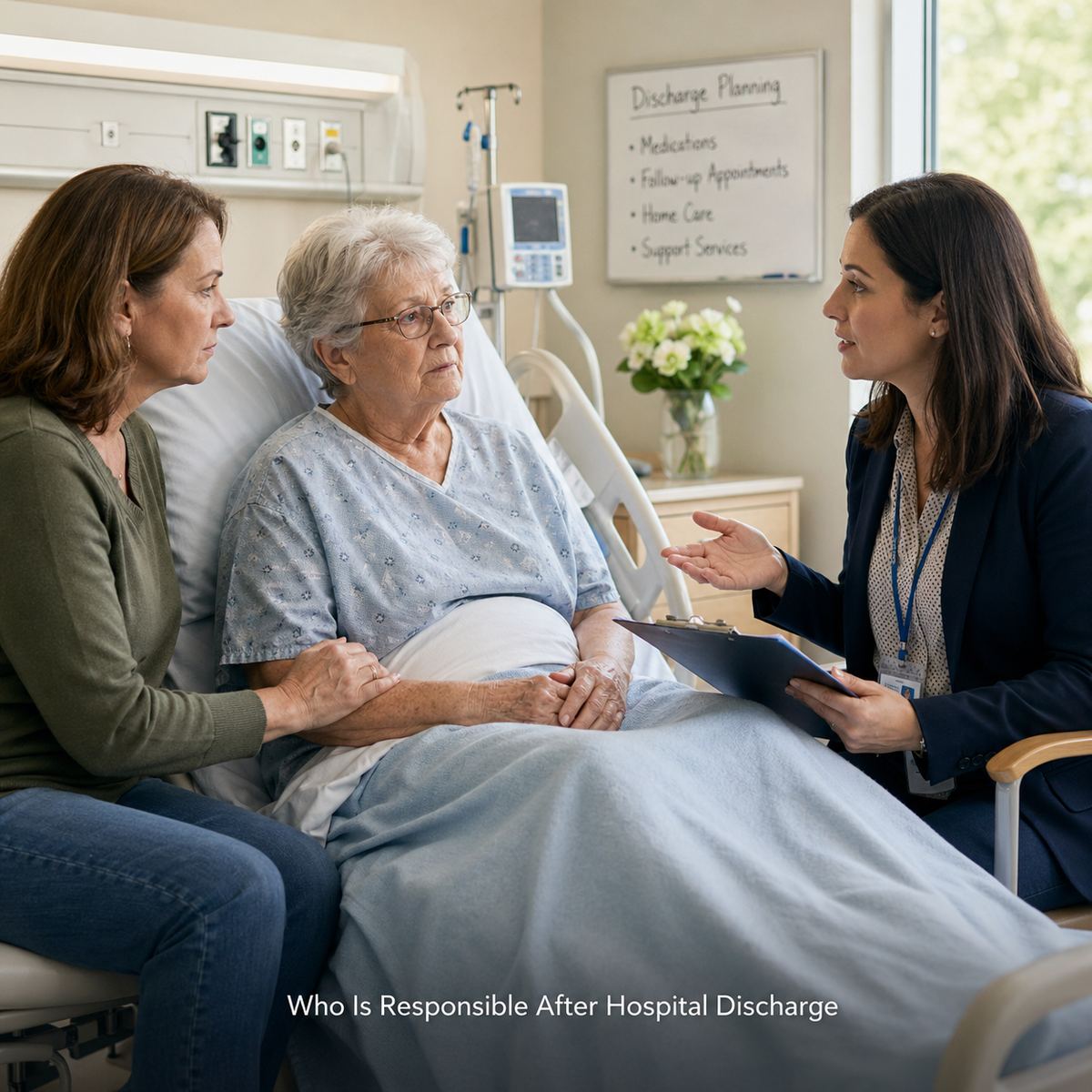
After a hospital discharge, many family caregivers feel like they have no choice but to take on full responsibility—but the truth is, the situation is far more complex.
When a loved one is discharged from the hospital, families are often left asking:
👉 “Am I responsible for their care now?”
The answer is not always what you’ve been led to believe.
The Reality: Responsibility Is Often Assumed—Not Assigned
Hospitals discharge patients once they are considered “medically stable.”
That does NOT mean:
- They are safe at home
- They no longer need care
- The family is prepared
But in practice, responsibility often shifts to the family caregiver—whether they are ready or not.
Important: You Are NOT Automatically Legally Responsible
This is one of the most misunderstood parts of caregiving.
In most situations:
- You are not legally required to provide hands-on medical care
- You cannot be forced to take someone into your home
- You are not obligated to perform skilled care tasks
👉 However, pressure from the healthcare system can make it feel like you have no choice.
Who Is Responsible After Discharge?
Responsibility is actually shared across multiple parties:
The Hospital
- Must provide discharge instructions
- Must ensure basic discharge planning
- Cannot detain a patient who is medically stable
The Patient
- Has the right to accept or refuse care decisions
- Is responsible for their own choices if capable
The Insurance Provider
- Determines what services are covered
- May limit rehab, home care, or equipment
👉 Including Medicare Advantage plans, which may restrict access to post-acute care
The Family Caregiver
- May choose to provide support
- Often coordinates care
- Frequently fills gaps in the system
👉 But this role is often assumed—not formally assigned
Why Caregivers Feel Forced Into Responsibility
Many caregivers say:
- “They told me I had to take them home”
- “There was no other option”
- “I didn’t know I could say no”
This happens because:
- Discharge happens quickly
- Alternatives are limited
- Communication is unclear
- The system relies on families
👉 This is part of the growing unsafe discharge crisis
🔗 Related: Unsafe Hospital Discharge Crisis: What Caregivers Need to Know
When You Should Question Responsibility
You should pause and ask questions if:
- You are not trained to provide care
- The patient requires medical-level support
- Your home is not safe or prepared
- You are physically or emotionally unable to provide care
👉 Feeling unprepared is a valid reason to stop and reassess
What You Can Do If You Cannot Provide Care
You have options.
You can:
- Clearly state: “I cannot safely provide this level of care”
- Request alternative discharge planning
- Ask about rehabilitation or skilled nursing
- Request a delay through a discharge appeal
🔗 Learn how to take action:
How to Stop a Hospital Discharge
What Happens If You Say No?
Saying no does not mean abandonment.
It means:
- You are setting a boundary
- You are acknowledging your limits
- You are protecting both yourself and your loved one
👉 But it may lead to difficult conversations with hospital staff
🔗 Learn more:
What Happens If You Refuse a Hospital Discharge?
How This Connects to Unsafe Hospital Discharge
When families feel forced into responsibility:
- Patients may go home without adequate care
- Caregivers become overwhelmed
- Safety risks increase
👉 This is how unsafe hospital discharges happen
How to Protect Yourself as a Caregiver
You can protect yourself by:
- Asking questions early
- Understanding your rights
- Setting realistic boundaries
- Building a caregiving support team
- Preparing before a crisis
👉 Use this tool:
Hospital Discharge Checklist for Caregivers
The Caregiver Balance Guide: A System for Protection
This article is one pillar of the Caregiver Balance Guide — a structured framework designed to help caregivers:
- Avoid unsafe decisions
- Reduce burnout
- Plan ahead
- Protect their health and finances
You Are Allowed to Set Limits
You are not “failing” if you cannot do everything.
You are not “difficult” for asking questions.
👉 You are being responsible.
You Do Not Have to Carry This Alone
If you are feeling pressured, overwhelmed, or unsure what to do next—support is available.
Caregiver coaching can help you:
- Understand your options
- Advocate with confidence
- Set boundaries without guilt
- Create a safe care plan
👉 Schedule Your Caregiver Coaching Session Now
Related Guides for Caregivers Facing Unsafe Discharge
If you are dealing with a hospital discharge right now, these step-by-step guides will help you take action:
- How to Stop a Hospital Discharge (Medicare Appeal Guide)
- What Happens If You Refuse a Hospital Discharge
- Observation vs Inpatient: Why It Matters for Rehab
- Hospital Discharge Checklist
- Who Is Responsible After Hospital Discharge
- Unsafe Hospital Discharge: How to Get the Right Medical Equipment and Avoid Costly Mistakes
- Unsafe Hospital Discharges in 2026: How Medicare Advantage Is Shifting Care to Family Caregivers
- Medicare Discharge Appeal : How to Stop an Unsafe Discharge
- Medicare Denials After Hospital Discharge: Why Delayed Care Turns Dangerous for Seniors
- Who Is Responsible After a Hospital Discharge:What Family Caregivers Need to Know
- How to Appeal a Skilled Nursing Facility Discharge
- Observation vs Inpatient: Why It Matters for Rehab
- Hospital Discharge Checklist
- Can a Nursing Home Kick You Out?
❓ Frequently Asked Questions
Am I legally responsible for my parent after hospital discharge?
In most cases, no. Responsibility is often assumed but not legally required.
Can a hospital force me to take someone home?
No, but they may discharge the patient if medically stable.
What if I cannot provide care?
You can communicate your limitations and request alternative care options.
What if I feel pressured by hospital staff?
You can request a case manager, ask questions, and file an appeal if needed.
Learn more:
- Unsafe Hospital Discharge
- How to Stop a Hospital Discharge
- What Happens if You Refuse a Discharge?
- Medicare Observation Status vs Inpatient Admission What you need to know before it is to late.
Take Control Before a Crisis Happens
Care plans are not just paperwork.
👉 They are your roadmap
👉 Your protection
👉 Your structure
👉 If caregiving is becoming overwhelming:
👉 Build a complete caregiving system:
👉 Keep everything organized and ready:
My Vital Vault Emergency System