Unsafe Hospital Discharges: How Caregivers Fight Medicare Denials and Stop Early Discharges with Dr. Jill M. Bjerke - Episode 202
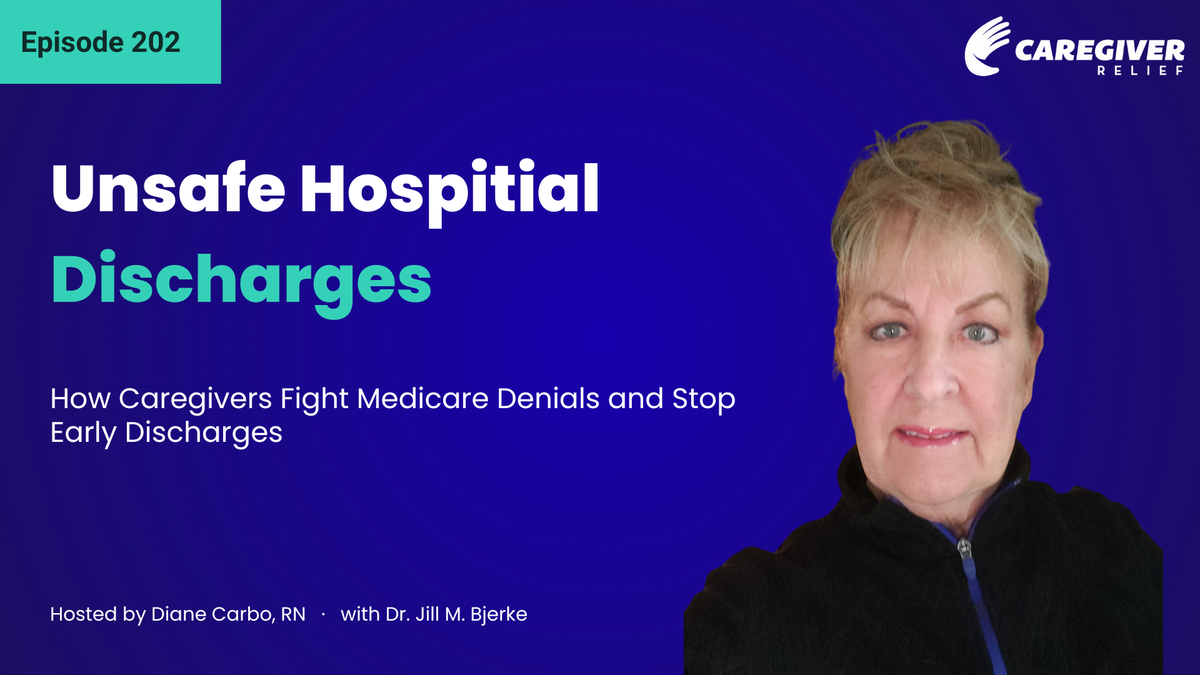
In this eye-opening episode of the Caregiver Relief Podcast, host Diane Carbo, RN, sits down with Dr. Jill Bjerke—a healthcare executive, senior transition specialist, and aging-in-place expert. Together, they pull back the curtain on the financial, structural, and AI-driven shifts inside the healthcare system that are putting corporate profits over patient safety. More importantly, they share the exact tools and strategies you need to fight back, halt an unsafe discharge, and protect your loved ones.
📋 What We Cover in This Episode
- The Rise of "Robo-Denials": How insurance companies use artificial intelligence (AI) to automatically reject thousands of medical claims in bulk.
- The DRG & PDPM Paradox: A look at the government reimbursement models that financially incentivize hospitals and skilled nursing facilities to shorten stays, regardless of patient readiness.
- Medicare Advantage vs. Traditional Medicare: Why Medicare Advantage plans have become the "epicenter" of aggressive, insurer-driven denials and early discharge pressures.
- The Five Levels of Medicare Appeals: A step-by-step roadmap of the formal appeals process, all the way from a basic administrative review up to a federal court.
- The QIO Emergency Appeal: The fast, powerful, and vastly underutilized tool that legally pauses a hospital discharge within 24 to 48 hours.
- The Power of the Spiral Notebook: Practical, immediate advocacy tips every caregiver must start using today.
🛠️ The Caregiver’s Toolkit: How to Fight Back
If a facility is pushing to discharge your loved one too early, Dr. Jill and Diane recommend taking these immediate actions:
1. Ask for the Case Manager / Discharge Planner Right Away
Nurses don't control the discharge, and doctors rarely handle the administrative details. Case managers do. Asking to speak with them immediately can help freeze the process long enough for you to voice your concerns and demand an explanation of your appeal rights.
2. File an Expedited QIO Appeal
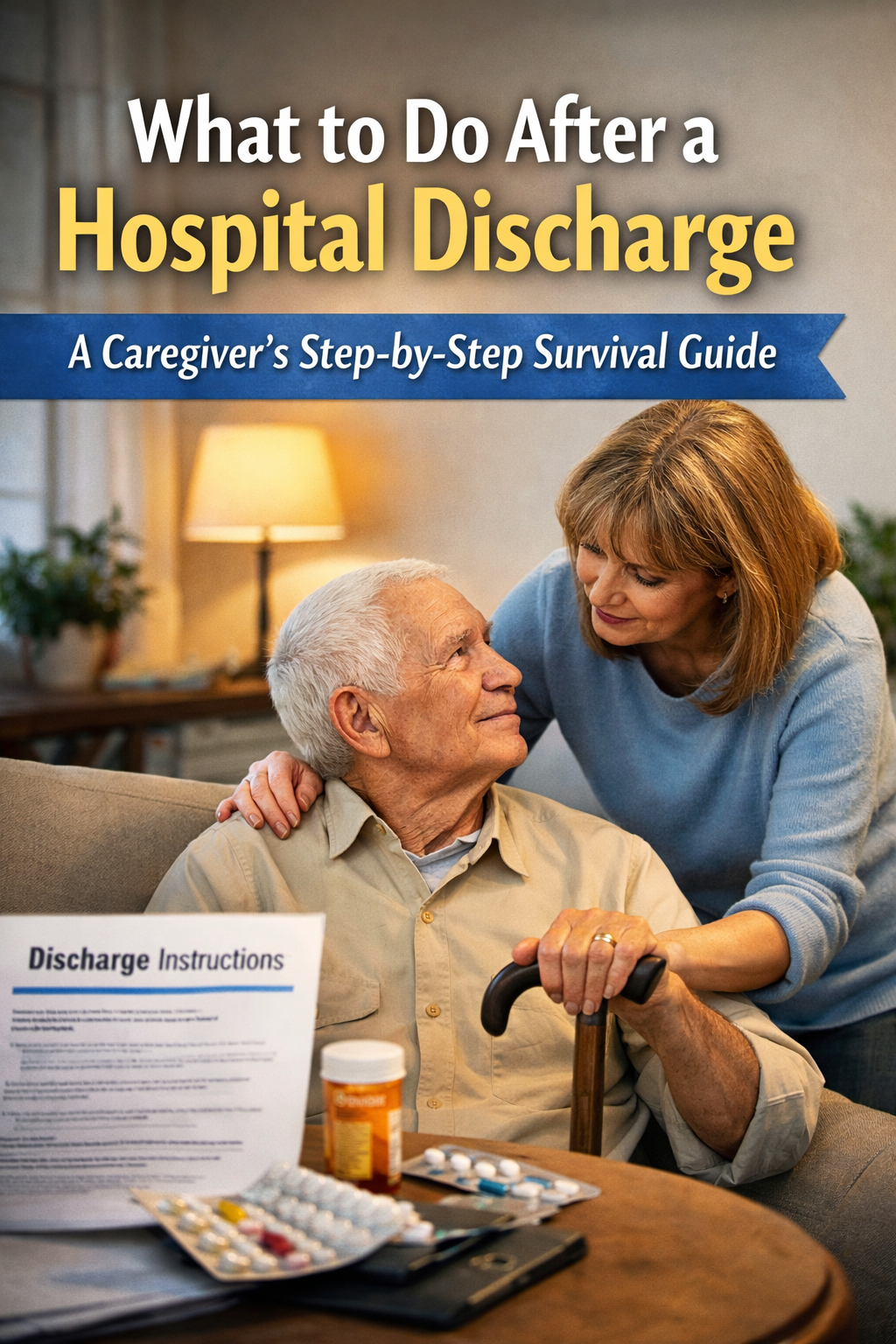
When a hospital decides to end coverage, the patient is given a document called an Important Message from Medicare. 📄 Do not ignore this. If you call the Quality Improvement Organization (QIO) number on that form by noon the day before coverage ends, the hospital cannot legally discharge the patient while an independent medical review is conducted. Even better? Medicare continues to cover the stay during the 24-to-48-hour review window.
3. Look for "Magic Words" in the Medical Records
You have a legal right to request your loved one’s daily nursing and physical therapy notes. Look for or request documentation that uses powerful clinical language such as:
- “Patient is unsafe to discharge home due to impaired mobility.”
- “Patient requires a two-person assist for transfers.”
- “Patient is a severe fall risk and is unable to toilet independently.”
4. Start a Caregiver Journal (The Spiral Notebook) 📔
Do not rely on your memory during a healthcare crisis. Write down the dates, the names of every doctor or therapist you speak with, exactly what they said, what medications were changed, and how your loved one is actually performing. If a doctor claims a patient is "independent," you can use your journal to challenge them with facts.

🗣️ Key Quotes From the Episode
"Claim denials are rising because insurers are using more AI automation to decline claims in bulk... None of this is about patient readiness. It is about economics wrapped around the patient." > — Dr. Jill Bjerke
"What healthcare professionals used to provide is now being expected of the family caregiver, and it’s frightening... The system overlooks the human condition." > — Diane Carbo, RN
🔗 Resources Mentioned & How to Connect
- Home Safety Assessments: Learn how to assess your home environment for hazards at SilverSpaces.com.
Podcast Episode Transcript
Diane: Welcome to the Caregiver Relief Podcast. I'm Diane Carbo, RN. Across the country, families are noticing something troubling. Hospital stays are shorter, therapy is reduced, skilled care ends abruptly, and Medicare denials seem to be happening more often. And I'll tell you from a personal experience, from my personal perspective, that I am seeing more unsafe discharges to home than ever before.
So today, we're gonna talk about why. Joining me is Dr. Jill Bjerke, senior transition specialist, aging-in-place expert, and healthcare executive, who will walk us through what has changed inside the Medicare system and how those changes are dramatically increasing denials and early discharge decisions.
We'll break down the financial and structural shifts driving shorter stays, how documentation and review systems are impacting approvals, why more families are being told, "Not medically necessary," and what an expedited Medicare discharge appeal, also known as a QIO appeal, really is, and how caregivers can protect their loved ones when discharge feels unsafe.
So if you've experienced this or worry you might, stay with us. Understanding the system is the first step to protecting your family.
Diane: Dr. Jill, thank you so much for joining us today. This is a really difficult topic, and I'm glad you were willing to discuss it with me today.
Jill: Thank you, Diane, and I have to agree with you.
You couldn't have picked a no more complex topic other than taxes. And that's why it frustrates people so much because unless you're willing to really go down a road and figure out what the heck is wrong, it's hard. So thank you for having me.
Diane: Oh, I'm thrilled with this topic, and, I hope we'll have follow-up, podcasts on this topic as well.
Dr. Jill, you've worked in senior transitions for over 20 years. What are you seeing now that feels different from five or 10 years ago?
Jill: When I started my company, SilverSpaces.com, as a downsizing clutter elimination and guide for aging in place decisions, none of those words or concepts were mainstream then.
Diane: Yeah.
Jill: Now they are incredibly important topics, not concepts. What I'm seeing is a lack of accessible and affordable housing, which is almost forcing seniors to remain in their current homes even if it's unsafe for them. Yep. As a physician, I understand that a person's care provider has no idea what type of living environment their patient is returning to, and it could be the very environment that injured them or made them ill.
This is why I promote home safety assessments. This is crucial, especially when you consider that a return to a healthcare facility within 30 days of discharge impacts patient outcomes, health system performance, and financial penalties.
Diane: Dr. Jill, one of the things that surprised me is I'm seeing discharge, unsafe discharges to home, and one of the things that used to be encouraged and done were home safety evaluations or assessments, as you were saying, and that is gone by the wayside.
They're not doing that now, and what I'm seeing just totally frustrates me. so I'm glad we're having this topic. Now, families tell me they're seeing more denials and earlier discharges. From your perspective, what systemic changes are driving this increase?
Jill: I help people walk through this denial process.
I used to work for a health system and actually was in charge of denials, so I'm very familiar with it. However, unfortunately, it's very complex, and if you're a patient or a caregiver, it's extremely complex. Claim denials are rising because insurers are using more AI automation to decline claims in bulk.
AI is using, being used to flag, quote-unquote, "medical necessity," never use those terms, those issues and reject claims in bulk. Yeah. one report I saw noted over 300,000 claims denied in under two months by an automated system, and although hospitals report billions in delayed or unpaid claims, with 70% eventually paid only after multiple costly reviews.
The single biggest systematic drivers are prior authorization rules are tightening, administrative errors are increasing, medical necessity criteria are being applied more aggressively, and out of network rules are stricter. Earlier discharges are rising because insurers challenge inpatient days and push for shorter stays.
Hospitals face staffing and financial strain, and that observation status is overused, which means they keep you in a certain period of time before they will either admit you or discharge you, and you're just in flux. And automated utilization reviews accelerate discharge pressures.
Diane: Dr. Jill, I worked for one of the first private review organizations in the country, and that was 50 years ago, or almost, maybe 47 years ago, and what I've, what I found as a young woman was the abuse of the hospital system with over-utilization of benefits. But now we've taken it to the total extreme, and I can tell you right now, our government-run healthcare has destroyed our healthcare and of the single-payer system, and we are in big trouble.
So I'm glad we're having this talk- topic, discussing this. So how have Medicare reimbursement adjustments affected hospitals, skilled nursing facilities, and therapy services?
Jill: From a hospital's point of view, their operating and income and expenses pressure them to shorten the length of stay and create more aggressive internal utilization efficiencies.
Skilled nursing facilities, or SNFs, as some people call them, often have very thin margins and strong incentives for that reason to shorten stays. They avoid complex patients because that can be a contributing factor to, the, denials of service or lack of service. And for therapy services, it goes by a per unit reimbursement method, and that creates pressure, as does that higher documentation burden, which doctors hate, and now comes the incentive to deliver fewer visits per episode, but still meeting the desired functional outcomes.
Those are at odds with each other.
Diane: They really are. in fact, I can tell you that the, I worked for a two long-term care, companies, nationwide companies, and one regional, and, they- Are not skimping on things for administrative buildings and staff, but they are skimping at the level of care, and that's where we have a big issue.
And the more Medicare cuts reimbursements, the more the facilities are trying to manage keeping those, benefits, keeping the income level up to keep their unnecessary middle management, I'm gonna say it, and, bonuses to the organizations. I'm just, very frustrated with what I'm seeing.
And the hospitals, it's the same. The hospital administrations are getting such huge salaries that are unnecessary, and it's not trickling down to the nurses, or the- No, it's, no ... the working staff. It's definitely not. it really isn't, and it's just corporate greed a- at one point, which makes me, frustrated.
Can you tell me, are facilities under financial pressure to shorten length of stay, and how does that show up clinically?
Jill: Absolutely under financial pressure. a lot of people do not understand that Medicare and commercial payers reimburse hospitals based on what are called DRGs, or diagnosis related groups, not, and I'm going to repeat this, not on the length of stays- which translates into fixed payments. Yeah. That's the problem. Longer stays do not generate more revenue. Shorter stays improve the margins, but then this creates a paradox, because the hospitals must shorten the length of stay without triggering readmissions and complications. Earlier discharge reduces the risk of days being denied as, quote-unquote, our favorite phrase, "not medically necessary."
Also, risking the important Medicare penalty to a facility if a patient is readmitted within 30 days of discharge for that same condition. Yes, hospitals are under strong financial, operational, and regulatory pressure to shorten length of stay. This shows up as premature discharges, higher readmissions, rushed discharge planning, more complications occurring at home, and greater reliance on predictive models and standardized pathways, which I have come to hate.
Diane: I hate them as well because I used to be one of those nurses of utilization review. I've even done retro review and worked on denials as well. And I can see the need for it 47 years ago, 'cause there was such abuse, but now we've come to the extreme, and I can tell you that, the problem with that model, it doesn't see people as humans.
It is, In fact, I can tell you right now, there's a, managed care company in Virginia. I had a home care company I interviewed, and they were actually calling their clients, the seniors, and doing these interviews with the seniors to ask how long it takes to shower, how long it takes for them to make a meal, how long they do things.
They're literally bean counters trying to acquire information so that they can cut home care benefits even more. And that's
Jill: Why they think- and that's where AI, unfortunately, is not doing healthcare a service.
Diane: Yes. Yes, I agree. But before AI, these the DRGs did nothing to support, seniors as well because the early discharges often resulted in return to the hospital within 30 days.
And hospitals change their way of functioning. You can come into the, you can go home, early and be sent right back to the hospital, but hospitals, they get dinged for that. They don't get any more money for this second admission. It's still continued, or considered a continuation of the previous, admission, so they're losing money.
So they look at other ways to fund. That's why we're gonna talk about observation status in the future here too, but, can you tell me why we are seeing skilled therapy reduced sooner or even when patients seem to be unsafe to go home?
Jill: Medicare pays for skilled nursing through what they call patient-driven payment model.
Another favorite government acronym, PDPM. And again, so few people know about this. I think sometimes they do this on purpose, to confuse people. But this shifts payment from the number of therapy minutes to patient-specific care needs that focus on the diagnosis rather than the therapy itself, and I can't tell you as a doctor, that is so wrong.
So skilled therapy is being reduced sooner even when patients are clearly unsafe to go home. Because there's a perfect storm of the insurer's use of prior authorization limits, medical necessity denials, lower costs of services if available, and back to financial pressure. None of this is about patient readiness.
It is about economics wrapped around the patient. This particular payment system pays the same regardless of the therapy intensity, and that is wrong. Medicare Advantage aggressively denies continued care. Hospitals discharge earlier, shifting risks then to the skilled nursing facility.
Then the skilled nursing facility faces staffing shortages, I'm sorry, and razor-thin margins. Value-based metrics reward shorter stays, not safer ones. So clinically, this results in unsafe discharges, inadequate therapy, and higher downstream risk. It just doesn't get any better.
It just keeps getting worse.
Diane: I have, an experience, a personal experience with this. One of my neighbors, has a history of, a heart attack and she had not enough oxygen to her brain for a few minutes. So she had, low, she's lost her short-term memory, and she was an attorney at one time.
So now she has very little l- has very little short-term memory. She doesn't remember things well. she, it's 15 years post-op from her, or post-op from her, episode with her stroke or, yeah, her heart attack, when she starts having seizures. Now, I believe she was probably having seizures the whole 15 years, but they were under, they were not being picked up by the family.
And now that they're getting huge, it became a big problem. So she goes into the hospital. She has a urinary tract infection and new seizures, and it was really a hard, they had a really hard time managing her. They sent her home. Within seven days, she was went to acute care, and then she went to, rehab.
Now, I'm an old rehab nurse, and I know what you look for when you send a patient home. she came home. They didn't do a home evaluation, and here's the disturbing thing. They didn't ask the they didn't include the husband in the discharge planning. Now, here's a weird thing.
Jill: Oh, no.
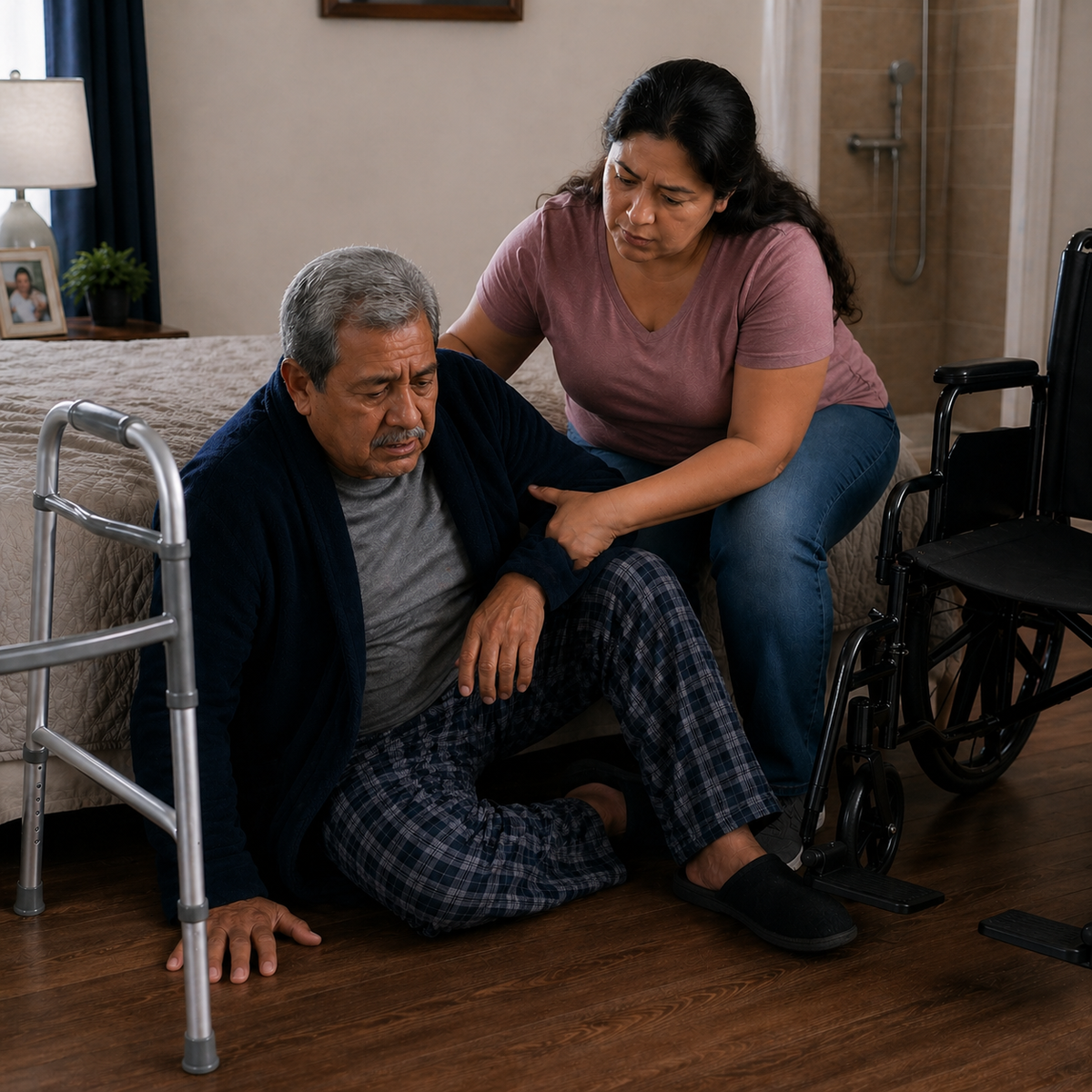
Diane: Oh, this is even more frightening And I'm a fierce advocate. she came home, she wasn't in and they sent her home with a wheelchair. That's it, a wheelchair. And they said she was independent, but they ordered physical therapy for her at home. None of that made sense to me. She's not home less than an hour, she's home less than an hour and she falls.
Jill: Now, I- I knew you were gonna say that.
Diane: I know. so I wasn't home, and I didn't know this, but this is what we had to do. I went the next day to see her. The irony is here, my roommate's daughter is a student nurse, and she went over to help 'cause the f- the husband was just frantic. He didn't know what to do.
And here's the student nurse. She says, "Where's the potty chair?" A student nurse- Oh, my gosh ... a, "Where's the potty chair?" And they didn't order her one. Now, there are 17 carpeted steps up to her bedroom.
Jill: No way.
Diane: There is no... Oh, it gets worse. There's no bedroom on the first floor. There is no... They had these bean, these, chairs that looked like a kidney bean out of bamboo, and that's what they sat in when they were, watching TV.
There was no accessible bathroom downstairs at all. I wanted to send her back right away, but, the husband said, "No, no, we can't do that." she was adamant. And I said, "Well, this is the wrong thing." But what I did, I will tell you right now, what I did was I called the facility. I talked to...
I first of all, I started with the therapist and said, "I'm concerned. How could she be independent if you're, and you didn't do this and you didn't do that?" And they said, she was independent." Then I called the head nurse of the unit she was on. I called the physiatrist, the rehab doctor.
I called them all. I went all the way up to the CEO and admonished them for this unsafe discharge to home. What was even more frightening is they doubled down that she was safe and she was well. But, and here's the thing, she was sent home with a urinary tract infection, and they ordered no nursing for her to open the case.
It was a physical therapist. And I was just sick to my stomach because they didn't... I learned that the home care reimbursement for nurses is not covered like it used to be. They're not- No ... covered. So what we have is a woman here and a family- In need of education and follow-up and monitoring on her new seizure meds, her, urinary tract infections, and, as a fall risk.
They wouldn't even order a bed to be delivered to the home that we could put in the living room at the time. they denied that she was not independent, and I was, I was really upset. The physical therapist came, and because I raised pure hell, forgive me, I did get a nurse to come in.
Whoop-de-doo. She did nothing, and I was They'd go in, they'd get out, and, there was no patient education. There was no monitoring of the urinary tract infection. There was no discussion on the complications you can have from seizure medications. Nothing. And it took them, the husband had to go out, literally buy, he bought a big La-Z-Boy chair that could go down into, as a, into a flat bed for her to stay downstairs.
Jill: Wow.
Diane: And that is just one of several stories I could share with you on unsafe discharges to home, and the facilities are ignoring it to unbelievable levels.
Jill: One of the reasons that I created silverspaces.com, which is a home safety assessment, is for this very reason. the home should have had a safety assessment before the patient even went home, and even older adults, should have home safety assessments.
It identifies where those risks are and tells them how to mitigate them. And I'm not talking about thousands and thousands of dollars, I'm talking about taping down area rugs and, you know- Yeah ... simple things. And grab bars. But what you're talking about needs to be completely documented, and someone needs to go back and say, "Look, there's no way she was independent.
Show me what she did to prove her independence." Because they have to be able to walk a number of steps, they have to be able to stand for a certain amount of time, they have to be able to bend over, all kinds of things, and that can be documented.
Diane: I will tell you that the, when the physical therapist got to the home that day, to open up the case, I said to him, 'cause she was known to them.
They had seen her before. I said to him, And he says to me, "I can't answer any of your questions because the facility called me to warn me about you."
Jill: Oh, my God.
Diane: Yes.
Jill: That's terrible.
Diane: Yes. Yes. So he avoided me. All I said to him then is, "All right, here's what I want to know. Is she independent?" And he said no, but that was all he would say.
And I was, it, this is what's really going on in our healthcare It is It's frightening. And, we have to make our family caregivers aware of they have options, and they can fight this. And, how they do it, we're trying to help them because we've got to do something. I'm write, of course, I sat and wrote letters to, Kennedy and Oz and my state reps here, and of course they get, we're addressing these issues."
And it's- No, they're not No, they're not. Nobody is. They're gonna... And they're putting more and more pressure on the family caregiver to provide support from, uneducated what healthcare professionals used to provide is now being expected of the family caregiver, and it's frightening.
Jill: Yeah. One thing I tell people is to buy a spiral notebook.
Diane: Yep
Jill: And start journaling. Yeah. And if it's a, if it, they start journaling when the person gets sick, before the person gets sick, when they're in the hospital, when they're at home, even your own care. Yeah. I do it for my own care. There's no possible way you can remember when this happened or that happened or whatever, and it gets, as you go down the road, it gets more complex and more confusing.
There's no way we can remember all this information. So to have a spiral notebook and just write down the date, what happened, who you talked to, or what the result was, or they didn't eat right today, or they fell, or they didn't sleep, or I'm feeling lousy. i- there's no way. Y- because a doctor will come back and ask you questions.
Unless you have that bir- spiral notebook with you, there's no way you can either answer it if you're a caregiver or if you're the patient
Diane: 100%. In fact, I take it one step, further, Dr. Jill. I actually tell my caregivers, "When you're in a facility or in a doctor's office, ask to record what they're saying to you so you can hear it and listen to it over and over again."
Jill: Or I encourage people to develop a caregiver relief support group around you, team that will help you provide care so you're not doing it alone. And it's good to have them listen to that information as well, 'cause everybody has a different perspective, and it's important that you get feedback from everybody so that you can make educated decisions moving forward on, what you need to discuss with the doctor, And that, spiral notebook should go with the person to every- Yep ... PT, every office visit, every hospital, every everything. I had, a problem with, my doctor. Had gone to an eye doctor. She was going to have eye surgery. I said to the doctor, he was in front of my face, "She wants monovision." They gave her distance vision in both eyes.
Oh. And I said to him, "I said this to you face to face." Yeah. His response to me was, "You're not the patient." And I- Oh ... almost blew it, but I thought, "I'm just gonna be quiet." But that's documentation. And they went back to their documentation. There was nothing in there about monovision. Yes. So you know, keeping track of what you say and what the doctor says is really important.
Diane: Absolutely. Now I want to talk about, Medicare Advantage plans, and we are seeing, changes, in what's happening in, Medicare Advantage. But I want to warn people, the Medicare... Our government policymakers have deemed that not only are we moving to a cost-sharing plan, but those of us that are on traditional Medicare with supplements are going to be subjected to, more aggressive, cuts costs, and we're going to be cost-sharing for across the board, which is making it really hard for people to receive the, recommended treatments, services, or therapies because you're gonna be more responsible for privately paying for them.
Jill: And Medicare Advantage has documented aggressive insurer-driven denials.
Diane: Yeah.
Jill: Documented. they are the epicenter of early therapy reduction and early discharges. Medicare Advantage plans have become the primary driver of early termination of skilled therapy
Diane: Yep
Jill: denial of continued skilled therapy, pushes to discharge to home when not safe
Diane: Yep
Jill: And overridden of clinical judgment. Why? Because Advantage plans control how care is utilized directly. Yeah. They require prior authorization before skilled care admission, ongoing authorization for every additional day, frequent, quote, "continued stay reviews," unquote, and my favorite excuse, algorithm-driven medical necessity checks.
This is where AI is not a friend to us. If the plan says no more skilled days, the skilled facility has two choices, discharge the patient or keep them and absorb the cost, and most facilities cannot absorb the cost. So this is where the worst patient safety issues occur. With original Medicare, facility driven reductions are due more to the payment system, staffing, and financial pressures.
This is still problematic, but nothing like the issues with Advantage.
Diane: The reimbursement for, rehab it, with tr- even with traditional is causing facilities with traditional Medicare as well to be discharged within the first 20 days if they can get if they can get rid of the patient because that's when they get the highest level of reimbursement.
In fact, again, we are seeing reimbursement so low that, Medicare Advantage plans are costing 200 to $400 a day co-pays to stay in rehab or skilled facilities. Nobody can keep that up. No. it's just not sustainable. No. I'm gonna share a story of a Medicare Advantage client. I had a, a client who has MS.
He's in remission, does very well. He's in his mid-70s and he was having back problems, so he fell and had to have surgery. So he's in the hospital and sent to rehab and is home with, on his 10th day post-surgery from spinal surgery. His wife is, a short little lady, had, has had bilateral knees done, has her own health issues.
They sent him home, he was not prepared to come home. But financially they couldn't keep him because they couldn't afford the 200 to $400 a day co-pay. So they bring him home and within an hour he needs to use the toilet and guess what happens?
Jill: Fall.
Diane: He fell. Not only did he fall, he re-injured his back.
He had to have- emergency back surgery-
Jill: Oh my gosh
Diane: And his wife injured himself. But it only gets worse. They're, so they're, they were going to discharge him, and this is where I went through craziness. The facilities will tell the family, we're discharging you, the next few days," and the family's calling me and saying, "Diane, what do we do?
He's not ready." So I tell them about the appeals process, and we're going to talk about that in a few minutes. So I walk them through the appeals process. they do what they're supposed to do, and the facility gets a call from the, appeals people and, the facility, this made me so angry, they said, "Oh, we haven't written the order yet, so he's not going home."
Jill: Oh my gosh.
Diane: So they, and of course the appeal process, there's nothing to appeal.
Jill: No.
Diane: And they did that three days in a row.
Jill: Wow.
Diane: And, this is going on where facilities are playing this game. Anyway, he did come home, and here, wait for it, when he came home, he had pressure sores on his buttocks and his feet.
Here is a man who's a severe diabetic, and while he was in the hospital, he refused to be turned.
Jill: Oh, no.
Diane: Oh, yeah, and guess what? Now we have patient rights, and I can't believe any nurse on this earth will allow this to occur, but it's even worse. As a rehab nurse, you just explain to him, "Look, you don't know what can happen, the complications of immobility.
We need to get you off your butt. We need to get you off your, check your feet." That, he was literally discharged with no home care, and he had decubes on his feet on his heels and his buttocks, and, no orders for, care. Get this, the facility, the skilled rehab facility he was in never did skin checks.
They didn't even have documentation
Jill: Holy cow
Diane: of his sores.
Jill: Those sores can develop sepsis and you can die from that
Diane: Yes, and because he's diabetic, he could lose a foot.
Jill: Yep. He could.
Diane: There's so much. I just... What I... And then I'm ashamed of my profession. My the nurses, what are the nurses doing?
The, not to do a skin check, not. I was shocked. But states now, the government policy makers are also now interfering with, patient. Now they talk about patient's rights. So the patient's rights, they have the right to fall. They have a right to injure themselves. They have a right to develop decubes.
They have a right to develop pneumonia and sepsis and all those things. And there's... I don't understand that. I don't understand. Yes, patients have rights, but when do their rights or the harm that they're cause- going to cause themselves override their rights?
Jill: In defense of skilled nursing facilities, I don't think there's ever been another place where staffing shortages have impacted patient care more.
So in defense of them, not that this was right, but I know, I just know that they don't have time to do all the things they need to do, and it's unfortunate, and the patients pay the price for it. But, recruiting for skilled nursing is difficult at best.
Diane: Yeah. This was not in skilled rehab.
I'm sorry. I misspoke.
Jill: Oh.
Diane: It was actually acute rehab, which to me-
Jill: Oh, okay
Diane: to me is even
Jill: That's different
Diane: Oh, absolutely. But it's getting the same results.
Jill: Yeah.
Diane: I've never worked at. I worked at Sister Kenny Institute in Minneapolis. I know good rehab. I learned good rehab there, and it doesn't exist anymore because it all comes down to the almighty dollar, and it overlooks the human condition, and I, it makes me, frustrated, but-
Jill: Yeah
Diane: Now, let's talk, I want you to walk through the medical appeals process at a high level. What should families understand when they first receive a denial? And they will receive- Yeah ... denials. Yeah.
Jill: If the patient does not agree and wants to deny a claim, I myself have gone through this, I help people through this-
it is a process, and it is what providers and patients use, to not pay for a service treatment or even an item. When a claim is denied, you can ask Medicare to review the decision, submit medical records, and move through the five levels of review. Oh my God So the five levels of review are first, very obvious, ask Medicare to look at the claim again.
Now you have to understand almost every single one of these requires either a form or a letter, and that's why I go back to that spiral notebook. Yeah. Document what you're doing, when you did it, and how you did it. You're gonna tell Medicare you think they made a mistake. You're going to ask them to review the claim a second time.
And you can ask for an independent reviewer. A lot of people do not know this, and I know on an EOB, explanation of benefits, I have seen it printed somewhere. If you do not agree, you can ask for an external review, which is called a reconsideration, and it is done by someone who is not employed by the insurance company, is completely independent from them, but it requires a form that has to be sent in within 180 days of the initial denial.
So that's why I'm saying this spiral notebook starts to become really important. Yeah. If you still disagree, you can send more information or medical records or go to the next level, which is to ask a judge to review it. Again, this is a form that has to be filled out. Again, it is time dependent as this written request must be filed within 60 days of response from the independent company.
If the independent company still denies it, you can ask a judge who works with Medicare to look at that case and you can explain it, explain your side either by phone or they actually do video calls. Finally, you can ask Medicare's appeals counsel to review that judge's decision if you do not agree with it.
Again, there's a specific form that needs to be filed within 60 days of the response from the judge. Again, this spiral notebook helps you keep track of what you did and when you did it. The last option is to take the case to federal court. You can file a case in federal court for a final decision.
What I will call the not medic- necessary language is vague, misleading, oversimplifies complex medical decisions, and is really often a harmful phrase that does not- explain who is deciding the necessary, what- Yeah ... criteria are being used for this decision. And this phrase is overused by insurance companies.
It should be avoided at all costs. Don't ever use it if you're appealing. Never use the medically necessary. go back to the medical and use them as the source of why you are appealing the denial. So there are five steps. You can Google them, in order to understand which forms go when, what the process is.
It's a very easy way to get that information. The problem is not very many people know you can do this.
Diane: One of the questions I'm gonna ask you is I looked at electronic records, and nurses are not recording, nothing's being documented like it used to be. It's just a checklist,did. And I've learned over the decades, and this is gonna be terrible to hear, but as long as you have a little, your initials in a box, that's all they care about.
They don't care if it was done, just that you've documented it was done. And I see that all the time, and it really frightens me because the lack of documentation is frightening me when we're I mean, look at a, patient is discharged from skilled care and they didn't even know he had wounds on his heels and his butt?
Are you kidding me?
Jill: Yeah.
Diane: This is what frightens me is the documentation isn't there, and it's really, sad. So I'm, I didn't know the five steps. I've gone to one or two, but I didn't know about the judge on forward. So I love hearing this now because, I will recommend that people contact you in the future to help them out.
Jill: What really upset me more than anything, I think it was either a 60 Minutes piece or a Sunday Morning piece, but they literally interviewed a doctor who had written this procedure that was denied by Medicare. And he wrote letters to Medicare, saying, "I w- I created this procedure. How can you deny this?"
And this went on and on. And there was another case where the doctor himself was sick. He's a doctor. He knows all the language. And he appealed and appealed and appealed and appealed and died. And that's just, he has more medical knowledge, and sometimes I have found if you call in and talk to someone about a denial- the first thing you should ask them is, "Can you tell me what your profession is?" Because sometimes you get a dentist
Diane: Yes
Jill: Sometimes you get a physical therapist. When you're calling about something very severe, maybe a stroke or something. So who you're talking to is as important as what you're talking about.
Diane: Exactly, and one of the issues I take, I have an issue with is, government policy makers, don't have any clue on the harm they are causing with their policies, and it's very frustrating.
Jill: It is.
Diane: It is. and it's really, more frightening now than ever before, and I'm really worried about the population, 'cause we're gonna double our population of seniors in the next four to five years, and we are not ready for the influx, Now I want to talk, when a hospital discharge feels too soon, what is the expedited, QIO, which is the acronym for Quality Improvement Organization appeal, and why is its timing critical?
Jill: This QIO is, O is what I spoke about before. Yes. When, the denial comes into a place and you call and you say, I'm filing a written appeal.
I don't agree with the denial," that's when that private organization steps in. They are there, they're hired by Medicare to handle appeals. the appeal is the Medicare mechanism that stops an unsafe discharge and forces an independent medical review. It is fast, it is powerful, and it is underused, especially by older adults who do not know that they have this right.
When a QIO, again, acronyms, why do they throw these out here? Let's confuse this more.
Diane: Yes.
Jill: A discharge is triggered by a document a patient is given called an important message from Medicare. People don't realize how important this is. This tells the patient when Medicare will stop paying for the service the person is receiving.
Diane: Yeah.
Jill: The patient must call the number on the form by noon the day before the coverage ends. Back to the spiral notebook again, keeping track of this.
Diane: Yeah.
Jill: This means if this happens, the hospital can't discharge the patient, Medicare continues to cover the stay during the review, and the independent organization must issue a de- decision within 24 to 48 hours.
The hospital must provide the medical record to the independent reviewer- And the patient does not pay for the extra days during the review. After that decision, if the independent organization agrees with the patient, the hospital must continue inpatient care and Medicare continues to pay. If the QIO agrees with the hospital, the patient may stay, but Medicare coverage ends at the noon the next day.
This is a fast, same-day Medicare appeal process. People don't know about it, and it can be used when they believe the hospital is discharging them too soon. It is one of the strongest patient protection in Medicare, and it temporarily stops the discharge while the QIO reviews the case.
Diane: Again, the facilities are using fearmongering to, override, you taking it, going with an appeal.
They're tell- 'cause I've personally have experienced this with several of my clients. they have, they, again, it's, they're told by the facility, "You're going home," and of course it's unsafe. the family feels strongly. And again, they play the game, the facilities it's a game to them. It's all about money.
They'll tell the family, if this goes against you, and I know it won't because I know what's going on with the patient, you are financially responsible, and any day after this day, you will have to privately pay." That puts such fear in people financially that they stop doing it.
Jill: Yeah.
Diane: And again, the facilities, they, they will say, we're discharging you," and like I said, one client, three days in a roo- in a row, they did the appeals process, and three days they were told, we, the appeals people were told, "Oh, we didn't write the discharge."
And then they start playing these this fearmongering, financial fearmongering by telling the family are you able to afford to pay for this care when they tell you, they're not gonna cover it. And the families are so frightened about everything at this point in time, they just go ahead and take the patient home even though it's unsafe because they fear that they will be hit financially and they don't want to go down that road.
Jill: And this is what troubles me more than anything.
This is where- Patient care stops.
Diane: Yeah.
Jill: We're not talking about patient care. We're talking about finances.
Diane: Yeah.
Jill: We're not doing what's best for the patient
Diane: Yes
Jill: We're doing what's best for the hospital, and that is so wrong.
Diane: Yes. What I'm concerned about is, a physical therapist documents a patient's independent when she clearly isn't, and the rehab doctor says, my therapist told me this."
So where is the lies and where is the... to me, is I'm mistrusting of all, and I never ever felt this way before, I'm mistrusting even of the therapist because they're having the crap beat out of them to save money and do what they can, and I don't know, I don't know if they're false documenting.
I don't know, but I'm worried that they are.
Jill: Yeah. I can understand what you're saying.
Diane: Yeah. so what documentation or language strengthens a discharge appeal the most?
Jill: What a lot of people do not know is that they can request medical records. They can request it for an entire, the entire time they've been in a hospital for I don't know how many years or for an event. But most of the time they want that request in writing. If you're lucky enough, like I am, the hospital systems where I am participate in the online, called My Chart, where you can log in, you can make appointments, you can see your visits, you can get your medical records, you can see your radiology and lab results.
Not everybody's that fortunate. So a lot of times if you have email, they can email you that form, which you can sign and send back, and they will send you those records. Or you will have to present yourself at the doctor's office or hospital and sign the form saying, "I give you permission to release the records to me."
And sometimes say you need your wife's. you have to have your wife say, "Yes, it's okay for you to release these records to my husband." The, anybody can do this. People just aren't aware of it, because not everybody wants their medical records, but when it comes to discharges and decisions, it can be crucial.
The single strongest document is a therapy or nursing notes that states the patient is unsafe to discharge, and this can be requested by the patient, and it comes from the medical records department. Wonder if that's really gonna be documented.
Jill: Yeah.
Diane: Examples of powerful language in the chart that you should be looking for if you get those medical records: A- Patient is unsafe to discharge home due to impaired mobility.
That's what you were talking about.
Diane: Yeah.
Jill: B, patient requires two person assist for transfer. C, patient is not safe on stairs, and the home has 12 steps. The next one, unable to toilet independently. Patient demonstrates poor balance. Patient requires ongoing therapy. Some of this seems logical, but when you're talking about people who are ill, this is not where people's brains are.
People are not thinking ahead about what I want to say and what I want to look for in medical records. This is just not intuitive. And if the therapy or nursing, notes write this, then the QIO will immediately pause discharge. So those are the most important words to look for. Unfortunately, too many people just are not aware of this.
This is such a complex system. And it, it just, every year it gets worse and worse.
Diane: You know what? I can tell you right now that I, this lady that was sent home was definitely unsafe. She was not independent, yet everything documented said she was. Now that scares the hell out of me. I'm sorry.
I'm like, what is happening here? I don't understand. And nurses not up- doing skin care checks in acute rehab? Oh, my lord. I don't understand. Our, everything's upside down. And the sad part is, Dr. Jill, we- our system is such right now that the family caregiver is expected to provide care once expected from healthcare professionals, and they're totally unprepared for what they are having to deal with.
Jill: Agree.
Diane: And that's awful. So if you could give caregivers one immediate action step when they hear the words planned discharge, what would it be?
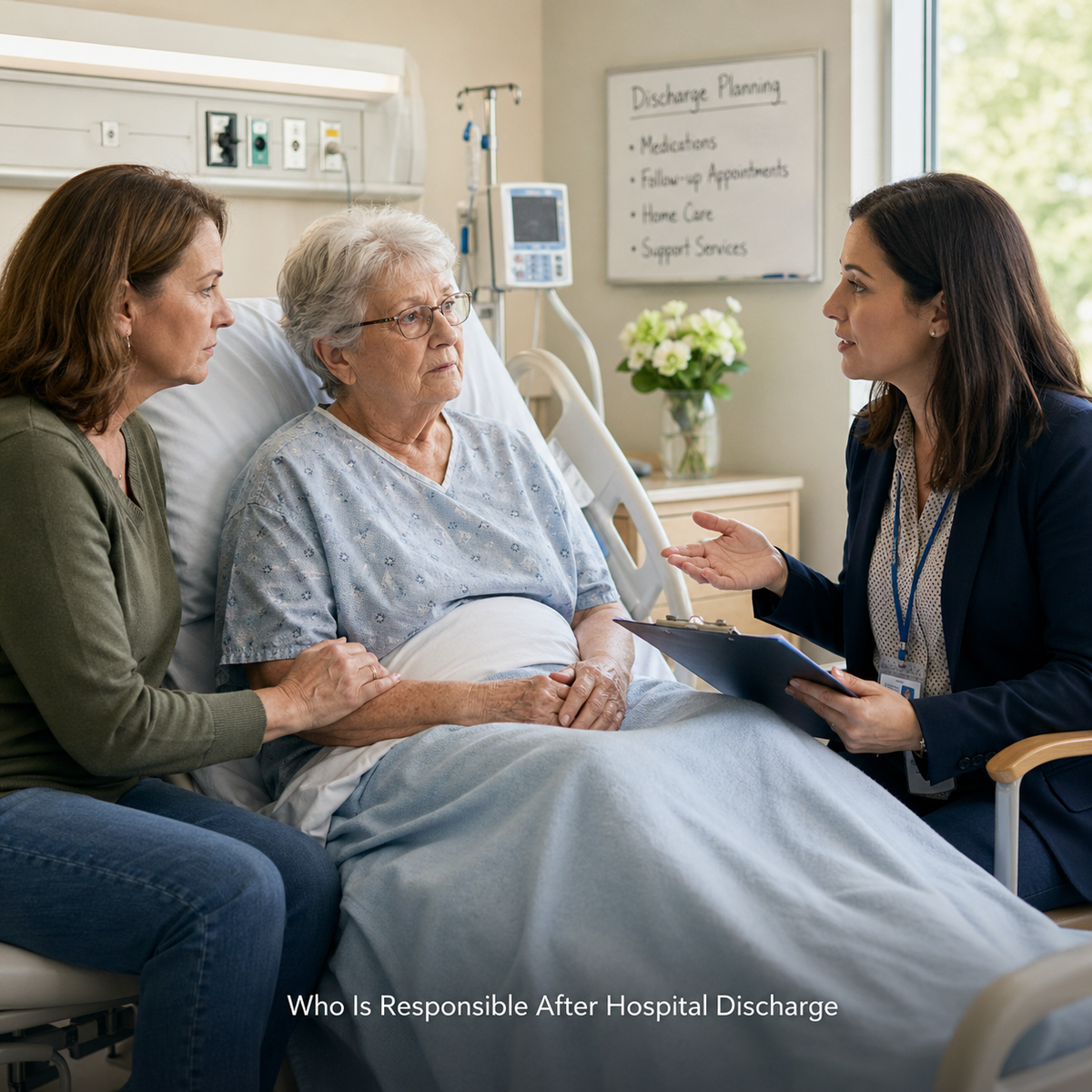
Jill: The one thing that I've found across the board is if people say, "I want to speak with a discharge planner or the case manager right now." That freezes the process long enough to understand what's happening.
So that freezes discharge right then and there. Hospitals cannot push a discharge forward while the patient is actively questioning the plan with the discharge team. Now, this should, quote unquote, should trigger the staff who actually control the discharge. Nurses don't. Doctors rarely handle the details.
They'll come in, they'll look at your little son, yeah, they can do it, but they don't go further than that. Case managers do. They should know when the discharge is safe, what services have been arranged, whether Medicare rules are being followed, and if a QIO appeal is appropriate. Once that case manager is present, the patient can say, "I don't feel safe going home."
"I need to understand the plan. I want to know my appeal rights." Again, this is buried somewhere, who knows where. I've never seen this before. I've never had a case manager come into my hospital room or, my relatives or anybody else's hospital room. But then again, I never asked for it. Sure. if you ask for them, that's different.
Medicare is one of the most complex and confusing payment systems that exist, and I often wonder if it was created this way on purpose.
Diane: Oh, I believe it was.
Jill: Yeah.
Diane: In fact, I want to, ask my listeners out there, I know personally because I've worked with many discharge planners and care managers in the hospital, and, there are hospitals out there that are actually given bonuses to care managers
Jill: Oh my gosh
Diane: Oh, yes, this is going on, it's real, giving bonuses to care managers in some of our top facilities in the country if they discharge early with it, they have, the DRGs give you, let's say they have a 20 days, ha, not likely. if they discharge in 10, they get a nice hefty bonus for discharging early.
Jill: Boy, that's a liability standing right there. That's a lawsuit.
Diane: Absolutely. and I don't know, I know that was happening 15, 20 years ago, and I assume that in some facilities it's still occurring today.
Jill: One thing I tell absolutely everyone is that seniors need to have an advocate, a partner, or an other adult who can help guide them through this maze.
Diane: Yeah.
Jill: Whether it is a relative or someone like you, someone like me
Diane: Yeah
Jill: Someone who understands the process. these people are ill. The last thing they want to do is asking for an independent review and picking up and asking for a care manager, and that's why the spiral notebook comes in handy so many times.
Some of these issues can go on for months and even years.
Diane: Yeah.
Jill: And never give up. Keep following which review process is next. Reach out to an advocate if you need to. They're all over the United States. and make sure you don't go to a hospital or doctor's visit by yourself.
Diane: Yeah.
Jill: Because you will not be hearing what that person is saying.
You'll be thinking about the next question.
Diane: Yes.
Jill: Yeah. Not the answer the doctor's giving. But if you have someone with you, they're writing down what the doctor said. So it's really valuable to have someone go with you, whether it's a therapy visit, a hospital visit, a doctor visit, ultrasound, X-ray, doesn't matter.
You should have someone with you because you just will not hear everything that's said.
Diane: Exactly. Dr. Jill, I, my son was in the Army and he was injured, and I dealt with the military medical delivery system.
Jill: Oh, dear.
Diane: And I can tell you, substandard and abusive, care is the quality of care you get in our military medical delivery system.
And sadly, our present healthcare system from Medicare on down to Obamacare now mirrors the, military medical delivery system. And the vets say, "Delay, deny, and wait to die."
Jill: Oh my goodness. And, That's so sad.
Diane: It is
Jill: But unfortunately, I think you're right, 'cause I've heard the same thing about military care.
Diane: Yes, yes, yes. So Dr. Jill, thank you so much for sharing such valuable information today. can you tell me, how people can find you?
Jill: Sure. My email is info, I-N-F-O, @silverspaces.com. My website is silverspaces.com. So you can reach me either one of those ways. You're welcome to Google whatever you need to do to reach me.
I will answer any question. I'm more than happy to help people out. I do it all the time. It is where my heart is right now. Denials is really hitting a hot button for me. I've had to go through it myself. I've had to go through it with two of my family members. And it's a painful process, but so necessary right now.
Diane: Yeah.
Jill: And that's why I'm saying you need an advocate. You need a family member, a, someone, a friend, anyone who's willing to walk this road with you.
Diane: I agree. and I thank you for bringing this, agreeing to work and bring this to light to people because, not many people want to talk about this topic.
But I feel that it's really important. We have to tell our healthcare consumers what's helping out, happening out there, and, we need to change it in some way or fashion because we're in a silver tsunami, and we're being more challenged than we ever and we're unprepared.
Jill: Very
Diane: I think that's coming.
Thank you again for your time and your knowledge and expertise. to my family caregivers out there, you are the most important part of the caregiving equation. Without you, it all falls apart. So please learn to be gentle with yourself. Practice self-care every day because you are worth it.
Caring for a loved one can be overwhelming — but you're not alone. If you have questions, big or small, our expert team is here to help.
👉 Click here to Ask the Expert
Our Resource section can help you find the information and tools that you need. We have courses, videos, checklists, guidebooks, cheat sheets, how-to guides and more.
You can get started by clicking on the link below. We know that taking care of a loved one is hard work, but with our help you can get the support that you need.
Click here to go to Resource Section now!
You might also like this article:
 Diane Carbo
 Diane Carbo
 Diane Carbo
 Diane Carbo
 Diane Carbo