Medicare Observation Status vs Inpatient Admission: What Caregivers Must Know Before It’s Too Late
Is your loved one admitted or under observation? Learn how Medicare rules impact rehab coverage, copays, and caregiver responsibilities after discharge.

Why This Matters More Than Ever for Family Caregivers
Many caregivers assume that if their loved one is in a hospital bed overnight, they have been admitted.
👉 That is not always true.
One of the most confusing—and costly—issues in caregiving today is understanding the difference between:
- Inpatient admission
- Observation status
This distinction can determine whether your loved one qualifies for rehabilitation, skilled nursing care, or coverage under Medicare.
What Is Medicare Observation Status?
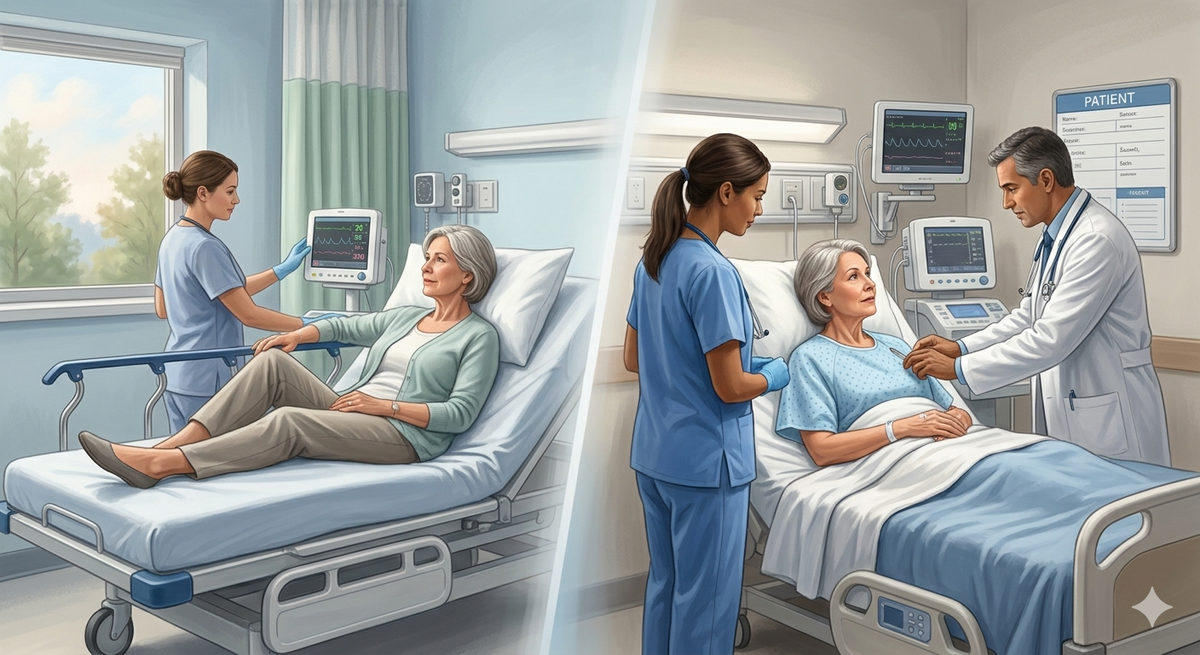
Observation status means your loved one is in the hospital, receiving care—but is considered an outpatient, not formally admitted.
Even if they:
- Stay overnight
- Receive treatment
- Are placed in a hospital room
👉 They may still be classified as observation
Why This Is a Serious Problem for Caregivers
This is where families get blindsided.
Observation status directly affects what Medicare will—and will not—cover after discharge.
Under Original Medicare:
👉 A patient must have a 3-consecutive-day inpatient hospital stay to qualify for:
- Skilled nursing facility (SNF) care
- Rehabilitation services
Critical Warning
Time spent under observation status does NOT count toward the 3-day requirement.
Why Observation Status Can Block Rehab Coverage
This is where many families are caught off guard.
To qualify for rehabilitation or a skilled nursing facility under Original Medicare, a patient must have a 3-day inpatient hospital stay.
👉 Observation status does NOT count toward this requirement.
This means:
- A patient can spend multiple days in a hospital bed
- Receive treatment and monitoring
- And still NOT qualify for rehab
👉 The result:
Many patients are discharged home instead of receiving the rehabilitation they need.
What This Means in Real Life
How Observation Status Leads to Unsafe Discharges
This is one of the most common pathways to unsafe hospital discharge.
When rehab is not covered:
- Patients are sent home too soon
- Families are expected to manage complex care
- Caregivers are left unprepared
👉 This is not just inconvenient—it can be dangerous.
🔗 Learn more about how this happens:
If your loved one is placed under observation:
❌ They may NOT qualify for rehab
❌ They may be discharged home unexpectedly
❌ You may become the primary caregiver overnight
❌ You may have to pay out of pocket for care
This is one of the biggest reasons caregivers feel unprepared and overwhelmed.
👉 If this is happening to you, start here:
Caregiver Burnout Help
Medicare Advantage Plans: What Caregivers Need to Know
Medicare Advantage (MA) plans can work differently—but they come with their own risks.
What many caregivers don’t realize:
- Some Medicare Advantage plans may waive the 3-day inpatient requirement
- BUT they often include daily copays for skilled care or rehab
👉 These copays can range from $200 to $400 per day depending on the plan
Learn more Medicare Advantage - Buyer Beware
Why This Matters
Even if your loved one qualifies for rehab under a Medicare Advantage plan:
❌ You may still face significant out-of-pocket costs
❌ Coverage may be limited or require prior authorization
❌ Length of stay may be restricted
Families often discover these costs during a crisis—when decisions must be made quickly
👉 Learn more about coverage gaps:
What Medicare Does NOT Pay for in Long-Term Care
The First 30 Days After Discharge Are High Risk
The first 30 days after hospital discharge are a critical period.
During this time:
- Patients are at the highest risk for complications
- Hospitals are monitored for excess readmissions
- There is pressure across the system to reduce returns to the hospital
👉 This can contribute to earlier discharges and more responsibility placed on family caregivers.
👉 Learn how this impacts families:
Unsafe Hospital Discharge: What Caregivers Need to Know
What Caregivers MUST Ask Before Leaving the Hospital
Before discharge—or if your loved one returns to the hospital—ask clearly:
👉 “Is my loved one admitted as an inpatient or under observation status?”
Also ask:
- How many inpatient nights have been documented?
- Do we qualify for skilled nursing or rehab coverage?
- What are the expected out-of-pocket costs?
- What happens if additional care is needed?
👉 Do not assume—always confirm.
What to Do If the Discharge Feels Unsafe
If you believe your loved one is being discharged too soon:
👉 You have the right to request a Medicare discharge appeal
This can:
- Delay discharge
- Trigger a formal review
- Give you time to plan safe care
👉 Follow this step-by-step guide:
What to Do After a Hospital Discharge
Common Mistakes Caregivers Make
Avoid these:
- Assuming overnight stay = inpatient admission
- Not asking about observation status
- Not understanding Medicare rules
- Waiting until discharge to ask questions
- Not planning for post-discharge care
These mistakes can lead to:
- Unexpected costs
- Loss of rehab coverage
- Increased caregiver burden
- Unsafe situations at home
Why This Problem Is Growing
We are seeing a major shift in healthcare:
- Shorter hospital stays
- Increased use of Medicare Advantage plans
- Staffing shortages
- More care being shifted to families
👉 The result: caregivers are managing more medical responsibility than ever before.
What You Can Do to Protect Your Loved One
To avoid costly and stressful situations:
- Ask questions early
- Clarify admission status
- Understand your insurance coverage
- Plan for post-discharge care
- Build a caregiving support system
👉 Start building your plan:
Caregiver Balance Guide
👉 Get expert help:
Caregiver Coaching Support
Related Guides for Caregivers Facing Unsafe Discharge
If you are dealing with a hospital discharge right now, these step-by-step guides will help you take action:
- How to Stop a Hospital Discharge (Medicare Appeal Guide)
- What Happens If You Refuse a Hospital Discharge
- Hospital Discharge Checklist
- Who Is Responsible After Hospital Discharge
- Unsafe Hospital Discharge: How to Get the Right Medical Equipment and Avoid Costly Mistakes
- Unsafe Hospital Discharges in 2026: How Medicare Advantage Is Shifting Care to Family Caregivers
- Medicare Discharge Appeal : How to Stop an Unsafe Discharge
- Medicare Denials After Hospital Discharge: Why Delayed Care Turns Dangerous for Seniors
- Who Is Responsible After a Hospital Discharge:What Family Caregivers Need to Know
- How to Appeal a Skilled Nursing Facility Discharge
- Observation vs Inpatient: Why It Matters for Rehab
- Hospital Discharge Checklist
- Can a Nursing Home Kick You Out?
Frequently Asked Questions
What is observation status in a hospital?
It means the patient is receiving care but is classified as an outpatient, not formally admitted.
Does observation status count toward the 3-day Medicare rule?
No. Only inpatient hospital stays count toward the 3-night requirement under Original Medicare.
Can Medicare Advantage plans waive the 3-day rule?
Some plans may waive it, but they often include daily copays and restrictions.
How much can rehab cost under Medicare Advantage?
Copays can range from $200 to $400 per day, depending on the plan.
Final Thought
This is one of the most important things caregivers need to understand—but many don’t learn it until it’s too late.
The difference between observation and inpatient status can impact:
- Your loved one’s recovery
- Your financial situation
- Your ability to get help
👉 Don’t wait until a crisis: