Can a Nursing Home Kick You Out? Skilled Nursing Facility Discharge Rules
Can a nursing home discharge your loved one? Learn when it’s legal, required notice rules, and how to protect against unsafe discharges.

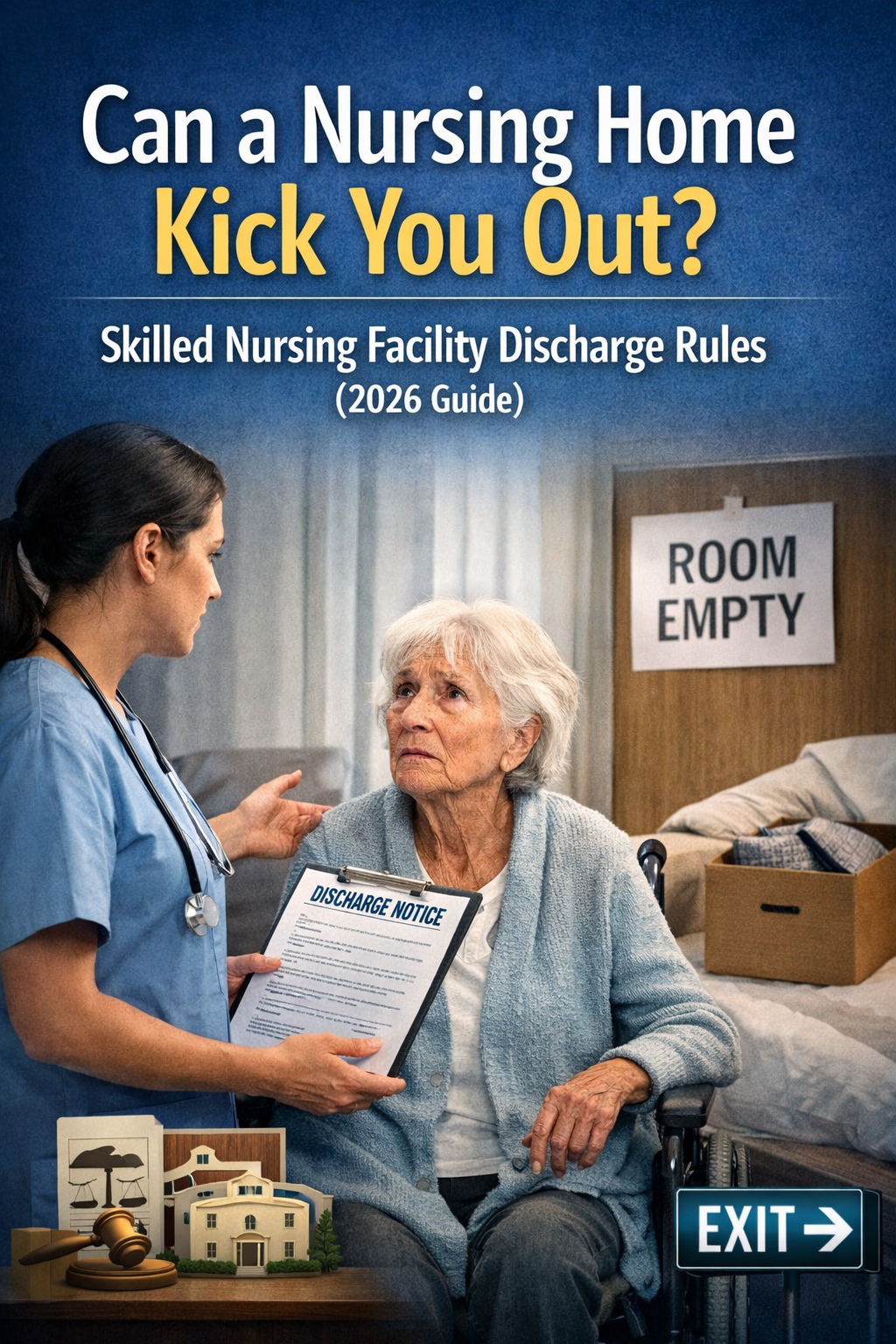
Yes, a nursing home can discharge a resident—but strict rules must be followed, and many families experience discharges that happen too quickly or without proper preparation.
Can a Nursing Home Kick You Out?
If your loved one is in a skilled nursing facility (SNF), you may be asking:
👉 “Can they just send them home?”
The answer is:
👉 Yes—but only under specific legal conditions
And even when discharge is allowed, the facility must follow clear federal and state regulations.
When a Skilled Nursing Facility Can Discharge a Resident
A nursing home may legally discharge a resident if:
- The resident no longer needs skilled nursing care
- The facility cannot meet the resident’s medical needs
- The resident’s condition improves
- The resident poses a safety risk
- Payment or insurance coverage ends
👉 These reasons must be documented and justified.
Required Notice: What the Law Requires
In most cases, the facility must provide:
- At least 30 days written notice
- A clear reason for discharge
- The planned discharge date
- The location where the resident will go
- Instructions on how to appeal
👉 The resident has the right to understand and challenge the decision.
When Discharges Become Unsafe
Many families report situations where:
- They feel rushed
- There is no clear plan
- Equipment is not arranged
- Medications are not explained
- Care needs are not fully addressed
👉 These are warning signs of an unsafe discharge
Related:
👉 Unsafe Hospital Discharge Crisis: What Caregivers Need to Know
The Real Issue: Coverage and System Pressure
One of the most common reasons for discharge is:
👉 Insurance or Medicare coverage ending
When coverage stops:
- Facilities may issue discharge notices
- Residents may be told they “no longer qualify”
- Families must quickly decide what to do
👉 This is especially common with
Medicare Advantage plans, which often limit rehabilitation coverage
What Happens After Discharge
After discharge, a resident may:
- Return home
- Transfer to another facility
- Move from skilled care into long-term care section of nursing home
But without proper planning:
- Caregivers are expected to take over
- Safety risks increase
- Readmissions become more likely
What to Do If the Discharge Feels Unsafe
If something doesn’t feel right, act quickly.
You can:
- Request a care conference
- Ask for detailed discharge planning
- Clearly state concerns
- Begin the appeal process
👉 Step-by-step help:
How to Appeal a Skilled Nursing Facility Discharge
Your Right to Appeal
If you disagree with the discharge decision:
- You can file an appeal
- The discharge may be delayed
- A third-party review may be conducted
👉 Acting quickly is critical.
Red Flags to Watch For
Be cautious if:
- You feel pressured to accept discharge
- There is no clear care plan
- Equipment is missing
- You feel unprepared
- Communication is unclear
👉 Trust your instincts—these signals matter.
How to Protect Yourself
Before discharge:
- Ask detailed questions
- Request written instructions
- Confirm medications and equipment
- Plan follow-up care
- Document everything
👉 Use this tool:
Hospital Discharge Checklist for Caregivers
Who Can Help You
You do not have to navigate this alone.
Support includes:
- Long-term care ombudsman
- Elder law attorney
- Care managers
- Social workers
The Caregiver Balance Guide Connection
This page is one pillar of the Caregiver Balance Guide — a structured framework designed to help caregivers:
- Navigate care transitions
- Avoid unsafe decisions
- Protect their health and finances
- Build a support system
You Are Allowed to Question This
You are not “difficult” for asking questions.
👉 You are protecting your loved one.
You Do Not Have to Navigate This Alone
If you are facing a discharge decision and feel overwhelmed or unsure:
Caregiver coaching can help you:
- Understand your rights
- Advocate effectively
- Make safer decisions
- Protect your health and limits
👉 Schedule Your Caregiver Coaching Session Now
❓ Frequently Asked Questions
Can a nursing home discharge without notice?
In most cases, no. Written notice is required.
What if Medicare stops paying?
The facility may issue a discharge, but you may have appeal options.
Can I refuse discharge?
You can challenge or delay it, but action must be taken quickly.
What if I feel the discharge is unsafe?
You can request review, appeal the decision, and seek support.
- Unsafe Hospital Discharge Crisis: Why Families are being Forced to Provide Medical Care At Home
- How to Appeal a Skilled Nursing Facility Discharge
- Medicare Discharge Appeal: How to Stop an Unsafe Hospital Discharge
- Hospital Discharge Checklist
- Who Is Responsible After Discharge?
Explore the Caregiver Balance Guide Framework:
• Caregiver Boundaries & Support Plan
• Family Caregiver Agreement
• Caregiver Relief Team
• Caregiver Balance Guide Overview