Family Caregiver Agreement What It Is and Why It Matters
A structured plan to protect caregivers, prevent burnout, and clarify family responsibility
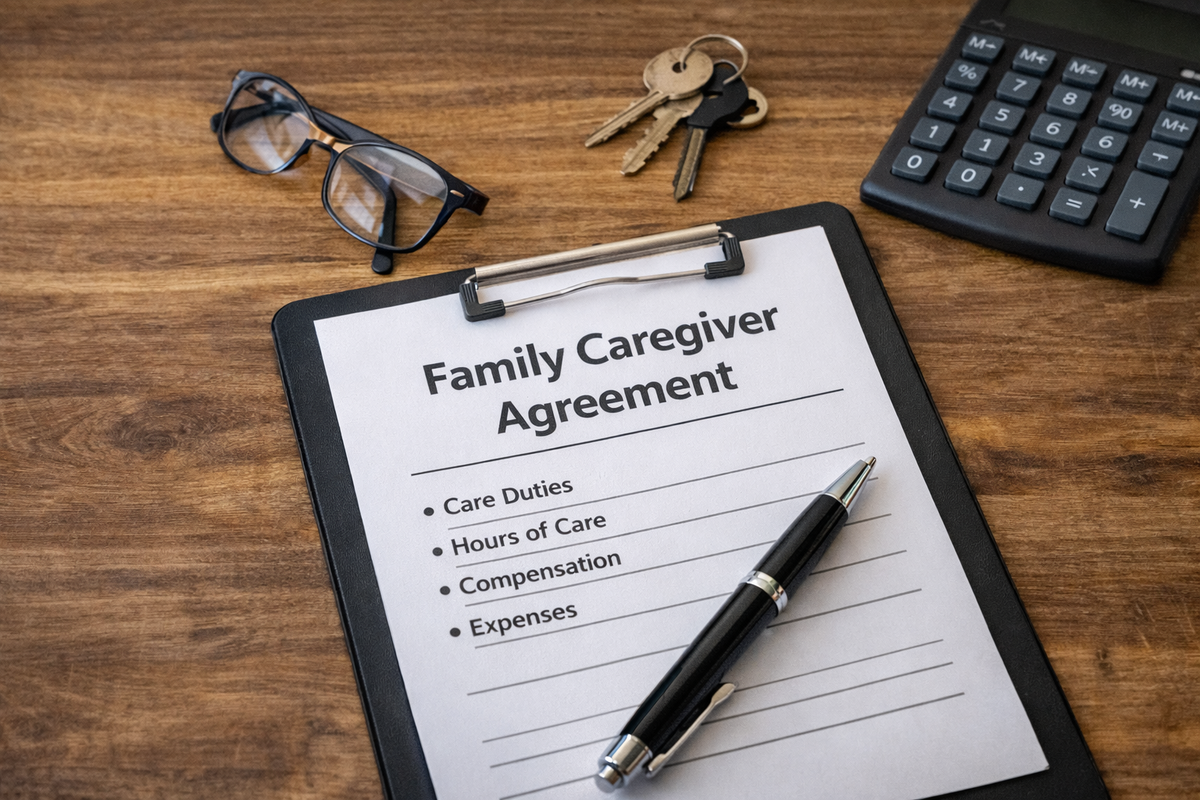
Many caregivers search for how to create a family caregiver agreement, but the real issue is not just the document—it’s understanding the responsibilities, expectations, and financial impact behind it.
Family caregiving often begins without a formal plan or caregiver agreement in place.
Many families search for how to create a family caregiver agreement, especially when caregiving responsibilities increase without clear expectations or financial planning.
One family member steps in.
Responsibilities increase.
Expectations remain unspoken.
Over time, this can lead to exhaustion, resentment, financial strain, and family conflict.
A Family Caregiver Agreement brings clarity to a role that often grows without definition.
Many family caregivers search for guidance when caregiving responsibilities expand without clear expectations or financial planning.
Because caregiving should not cost you your health.Pages
What Is a Family Caregiver Agreement?
A Family Caregiver Agreement (sometimes called a Personal Care Contract) is a written document that defines:
• Who is providing care
• What services will be provided
• How many hours are expected
• Whether compensation is involved
• How expenses are handled
• How time off is covered
• How decisions are made
• How changes in care needs are addressed
It turns assumptions into clear expectations.
Structure protects relationships.
Family Caregiver Contract or Personal Care Contract
A Family Caregiver Agreement is sometimes referred to as a caregiver contract for a family member or a personal care contract. These terms describe a written agreement that outlines the caregiving services being provided, the time commitment involved, and any financial arrangements between family members.
Whether it is called a caregiver contract, personal care agreement, or family caregiver agreement, the goal is the same: to create clear expectations that protect both the caregiver and the person receiving care.
A written agreement helps prevent misunderstandings, protects family relationships, and ensures that caregiving responsibilities are documented properly.
Important Legal Consideration
A Family Caregiver Agreement cannot be retroactive.
Compensation under the agreement applies only to care provided after the document is created and signed.
Retroactive payments for past care may create Medicaid eligibility penalties and legal complications.
If compensation is involved, consultation with an elder law attorney is strongly recommended.
Clarity now prevents complications later.
If compensation is involved, arrangements should be documented and reviewed by an elder law attorney to help protect Medicaid eligibility.
Why a Family Caregiver Agreement Is Essential
Without a written agreement:
• Caregiving responsibilities expand without limits
• Siblings may assume someone else “has it handled”
• Financial sacrifice may go unrecognized
• Medicaid eligibility may be jeopardized if payments are informal
• Estate disputes may arise later
A structured agreement protects:
- The caregiver
- The care recipient
- The family
- Future planning
Supporting the caregiver behind the care begins with defined expectations.
If you are feeling overwhelmed by caregiving expectations, start by understanding how to set healthy caregiving limits.
Explore the Caregiver Boundaries & Support Plan

What a Family Caregiver Agreement Should Include
Defined Responsibilities
• Personal care
• Medication management
• Appointment coordination
• Therapy participation
• Skin monitoring or wound care
• Transportation
• Administrative tasks
Undefined time leads to burnout.
Compensation Structure (If Applicable)
Rate of pay
Payment schedule
Method of documentation
Market-rate considerations
Expense Reimbursement
Mileage
Medical supplies
Co-pays
Out-of-pocket purchases
Time Off & Respite Coverage
A sustainable agreement must include:
• Weekly scheduled time off
• Coverage for medical appointments
• Vacation coverage
• Emergency backup plan
Time off is not optional.
It is required for long-term sustainability.
Sibling & Extended Family Responsibility
Caregiving should not automatically fall on one individual without discussion.
If siblings or extended family members cannot provide hands-on assistance, they can contribute through:
• Financial support toward paid caregivers
• Covering respite care
• Administrative coordination
• Insurance or benefit research
• Scheduling appointments
• Regular check-ins
• Supply management
Shared responsibility reduces resentment.
Caregiving rarely succeeds as a one-person responsibility.
Learn how to build a Caregiver Relief Team

Financial Planning Considerations for Family Caregivers
Caregiving may impact:
• Employment
• Retirement contributions
• Social Security earnings
• Long-term financial security
Families should also be aware of:
• Medicaid spend-down rules
• VA Aid & Attendance eligibility
• State caregiver compensation programs
• Local long-term care market rates (Genworth Cost of Care Survey)
Increased Medicare cost-sharing is shifting more responsibility to families.
Today, planning for caregiving responsibilities is no longer optional.
Download the Free Family Meeting Guide
When Should the Agreement Be Reviewed?
A Family Caregiver Agreement should be reviewed:
• Annually
• When there is a significant medical change
• When care intensity increases
• When family circumstances change
Care needs evolve.
Agreements must evolve with them.
Ready to Create Your Family Caregiver Agreement?
Before drafting a full agreement, it is important to understand the scope of caregiving responsibilities and financial impact.
Download the free Family Caregiver Agreement Starter Guide to begin the process.
Start creating structure in your caregiving situation.
Helping caregivers care without losing themselves begins with structure.
Download the Free Family Caregiver Agreement Starter Guide
Paying Family Caregivers Legally
Many families want to compensate a family member who provides significant caregiving support. However, paying family caregivers should be structured properly to avoid legal or Medicaid eligibility problems.
A Family Caregiver Agreement helps families document caregiving responsibilities and compensation in a clear and legally defensible way.
When compensation is involved, the agreement should:
• Be created before payments begin
• Clearly define services being provided
• Specify hours of care expected
• Establish a reasonable rate of pay based on local market rates
• Document how payments will be tracked and reported
Without a written agreement, informal payments may be viewed as gifts, which could create complications during Medicaid eligibility reviews.
For this reason, families should consider consulting an elder law attorney when compensation is part of the caregiving arrangement.
Proper documentation protects:
• the caregiver
• the care recipient
• family relationships
• future Medicaid eligibility
A structured agreement allows families to support caregivers fairly while maintaining compliance with financial and legal guidelines.
Frequently Asked Questions About Family Caregiver Agreements
What is a Family Caregiver Agreement?
A Family Caregiver Agreement is a written document that defines caregiving responsibilities, time commitments, financial arrangements, and expectations among family members. It provides structure to prevent burnout, conflict, and financial confusion.
Is a Family Caregiver Agreement legally binding?
It can be, especially when compensation is involved and the document is properly drafted and signed. If payment is included, consultation with an elder law attorney is strongly recommended to ensure compliance with Medicaid and tax regulations.
Can a Family Caregiver Agreement be retroactive?
No.
A caregiver agreement cannot compensate for care already provided in the past. Compensation should begin only after the agreement is created and signed. Retroactive payment may create Medicaid eligibility penalties or legal complications.
Should family caregivers be paid for providing care?
Not every caregiving situation involves compensation. However, when caregiving significantly reduces income, impacts retirement contributions, or replaces paid professional care, compensation may be appropriate and responsible.
Payment should reflect reasonable market rates and be documented properly.
How do siblings fit into a caregiver agreement?
A Family Caregiver Agreement helps clarify expectations for all family members.
If siblings are unable to provide hands-on care, they may contribute through:
• Financial support toward paid caregivers
• Administrative coordination
• Insurance and benefits research
• Scheduling appointments
• Providing respite coverage
Shared responsibility prevents long-term resentment.
Hesitant to hold a family meeting to discuss care needs? Download the family meeting guide today
Does a caregiver agreement affect Medicaid eligibility?
Improperly structured caregiver payments can affect Medicaid eligibility.
If compensation is involved, the agreement should:
• Be created before payments begin
• Reflect reasonable market rates
• Be properly documented
• Be reviewed by an elder law professional when possible
Planning early protects future eligibility.
How often should a Family Caregiver Agreement be reviewed?
At minimum, annually.
It should also be reviewed when:
• Care needs significantly increase
• A medical condition progresses
• Financial circumstances change
• Family roles shift
Caregiving evolves. Agreements should evolve with it.
What happens if family members refuse to participate?
While family members cannot be legally forced to provide care, expectations can be clearly discussed and documented.
If physical assistance is not possible, financial contribution toward paid care or respite may be discussed.
If conflict persists, a neutral third party such as a care manager or mediator may help facilitate discussion.
Is this agreement only for aging parents?
No.
A Family Caregiver Agreement may be appropriate whenever one family member provides significant unpaid care to another — including spouses, adult children with disabilities, or relatives with chronic illness.
Where do I begin?
Start by clarifying your current caregiving responsibilities and future expectations.
Download the Free Family Caregiver Agreement Starter Guide
Creating a caregiver agreement can feel overwhelming, especially when families are unsure how to begin the conversation.
The Family Caregiver Agreement Starter Guide includes:
• A step-by-step guide for holding a family care meeting
• A structured caregiver responsibility worksheet
• A caregiver agreement planning template
• Key questions families should discuss before drafting an agreement
Start building structure before caregiving expectations become overwhelming.
Download the Family Caregiver Agreement Starter Guide .
The Family Caregiver Agreement Starter Guide includes a planning worksheet and caregiver agreement template to help families begin the process.
Download the Free Family Meeting Guide
Explore the Caregiver Balance Guide Framework:
• Caregiver Boundaries & Support Plan
• Family Caregiver Agreement
• Caregiver Relief Team
• Caregiver Balance Guide Overview
 Diane Carbo