Caregiver Brain Health: How to Avoid Burnout and Cognitive Overload While Caring for Others with Barbara Gustavson - Episode 201
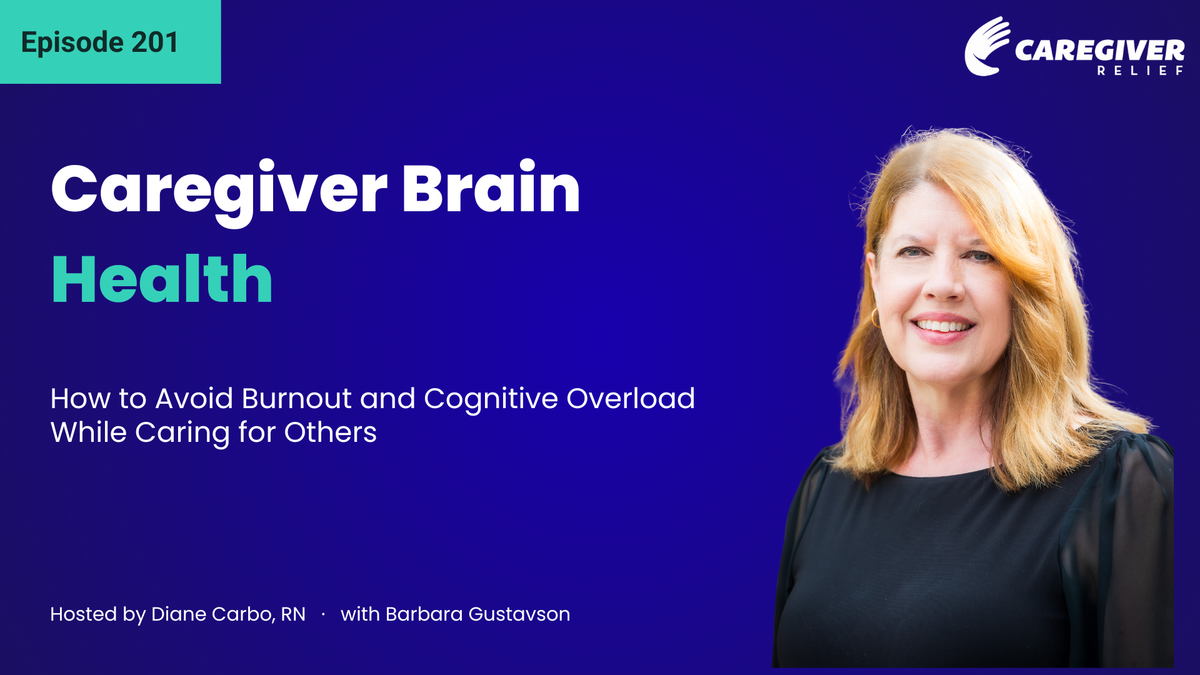
In this powerful episode of the Caregiver Relief Podcast, host Diane Carbo, RN, sits down with neuroscience and wellness expert Barbara Gustavson. Together, they pull back the curtain on the invisible weight that family caregivers carry—the constant multitasking, decision fatigue, and emotional labor—and explore how it impacts your neurological health.
Barbara shares her deeply personal 15-year journey of caring for her parents, including navigating her father's Huntington’s disease, while balancing a full-time job and raising teenagers. Through her own bouts of severe burnout, she developed the revolutionary REGROUP framework to help caregivers restore their strength, protect their energy, and build resilience without losing themselves in the process.
If you are feeling completely depleted, stuck on high alert, or drowning in caregiver guilt, this episode is your permission slip to slow down and breathe. ✨
📋 What You’ll Learn in This Episode:
- The Neuroscience of Stress: What happens to your brain's decision-making center (the prefrontal cortex) when chronic stress takes over.
- The Power of the "ANTs": How Automatic Negative Thoughts actively drain your brain's energy, and how a simple shift to gratitude can physically boost your cerebellum.
- Meeting Your "Inner Yoda": Learning to trust your gut and listening to the body’s whispers before they turn into a medical crisis.
- Overcoming the "All-or-Nothing" Trap: Why setting huge boundaries backfires, and how to start with tiny, successful micro-boundaries instead.
🧩 The REGROUP Framework Breakdown
Barbara walks us through her signature step-by-step method to reset your mind and unlock hidden energy:
- R – Resilience: Reflecting on past challenges you've already conquered to remind yourself of the deep strength you already possess. 💪
- E – Energy is Your Fuel: Shifting from "time management" to "energy management" by creating a micro-happiness list (or "bliss list") of things that give you quick emotional boosts. 🔋
- G – Guard Your Margin: Setting small, non-negotiable boundaries. Your brain naturally needs a break to flush out and recycle every 90 minutes! ⏱️
- R – Regulate Your Nervous System: Moving out of a "high alert" survival state using diaphragmatic breathing, grounding tools, and the HALT method (checking if you are Hungry, Angry, Lonely, or Tired). 🧘♀️
- O – Operate from Alignment: Staying anchored to your core values and remembering your identity and purpose outside of being a caregiver. 🌟
- U – Update Your Thinking: Challenging negative thoughts. Instead of forcing toxic positivity, focus on accurate, supportive thinking. 🧠
- P – Prioritize Your Brain Health: Recognizing that mental health is brain health, and treating your brain as the ultimate command center through proper rest and nutrition ("eat food that loves you back"). 🥦
💡 Quick Quote Spotlight
"Set the bar so low that you can't make an excuse not to do it. You can set the bar higher later, but during certain seasons, set the bar lower for yourself." — Barbara Gustavson

🔗 Connect & Resources Mentioned
- Ready to start regrouping? Barbara challenges all listeners to open their calendars right now and schedule just 5 minutes a day strictly for themselves.
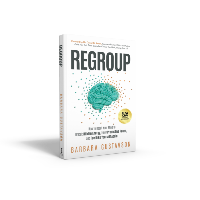
- Find Barbara’s book, Regroup: How to Reset Your Mind to Unlock Hidden Energy, Enjoy Productive Peace, and Feel Like Yourself Again, on LinkedIn or visit her website at discovernextstep.com.
💖 A Reminder for Our Caregivers
To our family caregivers: You are the most important part of the caregiving equation. Without you, it all falls apart. Please learn to be gentle with yourself and practice micro-self-care every single day—because you are worth it.
Podcast Episode Transcript
Diane: Welcome to the Caregiver Relief Podcast. I'm Diane Carbo, RN, your host. If you are caring for a spouse, a parent, or someone you love, you already know the invisible weight you carry. The appointments, the decisions, the constant multitasking, the emotional labor no one sees. But here's something we don't talk about enough: chronic caregiving stress actually changes the brain.
Today we're joined by Barbara Gustavson, brain-based leadership and wellness educator, best-selling author of Regroup: How to Reset Your Mind to Unlock Hidden Energy, Enjoy Productive Peace, and Feel Like Yourself Again. She's also the creator of the Regroup framework. Barbara's work blends neuroscience, psychology, and lived caregiving experience, including supporting her father through Huntington's disease after the loss of her mother.
She's on a mission to help the supporters, the caregivers, the ones who quietly hold everything together, protecting their energy, restore their strength, and build resilience without losing themselves in the process.
Diane: You know, right before, we started, was telling you I was reading a neuroscience magazine, and I'm a little nerdy sometimes, and everything you promote is, actually supported in this article about how caregivers, because of their estrogen levels, and there's a ... Men have estrogen too, but not to the degree females, that they actually can develop PTSD.
So I'm real excited because you are spot on with your science, and ,I want my listeners to know that so before we dive into the science, Barb, what first led you to focus on helping the caregivers, the ones who quietly hold everything together?
Barbara: Yes, and thank you, Diane. I've been looking forward to this conversation.
What got me started was through my own journey of navigating caregiving with my mom and dad. My mother, who was an LPN, who had the biggest heart, and also had a keen awareness of my dad's struggles. At the time, he had not been diagnosed with Huntington's disease, but it was definitely at the forefront of our minds- because he had nine uncles with it, and he had just not had the genetic test at that point. So in her mind, she was planning for that caregiving journey, knowing that there would be some point in time she would be caring for him at a deeper level, and yet she wanted to also care for others through her work as an LPN.
So my journey, when she had her first stroke, it was just everything stopped. at the time I was raising my two early teen boys and living a few hours away, so just dropping everything with work and family and going to support her. And I became keenly aware that my dad was struggling with basic decision-making, regarding her care.
So I jumped in with her caregiving at the time, and she was with us, another year and a half before her last stroke. And after she passed, I had to jump in immediately to support my dad's care. So I just began on this journey, just not knowing the road ahead, what was happening.
And at the time, I had the mindset, I'm gonna do whatever possible to support them while working full-time, while raising a family, and I just had this image that I could do it all. And I quickly found out that was not the case. and it was not without a cost.
Diane: Yes.
Barbara: Early on, I did not reach out for my own support, and so I learned through a couple of bouts of burnout that I had to find another way of doing this.
So I determined that I wasn't gonna have to choose, between my family and caregiving, but I would find a way that works. and honestly, it was through a lot of trial and error and mostly support. So over the span, of 15 years of navigating this journey with my dad, I learned some tools that worked for me, and I wanted to make sure that I got this in the hands of other caregivers to support them in a different way and bring the conversation to life that we needed to have more.
Diane: Yeah.
Barbara: That caregiving was essential, and you don't have to do it at the cost of your wellbeing, and it is possible to care and honor a loved one while honoring your own journey too.
Diane: Absolutely. And caregivers don't hear that enough, Barb, not at all. And, I applaud you because just having I had two sons, and teenage sons are traumatic And challenging. I, and then
Barbara: I know.
Diane: Yeah, I do. And then I'm, I also had a parent that, I took care of for a year, only a year. My dad was diagnosed with pancreatic cancer. And I actually stopped working for a year, to help take care of him with my stepmother.
So it's very challenging. But I'm also, I got my family involved because I'm the bossy older sister. But so many, don't understand that it's okay to ask for help. So I want to talk about what actually happens in the brain when someone lives in chronic caregiving stress, as so many of my caregivers do.
Barbara: Yes, so a lot can happen in the brain, and the thing that it's important to understand, there are no two brains alike. There's no two fingerprints alike. There are no two brains alike. In all the scans that they've done, they've never found two identical brains. But what they do know is there's certain patterns that happen in key areas that can give us information on what's going on and how we can support those areas.
For example, with, in scans that they show with trauma and chronic stress, often the basal ganglia or the limbic system has too much activity. And when that happens, that tends to override and makes our prefrontal cortex, our decision maker, go offline temporarily until those areas are calmed down.
So it's really helpful to know, what's happening. Is our brain in a state of, is it stuck on high alert? And think of the brain. that's part of the nervous system. It can get stuck and have too much activity, and when that happens, we need to think about what can we do to calm it down in that moment to get it to a place where it's regulating.
And sometimes it's the opposite. Our brain needs boosting, and it gets stuck in the state of disconnectedness, and activity and blood flow in that area has gone down. So we need to look at what can we do to boost our brain in a healthy way. So it really is understanding where we're showing up in real time and, what's happening, and often it's due to something physical that's happening in our brain that we aren't aware about.
Sometimes it could be as simple we're not hydrating, and so our brain is literally dehydrated and we're not supporting it. It could be the thoughts that we're thinking, the automatic negative thoughts. I call them the ANTs. It's amazing what happens in the brain just by thinking a thought.
And there's been a, there's this amazing scan that I, talk about, and it shows a brain scan of a woman in her 50s, and she was told to think about something grateful or that she loved. And within just a couple of minutes, activity boosted in her cerebellum, and it was just beautiful. It looked like a big smile.
And then they had her focus on something that was hurtful and hateful, and in just a couple of minutes, most of the activity went out of that. So it really gives you a new perspective when we're in a state of gratitude or when we're thinking and focusing on healthier thoughts. And go ahead. I see that you have a burning question.
I'm gonna let you jump in.
Diane: I'm just, I have this, 30-day positivity challenge for caregivers. And that is, actually, it's up to 100 days now, but I just post 30 days. And that is the one piece of information, that goes out to my listeners that I get the best feedback.
"Oh, thank you. I needed that this today." And I have it's just really positive. And when you were saying this about the positive and negative, I recently for the first time in several years, I received an email from one of the ones, individuals, caregivers that signed up for this positivity challenge, and she was so angry and upset and made it clear that she was not happy that we were pushing gratitude, because why would she want it to be grateful.
And I thought, "Oh, I don't know her. I tried to reach out to her. She didn't respond. I didn't think she would. But you just explained to me so many things that, caregivers don't understand, is, You know, everybody says, "Oh, positive thinking. It doesn't work." But if you change your attitude, you change your perspective, you change your life, and I really make that as a common thread through my, to my listeners out there. you have to change your perspective if you want to survive caregiving.
Barbara: Yes. and I'm so glad you brought that up because there are some times when we're in a state of such overwhelm.
Diane: Yeah
Barbara: To even think about the good is really hard.
Diane: Yes.
Barbara: And the reason why it's really hard, this is what I find so fascinating, sometimes we are wired more towards a negativity bias, meaning our brain is wired and set in that negativity, and to expect it to flip, it literally can't do that. So to expect someone just to start thinking positive can be very frustrating.
Diane: Yes.
Barbara: And the good news is you can start to train your brain through tiny steps to lean more towards to a positivity bias. So it's taking these little tiny steps. So instead of jumping from angry to happy, it could be angry to maybe something that's frustrating or not as an extreme an emotion, and just incrementally training your brain to go a little bit higher. So ,I know it helped me because when I was, My dad and my relationship growing up was very difficult. Because of his Huntington's disease, we did not have the, the relationship that I longed for, that every daughter wishes with her father.
That was really hard for me to come to terms with, so for many years I lived in this, state of, just resentment towards my dad, and it was really hard to come out of that, especially being a caregiver. How was, how could I work those through, for those, through those feelings and yet still honor him?
And I found it was really starting with myself and giving myself grace, and acknowledging this is really hard. this is he's been dealt with something he didn't ask for that was out of his control, and it's really hard as a daughter to support him when he's so angry or, he turns around and, changes a decision that I made on his behalf.
So I had to really challenge my thoughts and begin to reframe, and begin to savor the little moments with him, and it really helped me in the, just the way I was able to spend those last two years in some really good moments, and create some memories of happiness that I didn't have with him before.
It was hard work, yes. It took everything I got, and I'm so glad I did it just because it made those last few years a little lighter.
Diane: I also had a challenging father, to say the least. I'm an adult child of an alcoholic, and, it was really hard. My mom died young. My dad put a lot of things on me he shouldn't have, expectations, taking care of my mother as a young girl.
So I know that I have trauma, from dealing with it, and I too had to work through those issues with my father, and one of them was I took off a year of work. It was really hard, but I made myself do it good because I didn't want him to go to the grave and, I didn't want to have unresolved issues with him.
So, it was really, really hard, but I understand that. But after years of, Adult Children of Alcoholics and Al-Anon and all of that, those kinds of programs, I worked through my feelings, and it is one of the hardest things I ever had to do, Barb. Yeah. And, I really am, I wanna talk about your REGROUP framework.
You created this, platform, so can you walk us through what REGROUP stands for and why it's so powerful?
Barbara: Yes. So I created this framework through my own regroups. I started taking a necessary sabbatical, little retreat, just I had got to the point where my health was on the decline dramatically, and I knew that in order for me to continue supporting my dad, not having any help from any other family, from my birth family, that I had to find a way that works for me.
So I literally started once a month taking a regroup, respite for me.
Non-negotiable. it was really hard. it was so hard. It was often at the worst time, but I had support at home, from my family. My husband, extremely supportive. And during that time, I started working on different things so that I would come back feeling restored, after that res- regroup.
And then I started taking weekly regroup, little bits at a time. And da now I have still to this day, I have at least three regroups during my day. But I'll go through the framework, just-
Jill: Yes,
Barbara: 'cause it had to make sense. But the first one is resilience, and that's really the understanding is even though you're going through this hard maybe long limbo season.
You have faced things before, and you are already resilient. You have things inside of you. You may not feel resilient right now, but you have a resilience muscle. you've been through a lot of life already, and you can repurpose things and the strength inside you. So for me, just remembering and reminding myself that I can get through this even if I don't feel like I can in this moment.
Diane: Yeah.
Barbara: And so looking back on the hard things that we've been through before, you got through that even though you didn't know you could do that. So that's the first R, is just reflecting on a past challenge that you've overcome. The second one was really big for me, and that is energy is your fuel. It is your fuel.
And when you are able to transition, a lot of people focus on, time management. Because a caregiver, time is real. You're making so many decisions, millions of decisions it seems like, and that's a lot of time. But if you can look at it and layer deeper and recognize that your energy either, where you're at, you have energy drains, and then you have things that give you energy.
And when you're able to focus on what gives you little energy boosts on the day and use that kind of as your, your snacks, you know you will understand, restoration is huge. And so you'll start to see what restores you. And I recommend people to make a list, call it a bliss list or a micro-happiness list, but decide in advance.
Look at the little things that give you joy. For me, it's snuggling up with my dogs. it could be taking a five-minute walk. It could be listening to music. I have an emotional rescue playlist- that I play that just lifts me up. There's so much science behind certain kinds of music.
Diane: The power of music, absolutely.
Barbara: Yes. So the idea here is to get out of the mindset that you have to get away for a long time. Caregivers don't have that luxury usually. But there's little tiny things that you can do in the day that can boost your energy. So and the idea is to follow through with that. Knowing and doing are two different things.
Diane: I love that approach bec- I actually encourage caregivers to build a caregiver relief support team around them. And to ask for, it's in my Caregiver Balance Guide. I actually encourage them to, have people around you that you can say, "I need this. Can you do that?"
And so many and the thing with caregivers is, Barb, and I know you know this as well 'cause we've both been helping supporting so many caregivers, as well as we've done the personal walk of had a caregiving journey. so many caregivers feel like it's a failure if they ask for help, and they really don't understand the importance of that.
And it, when you talk about micro, happiness, things that micromanaging your happiness, or grabbing little bits, yes, have somebody help. It's such a relief for you that, ... 'Cause it can actually restore energy, and I love this, approach 'cause, you're helping people. Now, I've read that I
You talk about the inner Yoda. And I love that 'cause I, Lord knows I love Yoda.
Barbara: Oh, yay. Yeah.
Diane: So I want you to talk about the inner Yoda, what that means, and how caregivers can access that calmer voice.
Barbara: Wow. I'm glad you brought that up. You're actually the first one to bring that up, so I'm excited.
Yeah. we are all gifted with an inner wisdom that we have access to, and sometimes we forget about it or we don't hear the wisdom. Often that wisdom, it's just our innate wisdom. It can also come from experiences, even things that we've learned and gleaned on from people who have influenced us. And so the idea is often there's so much happening on the outside that we, forget to tune in.
And a mentor, he shared with me a few years ago, it's I've never forgotten it, and it's simply, "Listen to the whisper." "Don't wait for the two-by-four." Because our inner wisdom And our body and our brain is always listening and communicating with us. And we have this ability to tune in and listen to that.
And so that's been hard for me just because there's so much noise, so much happening, and it's but I, now that I'm- I've learned to listen, it's like a muscle the more you listen. And I've had to wait for those two-by-four moments to really my attention, honestly. More than I cared,
Diane: Yes.
Diane:Yeah. Definitely. Yeah. So that's where I, I just see, I have this inner Yoda, in me. You have a inner Yoda, What is your Yoda trying to say today?
Diane: Women have a tendency, and I'm not saying that men don't have this, but women more than, men have this they don't trust their gut anymore.
They... That's their inner Yoda, their inner voice telling them that something doesn't feel right or, or feels good. And we as a culture tend to ignore that our gut feeling. And, it's bad. And that was really hard for me, Barb, is to find that not only to trust my gut but find my inner Yoda.
I didn't know that's what I was doing at the time. Yes.
Barbara: Yeah. But
Diane: I love that perspective 'cause I can see I like the I'm gonna visualize a little Yoda sitting on my shoulder now and whispering things into me. And that will be I'll listen to because I just found that I love that perspective. And, I think people can relate to that. I just wish I was as cute and knowledgeable as Yoda.
Barbara: But to your So Point, and I love how you have this, I think you phrased it a care relief team. I was able to build that for me, and it was
Diane: Yes
Barbara: Hard to ask for help. I think the hardest for me is knowing what to ask for help on.
Diane: That was 100%.
Barbara: Yeah. Yeah. And so I had to really be honest, say, "I don't know what I need help with. I just know I need help. Can you?"
Diane: Yes.
Barbara: And it could be, that person may not know what that help is, but they know someone or they know a resource. And my greatest... I had several people on my care relief team.
My biggest was Gail, and it was my mom's best friend. She was her charge nurse. And Gail walked me through the journey of my mother and the whole 15-year journey with my father. And she was-
Diane: Gail. Oh my
Barbara: She was my Yoda
Diane: Yeah.
Diane: Oh. I love that. Now, one of the other things caregivers often struggle with is boundaries.
Barbara: Yes.
Diane: And, it's really hard for them to actually set boundaries or even know what realistic boundaries they should be setting. Why are boundaries essential for brain health?
Barbara: Wow. So that is the G, guard your margin. Oh. That's your boundary. This is great timing. That was the next letter. Thank you.
Diane: Yeah.
Barbara: Okay. So just think of, we breathe in, we breathe out.
Our brain needs, it's, the breathing, in, the breathing out is the doing. Our brain loves to accomplish, but it needs breaks.
Diane: Yeah.
Barbara: Every 90 minutes, our brain does a recycling, and it's tied to our ultradian rhythm.
It's different than the circadian rhythm.
Diane: Okay.
Barbara: But every 90 minutes, day and night, your brain flushes out and recycles, gets rid of the ickiness and stuff like that. And think about when, late in the morning or in the afternoon, you feel a little drop in your energy. Your brain is communicating to take a break because it needs to recycle.
It literally needs you to step back. And if we ignore that, it doesn't get a chance to fully do its cleansing thing that it needs to do. So the beauty of it is understanding that boundaries are really starting with boundaries for ourself and giving ourselves breathing room and a chance to catch our breath during the day.
And catching
Diane: I love that.
Barbara: Yeah. So boundaries I look at, sometimes we think of we need to set boundaries with other people. Yes, but if we don't have the appropriate boundaries for ourselves it makes it harder. So starting, you know, it doesn't just happen. You have to make it. And it's, boundaries keep you steady.
They keep you clear and able to show up like you want.
Diane: Yeah.
Barbara: So blocking out breathing room in your, calendar. For me, I have these little brains literally in my calendar, and it could be just taking a five-minute walk around my house outside.
Diane: Yes.
Barbara: But it's protecting your me time. And treat boundaries as essential, not optional, because you're your own, advocate.
Typically, no one is advocating for the caregiver, 'cause you're advocating for those you care about and care for. Becoming your best advocate and starting with tiny boundaries. That's the thing. That tended to backfire. I would set these big boundaries and it would backfire.
Diane: Yes. Yes, I understand.
Barbara: So the idea is start with one boundary that's easier and have success and build that confidence, and then try another boundary.
Diane: Yeah. I've actually encouraged, caregivers to create a family caregiver agreement, and in it- I give them a million questions and say these are to help them set boundaries, and they do it initially before they even start their caregiver journey.
And I think that's real- that's one of the pillars of my, caregiver balance guide, because the caregivers are so terrible at setting boundaries. And I love it that you encourage even little minute boundaries for yourself. And I suffer from chronic pain. You know, my years of nursing have just, ruined my body.
Although I'm not supposed to say that. I'm saying my body is healing.
Barbara: There you go. Big catch.
Diane: Because my body is healing. My body is healing. But, once I started thinking about my body as healing, I make myself get up and I'll take a break every two or three hours to walk around. I make myself get outside, even in inclement weather.
I'll just peep my nose out, stick my nose out, and I think it's really important because, just getting back to nature and get feeling the sun the wind, whatever, even the snow, just getting out, it gives you a break and it just makes a huge difference in being able to go on with your day.
And so many caregivers don't allow themselves that.
Barbara: Oh, and I Oh my goodness, I love your ideas. Having that contract and to be able to be that's clarity.
Diane: Yes.
Barbara: That's clarity.
Diane: Yes. Yeah.
I think it's really important. I've been doing this for a long time, and I'm we have a public health crisis right now.
We have more seniors than youth, and I, we are going to double in the amount of family caregivers and seniors in the next four or five years, which is frightening. we're going to have a lot of people in a lot of pain. So that's why I was so excited to be able to do this interview and introduce your group platform or framework to my listeners, because it's desperately going to be needed. So what's the next, R is next. So
Barbara: Yeah, the second R is regulate your nervous system.
Diane: Ah, okay.
Barbara: Yes. This is where it when I was able, because I used to suffer from panic attacks while all this was going on, and when I understood that it's my nervous system that's it's communicating to me.
It's sending me a message, and I wasn't listening. I'm pushing hard when it's stuck on high alert, and down here we are all given, th- every day we have a window of tolerance. It's our capacity during that day. And so looking at, when we're, are we exceeding that. And with caregiving we can exceed our, capacity really quickly, but really paying attention to how you're feeling.
And so using breath and movement and grounding tools to create a more calm space. Like when it's chaotic out here, you can still create a state of inner peace and calm. And it doesn't mean it's always calm, but you can always invite that in and have access to it. And so simple breathing, there's a lot of great types of bre- breathing.
I personally love the seven, four, seven, eight breath. A lot of people like box breathing. So just the idea of what's happening to your body and in your bloodstream. You're, you're creating more oxygen, in your brain in just a few moments. You're also supporting your focus, your ability to focus more and make decisions.
And so think of that as a muscle too, and breathing from the right places. Because what happens is when you're in a state, your nervous system is dysregulated, typically we are shallow breathers, and the implications of shallow breathing over time are pretty scary.
And can lead to harmful things. So the idea is to slow down the breath and breathe, from your diaphragm, 'cause typically we breathe way up here.
We're shallow breathers. So it's, it takes practice, and I started with two minutes. I just set my timer, for two minutes, and I wasn't able to block all the thoughts. That's not the goal. But the idea is to do your best to be present in the moment and slow your breath down. There's a lot of great guided tools out there.
I love the app Calm. That's a great place to start if someone finds that a little challenging to do it on their own.
Diane: I'm thinking as a nurse, I learned about this in a, the regulating nervous system because nurses are in, or any healthcare professional really, is trained, when chaos is around you, you learn how to remain calm and keep your head about you.
And, but I didn't apply it to my own family because it looked different to me. But I really appreciate this because, When I'm a nurse, I have a different uniform on. I talk differently, I act differently. I'm knowledgeable and, my family sees that as the bossy big sister.
The know-it-all sister, and I'm sorry but, when people are nuts and crazy, but when it comes to family, the dynamics are when you, you could be away from home for decades and, you've had, you come home for holidays, you have you know, interactions with the family and you, short interactions, and you go home.
But when you start to provide family caregiving, all those old family dynamics from when you were a kid still exist. And everybody goes into that role. And, it was hard for me at first to learn to step back because any decision made on emotions is a poor decision. people have to learn to step back and be logical, and caregivers aren't trained for that, and they need to learn to retrain.
So I really like this REGROUP, platform, and you're teaching them how to regulate their nervous system. I really appreciate that.
Barbara: Thank you. And a quick strategy that I learned from someone else that I teach also is called the HALT method. Whenever you're hungry, angry, lonely, or tired, halt and find what you need.
If you're hungry grab a protein, something to stabilize your blood sugar. If you're angry, take a step back. Take some breaths. If you're lonely, which a lot of caregivers are, that's a lonely journey.
Diane: Yes.
Barbara: Reach out to someone. don't wait for them to reach out to you, but connect with someone.
And if you're tired, start with 15 minutes going to bed earlier.
Diane: Well, you know, I have caregivers say they don't even have time to take a bath or a shower, and I think, "Whoa. no." You, first of all, that's a little bit of self-care that you should be able to enjoy, but they get to that mode where they're always in high alert, high stress.
Yeah. And, I love that you can teach them to take a deep breath and say, "Halt." I enjoy that. So what's the O mean?
Barbara: The O is operate from alignment. And this really gets back to who you are. Like who are you at your core? what do you value even during this season of caregiving? 'Cause often we'll put our, our joys, our purpose aside to really focus on the needs of other people.
We don't have to give that up. It doesn't have to be an either/or. So putting what matters and aligns for us back in the equation can really, it can even give our- ourselves an en- energy boost. I was, I remember I was like at a lowest low with my dad, and he had a 10-month journey in hospice, and I remember hopping on the call one day with someone who I haven't talked to in a long time, and I just remember after the end of that 30-minute call, I felt alive.
Like
Diane: Yes
Barbara: I had the most energy I had in months. And we talked about, our values, what mattered to us. And I had to remember from that is even during this journey, I still have a purpose outside of this caregiving journey, and I can still stay in touch with that. It might not be, what I would like it to be right now, but I love my work.
I had to adapt it around my journey, but I could still conne- be connected, and I don't have to, get completely pulled away from who I am. So really even simply identifying what your top three values are, what is it that you value right now? And often pausing before committing to something. just taking a breath and not saying yes or making a decision in the moment, but giving yourself a little bit of time to see if it aligns with who you are.
Yeah. And revisiting. I love to put things on paper, like what my purpose is, my goals, and just looking that, at that in the mornings 'cause it really helps me show up the way I want to. It helped me show up, especially in those last months with Dad, in a more positive way versus having a energy, of exhaustion and just feeling frantic.
Diane: I love that. Most caregivers lose themselves so much that they don't even know what their core values are anymore. They're just
Barbara: Yeah
Diane: they have given and given to the point that they can't give anymore. And, I like that you bring them back, and I encourage my listeners to journal and to set your priorities for the day, and make sure you're, you prioritize your own time, even if it's just five minutes to stand outside.
Barbara: Absolutely. Yeah.
Diane: Yeah.
Barbara: Absolutely. Yeah.
Diane: All of those things
Barbara: Yeah
Diane: make a huge difference.
Barbara: A friend of mine, she I love the way she phrases this, "Set the bar so low that you can't make an excuse not to do it."
Diane: I love that. I love that.
Barbara: Don't you love it? I love it. Yes, I do. I absolutely do. You can set the bar higher later, but during certain season set the bar lower for yourself.
Diane: Yes, exactly. Exactly. So now what does the U stand for?
Barbara: This one, was probably the hardest for me, and that's update your thinking. And the idea is not every thought that we think deserves a seat at the table. We tend to believe every thought we think, yet often our lies are not true.
Sometimes they're a flat-out lie, but we lock onto it, and it is how the brain works. it's really tied to what we believe or we have brought up to believe, and I think I referred to it earlier as the ANTs, the automatic negative thoughts. And the idea is focus on the thoughts that you tend to attach to, and the thoughts that I typically attach to is, "This is too hard.
I'm never gonna get through this," and I would just think these thoughts over and over again, and typically our brain when we it tries to predict the outcome through our thoughts. And so it was looking for evidence that it was too hard. It was looking for evidence that I'm never gonna get.
It was looking for evidence that I'm too tired, I'm too exhausted. Yeah, I'm tired and exhausted, but not to the point that I'm not able to do something. So really looking at the thought and replacing it with a thought that supports, you better. And I tend to, and probably if I'm being honest, tend to be wired more to a negativity bias, and so I've really had to work it to lean to the other way.
So I tend to love accurate thinking. So look a thought that is more accurate and more true and more supportive for you. and so really catch yourself, you caught yourself earlier when you said something. try to catch yourself, or even after the fact if you notice that you're thinking of a negative thought and- Think of a affirmation or a scripture or a prayer that can support you in your thinking and challenging it.
Is this thought true? Is this negative thought true? I love Byron Katie. She has these four questions around the thought, and it's basically: Is it true? Is it absolutely true 100% of the time? 'Cause that's when we're like, "Oh, no, not 100% true." But then the next question is: How do I show up when I think the thought that this is too much?
And then how do I show up when I don't think the thought that this is too much? Because our emotions typically, run the show of how we're gonna behave, how we're gonna respond in a situation. So it really is not forcing ourselves to think more positively. It's challenging and questioning our current thoughts.
Diane: I like that. I'm gonna share a personal experience. I was in the I'm in my 40s, and my dad's, in the hospital to have surgery, diagnostic surgery, and it ended up being pancreatic cancer, and he had this Whipple procedure, which was a horrendous procedure. And he was told he had less than six months to live.
And here's my dad, oh, you know, first thought out of his mouth is he planned on going to Hawaii. Every other year, he goes to Hawaii. He went to Hawaii for six weeks, and this was in November, and he was supposed to go sometime in January or February, and his first thought was, I can't go anywhere."
And because of my nursing or whatever, I just said, "Dad, you're not dead yet." and all people around me are going, "Ah," horrified. I said, if, you feel well enough, go to Hawaii." And my dad said, "Oh, no, I can't. I'm, what if I die over there?" And I said, "So what?" are you, do, is that going to be a terrible thing? My perspective is so different. And he did go to Hawaii, and he was on hospice over there. This is when you could do this with hospice. And he was there for one week, and they took him off hospice, and he had six beautiful weeks there.
His attitude was good. Wow. He had an amazing experience, and he came home the day before he was coming home, the realization of coming home, and, he started getting ill again.
So your mind has amazing abilities and if you think positive over a time, and you believe it true to your core, it makes a difference.
Barbara: I think the point you believe it to your core, it is crazy, but your beliefs are literally ingrained in your brain. When my dad was in hospice, I just had some wonderful conversations, such compassionate, nurses, hospice nurses. And one of them told me, "Your mind... Your body tends to follow your mind."
Diane: Yes.
Barbara: Yes. And that stuck with me.
Diane: Yeah.
Barbara: Yeah.
Diane: No, I believe that. I've seen My dad, in fact, when he was close to death, and one of my brothers that he was very close to was away, on a vacation, and my dad went into a coma, and I kept him updated on when my brother Paul was coming home.
And Paul made it to the house, and an hour after Paul came and my dad let go, and he passed within the hour. But I see that in so many situations where family members wait so that they can have one last goodbye or moment with. But people don't believe that, but I do. I've seen it too many times where
Barbara: Wow
Diane: people are wait for somebody when they're passing to have that one last moment of goodbye.
And I get all teary-eyed about that, but it does happen. Yeah.
Barbara: Yeah. Yeah. It really, yeah.
Diane: Yeah.
Barbara: There's this another fabulous book. It's called Your Brain is Always Listening. It's one of my favorite, but it really speaks to what you just said.
And so your thoughts, like your brain and your body really pay attention to it.
Diane: Yes
Barbara: and respond. Yeah.
Diane: Yeah. So P is the last one in the REGROUP. What does that stand for?
Barbara: Yes. So I saved, I think, the best for last, but I do like them all. But I also see this as foundational for all the other le- letters, and that's prioritize your brain health.
Your brain is the command center, behind it all, behind your decisions, your thoughts, your relationships and capacity to even regroup. So caring for it daily is essential. And so think about, with our mind, mental health is really brain health. They go hand in hand.
And to leave it out of the conversation, I feel that we're doing ourselves all a disservice. But bringing it in, we can really learn to take care of our brain better at a functioning level, but also at even psychological level, where our thoughts reside. At a social level, that's where our connections to other people and ourselves, and then even a spiritual level our core values, they're a part of us, but it's also a brain function.
Diane: Yeah.
Barbara: And so doing tiny things every day to support it is essential.
Diane: I always tell my listeners, what's good for the heart is good for the brain. So I want to include in your, in your platform that picking eating well, eating the right things.
And I know it's so hard 'cause so many caregivers stress eat. when you're– think about what you're putting in your body, because what's good for the heart is good for the brain. And if you're fueling the brain with the proper nutrients, it also helps you, be better on so many levels.
Barbara: I'm so glad you mentioned that.
There and there is a brain and heart connection, and it is so important that we include that. When it comes to food, I heard the phrase, "Food drives your mood." It is so true. Absolutely. Like it, it feels good in the moment so that, I get to work closely with Dr. Daniel Amen. he's just a joy to work with, and he often tells us, "Love food that loves you back."
"Eat food that loves you back." And I can think of times where I've loved to eat the food, but it hasn't loved me back later on.
Diane: Oh, God, yes.
Barbara: Yeah.
Diane: I'm a stress eater. Or I used to be a stress eater, and I understand that 'cause it never loved me back. So I understand that. Barb, you've been you have an amazing platform.
I'm really excited about sharing your information. If caregivers listening today feel completely depleted, what is one small step they can take this week to begin regrouping?
Barbara: I would say get out your calendar and schedule five minutes a day for yourself. No more, no less. If you could do more, great, but you feel that you don't have any time for yourself, start with five minutes.
If five minutes is too much, start with two minutes, and just make that a daily habit. And then incrementally, because that itself, just giving yourself a little breathing room to catch your breath and might be enough for you to make that difficult decision with confidence.
Diane: How do people find you, Barb?
I want them to be able to find you and your book.
Barbara: Yeah, so my book is on LinkedIn. You can just type in Regroup. There'll be, several books that pop up. It's the one with the brain on it and confetti around it. Yeah. You'll think of ice cream little drop
Diane: Yeah
Barbara: Confetti drops, yeah. Or you can reach out to me on LinkedIn.
It's Barbara Gustavson. Just type in my name, or go to discovernextstep.com and you'll find my website there.
Diane: I created a permanent page on my website, Caregiver Relief, and with the podcast we'll also have links to you.
Barbara: Oh, thank you.
Diane: Also, your headshot so everybody can see how beautiful you are.
Barbara: Aw, you're so sweet.
Diane: Thanks so much for spending time with us today. I really appreciate it, and I know my listeners will. To my family caregivers, you are the most important part of the caregiving equation. Without you, it all falls apart. So please learn to be gentle with yourself. Practice self-care every day because you are worth it.
Caring for a loved one can be overwhelming — but you're not alone. If you have questions, big or small, our expert team is here to help.
👉 Click here to Ask the Expert
Our Resource section can help you find the information and tools that you need. We have courses, videos, checklists, guidebooks, cheat sheets, how-to guides and more.
You can get started by clicking on the link below. We know that taking care of a loved one is hard work, but with our help you can get the support that you need.
Click here to go to Resource Section now!