How to Safely Transfer a Patient at Home Without Injury (Caregiver Guide)
Improper transfers are a leading cause of caregiver injury and patient falls. Learn safe techniques, when to ask for help, and how to protect your health.

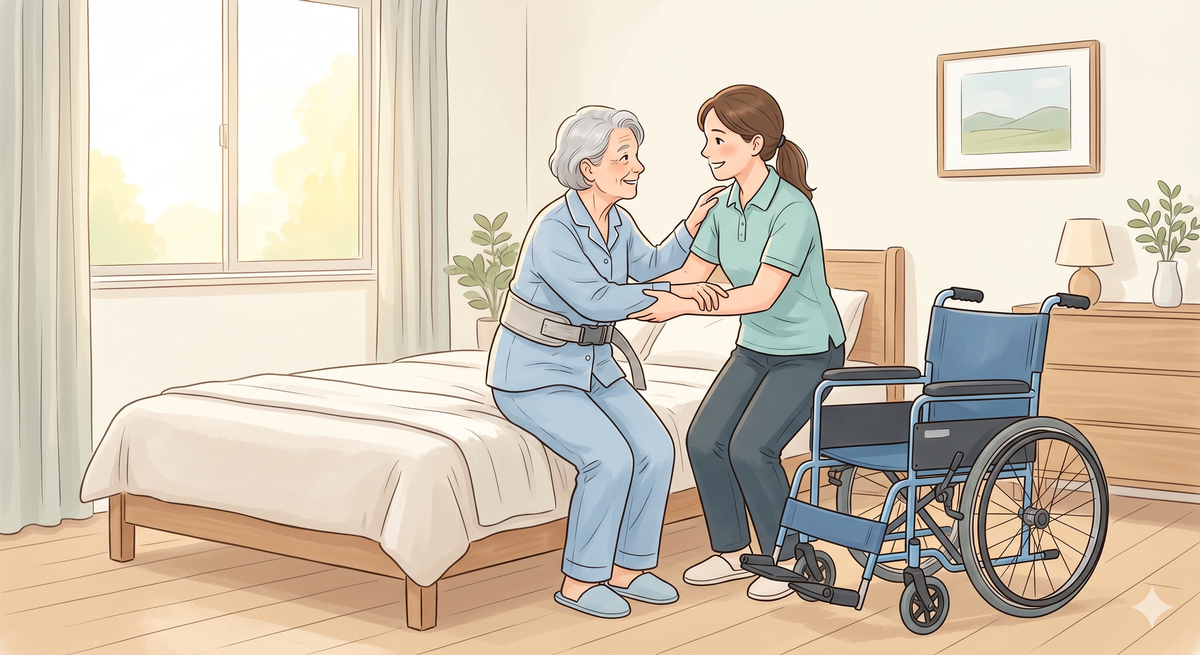
Learning how to safely transfer a patient at home is critical for preventing caregiver injuries, patient falls, and avoidable hospital readmissions.
Many caregivers are sent home from the hospital with little to no training on how to safely move their loved one.
What seems like a simple task—helping someone stand, pivot, or get into bed—can quickly lead to serious injury if done incorrectly.
This guide will help you protect both yourself and your loved one.
Why Safe Transfers Matter
Improper transfers are one of the leading causes of:
- Caregiver back injuries
- Shoulder and joint damage
- Patient falls
- Emergency room visits
Once a caregiver is injured, the entire care situation becomes unstable.
Common Mistakes Caregivers Make
Most injuries happen because caregivers were never taught proper technique.
❌ Lifting Instead of Guiding
You should never “lift” a person’s full weight.
❌ Twisting Your Back
Twisting while supporting someone is a major cause of injury.
❌ Moving Too Quickly
Rushing increases the risk of falls.
❌ Not Using Equipment
Many caregivers are not told what equipment is available—or how to use it.
Step-by-Step Safe Transfer Techniques
✔ Prepare the Environment
- Clear obstacles
- Lock wheelchair or bed
- Ensure proper lighting
✔ Use Proper Body Mechanics
- Bend at your knees, not your back
- Keep your back straight
- Keep the person close to your body
✔ Use a Pivot Transfer (if appropriate)
- Help the person stand
- Pivot together—do not twist
- Lower slowly into the chair or bed
✔ Communicate Clearly
- Tell your loved one what you’re doing
- Move together as a team
When You Need Equipment (and What to Ask For)
You should not be expected to manage alone.
Ask about:
- Transfer belts (gait belts)
- Slide boards
- Mechanical lifts
- Adjustable hospital beds
If these were not offered at discharge, that is a red flag.
See: Hospital Discharge Checklist for Caregivers
Red Flags That You Should NOT Transfer Alone
Do not attempt transfers alone if:
- The person cannot bear weight
- They are unstable or confused
- You feel physically strained
- You are unsure of the technique
👉 This is how injuries happen.
How to Advocate for Training Before Discharge
Before leaving the hospital, you have the right to:
- Request hands-on training
- Ask staff to demonstrate transfers
- Practice under supervision
You can say:
👉 “I need to be shown how to do this safely before discharge.”
If you are not comfortable, you can question the discharge plan.
See: Unsafe Hospital Discharge Crisis: Why Families Are Being Forced to Provide Medical Care at Home
Protecting Yourself From Injury and Burnout
Caregiver injuries are one of the fastest paths to burnout.
If you get hurt:
- You may not be able to continue caregiving
- Your loved one’s care may be compromised
- Stress and exhaustion increase rapidly
See: Caregiver Burnout: Signs, Symptoms, and How to Recover
Final Thoughts
Safe transfers are not optional—they are essential.
You should never be expected to “figure it out” on your own.
With the right training, equipment, and support, you can reduce risk and protect both your health and your loved one’s safety.
Because caregiving should not cost you your health.
- Hospital-Level Care at Home: What Caregivers Need to Know Before Saying Yes
- Unsafe Hospital Discharge Crisis: Why Families Are Being Forced to Provide Medical Care at Home
- Hospital Discharge Checklist for Caregivers
- Caregiver Burnout: Signs, Symptoms, and How to Recover
Frequently Asked Questions
What is the safest way to transfer a patient at home?
Using proper body mechanics, clear communication, and assistive equipment like gait belts or lifts is the safest approach.
Can I lift a patient by myself?
No. Caregivers should avoid lifting full body weight. Use proper techniques and equipment to reduce injury risk.
What equipment helps with patient transfers?
Gait belts, slide boards, and mechanical lifts can make transfers safer and easier.
What should I do if I was not trained before discharge?
Contact your healthcare provider immediately and request training or home health support.
Explore the Caregiver Balance Framework
Each section of the Caregiver Balance Framework provides practical tools to help family caregivers organize care, prevent burnout, and build reliable support.
• Caregiver Boundaries & Support Plan
• Family Caregiver Agreement
• Caregiver Relief Team
• Caregiver Guidance & Support
• My Vital Vault