
Traveling With Someone With a Disability: A Caregiver’s Planning Guide
lan safer trips with someone who has a disability, including medications, mobility, restrooms, lodging, emergencies and caregiver needs.

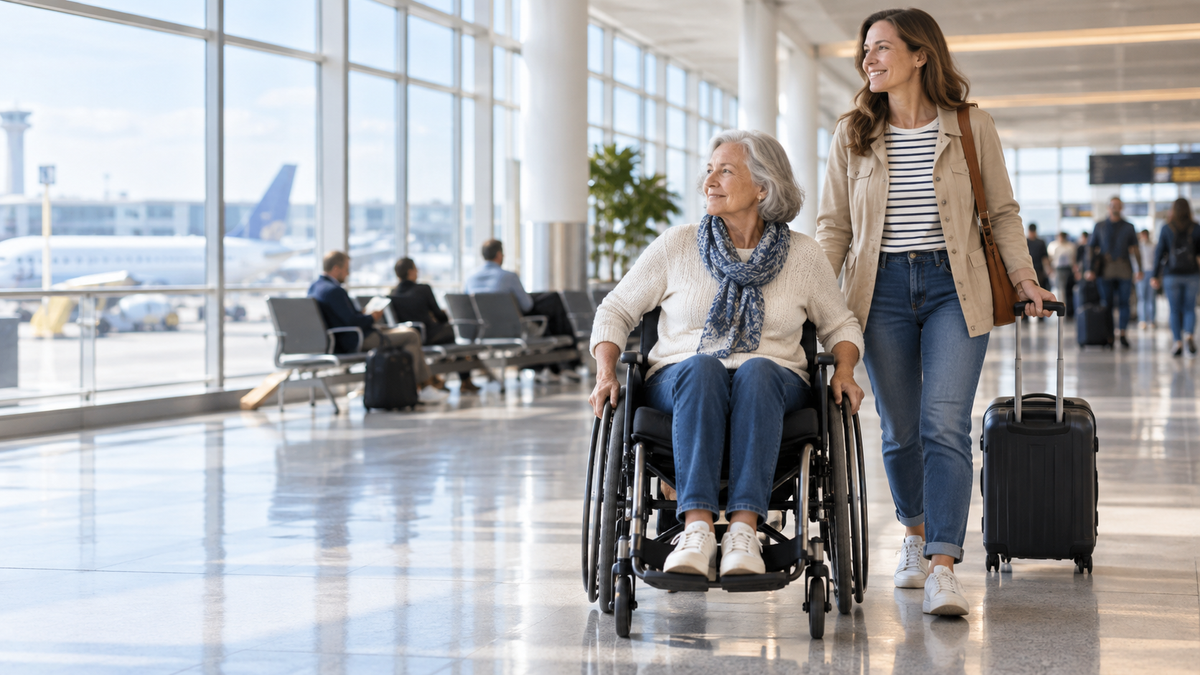
Traveling with someone with a disability requires careful planning for accessibility, medications, mobility, restroom needs and unexpected emergencies.
Traveling can create meaningful experiences and lasting memories, but it can also present challenges when someone has a disability, chronic illness, mobility limitation or cognitive impairment. A caregiver may need to think about accessible transportation, medications, medical equipment, restroom access, fatigue, transfers, meals, sensory needs and what to do if an emergency occurs away from home.
The goal is not to eliminate every possible problem. It is to anticipate the needs most likely to affect the traveler, develop backup plans and preserve the person’s dignity and independence throughout the trip.
Whether you are taking a short drive, flying across the country or planning an extended family vacation, this caregiver’s accessible travel guide can help you prepare.
Important: This article provides general educational information and is not a substitute for medical advice. If travel could affect a person’s health or treatment, consult the appropriate healthcare professional before the trip.
Begin With the Person, Not the Disability
Good travel planning begins by including the person with the disability in the conversation. Ask what they want from the trip, what makes travel easier, what causes discomfort or anxiety and what kind of assistance they want.
Do not assume that a person needs help simply because they have a visible disability. Likewise, do not assume that someone without an obvious disability will not need accommodations. Chronic pain, autism, dementia, hearing loss, low vision, bladder conditions, traumatic brain injury and many other disabilities may not be immediately apparent.
Before making reservations, discuss:
- The purpose and pace of the trip
- The person’s preferred routines
- Mobility and transfer needs
- Communication or sensory needs
- Restroom and personal-care needs
- Foods, medications and medical treatments
- Activities the person does or does not want to attempt
- How much assistance the caregiver can safely provide
Whenever possible, speak directly to the traveler rather than speaking about them to airline, hotel or attraction staff.
Decide Whether the Trip Is Appropriate Right Now
A destination may be accessible, but the timing may not be right. Consider the person’s current health, endurance, pain level, recent falls, infections, sleep patterns, behavior changes and ability to tolerate an unfamiliar environment.
Ask the person’s healthcare provider whether there are concerns related to long periods of sitting, blood clots, oxygen needs, recent surgery, altitude, heat, medication schedules or access to treatment while away. Do not stop or change medications for travel unless instructed by the prescribing professional.
It may be safer to postpone or shorten a trip when the person is medically unstable or when the caregiver cannot meet the person’s needs without additional help.
Create a Realistic Itinerary
An itinerary that works for an able-bodied traveler may be exhausting for someone with limited mobility, chronic pain, respiratory problems, dementia or fatigue. Build extra time into every stage of the trip.
Plan for:
- Frequent restroom and hydration breaks
- Longer boarding, transfers and security screening
- Time to take medications and complete treatments
- Rest between activities
- Accessible meals and dietary restrictions
- Delays, cancellations and changes in weather
- A quiet place if the person becomes tired or overstimulated
Avoid scheduling every hour. One major activity a day may be enough. Leaving open time protects both the traveler and the caregiver from becoming overwhelmed.
For someone living with dementia, maintaining familiar sleep, meal and medication routines can reduce confusion. Carry a current photograph and identification information in case you become separated.
Prepare Medical Information and an Emergency Plan
Caregivers should be able to provide accurate medical information if an emergency occurs. Keep essential information in a carry-on bag or another place that remains with you—not in checked luggage or a suitcase left at the hotel.
Your travel medical packet may include:
- The traveler’s full name and date of birth
- Emergency contacts
- Diagnoses and important medical history
- A current medication list with doses and schedules
- Allergies and serious medication reactions
- Names and contact information for healthcare providers
- Health insurance cards
- Advance directives and healthcare power-of-attorney documents, when appropriate
- Instructions for medical devices
- Baseline communication, behavior and cognitive abilities
- Preferred hospital or health system, if applicable
Research urgent care centers, pharmacies and hospitals near your destination. If the person depends on dialysis, oxygen, infusion therapy, specialized nutrition or another ongoing service, confirm arrangements before leaving home.
Pack Medications Carefully
Carry enough medication for the entire trip plus an additional supply in case of delays, when permitted by the prescription and insurer. Keep medications in your carry-on baggage so they remain available if checked luggage is lost.
Before departure:
- Confirm that prescriptions will not run out during the trip
- Keep medications clearly labeled
- Bring a written medication list
- Pack required syringes, testing supplies or administration equipment
- Plan for medications that need refrigeration
- Set reminders when crossing time zones
- Identify a pharmacy at the destination
Ask the airline and TSA about current requirements for liquid medications, needles, ice packs, pumps, oxygen equipment and other medical supplies. Rules can change, and international destinations may restrict medications that are legal in the United States.

Plan for Mobility Equipment and Safe Transfers
Wheelchairs, scooters, walkers, canes and transfer equipment make travel possible, but they require advance planning. Record the make, model, dimensions, weight and battery type of powered equipment. Photograph the device before handing it over for transport, and attach identification and handling instructions.
Pack small repair items that are permitted during travel, such as a compatible charger, tire-repair supplies or basic tools. Remove loose cushions, controls or accessories when advised and carry them with you.
Caregivers must also protect themselves. Do not attempt a transfer, lift or stair maneuver that you cannot perform safely. Ask what trained assistance is available. A caregiver injury can place both people at risk. If the traveler needs full assistance with transfers, a portable lift may be worth considering. The Hoyer Advance-E 340 portable patient lift is battery powered, folds for transport, and has a 340-pound weight capacity. Before a trip, confirm that the lift and a compatible sling will fit the vehicle and work in the room where transfers will take place.
For road trips, make sure the vehicle can safely accommodate the person and equipment. Secure wheelchairs and other devices properly. Plan fuel, food and restroom stops before entering long rural stretches.
Confirm Accessibility—Do Not Rely on a Label
The word “accessible” does not tell you whether a hotel room, vehicle or attraction will meet a particular person’s needs. Call the property directly and ask specific questions. If an accommodation is essential, request written confirmation.
Questions for a hotel may include:
- Is there a step-free route from parking or drop-off to the room?
- What are the door and elevator widths?
- Is the bed an appropriate height for transfers?
- Is there sufficient space beside the bed for a wheelchair or lift?
- Does the bathroom have a roll-in shower or a tub?
- Where are the grab bars located?
- Is a shower chair or bench available?
- Can the person reach the sink, controls, towels and toiletries?
- Is the room close to an elevator or exit?
- Are dining areas, pools and other shared spaces accessible?
- Is there a refrigerator for medication?
If the traveler uses a Hoyer lift or another transfer device, ask whether there is clearance under the bed. Platform beds often prevent the legs of a portable lift from sliding underneath.
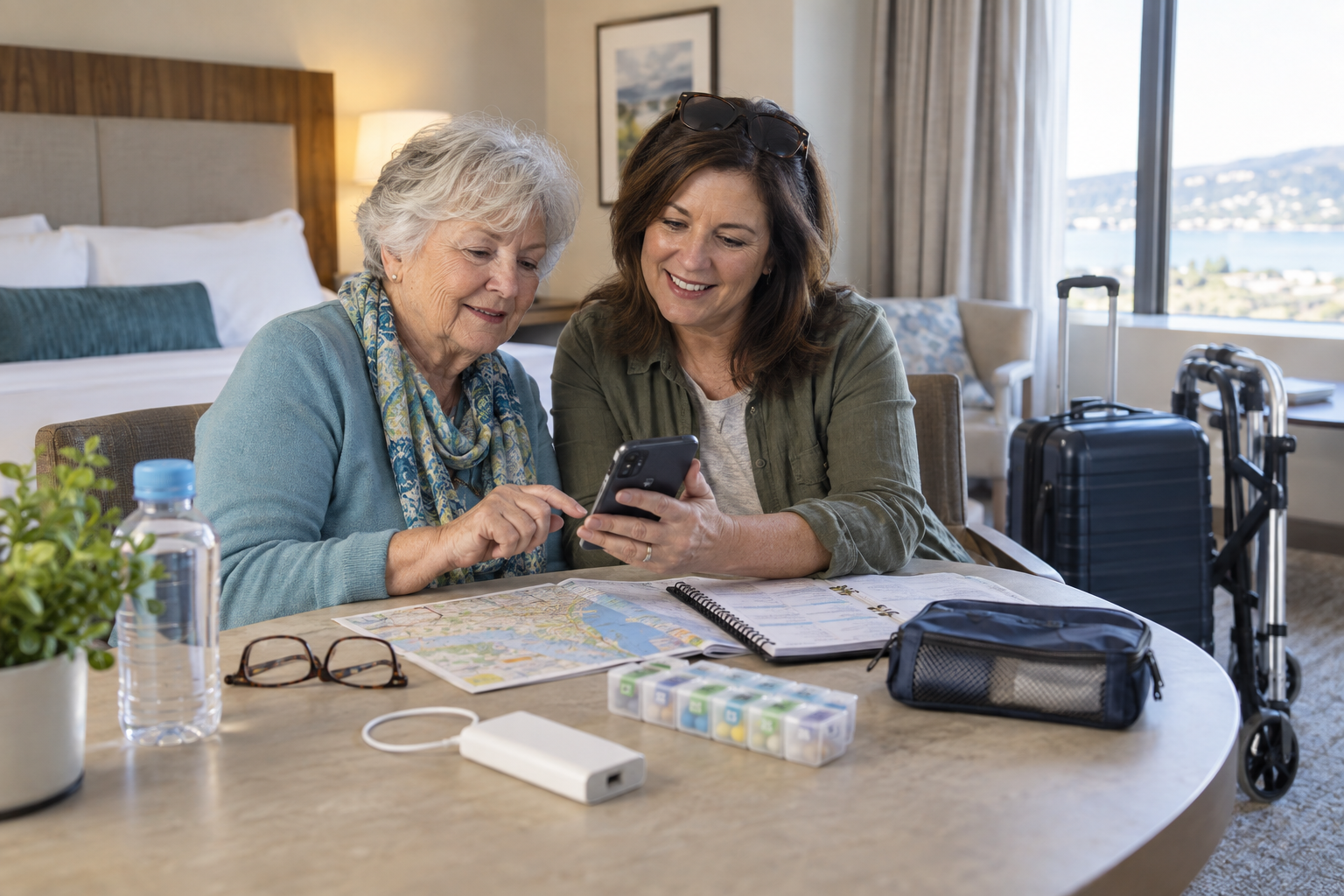
Make Restroom Access Part of the Travel Plan
Finding a usable restroom can be one of the most stressful parts of traveling with someone who has a disability. Urinary urgency, incontinence, Crohn’s disease, colitis, prostate conditions, medication side effects and limited mobility can turn restroom access into a medical and dignity issue—not merely a convenience.
Dunny Dash is a free public-restroom finder covering the United States and Australia. Its listings may include information about wheelchair access, grab rails, opening hours, nearby parking, baby-changing facilities and directions. The site also offers restroom guides for selected attractions, stadiums and national parks.
Caregivers can use a restroom locator when planning the route and again while traveling. However, no directory can guarantee that a facility is open, clean, functioning or appropriate for every disability. Dunny Dash advises users that real-time accuracy cannot be guaranteed. Confirm essential details when possible and identify backup locations.
Also consider whether the traveler needs:
- A wheelchair-accessible stall
- An adult changing table
- A family or companion-care restroom
- Grab bars on a particular side
- Space for two people and mobility equipment
- A private place for catheter, ostomy or incontinence care
- A safe location for a transfer
Carry an emergency personal-care kit containing the supplies appropriate for the individual. This may include wipes, gloves, disposal bags, incontinence products, a change of clothing, skin-protection products and a washable underpad.
Plan Air Travel Assistance Before the Flight
In the United States, the Air Carrier Access Act prohibits disability discrimination in air travel. The U.S. Department of Transportation explains that airlines must provide certain assistance, including prompt help with boarding, deplaning and making connections. Assistive devices generally receive priority for storage and do not count against the normal carry-on limit. Some specialized accommodations may require advance notice, so contact the airline as early as possible. Review the Department of Transportation’s air-travel disability guidance and confirm the airline’s current procedures.
When booking, tell the airline exactly what assistance is required. Do not rely on a general note saying “wheelchair needed.” Explain whether the traveler:
- Can walk short distances
- Can climb stairs
- Can transfer into an aisle chair
- Needs assistance to the gate, aircraft door or seat
- Will remain in their own wheelchair until boarding
- Uses a manual or powered wheelchair
- Is traveling with oxygen or another medical device
- Needs seating related to a disability
Arrive early and reconfirm the request at check-in and the gate. Before a wheelchair is stored, speak with staff about handling, batteries and detachable components.
Airline assistance does not ordinarily include extensive personal-care services such as feeding, toileting or administering medication. Plan for those needs separately.
Use TSA Cares for Security-Screening Support
TSA Cares provides information and assistance to travelers with disabilities, medical conditions and other special circumstances during the airport security-screening process. TSA recommends requesting assistance at least 72 hours before travel when possible. Travelers may call 855-787-2227 or submit a request through the TSA website.
TSA Cares may arrange for a Passenger Support Specialist to assist during screening. Contact TSA before the trip if the traveler has questions or concerns involving:
- A wheelchair, scooter, walker or prosthesis
- An implanted medical device
- Diabetes supplies, injections or liquid medications
- A portable oxygen concentrator or respiratory equipment
- An ostomy, catheter or feeding tube
- Difficulty standing, walking or raising their arms
- Autism, dementia, traumatic brain injury or another cognitive condition
- A service animal
TSA Cares addresses security screening; it does not replace the airline’s disability-assistance services. Contact both TSA and the airline when both types of support are needed.
The traveler may ask for a private screening and may describe how they can and cannot be screened. A caregiver should communicate respectfully, but the traveler should speak for themselves whenever possible.
Consider Hidden Disabilities and Sensory Needs
Crowds, noise, bright lighting, unfamiliar announcements and schedule changes can be difficult for someone with autism, dementia, PTSD, a brain injury or another non-visible disability.
Helpful preparations may include:
- Noise-reducing headphones
- Sunglasses or a brimmed hat
- Familiar music, photographs or comfort objects
- Simple written or picture-based instructions
- Snacks that meet dietary and sensory needs
- A quiet waiting area
- A brief explanation card for staff
- A wearable identification device, when appropriate and agreed upon
Use simple language and offer one instruction at a time when a person is confused. Avoid arguing or repeatedly correcting someone living with dementia. Reassure, redirect and move to a quieter location when possible.
Prepare for Service-Animal Needs
If a service animal is traveling, confirm the current requirements of the airline, hotel, transportation provider and destination. Pack food, water, medications, waste bags and other necessary supplies. Identify relief areas at airports and along the route.
For international travel, investigate vaccination, documentation, quarantine and entry requirements well in advance. Emotional-support animals and trained service animals may be treated differently under transportation and lodging rules.
Protect the Caregiver’s Health and Energy
Travel can intensify the physical and emotional demands of caregiving. The caregiver may be managing luggage, equipment, medications, transportation and personal care while trying to prevent falls or confusion.
Before committing to the trip, be honest about what you can safely do. Consider whether you need:
- Another family member or travel companion
- Professional travel assistance
- Accessible transportation rather than a standard rental vehicle
- Delivery of luggage or medical supplies
- A shorter itinerary
- Scheduled periods when someone else assumes responsibility
- Separate sleeping arrangements so both people can rest
Caregivers need hydration, meals, medication, sleep and restroom breaks too. A plan that ignores the caregiver’s limits is not a safe plan.
Create a Backup Plan
Even careful plans can fail. Flights are delayed, elevators break, accessible vehicles do not arrive and symptoms change. Think through the most likely disruptions before leaving.
Ask:
- What will we do if the wheelchair is delayed or damaged?
- Where can we obtain replacement medical supplies?
- Who can help if the caregiver becomes ill?
- Is there an accessible alternative if an activity or restroom is unavailable?
- How will we manage an extra night away from home?
- What symptoms require urgent care or an emergency response?
- Does someone at home have our itinerary and contact information?
Keep phones charged and carry a portable battery pack. Save important numbers in the phone and on paper in case the device is lost or its battery fails.
Accessible Travel Checklist for Caregivers
Before booking
- Include the traveler in planning and obtain consent
- Consider health, stamina, routines and personal-care needs
- Ask a healthcare professional whether medical guidance is needed
- Confirm transportation, lodging and destination accessibility
- Research restrooms, pharmacies and healthcare facilities
- Purchase appropriate travel insurance, if desired, after reviewing exclusions
One to two weeks before travel
- Reconfirm accessibility arrangements in writing
- Refill prescriptions and prepare the medication list
- Assemble medical and emergency documents
- Inspect and label mobility equipment
- Arrange refrigeration, oxygen or destination-based care
- Share the itinerary with a trusted contact
Before air travel
- Request specific assistance from the airline
- Review current rules for medical devices, batteries and supplies
- Contact TSA Cares at least 72 hours ahead when screening assistance is needed
- Photograph mobility equipment and remove loose accessories as instructed
- Confirm accessible ground transportation at the destination
In the carry-on or day bag
- Medications and medical supplies
- Identification, insurance cards and emergency contacts
- Change of clothing and personal-care supplies
- Snacks and water when permitted
- Phone charger and portable battery
- Mobility-device instructions and repair essentials
- Comfort, communication or sensory-support items
- Copies of reservations and accommodation confirmations
Travel Should Preserve Dignity and Choice
Traveling with someone who has a disability may require more time and planning, but the trip should not become a list of limitations. The purpose of preparation is to give the person greater choice, comfort, safety and opportunity to participate.
Start with the traveler’s goals. Confirm rather than assume accessibility. Prepare medical information, protect medications and equipment, identify accessible restrooms and develop backup plans. Just as importantly, recognize the caregiver’s physical and emotional limits.
With thoughtful preparation and useful resources such as Dunny Dash and TSA Cares, caregivers can reduce preventable stress and focus more fully on the experience they hoped to share.
Resources
Medication Mistakes Caregivers Make and How to Prevent Them
What Documents Do You Need Before a Medical Emergency?
My Vital Vault Emergency System
Explore the Caregiver Balance Framework
Each section of the Caregiver Balance Framework provides practical tools to help family caregivers organize care, prevent burnout, and build reliable support.
• Caregiver Boundaries & Support Plan
• Family Caregiver Agreement
• Caregiver Relief Team
• Caregiver Guidance & Support