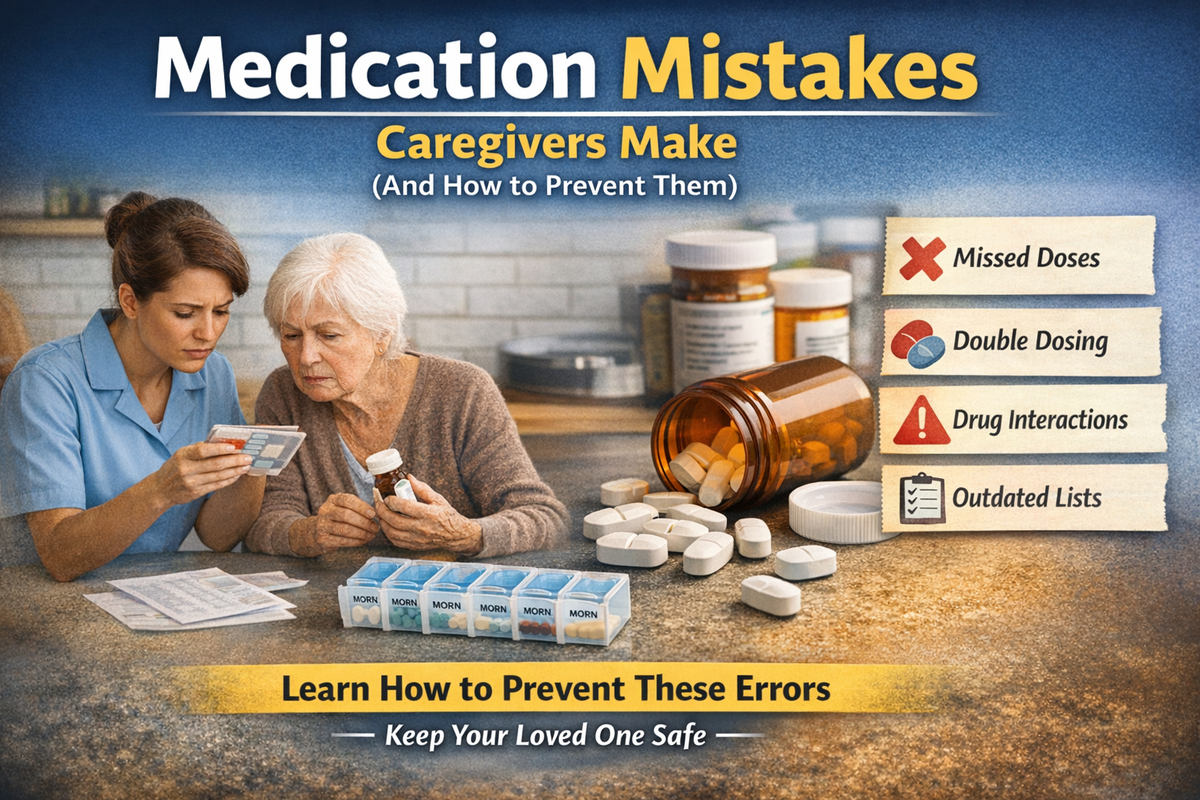
Medication Mistakes Caregivers Make (And How to Prevent Them)
Medication mistakes are common in caregiving. Learn the most dangerous errors caregivers make and how to prevent them to keep your loved one safe.

Why Medication Mistakes Are So Common in Caregiving
Many caregivers search for medication mistakes because managing multiple prescriptions can quickly become overwhelming and confusing.
Managing medications sounds simple—until you’re responsible for it.
Many caregivers are suddenly expected to:
- Track multiple medications
- Manage schedules
- Understand side effects
- Coordinate with doctors and pharmacies
👉 And most have no formal training in medication management.
👉 This is where mistakes happen.
The Risks of Medication Errors
Medication mistakes can lead to:
- Hospitalizations
- Serious health complications
- Drug interactions
- Worsening conditions
👉 In some cases, they can be life-threatening.
The Most Common Medication Mistakes Caregivers Make
1. Missing Doses or Giving Medications Late
Caregivers often juggle multiple responsibilities.
👉 It’s easy to lose track of time.
2. Double Dosing
Giving a second dose because:
- You’re unsure if it was already given
- Multiple caregivers are involved
👉 This is one of the most dangerous mistakes.
3. Mixing Medications Incorrectly
Some medications:
- Should not be taken together
- Require food or specific timing
👉 Without guidance, interactions can occur.
4. Not Updating Medication Lists
Medication changes happen frequently:
- After hospital stays
- After doctor visits
👉 Outdated lists lead to errors.
👉 Learn what to do after discharge:
What to Do After a Hospital Discharge
5. Not Understanding Side Effects
Caregivers may mistake side effects for:
- New medical conditions
- Behavioral changes
👉 This can delay proper treatment.
6. Using Multiple Pharmacies
When prescriptions are filled at different pharmacies:
- Drug interactions may not be caught
- Records are incomplete
7. Poor Organization
Medications stored in:
- Multiple locations
- Unlabeled containers
👉 This increases confusion and risk.
How to Prevent Medication Mistakes
✅ 1. Keep an Updated Medication List
Include:
- Medication name
- Dosage
- Schedule
- Purpose
👉 Update it after every medical visit.
✅ 2. Use a Medication Organizer
Pill organizers help:
- Track doses
- Prevent missed or duplicate medications
✅ 3. Create a Medication Schedule
Use:
- Written charts
- Phone reminders
- Apps
👉 Consistency reduces errors.
✅ 4. Use One Pharmacy
This allows:
- Better tracking
- Drug interaction checks
- Consistent records
✅ 5. Ask Questions
Always ask:
- Why is this medication prescribed?
- What are the side effects?
- When should it be taken?
✅ 6. Watch for Changes
Monitor for:
- New symptoms
- Behavioral changes
- Reactions
👉 Report concerns quickly.
Why Organization Matters More Than You Think
Medication management is not just about remembering.
👉 It is about systems and structure
👉 Learn how to organize everything in one place:
What Documents Do You Need Before a Medical Emergency?
👉 Store critical information in one place:
My Vital Vault Emergency System
When Medication Mistakes Become a Bigger Problem
This often signals that the level of care needed has increased.
If errors are happening frequently:
- Care may be too complex for one person
- Additional support may be needed
👉 This is not failure—it’s a signal for help.
Common Mistakes Caregivers Make
- Trying to manage everything alone
- Not asking questions
- Not keeping records updated
- Ignoring warning signs
👉 These increase risk over time.
What You Should Do Now
Step 1:
Review all medications
Step 2:
Create a clear system
Step 3:
Simplify where possible
Step 4:
Ask for help when needed
👉 If you need guidance:
Frequently Asked Questions
How do I keep track of multiple medications?
Use a written list, pill organizer, and reminders.
What should I do if I miss a dose?
Contact a pharmacist or healthcare provider for guidance.
Can medications cause confusion or behavior changes?
Yes. Side effects can impact cognition and mood.
Stay Safe and Stay Organized
Medication management is one of the most important—and challenging—parts of caregiving.
But with the right systems in place:
👉 You can reduce risk
👉 Improve safety
👉 Feel more confident
Medication management is one of the most important—and challenging—parts of caregiving.
👉 If caregiving is becoming overwhelming:
👉 Build a structured caregiving plan:
Explore the Caregiver Balance Framework
Each section of the Caregiver Balance Framework provides practical tools to help family caregivers organize care, prevent burnout, and build reliable support.
• Caregiver Boundaries & Support Plan
• Family Caregiver Agreement
• Caregiver Relief Team
• Caregiver Guidance & Support
• My Vital Vault