Estrangement Between Parents and Adult Children: Causes, Warning Signs, and How to Heal the Relationship with Marit Welker - Episode 208
Estrangement between parents and adult children is rising. Learn the causes, warning signs, and steps families can take to repair relationships and reconnect.

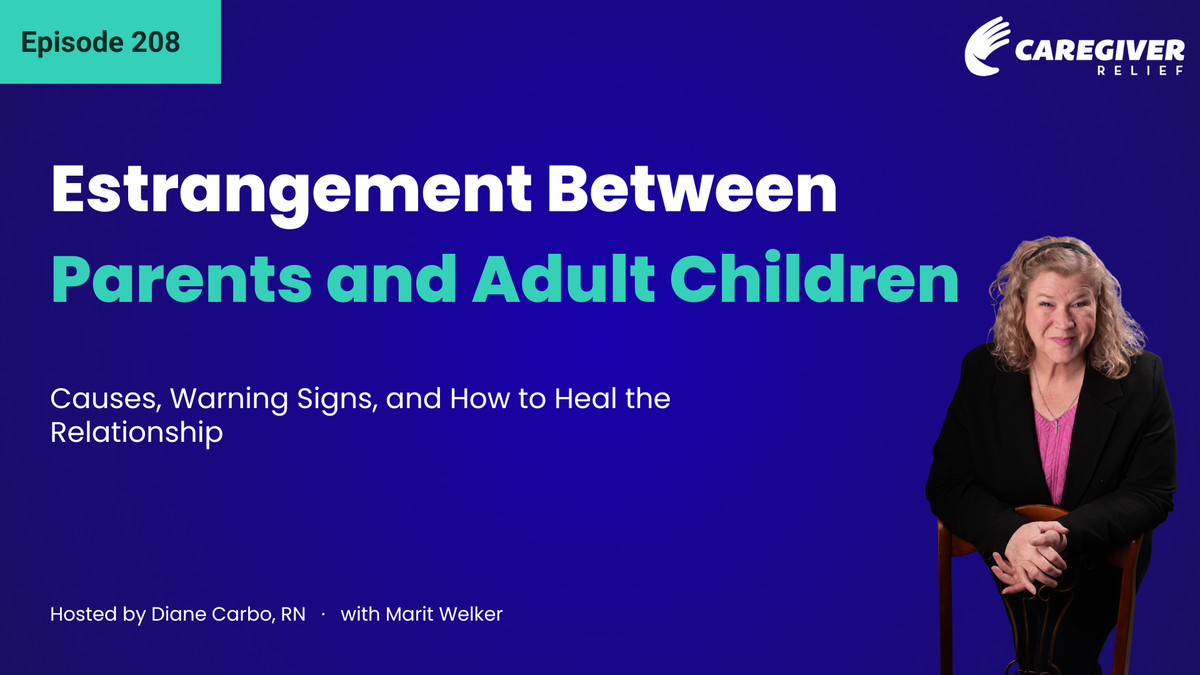
In this powerful episode of the Caregiver Relief Podcast, host Diane Carbo, RN, sits down with Marit Welker—speaker, certified life coach, and founder of the STILL program. Marit has lived estrangement from both sides: first rejecting her own parent, and later experiencing the agony of losing her son to estrangement before finding a path to miraculous healing.
If you are navigating the agonizing "waiting game" of family estrangement, this episode offers a lifeline of strength, peace, and purpose.
📋 What We Cover in This Episode
- The Rise of "No Contact": Why estrangement is rapidly increasing in modern society and the cultural shifts driving it. 📈
- The Therapy Side-Effect: How certain psychological approaches and untrained perspectives can accidentally encourage patients to rewrite family history. 🧠
- The Victim Mentality Trap: Moving from a past-controlled mindset to a present-focused, empowered life.
- The Influence of Outsiders: How in-laws, ex-spouses, and outside relationships frequently trigger a sudden family rift. 👥
- "Winning the Wait": Inspirational strategies to transform your time in limbo into a period of personal growth and spiritual refinement. ⏳
- The Crucial "Do Nots": The surprising boundaries every parent must maintain to avoid driving their child further away. 🛑
💡 Key Takeaways & Golden Nuggets
1. The Modern Drivers of Estrangement
Marit explains that a modern "me first" societal wave focuses heavily on individual self-fulfillment, sometimes at the expense of family bonds. While real abuse certainly exists, many rifts are born from unmet, unrealistic expectations, outside baggage brought in by spouses, or social media trends that encourage "canceling" anyone you disagree with.
2. Their Pain is Real (Even if the History is Distorted)
When adult children cut off a parent, they are often operating from fear and a victim mindset, which causes them to subconsciously rewrite the past.
"Their pain is as real as any pain could possibly be... Whether it’s valid or not does not matter. That pain is so strong for them that they felt their only choice was to cut you off." — Marit Welker
3. Shift Your Identity From "Mother" to "Daughter of God"
Many women struggle to transition from parenting a teenager to relating to an adult child. When your entire identity is wrapped up in being a mother, estrangement destroys your sense of self. Marit discusses how anchoring your identity in something higher allows you to reclaim your personal power and joy. 🧘♀️
4. You Can Be Happy While You Wait
79% of estranged adult children eventually return to their mothers. The ultimate question is: Who will you be when they come back? Will you be the same person they left, or a refined, joyful, and healthy version of yourself?
🚫 The "Golden Rules" of What NOT to Do
When your child cuts you off, a mother's natural intuition is to rush in and fix it. However, Marit warns that because the child is in a defensive "fear mode," standard responses will backfire.
- ❌ Do NOT repeatedly apologize: Their defensive brain hears this as a confession of ultimate guilt.
- ❌ Do NOT spam them with "I love you": Over-communicating feels like pressure and emotional manipulation to them.
- ❌ Do NOT defend or explain yourself: Trying to correct their distorted picture will only trigger them further.
What to do instead: Say it once, clearly, and step back:
"I love you. My door is always open." Leave the invitation open, step out of the way, and let God work on their heart. 🚪✨
🌟 Connect with Marit Welker
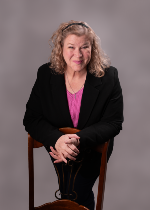
🌟 Connect with Marit Welker
If you are ready to stop spinning in circles of anger and confusion, Marit offers a free 5-day "Still Here" one-on-one coaching challenge to help you internalize your true identity, surrender what you cannot control, and cultivate genuine gratitude.
- Website: maritwelker.com
- LinkedIn: Marit Welker on LinkedIn
- Facebook: Marit Welker Speaker and Coach
- Instagram: @maritwelkerspeakerandcoach
The rest of your blog post remains exactly as formatted above, ready to be published!
🌸 A Note to Our Caregivers
To our family caregivers out there, you are the most important part of the caregiving equation. Without you, it all falls apart. Please learn to be gentle with yourself and practice self-care every day—because you are worth it.
Podcast Episode Transcript
Diane: Welcome to the Caregiver Relief Podcast with Diane Carbo, RN. Today we are addressing a topic that many seniors and parents are silently carrying in their hearts, estrangement from an adult child. When your child cuts off communication, it can feel like a death without a funeral.
The questions swirl: What did I do wrong? Will I ever see my grandchild again? How do I live with this silence? Research tells us that one in four Americans is estranged from a family member. Surprisingly, this is not rare. It is a growing crisis, and yet many parents suffer alone, ashamed to talk about it.
My guest today is Marit Welker, founder of Marit Welker LLC, speaker, certified life coach, and a Christian woman who has lived estrangement from both sides, first rejecting her own parent and later experiencing the heartbreak of losing her son to estrangement.
Through her faith-based STILL program, she now helps Christian mothers navigate what she calls the waiting game, building strength, peace, and purpose while trusting God with what they cannot control.
Diane: Marit, thank you so much for, joining us today. This is a very, needed topic because I'm hearing about this with many of my clients, and I've had personal experience with this. So welcome.
Marit: Thank you. It's good to be here.
Diane: Yes. For listeners who may be unfamiliar with the term, what does going no contact mean, and why are we seeing it increase so rapidly?
Marit: Well, going no contact means cutting off relationship with your family member, and it's growing rapidly because there's such a wave of me first that has become entrenched in society and that is growing, and it's about self-fulfillment.
And unfortunately, it's something that is bringing people to put their own needs before those of anyone else, and rejecting family members if it doesn't fit with the life they want to create. Unfortunately, there is a trend to find the people who are, creating their own new families by choosing their friends and choosing people that fit into the life that they want.
The problem with this, of course, is the pain that's caused through that estrangement.
Diane: Yeah.
Marit: But it's being created, through social media, through podcasts and talk show hosts, and through numerous sources. But it's also being caused by real abuse, which does happen. It's being caused by, unmet expectations that aren't even realistic.
It's being caused by people bringing baggage from other relationships into a new family as they marry into a family, and then they see the world based on their old baggage, and they influence the people there and bring in problems. It's being caused by therapists because they say that up to 39% of therapists in a recent study showed that they were adding their own perspective to their counseling as much as even diagnosing people who were not present with things like narcissism and things like that without ever having met the person, just relying on the words of the one patient.
And so therapy is, therapy has side effects.
Diane: It does.
Marit: And when you're... if you go with traditional therapy, you're going with Freudian psychology.
Diane: Yeah.
Marit: And that's what our psychology industry is based on, is Freudian psychology. And the, one of the major tenets of that is that our present is based on our past.
It's created by our past, and that is something that has been proven not true. We have something called neuroplasticity. Plastic meaning it can move, it can change. it's dynamic. And the exciting part about that is that we can change our brain, and we are constantly changing our brain. And because of that, if we live in the past, if we are defined by the past, which is not true, we've...
That's been proven false.
Diane: Yeah.
Marit: Then we feel like we have no control. We cede control to our past memories. And in therapy, we are ruminating on them week after week, replaying them, and going through to process them.
Diane: Yeah.
Marit: And unfortunately, all that's doing is it is taking those difficult times... let me rephrase.
Therapy is a wonderful thing. Therapy saves lives.
Therapy helps strengthen people. I believe in therapy. But it comes with side effects, and I believe in positive psychology, Adlerian psychology. I don't believe in Freudian psychology. And so when you go to a therapist, if that therapist comes in with attitudes of, their own personal...
I can't remember the name of the term, but, just personal-
Diane: Personal agenda?
Marit: More than that.
Diane: Okay.
Marit: If they come in with a strength of, me first, basically. It... That's what it means. It's not the term.
Diane: Yeah.
Marit: But they're, talking about becoming their best selves, and that's their number one priority, then they're going to...
That's going to come through in little ways here and there, even if they're trying not to, much of the time.
Diane: Yeah.
Marit: And so that's gonna be reflected. Tests have shown that, people who are in therapy eventually acquire not only the wording, the vocabulary of therapy- ... but they also acquire the habits, the messages Even sometimes the mannerisms of their therapist and their world view.
Diane: Wow.
Marit: So if you're going to a therapist who grew up with terribly abusive parents, what kind of perspective would they bring in?
Diane: Yeah.
Marit: It depends if they are healed from that abuse.
Diane: Yeah.
Marit: But it can be damaging. So it's something to be aware of. in the DSM-5, which is the current guidelines for descriptions of mental illness symptoms, they keep adding more and more mental illnesses that they-
Diane: Yeah
Marit: discover. Yes. That's in air quotes.
Diane: Yeah, I know.
Marit: And some of those, one of them includes rumination. Now, we all ruminate. You don't believe me? Go to bed stressed. And you'll lay in bed for hours thinking about the same things over and worrying about them.
Diane: Yes.
Marit: And everyone does that. There are people who do that obsessively, and that's a mental disorder and it's called rumination.
Diane: Yeah.
Marit: Or something like that. that's exactly what we're doing with Freudian psychology, is we are going through and processing these old experiences over and over. And that, in turn, ends up causing us to ruminate, causing us to experience the trauma over and over. Positive psychology focuses more on the present, where we are now influenced by the past, not controlled by the past.
It's framed by the past, but that's where it comes from, not where it is. There are times when I get caught up in the moment, and the intensity grows and builds, and I find myself getting stirred up in the moment. And at those times, I keep my thumbnails long. And at those times, I just take my thumbnail and shove it into the tip of my other thumb.
And I do that back and forth. And just that little bit of pain, not a lot, just enough pain to keep me plugged into where I am in the present. And it's a mental reminder to me to calm my nervous system- ... to take a deep breath, and to stop the acceleration of all those emotions that are building.
It allows me to regulate myself, stay in the present, and not get caught up in the past or the rhetoric of whoever is confronting me in the present. And that's been something that's really helped me just to calm myself. Because, I can say, "Oh, I'm gonna stay grounded." Yeah, that doesn't always happen when you're facing a person who's a family member and a loved one, and they know your blind spots.
Diane: Yes.
Marit: They know your pain, and they know how to push your buttons. it's crucial to stay in control so that you don't drive them away.
Diane: One of the things I think about when we're talking about this is cancel culture. our youth are being told it's okay to, not disagree with somebody, and listen to them, but to just get them out of your life, don't listen to a different point of view, do not have a respect for a different point of view, and that's dangerous.
That's so very- It is ... dangerous. And I- ... see this all the time, and I think that some of what's happening in today's world, in the present, is people are given the wrong message that if I don't like what you say, I don't have to listen to it, and I don't have... and I can just push you out of my life and everybody that's associated with you out of my life.
Marit: And, I think we need to keep in mind that's something that we as adults do as well. It's not just the young people, and that's-
Diane: Oh, absolutely.
Marit: And that's-
Diane: Absolutely
Marit: it's,we do it, with politics especially.
Diane Yes.
Marit: It's something that we can, we can see repeatedly that we are, doing...
Here's an example. The news. Okay, if your, political beliefs lean to the left- ... are you gonna watch Fox News every night?
Diane: They're supposed to be the demons.
Marit: I watch Fox News. I, actually, I watch... I like to watch a little bit of all of them so that I get a feel, because somewhere in the
Diane: There you go
Marit: in all of that
Diane: is a truth because- but- ... we are fed a bunch of stuff all the time.
Marit: But you are an outlier. You are not in the norm-
Diane: Yeah. Okay ...
Marit: for that, okay?
Diane: Okay. Yeah.
Marit: Normal people, if your political leanings are to the right, you're gonna watch Fox News, which leans heavily to the right. If you are leaning more, to be, to the liberal side, you're not gonna watch Fox News.
You'll watch just about any other source, because it leans more to the left. And then what happens is you are feeding yourself a steady diet of-
Diane: Yeah ...
Marit: mental and, rhetorical words.
Diane: Yes.
Marit: that are telling you what you believe is true.
Diane: Yes. Yes.
Marit: And they're telling you the news, but they're telling you part of the news, or they're telling you the news from a specific angle.
Diane: Yeah.
Marit: It used to be people reported the news.
Diane: Yeah.
Marit: And people were trusted for it.
Diane: Yes.
Marit: Walter Cronkite was voted the most trusted man in America, and he was a news anchor.
Diane: Yeah.
Marit: Back when I was a child in the '70s. And, now can you imagine any news person being voted the most trusted person in America?
Diane: No, because they've all lied to us in some way, shape, or form, and they blatantly do it, and we're supposed to trust them? No, I think that's why they have... the media stuff has such a low rating. Nobody trusts them. And- ... and our government policy makers have also,
Marit: Yes ...
Diane: are rating very low.
It's- No, they're the most mistrusted people in the world 'cause they've all, lied to us blatantly about things for a political agenda.
Marit: Exactly. Exactly.
Diane: Yeah.
Marit: Now, that agenda, that's what I wanna talk about.
Diane: Yeah.
Marit: Not about politics. no. And that is that- Exactly.
Diane: Yes ...
Marit: and that everybody has an agenda.
Everybody has leanings in everything, whether it's politics or life or how to raise a child or how you were raised-
Diane: Yes ...
Marit: et cetera. And those leanings, those, expectations, I like to call it, because we all have expectations on everything.
Diane: Yes.
Marit: And those expectations very clearly define the direction we're going and, what we want.
If those expectations are not met, then we are disappointed.
Diane: Yeah.
Marit: We can be angry, and we say that, someone was out to get us, someone didn't take care of us the way they were supposed to. Now, that's something that I had as a young person. I would say it probably started in high school, maybe even middle school, maybe even elementary school, where I had a woe is me victim mentality.
Ah. There were things going on in my home that I was unhappy with, and I blamed, and I felt like I had no control. I was a child. I had no control. But instead of deciding, okay, that's the way it is and moving forward, which that's Herculean for a child to do-
Diane: Yes ...
Marit: I found myself focusing on what a victim I was, and in that focus of what a victim I was, I found myself, growing.
And like a rope getting tangled in the axle of a bicycle, it just went round and got more and more tangled and grew, and pretty soon, I had this huge my family is out to get me attitude, and it wasn't my whole family. I rejected one parent, and, it was blame on that person. And how did that come about? there was a little bit of problems. my parent was, dare I say, human, imperfect
Diane: Yeah ...
Marit: and a living, breathing person.
Diane: Yeah.
Marit: They were prone to making mistakes. But more than that, I had an expectation that was unrealistic. I didn't understand that parent- And they didn't understand me, and I expected them to.
And if they didn't, then they were wrong and I was a victim. What kind of a relationship is built on that attitude?
Diane: Yes. Yeah.
Marit: And that's what I brought into adulthood. And so I was told by multiple people that they were doing XYZ and it was wrong, et cetera, and they had singled me out, and I believed it.
And then that got tangled around the axle again and grew even bigger. And so I looked for those problems. Now the brain is not built by our past. It's influenced by our past. But I let those past things and the present things grow, and as I had this new perspective, this newfound perspective I found myself leaning into it.
And as I did I looked back on my life and I found evidence it was all true, and everything that happened in the past was based on that new perspective. Unfortunately, what that did was I was rewriting my past because I was looking at it from a biased angle and I was looking at those real experiences, but not accurately.
Like watching Fox News if I was a liberal. It was not something I believed. I didn't have the right bias or the right, angle, and I ended up distorting my past and my present. I went through life looking at it that way, and I turned cold. I did not go no contact with this parent. I turned cold. I lived far away and was happy with that.
We talked on the phone rarely, and I kept my distance. And I had been hurt, and I couldn't let it go. Eventually, I had an experience that was a small car accident, which could have been very dangerous, but was not. But I suddenly realized I felt God gifted me the experience of feeling what it would feel like to lose that parent for a split second.
Literally a split second. And my world changed. And I also had a split second of seeing them more the way God sees them. And I realized how incredible this person was, and suddenly instead of rejection, I felt overwhelming love. And with that love, boom, rewrote the past. I began to see this person. It took 20 years before that experience happened.
20 years of resentment and pain. I had nightmares every week about this person for 20 years, and do you know what caused them? Was it their actions? They had been out of my life for 20 years, and I didn't live with them. even that long. I lived with them 18 years. So where did those problems occur? They occurred in my head, and they were my fault, not theirs.
Now, unfortunately, when a child is going through this, if you have been cut off from your child, you need to know something really important. Their pain is as real as any pain could possibly be. They believe so strongly in this pain, whether it's valid or not does not matter.
Diane: Yeah.
Marit: That pain is so strong for them that they felt their only choice was to cut you off.
Diane: Yeah.
Marit: Let that sink in.
Diane: I relate to this. I relate to this. my, I am, I moved away from home right as soon as I ran- I graduated from nursing school. My dad was a functional alcoholic. I was my mom's caregiver at a very early age, 15 and 16. She died when I was a freshman in nursing school. He got married within a year, remarried, and he abandoned me.
I felt he abandoned me. My expectation was he should have taken care of my mom instead of me. so I see where people, I had to get away from my dad because he hurt me, and I didn't want anything to do with him. I did talk to him once in a while, but not very often, and I kept my distance because didn't, when you have expectations of people, and you, they don't meet them, it's just overwhelming to you, sad. and that was a personal, a personal growth experience for me because I eventually took care of my dad while he was dying. I, we had worked through stuff, but Wonderful
Marit: Yeah, but it's hard.
It's very hard.
Diane: Oh, yeah. Yeah.
Marit: and I'm estranged from my siblings because I was the mom when my mom was sick, and I stayed in nursing school because my mom really wanted me to be a nurse, and I wanted to be a nurse, and I wanted to show her, her to be proud of me. And so I finished nursing school, but I went back and forth to school every day.
I had to run a household, grocery shop, all of that stuff, do laundry, and I assigned tasks to my brothers and sisters, and to this day they still resent me.
Marit: Wow. Oh- Yeah ... that's so painful.
Diane: Yeah.
Marit: And see, that's what I'm talking about is that expectation, and they felt that you- Didn't have that authority or whatever.
Diane: Yep.
Marit: And they expected to not have to do that.
Diane: Yeah. and those expectations, we have them as well. We have them with our children, we have them
Diane: Yeah ...
Marit: for, the relationship. Here's another thing that causes estrangement, and this one's really tough for people, and that is we learn how to be... My daughter just had a baby a few days ago.
Just the most beautiful little boy. He's not so little.
Diane: Congratulations.
Marit: He's nine pounds. But I will tell you that he is just a delight, and she is about to experience what it's like to sacrifice basically her entire life to becoming a mother.
Diane: Yes.
Marit: And that is a tough transition.
Diane: Yeah.
Marit: Realizing you'll never have a weekend off again-
Diane: Yeah
Marit: for 18 years.
Diane: Yeah.
Marit: And it is also a joy and an overwhelming delight.
Diane: Yes.
The problem with that is that as she goes through this experience, she will likely rewrite her identity, and she will shift from being a daughter of God, a woman, a wife-
Diane: Yeah ...
Marit: to being a mother, who is a daughter of God, a wife, a woman.
And when that happened, and it does for all of us, because, children are so consuming.
Diane: Yes.
Marit: And, the ultimate consumers. And, in that circumstance, we learn how to love on a level that we never imagined prior to.
Diane: Yes. Yes.
Marit: And it is through our sacrifice and our love that we, grow that relationship.
Our children have no concept of that level of love until they have their own children.
Diane: Yeah.
Marit: And when they have their own children, they have no concept of what it was like for us to be a parent, because we were told how to parent differently than they are told, first of all.
Diane: Yes. Yes.
Marit: And second of all, we are told we parented them most recently as teenagers and as adults, not as babies. And their young children are going through something entirely different.
Diane: Yes.
Marit: And you know how to be a perfect parent until you become one, and then you learn how to be a perfect parent to babies and little children, and, and so you know how to parent, teens perfectly until you become a parent of teens. And then when your child becomes an adult, most women do not make that transition well.
Diane: Oh.
Marit: You are no longer parenting a teen. Your role is different. And navigating that, there are no courses.
Diane: Yeah.
Marit: There's no way to learn how to, become the top mom when there are courses probably, but learning how to parent an adult child is a skill, and it is-
Diane: Yeah
Marit: something that we don't naturally develop and our parents don't teach us how. Except often by doing it wrong, and we have to learn to let them go. Now I'm, as you said in the introduction, I'm a devout Christian, and it says in the Bible that, a man shall leave his mother and his father and cleave to his wife.
Okay? That is what we're supposed to do at that age. We leave our family and we cleave to our new family. And if that is a commandment from God, that's going to be what is natural for us to want to do.
That also brings problems because the mom very frequently doesn't know how to make that transition and let her child go.
She doesn't know how to let all that love she has in her just hold back. And it's tough. I don't know of many things that are tougher than that, but it's tough. However, we can learn it. We will learn it, and we become better. We still have that mother love, but we have to re-channel it into new directions and new purposes.
Diane: Yes. And I can relate to that. I was forced to learn to step back when both my boys joined the military.
Marit: Yes.
Diane: And I wanted to... I'll share a story with you. I used to send the boys, care packages every week. I would send them, beef jerky and nuts and magazines they weren't allowed to have.
I just... and homemade cookies every week. And I had my youngest son call me from Korea one day and say, "Mom, we're... I'm getting all these packages." He says, "Could you stop sending them because most of the kids here don't have parents that send them even a letter?"
And I thought, I said to him, my thought is, I'll bake more.
I'll send more for the troop." And he just said no. I said, "Share it, Case. What the hell?" But it- he couldn't, so I get that.
Marit: Yeah.
Diane: I had to learn to be different.
Marit: Yes. Yeah. And, it's very painful.
Diane: Yeah. It's very difficult.
Diane: Yep.
Marit: And it's a journey that teaches us to be more like God, in my opinion.
Because God understands. He gave us our freedom to choose our agency. It was a gift and He honors it, and He gives us the dignity to choose for ourself whether we will accept Jesus, whether we will live a good life. And He understands more than anyone what it's like when His children reject Him, when His children refuse to live the way He taught them, when His children mistreat Him and crucify Him.
And so if you are ever feeling estranged and pain in that, please know you're not alone. Please know there's someone with you right now who's been there, who understands every bit of this, who would do anything for his children. He has engraven them on the palms of his hand, it says. it says also in Isaiah 49 that, we are, what's the word, chosen in the furnace of affliction.
Israel are the followers of Jesus. And as well as, the 12 tribes of Israel. And so when it says that we are chosen in the furnace of affliction, all of His people, not just the Jews, not just the, Daniellites and Ishmaelites and whatever, all of... I don't know if Ishmaelite is...
Yeah. Reuben, Simeon, Levi, Judah. Trying to remember- ... which ones are the tribes. memorized them when I was eight in a Bible-loving home. but what happened was, we are in need of... No, Ishmaelites is not one. I remembered. excuse me. But we are in need of keeping a perspective- ... of we are chosen in affliction.
What does that mean? That means that we are meant to come here to experience the challenges. We get to taste some of what God taught us and some of what He went through, and we do that by, listening to prophets and things and learning the stories and reading the Bible. We do that through prayer, but we do that most by being hands-on with our children the way He is with us.
By loving them and letting them go, and letting them have their agency. We taught them the right rules. Now we have to let them govern themselves. The next stage, though, is the most difficult, and that is the biggest reason that parents leave their, child, a parent, children leave their parents and cut them off is always the influence of another person.
Always. That's the biggest, and that can be from an ex. a couple splits up, the kids grow up with mom. When they turn 18, Dad has money, they move in with Dad, and suddenly they hate Mom and don't wanna talk to her again. Yeah. Common story. And to the reverse. Kids grow up with Mom or without Mom, but they see Mom's pain.
And Mom doesn't even talk badly about Dad, but they see her pain, and they see how Dad treats them, in the bad moments. And suddenly what are they doing? They've decided Dad is bad, and they won't have a thing to do with him. One in four fathers is estranged from a child.
Diane: Wow.
Marit: How many fathers do you know?
Diane: A whole hell of a lot.
Marit: Yes. Yes. And, one in four Americans is estranged from a close family member. It's only one in six, no, it's less than that, one s- one-sixth of moms that are, estranged from a child. And I have good news, 79% of those do come back at some point. The question is, what will you be doing when they come back?
So you mentioned the waiting game. the waiting game is this, and I'm gonna share an analogy. One of the... I'm a big distance running nerd. I'm a geek for that. I just can't get enough of distance running, and I have a family member who runs for one of the top distance running programs in the country, and that is BYU.
Now, BYU has a phenomenal team and a phenomenal coach, and she's a professional coach for Nike's professional running team. But what happened was in 2019, or in, sorry, in 2020, COVID came.
Diane: Yeah.
Marit: That was the end of cross country. They didn't get to have their, national championship. what did that team do?
They decided that they will win the wait. Okay? They were gonna win the wait, and they did. They won nationals.
Marit: Wow.
Marit: How did they get there? They all trained, and they all talked with their coach, and they did it on their own, and they ran alone wherever they were in the country, wherever their parents were.
And they logged their miles, and they did what their coach told them to do, and they worked very hard. And so when the cross country season was restored, they had their cross country championship not in December, but I think it was in March. it might have been at the exact same time as indoor track national championship.
But it was an exciting event. Everybody went for the national championship, and BYU won. Now, they won that because they had trained and they were in the top shape of their lives, and then suddenly it's time again, and they were prepared. That is our job as well. We need to win the wait. Now, when will our child come back?
One of my best friends, their child was estranged for, I'm gonna say, about 30 years. And during that time they came back maybe three times, and then always left. When, their father died, they sent a message and flowers, and that was, the only connection. And then a few years later they started connecting again, and they have a,have been developing a good relationship and they're both enjoying it, and I'm so happy.
So happy. then also there are others. In my case, I don't talk about what it was like for my son's privacy- My child, rejected me and it was a little bit bumpy. There were, me, a couple times when he came back, and then, there was the final time, and I knew it was gonna last for a very long time.
And I didn't know if I would see my grandchildren again, and they were very young and they had lived with us for a time, and I knew them closely. And so that was excruciating. I was angry for two days. I was so angry when this first happened. I knew it was 100% on their side. I was furious, and I could not have been more self-righteous about it.
Was I correct? Number one, and this is really important, so please pay close attention. Number one: It doesn't matter if I was right.
Diane: Yeah.
Marit: Okay? Doesn't matter. Number two... I was. I'm k- I'm kidding. no, number two was, what mattered is what I did about it, okay?
Diane: Yeah.
Marit: Freudian psychology creates victims.
Diane: Yes.
Marit: Now, the goal is to get rid of the victim, to banish that inner victim, and it can do that with the right treatment if people respond correctly. But the concept of our lives are created by our past is a victim mentality in and of itself. And if our present is created by our past and controlled by our past, then we're pretty much SOL.
But if we are focusing on our present is informed by our past, influenced by our past, but not controlled by it, then we have control, then we retain the power to change, the power to move forward. And if we have a vision of the future, then we become, we can have incredible power to move forward. And that's the important thing.
First of all, to love your child and to have compassion for their pain, because whether it's valid or not, their pain is real.
Diane: Yes.
Marit: Their fear is real. If they are in victim mode and rewriting history, that's okay, because you are, too.
Diane: Yeah.
Marit: Okay? Th- that's the interesting thing about our brain. If somebody says, "You were a terrible mother," the natural response will be to go through your past and look back and say, "I wasn't a terrible mother."
And then what are you looking for? You're looking for all the evidence. You don't think about this is natural, but you're looking for all the evidence that you were not a terrible mother.
Diane: Yeah.
Marit: So you are bringing forward all of those events where you sacrificed, where you loved, where you did good things, where you chose to help them, where you were close.
But that's not the full picture.
Diane: Yeah.
Marit: That is what your brain has focused on- And will continue to focus on in the future, but it's not the whole picture. And that's why it doesn't matter if you are right and your child is wrong. What matters is what are you gonna do about it? You need to take charge and move forward, and you do that by that's what I teach in my course. It's a 90-day course.
Diane: Yeah.
Marit: And you do that by choosing to find the good in the present. Choosing to find the good moving forward, setting goals for yourself, and becoming. Becoming not a mother like you did when you had a newborn but becoming a daughter of God.
When your identity is yourself, and when your identity is defined by that relationship, everything else comes into focus. And then you can be a daughter of God who is a mother. You can be a daughter of God who is a wife. You can be a daughter of a God who is a woman. But as a daughter of God, you have immense power.
You have divine inspiration, and you have the ability to shift how you're seeing the world. And the bias of looking for, I did all the good things, becomes the bias of, I'm a daughter of God, and that means I need to act like one. But I also have power, and that power is to choose my present and my future.
We can win the wait, and we do that by preparing and becoming. When my child came back, it was unexpected. It was not the timing that I would have considered to be, what I was expecting at all. But the call came, and then it was, "They're in town. They would like to see you." They lived about 90 minutes away.
And, I thought about it for a minute and I said, okay, because I'm gonna be like my Father in Heaven. I am not going to be the, shamed mother. I'm not going to be self-righteous. I'm not going to be a victim. I am going to be humble, and I'm going to love, and I'm going to smile, and I'm going to reflect Jesus.
And I went in the other room, and they came, and it was awkward. It was so stiff. And we all sat down together at our couches, and we have a coffee table in the middle. And the kids knew where the grammy toys are, and I had kept them there. And they went and they found them and pulled them out and started playing.
And one of them ran over to the fridge to get some grammy snacks, 'cause he knows I keep fruit stocked in there. Lots of berries for them all the time. And fortunately, I had some. And it just, it felt like family. And those kids just softened it, and it just felt like family. And it took a couple of months, and it was awkward, and there were little flare-ups here and there- But we got back together, and we are close now.
Are there problems? Absolutely. But I have finally learned to listen to him, and I have finally learned to be the mother that he needs, and I have finally learned who my identity is. And I mentioned my course. What I do in the course is I'm not working with people to learn skills or to learn intellect.
I am working with people to help them internalize these concepts because you can learn the ideas all you want.
Diane: Yes.
Marit: But without the other, if you don't change your identity and who you are if you don't change your soul, you are just going to be the same person, and that is the person they rejected and left.
And when they come back, they'll leave again, and hopefully not for good. And then last, and this is my favorite part, God has you in their hands, but God also has your child in their hands because He is their child, and He loves them even more than you do. And their path might take a little long route.
It might be about eight or nine months total for the experience, which was what ours was. We had multiple miracles in there. I didn't bring those up. But, it was remarkable that we were able to get back together so quickly, and it was 100% God's hand that brought that about on both sides. But my friend, it took 30 years.
What's the difference? The difference is this: That each person has their own path, and God will help them walk it, and we have to let that happen. You taught them the right principles. Let them govern themselves. Never stop loving them. Never stop praying for them. But learn to give it to God and let it go because you cannot control, nor is it your job to control that relationship.
Know that 79% of children return to their mother. And again, that question is who will you be when they come back? Will you be the person they rejected, or will you be prepared and be the person who wins the waiting game? So that's what I do in my work.
Diane: I'd like to ask you a question. Many parents are never told why their child has cut contact.
Marit: Oh, absolutely.
Diane: How should they process that silence? That's the hardest one.
Marit: I can tell you that number one, it doesn't matter. I said that earlier, And that's, when you can internalize that then you're okay. Now, there isn't always a reason. All right? Sometimes it's pain.
And it's pain for specific things that has grown and grown in their heart, and then outside things are added to that pain.
Diane: Yeah.
Marit: You would be shocked how many children do not tell their parent why. I received vague answers, but God directed me as I prayed and as I prepared and I fasted and I worked on myself, and He helped me to see the problems that I had caused, the pain that I had caused my child so I could change and become what they needed.
So my answers came through, spiritual work. It wasn't through, a miracle of I did receive miracles. I will not deny that. But it was through, the spiritual work of the prayer, of the fasting, of the humbling myself before God, the spiritual seeking, and reading the Bible and really studying it every single day over an extended period of time.
It helped change my heart. And I teach godly habits because, in my program, we do four different transformations which change our heart towards ourself, where we learn to love and accept ourselves as we are, as daughters of God, where we internalize that identity, where we fully surrender to Jesus, where we're not just, committing our lives to Him, but we live our lives for Him, and we become fully surrendered.
His will be done. Just like He says in all of the prayers that He, "Thy will on, be done on Earth as it is in Heaven", but, "Nevertheless, not my will but Thine be done." I, obviously I studied King James. but, it, to see how He responded, Jesus responded is how we need to pray.
Don't ask for your child to come back. God knows what you need from the beginning. Ask God what you need to do, and that is how I discovered and I understood. Now, here were the clues that helped me. My child had complained about things repeatedly. I was able to take those complaints, and they weren't given to me at the time of the separation.
Diane: Yeah.
Marit: He wasn't able to find the words that he needed to make that clear. But that doesn't mean his pain wasn't very real. And whether that pain is based on their perspective of things, or whether it's based on a clear perspective and God's perspective, that higher way, that higher vision, didn't matter.
It was his real pain and his real experience. So while I didn't find it valid at the time, God showed me what parts were valid and what parts I needed to change, and the rest of it wasn't important whether it was valid or not. I was able to pull out the complaints I'd heard over time- And work on those.
And just so you know, if this is your circumstance, if you're in a situation where you don't know why your child left, please know that means that there's nothing you have to work on as far as their relationship. You have to work on your relationship with God. You have to work on your relationship of becoming your best self.
But if they haven't given you one thing that you need to do, then you need to work on becoming you, becoming your best self and preparing. I will teach you some skills, though, that will help you so that if and when they do come back, they don't leave again and make it the final time as quickly, as easily.
And those skills include what not to say.
Diane: That's a good one. That's a good one. I have to, tell you that what I hear from so many is, the daughter-in-law is influencing the son. And, that's I have many clients and many friends that, and how do you work around that? I, you don't really
Marit: Oh
Diane: know the daughter-in-law.
She's definitely.
Marit: Here's the thing.
Once again, there's a stage in life where we leave our parents and we cleave to our new partner. And that is, that's given in the Bible. It's also natural where we are to leave our parents, leave it behind, cleave onto our new partner.
And if that's something that God commands us, then that's what we do. And it's also natural, and it's right. It's good. Now, if that daughter has been damaged in the past, let's say for example, and I'm using daughter, it can also be son.
Diane: Yeah.
Marit: Although daughter is much, much more common.
Diane: Yeah.
Marit: If she has had an experience, a difficult experience with her mother or her family in, her formative years at any time, then she may bring that baggage into any relationship.
And here's the important thing. When you leave a parent, it's not about making things better. Because you're removing the trigger, but you're not removing the problem, okay? Okay. They're removing the trigger, which is you and your actions and words, but they are not removing the problem. So if a daughter-in-law has these problems and brings them into a marriage, how is she going to look at you?
Is she gonna see you clearly, or will she have a distorted perspective?
Diane: A distorted perspective, yes.
Marit: And when you bring that lens to things, it's if I have my glasses on versus not, it's just gonna make things a little bit different.
Diane: Yes.
Marit: And, so I just put my reading glasses on- And now I see you much more clearly, and you're beautiful.
But- But also, the rest of the room is blurry.
Diane: Yeah.
Marit: And so whatever prescription she is seeing the world through, that is her reality. Whether it's true or not in her case, it matters in our heart and it matters to God. But as far as the relationship is concerned, you have no control over that. You have no stewardship
Diane: Yeah
Marit: and no authority to change her.
Diane: Yeah.
Marit: You have to let it go, and that's hard.
Diane: Yes, it is.
Marit: And, so here's an example of what you can do in that circumstance. Nothing. But you love your child, and you know that if that child was told, "It's me or your parents," and they chose their spouse, they were following biblical truth.
Diane: Yes.
Marit: That person may be the love of their life
Diane: Yeah ...
Marit: and, may have wonderful qualities you know nothing about.
Diane: Yeah.
Marit: And so they may not be the ultimate victim, a ultimate, evil person. Yeah. They might be a phenomenal person who's got a distorted perspective because of how they were raised, which they had no control over.
And that person might grow up and might become the better person. We don't know, but that is between them and God. And your child's response if they cut you off because of that other person, it's excruciating. It's not fair. It's not right.
Diane: Yeah.
Marit: But it is, and it is what it is, and you can't change that.
Diane: Yes. Yeah.
Marit: So you leave it to God. You trust in God, and you will put it on the back burner. You can't leave it to God and try to be in control.
Diane: Yeah.
Marit: You can't leave it to God and pray every day that God will bring that child back.
Diane: Yeah.
Marit: That's not leaving it to God. You pray every day for that child.
Diane: Yeah.
Marit: You pray every day that you will know what your responsibility is, what your stewardship is, and what you can change regarding you, because that's all you really can control. And then that is leaving it to God. That is letting it go. Does it hurt? There are no words to describe the pain.
Diane: Yeah.
Marit: But the children of Israel in Isaiah 49 were chosen in the furnace of affliction, and I believe firmly that being chosen in the furnace of affliction is something that happens to us as well, that we are chosen through our struggles to become stronger, to become more devout, to become, the people God wants us to be.
I have been through a lot of struggles in my life.
Diane: Yeah.
Marit: Cancer. I've had long COVID five times, but it was actually pre– no, what's it called? Post-viral syndrome.
Diane: Yeah.
Marit: Okay so sometimes it was long COVID, sometimes it was other viruses, but I've probably spent a total of about four years stuck in bed because of this post-viral syndrome that I'm prone to.
My DNA even shows that I'm prone to it.
Diane: Yeah.
Marit: And, so when that happens, what is my recourse? My recourse is to, choose to accept my circumstances and move forward or lay in bed and be a victim. at one point I decided I was gonna be cheerful, and I vowed to God I was gonna be cheerful and I was gonna be patient, and I gave it to him and I let it go.
And I could not have done that without being bedridden for two months prior. But I did it, and the next 16 months were the happiest of my life. Happiest of my life, bar none. B- Happier than giving birth to a child.
Diane: Wow.
Marit: How come? It was because God blessed me when I fully surrendered and gave it to him and I chose to be cheerful.
How can you be cheerful when you don't know what you have, 'cause it hasn't been discovered yet?
Diane: Yes.
Marit: You don't know if you're gonna live, and if you live you don't know if you're gonna get better, and if you get better you don't know how much better you're gonna get. Looking forward, no point.
The present, I was in a very messy room and I had zero capacity to clean it. So I laid in a messy room for almost two years. Clutter piled around everywhere because I was the person who my living room and kitchen need to be clean, but if I don't know what to do with something, I would stick it in my bedroom or the garage.
I stared at these piles for two years. It was excruciating. I lost the beautiful trees that, shaded my bedroom window and I had dappled sunlight all day dancing on the blinds, and it lifted my spirits so much. My neighbor cut all the trees down.
Diane: Oh.
Marit: And my business. I had lovingly built a business for seven years, and suddenly it was dying, and it was a painful death.
Diane: Yeah.
Marit: And, all of these things happened at once, but I had vowed I was gonna be cheerful, and when I did God showed me the way. God brought me the way, and that was gratitude in my case. It was much more than gratitude. There's four skills for happiness.
Diane: Yeah.
Marit: It starts with that surrender to God and letting him take it.
Literally take it. And I could not have done that without my circumstances. I could have, I just didn't know how, but my circumstances made it easy. In 2 Corinthians 12, Paul says that in our weakness he thrice, he asks to have... I love that word. He asks to have the thorn removed from his flesh thrice.
And what did God say? " When you are weak, then he is strong." And so Paul's response was, "Bring it." I'll do it all for Christ. And in my circumstances, I was so weak that it was hard to breathe. I couldn't put a sheet over my body because it made it too difficult to breathe.
Diane: Oh.
Marit: That's how weak I was.
And I wasn't in a hospital. I was too weak to go to the doctor, and my pulse was about 50 most of the time, sometimes lower, and I just was so weak. But in that circumstance, I was able to see the power of negativity. My teenage daughters came home from school and needed to vent about their day. I couldn't help them.
I didn't have the capacity. It was like a dementor was sucking my soul. But if I thought cheerful things and gratitude, it lifted my spirits in a remarkable way, and that was very eye-opening and transformative. And so I started thinking about the great things from the past, and I stacked them up on top of each other, and pretty soon, wow, I've lived an amazing life.
It wasn't that I got to go snorkeling in the Red Sea and climb up inside a pyramid. It wasn't that I, got to sing in front of thousands of people and speak to thousands of people. I prayed to 9,000 people and, lived on four continents and traveled to, 11 countries and speak multiple languages.
It wasn't all of those things and dignitaries and powerful experiences. It was that I did all of those things on the same day. Okay? That is what gratitude gave me. That was the power of my brain's ability to think beyond the obvious.
Diane: Yeah.
Marit: My brain's ability to harness that gratitude and stack one good thing on top of each other.
Diane: Yeah.
Marit: That changed me so profoundly that I then learned to, look for the good in everything. and I'm gonna give an extreme and example. This did not happen, okay? But imagine that I was in a car accident. I had to have both legs amputated. I'm so grateful that I had such good medical care that it saved my life.
Now, which perspective... Is that a natural perspective?
Diane: No, you have to choose that, 'cause I've cared for people in those situations.
And it is and it is a choice.
Marit: It is a choice. And we have that power.
Diane: Yes. Yes. Yes.
Marit: I did not find that power until I was so weak that I could see such a dramatic difference between positive energy and negative energy.
It was so dramatic in my physical being that I chose positive, and I did that for years, and then I stopped doing it, and I'm trying to get back to it. But I don't have the circumstances that are as extreme. I don't have the power of that pain to make God strong in me. I need to be weak so I can be strong.
So God has chosen us in the furnace of affliction, and this is that affliction, and we need to be grateful and allow it to transform us into who God wants us to be. Because if we can do that, then we become those powerful, strong individuals, and we become, even more importantly, the person who is happy, who is strong, who is living a life full of meaning and purpose with or without those family members.
Diane: Yeah.
Marit: You can be happy and have peace and joy and incredible strength and power, and choose and live a fulfilled, meaningful life. And that is the purpose of my 90-day course, is to help people understand that, live it, and develop the systems and frameworks and habits that sustain it. And in doing so, then they can live this great life.
If their child comes back, which most of them will, then they are ready. And if their child doesn't, then they are happy. And they're happy while they wait, and that is a choice we have. And it's not just gratitude. It's so much more than that, but gratitude is very powerful. So don't resent your child and fill your life with hatred and anger.
Even if your child made this up or pulled in outside experiences and distorted things and created a problem that really wasn't there or certainly didn't deserve this- ... which is the case much, if not most of the time. Probably, I would say most of the time. And what you're dealing with is, "I don't understand."
So what?
Diane: Yeah.
Marit: What are you gonna do about it? And I know that sounds really harsh, and it's meant to, because without deciding to change, you're stuck where you are and you're just gonna keep going forward, spinning that axle, getting the rope tangled, stuck on, why did they reject me, what did I do, or what's wrong?
It doesn't matter. Give it to God and trust that He's got your child and He loves them way more than you do.
Diane: Yeah. Marj, how do my listeners find you? You... There's so many out there that are estranged from their family members or an adult child. I've had this personal experience myself.
You've given me a lot to think about today. How do they find you?
Marit: My website, maritwelker.com. I'm, Marit Welker is everywhere. I'm on all the social media, Marit Welker speaker and coach. Okay. just Marit Welker. But, if you go to my website, Maritwelker.com, right now I'm doing a special and, it's not like a sale or anything.
It's-
Diane: Yeah ...
Marit: a special program. It's five days of a one-on-one coaching, and this program gives them one-on-one coaching with me to test this out and to learn. And the goal is, this is the Still Here program, and this is to remind you that while you are still here for your child if they return, and that you need to stay that way and not fill your life with anger or hatred, but also that God is still here for you.
And we work on identity. And in those five days, it's only five days, I can't promise miracles.
Diane: Yeah.
Marit: But what we do is we work on changing your heart and transforming you to find more love for yourself and to understand who you are as a daughter of God, not as a fact, but as an actual, internalized understanding, part of your identity, rewriting your heart and your brain.
And when that happens, then the rest can grow from there. And so it's a five-day challenge for that. It's free, and if you go to my website, Maritwelker.com, you can sign up for that. And the exciting thing about it is that it gives you a taste of what I do.
Diane: Yeah.
Marit: And there's also some free downloads there.
And if it's something you're interested in, great, you can continue and go into the course and even sign up for the one-on-one coaching long term. But it's just an opportunity to understand more. I feel like we've tip, touched the tip of the iceberg today. There's so much more.
Diane: Oh, I k- I know, and I really appreciate you sharing that information.
But there's so much need for your services out there because it's
Marit: Thank you ...
Diane: we're rampant right now
Marit: Yes ...
Diane: with people canceling each other or- ... estrangement from families. So thank you so much, and, we will put on your page, on my... I create a page on each- ... podcast, and we'll put all your contact information there as well.
Marit: Thank you. I want to say also, I didn't tell you the things not to do, and I want to do that real quick before we finish.
Diane: Oh, Sure.
Marit: Okay. Do not apologize to your child. Do not tell your child repeatedly how much you love them. Do not defend yourself. Do not explain your perspective. Don't try to correct the picture.
Now, that is a woman's intuition. She wants to go in and fix it and help her child feel good, and she wants to make sure they understand how loved they are. Don't do it, and here's why. Their brain, when they're interacting with you, is not in the prefrontal cortex. Their thinking is in their heart and in their defensive fear mode.
And so they're going to react with fear and panic and from that defensive position. And so this is what they hear. When you say, "I'm sorry," that's a confession of guilt. I did it. Okay?
Diane: Yeah.
Marit: When you say, "I love you" more than once, then you're pressuring them, you're manipulating them. And when you're giving your explanation, it's again pressure, manipulation, control, and, and lies and, et cetera.
And so because they're in that defensive mode when they're interacting with you, do not do those things. Here's what you start with: "I love you. My door is always open." And how many times do you say that?
Diane: Once. Once.
Marit: You might say it twice, but no more. Yeah. "I love you, and my door is always open." Okay, six months or a year later: "I love you.
My door is always open." That's it. Yeah. And by doing so, you're not triggering them and making it worse. You're leaving things with an open invitation, and then they can go forward, and they can go through their own process of growth, and they will go through their own experiences, and God will provide and work in them to bring them to where they need to be.
And most of all, remember that we think in terms of birth to death, and that's our little 12-inch ruler.
Diane: Yeah.
Marit: And we have a Mount Everest on our 12-inch ruler, and it feels insurmountable. And when you're going through this right now, I know what your pain is like. I've been there. I know what it's like to collapse on the floor- in excruciating pain, sobbing uncontrollably. Completely feeling desperate and there's no hope. And in that circumstance, here's what you need to know. There is hope that God is in charge, that God is in control, and He will bring both of you through your own path. And if you choose, then He can help bring you to where you need to be.
But most of all, you are in the waiting game, and that's okay. You are being chosen in the furnace of affliction. And let that work in you because what is a furnace of affliction? It's a refining process, and you need this. As much as you need all the good, the hard times are the making of us. And you can get through this.
Please know that God loves you and that you're not alone and that He understands. Please know that you're gonna get through this, and it's gonna be okay. And that you can be happy even in the waiting game.
Diane: That's a beautiful sentiment. I appreciate that. Thank you so much.
Marit: You're so welcome.
Diane: To my family caregivers out there, you are the most important part of the caregiving equation.
Without you, it all falls apart. So please learn to be gentle with yourself. Practice self-care every day because you are worth it.
You might also like this article:
 Diane Carbo
 Diane Carbo
 Diane Carbo
 Diane Carbo
 Diane Carbo
Caring for a loved one can be overwhelming — but you're not alone. If you have questions, big or small, our expert team is here to help.
👉 Click here to Ask the Expert
Our Resource section can help you find the information and tools that you need. We have courses, videos, checklists, guidebooks, cheat sheets, how-to guides and more.
You can get started by clicking on the link below. We know that taking care of a loved one is hard work, but with our help you can get the support that you need.
Click here to go to Resource Section now!