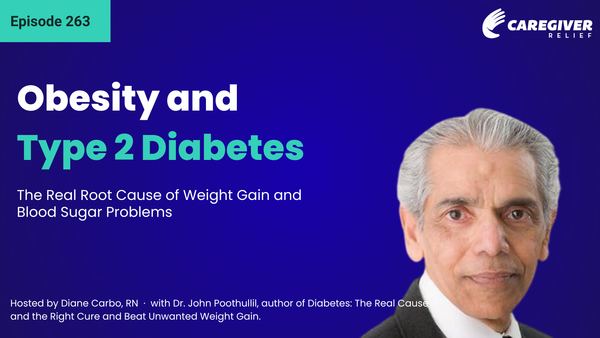
TMS Therapy for Chronic Pain and Depression: A New Non-Drug Treatment Option with Dr. Stevie Foglia - Episode 214
Dr. Stevie Foglia explains TMS technology, chronic pain, depression, and how noninvasive brain stimulation may shape the future of patient treatment.
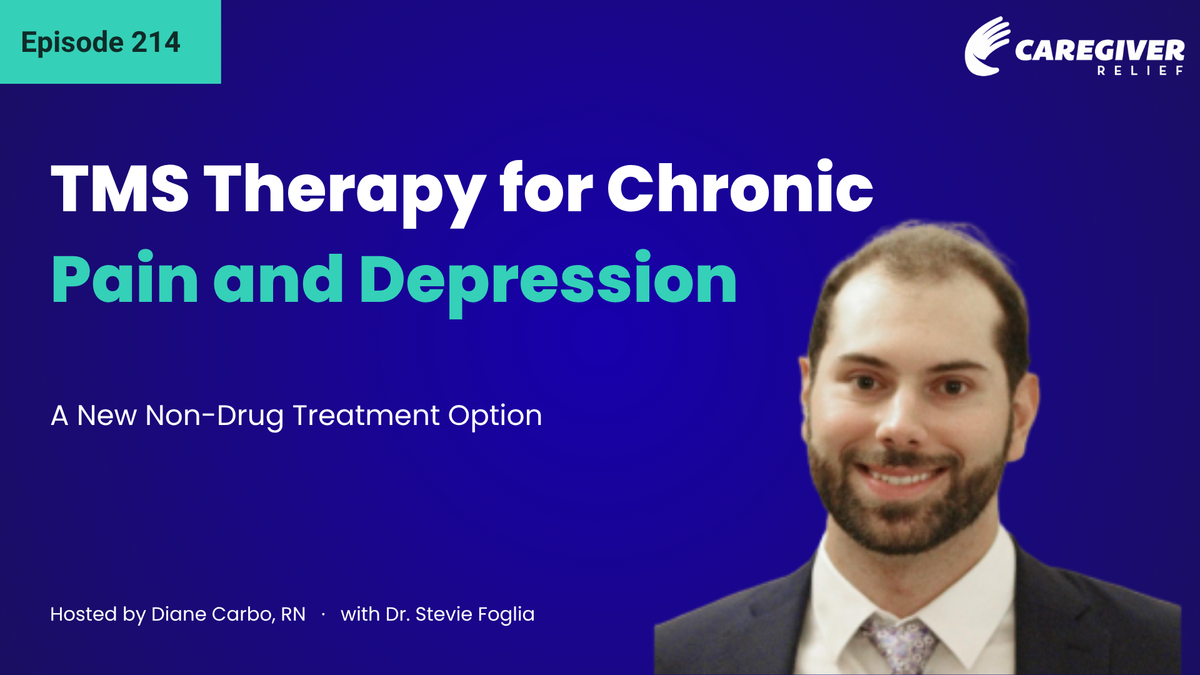
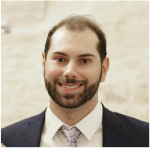
In this episode of the Caregiver Relief Podcast, host Diane Carbo, RN, sits down with Dr. Stevie Foglia, PhD, Chief Executive Officer of Neuromod Inc. Dr. Foglia shares groundbreaking insights into Repetitive Transcranial Magnetic Stimulation (rTMS)—a game-changing, non-drug, non-invasive technology that is rewiring how we treat neuropathic pain, complex regional pain syndrome (CRPS), and treatment-resistant depression.
🚀 Key Episode Highlights
- The Pain-Depression Connection: Why chronic pain and depression are deeply intertwined, and how treating one can drastically improve the other.
- The Power of Neuroplasticity: How rTMS uses precise, repetitive magnetic fields over the scalp to safely change brain activity without the scary side effects of heavy medications.
- A Lifeline for CRPS and Neuropathic Pain: Hear the incredible research showing how central brain stimulation helped severe CRPS patients tolerate wearing socks and shoes again.
- The 10-Year Relief Discovery: A look into stunning long-term data where monthly maintenance TMS treatments prolonged pain relief for up to a decade.
- The Future of Tech (AR + TMS): How Dr. Foglia's team is pairing TMS with Augmented Reality (AR) to treat chronic neck pain and concussions.
🗺️ Podcast Outline & Timestamps
- Welcome & Intro: Diane Carbo introduces the heartbreaking reality of chronic pain and caregiving.
- Personal Motivations: Dr. Foglia shares how his father's severe spinal cord injury drove him into chronic pain research.
- TMS Explained Simply: Breaking down how non-invasive magnetic fields modulate brain activity.
- The Origin of TMS for Pain: Moving from invasive brain implants to safe, scalp-based stimulation.
- TMS vs. rTMS: Why the repetitive pulse is the secret ingredient for long-term neuroplastic change.
- What the Clinical Research Shows: Approved peripheral treatments vs. central brain treatments for diabetic neuropathy and fibromyalgia.
- The Patient Experience: What a session actually feels like (Hint: It’s painless, and some people even nap!).
- Medical Innovation (ARST): How Neuromod is combining Augmented Reality with TMS to "prime the brain" for physical rehab.
- A Message of Realistic Hope: Dr. Foglia's dream of making TMS a first-line therapy before opioids or surgery.
- Outro: Diane’s vital reminder to family caregivers on the importance of self-care.
💡 Notable Quotes
"Every chronic pain patient we had in our research would also present with depression... They are so closely interconnected." – Dr. Stevie Foglia
"We had participants that initially had CRPS in their foot, and they couldn't even wear a sock... But by the end of the study, they were actually able to put a sock on again or wear a shoe." – Dr. Stevie Foglia
🔗 Connect & Learn More
- Neuromod (Brain Stimulation Consulting): neuromod.co
- ARST (Augmented Reality Physical Therapy): arst.ca
 Kelly Riley-Dunbavin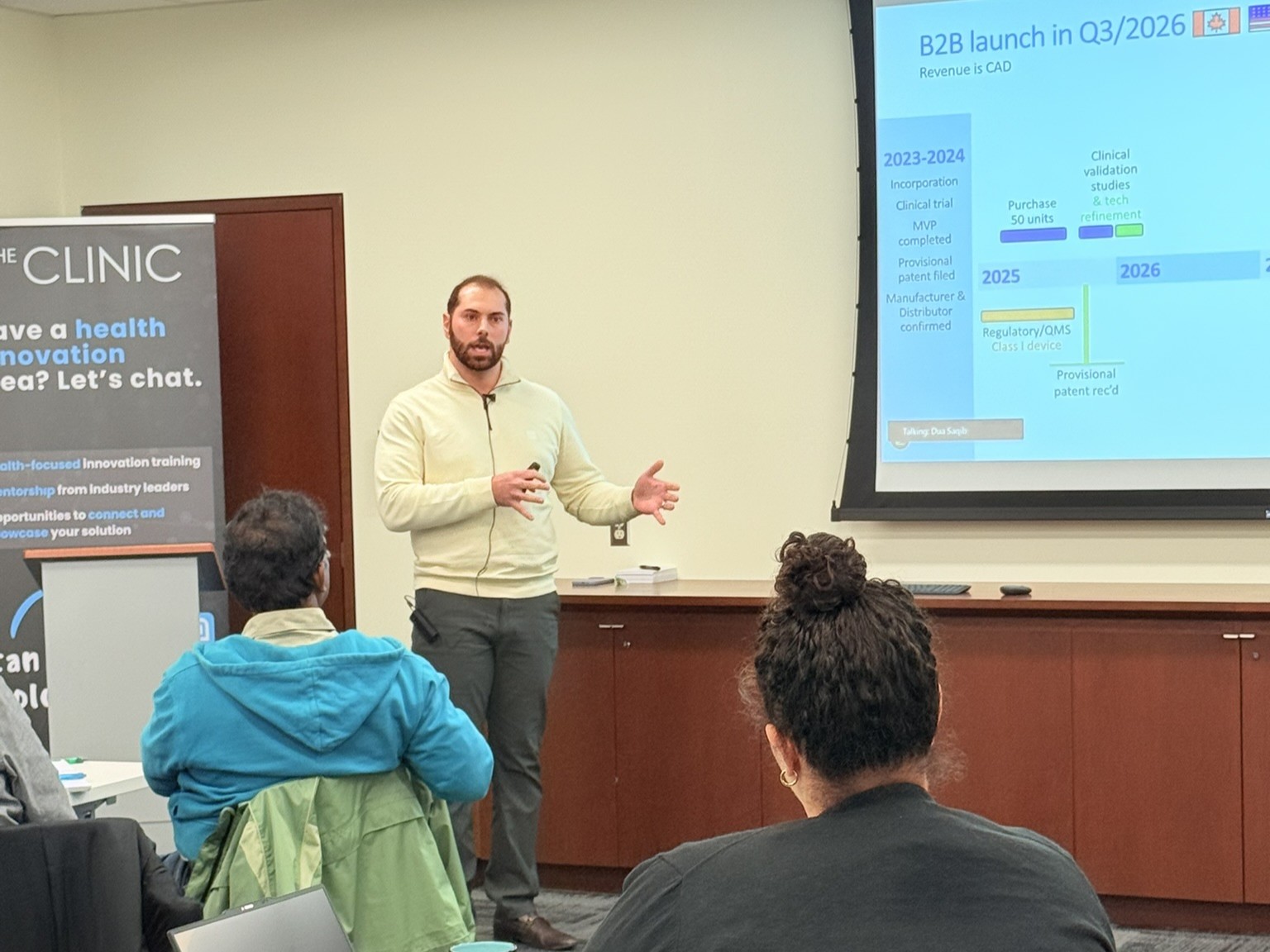
Podcast Episode Transcript
Diane: Welcome to the Caregiver Relief Podcast. I'm Diane Carbo, RN. And today we're talking about a topic that affects millions of families, chronic pain, depression, and the search for better treatment options when traditional approaches are not enough.
Chronic pain does not just affect the body. It can change sleep, mood, movement, independence, relationships, and quality of life. And when pain continues day after day, depression can often become part of the struggle. For family caregivers, this could be heartbreaking. You may watch someone you love suffer, withdraw, lose hope, or feel dismissed by the healthcare system.
You may also feel helpless, wondering what else can be done. That is why today's conversation is so important. My guest is Dr. Stevie Foglia. Chief Executive Officer of Neuromod Inc. Dr. Foglia completed his PhD in biomedical engineering at McMaster University and has experience leading clinical trials using repetitive transcranial magnetic stimulation, also known as TMS, in chronic pain, dementia, and concussion.
Today we're gonna talk about TMS therapy for chronic pain and depression and how this non-invasive technology works, what the research is showing, and what patients and caregivers should understand before exploring emerging treatment options. This is not about promising a cure. It is about education, innovation, and hope grounded in science.
Dr. Foglia, welcome to Caregiver Relief. I'm so excited to have this conversation with you.
Stevie: Thank you, and thank you very much for having me. Really looking forward to this.
Diane: I have a personal interest in this, so I suffer from chronic pain myself, and I had a son who had chronic regional pain syndrome, and, so I know what families go through.
Before we get started, can you share what first drew you into the field of chronic pain research and TMS technology?
Stevie: So similar for me, it was a personal experience as well. When, I was really young, my father was in a motor vehicle accident, had a spinal cord compression, and, spinal cord injury as a result of that, so developed, really intense neuropathic pain.
And unfortunately, his pain doesn't respond to traditional medications. He's tried really everything under the sun, and, nothing really had worked for him. And so I'd seen firsthand that struggle personally, but also how that affects a family. And so I was really driven to go into research within the chronic pain space, but more specifically in an area where we could develop novel technology or apply novel technology that could potentially help people that don't respond to traditional pain management.
So that's what really drew me into the PhD and the research.
Diane: After year, I've done years of rehab. I was a rehab nurse, so I have experienced patients with that chronic pain. And then my son, has also, with his diagnosis and what we went through, and how the healthcare professionals don't know how to treat it.
So I'm very interested. Now, for listeners who have never heard of it, what is TMS therapy in simple, everyday language?
Stevie: So TMS therapy is a non-invasive way to change how the brain functions or activates. So what I mean by that is we can apply magnetic fields in very specific timings and very specific intensities over the scalp.
Those magnetics fields change how the brain is activated, so we can increase how active the brain is in certain areas, or it could decrease how active the brain is in certain areas. And the reason that's important in clinical application is we can target areas that might be reduced activity and that might be related to a condition, and we can increase that to a normal level.
Or similarly, we can target an area where there's a hyperactivity, a heightened activity, and suppress it down to a normal level, and that seems to have implications for clinical symptoms. So it's a way to non-invasively change brain activity, is what TMS is.
Diane: Oh, why do chronic pain and depression often go together?
Stevie: It's really, comorbid conditions. I mean, every chronic pain patient we had in our research would also present with depression, and it's really something we've tried to focus on teasing those two apart. Is it the depression that leads to the pain, or is it the pain that leads to the depression?
And it's very challenging from a research perspective in order to tease those two apart, because they are so interrelated. And so what we do see is if we improve pain symptoms, we also subsequently see an improvement in depression. Or if we improve depression, we can also see an improvement in pain.
So mechanistically
Diane: Wow
Stevie: they are distinct, but we, It's hard in a clinical presentation to tease those two apart. We do see them being so related to each other. but ultimately what we see in pain is that the emotional implication can really drive the symptoms of pain. So for example, if you're having a really good day, you feel more positive, your pain might be more suppressed versus if it's raining outside, things might be a little more gloomy, your pain might be heightened.
And so just your perception of how you're feeling can really modulate how you're experiencing your pain symptoms as well. So those two are so closely interconnected
Diane: As a nurse, I used to observe it, and I experience this now. When you're try- when you go to when you put people down to, for bed, and they're in their bed sleeping, their pain keems seems to elevate because there's no other stimulation, and that's all they have to focus on when they're trying to rest.
Stevie: Exactly.
Diane: So I get what you're saying there. TMS is known by many people as a treatment for depression, but how did researchers begin exploring it the possible role in chronic pain?
Stevie: So they, timing-wise, they actually happened quite similar time. So TMS was developed originally in the late, 1990s, and began to be applied in depression.
But simultaneously, what was happening in the chronic pain area was a treatment called motorical electrical stimulation. So they would implant electrodes into the brain, and that would stimulate the brain to potentially reduce pain symptoms. And what they realized was that you could use TMS to do the same type of modulation to the brain, but in a non-invasive way.
So rather than having to implant physical electrodes into the brain that would cause the stimulation, we could stimulate outside on the scalp, and that would ultimately change brain activity underneath the scalp. And so that's why it initially was tried in chronic pain. there was some really early studies in the early 2000s that were showing some really nice benefits using this, majority in neuropathic pain patients, so people with spinal cord injury or other traumas that led to neuropathic pain.
And then really from there it began to proliferate. I think the reason the field grow so rapidly is the fact that we have such a potential to change the brain, but in a non-invasive, more side effect-free approach. So it's, really a way to potentially help someone without having the risks of the side effects associated with a lot of the other treatments.
So since then, it's really been applied into various chronic pain conditions, fibromyalgia, complex regional pain syndrome, different types of post-cancer pain. So it has really proliferated since those initial studies in the early 2000s.
Diane: Our healthcare delivery system in the US here is broken, and, getting pain meds is really hard.
Our Medicare, reimbursement allows a 15-minute visit for our doctors to see the patient, assess them, diagnose them, or write orders for diagnostic tests, and to treat them and go on to the next patient, so a lot gets missed. And I want you to explain I didn't realize this, but there's a difference between TMS and, repetitive TMS, is that correct?
Stevie: Yes.
Diane: And why the repetitive stimulation matters.
Stevie: So TMS is... All TMS means is the ability to stimulate the brain with a magnetic field. In order to change brain activity, what we call neuroplasticity, so the ability for the brain to change we need to stimulate it very frequent, very specifically, and with various, specific intensities.
And so the reason it's repetitive is that we're applying that magnetic field over consecutive pulses within a day, but also across days. And it's that continual repetition of the pulses and how it's activating the brain that ultimately leads to the long-term change. to give you an example, what we can do is apply TMS to the area of the brain that controls your body's movement, so what we call the motor cortex.
And what we can do is find the area in the brain that controls the muscle of the hand, and I can deliver a single pulse over that area of your scalp, and your hand will twitch. So I'm activating that area of the brain, it's going down your spinal cord out into the muscle, and causing a physical response.
We use that a lot to study the brain. we can use it to understand how active the brain is or how inhibited the brain is. We can do different types of modulation and circuits with single pulse. But in order to apply it clinically, and into these other populations, we need to stimulate that pulse very repetitively, and that's what leads to the long-term change.
So repetitive is that sense. So to give you an example, in the chronic pain space, we typically stimulate the brain at a frequency of 10 hertz, so 10 pulses per second. So it's quite fast over that area, and that's what's leading to those effects over time.
Diane: That's fascinating, and the non, invasive, non, no medication approach to this is, a wonderful.
I suffer from treatment resistant depression, and, I presently go for ketamine treatments because that was the only actually, here in Myrtle Beach, that's the only thing I could find, at the time. And my son has a ketamine clinic, so I knew about ketamine. And, he actually treats not just for depression, but he does have chronic regional pain syndrome patients that he treats, and that's a one-on-one four-hour treatment.
But, it actually makes the... I like when I go for my treatment 'cause my pain for a few hours is all gone. It's just, my body's numb. Of course, when I get up and I try to walk, I'm like a baby elephant or a giraffe, just, being born. but it has helped me in so many ways.
But, TMS was not, it is just now in my, area that will be affordable or, close to me anyway and be able to go. Could you talk about the research and what it's currently suggesting, is, TMS for therapy for chronic pain?
Stevie: Similarly in Canada and the US, TMS for chronic pain is not an approved treatment at least delivered centrally. So there's two ways that TMS can be delivered for pain. We can target the brain itself, or what we can do is actually apply TMS to the area. So say, for example, you had pain in your elbow or your forearm. They could physically apply the TMS to that area to help with pain.
So that is approved and only by one company, Magstim, so they have peripheral TMS for pain approved.
Diane: Yeah.
Stevie: For central, it's not yet approved in Canada and the US. really what the research is suggesting in that area is that it can be an effective solution for neuropathic type pain. There's a lot of work, especially coming out of France, that's showing really long-term benefits of TMS applied in chronic, neuropathic pain.
So to give you an example, there was a study that just came out last year where the longest, tracking of patients post-stimulation. And what they found was after you do what's called an induction period, so that's typically five days over a week or two weeks. After that, if you maintain the patient with one month tre- a treatment once a month, you could actually prolong the effects for pain relief for up to 10 years.
So those type of studies in these large patient populations are really showing some really nice evidence for neuropathic pain. In the other conditions like fibromyalgia, complex regional pain syndrome, endometriosis, all these other conditions, data is coming out, but we don't know if we're at the level of evidence yet to necessarily inform clinical care. I do know of applications where clinicians use it in off-label therapy, so they will try it with a patient with fibromyalgia, for example, or CRPS, for example, in clinic. But in terms of the real research recommendations, what's really strong right now is suggesting as a potential benefit for neuropathic pain.
And there's very specific parameters that should be used when that TMS is applied for that population. But that being said, that's all central. For the peripheral area, what we're seeing is some really nice benefits with peripheral stimulation. So you can think of musculoskeletal type pain, things like that, where it's being applied to various areas of the body, the low back, for example, the shoulder, the knee, and that's showing some really nice relief.
And again, that's, approved right now, through what's the Magstim device. kind of the two areas that are happening concurrently. One's more applied right now, one's more in research.
Diane: When I think of you doing the peripheral approach, I'm thinking of my son Jeff, who had our, it in his, left foot.
And he guarded it so much. Would that even be a treatment? he's gone now, but, he's no longer with us, but would that have been a treatment that would have been tried on him? 'Cause I'm just thinking, he guarded that foot so much. I mean, when you know, we couldn't put the air conditioning on in the car 'cause he couldn't handle it on his foot, and he would always have it all.
And we're all sweating bullets, It was very uncomfortable. So I'm trying to think how he would feel about somebody putting something on his foot that might put a... 'Cause they're they get very guarded and very careful. But they are seeing improvements, like with peripheral? That's good to know.
Stevie: So I'm not
Diane: I'm just asking for other client, you know, people right now,
Stevie: So I'm not as familiar with peripheral stimulation for CRPS.
Diane: Okay. That's fine.
Stevie: Everything we did was central.
Diane: Great.
Stevie: And the reason for that is exactly the point you had just made.
Because they're such a hypersensitive area
Diane: Yeah
Stevie: Stimulating that particular area might be very challenging. So to give you an example, we did some nerve stimulation in my research. And that was very challenging for a participant to tolerate because of the physical application.
Diane: Yeah.
Stevie: When we're targeting the scalp, obviously we omit that need, and we can target more central areas.
Diane: Yeah.
Stevie: So all of our research was there. But to your point about the hypersensitivity, what our research did show was that using the brain stimulation over the scalp, where we're targeting the motor cortex, we were able to reduce that hypersensitivity. So we had participants that initially had CRPS in their foot, and they couldn't even wear a sock, or they couldn't even have bedsheets rub their foot.
Diane: Yes.
Stevie: But by the end of the study, they were actually able to put a sock on again or wear a shoe. Oh. So we were seeing reductions in what's called allodynia, so that heightened
Diane: Yes, yes
Diane: pain response to non-painful stimuli.
Diane: Yeah.
Oh, this is such a blessing for those that have this condition in the future because it just breaks my heart.
It really does. can you tell, what a patient's from a patient's perspective, what does a TMS treatment feel like?
Stevie: So you're seated in a kind of a recliner-type chair. What we do is we apply the coil over the scalp, so really you just feel something touching the top of your head.
The stimulation itself makes a clicking noise, and you feel, in some situations, a slight tapping on the head. So it's completely non-painful. We even have patients that fall asleep during it, that we... We don't want that, but sometimes they fall asleep
Diane: Yes
Stevie: during therapy. from a usability standpoint, it's very well-tolerated, when applied over the scalp, and, we don't see issues there.
But it feels like a slight tap, and you hear a clicking noise.
Diane: That's fascinating. now what kind of patients may be considered for, the repetitive TMS therapy for their pain, and who may not be a good candidate?
Stevie: So really what we're seeing is neuropathic-type pains as being quite strong candidates.
So what we're looking for is patients that have what we call central sensitization. So what that means is the central nervous system, the thresholds for pain have been reduced, and that's where you get these symptoms like allodynia, where a stimulus that typically before wouldn't be painful is now painful because it's hitting a lower threshold, so it's able to pass through as a painful stimulus.
So those neuropathic-type pains, we're seeing some nice responses. The area that might be a little more challenging and really needs a lot more research in is musculoskeletal-type pains, chronic neck pain, low back pain, knee osteoarthritis, things like that, needs a lot more work. but the kind of central neuropathic-type pains, we're seeing some nice benefits.
But even within that, just like any treatment, there are responders and non-responders.
Diane: Yes.
Stevie: So we do see a proportion of people that do not respond to TMS, and so what we're really working on now is, how can we change the protocols or even personalize the protocols so that we get a higher number of people that respond?
So a lot of our work in our research right now is figuring out, can we measure the brain activity through what we call EEG, electroencephalography, and can we time brain stimulation to specific brain states to be more personal to that patient? And that may cause greater number of responders. Or even an example clinically is you have patients try out the standard kind of treatment protocol, this 10 hertz protocol.
You get the people that respond, and you maintain with them that protocol. But then the people that don't respond, you try different protocols, so maybe a faster frequency, like an ITBS that's typically used in depression. So there's ways to work and try to increase the number of responders, and that's an area in research that we're currently in right now.
Diane: So you're doing clinical studies right now,
Stevie: That's correct
Diane: Yeah. So, and you're also developing new technology through Neuromod. can you tell us, what you're trying to solve for patients with chronic pains, what problems you're having, like you just discussed and what for the future, in chronic pain management?
Stevie: So really, Neuromod's goal is twofold. The first is to increase accessibility to TMS care, whether it's for depression or chronic pain. So what we offer is a consulting service, so we work with clinicians who are either already using TMS for depression and want to expand their cases into chronic pain, and we can train them how to deliver it for chronic pain, the protocols, selection, things like that.
Or the other aspect is working with clinicians who currently don't have any TMS and want to start building a TMS program in part of their practice. So we consult and help develop that with the clinician. The second mandate with Neuromod is to develop novel technologies that can either be standalone tech for chronic pain or technologies that can enhance TMS.
So to give you an example, one of the studies in my PhD was in people with chronic neck pain, and what we found in the literature was that TMS for chronic neck pain really wasn't studied well, but we weren't really hopeful with how TMS could affect MSK, musculoskeletal-type pain conditions. So our idea was why don't we use TMS and pair it with a novel technology that was more targeted to the neck pain?
And so what we developed was these. Have you heard of virtual reality before?
Diane: Oh, my lord, yes.
Stevie: Okay. So similar to virtual reality. So it's called augmented reality. What it does is it projects virtual objects into your environment, and your goal is to track these objects with your head and neck. And so it's training fine motor control of the neck muscles, functional range of motion, target tracking, and what we see over time is that improves function and pain of the neck.
So that was a therapy that we had developed, and then what we wanted to do was say can we prime the therapy with TMS to potentially enhance the outcome. And so to give a little background to that, TMS is a tool for depression, pain, and these other, clinical populations. But what it can also do is prime the brain, what we call neuroplasticity, so prime the brain in order to learn a type of therapy.
And so the idea was if we apply TMS, maybe the brain is in more of an optimized or better state to then learn a therapy and then benefit from that therapy to a greater extent. And so that's being really come out of stroke literature, where you'll have a group of patients that have had a stroke. Half of them will do their typical rehab, and then half will do their TMS plus rehab, and those patients outperform the patients with just the traditional rehab, so the idea that the TMS is enhancing the ability for that therapy to benefit, that population.
And so we, we are just wrapping this study up now and what we're showing is that, patients with neck pain are seeing some really nice improvements, about a 40% improvement in pain, 50% improvement in neck function following four weeks of training with the system, with the AR system that we created.
The patients that got TMS before the AR are seeing to maintain those benefits at our two-week follow-up, whereas the patients with just the AR, might not be maintaining that same effect. So it's suggesting to us currently that the TMS might be having a protective effect on the therapy and maintaining and improving that effect over time, even after the therapy is no longer being used.
So It's, sorry, that's a really long, roundabout answer, but that technology is example of now what we're doing in the company, and we're now taking that tech, applying it clinically in physiotherapy clinics or pain management clinics as a tool to help with chronic neck pain. We're also helping with concussion.
We're, we have different modules of training that we're building out with this AR system. so really that's our area, is developing novel tech for pain, but also helping accessibility for TMS in relation to chronic pain.
Diane: When you talk about rehab, our present system right now, has, such a low reimbursement for therapies, OT, PT, and speech, that we're getting patients having a lot of unsafe discharges to home.
And, that's why I'm trying to do these kinds of podcasts, to make people aware of alternative treatments that they can seek, because of people with chronic pain, I know this happens in Canada just like it does here in the US, people with chronic pain are always seen as drug-seeking and it's not the case at all.
Our system is you have pain, they give you, pain pills. And then when you get to a, an area where you, develop a tolerance, you need more, and when you go back they say, "Oh, you're drug-seeking, so we need to put you in pain management." And now our interventional pain management, is being rationed.
The very procedures that are meant to deter or to decrease or eliminate the use of pain meds is now being, rationed. People need alternatives. So I applaud you for helping, y- you changing this.
Stevie: Thank you.
Diane: I have a question. Will it work on diabetic neuropathies as well?
Stevie: Yeah, interesting you said that.
So we actually just wrapped up, we just submitted a study, in people with painful diabetic neuropathy, and yes, we were showing, similar to what the CRPS was showing, we were seeing improvements in the sensitivity, but also in overall pain reduction, following f- two weeks of training with the TMS, so five days a week for two weeks.
And that was greater than a placebo. So what we do is we deliver the same stimulation. to the patient it sounds like the same stimulation, but there's no magnetic field. So what we were able to see is that relative to the placebo, the people that got the real TMS had a greater benefit in terms of pain, and these were individuals with painful diabetic neuropathy.
So we just submitted that, study, so hopefully in the next few months that will be published. But we're really excited by that data.
Diane: That's fascinating. Any more insights into other things that it's helping that we could d- discuss?
Stevie: Yeah, so
Diane: I'm a shameless opportunist.
Stevie: Yeah. Only, I can talk so much 'cause a lot of it is ongoing, but in terms of research that we've finished and now published, so neuropathic pain, complex regional pain syndrome is a really big area for us because
Diane: Yeah
Stevie: as it's such a impactful condition to the patient, not that any other chronic pain isn't. But CRPS is so intense, and it's so complex.
Diane: Yeah.
Stevie: And the treatments, the effectiveness of treatments is so limited.
So we're ... we're really passionate in the CRPS space. we work with an organization in Canada called Conquer CRPS. They're a patient support group. They help with funding and fundraising, advocacy, recruitment. So we're really big in the CRPS, area. Other areas is, like I said, painful diabetic neuropathy, fibromyalgia we're wrapping up a study in, and we're starting in endometriosis.
So we just received funding from our university in order to do a trial in patients with, endometriosis. so we're trying to apply into these different populations and understand how effective this can be in, in these other populations.
Diane: Awesome. For the patient or caregiver listening who feels like they've tried everything, what message of realistic hope would you want them to hear?
Stevie: Really, that there are very dedicated researchers and clinicians that are day-to-day actively building and testing new technology to help with pain. Our goal, and a dream of mine, would to see TMS be effective enough where it's a first-line therapy
Diane: Yes
Stevie: for chronic pain before the opioids and the intensive medications or even surgery.
That's an area I'd love to, that we could get to over time as TMS develops. the hope, I would say, is that we exist. we're doing this work, and really we want to help people and make this accessible, and that's really what inspired the development of Neuromod. It's great to do this research, but if it's not applied in clinical setting and ultimately helping people outside of research, I don't think we're giving people the best hope and chance with the research itself.
And so really the goal of the company is to translate the developments and research into real-world help, real-world practice, and ultimately make these things more accessible to people with chronic pain, and potentially get benefit.
Diane: How do people find you?
Stevie: So we have a website. So our website is, neuromod.co.
That's related to the brain stimulation side of things. Related to our augmented reality, which we use more for pain, neck pain, concussion, back pain, that is www.arst.ca. And that talks about the product and, what we're doing in that space.
Diane: I want to thank you so much, and I'm so excited you're doing this work because I know what my son went through and how, our healthcare delivery system lets down people in pain.
And as a chronic pain sufferer myself, I'm always looking for ways, because I can't. I'm a person who can't take pain medication. My stomach doesn't tolerate it, and so I'm always looking for ways to, alternative treatments, and a no-drug way is the best for me. So I applaud you, and I thank you so much.
Thank you. To my family caregivers out there, you are the most important part of the caregiving equation. Without you, it all falls apart. So please learn to be gentle with yourself. Practice self-care every day because you are worth it.
You might also like this article:
 Diane Carbo
Caring for a loved one can be overwhelming — but you're not alone. If you have questions, big or small, our expert team is here to help.
👉 Click here to Ask the Expert
Our Resource section can help you find the information and tools that you need. We have courses, videos, checklists, guidebooks, cheat sheets, how-to guides and more.
You can get started by clicking on the link below. We know that taking care of a loved one is hard work, but with our help you can get the support that you need.
Click here to go to Resource Section now!