Life Beyond Pain: Finding Strength, Purpose, and Joy with Vita Oyler - Episode 212
In this deeply moving episode of the Caregiver Relief Podcast, host Diane Carbo, RN, opens up about her personal connection to chronic pain and the devastating loss of her son to suicide after his battle with Reflex Sympathetic Dystrophy (RSD).
Joining Diane is the incredibly inspiring Vita Oyler—a rehabilitation counselor, author, and speaker who has thrived despite living with RSD for over 35 years and undergoing a partial leg amputation. Together, they share an uplifting conversation about shifting perspectives, finding joy, and choosing to thrive instead of just survive.
📋 Episode Outline & Key Takeaways
- 💔 A Heartfelt Welcome & Personal Story: Diane shares the reality of invisible chronic pain and honors her son Jeffrey’s memory, setting the stage for a raw and vital conversation.
- 🩺 The Reality of RSD (CRPS): Vita shares how a simple running accident and a hairline fracture completely altered her life. Diane discusses the frustrations patients face with a shifting healthcare system.
- 📺 Laughter as Medicine: How watching I Love Lucy marathons helped Vita realize that laughter releases powerful endorphins, naturally shifting focus away from physical suffering.
- 📝 The Power of Micro-Goals: Vita’s secrets to building a full life by setting daily, achievable tasks, tracking milestones, and learning to be gentle with yourself.
- 🤝 Turning Struggle into Advocacy: Why Vita started a three-tier support group for patients, families, and caregivers to break the cycle of isolation.
- 🧠 "My Body is Healing": Shifting your mindset from negative self-talk to positive affirmations. The critical roles that faith, gratitude, and community play in lifting the heavy burdens of caregiving.
- 🚗 Advice for Caregivers: How to practice extreme patience, avoid "enabling misery," and help your loved ones safely re-engage with the world.
- 🕊️ A Final Message of Hope: Vita and Diane leave listeners with a powerful reminder: Don't give up, push yourself just a fraction of an inch every day, and find a reason to smile.
🤔 Why You Can't Miss This Episode
If you are a caregiver feeling overwhelmed, or if you are personally fighting an invisible illness, this episode is a warm embrace and a roadmap rolled into one. You will learn how to:
- 🌻 Reframe your mindset from "broken" to "healing".
- 🛑 Stop using the words "I can't" and embrace micro-successes.
- 🐾 Find small, daily anchors of joy (like music, art, or even pet sitting!) to keep you active.
💌 A Note from Diane:
"To my family caregivers out there, you are the most important part of the caregiving equation. Without you, it all falls apart. So please learn to be gentle with yourself. Practice self-care every day because you are worth it."
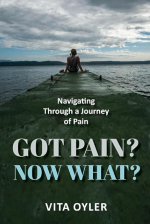
- Read Vita’s Book: Grab your copy of "Got Pain? Now What?" to dive deeper into her incredible journey and strategies.
Podcast Episode Transcript
Diane: Welcome to the Caregiver Relief Podcast. I'm Diane Carbo, RN, your host. Today's episode is very close to my heart. I live with chronic pain myself, though thankfully mine is manageable. But I also know how devastating it can be. My oldest son, Jeffrey, was a Korean linguist in the Army when he developed reflex sympathetic dystrophy, or RSD.
His pain became unbearable, and 14 years ago we lost him to suicide. So I share this not to bring sadness, but to shine a light on the reality of chronic pain. It's invisible to the outside world, yet it impacts every aspect of life, and it's why conversations like this one we're, having today are so important.
And my guest is very special. Vita Oyler is a rehabilitation counselor, inspirational speaker, and author of Got Pain? Now What? Vita has lived with chronic pain for more than 35 years after developing RSD from a simple accident. Her journey has included enormous challenges, including the amputation of part of her leg.
But she's also discovered resilience, purpose, and even humor along the way. In this episode, we'll talk about how to live fully with chronic pain, how laughter can actually be medicine, and what caregivers and those living with pain can do to find hope. This isn't a story about despair.
It's a story about courage, resilience, and a choice to thrive.
Diane: Vita, thank you so much for sharing this. When I read your story and you agreed to do this podcast with me, I was really, elated because we have so much pain in the world, and I know from firsthand people with RSD or chronic regional pain syndrome, that's the other name for it, have a unique pain, unbearable pain, and, not to dismiss those like me who have chronic pain.
So welcome.
Vita: Thank you. Thank you so much, Diane, and thank you for having me on your show here.
Diane: You'll have a positive impact on many of my listeners, and I think that's important. Can you share your story of how your journey with chronic pain began?
Vita: Oh, yes. it was, just a, an accident.
I had a little running accident. stepped hard on a rock, and my foot, I couldn't move it, so I went to the doctor's, and he said I had a hairline fracture and, casted it. while it was in the cast, my foot, became purple and blue, and my toes swelled up. And so I went back to the doctor.
He cut off the cast, and he said, "I think you've developed something known as reflex sympathetic dystrophy." And I asked him, "What is reflex sympathetic dystrophy?" And
Diane: Yes
Vita: he said, it was-" So- something that was discovered or named during the Civil War. And he took me into his office and he said, and he read some of the, case studies, and then he said, "There's really no cure for it, nothing that we know that could make it go away."
And I was like, "Oh," devastated. you gotta send me someplace. You gotta, we gotta try. I can't live like that with a swollen foot and it's so painful." So the rest, and then it was just referring me to different, medical facilities, different doctors, trying to figure out how to make the pain go away
Diane: Yeah.
You know what's really sad is, and I know this for a fact because I have dealt with it with my son, but I also go to a pain management doc, and the healthcare professionals treat us if we're drug-seeking all the time. And it's very frustrating because they dismiss our pain. And we now have, because of the...
when I was in the '70s, I started my nursing career. in 1974, I was a, a new grad. And then they talked about, oh, if a person has breakthrough pain, which is a term that they made up, that, to push more pain meds, we've learned, we gave them more meds. So we caused, this interest in having to have pain fully relieved, and now they take it away.
In fact, I feel totally insulted when I have to go to the doctor's and, they want you to sign that you're taking and I can't take pain meds. that's, really tough on my stomach's too bad. I throw everything up. So I'm very, I struggle with that. But they want... I have my clients and friends that have to sign a contract that's, and they have a pee test done every single time they go to the doctors to make sure they're doing, taking their drugs.
And I'm like, "Oh." And then they don't wanna give you more
Vita: Yeah
Diane: when you develop. So I really understand what you went through. And I feel sorry for anybody in pain because we're at a time in our society where, they don't want you to have pain, and the doctors get a check mark, a black mark next to them if they order too many pain pills in their practice.
Vita: Yeah. Yeah.
Diane: It's very frustrating.
Vita: It is frustrating.
Diane: So how did it affect your life? And you describe humor as a healing tool.
Vita: Yes.
Diane: And, I use humor all the time, as a nurse, and I know as a rehab specialist that you are. You have to have humor in our lives, because we couldn't get through it.
But how did that help you to actually help your pain?
Vita: Oh, my gosh. when we laugh, we release those endorphins, the good guys.
Diane: Yes.
Vita: Yeah. And, I was, going through it. I was very, scared, nervous. I was isolating myself because I didn't wanna do anything, except, be with- taking care of my foot.
And then as it was spreading and the doctors said, "Really, Vida, there's really nothing we can do for you. You're just gonna have to go out there and learn how to live with it." And, so I had to find ways to learn to live with it. I didn't wanna take painkillers because they made me feel like a zombie.
Diane: Yeah.
Vita: so that wasn't gonna work. So I discovered believe this is a good story because my mother used to love to watch I Love Lucy in the morning.
Diane: Yes. yes, I know.
And, Lucy and Ethel, yes
Vita: Lucy and Ethel. And, "Lucy, I'm home." Yes. And I started watching that, and then I thought, "Wow, I feel so much better."
My mom we would both laugh, 'cause there used to be, like, a little marathon of I Love Lucy in the morning.
Diane: Yes. Yes.
Vita: And so there I would be, laughing, and I thought, "God, my pain isn't as bad. What's... This is weird." Yes. This is good, a good weird.
Diane: Yes.
Vita: Yeah. and, so I started, watching other things 'cause I wasn't really watching TV too much.
But, I started watching comedies, and I started feeling so good. Because, it was taking the focus off my foot and
Diane: Off your body and yourself
Vita: yeah.
Diane: Yes.
Vita: I was watching something that made me feel good.
Diane: Yes.
Vita: And, and
Diane: We don't do enough of that in our culture right now, And, people like to feel unhappy and miserable sometimes.
Vita: I know. Why?
Diane: You know what? I, and I know that many people with chronic pain feel isolated. I know Jeff did. He did have his Army buddies, 'cause he had been in the military, and he would communicate with them. But,a- he became more and more isolated.
The thing with chronic pain is they give you pain meds, and then when you develop a tolerance to them, you need more. Then they accuse you of drug seeking, and then they send you to pain management to wean yourself off the pain meds. And, they offer you, treatments. Interventional pain management treatments to try to handle your pain.
Now, with everything that's going on in Medicare, they're even rationing the treatments.
Vita: Yeah.
Diane: Not only can you not get
Vita: No
Diane: and I will tell you one of the things I was fighting for. Now, this is 15, 16 years ago when Jeff was in the military.
Fighting for ketamine treatments for him because I had been in- I worked at Hahnemann Hospital as a nurse liaison for the VNA of Greater Philly, and then Dr.
Robert Schwartzman was doing, sending patients with RSD over to Germany for ketamine comas in those days. It wasn't approved here, but it was being t- tested there. And I knew about it, so I tried to get the military to send Jeff over to Germany, for that. And of course they wouldn't do it.
But, that I knew that was hopeful. And now this the long story short, my oldest, my youngest son is a nurse anesthetist and opened a ketamine clinic in, in honor of his brother.
Vita: Oh my gosh. That's so
Diane: So at least he's giving back and he's helping. and I like that. That's so cool but how did you manage to build a meaningful and full life despite your limitations?
'Cause I know that's hard to overcome.
Vita: It's hard. It's hard. I started learning to, make little goals, I was writing things down.
Saying, "Today," for instance, "Today I'm gonna get up and wash the dishes," or something like that.
Diane: Sure.
Vita: and as I did that, and I had my little list of the things that I wanted to do, I would check that off, and then I would go, "I did it."
How'd you feel? Eh. and so I kept a little log, which is really a good way to do this.
Diane: I've always been a list maker
Vita: Yeah
Diane: because then I can feel like I'm accomplishing something. Yeah. And I don't want to miss anything.
Vita: Yeah.
Diane: And I prioritize. In fact, I encourage my family caregivers to make a list of their every day of what they want to accomplish, and prioritize it.
And if you don't get to it today, put it on tomorrow's list.
Vita: Okay.
Diane: Exactly. But it gives you a sense of c- accomplishment in a time when we're struggling.
And when pain gets bad, and you have to take a down day or two, it's waiting for you, but at least you have goals.
Vita: And it's okay if you don't, you don't get, achieve all those goals that you want to achieve that day, But I think
Diane: the hardest thing for me, I'm sorry, the hardest thing for me was learning to be gentle with myself.
Vita: Yeah. Gentle. Definitely.
Diane: Yeah.
Vita: Do.
Diane: Yeah. Yeah.
Vita: Don't be, don't come down on yourself because you don't do something.
Diane: Yeah.
Vita: and then the other thing I've also learned is to try not to use the words, I can't," to may- you know, where I can. Yep. 'Cause even just a little thing just a tiny little thing. I can do that. Guess what? I did it. Huh, I can do that. I can do that. And you start, you know
Diane: Yeah
Vita: you start making your goals a little bit better, and you start realizing that you can achieve certain things.
Now, I'm not saying go to the moon or
Diane: I know.
Vita: Although, I wouldn't mind. No.
Diane: I would.
Vita: I'm joking.
Diane: I, yeah, I went to a, Catholic school. Oh. And I had a French teacher, her name was Sister Steven, and she would say to us, "You're an American, not an Americant. I don't want to hear you can't do it." Oh, no.
Diane: Oh, that just brought that's the first thing that came to my mind. Oh my God, Sister Steven.
Vita: I did too, so I know what you're talking about.
Diane: Oh. Now, you had family around you
Vita: Yes
Diane: and, and a support system. Very much. How did that help you in your healing journey?
Vita: Oh, support from my family was really, Appreciate it. my mom and dad were like that for me.
Diane: I like it.
Vita: Yeah. And, again, they were the kind of parents that you could you know, you could do it.
You could do it little by little, Vida. Do it. Do it. You could do it, sweetheart. And, and that to me was a good support system, knowing that I– that they had my back, so to speak.
Diane: So many family members can be negative
Vita: negative. "Oh, it's, it's all in your head." yes. And, "I could do that."
Diane: Healthcare professionals will tell you that too.
Vita: Exactly.
Diane: When you have a family that's supportive, that's very important, that means everything.
Vita: It means everything, yeah. It really does.
Diane: Now, you founded a chronic pain support group-
Vita: Yeah
Diane: and work with employers and injured workers. What inspired you to turn your personal struggle into advocacy?
Vita: Because, I was doing rehab counseling, and there was no support whatsoever. And, so I thought, we need to get people to talk to each other about how they handle pain or how, or an injury. What do they do that's, that might help you to communicate together? 'Cause that's really important too.
And so yeah, I started that support group, and it was hot. We had, we had caregivers, families. We divided it,
Diane: Oh, yeah.
Vita: Yeah, we had a support group for families, support group for the patients, and a support group for caregivers, which were family members
Diane: Yes
Vita: most of the time.
And, but it really worked because it kinda gave everybody a sense of togetherness, and that I'm not all alone in this.
Diane: Yes.
One of the things I find, with, chronic painers is, chronic painers we could be pains in the butt to people because they don't understand what we're going through.
And because they can't see it, they don't understand it. My son Jeff was a big guy, ginger beard. He had been in the military, but when he was going through his pain rehab, he grew a big red beard, and he was big. and he would... He had a handicapped parking thing, placard, and he would park in handicapped parking, and people would be cruel to him.
"You're young. What are you doing?" 'Cause he was only 30. Yeah. "You're young. What, who are you to... You lazy" whatever. They would call him names. And I'm like, oh my gosh
Vita: Yeah
Diane: how awful people are. They are. And, but he had, it's good when you get in groups that you know that you're experiencing these and you're not the only one experiencing that.
Vita: Right.
Diane: One of the things I took Jeff to, we were in Washington, DC, and he loved the Smithsonian, and he had to go in a wheelchair And he hated that because people, when you're in a wheelchair, and I know this 'cause I worked at Sister Kenny Institute, and I worked with people, young people in quads and paras and stroke victims and head injuries.
And when you put somebody in a wheelchair, you're pushing them around, that you have control over them. They don't like that. But people walk in front of you, they ignore you. They act like you are invisible to them. And it really upset Jeff. He felt offended by that. People would just He'd be sitting there looking at something, and they would just walk right in front of him and not say excuse me or anything.
And it's really sad because when you have pain, you're already feeling challenged. And then when the people around you. So I know you've been through all of that.
Vita: Oh, gosh.
Diane: And I think the support group that you created had to make an impact on those people.
Vita: Oh, big time. Big time.
Diane: Yeah.
Yeah. I tried to get Jeff. He was in the military, active military, then he went to the VA. The message they give soldiers is you should've come home in a body bag. It's really a tough, it is. And, I had to go all the way to the surgeon general's office to fight to get him treatment outside of the VA at the time.
And, it was just awful. But once he got into the VA versus active military, it's all downhill from there. Yeah. it's wait, delay, deny.
Vita: Oh gosh,
Diane: yeah ... just,
Vita: Yeah. I've worked with, the VA as well, Bless you some of my clients, and it was, the thing was hurry up, and then wait.
Diane: Yes. and wait. The old waiting. But you know what? That's our present medical system now, medical delivery system. people are having to wait for care because we have a shortage of doctors right now. The payment system for Medicare is so low that doctors are making less now than they were 20 years ago.
So people aren't going into medicine. nurses are going to step up and become the present doctors.
There's a lot going on in our healthcare system. And a single-payer system is not good in the United States. It just doesn't work. but now I have, lived with chronic pain myself, and I know you've lived with chronic pain.
From your perspective, because you've worked with families, what would you say to families and caregivers who are watching someone they love suffer with pain that feels overwhelmed?
Vita: Well, firstly, take it day by day, and, to try and understand where your family member is coming from, that they're in that pain.
But to... as a caregiver, what you could do is just say, I understand." use the word. "I understand you're feeling badly," or, e- embrace that person, because I think that's really important, to give them
Diane: Yes
Vita: yeah, to know that they're okay, There's... They have support.
Again, that's the support.
Diane: Yeah. I can tell you've had a lot of good support.
Vita: Oh, I did.
Diane: you were very lucky
Vita: I was so grateful
Diane: because so many don't. and I know. I deal with clients every day that are so upset. And I'm on forums with people in chronic pain, and I'm shocked at how doctors are treating them or
Vita: Yeah
Diane: dismissing them or, And it's really a bad time to have chronic pain. It's "Suck it up."
Vita: Yeah, suck it up.
Diane: Yeah.
Vita: and I love it when they say this: "It's all in your head."
Diane: Oh, I know.
Vita: Yeah. It's all in my head?
Diane: Yeah.
Vita: and it makes that patient feel
Diane: Like we're psycho
small, I think.
Vita: Yeah.
Diane: or you're drug Not that seeking. You're drug seeking.
Vita: Yeah.
Diane: And I, there are times when they would say that to my son, and I wanted to leap over the table
Vita: Oh
Diane: and just choke them.
Vita: I know.
Diane: The mama bear in me would come out.
Vita: I know. I had some pain, yeah.
Diane: and it's really hard, because just because you can't see it doesn't mean it doesn't exist.
Vita: That's right.
Diane: And I realize that a lot of people haven't had any kind of pain in their life at all. Like, physical pain. Or they haven't had even a loss of something. And that may happen when they're older. So they have this naivete about their approach to the world. Yeah. And with no experience, and then they're telling us what we should do, Yeah. and RSD, I have to tell you, is really, really challenging to live with. Jeff was in his foot. His was also due to an injury that caused a hairline fracture. But they put a pin in his foot And it caused his RSD. And when you're in the military and you're having pain, they just want you to do more.
They think you're trying to get out of physical, treat, the physical ed part of it, phys ed part of it. So he was pushed and pushed beyond his limits. And, it got really bad. And then finally they said, "Oh, you have RSD."
And it was terrible, so I know. Now you've written Got pain, now what?
I love that because people, I knew what to do with Jeff and because I had to call senators and congressmen. I had to go to, I had to go to DC and talk to people. It was hard. It was really hard. but I knew what to do for the military. But here in the medical delivery system, now that we have, you have so much.
You don't have much recourse because doctors don't wanna get. They dismiss, and they don't know. They really, They don't truly don't know. So what are some first steps people should take when they are newly diagnosed or struggling?
Vita: That's the thing. When you're struggling, like I said at the beginning, I believe in making little goals.
And then focusing on those goals.
Diane: Yes.
Vita: Be it. And then start a lot of times you become isolated, so it's nice, with your goals, maybe call Susie or something, to reach out again. Push yourself to make a phone call. Push yourself to have a visitor come over. Push yourself. you have to do that.
Otherwise
Diane: relationships are like a garden. You have to water them and add sunshine- You have to ... to them. Otherwise, they go away.
Vita: Yeah. They wither and go away.
Diane: So I really like that. one of the things, the benefits of being in the military, was Jeff had people reach out to him all the time.
That the bond in the military is unlike anything I've ever seen before. They go through so much together, and they could be a, an ostrich farmer in part of the country, and then Jeff was a Korean linguist, and he was going to school to be a immigration attorney. And I'm listening to all this, all these different people that are in his life, and I'm thinking, "What do you have in common with these people?"
And they all did. they really truly loved. But we don't have that in today's society culture outside of the military. It just rarely exists. And it's especially since COVID.
Yeah. COVID just destroyed us.
Vita: Oh, yeah. But that's why, with the COVID and everything
Yeah ...
Vita: there's the phone,
just reach out. not to be afraid. it takes- How should I say? It takes the steps to do it. It takes the want to do it. You have to, but you just, I think it's important to, for me and for my clients, to make those goals, try and achieve them. Do your daily goals, your weekly goals, your monthly goals, even look forward to the year.
Yes. and I think because you're focusing on something other than yourself.
Diane: Yeah.
Vita: and, I think it's important to try to reach out and find a group that you can belong to a group, that's what. The support. Go to find support groups.
Diane: Yes. Yeah. and make yourself get out and go to them.
Vita: And go to them.
Diane: It's nice if you can do it on Zoom, but it's not the same. It's not the same as in person. You have to brush your teeth, comb your hair, and put some nice clothes on
Vita: Exactly to go out. Exactly
Diane: and feel like a person.
Exactly. Exactly.
Diane: So you have to make that effort.
Vita: Yeah.
Diane: And people, I think on online stuff, especially if it's just in a, like Facebook, they get so cruel to one another. t, social media I think has brought out the ugly side of human
Vita: Yeah, I agree with you
Diane: humans, because they think that they can say terrible, cruel, nasty things- Oh, agreed
and think it's acceptable because they're not suffering the consequences.
So I really prefer getting to one-on-one, outside in a support group, 'cause I think that's important.
Vita: It is. Yeah. it's important to have that network.
Diane: Yeah.
Vita: and then try and use words that are positive.
I know there's so much negativity going on, but look at things in a positive way. find... and by positive, again, it's like instead of saying, "I hate," say, I may not like it." or, "I like," Change, change those, the way you speak and the way you're thinking. the way you speak and then it comes to your mind, you go, "Oh yeah, I'm not gonna be negative."
'Cause when you feel negative, it makes it worse,
Diane: Yeah. and you know what? It, it does. I had somebody tell me the other day, I was doing a podcast with a lady and she was telling me, about how she's overcome trauma and stuff, and she goes it's her thought process.
And we were talking, I said, "Yes, I have chronic pain. My body's broken." And she goes, nope. Your body is healing."
I like that And yeah, I like it too. And I went, "Holy crapoli, I should have said that." and now instead of saying, "Oh, my body's broken and I hurt," I'm like, "My body is healing. Are you listening?
I'm healing." I'm healing.
Vita: I'm doing better.
Diane: Yes. and that, now I'm looking at everything I think of in during the day, and I'm like, "I need to reword this. Because if you change your thought process, you change your perspective, and you change your life.
Vita: You do.
Diane: And I can see you're one of those people that has done that.
Vita: I have. I have.
Diane: Happiness and joy.
Vita: Yeah, you find joy. Life, at the beginning, though, there was, you're feeling awful, and I still have pain.
Diane: Yeah.
Vita: I have RSD, you could tell, in my hands.
Diane: Oh, yes.
Vita: And in my other leg, so you know, I'm... I have RSD, but you know what? I just go, "Okay, you're there."
Nice to see you. Okay, I'm gonna get on with my life and do what I wanna do. But, And then the other thing with being positive, being grateful for the things you can do every day. "Oh my gosh, I am so grateful I got up today. I had my milk and cereal," but learning to be grateful.
Those are important. And then, having gratitude. And, then another thing for me too is having faith. Faith and hope. They go together.
Diane: Yes, they do.
Vita: And
Diane: I can tell you with people that I work with, I have a faith and caregiving platform on my website. And, one of the things that I've learned, and I'm a recovering Catholic.
I'm spiritual. I don't practice my religion. But I still make the sign of the cross and say "Jesus, Mary, and Joseph." But, I find that people with faith
Vita: Yeah
Diane: carry their load, their burden differently. They don't see it as a burden. they see it differently because they feel like they're sharing it with God or whoever their higher power is.
Their higher power. Whatever it is. They just you know, whether they have a faith or, whoever, whatever type of faith.
Vita: Whatever.
Diane: Yeah. they have something. Plus, along with the faith comes community a lot of times.
Vita: Definitely.
Diane: And we as a society, I think, have lost a sense of community.
We live all over the country. if we used to live, within 25 to, to 50 miles of where we were born. And now, you can be all over the world. And your support system may not be in your neighborhood like it was. And that's hard. So I think that, people with faith have more of a connection.
They feel connect a human connection to others that share their beliefs.
Vita: Yeah. Definitely.
Diane: And that makes a difference
Vita: Yeah. And, like in faith and, I've worked I Doesn't necessarily mean religion, but just
Diane: Yeah
Vita: having faith
Diane: yeah
too, that's important. And then, then of course I think finding laughter, again, that's really important. And we talked about that already, but, to find things that are good in life. And again, that stay away from the negativity, but find things that make you smile. Because as being a nurse, even a little smile releases that endorphin, and you're focusing on something good.
And the pain is negative enough.
Diane: Yes.
Vita: You don't need negative with negative.
Diane: Yeah, exactly.
Vita: I don't need that. And, people have asked me, I don't have anything to smile about." You're like, "Really?"
Diane: Oh, my lord, yes. I've heard people say that. Yeah. say I'm going, "Really?"
Vita: Really? You can't find anything to smile about?
but, you know
Diane: I get silly. I've always been that way. Really? I don't I'll make fun of myself, I'm nothing like Lucy. I would love to be Lucy, Lucy Ball. her character was wonderful.
Vita: She's great.
Diane: But since I've been young, my patients used to tell me, "Even if I don't see you, I know you're on the floor," 'cause they could hear me laughing.
And because I feel that when people are, not feeling well, I can be appropriate, but, you know if I can make them silly or laugh, make them laugh just, or smile Smiling it changes their whole perspective. It does. And I think that's really important. And one of the things I do is encourage.
In fact, Lucy and Ethel, or I Love Lucy, I encourage people, watch old episodes of that. Watch old Enjoy being silly. Find your inner child and
Vita: Yes
Diane: and just be a little like. Yes.
Vita: Yeah. That's definitely
Diane: Do things that make you feel good.
Vita: Yeah.
Diane: Yeah. And whether it's m- music and you're dancing or singing.
And I can't sing off, I'm good off key, but I'll be silly and sing, and everybody'll go, "Oh, please, go find a day job,"
Vita: But that's fun, too.
Diane: yes. I just, I try to find humor in everything I do because otherwise I couldn't get through the day.
Vita: No, you can't.
Diane: yeah.
Vita: I couldn't with you.
Diane: Now, how do you personally balance medical treatment with self-care and mindset work?
Vita: For me or for everyone?
Diane: Just for you, but I'm sure if whatever you're telling me will be able to be shared with others.
Vita: Yeah. Medical treatment, that's always, for me, it's been going on.
It's Forever.
Diane: Yeah
Vita: forever.
Diane: Yeah.
Vita: there's no nothing new in the world of chronic pain. except, I could say, that ketamine or Ketamine,
Diane: Ketamine, yeah
Vita: yeah, or something like that. But, And painkillers, and so I'm not going there.
Diane: Yeah.
Vita: There are other things like, stimulators and, that they think can help.
They, it... None of those things have helped me.
Diane: Jeff had a stimulator, but it didn't
Vita: Yeah
Diane: help him
Vita: It didn't help, yeah.
Diane: He just felt like it was a cellphone vibrating all the time.
Vita: Yeah, it would just interrupt the, nerves or whatever
Diane: that would but it didn't make him- I understand
it didn't take away anything.
Vita: Me too.
Diane: They, just, just distracted him.
Vita: Yeah, me t- yeah, that's what it does.
Diane: Yeah, it distracts you, a little bit more .
yeah. a- and, but it didn't help him. Yeah. and I know people struggle with that. they really do.
Yeah. I know with Casey, the ketamine treatments that he does, it's a one-on-one treatment and you get ketamine for four hours, and it usually lasts six to eight weeks for some people, and it gives them relief.
Vita: Would love to do that.
Diane: I can tell you, I go for ketamine treatments here in Myrtle Beach, Casey's in New Hampshire for treatment-resistant depression. And I can tell you that it anesthetizes your whole body so that. And I love it because for the first few hours, and even for a day or two, I may feel, have no pain in my body.
Vita: Yeah, I know. Yeah.
Diane: And it's oh, man. No, and I'm not, it's not effective because I don't have the high enough dose for the four-hour treatment, but I, you know But it's still
I'm just doing it for my depression. But I can imagine that it's gotta be wonderful to people that have, pain. This, I don't know how you were, but Jeff, if he had a breeze hit his foot, he went into agonizing pain.
Vita: Oh, it's terrible. I, just like your son, I had that, and it's ongoing right now.
I've, because it becomes exacerbated.
Diane: Yes.
Vita: And you know, I've had some things going on with my hip. I think it's been exacerbating the RSD. And I tell you, I can't even put, I can't even put long pants on, and it's cold, and you know the little things, but
Diane: and Jeff, if he got, if he had cold water hit him, just a drop or two, it would send him through the roof.
Vita: yes.
Diane: So I know, and and here I am. I just know with me right now, It's cold here in Myrtle Beach. it's in the 50s. Oh my gosh. It, and it's in the 40s, at night. And it's oh my gosh. I, and having lived up in Minnesota and Pennsylvania and New Hampshire, I have, I know cold, and this isn't cold.
Like It's cold ...
but it affects my body.
Vita: Yeah.
Diane: It affects my body, and I'm like, "Oh, this..." And I'm like, "Ah." So any day that I wake up and then, I slept a decent night is a good day for me. And I'm grateful for that. But you're right. It, you have to be grateful, and you have to be thankful that, you've been given this opportunity.
For me, I love that you wrote this book. Yeah. And you're sharing your experience because, it helps others that have no clue. What advice do you have for caregivers supporting a loved one with chronic pain?
Vita: To be patient
Diane: Yeah
Vita: and to be encouraging.
Diane: Yeah.
Vita: That's really important for a caregiver, I think.
Diane: I think so too. and I'm gonna say that don't let them be cruel to you.
Vita: No.
Diane: and that happens. you know, when you are caring for a loved one, the loved one is feeling crappy and rotten and in pain. They wanna lash out at somebody, and who do they lash out at? They lash out at the person that's providing their care and support. So you've gotta learn to get a thick skin.
Vita: Yeah
Diane: and, I just put my drill sergeant voice on and tell Jeff, "Behave yourself. I'm your mother."
Vita: Oh, wow.
Diane: and, you know Yeah ... he'd get mad at me. But then he used to say to me, "Hey, He would say, "Hey Mom, put your dye monster on."
And that's, that is him wanting me to advocate for him, and, call the military or whatever, 'cause I was always on the phone to somebody to get attention. And that's...
Vita: Oh, that's wonderful.
Diane: Yeah. But it's hard work, and it's exhausting for the caregivers. It is
Vita: It is. And it is. And then the other thing, too, a lot of times people in chronic pain, including myself, it's nice if you have a caregiver, and I don't, but, but if a caregiver or a family member to get you out of the house
Diane: Yeah
Vita: maybe for a little ride. If, get in the car, go somewhere, or take a little walk outside and if, do something Yeah ... with that person, 'cause that helps them, too. it helps both of both people.
Diane: Jeff liked to go to the movies. And we'd go at night because he didn't want people to be around people.
Vita: It was defeating
Diane: the purpose, but you know what? He, he- That's okay, we would go to a, we would go to a movie theater that served booze. And he liked his beer, 'cause he, likes microbreweries. And, he would sit and have a beer, and fall asleep and snore at the movies. But getting out and being out and enjoying himself. And eventually, you're right, you take baby steps. You do things like that, and then all of a sudden you find yourself, you have your friends will say, "Hey, do you wanna go anywhere? You wanna do things?" And he did. But it took time.
Having the right perspective, having the right support around you, and you don't wanna coddle somebody with pain. don't enable them to be miserable or unhappy. I know that's hard to say, but, to do. it's easier said than done, but- Don't say, "Oh, it's okay. I know you're feeling."
They don't. First of all, you don't know how they're feeling. You have no idea what the extreme pain that they're in and what they're dealing with. But, if you just make them, give them a sense of purpose, by getting them out and being kind to them, and encourage them to eat right and exercise and get out and nature, it just will improve their lives.
But it's one step at a time, one minute at a time.
Vita: Yes. it's not gonna be done overnight, but, like you say, you take these steps and before you know it, you're both, parties are involved and you're moving forward, and that's the thing. I like to see people move forward, whatever that is gonna be, but
Diane: what life is.
Yes, us moving forward.
Vita: Yeah. Move forward.
Diane: Now, what advice, looking back at your journey, what do you wish you had known earlier about living with chronic pain?
Vita: How hard it was gonna be at the beginning. What I wish I would've known, that I wish I would've known at the beginning that I was not going to be what do you call it?
Just a zombie.
Diane: Yes.
Vita: Yeah. I really wish, because I got really nervous and scared about that, how I was gonna move on.
Diane: Well, my gosh, you had an amputation. Lord have mercy, girl.
Vita: Amputation twice.
Vita: that, that's a change in your body image. It's just, it's horrific.
Vita: Thank you.
And, the chances that pain might not go away is, was still there. I know, because I've had patients that had amputations that the phantom pain
Vita: Oh ...
Diane: was still there. And it was, it's horrific. I know that. there's so many changes.
Vita: Too many. And even today, Diane, I still have, I get open sores on my stump 'cause I can't wear a prosthesis 'cause of the RSD.
Diane: Yes. Yeah.
Vita: So I use a wheelchair. But, to get around. It's still a problem. My, my foot, my leg. I call it my foot. Hi, foot. but, it's, it's something that you just have to, for me, I've gotten used to it. And I know I wanna move forward with my life.
l love my life, and I just want to move forward in spite of everything, and you can do it. That's the thing. I have cats, I have that I focus on. I have, music. I never played music, but now I've learned to play a piano and
Diane: Oh, there you go.
Vita: There I go. Even though I have RSD in the hands and I don't care, I go blah, blah, blah, blah.
Oh, boy. This is fun. Just to get out and do things. Paint, do things. Do things for yourself and do things for others. I think that's really important too.
Diane: I think it's learning to adjust to your pain and that's, I know that's really hard to do and hard to say, but I have a very good friend who has, since she's a child, fibromyalgia, rheumatoid arthritis lupus. She's got Raynaud's. She's got the whole kit and caboodle. every autoimmune disorder, and she's only, she just turned 50. And she's the most positive, upbeat person I've ever met in my entire life. And I know she has pain. She's had five total knees. She only has two legs, but she- But five.
But five knees. Yeah. and she's only 50. And I watch her and I look at her as a role model for me because I struggle with, the weather changes and I'm like, "Oh, I don't wanna get out of bed. I hurt." It was so cold out yesterday, I'm like, "Oh, don't make me go out there," I'm like a baby.
But I just dress warmer and I make myself move. All my life I've had to push people with arthritis and pain. Walk, you gotta move, you gotta move. And I, it's coming back to me now 'cause every person that swore at me, I get it.
Vita: You get it.
Diane: Yeah. I actually dog sit for friends because I need that socialization and getting out.
And at my age, 'cause I do this a lot my podcasts and stuff, and I support caregivers, but it's isolating because I'm at home working, And I meet wonderful people like you, but I actually dog sit or pet sit. And it gives me, makes me get out and walk. It makes me, it makes me, give, it gives me a reason to, to be active. and I'm getting my touching needs met because I'm petting them. And every dog around me says, "Oh, I, you're my favorite person," because I massage them till my fingers are numb. But I'm also finding joy in my life with pain.
And it's a choice. It's a choice. It's really a choice.
Vita: It really is a choice. I mean-
Diane: Vida, I have enjoyed you so much. What
Vita: I've enjoyed you.
Diane: You're just such an inspiration to those out there that are living with pain, because RSD is no walk in the park. I know it very well.
What message of hope would you like to leave with listeners who are struggling right now?
Vita: The hope. Don't give up.
Diane: Yeah.
Vita: don't give up.
Diane: Yeah, don't give up. You're right. And just know tomorrow may be a better day.
Vita: Yeah. It's a
Diane: But learn to be gentle with yourself, but don't be a wuss. Push yourself a little bit.
Vita: Yeah. Push just a little bit. Yeah. Even if it's a fraction of an inch, just a little bit.
Diane: And, yeah. Yeah. and find a reason to laugh every day.
Vita: Every day. Find something to laugh at, and don't be like some of the people that I've spoken, with that there's nothing to smile about. Well, look out the window and you can see a beautiful, flower or a bird. Something'll bring a smile, to your
Diane: Yes. you can always it is change your perspective, you change your life.
Vita: Yeah, you do. You really do.
Diane: Yeah. Thank you so much for spending time with me today. Oh. I love this.
Vita: Thank you. I love it.
Diane: Thank you. And to my family caregivers out there, you are the most important part of the caregiving equation. Without you, it all falls apart. So please learn to be gentle with yourself. Practice self-care every day because you are worth it.
Caring for a loved one can be overwhelming — but you're not alone. If you have questions, big or small, our expert team is here to help.
👉 Click here to Ask the Expert
Our Resource section can help you find the information and tools that you need. We have courses, videos, checklists, guidebooks, cheat sheets, how-to guides and more.
You can get started by clicking on the link below. We know that taking care of a loved one is hard work, but with our help you can get the support that you need.
Click here to go to Resource Section now!