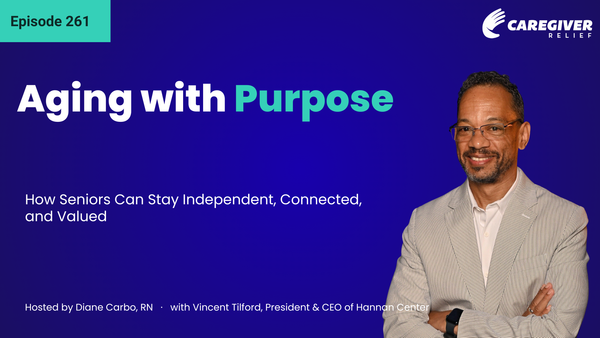
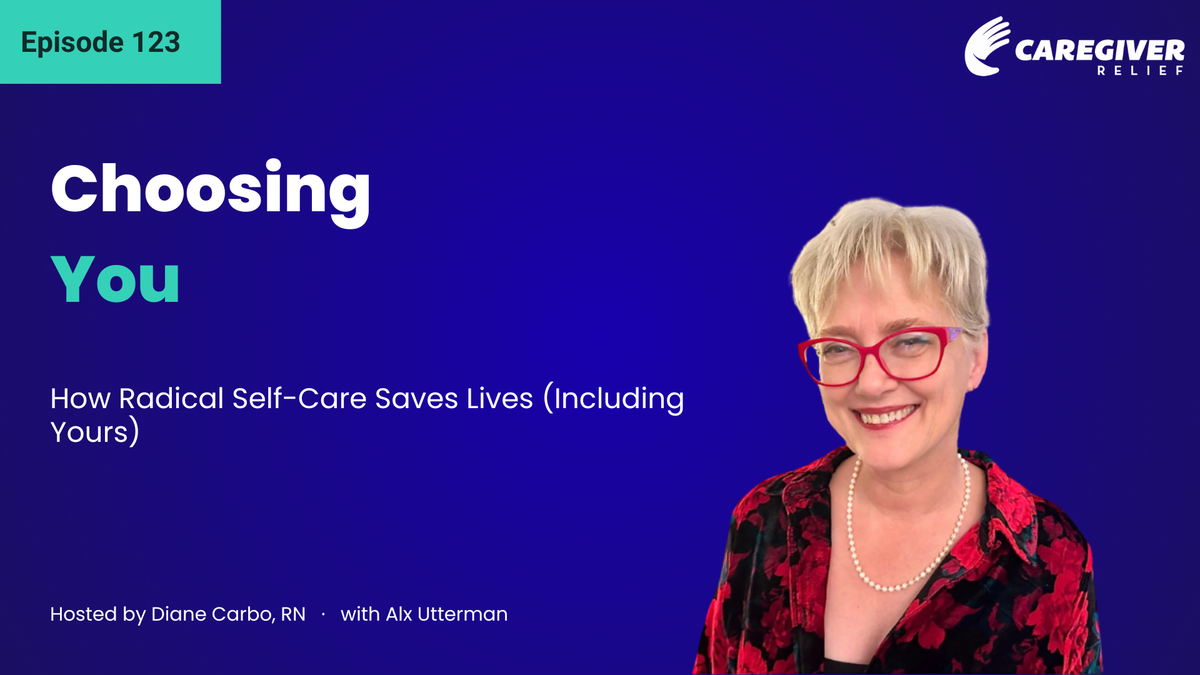
Choosing You: How Radical Self-Care Saves Lives (Including Yours) with Alx Utterman - Episode 123
Caregiving is one of the most meaningful things you can do—but it can also be one of the most dangerous.
Host Diane Carbo shares a staggering and terrifying reality: 63% of family caregivers become seriously ill or die before the person they're caring for passes.
Why? Because the chronic stress, emotional exhaustion, and lack of respite care aren't just "in your head". That stress lodges in your body, showing up as fatigue, brain fog, anxiety, digestive issues, inflammation, and even autoimmune illness.
This episode isn't about bubble baths or quick fixes. It's about healing at the soul level, and it features healer and spiritual teacher Alx Uttermann, who explains why unprocessed stress is the true disease behind caregiver burnout.
Alx shares "stupid simple" tools that can dissolve stress in minutes, helping you reclaim your health, energy, and spirit. It all starts with one powerful choice: Choosing You.
🌟 What You'll Discover in This Episode:
- The Sponge & Battery Analogy: Why open-hearted caregivers are like "giant sponges" that absorb the pain and stress of those around them.
- The Soul Battery: How your soul acts like a battery, holding both positive and negative charges, and what happens when it's overloaded with negativity.
- Listening to Your Body: How physical pain, headaches, anxiety, insomnia, and obsessive thinking are all alarm bells from your system screaming that it needs to "decharge".
- Ancient Healing Tools: Alx introduces simple, powerful techniques from ancient India that use the five elements (Earth, Fire, Sky, Water, Air) to dissolve stress.
- A "Stupid Simple" Tool: A step-by-step guide to the single most effective, portable, and free tool you can use right now to decharge negativity (Hint: It's just a black rock).
- The Power of Flowers: How fresh-cut flowers (especially roses) can act as an energetic buffer, absorbing stress in a room so you don't have to.
- Putting on Your Mask First: Why you cannot help anyone else if you go down first, and how these simple tools help you stay strong.
💎 Your 1-Minute Radical Self-Care Tool
Alx explains that the easiest way to "decharge" is by using the Earth element. Here's the simple practice you can do anywhere:
- Find a black rock. Any black stone will do—from your garden, a riverbed, or a landscaping store. Size doesn't matter.
- Hold it in your hand.
- Step 1 (Gratitude): Say "Thank you" (to God, the Universe, nature, etc.) for the stone. This gratitude opens your heart so energy can move.
- Step 2 (Intention): Say, "Right now, I am decharging/offloading all the stress, pain, and negativity I've absorbed".
- That's it. Just hold the rock for 10-15 minutes while you drive, watch TV, or sit quietly. You'll feel the negativity drain out of you and into the rock, which offloads it to the earth.
Alx shares stories of nurses, doctors, and therapists who use this exact technique to survive high-stress environments and go home clear and available for their families.
 Alx
Alx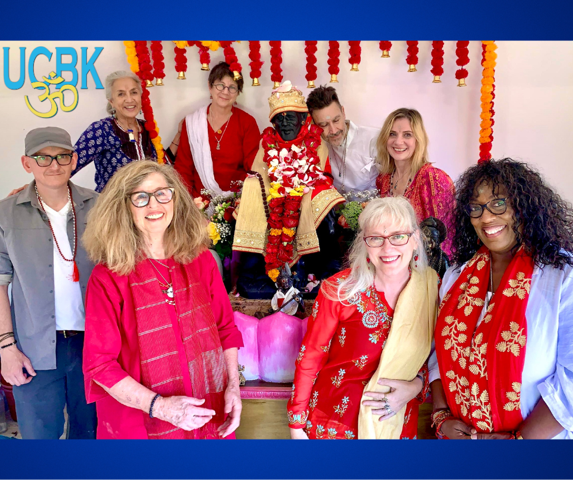
👇 Listen Now to Choose Yourself
This episode is a literal lifesaver. If you feel overwhelmed, exhausted, or on the brink of burnout, you owe it to yourself to listen.
You are the most important part of the caregiving equation. Without you, it all falls apart. Learn how to be gentle with yourself, grab a black rock, and start practicing radical self-care today. Because you are worth it.
Find Alx Uttermann's tools at: https://energeticsofselfcare.com/
Podcast Episode Transcript
Diane: Welcome to the Caregiver Relief Podcast, where we hold space for the unsung heroes, the family caregivers. I'm your host Diane Carbo, a registered nurse and lifelong advocate for caregivers navigating one of the most challenging roles in healthcare and in life.
Diane: Today's episode is called Choosing You.
How radical self-care saves lives, including yours, and we mean that literally. Here's the staggering reality. 63% of family caregivers become seriously ill or die before the person they're caring for passes. Why? Because chronic stress, emotional exhaustion, and lack of affordable respite care arose our health over time.
And that stress doesn't just affect your mind, it lodges in your body. It shows up as. Fatigue, brain frog, insomnia, digestive issues, anxiety, depression, inflammation, and even autoimmune illness. So today we're joined by a truly extraordinary guest, Alx Utterman, a healer, a spiritual teacher, and co-founder of the Universal Church of Baba's Kitchen.
Alx has spent decades teaching ancient healing techniques from India and guiding others to dissolve emotional trauma, reconnect with the divine energy, and become empowered healers in their own lives. Today we're going to explore how radical self-care, what it really means, and how unprocessed trust is the true disease behind
Caregiver burnout and how you can begin to reclaim your health, your energy, and your spirit. This isn't about bubble baths or quick fixes. It's about healing at the soul level, and it starts with one powerful choice, choosing yourself. Alx, thank you so much for joining us again today. What a, oh, I'm so happy to be here.
I'm excited to have you two because,you have all this wealth and knowledge and I'm blessed that you're willing to share it with us. 'cause I have caregivers out there that need to hear what you have to say.
Alx: Yes. I would imagine you do. and honestly I didn't realize until we did a podcast of, a month ago, how serious and how dire it is for our caregivers.
I didn't realize that they're going down like that after their loved one also goes. which is I'm not shocked, but it's so prevent.
Diane: it is. And, that's what we're, that's why I have you here,you decided to help me out and talk about this because I don't think it can be discussed enough.
can you tell, can you describe what self-care means to you and how it's changed? since you know all this. Spiritual information that you're, you practice.
Alx: Yeah. self-care is a buzzword, right? Yes. For taking care of oneself and it's become really, popular because there's such a demand, because everybody is so stressed.
this is just obvious. what I practice and what I teach is a series of simple, like stupid simple tools that absolutely dissolve stress within a matter of sometimes of minutes. And, so I tend to call it radical self care because it's so extremely efficient. What are we do?
What are these tools they rely on? the elements of nature, literal, concrete, physical elements of nature. I'll just give you like a little thumbnail of what I mean by self-care and how this works. All of us are semi-permeable membranes. That's the nature of being a human being. And when you have an open heart, like a heart to help someone, a heart to be of service, a heart, because you care the essence of care giving, it means you're a giant sponge.
And that sponge absorbs all of the pain and stress and negativity of the people around you. It just, it will, this is how we operate. I have some friends who are empathic for example, it means they're so open hearted. They can barely be in public. They can't go to a movie theater or a shopping mall because they're aware of what everybody is feeling.
Yes. They get overwhelmed. They feel bombarded. And then they have absorbed all of this and they don't know what to do with it. So what happens is, as we absorb and absorb the pain and suffering of other people, which we should do, I should make this clear, we're here to do that for each other.
It's part of being human and having a heart. It's naturally we wanna help each other. That's great. and I know that when a sponge is oversaturated, it's useless. Exactly. It's absorbed and absorbed, and it's rendered, dysfunctional. Basically, it needs to be rung out.
Correct. That's the nature of a sponge. Exactly. Okay. Our heart, you could call it like our soul battery linked to the heart is very similar. This means we need an effective way to wr out every day the stuff that we've absorbed from everybody else. What I like to liken this to is, yeah. Okay.
Let's say it like this. So the human soul, it's like a battery. We can hold positive charges, we can hold negative charges. It's very funny how the human system is set up. we're like a kind of bags of water that hold charges and we have like semi-precious minerals in us, right? Uhhuh, I mean it, it's very funny.
We are like a battery system and as batteries can hold positive. Or negative charges. Both. Nice. Okay. Good. Positive charges. A beautiful moment in nature that brings you to tears. You see a sunset or an ocean or a mountaintop or something, right? Or art or literature or a piece of music that moves you to tears or a scene in a movie that's so beautiful or.
Two little animals frolicking or a moment with a grandchild or some beautiful thing that moves the heart. Why do we get tears in the eyes? It's because the soul itself is emitting that water element in our system. These are positive charges. We wanna hold them in our soul battery.
You could say negative charges, obvious stuff like being scolded or, an argument or abuse or trauma of any kind. Or like the extreme cases, PTSD, like from our combat veterans who as young people did and saw things that nobody should ever do or see. Yeah, that comes in a straight shot through the heart and lodges in the soul battery as a negative charge because it came with such force in the case of, let's say, a really extreme trauma.
It can't come out by any other means. It needs to come out by an equal pressure applied to it. It needs almost like a supernatural pressure. To open the heart and get out that, that kind of thorn, that charge that's sitting in the soul battery. Okay. Those are obvious charges that are negative. Even if you cut somebody off in traffic and they shoot you a dirty look, you feel it? Oh yes, absolutely. We absorb these negative charges all the time. Okay. So fast forward to, more subtle negative charges, which is the nature of healing anytime a human being. Facilitates an energy shift in another human being or group of human beings where that recipient feels better at the end of, let's say, a conversation or an overt healing consultation or some treatment of some kind, whatever it is, there's an energetic shift, right?
They felt like crap. Now they feel better. Classic example, your friend calls you, they had a shit, can I say that? They had a really bad day. Yeah. Sorry. Friend calls you, they had a really bad day and they're hurting, right? And they're traumatized and they're crying. And you as a good friend, you listen with a big open heart, right?
Great. At the end of an hour, your friend feels better. They offloaded some energy, some stress got released. Okay, but where did it go? We know from physics, energy does not disappear. It merely changes state. Majority of it comes through the person who listened. Yes. And if we don't have a way to decharge to pull that negative charge out of our system, it will rattle around in us and then we will metabolize it and it will become part of our system.
So what that means practically is check yourself after such a conversation. How do you feel? A lot of people feel very drained. Some people feel hyper. They wanna go clean the whole house or go eat a whole Sara Lee chocolate cake. or they're so irritated and jangled inside they need to go for a walk or they need to fix a stiff drink or grab an edible or something.
There's an energy imbalance. Yeah, because you absorbed the stuff that person released and absent a process to decharge it. We are in big trouble. Okay. That's a simple example. Now, there is an exception to this, which I'll talk about, and the exception is when you know that you're an instrument of divinity or the universe or God or Jesus, or whatever you wanna call it, when you know that larger force is what is doing the active listening, for example, in the situation where your friend calls.
You know that God is the healer, you are not the healer in that situation. 98% of what you've absorbed from that person goes straight back to source, but two to 3% of it will stay in our subtle energy system. And until it is effectively decharge, that's to say pulled out by really good energy tools that can actually dissolve that at the core of it.
Okay, so in caregiving. Not only we're dealing with the person who is suffering, right? Yes. You're taking on so much of their pain and suffering. Of course, you want them to feel better, right? You're doing all of the things throughout a day that are required, to help somebody, whether it's giving them medicine or listening to them, or massaging their feet, or cleaning up after a bathroom, or, whatever it is.
Not to mention if there are other family dynamics and other dysfunctions in the mix, which I'm sure they are. I've worked in hospice, I know that drill pretty well. Yeah. It's not so much the person, it's everybody around the situation that is fraught. Yes, you're absorbing all of that all the time, and what happens is, because we metabolize it over time, that starts to build up.
Even if Hey, I'm doing God's work. I'm here in the middle of this. Situation. it's really divine is taking care of this person. I'm just the agent of it. I'm doing my best, but the results are in the hands of divine whatever. Okay? Still that two to 3% will build up, and it will lead to burn out.
It will also lead to PTSD. It will lead to physical breakdowns. Absolutely. It will lead to mental health issues. Yes, this is inevitable, or some combination thereof. So for example. because I work with a lot of healers of all stripes from Western medical to natural medicine to energy healers. a simple example is somebody who does massage body work, right?
Yeah. They go into it with an open heart. They're taking care of people, their hands are on the person. They're absorbing all of their stuff. And I've had friends who've gone through massage therapy training and they were told. by instructors, do not make this your primary source of income because you will burn out after five years.
So they know what the problem is, but they don't have a way to address it. Yes, the finger is right on the issue. however, they don't know what, how can you actually upload it? I had a beautiful friend many years ago who she, she did a massage for somebody, a new client. She didn't know this person and.
My friend said she's very empathic. She put her hands on a woman. She did two strokes, and my friend said she got so nauseated she had to go and throw up, which she did quietly. She came back and worked on this woman, and it was after the massage that the lady told her she had stage three cancer. Oh my.
Oh. Happens all the time. Wow. Yes. Happens all the time. I cannot tell you the number of massage therapists who have come through my door, who are like in their mid twenties, early thirties with ulcers and joint problems, and are like gray when you look at their faces, because they're big open hearts.
They went in to do massage, for example, because they love taking care of people. And they're absorbing and absorbing and it's too much, right? So that's the problem. And where we see the symptoms, our system is brilliant. The human system is brilliant. It will tell us when we are overwhelmed and we need to decharge, and I'll give a simple charging technique so everybody can practice it as well.
But let's say, average person, this isn't even in the trenches of caregiving. Average person comes home from work. They have a headache, they take a pill. Why do they have a headache? Because their system is screaming at them. You absorb too much energy from your coworkers or from, let's say they're in a service occupation of some kind.
So all the people that they were taking care of that day. Can you imagine what customer service representatives have to deal with at the end of the day?
Diane: Oh, they put up with a lot of, or
Alx: waitresses or flight attendants or anybody in retail sales. people coming, angry, entitled, unloading on them.
It's happening
Diane: to nurses too, right? And nurses.
Alx: Holy cow. Yes. I have many friends on the, in the healthcare world. Nurses since COVID have,
Diane: are being attacked. Literally. Yes, that's right. And attacked because they're not meeting the needs of their patients and it's, oh my gosh, unrealistic. it's sad.
And it,I didn't have that type of experience. Yeah. But, I was very lucky. I did.you know what, I can see that a professional nurse and a family caregiver deal with many of the same things. Yes. Difference between the professional nurse and the family caregiver is the professional nurse at the end of the shift, reports off and gets off the job and.
Can de-stress or whatever they decompensate some days are great where you feel like you've saved the world and then there's days when you feel like such a total failure. And those are the days I would come home and take some meds and lay down because I was like, I can't. I can't do. You just can't.
Alx: That's right. I have a sister who worked in ICU at the height of the AIDS crisis in Washington DC Oh wow. And yeah. And she got outta nursing pretty quickly. Yeah. And she couldn't even talk about her experiences. One day we were sitting, she was folding laundry and she was drinking beer in the middle of the afternoon.
I was like, whoa, girl. And she started to tell me some of the things that she had seen in the ICU wards and she just cried and cried. And toward the end of that conversation, she said to me, you know what I've noticed in nursing is that there are two kinds of nurses. There are the young, enthusiastic, open-hearted ones who wanna get in and save everybody.
And there are the old bitter ones. Who've seen it all and can't anymore. And she said, honestly, I didn't see any. There's no in between there. There's these two extremes. And looking at it from the point of view of this buildup to burnout, yes, it makes complete sense. You go in all gung-ho and open hearted, and this is, you chose nursing for example, because you wanna help people 'cause your heart is open.
it's a noble profession as in any kind of healing mortality, a physician or a dentist, or an acupuncturist or whatever. Everybody's going into the healing professions because they want to help, which as I said, again, we should do that for each other. Yeah. But we need to know how to manage the energy, otherwise it will take us down.
Caregivers don't always have a, don't feel. No. And they don't have a choice. It is, as it were, thrust upon them.
Diane: and then they, and they do, they deal with judgmental, uninvolved siblings and extended family members. they are, they're brutalized and they really do develop PTSD. Yes.
And the other thing that the pressure of the family caregiver in today's world is that they are actually expected to do things. That were once done by professional healthcare providers. Yes. And all of a sudden, all, they have no education, no knowledge or expectations of what they're supposed to do.
And they're terrified. Of course. They really are. and then they're afraid to ask for help because. They seem like then people will think they're stupid. Oh my God. Or that they failed, and I'm like, oh,no. It doesn't work this way. No. And so the
Alx: pressure is enormous.
Diane: Yeah. it really is.
And I can tell you right now that it is what is happening with, the changes in our Medicare reimbursement is it's even gotten worse to the point where the family caregiver. I'm afraid it's, we're gonna lose a hundred percent of them because we have nobody to take care of our seniors. We have, we have a shortage of doctors, nurses, and therapists.
They've cut the reimbursement rates so low that they're sending people home. I'm seeing unsafe discharges to home at unprecedented rates. Oh my God, it's gonna get worse. Yes. And that's why it's so important that we have this conversation today because I really want our, the family caregiver to know you're not a failure if you ask for help.
No, not at all. And that there are techniques that you can use to help you get through this, or people like. You that Alx, that they can re reach out to and say help. Yeah. A thousand percent,
Alx: yes.
yes. Okay, so let's talk about symptoms that your system is telling you need to get rid of this energy that you've picked up.
Yeah, it could be physical pain, like a headache or sore muscles or leg or neck pain. That's pretty common, or back pain, right? At the end of the day, people are like, the caregiver is practically the person who needs care, isn't it? Just having absorbed and absorbed and absorbed all the stress all day from everybody in all directions?
Okay, so it could be physical pain, it could be emotional, mental health symptoms like anxiety, depression. obsessive thinking. one of the things that you see in the medical professions or in any service profession really is this inability to leave the work at home, right? I sorry to leave the work at work, once you go home, it's but it's still running around.
You see this with psychotherapists a lot. The cases are still rattling in their heads. You do a lot with nurses. Did I hang that iv? Did I leave enough for them to hang? Exactly. Oh my God. What if I didn't, did I did and I, is that person gonna be okay? Yes. Yes. I have one friend who was on the front lines during the COVID, pandemic here in la and he.
He was in a hospital that, everybody was scrambling, right? Because they didn't know how to treat this thing in the very beginning. And they figured out about proning people pretty early. Yes. And so he was proning,which is to put people tilted down so that the lungs can drain. So they can breathe.
And he had some people that he was proning, like every hour on the hour. And he said, I would go to the parking lot. I would sleep for a few hours in the hospital. He never even went home. huh And then he said, I would get up after four or five hours and go back in and keep proning these people because he said, I knew if I didn't, they would die.
Yes. Yes. This kind of stress. So not even being able to leave it just to get sleep. Sleep disturbances are another mental health symptom that will come when your system is screaming at you, that you need to decharge, you need to dissolve and offload the stressors that you've taken in. that could be insomnia, it could be restless sleep, it could be.
nightmares, obviously, like classic PTSD symptoms, right? the little triggers that suddenly send you into a disproportionate response of some kind, or plagued by nightmares or, all of it. eating disorders can happen. It could be you feel queasy all the time, can eat or you're suddenly obsessively eating.
it could be even going into bulimia, anorexia as a result of all this stress that's coming to your system. All of these things are telling us it's our system putting out all the alarm bells and saying, you need to decharge. We are overwhelmed in this system. You need to get these negative charges out of your system.
So the tools that I teach, I've been teaching these now for 20. Like 25 years. Wow, that's amazing. they came from ancient India, and they're stupid simple. As I said at the beginning, they're like falling off a log backwards and they're so intuitive. You wonder why we didn't know all this, before in, in short.
and it's a much longer discussion, obviously, but in short, there we're linking to the elements of nature. What do I mean by the elements of nature? according to Vedic. ancient scriptures of India Veda, which was the, they were like the first spiritual scriptures on the planet. The first written down anything, it's not a religion.
It was like a, they're like a blueprint of the creation, the how stuff works.
Diane: Okay?
Alx: And they were found by, they were seen, they were recognized by great, high consciousness Sears, or what they call rishis who. We're so deep and quiet and silent in the consciousness, and so inquiring about the nature of how everything works, that, as it were, nature showed itself to them, how things work.
And then they wrote it down and that became the Vedas, the basis of spirituality on the planet, and certainly from which all other scriptures derive. Okay. According to Vedic, India and Veda itself, it's not a religion of any kind. It means, knowledge. It just means knowledge. Plain and simple.
you could make the case that Hinduism, per se, derived from Veta understanding. But they, these are not the same thing anyway. they found out, they, from their research that the human system, that everything in this creation is composed of the five great elements, the earth, the fire, the sky, which is like ether or, the Akash.
the water and the air and that. Everything that's in material creation is some configuration of these elements, but for the human system, we are made of these elements. Our dense bone structure. like even you cremate a body, the bones are left, right? That earth element, the most dense, gross, magnetic pull, like gravity, right?
If I drop something on the floor, it's always gonna hit the floor. Yes. Magnetism is the nature of the earth element. It's where we tend to hold a lot of our stuff, and you'll see why I'm talking about this in a minute. So the earth element, right? The fire element. We have the digestive fire for sure, but we also have inspiration pation from the Greek.
It's even in our word inspiration. Ros, right? The word for fire when somebody has an aha moment. Huh? There's like a sparkle, right? We even say that like we can see in somebody's eyes if they're awake or not, right? We use fire terms, which is interesting because the fire element in the human system also relates to the two eyes.
Somebody has a twinkle in their eye. We say, oh, they're awake. Versus somebody who's pretty covered over and Som Nolan, like their flame is dampened, So I know I, I'm gonna,
Diane: I can relate to this and I'm gonna relate to it because my family caregivers, so many of them deal with dementia.
And when you see a person with dementia, a lot of times their eyes are just glazed over. They don't know who you are. They don't know anything. And then you're, then there are flickering moments. Where flickering, yes. Where they actually see you, they recognize you. And that's why they call it the long goodbye because you're always hopeful that person's gonna come back out to you again.
So what you're saying to me really makes sense. Yes. Fire element.
Alx: And it does, it relates to the two eyes as well as, the digestive fire on the material level and the inspiration, the creativity, the expression you would say, somebody who has anger management issues. a little too fiery, right?
There's a disproportion in the way. The elements are balanced in their system, for example, okay? Water element will like Mother Earth. 75% of our body is water. Not everything that makes all the flesh, everything, right? It's, we're not very solid, really. We're squishy. It's fluid, right? Reproductive system.
Salivary system. Even part of the digestive, right? it's liquid. Yes. Circulatory system. Liquid. Okay, good. So water element, right? The air element, if you stop breathing, you're dead. That's a clinical definition, isn't it? They stop breathing. yep. Cease to breathe. You can go without food for a few days.
You can go without water for a few days. You can't stop breathing. Yes. Everything in us is composed of these elements, so where we hold a lot of the stress and the difficulty. It is also like reliant on and linked to these different elements. And this is the craziest thing. So I was in India in 1999.
I had already been working as a healer for some years, and I came from a deeply traumatized, family system. So I had a lot of negative charges, in the soul battery you could say to. Offload and my teacher started talking about this incredibly efficient system of dissolving these stressors.
And I was like, wait a minute. What? How did we not know those? So let's take the earth element because it is the most prevalent, dense, gross, big element in our system. And it's usually where we hold the worst of the worst. these tools rely on having a physicalized. Agent of that element. This is not airy fairy esoteric.
Oh, I imagine white light washing through my body and then I'm fine. No, sorry, that might've worked in a subtler time. But our time is dense and gross and overflowing with pain and suffering and negativity. So we need the actual physicalized dense, gross elements. So for the earth element, and this is gonna sound completely nuts and I'm fully aware of that, but just go with me here.
Okay. the simplest, most effective tool. Is a black rock. It's a Blackstone, any kind of black stone, it doesn't matter. It can be something you picked up by the ocean or river rock, or you got in a landscaping supply store or a piece of obsidian or whatever, shape, size, immaterial. I had the same little black rock in my purse for seven years.
I'm not joking. Oh wow. And a black rock is unique. Black, as we know, absorbs, right? Yeah. You don't wear black clothes out on a hot day. Why you don't generally drive a black car with a black interior if you live in a hot climate? Why? Because it's absorbing heat. Yeah. Okay. So this very interesting.
So a black stone has this unique, quality that it absorbs very quickly and it has a, link to the big earth element. The big Earth mother, you could say the big magnet of the earth that pulls out everything from us. So like you'll see in traditional cultures, you ever see like a movie like World War I Italian grandmother gets the news that the grandson died in combat.
And what does she do? She falls to the ground, right? yes, The ground is a big healer for us. Yeah, the earth itself will pull out a lot of pain and stress and negativity from us. But here's the caveat. If you are a meditator, if you're somebody who's trying to build a lot of very high consciousness charge in your system, you don't wanna lay down on the bare earth.
So I'll just say that you don't wanna do that. It's too big, and it will pull out all of the positivity as well as all the negativity. She doesn't differentiate the earth. She's a little, she's a little dense that way. So we use a little, microcosm of the big magnet Earth, which is a black stone, which has this funny relationship.
Did you ever do that thing in high school where you took a magnet and then you took a bunch of iron filings and you put them to the magnet and suddenly they're magnets too?
Diane: yeah. That is
Alx: the nature of a BlackRock to the big magnet earth.
Diane: Interesting.
Alx: Why does this matter to us? Because you can hold a damn BlackRock in your hand.
I'm not joking. And you, there's a two step process to this. Let's say, oh my God, I'm so upset because the person I'm caregiving for had a, they almost died today and it was really scary and we made it through it, but now I'm like shaking, right? Yeah. Why am I shaking? Because it, my system is overwhelmed with negative charges.
My system is overwhelmed. That's why we shake. That's why we shake after a bad argument. We absorb negativity and it's too much for our system and it's reverberating. Okay. I'm shaking right? I grab my BlackRock and I think the following two things. The first thing is thank you. Like a prayer of gratitude to God, universe, Jesus, mother Mary Buddha, nature.
Higher self if you are not particularly a believer of any kind, whatever it is, a gratitude. Thank you for this earth element. This black rock. Thank you. Why do we do that? Gratitude opens the heart. When the heart is open, energy can move. That means whatever stuck in our system can come out and through because we've opened that door by saying, thank you.
Next part. Right now, not tomorrow, not 10 minutes from now. Right now, I am charging. I am offloading. I am dissolving whatever it is that I just experienced. That's too much for my system or whatever I picked up from anybody today. That's not me. And you're holding the black rock in the palm of the hand.
Palm of the hand also has a chakra. there's energy centers that allow energy to move through the hands. as any Reiki practitioner will tell you, you're holding the black rock in the hand, and then that's it. You just sit there, 10, 15, 20 minutes, whatever it takes until you feel everything drain out.
It will go to the Black Rock and it will offload to the big magnet of the Earth, and you're done with it. Wow. And this is it. It is so immediate and incredible, and you don't have to focus on it. Once you set that intention, your inner consciousness knows pretty good how to relate to this earth element, this External mirror of the earth element inside you. It knows. So let's say you're watching, you can sit and watch a YouTube video. You could be driving with one hand holding the BlackRock in another hand. I had a nurse colleague and student who she worked in an Outpatient, surgical facility.
She was taking it in the teeth. Let me tell you. She kept a BlackRock in her car and by the time she drove home half hour, she was done. She was done with the whole day. All floated fine, clear, fine. That's fascinating. It's immediate. I know it sounds crazy and hyperbolic. So the deal is you have to try it yourself.
Yes. Yes. You have to verify it for yourself. You hold the BlackRock, you think the two things. It's very important. Thank you. However you qualify that. Thank you to God for this Blackstone that I am using right now. And then, right now I'm d charging, I'm offloading. I had a colleague who, he was a internal medicine physician and he was the primary doctor at a very small clinic in rural, Northern California.
And he was a good, open-hearted doctor. Really interested in healing. And he said, every day I came home I felt like I'd been hit by two trucks. Yep. Couldn't think. Couldn't deal with his family. He had a wife and kids. Yep. I said I was completely unavailable. I was like numb in my being. And he would sit in front of the tv, he would get high, he would smoke marijuana and he would sit in front of the television and like for a couple of hours, just like kind of channel flipping, seeing nothing.
And he said, I assumed that this was the life of a physician 'cause this is what medical school was like and this is what they prepped us for. And he lost his marriage, it didn't go well 'cause like he's not available. Yep. And he met my teacher and started de charging and he said, holy cow.
I had no idea everything of that numbness and that kind of. Shut down was all the people's stuff that he had absorbed throughout the course of the day and treating them. Yes. Yeah. With a big open heart as a physician. It wasn't his stuff. It wasn't his dysfunction. Yes. It's the overlays and the problem is we mistake the overlays for ourself and they were really in a bind.
Yep. Especially when it comes to the mental health distortions that can happen. and all of that can simply be charg through this. This is one angle of the earth element. There are others, but this is by far the easiest, simple decharge it, get rid of it, and suddenly within, 15, 20 minutes, you're back to stasis.
You know you're finished charging when you feel, oh, I'm myself again. Oh my gosh. I don't have all that upset and that Sturman drawing running anymore. I'm okay. Oh my gosh, I'm okay. Wow. And this also back to self-care. When we recognize what is the self versus this kind of overwhelmed, covered over version of ourself, that's completely distorted because of all the other stuff that we've absorbed automatically without our notice.
When you actually get down to this part that is you're like, oh, I'm actually okay. Oh my gosh. And it doesn't mean that the next wave won't hit. It Will. It will. We had a, I had a student who was a psych nurse at UCLA here in LA and whoa. You know what that's like. Yeah. they're coming in the Strait jackets.
They're coming in into full mental breakdowns and total psychotic. Yeah. Everything right. And have to be restrained and like craziness. And the staff is all wild. Because they're all absorbing all this. Yeah. She kept a black rock in her lap coat per episode that woman was charging. She wasn't saving it up to the end of the day.
Hell no. And she made it through and she was like. I can't believe the difference. I can function in this environment. Whereas before, she was just completely like she was. Kind of neuro aesthetic herself.
Diane: You know what, I understand that. IU it used to nurses a lot of times now are working 12 hours, three 12 hour shifts, and it literally takes them, Alx three, then they're off for three or four days.
Yeah. Yeah. It takes them that long to de-stress. Yep. And then the day before, 'cause I experienced this as well, the day before I had to go back to work, I would get physically ill. Of course my stomach would hurt, my head would hurt. And I knew that it was, 'cause I didn't wanna go back to work and I started looking at other avenues of nursing because it was just getting too much.
Oh my God. But this is the problem with the caregivers. They don't have a way to run around. They don't have
Alx: a break.
Diane: Yep. They don't have a break. They don't have anybody to pass it on to. No. And they are getting bombarded with negativity, every second. Yeah, that's what I love. Little technique. I'm like, Ima, I was thinking I'm gonna have to find a boulder to hang on to.
Yeah. It's size.
Alx: Size does not matter. Contrary to what some people would like to tell us. yes. It really is immaterial. It can be a tiny little, seriously, I kept the same one in my purse for seven years. I always had a little black rock. 'cause you never know when something's gonna happen, And you just wanna decharge it. And the thing of it is the going to the energy level is so effective because you don't need the story. Yes. You don't need all the analysis of all the emotions around the thing that happened that made you upset or that you feel suddenly Ugh. The weight of the world is in your heart and you just can't function and you have to function, right?
You don't need the story about all that. You just cut to the chase, go to the energy and pull that charge out of your system and it's gone. This is the thing, let's say in nursing for example, it's a recurrent. You're gonna go back in and then again, you're subjected to the same stressors. And again, you get your 36 hours off and again, you're gonna go back in and again, you're off.
It never cleans out that cache of all the stuff that's in there that needs to be cleaned out. All of it has to get out. That's the whole point. I swear to God this technique. And there, there are other aspects. I'll say one other thing about the earth element 'cause it's so lovely, Uhhuh, which is that any fresh cut flower.
Flowers and plants and trees and all that. Their expressions of the earth element, they're coming out of the earth. Yeah. It's so beautiful. Even the, like the food we eat, right? Yeah. The vegetables and all it's coming out of the earth. Yeah. Yeah. So they have that intrinsic link to the earth element as well.
The black stone is just efficient 'cause you can carry the same thing around and you never have to clean it or anything. 'cause it just all flows to the big magnet of the earth. Okay. But flowers, what is the role of flowers in our creation? They soften the environment. They bring joy and beauty.
That's their role. They're angelic, Yes. And cut flowers. So not on the bush, but actually it's been taken from the bush or the vine or whatever, operate the same way that the, black stone does in the sense that you can use them. You can, and in our western culture, the highest vibration flower we have is the rose.
Oh, so you can take just the tops of the roses, not the whole stem, you just pop off the flower part and you can hold it in the palm of the hand. Same exact process. Thank you divinity for this beautiful, this expression of the earth element. Right now, these flowers, right now I'm d charging, I'm offloading whatever I picked up into these flowers.
And the same exact process you'll see, they'll turn brown sometimes. It's amazing. But because they're organic material and they've absorbed your stress and pain, you don't want anybody else to touch those. Oh, different from the black stone, which will offload it straight to the Earth. Yes, those flowers will hold it.
So you need to put them outside on the ground, like behind some bushes or something where people won't see them. So they can offload that to nature. If somebody were to come and grab those accidentally, they will absorb your things that you decharge and that will not be pretty. I've seen that happen and it's really ugly.
but here's the thing. In our culture, we intuitively have a feeling about flowers. Yes we do. When the old cliché was husband and wife had an argument, what's he supposed to do? He's supposed to go get her flowers. Why? He's holding them and de charging a little bit without his notice. He gives them to her, it opens her heart.
She's de charging without her notice and peace is in the place. That's fascinating. I used to keep, I used to do body work and massage and breath work with people and I always had roses just instinctively. I liked roses and I'd always have a bunch of roses around my massage table and in the room, and the ones closest to the table used to wilt first, and I couldn't figure it out.
I was like, what is going on? Why is that happening? I don't understand this. Yeah. Why do we bring flowers to a sick room? That was the tradition, right? You go visit somebody in the hospital, you bring 'em flowers, they soften the environment and they start to automatically absorb some of the pain and stress.
Wow. Seriously. So here's the thing. Back in the day, we were in Santa Cruz, California and a young man came who was the manager of the local psych ward.
The intake part of the psych ward. At the local hospital. God bless him. And yeah, God bless him And talking with him, he said, it's not only all the episodic stuff that comes in the door, but it's the staff can't stand each other.
Yeah, they're all fighting with each other all the time because they're of course absorbing all the crazy, right? Yeah. It's, this is the deal. So they're all edgy and they're all blah, and they can't deal with each other, which is unfortunate because they have to have, staff meetings and they have to work together and that.
So we said, okay, so try and experiment. actually he said, here's the weird part, 'cause we explained charging and he said, here's the bizarre part. They're all gardeners. Oh, everybody who works in that psych ward were amateur gardeners at home. And they weren't growing veggies. They were all growing flowers.
Oh. And so we said, great. So here's the experiment. Everybody bring in bunches of flowers from their gardens. Try it for a couple of weeks, put them around the psych ward and see if it makes a difference. And he came back in a few weeks later with his jaw on the ground and said, okay, first off, the flowers were at all dead by the end of the day.
Oh, like completely munched. And he said, and everybody's dealing with each other better. Yes. So what the flowers were doing was helping buffer, they were absorbing some of the crazy negativity that was coming in with the people who were coming in, in dire straits to the psych ward, to the point where the people in the psych ward weren't, absorbing so much themselves because the flowers were doing some of the hard work.
So this is a clue also for caregivers, if you can try to have fresh flowers. In the place where you are doing the caregiving, try to keep fresh flowers, any bouquet of any kind of flowers. roses are the highest vibration, but you can't always get them, or they're a little pricey or whatever. any fresh cut flower, it can be wild flowers from outside or from roses you pulled off of a neighbor's garden or whatever.
But try to keep those in the room with the person who is ill. And if you can keep them, if you're there on a, many hours a day kind of basis, maybe you're just sitting quietly reading while they're sleeping or whatever. Yeah. Try to put some of the flower, bouquets between you and the person and the flowers themselves will do the heavy lifting and absorb some of the pain and stress of that person so that you have less to have to decharge by
the end of the day.
Alx. That's fascinating.
Diane: It's crazy. and it's crazy simple. And, stupid simple. Need my family caregivers desperately needs Yes. Simple. Because they are in a situation that is so stressful, they've got so much negativity around them, plus they beat themselves up and have guilt and all of those things, all these negative emotions.
I'm gonna go out and find a black rock today.
Alx: and here's the thing, that beating up and the guilt and all those negative emotions, part of that is the overlay of what they're absorbing and it's expressing in their system as those kinds of feelings. That too can be recharged. so I do wanna say something about the efficacy of this, because I know it sounds crazy and a couple things actually.
One is, we all have a huge healer inside that we mostly neglect. We're always looking outside for something, somebody to fix us, somebody to talk us through a process, somebody to help us do whatever it is. Just gimme a pill or just fix me. put me in a yoga class. You call the shots, I'll just do the moves.
I'll feel better. But the truth is we're neglecting our own healer inside. And this is so empowering because this is literally in our hands. Grab a BlackRock, it means we have to remember to use it. Part one. Yes. We have to remember that this is trickier than you would think because it's so simple.
We. we run the risk of, underestimating how powerful this is. And honestly, until you try it, you can't believe it. when I teach this formally, I make sure everybody has a BlackRock in the class and they're literally holding it and going through the actual process of charging on the spot. I've seen headaches disappear.
I've seen people open their eyes and go, oh my God, what was that? I was so upset when I came in here and I had so much disturbance, and now I'm like, calm, and I feel fine. What the hell just went down? So you have to do it, and you have to remember that you have this extraordinary tool that you can rely on any time.
Yes. It doesn't need another person to do something to you. You can find this relationship with this earth element, which is part of your makeup yourself. So that's part one. Part two is some years ago I worked with a branding experty person, marketing person, whatever. And we were talking because I made a commercial website during the height of the pandemic because I was so worried about all of my caregiving.
Oh yeah. And healthcare folks who were on the front lines. I have friends and family who are on the front lines and I was like, they're gonna go down man. This was when like physicians were committing suicide with the rigors and all that. And I was like, I can totally understand. and so I made a website with these tools on it, given in a more kind of elegant and not very woowoo way uhhuh hoping to appeal, especially to healthcare, professionals, but anybody who's under any kinda stress.
And, so this lady was helping me Position this and market it and whatever, and she said to me,it just seems like hyperbole when you say this is an immediate relief of the symptoms. I said, oh, Uhhuh, have you tried it yet?
Two days later, that woman came back to me and said, I don't believe how effective this is. This is crazy. She said, I literally felt the stress pouring outta my body. I'm like, She's you should be shouting this from the rooftops. I'm like, Yes. It isn't hyperbolic. I know it sounds like it is, and I'm sorry for that, but it really is so stupid.
Simple. Once upon a time, I was giving a workshop in Santa Cruz, California and in burst one of the students a little bit late, very, harassed a harried lady with a teenage kid. I've just had such a terrible day. You guys have to do a healing for me. And I looked at her and I was like, why? You know how to decharge Uhhuh?
You can handle this yourself, right? She goes, oh yeah, I forgot. This is the condition. So we have to train ourselves to use the tool and remember that we have it. It's difficult. It's trickier than you think.
Diane: Yeah. I encourage my caregivers that when they feel stressed like that, to take a deep breath.
So what I should be saying is take a deep breath and grab. Grab your
Alx: rock. Grab the rock, and I will say there are other de charging techniques that involve the water element and the fire element, which are equally as effective. I'm only mentioning the earth element because it's really easy and more portable, let's say.
but yeah, and the full string of tools is of course, we still have that elegant presentation up on that website for all healthcare providers.
Diane: Alx, you've been a wealth of information. I love your simple techniques. I'm actually going to try them because we all have stress in our lives. what's your message to caregivers, to start practicing radical self-care?
and then please tell my listeners how they can reach you, because I think they're gonna wanna learn more about you. Yeah. So
Alx: my first thing is just try it. That's the biggest thing. I know there are a hundred million obstacles in the way, especially. When you're caring for other people, we tend to put ourselves last on the list.
And it's the old, I know, we know the saw when you're in an airplane and the pressure changes and the oxygen masks drop, they always tell you, put it on yourself first before you help little kids or older people or disabled people. You can't. Help anybody if you're not in the best shape that you can be yourself.
So please, I'm begging you come over the hurdle in yourself that says, oh, I don't have time for this. Yeah, you have time to pick up a damn rock. This is the point. truly, this is the point I designed that. Those trainings uhhuh, knowing that people are highly stressed and had no time. Yeah. here's a conundrum.
You're so stressed. You need stress relief. You need to learn something to get the stress relief, but that's another action item that's gonna take time, so it's more stressful. So I was like, no, we're doing like 15 minute bites. Get to the juice, grab the rock. Do it. So my prayer, my, I'm imploring you, just whatever it is to come over that in yourself to try this.
You owe it to yourself, and you owe it to the person that you're giving the care to, and all of the complications of that situation for you to be at your best. And like Diana's saying, listen, you can't go down, right? That person may exit the planet, depending on what their situation is.
Okay. But you have a long life ahead of you. You can't. Have absorbed all of this and then just let it take you down as well. That's not okay. That's not the plan. So you can make this stand for yourself. And pick up the tools and try it honest to God, try it and then make it a daily practice. What I did in that training was, I would say to people, do it like for 21 days, there's some research, I don't know if it's really true or not, but they suggest, to change a behavior, you need to do a new behavior for at least 21 days consistently, to make a new habit.
Have 28 days. exactly. Whatever, something. But to make a conscious effort, okay, I'm gonna use this black rock at every turn when I am stressed, even for just a couple minutes to offload some of this awful upset in me. Or the overwhelm or the feeling that I can't go on, or the debilitating fatigue that comes from it, or the crazy mental patterns, or whatever it is.
No, I'm gonna make this commitment. I'm gonna do this like you would brush your teeth. Yeah, you're not gonna not brush your teeth every day. You don't want the buildup of plaque six months down the road. The dental hygienist gives you that look, I've had that look and I don't ever wanna see that again.
It's basic self-care. We brush our teeth to prevent the buildup. This is exactly the same idea, but it's more on the psychic gloves, build up level. So make the commitment to do it, and then stick to it and see what happens. Pay attention inside. Do I feel better? Oh my gosh, do I actually feel better, affordable, better, specifically done and affordable?
And can I, yeah, I know. And can I be more help Yeah. Than with this reservoir of, peacefulness that's in me that I didn't carry before. Alx, tell my listeners how to find you. Ah, for those tools, energetics of self-care dot com. The energetics, Uhhuh the energy of self-care, right? Energetics of self-care dot com, and there's the whole array of charging tools.
There's also a meditation tool that's similar, stupid, simple. You can use it while you're doing your caregiving. And it creates like a kind of bulletproof around you so that less stuff comes in and it gets absorbed so that by the end of the day you have less to have to manage and decharge, as well.
So there are two sets of tools on there and also, my main day job is uc bk.org. That's the real woowoo spiritual. How does healing work Uhhuh, and more deep, practices and all that around this. But energetics of selfcare.com is the how to manage your stress, energy and it, I've seen it save lives really.
I have seen it save lives. I do wanna say amongst my friends and family who were on the front lines in the COVID pandemic, those who knew how to decharge. They're fine. Yeah. Those who didn't, oh my gosh. They're all the mental and physical still struggling cases you would imagine.
Diane: Yep. I believe it.
To my family caregivers out there, you are the most important part of the caregiving equation. Without you, it all falls apart. So please learn to be gentle with yourself. Practice self-care every day. Grab a rock, a black rock, black because you are worth it. Amen.
Caring for a loved one can be overwhelming — but you're not alone. If you have questions, big or small, our expert team is here to help.
👉 Click here to Ask the Expert
Our Resource section can help you find the information and tools that you need. We have courses, videos, checklists, guidebooks, cheat sheets, how-to guides and more.
You can get started by clicking on the link below. We know that taking care of a loved one is hard work, but with our help you can get the support that you need.
Click here to go to Resource Section now!
You might also like this article:
 Diane Carbo
 Diane Carbo