When Caregiving Ends, Grief Begins: The Hidden Loss No One Talks About with Kelly Edmondson - Episode 215
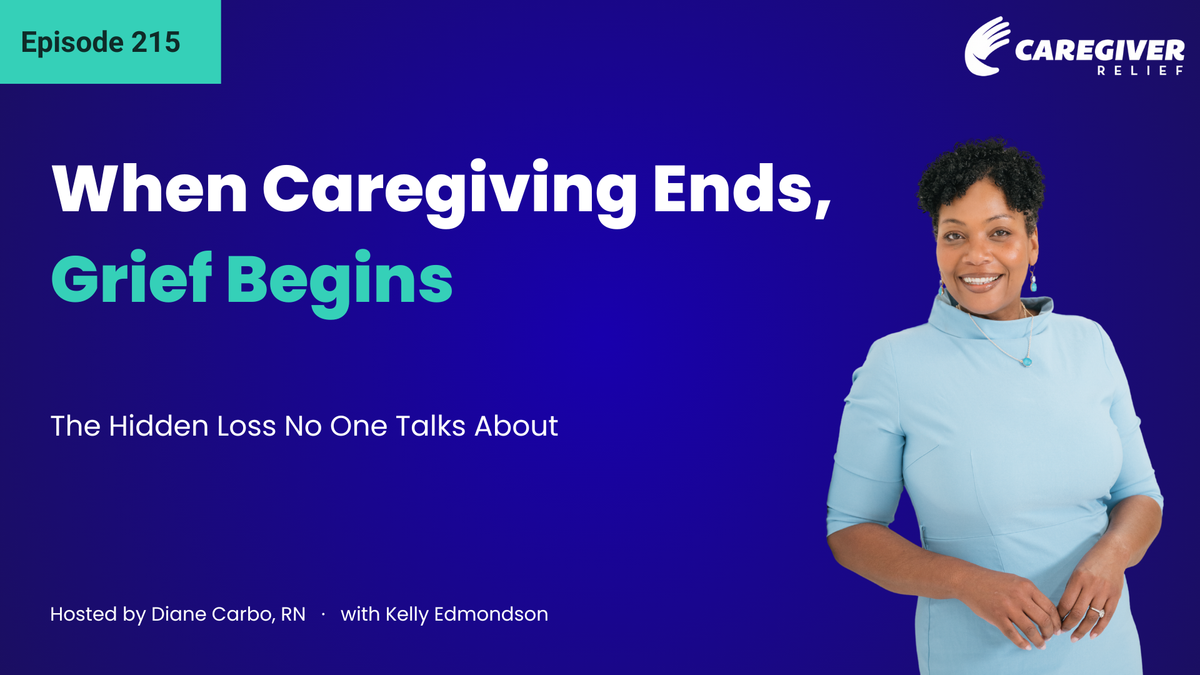
In this deeply moving episode, host Diane sits down with Kelly Edmondson—a trauma nurse, grief counselor, and the founder of Timely Presence. Both Diane and Kelly share the heartbreaking bond of losing their sons too early, and together, they pull back the curtain on the "hidden loss" that happens long after the funeral ends.
If you have ever felt lost, guilty, or completely abandoned after your caregiving role ended, this episode is a warm embrace and a reminder that you are not alone.
📝 Episode Outline & Key Takeaways
1. Introduction: The Grief No One Prepares You For 🕊️
- The Caregiver Identity Crisis: Why ending the role of a caregiver often leaves people asking, "Who am I now?"
- Introducing Kelly Edmondson: How her background as a trauma nurse and the sudden loss of her 22-year-old son, Darius, led her to redefine grief support.
2. The Quiet Reality After the Funeral 🤫
- Sympathy vs. Support: Why loved ones shower you with attention during the funeral rituals, only to vanish weeks later when the real grief begins.
- Grief Stacking: How caregivers experience "tiny episodes of grief" every time their loved one's health declines, creating a mountain of unaddressed emotion.
3. Overcoming the Guilt of Relief 😔
- The "Long Goodbye": Navigating the emotional rollercoaster of dementia caregiving.
- The Guilt Complex: Acknowledging that it is entirely normal to feel a sense of relief when intense caregiving ends, and how to forgive yourself for it.
4. Navigating Milestones & Reframing Rituals 🎂🎄
- Predictable Triggers: Why birthdays, holidays, and anniversaries act as emotional "gut checks".
- Reinventing the Space: How Kelly beautifully reframes her son’s Christmas Day birthday by traveling the world with his ashes.
5. Timely Presence: A New Way to Show Up 🎁
- Beyond Flowers: Kelly introduces Timely Presence, a unique service that delivers beautifully curated memorial gifts (like engraved boxes, wind chimes, and 3D crystals) to the bereaved on the specific days they need it most.
- Grief Literacy: Simple, awkward-free ways to support a grieving friend simply by saying their loved one's name.
💡 Memorable Quotes from the Episode

"People give sympathy, not support. I don't want you to feel sorry for me... I want you to help me." — Kelly Edmondson
"You miss shared space. That's what you're grieving... It can be with a person, a cat, or a job. It's part of the fabric of our life, and when you pull a thread, it leaves a hole." — Diane & Kelly
🔗 Resources Mentioned in This Episode
- Connect with Kelly: Visit thetimelypresence.com or follow her inspiring grief literacy updates on Instagram, LinkedIn and Facebook.
🌟 Leave us some love!
If this episode spoke to your heart, please take a moment to like, share, or comment. Every click helps us reach another caregiver who needs encouragement, resources, and hope today.
Podcast Episode Transcript
Diane: Welcome to the Caregiver Relief podcast, where we support family caregivers with tools, guidance, and encouragement you need to care for your loved one without losing yourself in the process. Today's episode addresses something many caregivers are unprepared for: what happens after caregiving ends. We talk so much about burnout, stress, and the demands of caregiving, but not nearly enough about profound grief and identity loss that follows.
When the caregiving role ends, many caregivers are left asking, "Who am I now? What do I do next? Why does this feel so overwhelming?" And joining me today is Kelly Edmondson, a trauma nurse, a grief counselor, and founder of Timely Presence, a service created to ensure families feel remembered on days that matter most.
After the loss of her son, Kelly experienced firsthand how quickly support fades and why grief doesn't follow a timeline. So today, we're going to talk about the grief no one prepares you for, and how we can better support caregivers long after the caregiving journey ends.
Diane: Kelly, thank you so much. I'm excited about hearing, and I'm grateful you're sharing your story.
As I was telling you before we started, we both have lost sons, much too early in our lives, and the grief that we follow It's 15 years for me since Jeff left, and I'm still overwhelmed. And my mom died 52 years ago, and I still miss her every day. So can you share your story?
What led you to create Timely Presence?
Kelly: Yeah. So thank you for inviting me to engage with you and your audience. My story really starts, in nursing school. I, entered nursing. My grandmother was a nurse. My mom's twin sister, a nurse, her oldest daughter. And so following a family tradition of caring for people, I was introduced to nursing, not only through them, but my oldest son, Darius, was born with a benign tumor on his skull.
On his scalp. And he had surgery at eight months old, and became septic, and was admitted to the pediatric ICU.
Diane: Oh.
Kelly: I was an 18-year-old kid with a very sick child and no clue of how to navigate it. And the nurses took amazing care, not just of him, but of me and my family. And they made what was terrifying and tense tolerable.
And I thought, I want to do that. I want to reach people in crisis and help bring the calm." And so Darius, is really the reason that I became a nurse, and I spent many years caring for people in trauma, ICU, and emergency departments, at their most vulnerable moments.
Diane: Yes.
Kelly: In fact, I have told dozens of mothers that, "I'm sorry, your child did not make it," right?
I've done that dozens of times with parents, with spouses, with other loved ones. but January 3rd, 2023, I got the call that would change my life. My younger son called me and said, "Mom, I have something to tell you." My husband and I were on a cruise ship celebrating being empty nesters.
And I knew instantly that something was wrong. He said, "I don't know how to tell you this." My heart still bleeds that a 22-year-old had to call me to tell me that his brother was dead, but he had a seizure in his sleep and aspirated and never woke up. And
Diane: That's devastating
Kelly: it's devast- it's devastating. It's the midlife interruption, right?
Diane: it... I had... You know what? We really are, sisters to a, of circumstance, different circumstance, similar circumstances. My youngest son contacted me to tell me about his brother's death.
Kelly: Oh, wow.
Diane: And it's just, Casey was in nursing school in Miami, I was living in the Poconos, and I, Jeff had been in Austin, Texas, recovering from a long, hospital stay in the military. And, he was doing well, but he was going in and out of the, behavioral health for depression with chronic pain comes depression.
So I know, Casey, you know, instantly started his friends were telling me he was vomiting, he was so upset. And to have to call and tell me, I know you just, I know how you must feel. Yeah. Yes. Yes. Devastating.
Kelly: It's devastating. Devastating. Lots of pressure for a young man
Diane: Yes
Kelly: to need to do that, right?
Diane: Yes. Yes.
Kelly: and I got the call and really life has been before and after. And so
Diane: yeah
Kelly: while I had spent years, in end of life situations and providing dignity at the end of life and supporting people in that very acute phase, what I learned in my experience is that, the initial notification of grief is shock.
There's no processing.
Diane: Yes.
Kelly: There's no understanding of the loss, of
Diane: Yeah
Kelly: the sadness of forever. Forever is a very difficult concept to understand.
Diane: yes.
Kelly: and so I've come to learn that really leading up to the rituals that we have around death, and we have so many.
Diane: Yeah.
Kelly: We have obituaries, we have the calling hours, the viewing, the celebration of life or funeral.
All these things move very quickly. There's a lot of people around you ushering you through the decision making.
Diane: Yeah.
Kelly: it's rapid fire. There's not even time to recover until the next decision.
Diane: yes.
Kelly: I've lived it. And then Yes. Yes. and then in a week or two, all that's done.
Diane: Exactly.
Kelly: And everyone goes back to living because they're alive
Diane: Yeah
Kelly: and they need to, and you are suddenly left in a very quiet
Diane: Yep
Kelly: deafeningly quiet space, with a new reality that you, meet. And so after the funeral is really the starting line of the grief process.
Diane: You know what? You're right, 'cause I just, I remember being so numb when my mom died. It was sudden.
And then with my son, it was sudden as well. And you do, you just... I literally went to go pump gas, and I was in New Jersey at my brother's, and I went to pump gas, and they asked me for my zip code, because in New Jersey they pump your gas for you, and I literally couldn't remember my zip code.
I start crying to the guy, "I'm sorry." I don't remember. My son just died. And you do, you go through this sense of shock. And, and you're right, as soon as it's over, after the funeral, that's when the real grief begins. And you feel, and you're alone.
And, I can't tell you, I was shocked when I felt abandoned by my family and friends when my mom died. And in nursing school, my friends in nursing school didn't know what to say to me, so they avoided me. And then after Jeff died, it was the same thing. People just don't have, provide the support you expect and need.
In fact, I just recently had a girlfriend who lost her husband of,50-some years. We grew up together, and she says, "Di, where is everybody? They all promised to be there for me, and they're not." And she says, "What..." and I said, "I lived this, Kathy, twice already in my life, and it was really hard."
Kelly: It really is. And people have the best of intentions. We know this. People love you.
Diane: Yeah.
Kelly: They feel for you.
Diane: Yes.
Kelly: But how I describe it is I say people give sympathy, not support.
Diane: Very well said. Right? Right. Yes, yes. I don't want you to feel sorry for me.
Kelly: That's right.
Diane: I want you to help me.
Kelly: That's right.
Diane: Yes, yes. That's right. You know, many caregivers expect relief, but instead they feel lost. let's talk about why this happens.
Kelly: Yes. I think there's so much that happens with caregiving. So throughout even the whole process, right? So the beginning of diagnosis, the beginning of a change, you begin grieving immediately.
Yes. You, you grieve the relationship as it existed, the future as you had conceived it.
Diane: Yeah.
Kelly: I have a dear friend I was talking to just the other day who is caring for a demented in-law.
And she said, my husband grieves a little every time something new happens."
When mom starts sleeping longer into the day.
Diane: Yeah.
Kelly: Mom stops recognizing an outside family, right? All of those incidences are tiny episodes of grief, and they
Diane: Yeah
Kelly: begin to accumulate. You accumulate. They stack. They really do. and
Diane: Yeah
Kelly: it is, because you're so busy caring, you often don't take the time to care for you.
Diane: Yes.
Kelly: Which means that you have dedicated your love, your energy, your support to your loved one.
Diane: Yeah.
Kelly: And neglected
Diane: Kelly, that's a big problem because, one of the things I tell my caregivers is you have a life outside of your caregiving journey, and, you need, every relationship you're in needs watering and sunshine just like a garden.
And when you don't water and nurture those relationships, they have a tendency to die. and that's one of the problems I see with caregivers after their caregiving journey ends because many have left their jobs. Many have let those relationships and friendships die to a point where they're not survivable, and they feel alone.
And they're also in an identity crisis
Kelly: That's right
Diane: Because they were a caregiver. The average caregiving journey is five and a half years. That's a long time. Long time. there's many that do, some have up to 20 years.
Kelly: That's right. That's right.
Diane: So it... Yeah, so it's no wonder they feel loss.
Kelly: And so they're grieving the loss of that identity.
Diane: Yes.
Kelly: There's also the, a guilt grief, right?
Diane: Oh, yes.
Kelly: So there's some relief of pressure.
Diane: Yeah.
Kelly: There's some relief of ongoing obligation and continued accountability and responsibility. And there is guilt
Diane: Yep
Kelly: in feeling relieved.
Diane: Yes. Yes. Yes, especially those who have taken care of somebody with dementia 'cause it was so intense for so long. Not to say that anybody taking care of anybody, a senior that is, not well. With a person with dementia, they s- they call it the long goodbye for a reason because you have glimmers of hope when they show the moments of lucidity.
And, they'll know who you are and, or even have an appropriate response. And then in the next minute you're back to they're glazed over and you've lost them again. So, you know, that's a constant hopeful that they're going to come back. and then in the back of your mind you're actually believing that they're going to get better and overcome this dementia, when in fact it doesn't.
Kelly: Yeah. That's right. and the last thing I'd say is people grieve relevance, right? My entire identity has been built around this. I am a caregiver. I am my mother's keeper, my wife's support, right? And now who am I? Who am I without this? Yes. How do I still have an impact in the world? And, grief shows up in many forms.
All of them require the same thing, though. That is acknowledgement that it exists.
Diane: Yeah
Kelly: Space to confront it. Time to deal with it and a willingness for other people to support you along the way. Those things are non-negotiable. They're non-negotiable
Diane: And nobody has ever heard that. They don't, they've not been supported.
I know. I understand that totally. Now you, we both talked about you, that support often disappears. Can you tell us why that happens or, and how does it impact our caregiving, our grieving families?
Kelly: Yes. I think there's a couple of reasons. The first is people who have not experienced true loss don't understand the ongoing nature of grief. They really don't.
Diane: Yes.
Kelly: So, you know, they think everything's done, it's been wrapped up in a box. We get, it's six weeks. Takes six weeks to recover from having a baby, right?
Diane: Yes.
Kelly: Six weeks to recover from major surgery. We time things. We are a society that's very urgent.
We put deadlines on everything. And so as a society, we have created this thought that you get well in a defined period of time. That's just the way life works.
So we have that. People don't understand. Two is people are afraid to have discussions of death. they call it
Diane: Yes
Kelly: magical thinking. So if I talk about it, if I bring it up, somehow I'm either going to cause you to fall apart. You look so held together. She's come so far. If I bring this up, it's going to destroy her. Or people believe you can invite death by having conversations about it. So we are very afraid of having discussions of this very natural phenomenon that is one day promised to all of us. So we
Diane: Yes. We're not gonna get out of here alive.
Kelly: That's right. That's right. We don't bring it up because of that. And then last is we just don't know how. People have not been taught how to have the discussion, so it's awkward for them. They've got no tools in their chest
Diane: Yes
Kelly: to bring it up. So they don't know, they're scared, a or they don't know how. And so what that does is it leaves the griever alone, which is the worst place to be on the grief recovery journey.
Diane: 100%. when I was growing up, I can remember my great-grandfather, Bachman. He was my grandmother's father, and he had last rites seven times.
Kelly: Wow. Wow.
Diane: He was a cat. And he, I know. He had a lot of lives. I just say he was too ornery, God wasn't ready for him yet. they would bring, my little, my great aunts, there were three little, they were all, like, under five foot, and my grandma would all get out the tea service, and the priest would come over.
And, now I'm from I'm the oldest of four, and this was an old house, and I remember the pocket doors that would close. And, they would all sit around and talk and cry. And, of course he woke up one time and wanted to know where his suit was that he just bought. He wanted to see if it was from the, got back from the tailors.
So, you know, I learned about death at an early age, but we talked about it because we had to. he was dying at home. He wasn't in a hospital. And, it was just the way things were. And we have we've gotten away from, what reality is, You accept death, as you get older, but now, on TV, they have people just close their eyes and they die, And it doesn't happen that way. And we are, in tune to... And social media, we, kids are contacting each other on their tablets and on their phones, and they could be sitting right next to each other. There's no interaction. So we really, really have an issue with, sharing our emotions.
And, you know, I come from a big Irish family, and when my mom died, all her brothers, sisters, my aunts and uncles and cousins all came to the house three nights in a row. And there was drinking and laughing, and I'll never forget, my future husband had to leave because he couldn't believe people were acting like this over somebody's dying.
And I'm like, 'cause he had never been around death, had never seen anybody die. His family, was, they lived away from all the other, families in their family. So you know, they had no relationships, frequent visits from we had dinners, we had family gatherings all the time.
He didn't grow up that way, and he was, he thought we were barbaric to be laughing and drinking. Oh. I said, you should be glad I was not a real, we're not real Irish, because we'd be getting the corpse up and sitting it at the bar." I'm so bad. But I had a different view of death and dying.
Kelly: From an early age.
Diane: Yeah. Yes From an early age. Now I wanna talk about, why are birthdays, anniversaries, and milestones such powerful triggers for grief?
Kelly: Yeah. One of the, beauty, most beautiful things about life is that as humans, we have the, we have recall. We have memories.
Remembrance matters for us, right? And it is full of emotion. it's full of joy. and so much of what happens when you lose someone is that your positive reflection on those things are in all of the memories.
They're in all the opportunities where you, that were special, that were celebratory, that involved ritual, which is a really important part of the way that we experience life, rituals.
We move from one... Yesterday was Mother's Day. Today happens to be my birthday. Huge ritual for us, right?
Diane: Happy birthday.
Kelly: thank you.
Diane: I'm a Taurus too. My birthday was last week.
Kelly: That's so funny. But we move through with rituals.
Diane: Yeah.
Kelly: They give context and color and meaning to our lives.
Diane: Yes.
Kelly: And when you have these events, birthdays, you think about Grandpa's favorite strawberry cake, right? and that day becomes, synonymous with that.
Diane: Yeah.
Kelly: and rooted in that. The holiday seasons are huge for people. They're so centered on family and connection and, ceremonial, rituals, and so when one is absent from that, there, the gap is noticeable. It's noticeable, and it certainly triggers sadness and grief. And so the research says it's very predictable. Birthdays, wedding anniversaries, holiday seasons, and most certainly the anniversary of the loss. You'll never forget the day that your mother died. The day that you lost your son, right? those days. In fact, I spend days ahead of time planning for the emotional gut check that is coming on January 3rd every year. I know it's arriving, right? My son's birthday is Christmas Day.
Diane: My mom died at Christmas time
Kelly: Oh.
Diane: And I will tell you- And you completely understand ... and again, it was December 17th, but again it's every year. Now, it's 50-some years my mom's gone, and I still from Thanksgiving on have this sadness about me, and I know what it is now.
But I don't intentionally say, "Oh, it's time to, mourn my mom." It just doesn't come that way. But she made Christmas so special. And, she made it special for us children and our relatives, and she always had people over, that didn't have families and stuff. So I grew up that way, and I find myself, I was always trying to fill the void of the loss of my mom even in my, after I had my own children, by having lots of people over to the house on Thanksgiving or Christmas Eve just to fill the void.
And I always had people that didn't have family members around to help them feel like they're not alone.
Kelly: That was beautiful work that you did for people because they needed it. I'm sure.
Diane: Yeah.
Kelly: They just looked forward to those days. His birth- Darius's birthday being Christmas Day, what we've decided to do is reframe the ritual.
So instead of, living in this space where he doesn't show up around the tree
Diane: Yeah
Kelly: and the gift giving, what we do now is we take a vacation at Christmas every year.
Diane: Beautiful. Yeah.
Kelly: And I take his ashes with us, and so he gets to travel- Travel.
Diane: Yep
Kelly: around the world, and I leave him in the most beautiful places on Earth.
Diane: Yeah. That's lovely
Kelly: because he didn't get a chance to it is. It's a reframing of the ritual.
Diane: Yes.
Kelly: That's why those days are so difficult for people.
Diane: I like that.
Kelly: We have to reframe the ritual.
Diane: Yes.
Kelly: Reframe.
Diane: Yes, I love that. my son, my second son, my youngest son travels, and I tell him, "When I die, I want my ashes put on his fireplace so I can know what's go- on the mantle so I know what's going on."
But now I'm gonna tell him, 'cause he travels a lot, "You gotta take me with you."
Kelly: It's great. I buy, I bought all these little mini urns, and so I just take little places of them and I leave him all over the world. It's great.
Diane: Oh, I love that. That is such a beautiful thing to do And I love that about reframing. I actually, Jeff's birthday's July 21st, and I actually like to, like I live in Myrtle Beach, so I like to get, I walk on the beach often.
But I have to tell you, I literally walk on the beach and try to put my feet in because Jeff and I, it's got Jeff's cells in there somewhere, 'cause him and I were in the ocean several times, many times. So it's like my way of reconnecting. Hey, I know you're in there somewhere. It's silliness, but it's just something that makes me feel still connected to him.
Kelly: Connected, that's right.
Diane: Yeah. That's right.
Now I'll tell you what. Some, the, what are simple ways people can acknowledge those dates without feeling awkward?
Kelly: Yes. I say this all the time. Darius is the sweetest word in the English language to me. I just like to hear his name. Just say that person's name.
Just say it.
Diane: Yeah.
Kelly: Just recognize, Jeff's, I know today's Jeff's birthday.
Kelly: And I'm just thinking of you. People are not expecting a, you to show up as a bereavement specialist.
Diane: Yes. ever. Exactly. Exactly.
Kelly: they just don't want their person to be forgotten.
Diane: Yes. That's very true.
Kelly: They don't wanna feel alone. And they just wanna feel like it's okay that I still have this hole in my heart, right? It's not a I'm not abnormal here.
Diane: Yes.
Kelly: And so you just normalize that. You just say, I don't know what to say, but I want you to know I'm thinking of you."
Diane: Kelly, people, It's beautiful
I've had people actually say to me, "Aren't you, you should be over this by now." I'm like yeah. that just brings anger, to the forefront for me. It says, you know, like, how do you get over somebody you've loved so deeply
Kelly: That's right. That's right ...
Diane: and was such a part of your life for so much, you know.
My mom, I love my mom. she was important to me. We had a good relationship. she did a lot for me and encouraged me. That's why I, when everybody wanted me to not go to nursing school, to drop out to help my dad with my brothers and sisters, I wouldn't do it 'cause she was so excited I was gonna be a nurse.
She was so proud. And I wanted to make her proud. So I went to be a nurse. It was hard because
I went back and forth to nursing school and every day, and I had brothers and sisters that I had to, you know, we had to cook, clean, do laundry, make food, get ready for school. I mean, there was a lot of things. and that's impacted my relationship with my siblings even to today because I'm the bossy know it all big sister.
Kelly: Me too.
Diane: Yeah. What a surprise, and it used to make me feel bad, but now I just embrace it 'cause it is who I am. And I was, I'm a victim of circumstances that put me in a role that I, wasn't prepared for, but I did well because my mom had taught me how to cook and to clean and do all those things.
So many people say, "I don't know what to say." What should we say or not say to somebody who is grieving?
Kelly: You never want to minimalize it, right? You never want to minimize it. And so that, "You should be over it by now."
Diane: Yeah.
Kelly: or, the comparison, grief comparison, grief dueling.
Yeah ... I lost my son. I lost my husband of 50 years.
Diane: Yep.
Kelly: None of that is helpful.
Diane: Yeah.
Kelly: None of that is helpful. The power of the pause is important, and if you find yourself reacting to a statement in a way that's not well thought out, it's good to be quiet. It's okay to just say, "I'm sure this is very hard."
Diane: Yeah.
Kelly: Yeah. I don't know what to say.
Diane: Yeah.
Kelly: But I want you to know that I'm here. And that simple.
Diane: That simple. It really is that simple. And, people don't understand that grief lasts as long as it lasts. That's right. It doesn't have a timeframe. That's right. And if you've loved deeply and you've loved strongly, that it leaves a huge gap in your heart, your soul, or whatever you want, in your life.
And, I grieve my creatures that I lose. And people don't understand that. That's right. What do you mean you grieve your but they have been in my life more than most of my family members. That's right. Through the thick and the thin. And, and people think that's silly, but I still have, I miss the creatures that I've had in my life.
That's it,
Kelly: And You miss shared space. That's what you're grieving.
Diane: Thank you. Thank you.
Kelly: Shared space.
Diane: Yes. Thank you. Thank you.
Kelly: And that can be with a person. That can be with a cat.
Diane: Yeah.
Kelly: That can be with a job.
Diane: Yeah.
Kelly: That can, right? That, it's with so many things.
Diane: Yeah.
Kelly: And a relationship, we minimalize it, but it's shared space it's made memories. It's love. Beautiful.
Diane: Yes. It is. And, it's part of the fabric of our life. and, you pull a thread and it goes out. It just leaves a hole.
Kelly: That's right. That's right.
Diane: And yeah. And people have to realize that. Now, I want you to tell us about Timely Presence.
And I'm excited to learn about this because it sound- I know you have real-life experience and you and you've been through this. So tell us about that.
Kelly: So when Darius died, I had so many people show up at the beginning, but they faded quickly.
Diane: Yeah.
Kelly: And I needed a bridge. I needed support, and it didn't exist, so I built it.
And so what we have with Timely Presence is a way for the people who care the most about you to keep showing up. It's easy for them. It comes when the research says it should.
And it comes packaged and personalized to the love that you lost. So with Timely Presence, instead of a one-time sympathy gift, instead of buying flowers, which are really expensive and die
Diane: Yes
Kelly: you are able to send an entire year's worth of memorial tribute gifts that are specially curated and personalized to the person who was lost that arrive on the days that matter most.
Diane: Oh, wow.
Kelly: So the birthday. Your gifts come on your loved one's... So for you, for Jeff- Okay they would come on Mother's Day, you would receive a gift.
You'd receive a gift on his birthday. You'd get one during the holiday season. You'd get one on the anniversary of the loss. And so the gifts come all year round with special notes that just talk about how I didn't want you to feel alone today. I knew today would be difficult. I am thinking of you.
You're not alone. And we were so thoughtful with what gifts came, right? This was based on my experience and the experience of others around me who experienced loss. So the first gift, just after the services, you have all these things. People have given you pictures. You've pulled out cards. You've found this, it's, you have all these things, the obituary, and nowhere nice to keep them, right?
Diane: Yeah.
Kelly: And so we send a gorgeous engraved memorial box that allows you to just keep everything close, so when you want to feel connected, when you wanna go in and stay, they're neatly packaged in a felt-lined beautiful wooden engraved box.
On the birthday we send a wind chime, and I love the wind chime because it's an interactive gift. I feel like Darius is talking to me through it.
Diane: Yes.
Kelly: And my neighbor lost her husband three months after I lost my son, and so we went through this journey together, and I started testing this idea on her.
So I secretly dropped a wind chime off on Mike's birthday which was just a couple of months after he died. She stopped me in my driveway and said, "Natalie, come over. You won't believe what someone left for me." And so I went, she goes, "Somebody left this for Mike's birthday." She had hung the wind chime up and sat outside and listened to it talk to her the whole night long.
Diane: Oh, that's beau-
Kelly: When it started ...
Diane: I got goosebumps with that, Kelly.
Kelly: Yeah. It just, oh. It came right when she needed it. And to me, it's the gift that just keeps giving back, right?
Diane: Yes.
Kelly: We send, on the holiday season, we are holiday agnostic, so we wanted a gift that was relevant for everyone.
Diane: Yes.
Kelly: And we send a beautiful crystal votive candle holder that just reflects light and love, and it- Beautiful
it's, they're just absolutely gorgeous, and not an obvious bereavement gift, but something you can place on a fireplace or
Diane: Yes
Kelly: something you can have near the tree. And then on the anniversary of loss, our gift is a 3D photo crystal keepsake that allows your person's face to come alive.
It lights up. They are
Diane: Oh, wow ...
Kelly: stunningly gorgeous. and we send that as the final gift, and an ongoing tribute to
Diane: Yeah
Kelly: the love that was lost. So different packages have different other gifts. A Mother's Day
Diane: Yes, yeah
Kelly: package. a spouse would get something on the, wedding anniversary.
But those are the core tenets of our gifts.
Diane: That's beautiful.
Kelly: They come all year.
Diane: Yes.
Kelly: They come with power, and they come with presence, and they matter.
Diane: That's beautiful. and I, having been, lost two major people in my life and still feeling the pain decades later, those, that's would have been so meaningful to me in that, those, that first year.
Well, it's just, it, you're not only acknowledging them, you're bringing comfort at a time where you feel like you're alone, but you're, it says you're not alone.
Kelly: That's right.
Diane: And I love that. That's right. What a beautiful, timely presence. So Kelly, how do people reach you?
Kelly: Yes. So our website is thetimelypresence.com. the, thetimelypresence.com, but we are on all your socials. And so we do a lot around teaching on grief literacy, supporting the bereaved, just general messaging to help you. So on Facebook, we are Timely Presence, on Instagram we're The Timely Presence, and I have a very active Instagram page, the.kellyedmondson.
And Kelly Edmondson on LinkedIn, and we do a lot. We want to get the message out there. I received a text on Mother's Day, I have to tell you. Lots of people in my life checked in
Diane: Yeah
Kelly: to make sure that I was doing well. My favorite text was, "Kelly, I used to avoid these conversations. I was afraid that I would trigger and cause someone more pain.
But because of your messaging and you sharing Darius's story, I've learned that's not the right way to handle things. And so"
Diane: That's beautiful
Kelly: "Happy Mother's Day." "I'm thinking of you." And what that said to me is Darius's legacy is thriving. The idea that we reimagine the way people show up for the bereaved.
Diane: Yeah.
Kelly: Best gift I could have had on Mother's Day. And so- Yes.
Diane: you're giving a gift to so many
Kelly: Yeah
Diane: and sharing. I love that.
One of the things that I've learned through my podcast series is every single family member has identified an issue, an obstacle, a challenge, and then they found a solution to it.
Kelly: That's right. That's right.
Diane: And I love this solution. I really do. Thank you so much. And we will create a page on, Caregiver Relief with all this information. Your social media and, all your information will be there, as well as your pretty face. I want your headshot so that everybody can see how beautiful you are.
Inside and out, baby girl. You're amazing. Oh, thank you so much for your time. I really do appreciate you sharing such wonderful, information. it makes me, It touches my heart because, so many people are in pain for so long, and this is just a beautiful way to remember somebody. I love it.
To my family caregivers out there, you are the most important part of the caregiving equation. Without you, it all falls apart. So please learn to be gentle with yourself. Practice self-care every day, because you are worth it.
Caring for a loved one can be overwhelming — but you're not alone. If you have questions, big or small, our expert team is here to help.
👉 Click here to Ask the Expert
Our Resource section can help you find the information and tools that you need. We have courses, videos, checklists, guidebooks, cheat sheets, how-to guides and more.
You can get started by clicking on the link below. We know that taking care of a loved one is hard work, but with our help you can get the support that you need.
Click here to go to Resource Section now!