Triggers, Trauma, and Transformation: Coaching Through Psychedelics with Greg Lawrence - Episode 131

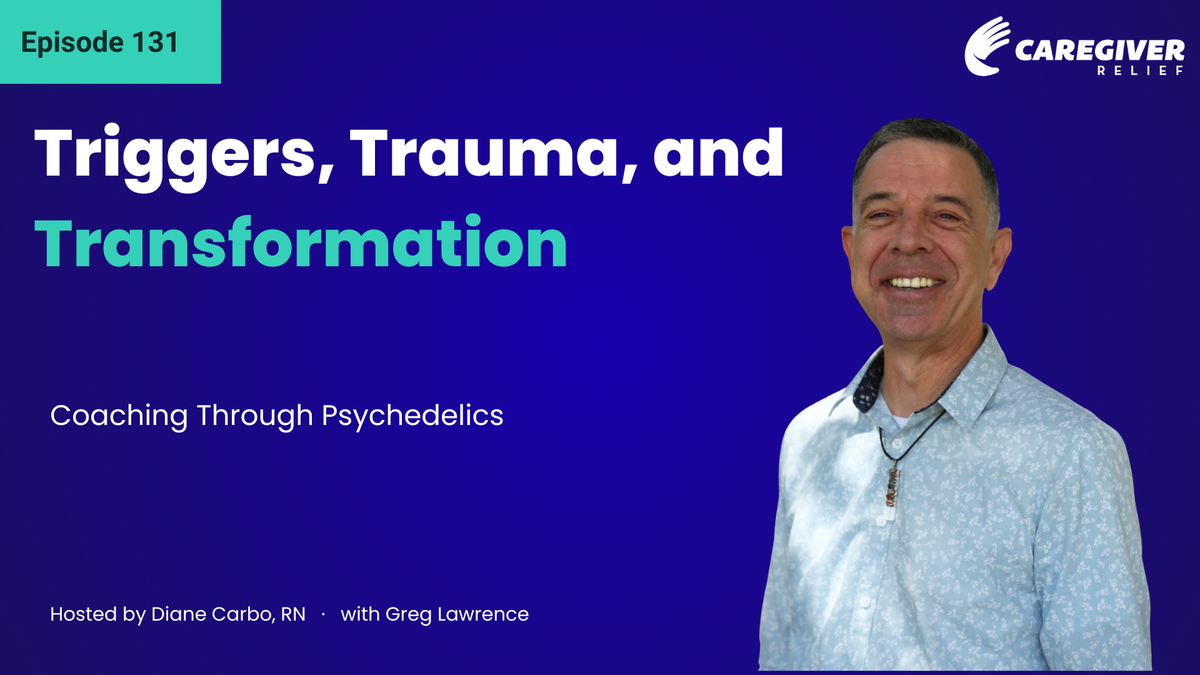
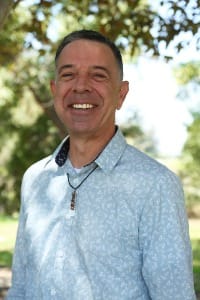
The latest episode of the Caregiver Relief Podcast features a fascinating conversation with Greg Lawrence, a certified life coach and psychedelic integration coach, exploring the rapidly evolving world of psychedelic-assisted healing and transformation. Host Diane Carbo and Greg discuss how these substances, when combined with proper coaching and integration, can lead to real, lasting change, particularly for those dealing with trauma and old behavioral patterns.
Greg, one of the first psychedelic integration coaches, shares his personal journey from addiction and unresolved trauma to finding healing through intentional psychedelic use, which inspired his work. He emphasizes that a psychedelic experience is just the beginning; the real transformation lies in the integration work that follows.
📝 Episode Outline: Key Takeaways
The episode dives deep into the mechanism of psychedelic-assisted change, focusing on the brain, behavior, and the essential role of integration.
1. The Genesis of a Psychedelic Integration Coach
- Personal Motivation: Greg was inspired to become a coach after psychedelics helped him address unresolved childhood trauma and past addiction issues.
- The Power of Intention: He discovered that a psychedelic experience's outcome is tied to the intent, contrasting his earlier, mindless use with later, introspective journeys.
- The Integration Revelation: Greg realized that insights gained during the experience quickly faded, leading him to research and become certified in psychedelic integration to sustain transformation.
2. Defining Psychedelic Integration
- More Than Just an Experience: Integration is the process of taking realizations—like acknowledging a trauma or a need for change—from an expanded state of consciousness and embedding them into the "normal, everyday operating state".
- The Unconscious Mind: Our habits are "burned into us at the level of the unconscious mind." The unconscious acts quickly, often before the conscious mind, reinforcing patterns, even bad ones, because they ensured survival.
- The Challenge of Change: The brain generalizes experiences and views change as a potential threat to survival, making the process inherently awkward or uncomfortable. Recognizing this discomfort is a vital part of integration.
3. Preparation and Trauma Healing
- Harm Reduction: A crucial aspect of preparation is understanding that the experience may be very uncomfortable, as psychedelics can amplify emotional states 5 to 10 times.
- Completing the Cycle of Emotion: Psychedelics often force people to feel "incomplete experiences"—emotions that were previously suppressed—to allow them to run their full course and resolve.
- MDMA and PTSD: MDMA is highlighted for its effectiveness in helping veterans and first responders heal treatment-resistant PTSD by quieting the brain's fight-or-flight response. This allows the person to see that the traumatic event happened "over there" while they are "safe now".
- Therapeutic Component: All successful clinical trials for psychedelics include a significant therapeutic component before and after the experience, underscoring that the experience doesn't end when the substance wears off; it's just the beginning.
4. The Science of Change
- Neuroplasticity: Psychedelics increase the potential for neuroplasticity—the brain's ability to structurally change.
- Conditioning: Consistently practicing a new habit or behavior, even with discomfort, reinforces the neural pathway. This follows the principle of "what fires together wires together," leading to actual structural growth and conditioning.
- Behavioral Psychology & Prediction: Our behavior is often driven by unconscious bodily reactions and the brain's reliance on prediction (e.g., the "missing step" feeling). The thoughts we have are often distractions from deeper physical reactions.
5. Integration Tools and Misconceptions
- Mindfulness as a Tool: Practicing mindfulness—"actively noticing novelty"—quiets the brain's default mode network (the source of anxiety, chatter, and self-criticism). This state of presence mirrors one of the core takeaways of the psychedelic experience.
- Negative Self-Talk: The critical, negative thoughts in our heads are often not our own, but phrases internalized from childhood, which we reinforce by taking them too seriously.
- NLP and HNLP: Greg uses Neuro-Linguistic Programming (NLP) to understand the space between a stimulus and a response, and Humanistic Neuro-Linguistic Psychology (HNLP)—which incorporates spirituality and quantum theory—to effectively change internal reactions and habits.
- Major Misconception: The biggest misunderstanding is that the substance itself will cure a condition or make the change. What you do in the aftermath determines the level of change you achieve.
🙏 A Message for Caregivers
Host Diane Carbo emphasizes the relevance of this topic for caregivers who often deal with their own trauma, PTSD from navigating the medical system, and the difficulty of practicing self-care. The conversation serves as a beacon of hope for those seeking more effective treatment for conditions like treatment-resistant depression, which Diane manages with Ketamine.
"Please learn to be gentle with yourself. Practice self-care every day because you are worth it."
Guest Information:
If you're curious about transformational coaching or psychedelic integration, you can find Greg here:
- Website: greglawrencecoach.com
- Facebook: Greg Lawrence
- Instagram: psychedelic_integration
- YouTube: psychedelic integration specialist
🎙️ Ready to Dive Deeper?
Click the link below to listen to the full conversation and learn more about how intentional psychedelic use and integration coaching are leading to profound transformation.
Podcast Episode Transcript
Diane: Welcome to the Caregiver Relief Podcast. I'm your host, Diane Carbo rn,
Diane: and today's episode is titled Triggers Trauma and Transformation Coaching Through Psychedelics. I'm joined by Greg Lawrence, a transformational coach, speaker educator who has been at the forefront of psychedelic integration coaching for more than five years.
Greg is a certified life coach, certified psychedelic integration coach, NLP, master Practitioner and practitioner of HNLP. His work combines personal growth, spiritual development, brain science, and behavioral psychology to help people change their inner dialogue and transform their lives.
Together we'll explore how psychedelics can be used for healing, how the brain and behavior can be reprogrammed, and why integration coaching makes all the difference in creating real lasting transformation. Greg, thank you so much for taking time out of your day to share information on this growing trend of using psychedelics and psychiatry.
Greg: thanks for having me. I appreciate it.
Diane: what inspired you to become one of the first psychedelic integration coaches?
Greg: yeah, I've been an integration coach since 2018, actually.
Diane: Oh.
Greg: What inspired me was that it's the thing that helped me at a critical time in my life. I had, I should start by saying that in my late twenties, my late teens through my late twenties, I did quite a bit of psychedelics along with anything else that would help me not feel what was going on inside me.
And unfortunately in my late twenties I got, hooked on hard drugs and I spiraled outta control. And, I just about hit rock bottom when someone pulled me out of my physical surroundings and I just quit everything cold Turkey except for cannabis, which I abused for about 20 years, meaning I used it just all the time mindlessly.
and about 11 years ago, my wife at the time passed away. In the middle of that process of grieving, I realized I had a whole lot of childhood trauma that hadn't been addressed at all, which was why I had been an addict at one time and everything was unsettled in me,
Diane: I
Greg: sought out the help of a coach.
I was working with a therapist and at the time I was smoking cigarettes and I told my coach I wanna quit smoking. And he said, I wrote a study that said psilocybin helps with that magic mushrooms. I thought, mushrooms, I've taken those before. So I went and I found some and I took them, and I didn't quit smoking that night.
But I discovered the power of intention because a lot of people talk about taking psychedelics as a sort of a pleasurable experience, experience the world here. And then taking it and you just see what's inside of you that has to do with where you're looking. exactly. When I was young, I didn't wanna look inside of me and I just saw everything outside of me, and then I become introspective.
And the first time I did mushrooms, I went inside and I saw all kinds of different patterns and problems and triggers and traumas and what I had been doing and not doing that was making my life the way it was. And when it was over, I thought, now that I've seen all of that and it's been aired out, everything's going to be different.
It took about two weeks for everything to be the same again. I was on this high thinking, wow, everything's changed and nothing's ever gonna be the same again. And then I found myself doing the things I didn't wanna do and not doing the things I wanted to do again.
rinse, repeat a couple of times that kept happening.
I had no idea why. Why is this not changing things
Diane: uhhuh? So I
Greg: started doing some research and found out between the time I did psychedelics and now there. Something came around called psychedelic integration. I had no idea what that was. I found a group that talked about it. It was an integration circle, and I went there and talked to a lot of people and got support and met other people.
And I heard a lot of different ideas from people about what it means to integrate a psychedelic experience. And none of those worked for me. Everyone had their own ideas and opinions about, no, you need to do this and this. Nothing was working for me. So I started looking at how human behavior works. why we do things we don't wanna do and don't think do things we wanna do.
How you create new habits and patterns and ways of being and thinking. And I started crafting a program for myself at the same time. I had been gonna these integration circles so regularly that the facilitator said, I'm going on vacation for a couple of months. Why don't you handle the circles while I'm gone?
I said, all And since I was facilitating these, then people are coming and asking me for advice, and I thought I should really know what I'm talking about. So I went to a training program and became certified as a psychedelic integration coach.
Diane: Interesting.
Greg: I had a small business at the time and I was getting coaching requests from people and I was telling university, that's nice, but I'm busy doing my job.
And after a while they reached this critical mass where it was like, this can be your job. That's how I sold my business. And in 2018, I became a full-time psychedelic integration and transformational coach.
Diane: That fascinates me. and here's where I'm coming from. I am,I've lived a very sheltered life.
my mom died when I was 17, so I was the response, and I'm the adult child of an alcoholic, so I'm the adult in the room that all that has always been in, in charge. And I'm not a drinker. I don't smoke. I didn't do drugs because at 17 I was in nursing school, or 18, I was in nursing school and I've not been adventurous at all.
And, and people are saying to me, why are you talking about psychedelic psychiatry? And I, it's coming, it, and in some states it's already here. And I know people don't understand that. I know that the FDA if you're wanting to do it legally or whatever they call it,there are other, some states where you can do, I know even in DC you can buy sill and,and there are states like I'm in Myrtle Beach, South Carolina, the south.
everything's taboo. So I really want people to know that, that there are avenues that are coming that may be of interest to you. And I know because so many baby boomers, they've done, they've led the kind of life you've led. and I want people to know that. I have treatment resistant depression, and one of the things that I use is Ketamine.
Now, okay, I'm a Ketamine user. I go to a clinic and I have the treatment there, and then I come home. the irony for me is I laugh because they said, oh, you want. Oral Ketamine to take at any time. You need a break, need the help, and I don't like the experience at home. but I'm very interested in, how you define psychedelic integration and why it's such a vital part of the process.
Greg: I define integration as taking, let me just say this. During a psychedelic experience, it's not uncommon for someone to have a sort of a realization that, wow, I didn't know that thing bothered me so much Uhhuh, or I wanted this thing so much, or this thing was really something I need to get done.
All of that stuff comes out, it's right. Tapping on the back of our minds and our UN and our subconscious all day long. We don't. We're ignoring it. Take a psychedelic and it opens up your unconscious mind and those things come spilling out. Yes. The problem is that's an expanded state of consciousness and you can realize, wow, here's a thing that I need to do, and here are the changes that I'd like to make in my life.
when you come back to, what we call normal, everyday operating state of consciousness,
Diane: yes.
Greg: Those things that you're doing or not doing, that we think of as bad habits or patterns, those things are burned into us at the level of the unconscious mind. No one thinks I'm going to do that and then does the bad habit.
They do the bad habit and they say, shit, I did that again.
Diane: Yes.
Greg: So if you've ever had the experience of if someone throws something and your hand goes up and you think, wow, my hand just went up. I didn't think about it. That's your unconscious mind protecting you. Your unconscious mind acts a half a second before your conscious mind.
That's why my hand goes up when someone throws something, because if I thought had the time to think someone threw something, I'd be hidden the head.
Diane: Yes.
Greg: Conscious mind controls my body. It controls my body in the sense that it controls my circulation and breathing and all these things. My autonomic nervous system, it also controls my body for certain things like.
if I go to the edge of say the Grand Canyon, look over, I get a bad feeling.
Diane: Yes. Yeah. Oh, that
Greg: doesn't feel good. That's my unconscious mind. Making my body contract so that I back away from that thing. It takes care of us, but the unconscious mind and the brain don't know the difference between. Someone giving me a funny look and being at the edge of the Grand Canyon.
Those are both things that present danger to us and we need to retreat somehow.
Diane: Yes
Greg: and very strangely, since our brains are wired for survival, our brains are very much the same as they were 15,000 years ago. Now you think that's a long time ago, but think how different people are 500 years ago. Our world is completely different.
If you think about 15,000 years ago, our brains are evolving very slowly in comparison to how we were evolving as a culture.
Diane: Yes.
Greg: So my brain's still trying to help me survive. To think there's where food is, there's where dangerous animals are. This is where the shelter is. The famine's coming soon, there's gonna be cold weather.
It operates like that. And strangely, if we do something and we don't die, the unconscious mind or your brain says, that's pretty good. You should do that again. So if someone gives me a funny look when I'm young and it doesn't feel good. My brain says, you know what? That kept you safe. You didn't die.
Diane: Yeah, exactly.
Yes. Yeah. And then something
Greg: our brains do all the time is generalize. as a way of operating in the world, we generalize everything is like something else. To the extent that if we saw a spaceship coming from, galaxies away, we might look up and say, Hey, that looks like a cigar.
Diane: That's what our brains do.
Greg: That's how we learn to open doors and drive cars and pick up cups and all the things we do. It says that's a cup, that's a car, that's a door. So it also says that's a bad look on someone's face, and it doesn't feel good. You know what? The look on that person's face is very much like that. So you should have that same reaction, and the look on that person's face is like that.
So you have the same reaction. Pretty soon. It's 20 years after the original incident, and my partner says something to me that's completely, innocuous, but they have a look on their face and I'm triggered. I don't feel good.
Diane: I know exactly what you're talking about. I've had that many times.
Greg: Yeah, everyone does.
that's what we, that's how we experience life all day long. We're predicting that things are going to happen a certain way, and when they don't, we have a feeling about it. We're not always aware of the feeling. We're usually not. We're aware of the thoughts that go along with it. And that's another story.
Diane: Yes, together.
Greg: But in the aftermath of a psychedelic experience, we have those same habits and patterns, not because we don't want to change, just because that's the thing that we do. My body does that. So I am right-handed. If I put the pen in my left hand, I immediately notice, first of all, I don't know where my fingers go.
If I do this, I don't think about it at all.
Diane: When I do this , I'm thinking, wait, does my index finger it supposed to be here? Do I support it like that, and then if I try to write, do I move my wrist or my arm? I don't remember, because this is all burned into my unconscious. It's automatic. Yes. When I do this, what I am doing is I'm going to the edge of the Grand Canyon.
Greg: I'm walking over where dangerous animals are. I'm going out in the cold. As far as my brain's concerned, this is not something I'm supposed to be doing. I'm supposed to be doing what it has automated me to do. My brain thinks it would be a bad idea for me to change. It makes change awkward or uncomfortable.
That's one of the most important parts of psychedelic integration. Knowing that change is going to be uncomfortable and what people usually do. I did this, I've done this myself. They buy books and go to webinars and see people and do all kinds of things looking for the way to not be comfortable when they change.
Yes, that's most likely not going to happen.
Diane: 100%. So we have the
Greg: psychedelic experience. We think this is absolutely gonna change everything, and then afterwards we start falling back into old habits and patterns and we think, it didn't work. Maybe I'll try it again. What do I need to do? So there is most likely going to be some healthy discomfort in the process of change if we're trying to change for the, that's why we're so
Diane: resistant to change.
Because it is uncomfortable. It's uncomfortable,
Greg: and it's supposed to be,
Diane: yes. That's
Greg: our brain trying to keep us alive, believe it or not. So yes, we need to have the understanding that, and most people understand that if they look over the Grand Canyon and have that feeling and there's a big plexiglass wall, they say, oh.
I'm not gonna fall off. So I can go look at that and I'll be safe. My body will still do that.
it will, it'll still have a feeling. Maybe not as intense, but then I'll say, okay, that's what my body does when I look over the edge. So it's okay. Yeah. There's something like that involved in change. I need to know that my body's reacting with that doesn't mean I'm wrong.
Diane: Exactly. So what's the difference between simply having a psychedelic journey and truly integrating it?
Greg: when you think of the, the idea of parts, so people always say, part of me wants to eat that donut, and part of me doesn't. that's really true. There's a part of me that wants to eat that donut, but that kind of goes against my values.
I don't want to eat donuts. I have a certain value. There's no, no judgment against donuts. I'm just making up an example. Part of me wants to do that. in order to not eat the donut or not have the bad habit that I have and not drink, and not look at porn and not smoke and whatever it is, I'm going to experience some discomfort.
Yeah. And when I do that part of me that was urging me towards doing something, actually become a part of me. It'll come into me and it'll settle into me. So it's actually a sort of an energy settling into you because there's an uneasy feeling about change and when we go through the change in whatever way it is.
For instance, in NLP, we have ways and we have processes that can help people sometimes flatten something out very quickly. I don't like that thing that happened to me. Every time I think about it, I have a bad feeling. sometimes we can just flatten that out and once that's flattened out, then that part of me that didn't feel good is now just done here.
It's a part of me. It's integrated. Because when I think about parts of me that wanna do things that I don't want, those parts just need to be integrated into me.
It can also be things like, realizations about my level of safety or how I need to set boundaries or things like that. It's really integrating some sort of mental or outward behavior into me so that I'm no longer resisting it.
Diane: So can you walk us through what preparation for a psychedelic experience looks like?
Greg: One of the most important aspects of, preparation for psychedelic experience is realizing that it may be very uncomfortable.
Diane: So
Greg: psychedelics have the ability to take us through a full range of our emotions.
When you go into some of these government sponsored clinical trials, one of the questions that's also often asked is something that's like this. I would like you to imagine the least favorite psychological state that you've been in the last three months, and ask yourself if you'd be okay with that being amplified five to 10 times, because that's a distinct possibility.
Wow. There is a lot of talk in the psychedelic community about, there's no such thing as a bad trip. Some guy, I have someplace that he said the worst thing can, that can happen. That you're a little uncomfortable. that's not true. Yeah. Psychedelics can have you relive something that was very uncomfortable for you and they can amplify it because they're largely feeling an emotion.
Generators. So feelings are like everything, I'm gonna call them emotions. Emotions are like everything else in the universe. There's not a single thing in the universe that is not created somehow serves some sort of purpose, or goes through some sort of cycle and then transformed. You can say that it died.
You can see it transformed or whatever. Emotions are exactly the same. We come to think of them as things that we own and create, but they have a cycle. The difference with emotions is that they can get halfway and we can say, I don't like this. I don't wanna feel it right now. When we do that, it goes inside.
Now that doesn't stop the cycle. It has to complete that cycle. So what happens is I have these emotions inside of me, generally ones that I don't care for that are trying to be felt.
Diane: People
Greg: come for counseling or coaching, they often say, I don't know what's wrong. I just don't feel good. We have a lot of emotions in there that are trying to be felt and we have programmed ourselves and our body has programmed us.
We have a lot of automatic behaviors that say, I don't want to feel that, and we're holding it down.
Diane: Yeah.
Greg: Psychedelics have a way of looking. I can't explain what it is, but they have a way of scanning this and saying, you have a lot of X emotion in you. I'm gonna make you feel that. So it gets out.
Because that's the only way for it to be completed. It has to be felt in order to live out its existence. It is an incomplete experience. The psychedelic substance is trying to help us complete that experience and it will make us very uncomfortable. I had someone once who actually came to me and could not figure out why they had spent like over an hour during a psychedelic experience feeling extreme shame over stealing cookies from their grandmother's cookie jar when they were like five.
Oh wow. Because the substance doesn't care how they make you feel it. They'll just push a button and make you feel that to get it out of you. Now, she was still baffled about why she felt that once she understood that, then it wasn't bugging her anymore. But it just wants you to feel that is one of the most important parts of preparation of psychedelic experience, that's harm reduction, understanding that you might be uncomfortable because if you don't understand that, you might think that something's wrong and start resisting it.
Psychedelics will teach us the lesson that if we resist what we're feeling, it's going to be very uncomfortable. That's a life lesson.
Diane: Fascinating. Now, psychedelics are often linked to trauma healing. How do people help? How do you help people, or how do psychedelics help people work through those difficult memories and triggers?
Greg: it depends on the level that it's at. So let's take, when you talk about trauma and psychedelics, inevitably people start talking about MDMA because MDMA, which has been known as ecstasy or it's a component of ecstasy anyway.
Diane: Yeah. Has been
Greg: in, governments sponsored trials for over a decade now, and it's done, it's been very effective at helping veterans and first responders heal treatment resistant.
PTSD.
Diane: Yes.
Greg: That's ptsd, TS d that's resistant every other kind of treatment. And with PTSD, let's just say this. When something happens, in my life, there's a part of my brain that it goes through where there's a narrative that's created that allows me to talk about the experience without feeling it.
And that's just a thing that we all have. And when it comes to PTSD or something life-threatening, that part of the brain is bypassed. So in effect, when that person recalls that experience, that life-threatening experience, there's no narrative that's been created in their brain. They just have to relive the experience.
So a person with PTSD, if they're talking about or thinking about the experience, goes through the whole somatic thing. As far as they're concerned, they're there as far as their bodily and mental reactions. MDMA has the ability to help people quiet down the fight or flight response part of your brain that keeps you out of danger for a moment to let people see that, wait a minute, that happened over there, and I'm over here, so I'm safe now, possibly for the first time.
So that's one way it can be healing. Now, it should be stated also that all of these government-sponsored clinical trials where you see the results and you see the effectiveness of psychedelics on different conditions and things like that. They all have a significant therapeutic component, meaning there is therapy of some kind before and after the experience.
So one of the most important parts of this whole thing is I don't think that coaching is very important because I'm a coach and I want people to come to me. Coaching's very important. It's not just coach coaching or therapy. I will say some sort of therapeutic approach after the experience, because the experience doesn't end when the substance wears off.
It begins with what you do afterwards.
Diane: exactly.
Greg: So the other way that it helps is by people seeing what these things are, because a lot of times people will see these patterns and habits and ways of being and thinking. They're just something they thought that was part of them before, and they say, oh my God, I'm doing this thing.
I don't know why I'm doing that. That's really not how I wanna be. And then afterwards they go through that process of whatever it is, however they get help to help get to a place where they're maybe not doing that thing. So psychedelics are a spotlight that show us what we wanna do and what we wanna achieve.
Then it's up to us to do something afterwards. Most of the time, there are times when you can have a profound experience that changes you in the experience. That's the exception rather than rule.
Diane: You also bring in brain science. Can you explain how psychedelics interact with the brain to support change?
Greg: Psychedelics have the ability to increase the potential for neuroplasticity in the aftermath. That is the brain's ability to actually structurally change. So if I'm doing something that I don't like and I start doing something else instead, like I said, it's going to be uncomfortable. But if I keep doing that, it's gonna be no different than if I pick up a bar bill.
If I pick up a bar bill and I keep picking it up, my muscle can't help but grow. That's how it's
Diane: right.
Greg: I keep doing something over and over after a while, that neuro pathway of this and that. So let's do this again. I put the pin in my left hand right away. My brain says, wait a minute, pen and left. If I start writing, my brain's gonna say, wait a minute, writing and left hand is gonna fire. Little circuits says, wow. Those don't usually go together. Now if I just put the pen down again, it'll say, oh, that was interesting. But if I keep going over and over pretty soon I'll be able to write left-handed. It takes a lot of practice, but if I keep going, Joe Dispenza describes this as what Fires together wires together. That circuit's gonna keep firing over and over, and it will actually structurally grow and become stronger after a while, your brain cannot resist conditioning. That's how your habits became ingrained. Problems form by starting small. And then repeating themselves, never judging their progress. So a problem doesn't say, oh, I forgot to do that, so nevermind. It's all that was all wasted. It just says, okay, I'll do that next time. Because it knows that it's not interrupted progress. It's the amount of times that you keep doing the thing. And if you keep doing the thing, that muscle will grow. If you're not doing the other thing, that muscle will atrophy. That's just a basic part of brain science. Conditioning something our brains do naturally that can't resist. In the work that I do in NLP and HNLP, we do a lot to take advantage of the natural tendencies of the nervous system. How do problems form and become stronger? Okay, let's use that process because most of the time we're fighting against the nervous system. We're trying to make change.
Diane: Fascinating. I absolutely, I observed a soldier who had been in Vietnam. And, the trauma he went through. I sat in on a session and he was coming for sessions on a regular basis. And, he was reliving the experiences. He was crying, he was sweating, he was physically in the moment, and he, and. What I saw was this man after he was finished with his session and had become alert and present, and I was shocked that he woke up and he's talking to me and he came right out and said, if I didn't have this to help me deal with my demons, is what he said. I couldn't function in the real world anymore. And, he had the, I was actually observing a therapist who was with him at the time and, and was guiding him and talking to him. And I thought that was fascinating. 'cause to me, We try to avoid of everybody want, like you said, it's uncomfortable for change. We don't like the feelings that we have and we want to change them. So I really appreciate what, you're sharing with us today because, and psychedelics get such a bad rap, I'm sorry. people are like, oh my God, psychedelics it, it's real. The science is supporting it and. We just need to learn to embrace it if we want to improve our individual selves.
can you tell me how behavioral psychology also plays a role in reprogramming old patterns and beliefs?
Greg: that again comes into, why we do the things we do. the neuroscience and behavioral psychology can be tied very closely together in this instance because when we are. Let's just say that when we're triggered, we have a bodily reaction. But the design of the human brain is to, create some distraction from that bodily, distraction. Because I'm not supposed to go to the edge of the Grand Canyon and look over and have that sort of contraction and think, oh, that's just in my body. I'll be fine. I might fall off the cliff by then. So when I have these reactions, I have a contraction in my body somewhere, and then I start thinking about something like, oh my God, that's so far down, that's so high. I'm afraid of heights. I don't want to be there. you can take that and transfer that to anywhere.
the reactions that people have and the things that they do and don't do, are often tied to something that's happening within their body. Yes, but that's been cut off and the thoughts are actually distraction from this reaction because our brains are trying to keep us safe by not letting us realize, oh, it's just a feeling in your body. So when I have that,I can override this again and say, wait a minute, there's a big pl piece of plexiglass there. I can't fall off the Grand Canyon walk over there. It's still gonna give me something. Yes, it might not be that strong. Yeah. But the way that we behave is often driven by things that are happening in our brain.
Diane: And
Greg: our brain works largely off prediction. If you've ever had that feeling of, you're going down a, bouncing down a flight of stairs and there's one less stare than you thought there was going to be.
Diane: Yep.
Greg: The ground, you have that weird feeling. That's because in your brain, without you knowing unconsciously, your brain had already pre predicted there's going to be a step and it's going to feel like this. And then it felt like this and my brain said, wait a minute, what happened?
Diane: I relate to that is a lot we women. Often have gut feelings. And we don't trust our gut feelings anymore. And 99.9% of the time we should have. And something, when we're expecting something, it happens, it bad happens. I recently, Was, I had a person who was going to be unsafely discharged from home, and I had, was called the CEO of the hospital because I wanted to address what was happening and why, and. I found myself getting angry and upset so bad that I just wanted to punch the guy on the other end for the responses. And I had a situation where my son was in the military medical delivery system and it's, I was having the same kind of issues with, What we're going on in our healthcare system with the military medical delivery system, it's delay, deny and wait to die is what they say in the VA or the active military. And I, and what I've learned about myself is. I am more aware of things that trigger me now. And I'm working on that. 'cause I thought, ah, why are you feeling so angry? This man's just giving you a response. 'cause he's trying to keep his fricking job, he's not caring what the, about getting the home safely. He just has to make sure that his hospital's making money. And it's a big problem and it's. But it was triggering to me and I thought, oh my gosh. And that's one of the things I think that we as individuals don't often know is what triggers us or we ignore what triggers us. And I'm since, I've been, going for my treatments. I see. I'm more aware of things that trigger me or, I feel like I'm a demon inside sometimes and I think, oh my God, what's wrong with you? 'cause I could be the most patient, caring person in the world, but you get my, what my son calls my dye monster. he's no longer with us, but he would say, Hey mom, could you get your dye monster out, Diane die? and. Talk to the generals and stuff, and,when you're, and I know so many caregivers, especially Beco, have PTSD on dealing with the medical delivery system and caring for somebody. So I really appreciate what you're saying. now I wanna ask you, can you share an example of how integration coaching helps someone transform their experience of life?
Greg: explaining how that works is like explaining therapy, so that's hard to do, but if you can
Diane: Yeah. Yeah. Work
Greg: with someone to the extent that they can come to make the change that they want to through the discomfort or have less discomfort.
Diane: Yes.
Greg: I'll say this. One of the best things that someone can do in the aftermath of a psychedelic experience is to explore the area of mindfulness.
Diane: yes. So
Greg: mindfulness is a word that's been overused and is undervalued and,
Diane: absolutely
Greg: amazing. I don't know if you're familiar with Ellen Langer. Yes. She's a psychology professor at Harvard. Okay. So Ellen Langer says mindfulness is the process of noticing things, and she takes it a little further and says, mindfulness is the process of actively noticing novelty. So I can look around this room and I can find things in the artwork that's behind my monitor here that I hadn't noticed about it before. Uhhuh. While I'm doing that, it's impossible for me to be in my head thinking about other things because the default mode network of my brain is the part that does all the chatter and it gets anxious and it gets angry, and it gets critical, including self-critical. And it can even get, panicked. Yes. That's the people mode network. It's a region of the brain. Now when the default mode network's on, it's likely that I'm on autopilot. That's what happens. It's very good for slicing and dicing things and getting to information and equations and things like that. Not so good for having a lot of noise in my head if I'm trying to quiet it down.
Diane: Yep.
Greg: Now, if I'm driving to work the same way, I've driven 20 or 30 times, I'm probably on autopilot. Everyone's had the experience of driving and wow, I don't even remember driving. I was busy listening to a podcast or talking.
Diane: Exactly. yes.
Greg: You're on autopilot.
Diane: Yes, but
Greg: if you're driving in an area that you don't know on a windy road and it's night and it's raining, you're probably playing paying close attention to the road. Now, when you do that, the attention positive network is activated in your brain. The attention Positive network and the default mode network aren't on at the same time at any time when one's on the other's off. So if you're paying, actually paying attention to things, your default mode network is quiet. People all people often ask me, what can I take from the psychedelic experience? Sometimes people wanna know, can they have the psychedelic effects? No, you can't.
Diane: That's
Greg: something that's native to the psychedelic experience. But there are a couple of things that are common to just about every psychedelic experience. One is that you are absolutely present to that experience. You can't ignore it and do something else, and if you don't feel good, you're going to not feel good. If you do happen to be on autopilot or ignoring something, you're going to be uncomfortable.
Diane: That's just
Greg: how it is. But paying attention to your surroundings as much as possible will do what the psychedelic experience did. And then it's to quiet the default mode network. Almost every psychedelic quiets the default mode network. And in that we have a more embodied and less thinking experience. We still think we'll also think, we'll always think and we'll always have thoughts. We don't always need to think about those thoughts. That's a lesson of meditation. in meditation sometimes when you have a really good meditation experience, you're sitting there and a thought goes by and you just think there's a thought. I don't need to do anything with it. that's a life experience. Yeah. We always have thoughts, but what we usually get tripped up by is thinking about those thoughts. So incorporating something like mindfulness and using, once again, there are tools you can use that will take advantage of the way the nervous system actually operates already.
Diane: You
Greg: don't have to fight against your nervous system to try to be mindful. You can use tools that already work. I'll give you example. in meditation, there is ancient advice that says when you forget you're meditating, which everyone does be gentle with yourself. don't criticize yourself. I thought about that for years. I'm like, yeah, I know. Be gentle with myself. Don't eat yellow snow. Don't run with scis scissors. I get it.
yeah. I get it. But when I was meditating, if I would forget, I was meditating, I'd remember and then think, oh, you idiot. You're supposed to be meditating.
Diane: Yep.
Greg: John Yates, who goes by the name Kula Dasa, is a professor of neuroscience. he also has run Buddhist meditation centers for over 40 years. He wrote a book called The Mind Illuminated, in which he teaches the 10 steps of meditation as taught by the Buddha, but explains them in terms of neuroscience. And he says, the reason that you are gentle with yourself when you forget that you're meditating. And I'll use a metaphor here that might be helpful. If my father says, wow, I really wanna watch the baseball game at three o'clock, and then he's asleep at three and I say, Hey dad, it's three o'clock. The baseball game's on. If he wakes up and says, God dammit, I'm missing the baseball game, I would probably not wake him up the next day.
Diane: Exactly. Yep. And if
Greg: I said, Hey dad, the baseball game's on, and he woke. Woke up and said, oh, thank you. I really wanted to ba watch the baseball game. Thanks for waking me up. I think I'm gonna do that again. Yeah. That's exactly how your unconscious mind is. So when you forget, you're meditating, your unconscious mind says, Hey, you are meditating. And if you say, ah, you idiot, your unconscious mind says, oh. I guess he didn't want to know that. I'm not gonna tell him as much, but if you say, oh good, that's what I want. I wanna be paying attention to my breath. Your unconscious mind's kinda like a little dog that says he likes that. I'm gonna tell him more.
We don't instruct our brain and our minds about what we want in a certain way. We say things all the time, but we say things that are ingrained into us, and we don't put it in ways that our mind understands. If I notice that I'm not paying attention to my body.
Diane: And in my
Greg: mind, when I notice that, if I tell myself, oh man, I'm glad I noticed that. Really glad I noticed I was lost in thoughts. I wanna be paying attention to what's happening right now. The more I do that, the more I will start to pay attention to what's happening now. That's just something that's wired into us and we can take advantage of.
Diane: That's why, negative self-talk is so bad. We're reinforcing all the bad things that everybody's ever said to us and puts us in and we get comfortable with those negative self-talk that's negative.
Greg: those are two important points you brought up that everything everyone said to us, because the talk we hear in our head about what kind of bad person we are is usually directly connected to things that people have told us through words or deeds when we were small. And at some point we started saying them in our voice, and now we're wondering why we're telling ourselves that we take these thoughts very seriously. they're not our thoughts. This is another thing that brings people to therapy and psychedelics and everything else. I can't, I have all these thoughts that I'm a bad person. if someone called me overweight, I'd just say, that's ridiculous. But for some reason, if I think I'm a bad person, then I have to take that very seriously and wonder why I'm a bad person.
Diane: Yeah.
Greg: But the other thing you said was, And we take the thoughts very seriously. We do. We just have to let those at some point, realize that those thoughts are going to happen and they're okay.
Diane: what misconceptions do people often have about psychedelics or integration coaching?
Greg: I, I've actually seen people who are involved in the psychedelic community who think that integration coaching is about helping someone not having any disturbing feelings after an experience. It's really about helping someone integrate those, the feelings that they might have, any discomfort that they might have. It is about taking the things that you learned and learning how to implement those in your daily life. Somehow it might be about making some change in your life, setting a boundary, forming a new habit or pattern of some kind. It might also just be learning that you unearth some energy that's trying to find a new home and it's okay to accept it. 'cause a lot of people feel uneasy after an experience that was. Not very pleasant for them sometimes, or even after a pleasant experience, the aftermath can be a little rough. So it's not just to make things easier on people, it's to help people accept the fact that things aren't going to be easy sometimes. But that doesn't have to be a problem itself.
Diane: the reason why we don't change is avoidance because we don't wanna feel that discomfort.
Greg: Yeah, absolutely.
Diane: and I know at 72 I have been looking for, help with that for decades and didn't know where to find it. But I also wasn't willing to, I didn't think to explore. Like I said, I've led a built very sheltered life and because of my, I was the adult and had to be the adult when my mom became ill and sick, I didn't explore other, I didn't have fun as a kid. I didn't explore things that other people did, even in nursing school. And, so I, when I hear people talk about how openly, about all their psychedelic experiences, I think. Why would they even do that?
Greg: You asked about one of the biggest misconceptions about psychedelics and, rather than going to the negative,they might harm you and you go crazy and all that, which are myths. psychedelics are largely physiologically safe. There are certain medications that don't mix well with them. There are certain psychological conditions that don't mix well with them, and depending on the substance, there are certain physical conditions that might not mix well. So it's important to find out before you have that experience.
Diane: Yeah.
Greg: One of the biggest misconceptions is that. Psychedelics. People often contact me and ask me, how many times do I need to do mushroom secure my depression? the substance itself does not cure, the condition most of the time. Yes. And the substance itself most of the time doesn't make the change. What you do in the aftermath is what determines the level of change that you might achieve, and that's if you're looking for a change, I have no judgment about someone who wants to take a psychedelic experience for purely what you might call recreation purposes. I believe in cognitive liberty. Anyone who wants to explore their psyche or enjoy themselves in some way, if they're not hurting themselves or someone else. Yes. Fine with that.
Diane: Yeah, I'm really excited. I'm the kind of person that would have to have it in a controlled environment. Like I said, I don't wanna be in a situation where I might feel unsafe or uncomfortable, and I don't know why I feel this. Way. But, I just do, so I'm really looking forward to the FDA approving, and I was supposed to be last year. I hope it'll be this year. the, sill and soon MDMA, assisted therapy because I think that,and I love that it's going to be assisted therapy because. right now there are so many people out there that are doing things on their own, and they're, like you said, they're, they need to help integrate and they don't integrate what they're doing to help get over, overcome their traumas and, You can't do that without help of somebody who's there to talk you through it and work you through it and help you to,make that change and maybe even force you to feel a little bit more uncomfortable. along the way so that you do overcome those, that those traumas, I think that's fascinating and, I know that there's, many people out there like me who have never done anything or were cautious about it. I've always been curious. I just wasn't curious enough to feel unsafe to try it and because of all the misconceptions, so I really am fascinated about this now. Can you tell me about NLP and HNLP practices and how that enhances your coaching work?
Greg: NLP is neurolinguistic programming.
Diane: Yes.
Greg: that doesn't mean that we program anybody. That means that we are programmed neuro linguistically. words have an effect on our psyche, our nervous system. That was the basis of NLP. NLP was originally designed as something to help, model the work of successful therapists and show therapists how to work with words and what people are saying and what to look for and how to respond. But in the aftermath of that, it developed into a lot of different processes and practices and, methods for helping people deal with things. you can help someone. If there is something called, I call the problem of the mind. So if you have a problem that may not be a problem in the future, even though nothing changes externally, that means the only thing that's going to change is something inside of you. some people think of that like time passing. interesting. There are ways of accelerating that process. Sometimes within one session you can help someone not feel something that they've been feeling. I worked with a woman recently who was on a plane that had really bad turbulence and she was injured and every time she thought of it had an awful feeling. It was interrupting her day. when we got done, she didn't have that feeling anymore. NLP helps you understand what happens in between stimulus and response in that space, the unconscious. Reaction that you have and what you can do with that reaction, how you can deep potentiate that. HNLP was developed by my friend and mentor John Ober, that's a humanistic neurolinguistic psychology. And he said he developed that because NLP didn't have a spiritual bone in his body. So NLP takes these same concepts and an add in, things from neuroscience, from quantum theory and quantum fact. It adds a spirituality like ancient spirituality from Eastern traditions and blends all those things together. Again, helping to develop different patterns and methods and ways of helping people.
Diane: It sounds like a general approach to overcoming trauma.
Greg: It can be very effective for trauma. Yeah.
Diane: Yeah.
Greg: It's also, it's also for everyday triggers. It's also for helping people form new habits and patterns and ways of being and thinking. also for helping people see things differently.
Diane: Change your perspective , you change your life.
Greg: Absolutely. our feelings don't come from people, places and things. Our feelings come from the way that we think about people, places, and things. Yes. Yeah. It's possible to change your thinking.
Diane: I tell my caregivers that every day, change your perspective, change your life. But people don't understand what I mean. I think sometimes, and you're right. now Greg, looking to the future, how do you see psychedelic integration evolving as more people explore these experiences for, healing and growth?
Greg: psychedelic integration overall is done by therapists and coaches. Now, I started doing integration in 2018, and at the time I only knew one other integration coach, the person who inspired me at the time. But since then, there are a lot of, I'm actually faculty member on a couple places that do, psychedelic integration, coach certification programs, training and certification. So there is starting to be a lot of integration coaches and. When you think of there being a lot of people like that, it's like the fact that there are a lot of therapists now. Yeah. There are something like 15,000 new L MFTs, licensed parent to family therapists in the last two years or something. Wow. It's impossibly large and anytime you get a glut of a certain profession, you're gonna have to be careful about who you're working with. So
Diane: yes. As far as
Greg: integration, I say you should always look for someone who you're very comfortable with. and who you trust, who may hold you accountable for things, if that's what you're looking for. The absolute most important thing is being comfortable with the person. That would, I'd say the same thing about if you're gonna sit, have a sitter during a psychedelic experience, the most important thing is to be comfortable with that person.
Diane: Yes.
Greg: Future of integration is, it's gonna become more and more standardized. When it gets more into therapy, the more therapists talking about doing it. It's going to become a more effective way of working with people than it is now. It's a little scattered right now.
Diane: Now I have to ask you, my ignorance is, how the hell do you find these drugs, these, the cyber cell? it's not, It's not legal at this point in time, anywhere, I don't think. or is maybe, I know you're in California, so I know that,there are some like it and like Washington DC you can actually purchase it legally there. it's how do people reach out and find this stuff?
Greg: if people are looking for substances, the general advice I give them is you have to find a community. And generally there are things like psychedelic societies, okay. Psych migration circles and things like that. If you show up those places and show people that you're there to be. To engage with them, not just Yes. One time to find out where's the mushrooms?
Diane: Yeah. Yeah. yeah.
Greg: If you find those communities generally, you will find what you're looking for. Okay. If people can see that you're genuine.
Diane: Okay. I just feel so out of my depth with this. I am just so ignorant on so many things, but I'm open to things when I've seen how ke ketamine has helped people and, I feel that, There are other, psychedelic, the future of psychology or psychiatry is psychedelic psychiatry. And it's coming, it's here. And we need to be able to embrace it because, it takes us to a different level that we've never experienced before. And, for me, I do have a therapist I go to after my treatments, but I could not do one. I know some people want their therapist during their treatment for ketamine. I don't wanna talk when I'm in my, in there,I go in with an intention to work on something and, and I help work through it and it's a very strange experience for me. But,it's helped me in so many ways because I'm, I've, I'm not, I don't take any antidepressants at all. Which I used to, and I feel a calmer person. I feel, more settled and centered. I still have a lot of work to do and that's why I am looking for forward to, cyber Cell or MDMA in the future because I'll be calling you and saying, okay, I am gonna do this. What do I do next? So I appreciate you, Greg. Tell people how to, how they can find you.
Greg: My website is greg lawrence coach.com.
Diane: Okay.
Greg: You can find me as Greg Lawrence on Facebook, and I'm psychedelic integration,psychedelic integration specialist on YouTube. That's where you can find a lot of my videos and, different, product, or, excuse me, what's the word I'm looking for? Content that I.
Diane: Okay. Thank you so much for your time. I, this is enlightening to me because I am a totally a nerd about things and, have not been curious enough to look into it. And, my son just,is become a nurse practitioner for psychedelic psychiatry. I wanna learn more and I, I have all these people saying to me they, they wanna do more and they're looking forward to it. I. I appreciate you to my family caregivers out there. You are the most important part of the caregiving equation. Without you, it all falls apart. So please learn to be gentle with yourself. Practice self-care every day because you are worth it.
Caring for a loved one can be overwhelming — but you're not alone. If you have questions, big or small, our expert team is here to help.
👉 Click here to Ask the Expert
Our Resource section can help you find the information and tools that you need. We have courses, videos, checklists, guidebooks, cheat sheets, how-to guides and more.
You can get started by clicking on the link below. We know that taking care of a loved one is hard work, but with our help you can get the support that you need.
Click here to go to Resource Section now!