Trapped Within: Jo Ann Glim’s Journey from Stroke to Strength - Episode 105
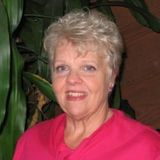
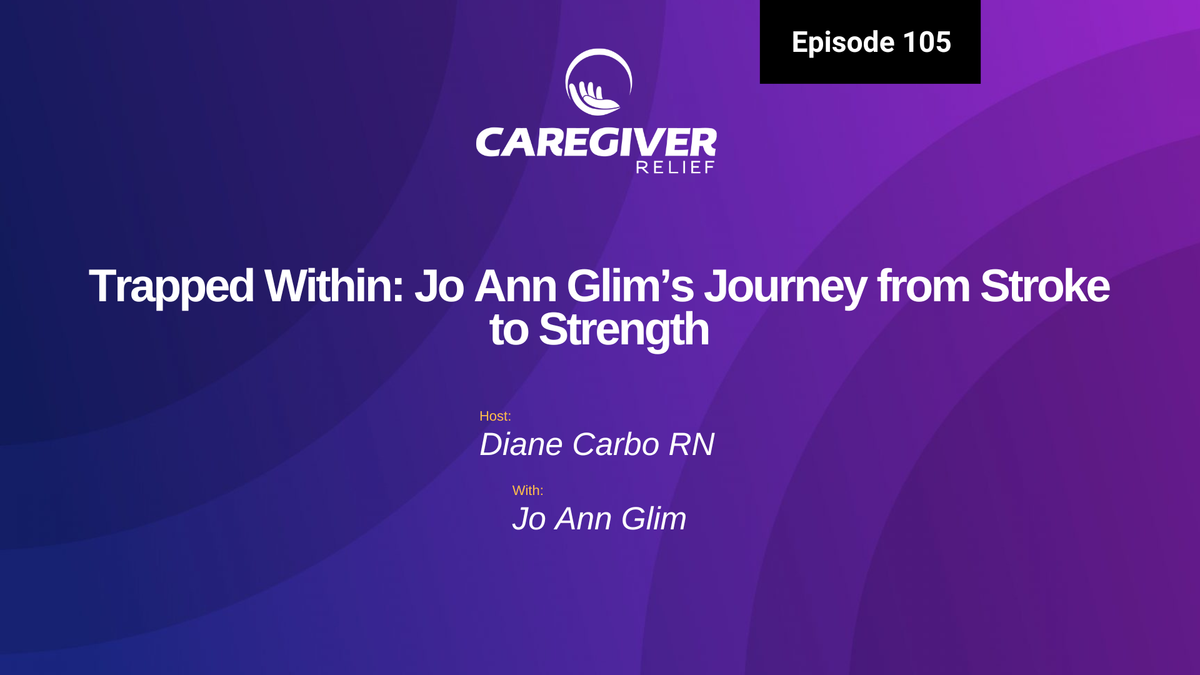
What happens when your life changes in a single, terrifying instant? One moment, Jo Ann Glim was on a work assignment; the next, she was in the throes of a hemorrhagic stroke that left her unable to walk, talk, or see clearly. In this powerful episode of the Caregiver Relief Podcast, host Diane Carbo sits down with the remarkable author, podcaster, and stroke survivor Jo Ann Glim to discuss her incredible journey from being "trapped within" her own body to finding a renewed sense of purpose.
Jo Ann shares the harrowing details of the day her stroke happened, the profound impact of losing both her mother and daughter to strokes, and the vital lessons she’s learned about resilience, recovery, and the healing power of connection. This is a story of hope, determination, and unwavering strength that every caregiver and survivor needs to hear.
🎧 Press play below to listen to Jo Ann's incredible journey!

In This Episode, You’ll Discover:
- 🧠 A First-Hand Account: Jo Ann details the frightening moments she realized she was having a stroke, from her speech turning to "Russian" to making the controversial choice to drive herself to the hospital.
- 💔 Generational Impact: Hear how the tragic loss of her mother and, later, her daughter to strokes influenced her own mindset on anger, faith, and recovery.
- ⚠️ The "Mini-Stroke" Warning: Why a TIA (transient ischemic attack) is a major precursor to a larger stroke and must be taken seriously.
- wheelchair Crucial Caregiver Insights: Jo Ann shares powerful do's and don'ts for supporting a loved one, including the importance of patience and one thing you should never do to someone in a wheelchair without their permission.
- 💃 Creative Rehabilitation: Learn how Jo Ann used creative outlets like line dancing to retrain her body and improve her balance post-stroke.
- ❤️ From Survivor to Counselor: What motivated Jo Ann to become a peer counselor and the most important messages she shares with new survivors in their most overwhelming days.
- 💪 Never Give Up: The core message of hope and resilience, reminding us that recovery is a lifelong journey and progress is always possible.
About Our Guest
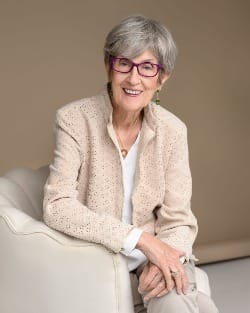
Jo Ann Glim is an award-winning author, podcaster, speaker, and stroke survivor. After a hemorrhagic stroke changed her life, she dedicated herself to helping others on their recovery journey. Through her books, Begotten With Love and Trapped Within, and her work as a peer counselor, Jo Ann has turned her personal struggle into a beacon of hope for countless individuals. She is also the host of the Stroke Survivor Stories Plus podcast, where she brings together voices from the stroke community to share their experiences and insights.


To our amazing community of caregivers: Remember to be gentle with yourself and practice self-care every day. You are the most important part of the equation. Thank you for listening, and please like, share, or comment to help us reach more caregivers who need encouragement and hope. ❤️
Podcast Episode Transcript
Diane: Welcome to the Caregiver Relief Podcast, where we bring you powerful stories and practical insights to support family caregivers and those they care for. I'm your host Diane Carbo and a registered nurse,
Diane: and today we are joined by the remarkable Jo Ann Glim. Award-winning author, podcaster, speaker, and stroke survivor.
Jo Ann's life changed in an instant when a hemorrhagic stroke left her unable to talk, walk, or even see clearly. But her determination, faith, and the love of those around her led her on her journey, not just to recovery, but to a renewed purpose. Through her books, begotten With Love and Trapped Within and her work as a peer counselor, Jo Ann has turned her own struggle into hope for others.
She also uses her platform to raise awareness about stroke recovery and the healing power of connection, including surprising ways music may play a role in recovery. Today. Jo Ann will share her story. Her journey, her insights for caregivers and lessons she's learned about resilience, love, and never giving up.
Jo Ann, thank you so much for being here. I'm glad you agreed to do this podcast with me.
Jo Ann: I'm looking forward to it. I think it's such a remarkable way to get the word out to not only stroke survivors, but the caregivers, because there is a big question mark, not only between them, but also with the medical professionals.
Diane: Absolutely. Now, you've written about your life before stroke in Begotten with Love. Can you take us back to the day everything changed and what happened and how did you first realize that you were having a stroke?
Jo Ann: it actually goes back to when I was 14 years old and my mother had a stroke. she did not survive her stroke.
She had a stroke and three days later she was gone. Oh, I was 14. She was 51, I believe at the time. And, that affected me a lot. It made me want to go into medicine in one way or form, and, it was impossible to do. I had been living in the, state of Washington in a little town called Anacortes. It was a small town.
I'd known everybody since I was four years old. And, So it was quite a shock to me to go from living in a small town that was actually, it's actually on an island. And at the time, back in 1950, eight, there, it was 5,280 people that lived there. And, the kids had free range,of the island. We all knew each other.
We, when we were old enough, we could ride our bicycles to wherever we wanted to go, because everybody was your mom. And If my mom told me to be home at a certain time, or if there were other mothers that were around and see, saw me doing something I shouldn't be doing, they would be on the phone and call my mother and she would know everything before I ever got home.
So I never won one of those arguments. But, anyway, when she passed away, I had come back to Chicago to live with her, sister, yeah, with her sister and her family, and it was such. A difference, because we had thousands of kids just in our high school, and my graduating class in Anacortes would've been, I believe, 126.
so it was quite a difference. And I was very shy to begin with, so it took me a while to find out who I was and. Go from there.
Diane: I, lost my mom at a very early age, not to a stroke, but to cancer. And it has a major impact on all of our lives. So much. And, so I understand,what some of what you went through about losing someone you love so profoundly and to a stroke in such a short period of time.
that's a tough one. now in those first days and weeks, what was the biggest hurdle you faced physically, emotionally, and mentally after you had your stroke? Can you, can, do you remember any of that time?
Jo Ann: I remember very little, but I definitely remember the time when it actually happened. my husband and I had just recently retired about six months before and had moved from Chicago, down to Florida, and we were looking forward to having a few years of enjoying life and doing whatever we felt like doing.
but we also wanted to stay involved, because once you're retired, the things that you love can actually start to settle into your life and you can really make progress and do good things with your life. And it feels good to be able to do that. So we had reached a point where we believed it was time to, to.
To get back to doing something. And because we didn't know a lot about where we were living, and I had worked for 16 years for, Kelly Services, but I had also worked at the same time, they had put me into a management role for Kelly Services at Pastor Healthcare. So I worked in human resources at, in that position.
So when we moved down here, I went to Kelly and, introduced myself and everything and, I called them and asked if they had any openings, for a day or two, and they did over at, Tropicana. So I took a one day, Assignment and went over there. It was a gorgeous day. I was really looking forward to going over and working with them.
They had me on assignment in marketing, which I absolutely love. And I got up there and everything was going well until one of the managers came out and told me that, he didn't have any lunches for 17 people that he was,educating. They had a conference going on and so I told him not to worry about that.
I'd take care of it. So I got everything set up. Went over to the, restaurant to pick up the sandwiches. They had box lunches for them and, When I went up to pay for it, I didn't feel any differently than I had, but when I went to say, how much do I owe you, it came out sounding like Russian and the Yep.
Gentleman that was. Waiting on me just looked at me very strangely. And I felt embarrassed because I thought that he thought I was making fun of him. because he, he had an accent. And so I tried one more time and still came out the same way. So I just handed him the credit card. We did the exchange.
He handed me two of the box lunches and a couple of the people that worked for him followed me up with the rest of them. And as I was walking to the car, I felt like my legs felt like jello and I was uncertain of myself. But the thing that was interesting is in my mind, I knew definitely right then and there that I was having a stroke.
Oh, wow. What I did was I, put the sandwiches in the trunk, the others put theirs in there. I knew I wouldn't be able to say thank you, so I just blew them because, and I got in the car and by this time, I didn't have control over my right arm. my hand would just slide right down into the seat and no matter whether I told it, just through my own will and my own words in my own mind, or if I shouted it out loud, it didn't matter.
It wasn't groin anywhere. So I got back to Tropicana and took a couple of his bus lunches and walked into the, reception room and, picked up a phone and called my husband. And when I called him, It was coming out all garbled and just very odd. And, he was very quiet for a minute and then he said, I'm sorry.
I think you have the wrong number. And I kept thinking in my mind, I have to think of something that he, and I know that's one word and I can get that out. And so what I did was I just shouted out our anniversary date and all of a sudden he goes, what's the matter with you? And I told him I'm sick.
And, meet me at the hospital. And I turned around. I hung up, I turned around and I looked at the car still out in front of Tropicana. It was still on. And I'm looking at the people who are returning from lunch and I hate doctors, and it happens no matter where there's an accident, everybody's gonna stop and take a look.
And I thought, I'm not doing that. So I walked out to the car and I realized that the car was only about maybe a mile if that, not even, maybe half a mile away from my tropicana's office for. I'm so sorry about that.
I'm so sorry about that. I wasn't expecting my phone to ring anyway. I, Diane, if you don't mind, I'm gonna start that sentence over
you okay? Yeah, I'm fine. I just was not expecting my phone to ring.
Diane: Then Kyle,
Jo Ann: I have Linda. Linda, I need to call you back. I'm right in the middle of the meeting. Okay. Goodbye.
I'm sorry about That's okay. Start over. So anyway, I saw my car still waiting out in front of Tropicana. the engine was still going. People were coming in from the lunch break and because I was sick and I had no idea what was gonna happen, except if I had called 9 1 1, we would've had an emergency situation right in the middle of the reception room.
And I hate doctors and I wasn't going to put up with that. But I still felt good enough that I believed that I could drive myself to the hospital. So I got in my car. And I did. I drove over there. I parked in a parking spot for an ambulance because there were no other parking spots. And when I went to get out of the car, the gentleman who watches the parking lot was on his little, I wanna say go-kart. And that's not right. It's, the golf cart on his little golf cart in his uniform. And he came over. But by this time I'm standing pressing up against the window on my car. My arm is sloped over, looks like a ski slope. I didn't realize, but by that time my mouth was beginning to droop.
And, when he came up, he looked at me and he said, lady, you can't park here. And I said, I think I'm having a stroke. But he looked at me, realized it was true, never said anything like, let me help you. He just said to me, he said, okay,I'll keep an eye on your car, don't worry about it. And drove off.
I. And so I'm looking at him. I walked the 15 steps to the front door, and when they opened, they've got that air in it, so it made that wash sound. So you would think somebody would turn around to see who's coming in, but nobody did. So I stood right in the middle of there and I just yelled out as best I could.
I think I'm having a stroke, and I know Sooner said that. And the nurse turned around and looked at me and said she walked in here. And just at that moment, somebody came behind and put their arms under mine and I collapsed. And that's, I remember.
Diane: I, was, I have a friend who was in her mid to late eighties.
Her name was Charlotte. She's no longer with us, but Charlotte was, would have TIAs or trans ischemic attacks and, they never, every time she'd call 9 1 1 'cause she lived alone, by the time they got there, they had resolved. And nobody does anything. And people don't understand that. a TIA is, they call it a mini stroke, is a precursor to a bigger stroke at some time in your life.
So you really want to address and manage your. Yourself, your health, so that maybe that you won't have the bigger stroke. But I literally was, she drove a Ford one 50 big truck. She's in the, in Pennsylvania in the country, and she's driving. We're going out to lunch. We come back from lunch and as she's talking to me, she starts to have slurred speech.
And just like you, it started to be garbly goop. You couldn't understand it. But knowing her health history and I'm a nurse, I just said, pull over right away. And because she was the one that was driving this monstrosity of a truck, I said, pull over right away. And I. Pushed her over and got her, got in her side and took her right to the er.
And that was the first time that they were absolutely able to see that she had a mini stroke. And,that, that shocked me because it, they can be very transient. one minute you're feeling bad, and the next minute you are feeling, you're having a stroke and then all of a sudden it's resolved again.
And I guess during those periods, people don't always realize what's happening to them when it's occurring. I don't know. I've not had a stroke, but I've had others say, they just can't remember a lot.
Jo Ann: My, my daughter, just passed away about a year and a half ago, from a, she had a series of strokes, but maybe four or five years before that she would have a mini stroke here and there.
And I know for her, what she would do is, when she had 'em, you're right, they don't, I think they don't understand how serious it is because you don't have the pain. Yep. It's there and they do something and it's gone. And yes. So it feel like if you get an aspirin or you get something other type of medication, it makes it go away.
You feel like, wonder Woman or Superman or somebody because you fought it, you got rid of it. And so you don't yourself take it as seriously as you should.
Diane: Exactly, and that's why I really appreciate you bringing this topic to light. because so many people poo p or dismiss or discount even that, what they're feeling or what their family member's seeing resolves, oh, they're fine and it's not going to happen again.
But they don't understand that it, these, it can happen. Charlotte had 10 episodes over a period of a few years, and it was that one that, that I was with her that observed it and took her right to the er, that she didn't have to wait for an ambulance. She didn't have to, wait to be able to call.
And we actually got it. we got her to the ER where they diagnosed her and started to work on teaching her about preventing. A stroke in the future because she was still a bad di a bad diabetic. she'd eat extra sugar and take more insulin. she didn't eat right, she didn't exercise, she didn't do anything, to make a lifestyle changes to prevent future strokes.
And that was sad for me because I really loved her. But you can't make people take care of themselves if they don't see what
Jo Ann: A lot of times too, they, and I shouldn't say this to, to point fingers at anybody, but a lot of times people that. in order to get around, they become very creative.
My mother-in-law was one that did this. She was a diabetic. And I remember when we would go out to breakfast for her, if it was a special breakfast or something, she always liked to have a Belgian waffle. That was her favorite. And her way of getting around things was because she had insulin with her. She said if she took an extra shot of insulin, she could eat that Belgium waffle.
Exactly. And everything would be okay. Yeah. So we've learned how to fool ourselves over the years, and all of us included, we all have our little quirks in life and we're not ready or willing to give them up.
Diane: exactly. I was, in my. Third, no, I was in my twenties and, late twenties when my mother-in-law at the time was, took retirement.
They were much older. their son that I married was, a change of life baby, and he was the. Youngest of four. when, Mrs. B, Mrs. Brock Vogel actually retired, she was a head of a high, a lab, a bacteriology lab. She was a brilliant woman. graduated Magna Laude from, the University of Chicago.
Very impressive female, very bright, loved to cook, loved to eat, and had high blood pressure her whole life. and never followed the rules. So they finally get to a point where they're living in it. They live in Indiana and they found this house on a lake. Now, there aren't many homes. On a lake in Indiana.
In Indiana, it doesn't have a lot of lakes, but this was a manmade one. And they were so excited to ha start their retirement. And as I'm helping them move in, I have my mother-in-law sitting, reading a book by the window overlooking the lake, and she's noticing how beautiful it is. And while she's reading, I'm busy hauling in boxes and unpacking.
And she's sitting there and she goes, Diane, there's something wrong with me. I said, what's the matter? She goes, I can't read. And that was one of the first strokes that she had. Again, it was a mini stroke, a TIA, but,and we took her to the hospital right away because, I wanted her to understand the serious nature of this, even if it did resolve.
But, as as brilliant as she was, she. Did what she wanted to do. She cooked up a storm, amazing gourmet food all the time, and she ate it and we all were supposed to eat it. And it, she lived life on her terms, but she never got to enjoy that lake house. they were in there a short period of time when she, continued to cook.
It was months later she had a massive stroke and ended up in a nursing home, which broke our hearts. so I understand that, people. Don't, I want people to understand that,if you're seeing the symptoms of a stroke, like high blood pressure, one of the things is strokes are preventable. most of them are.
There are some where you're gonna have a weakness, genetic weakness, but they are preventable. I'd like to ask you now, you've witnessed losing your mother and your daughter to strokes, and I'm sure that's, that has had played some importance on your recovery. How did those, experiences influence your mindset today?
Jo Ann: it's interesting you should say that, but before we get to that point, there is something that I do want to say about the first part of when I had my stroke Was me driving in the condition that I was in. And this is a part of just who I am when I'm in situations, especially working for 16 years for Kelly, you never knew what you were gonna walk into and have to resolve.
So I would always do, okay, if this happens, we go to plan A. If this happens, we go to plan B. So I always had two or three different thoughts in my mind when I would do something, or if I was in a situation where I saw someone who was ill or had been hurt or something. Even though I'm not a medical person, and, but if I knew I was the only one there to help this person, until the medical professionals got there, I would do the same thing.
Go through the A, B, C. Yep. So when this happened to me, I said to myself. I still feel strong enough, my mind is clear, I don't know what's gonna happen next, but I knew the way the road was laid out and it wasn't that far for the whole journey. It was a matter of blocks for both ways, and both of them had a lot of open field.
So I felt if anything progressed further, I could just swing the car up over the sidewalk onto the field, and be done with it until somebody found me. But I would like to say never trust somebody with an adult mind. And that's what I had at that time. And if you happen to be in the throes of a stroke or you're not feeling well enough to drive, don't drive.
It's not a smart thing to do. Ask for help, lay down on the ground if you have to. They'll get somebody to you very quickly if you're on the sidewalk. do something that's intelligent, not because you think you're so smart, just know there are people out there that will help you. And that first hour is so critical for you.
It
Diane: is, it is absolutely critical. And I have to jump in there and say that, there are many women. Men out there that are fiercely independent and they would rather die than have someone see them in a weak, weakened state, whether it's a stroke or something. And I can see people making themselves do things, making a decision based on emotion and not logic and having dire consequences.
I know when Charlotte had her stroke while she was driving, I'm like, oh, hell no, you're not. She said, I, she could slur. She was trying to tell me she could still drive and I, I'm like, hell no, you're not driving, I'm sorry. And I made her, push across the seat of the thing and said, I'm getting my butt in there and I'm driving because I, there's what happens if something worse happens to you?
I said, there don't need to be two victims in the, of a car accident. And she did. she gave in. it people, this is a really good point that you shouldn't drive. You should try to get attention and understand that first hour is so important. If you can dial 9 1 1, if you can't cause a scene, lay on the ground, people are gonna come and find you whatever it takes to get the attention to get to an emergency room as soon as possible.
So get back to losing your mother and your daughter to strokes and how that's re has experienced, has influenced your mindset.
Jo Ann: when I lost my mother, there was a point in time that I was very angry at God. And I think there's so many emotions that family goes through. and back in like 1958, it, it was a totally different place to live.
Yeah. back during that period of time, you did not talk about emotions. this was life. True. This is the way it goes. That's it. Yeah. I had never been e except to have my, my, tonsils out when I was seven. I'd never been in a hospital and never saw anybody that was critically ill. And, when my mother passed away, our pastor came over.
Now my, my second grade teacher was in the room next to my mother, and I was terrified of her. she wasn't mean, but she was very stern and there wasn't one person. even if, even at this age, if all of my classmates and I were in the same room and somebody shouted up, Mrs. Caldwell, we would all go, oh,
none of us would dare to say a word in her case. Yep. And so when I walked into the hallway and I saw Mrs. Caldwell in the room right across the way from my mother's, she said, Joanie, come here. And I'm like, when you see my mom that I did, I went in there. She was so kind and so gentle and so loving. Wow.
And she knew how difficult this whole situation was. She said, if you need me, you come in here. And I just was so taken by that. And so I went in and I saw my mother just for, just briefly, and she was sleeping at the time. Later that evening, my, my best friend, she had invited me to go with her and, To their church, and the kids were having a meeting, so they prayed for my mother. And because I was 14. I didn't drive. My aunt and my grandparents lived with us, but they didn't drive and neither did my mom. So the kids. Parents drove me to the hospital. when I got in there, my mother was awake.
she wasn't able to open her eyes, but she grabbed my hand and just held it so tidy. Oh, hurt. I really thought she was gonna break my fingers,
Diane: but
Jo Ann: we talked for a while. I told her I loved her and I saw too, trying truthful from the side of her face. And, I told her I'd be back the next day that there were people waiting to take me home and I left.
And that was the last time I'd seen her when she was still a alert herself. So the next day when I went back. It's the day that she passed away. And after she did, and Mrs. Caldwell came out there and just held me while all of this was going on. But when our pastor got there, he grabbed me by the shoulders and pulled me into her room and he put me so that my face was facing hers.
They had not closed her eyes yet. she had just passed away. And he said to me, he said, she's dead now. She's not here anymore. And he pulled me away from her and out into the hallway. And that was the only words of comfort I'd received from that man. Oh. So that left me feeling really angry. At him, angry at God.
how can you take the mother of a 14-year-old child, Yeah. and it was very difficult. I held onto that anger until I got married and had a baby of my own. And then all of a sudden I started to have a yo-yo relationship with God, where when things were good in my life, yay.
we were a team. When things were falling apart, it's okay, God, I got it. I'll take it from here, and then things would really fall apart. But it went back and forth like that for a while. And then I met a beautiful man that, I married, I'd been married once before, and. We went through a divorce.
I stayed single for about five years, and then I married this wonderful man and, we had 47 years of marriage before he passed away.
Diane: Oh, wow. That's impressive.
Jo Ann: Yeah, it was good. It was really good. But, so as our time together. Continued. My faith also continued to grow and become stronger even through the hard parts.
And the reason I'm mentioning all this is because when my daughter passed away, and it was funny because she wasn't involved in the church as she was older. And so every time we would have a, a phone conversation or anything, I would always say to her, very last thing I would say is, okay, Tammy, I love you.
Go to church. And it was silly conversation we had, but often, darn if she did. She found the church that she absolutely loved. and we were in Florida. She lived up in Chicago at the time. She asked my husband to be her, sponsor and, he had a beautiful singing voice and he sang for her when she joined the church.
And just really, her face was so strong. she didn't talk about it a lot, but she used it in her life and it was really beautiful to watch her experience that. Now when she passed away, she had come down here. My husband had already passed away. She had come down to visit and, this is about two years after.
Bill had passed away. She came down here to visit and while she was here, she had a stroke and she ended up in the hospital more than once on three different occasions. In fact, one of those times, because she went to the situation where they brought her back, she was doing good. And on one of these occasions, she and I decided to go out and buy some pajamas.
Because at Christmas time, Bill's family decided that we were all wearing pajamas on Christmas Eve. We went out to get these pajamas to wear and stuff. And as we were in the store, we didn't walk far to the store or anything and she said, mom, I'm gonna sit down. I'm tired. And I said, that's fine.
And I went a little further into the store and so I couldn't see over the stacks of clothing to see who said this. But I heard some woman say very loudly to my daughter, because I knew where she was sitting, what your name? And Tammy told her. And,there was a little more of a conversation, but it was a little more quiet.
And so by the time I got up to the front, this woman was gone and Tammy was sitting there laughing and she listened and she goes, oh, are you in trouble? I went, why? She said That was one of the nurses from the hospital. I guess I'm supposed to be home.
we got a pajamas and left right away and we did go on Christmas Eve, we did go because it was a family dinner not far. And, not, it just was nice. It was comforting to be there. And we did, we wore pajamas. And, just had a really good time. But she ended up three different times in the hospital, and the third time she did not come home, she passed away.
Diane: We have two things in common. We both lost our moms at young ages and we both lost, a child, an adult child. My son, was not from a stroke. My son had a severe pain condition and completed suicide. But, the loss, it just has definitely affected and impacted my thoughts on death and dying. I'm a lot more open about talking about it.
because of the situation, that I dealt with my father when my mom was going through treatment for cancer. Jo Ann, you became a peer counselor for other stroke survivors. What motivated you to step into that role and what do you share with people in those first overwhelming days?
Jo Ann: when I was in the, rehab center, the doctors and the therapists came in almost every day just to talk to me about what they're offering to me and if it was helping and what else I felt like I needed. and they shared with me that back at that time, which was, I think 1997 was when I had my stroke.
And, back then most of the training that they received was for their, for physical. And they never realized all the other symptoms and things that, the process that you have to go through in order to find who you are now. So as we had our conversations and stuff, it set a seed in my mind. And that's when,I started to think about writing about what was happening to me and without knowing how it was going to end to keep doing it, until, until we had found a place that, people may be able to say, oh my gosh, that's what I'm going through.
And then see certain hints or thoughts and stuff that I may have had that may help them in their process of healing. So
Diane: how does telling your story help you heal? It's obviously helping others because it's giving them hope and, a sense of they're not alone in their suffering and recovery.
Jo Ann: I think the way it's helping me is to help me to continue to realize we're not alone.
we're not the only one that's had a stroke. not to be negative towards insurance, but to share something that seems to continue to happen. And that's when you have a stroke, it seems like you have a certain amount of insurance and then they deem that you're well enough to go home, you don't need their help anymore, and they may give you a little more help as far as physical therapy for, six weeks or eight weeks.
And then you are done with that. So a lot of times for stroke survivors, we feel, that's it, and we don't know how to do things. We might repeat some of the, some of the therapy that we learned. especially, I used to do that when I was cooking dinner. I'd have the radio on to a song that I liked and, I'd be kicking my heels backwards or, doing some steps or something.
enough for that song. That was it. And that wasn't really giving me what I needed to do. So somewhere along the way, if you want to really tough, be tough on yourself, you have to begin to look at yourself as like an Olympian and. Really push yourself to do the best you can. Now, when I say that, I'm not saying, no pain, no gain, because that's the furthest thing from my mind, because that can cause more harm or disillusionment than anything.
But what I'm saying is, if you're having difficulty with your hand, if your hand is curved up so that you can't get your fingers down straight, be kind to yourself. Go and put a, a washcloth or a dishcloth in the microwave for, I'm not sure if it's 30 seconds or a minute. It's not very long, and it will warm it up.
Roll it up, put it in your hands so that your fingers aren't quite as, Clenched as they are when you have nothing there, and do that, for maybe an hour. And then the next night do the same thing, and you'll start to feel an ease in your fingers from doing that. And then start doing things like taking one finger at a time and just rubbing it from the bottom where it joins the hand all the way up to the tip of the finger because it's allowing more blood to flow into your fingers.
And it's helping to soften it.
Diane: So people don't realize that after a stroke, it's ongoing, rehabilitation for the rest of your life. they don't realize that, if you stop walking or exercising, you're gonna lose your ability just like you would if you were naturally aging.
But with a stroke survivor, if they have dysarthria, which is difficulty with speech, then they need to continue to work their mouth muscles, their tongue muscles, and do the swallowing exercises on a regular basis so that they maintain that base level. Because if they decline, they may not get it back again.
And I think that's one of the things that people don't realize about after a stroke. It's like your therapy's not done. I am, we have a. Public health crisis, right now in the country where, they're discharging. Medicare reimbursement is so low for therapies right now. When you go into a skilled facility or acute rehab, the facilities get a higher level of reimbursement for not providing care, and that's very disconcerting.
I just had a, a family, me, a patient, of one of my fam, my clients that he was in the hospital for. he has ms, but it's in remission. He's doing very well. He's a very unstable, diabetic, and he just went in because he couldn't walk. He literally couldn't walk, and they didn't know what it was.
So he had back surgery. They sent him home. In 12 days, he was home less than an hour, and we had to send him back because when his wife transferred him to the toilet, he fell. She fell. Oh. And he had to go back in to have surgery again on his back. And what I'm seeing is that rehab is not being provided to.
To patients that need it on an e on a regular basis. And what I'm, that's why I'm doing a series on stroke. Stroke awareness is stroke recovery. Because there are things now that are happening, because the therapies aren't, we're, we as a culture are now expected by our government to cost share in our care.
That means that, the rich will pay for whatever it is they need because the high copays or whatever deductibles, they'll be able to meet them. The middle class will do like they've always done, they will take out second mortgages, reverse mortgages, whatever it is to get the treatment and the poor, and the elderly with poor funds.
Are going to do without. So I'm really concerned about stroke recovery and I'm reading, we're having hybrid therapies where it will be done online. The therapy will be done with the fa the patient that needs the therapy and their family care caregiver being directed to do the care, do the session, the physical therapy, speech therapy or OT session, under the direction of a physical therapist via online.
And I'm like, oh my gosh. Now they have exoskeletons that you put on your hand to exercise your hand regularly. There are all these products coming out to help us recover because our healthcare systems. Very broken and people aren't getting the care they need from home at home. In fact, this, gentleman with the MS and the back surgery, he was literally discharged after two weeks in from in rehab, acute rehab, and he had a decubitus on his heel that the facility didn't document or the nursing staff never looked for and noted.
And as an old rehab nurse, I can tell you right now, that just made me so angry because. He could lose his foot. We don't know yet. We're still dealing with that. But how do you do that? If you're getting people up and you're taking them to therapies and you're doing things, they're leaving them stay in bed, which is really frustrating to me.
and I'm sure you hear this now, you have a podcast, stroke survivor Stories Plus, and it brings together voices from the stroke community. Yes. what's been one of the most memorable moments from those conversations?
Jo Ann: Oh my goodness. I think one of the ones I remember the most is a woman who, she's a beautiful woman and she's so smart.
she, but her health is really, how do I put it? it's, fragile. Just because what happened with her, I've not talked to her about sharing this, but I think it's all right. She, had been in a car accident and when she shared this on our story, when I did an interview with her, she, had been in a car accident that had to really crush her pretty bad.
and afterwards, she had a stroke. it was from everything that happened, but it had happened at the time of the stroke, I think is what I'm trying to say. She, on the,on, she had a podcast as well. And she was doing physical things at that time. Now she did not do anything. She had her stroke and did nothing as far as physicality for nine years.
Oh my. And when she found out, because right now, oh, why is that word escaping me?
Oh, it's not coming to me. Anyway,
they do things repetitively nowadays and when she started to do some of the things that had been taught to her, she started to get. Movement back in her hand and Oh wow. After all those years, it's clumsy. But she's capable of picking things up in her hand, which, is a big hooray. and there are a lot of podcasts that are on there right now for stroke survivors, and a lot of them are being done either for, by physical therapists or by stroke survivors themselves, showing you how they did something and how it helped them.
And they have a pretty, pretty big following.
Diane: We need that because, strokes are absolutely, the majority of them are preventable, but people don't realize that. So the more we have about stroke awareness, the more we talk about how TIAs are a signal to a future stroke, don't dismiss them and don't think that just because they, they,
the symptoms and that you are experiencing go away and you think you're back to normal, you're not at baseline, you won't be, you're just gonna keep, having these until, it gets to a dangerous level and you may never come back from it. Some people never come back home after having a massive stroke.
So it's really important that we teach people that eating right, exercising, health, making healthy lifestyle choices can delay or prevent or even help you during your recovery so that you can get to, a higher level of functioning than you did, after your stroke. And it's possible, I've seen it many times.
you were saying that you were trapped from within and you couldn't, physically or emotionally speak so. What message do you wanna leave with people today about, from your perspective, what they misunderstand about stroke recovery and how they can better support their loved ones?
Jo Ann: I would say never give up.
and that's a saying that we all say online. go in and take a look at some of the stroke groups that are on there. They've got some really good ones. but there was a couple of things that I was thinking about before we did this show that I wanted to make sure the caregivers knew about stroke survivors.
One of the first things after a stroke, after the trauma portion of it is, more or less. see, I'm having an aphasic moment myself,when it's calmed down, when the trauma is calm, but you are still recovering in the first shows of the recovering stages of it.
The things that, that we look for without even realizing is kindness, love, patience, because at that time it's hard for us to put a thought together. if you ask us a concept about something, I would imagine most of patients can't give it to you. one of the other things. Especially for people who are caregivers or friends who are visiting, or friends that have gone out with you and stuff.
This was a big pet peeve with me when I was in a wheelchair. Do not move my chair without my permission.
Diane: Amen.
Jo Ann: It would be the same as if I had walked up to somebody, put my hands on their shoulders and moved them where I wanted them to go. first off, it's scary because you don't know who's behind you.
Most of us don't have the flexibility to turn and to see who it is, so you have to be very careful with that.
Diane: I am going to jump in here and say that for, to the family caregivers that are providing care to someone with a stroke, a patience is absolutely necessary. I know people that in acute rehab, which is what I did and then I did home care for years.
I can tell you that one of the things I noticed is, family caregivers wanna hurry up and help them get dressed, help them do everything, and it's, that is the wrong approach. You want a person post stroke or any injury or illness or disability to do as much as they can for themselves. Yes, it's painfully slow to sit there and watch them put a shirt on or they should be able to ask you for help.
And I've had people scream at me, don't just stand there, you lazy, bum get me dressed. And I, and then I'm saying, you do what you can and then you tell me what you need to do, because that just makes it so that they have an opportunity to increase their independence and maybe reach a higher level of independence.
But patience is a virtue. I know many, they don't understand about the assistive devices that can be used. Like when you're watching somebody eat and you, they're shaking and they're not getting the food to their mouth. there are special spoons, special tools, and even special plates to help a person eat.
By themselves. Now I know that the family caregivers, so they say, oh, but it's so painful to watch. you know what? Until somebody asks you for help, you need to allow them to. Eat whatever they can on their own. It gives them a sense of wellbeing and their self-esteem and dignity. And, whether you may look at the food and see the shaking and see it as undignified.
That's a, I see it as a person trying to do the best they can with what they have to work with. And that give, that's the resilience that keeps people going and giving them the hope that they can get to a higher level of functioning when you talk about never giving up. And that is the most important point that I would tell any person that's in rehab that post-stroke is never give up.
no matter how far post, post-stroke you are, there's so many things you can do and find things to enjoy your life.
Jo Ann: Absolutely. and when you're talking about that, I was thinking. You not only are trying to get the food to your mouth, so you're working your mouth, you're working your hand, you're working your fingers, you're working your shoulders.
Those are all exercises. you don't have to go to the gym, you don't have to put on a pair of those tight pants. You can wear your sweats or whatever you want and just work so that it feels good. The people that I, really looked up to when I was first learning everything myself, were kids that were anywhere from six months old to about maybe eight.
Because they would do things. I remember this one little boy, oh, he got in so much trouble. We were over at,Walmart and he happened to climb up on a couple of the shelves. There wasn't any product on there,he just stepped on and he climbed up. He grabbed a hold of the bar and has his other hand out, thinks he's done something really great and his mom turns around and yelled at me, get down from River.
No, you can't do that. and I'm sitting back there going, you go.
he had his lungs going, his legs going, and it just made me realize, there's so many things when you stop to think of what we're going through, it's like we're going through grief. it truly is when you stop to think of it and you watch the progression, it's just like following Elizabeth Kubler Ross with the progressions of grief and, That, that's one thing when I was in the, in the rehab center that they brought, they didn't bring it to my attention, but that's where I really discovered it. And, there was a woman, because you do, you struggle with, am I always gonna be like this? And you're trying so hard to get back to who you were.
And when you think of the creativity of children, they haven't been taught that, okay, if you know that this is what you want to do, then you're locked into it for the rest of your life. They haven't figured that out and nobody's taught them that's what they wanna do. They're taught to, try this, maybe this'll be a little better.
Or because they grow and they're taller, and stronger. They can do it a little bit differently. And what we're doing. When we're trying to come back is we're railing against being creative, and one of the things that I think is very important is to allow the stroke survivor to think of things that they enjoy doing.
For example, I love to garden. My hand wasn't strong enough to hold onto a tool or do anything like plant something. But my husband went out and bought me some tools that were battery operated. I couldn't use them for long, but I couldn't use them for long 'cause I didn't have a lot of energy anyway. But the, and that's another thing, for us, for stroke survivors, we need to be kinder and more gentle with ourselves and for caregivers to understand when we say we're tired. Yep. We actually need that sleep. That's a part of the healing process. So don't expect one of us to just get up and do it because, we didn't sleep well the night before.
We don't have the ability to do that right now.
Diane: and that's especially with a person that's aging with a stroke. I haven't had a stroke, but I can tell you I live with chronic pain, so I don't sleep well either. And people look at you, the problem I saw, with my son who had a severe pain condition, and people with strokes, you can't always see their disability.
they may walk fine or just have a light limp, but it's their speech that's not right, or their swallowing is not right. Or they're, they have a neglect on one side or weakness on one side. People don't, they just look at you and don't see anything outta sorts with you. So they can be very judgmental about what, you're doing.
And,and in people can be insensitive and judgemental and you just have to tell them, I tell people, just mind your own business. But to the survivors out there, I used to tell my patients with dementia, and I do this for my stroke patients too, have little cards made up.
Especially if you are, have dysarthria a problem with speech. just make a card up and say, Hey, I'm a stroke survivor. Be patient with me. my, I can't talk, I things are processing slower. And give that out to them when they're yelling at you. Embarrass them for being such idiots. Because we have an uncaring culture out there.
And I have cared for many young people with strokes. People don't understand that strokes don't happen just in the, aging adults. It, they can happen at very young ages.
Jo Ann: That's right. And the one that seems to be growing the fastest right now is, was in the thirties. And yeah, that's alarming. That should be looked at to figure out why.
Yeah, that's a tough one. Yeah, we were talking a little earlier, I feel like we're bouncing all over, but, these are all things that I think people would love to know about. yes. When we were talking about being creative about things, one of the things that I did, because I was having trouble with my balance, I still do.
And, and with the, just walking in general and I do like to dance. And so what I did was I thought about it and my sister-in-law and I decided that we wanted to learn how to line dance. And so we did. we went over now at that time. I think for the first couple I took a cane with me 'cause I didn't know what I was gonna walk into and I wasn't strong enough to get up and actually dance on the line with everybody.
But I would sit back at my chair and as I sat there, I would go through the motions with my feet, if they were Yes. And so then when I finally walked, worked up my courage and felt like I could do it, I'd get at the end of a line and do as much as I could and then I'd sit down when I either was getting confused or if I was tired.
And, and then eventually the teacher saw. You know what I was doing and stuff, and came over and talked to us and we told her what was going on. then what she would do was when they had a new dance, she'd grab my arm and she'd go, okay, Jo Ann, we're gonna do this one. And so shed get me up there and the two of us she'd hold onto my arm and we would dance together.
And just from that motion and from having someone hold onto me, it made all the difference in the world, And I was able to move with motion like you're supposed to. And then after that, I would go sit down and everybody would do the first song and stuff, and I'd either get up and join them or not.
And, and I got to a point where I could dance on my own. But the, it's the neuroplasticity is the big buzzword that I hear a lot in the last two. Yes. And you see so many people just from trying over and over again. And if you look at that 3-year-old or that 6-year-old, they'll try it around people.
And if people laugh at him, they might go in their room and practice a little bit and they come out and try it again. But that's what they do. they're repetitive until they perfect it. And that's what we have to do when we wanna try to get better than where we are right now.
Diane: What I love about you, Jo Ann, and I have to say this to my listeners, you have to have courage.
I'm at an age where I don't care what people think of me and what their response to me is. I was never that way when I was younger, but because I have issues right now with my ability to, I also have balance issues and, they're not bad, but they're going to be bad with my chronic pain. So I'm addressing all my, my knees and stuff are going, but you have to have the courage to just get out of your comfort zone and do something.
And look, the reward for you was more socialization and the ability to dance. that's amazing. And those are the types of tips that, the caregivers absolutely need to encourage their survivor. the family member that's a stroke survivor to keep going and never give up. Jo Ann, how do people find you on your, podcast?
Jo Ann: we are on, YouTube, and it's under my name or you can find it under a stroke survivor stories plus,
Diane: I'll put, a link to your information on the bottom of the page when we, after we, we do the, put up the podcast. Jo Ann, thank you so much for your time today. I appreciate it. I think that we have a lot of people that are going to, be, that need this information and, I'm going to do this.
I share it during stroke awareness month. but every month needs to be stroke Awareness month. So thank you for your time, Jo Ann.
Jo Ann: Thank you so much. I've really enjoyed being with you.
Diane: Oh, to my family caregivers out there, you are the most important part of the caregiving equation. Without you, it all falls apart.
So learn to be gentle with yourself. practice self-care every day because you are worth it.
Caring for a loved one can be overwhelming — but you're not alone. If you have questions, big or small, our expert team is here to help.
👉 Click here to Ask the Expert
Our Resource section can help you find the information and tools that you need. We have courses, videos, checklists, guidebooks, cheat sheets, how-to guides and more.
You can get started by clicking on the link below. We know that taking care of a loved one is hard work, but with our help you can get the support that you need.
Click here to go to Resource Section now!