Therapeutic Massage for Seniors: Natural Relief for Pain, Stress, and Brain Fog with Phyllis Nunn - Episode 242
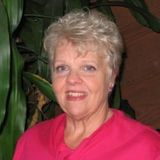

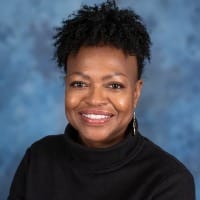
In this episode, host Diane Carbo, RN, sits down with Phyllis Nunn—a licensed massage therapist, certified craniosacral therapist, and manual lymphatic drainage practitioner—to explore how gentle, science-backed therapies can transform chronic pain management for aging adults and their caregivers.
🎙️ Episode Highlights
🧠 The Mind-Body & Nervous System Link: How thoughts, emotional stress, and a dysregulated nervous system directly impact physical pain levels and block fluid flow.
🌸 Understanding Body Whispers: Why deep pressure isn't always the answer, and how gentle touches like Craniosacral Therapy (CST) help unwind trapped nerve signals and restore balance.
💧 The Power of Manual Lymphatic Drainage (MLD): How sweeping away stagnant fluid, long-chain fatty acids, and inflammation unblocks the body's natural "toilet" to ease stiff joints and reduce brain fog.
🏥 Alternative Approaches to Modern Healthcare: Moving beyond 15-minute doctor visits to find root-cause alternative solutions for holistic well-being.
💛 Self-Care for Caregivers: Simple mindsets and practices to help family caregivers prioritize their own physical and emotional health.
📋 Quick Episode Outline
⏱️ Introduction: Managing chronic pain, rising healthcare limitations, and alternative holistic options.
🎭 Guest Story: Phyllis Nunn’s unique background from off-Broadway performance and caregiving to discovering her gift for healing touch.
⚡ The Science of the Nervous System: Explaining parasympathetic vs. sympathetic states, nerve unwinding, and body energy alignment.
🌿 Demystifying Lymphatic Drainage: How MLD works to flush inflammation, tackle long-hauler joint pain, and clear brain fog.
🙌 What to Expect in a Session: A step-by-step walkthrough of starting at the terminus (subclavian veins) to safely clear systemic inflammation.
🤝 Closing Advice & Resources: How to access specialized care, book a discovery call, and connect with veteran support options.
🎧 Why You Need to Listen
If you or a loved one suffer from lingering stiffness, chronic inflammation, or high caregiver stress, this episode offers a practical alternative toolbox. Phyllis shares deeply personal client success stories—from resolving 20-year neck blockages to helping seniors leave their mobility devices behind—showing how gentle, intention-driven care can help you age with clarity, calm, and confidence.
🔗 Resources Mentioned in This Episode
Connect with Phyllis Nunn: Schedule a 15-minute discovery call at Serene Valley Massage.
📸 Instagram:@phyllisalanyanunn
💼 LinkedIn: Phyllis Nunn
📘 Facebook: Serene Valley Massage
Podcast Episode Transcript
Diane: Welcome to the Caregiver Relief Podcast. I'm your host, Diane Carbo, RN, and this podcast is dedicated to helping family caregivers navigate the medical system, protect their health, and provide better care for the people they love. Before we begin today's episode, I want to ask you a question.
What happens when the pain medications stop working or become too risky to use? For many seniors and the family caregivers who support them, managing chronic pain has become increasingly complicated. I know, I suffer from chronic pain. Government policies are tightening access to pain medications, and they're rationing interventional pain procedures.
At the same time, caregivers are being asked to manage more care at home than ever before. So families are asking the important question: What are the safe alternatives for managing pain, inflammation, and stress? Especially for the aging body. Today, we're exploring one option that has been used for centuries, but now is being supported by growing science: therapeutic massage and nervous system therapies.
These therapies don't just relax muscles, they can help regulate the nervous system, support the immune system, reduce inflammation, and improve circulation, all of which can play a role in reducing chronic pain. Joining us today is Phyllis Nunn, a nervous system wellness specialist and founder of Serene Valley Massage and Rehabilitation in Paducah, Kentucky.
Phyllis brings a unique perspective to her work. After careers in performance, caregiving, and ministry, she now helps women over 40 reduce inflammation, brain fog, and chronic stress using science-backed techniques, including craniosacral therapy and manual lymphatic drainage. She is a licensed massage therapist, a certified craniosac- sacral therapist, and a certified manual lymphatic drainage practitioner, and she has more than a decade of experience helping people restore balance to their bodies and nervous systems.
Her work focuses on helping people age with clarity, confidence, and calm, while reducing pain and improving function. Today, we're gonna talk about why the nervous system plays such a critical role in chronic pain, how lymphatic drainage and craniosac- sacral therapy work, why these therapies may help seniors dealing with inflammation, brain fog, and stress, and how caregivers can safely incorporate massage therapies into a pain management plan.
So if you or someone you care for is struggling with chronic pain, this conversation may open the door to solutions you didn't know were available.
Diane: Phyllis, thank you so much for joining me today. I've been looking forward to this conversation because I suffer from chronic pain, and I've been suffering from it for decades.
And I know I'm supposed to say, "My body is healing, my body is healing." I get that. It's a mindset as well. But I want to thank you for, joining us today. You've had a fantastic journey to become a massage therapist. You've done, performance, caregiving, ministry, and now you're doing therapeutic wellness.
What led you to work on the nervous system health and massage therapy?
Phyllis: Thank you, first of all, Diane, for, welcoming to your show, your podcast. I'm so excited to share a little bit of my journey. I always knew that I had the gift of healing and the gift of touch in my hands, but I didn't know how to master it until I went to college.
I went to Western Kentucky University and realized it, at that time of, It was segregation was easing out. Integration was easing in. So you see, I'm dating myself. I'm 68 years old. So therefore, at the time, I didn't think that I would ever have an opportunity to work in this profession, but it kept calling at me.
And sometimes when the Lord has a mission, an assignment for you, it nags at you. You can be, an actor. I was an actor off Broadway.
Diane: Yeah.
Phyllis: I toured professionally with a '60s girl group doing doo-wop,
Diane: Oh, I love doo-wop! Around the country.
Phyllis: Went overseas and I'm still running. I was the nerd on the trips who had a book and a Bible.
And, it just kept following me until one day I was vice president of Paducah Housing Services about 12 or 13 years ago when I said, "I've got to do this. I have to be a massage therapist." And my family wasn't that excited about it. They thought I was a little bit nuts. But, my mother would always tell me that, "Baby, you can do some things.
You feel things in the body that nobody else can feel."
Diane: Yeah.
Phyllis: And she always said that if there was something I could do that no one else could do but I could do it better that's what God was calling me to do. And you agree.
Diane: Yeah, I totally agree. I believe that. I have had therapy, massages where I could feel the energy within that person as they worked on me.
It was amazing. If you've never had an experience like that, and I didn't, and, I'm a healthcare professional, and I thought, "Yeah, yeah, yeah." And it's an amazing experience when you have a gift like that. And I'm glad you followed it.
Phyllis: Yes, I did. It was a struggle pretty hard in the beginning, but
Diane: Yeah.
Phyllis: I always had to pray about where I was going, what direction, and doors seemed to open up. But it was not until I actually took my first craniosacral therapy class at the Upledger Institute and I discovered those seven rhythms, and I could feel four or five of them. And then once I was taught how to recognize the seven, and it depends on, which, holistic therapy you're working with.
There could be more, and I'm sure there are. But I can feel all seven in the body, and things started to turn around because it was a uniqueness in the way I was providing service in addition to massage. Because sometimes the body, it is speaking very gently, so it means it requires a gentle touch in a different kind of way.
Diane: Yeah.
Phyllis: And it's not all about an elbow or manipulating the tissue, hardcore deep tissue. And everybody knows me, I don't do deep. Yeah. I might have to do sometimes a little bit of, maybe a medium pressure
Diane: But
Phyllis: everything is very soft because the body whispers the pain. And I also learned over the years, and right now I'm in a, it's called Face Plastica with Dr. Alex Ulyshinko. He is based out of Dubai, but he's a Russian plastic surgeon and osteopath who started at the age of 15 in massage. So he's created a wonderful therapeutic protocol that encompasses all. His philosophy is that you can't heal the head or the brain without healing the body or the face.
So all of it works in concert, and so the therapies that I work and I'm practicing now encompass moving the cranial bones just as they do in lymphat not lymphatic, but craniosacral therapy. When you're working with the cranial, you can just add your hands to the occipital, region of the skull.
And once your energy connects, you it tends to come to life. You feel, I often feel what that person is feeling, not to the magnitude that they do, but I know the proximity of the pain, and I have to send messages of intent and intention into that region of the brain or in the, the inguinals, the axilla, so that I can help the body move fluid.
I'm not doing it. The body is doing it. It just needs my intention and my energy to stim it along, to kind of push it along to do what it wants to do, but it might be stuck. And oftentimes our thoughts are what drives the pain
Diane: I went to nursing school in the Dark Ages. I graduated from nursing school in 1974, and I, we had eight weeks of psychiatric nursing, and one of the things they taught us at that time, which shocked, shocks me now because they don't get that training like they, we did, but we were told that every disease that a person has can be related to their thought process.
Like high blood pressure Energy absorption yes, yes. So I grew up thinking and knowing the mind-body connection. Did I always pay attention to my body? No, and I had to wait until it said red alarm, alarm, alarm before I sought treatment for some things, which is unfortunate for me.
But yes, I have a strong, and I love that people can be so positive, about things. And, I am a positive person for the most part, but when it comes to my body, I'm saying, "Oh, I hurt," and I know I need to be saying, I need to be gentle with myself," and I'm learning. at 73, I'm still learning.
But the mind-body connection is very real. Now, you, can you explain how the nervous system influences the body's, experience to pain?
Phyllis: The nervous system, if we're starting with the parasympathetic it moves into the sympathetic. No, it might, no, it's the sympathetic that moves to the para.
Diane: Yeah.
Phyllis: And I find that working in the sympathetic, because I'm working on an, a design pattern for something I'm making that deals with frequencies and, red light or far infrared heat. Because I find if I can clear the spinal column and then I put you in the parasympathetic, a state of relaxation, the, then I do lymphatic drainage to clear the inflammation from the spine, then I can do craniosacral therapy, lymphatic drainage, and I'm floating back and forth because as the lymph fluid releases, the nerves start to relax.
Because many times the inflammation has hardened. It can become a blockage.
Diane: Yeah.
Phyllis: And also, it just sits there. So if it's just sitting there and we're trying to move against it but the body is saying no because I have this blockage here then there's a disconnect in what the body wants to do and what our mind wants to do, which can exacerbate the pain.
Because it's still a block. Just like with a, a nerve block, a shot. It blocks the pain. The pain's not gone.
Diane: Yeah.
Phyllis: The reception of the block or of the nerve, that's the only thing that it blocked. 'Cause once it wears off, you still got the pain.
Diane: Yeah.
Phyllis: And nerves can wind up. It's called a nerve unwinding process.
And sometimes when you're just holding space for that nerve to unwind, it will. It feels like a little circle. It goes around and round and round until it, it calms down. It ascends and it descends.
This is cyclical, and if you stop the flow prematurely, it can, and you make the wrong move, it can start to wind up again.
So it's waiting and, for the nerves to do what they do. I remember, and it's not been the only one, I've had a few massage therapists saying that, "Phyllis, what you do is like watching paint dry." They're looking for something really, dynamic. But when you're touching the human body and the brain, and even the face, because I'm now working with the bones of the face which can affect the visceral organs. That is what, that was my next journey. And that's because there's a direct correlation. If we don't understand that, I'll give you an example when people get their teeth pulled, the jawline or your teeth, your gums, it starts to decrease or it will increase.
It will try to fill in the space where that tooth is missing.
Diane: Yes. Yes.
Phyllis: And so I had a person here last week, and I told her, "Your sternocleidomastoid," and it's what it says, the muscle connects to the sternum. The clavicle is your, your collarbone.
Diane: Yeah.
Phyllis: And the mastoid process is right here, part of your jawline.
Diane: Okay.
Phyllis: Well, her right one was really tight. The left one wasn't, and I didn't understand the disconnect, so I said, "I wanna work on your sternocleidomastoid." And, well, what Dr. Ulashenko teaches us, when you hold it and you gently pull to release, not only does it have a, a stretching effect, which is good for releasing inflammation- behind and in front of the ear. Once I began to do that, she said, "Okay," she said, "I felt a shift in my jaw." the mastoid is right here. I'm relocating that sternocleidomastoid. Mastoid shifted up right in front of her ear to alleviate the pain, because it had started to settle. And she said, "How did you know that?
I'm going to the dentist tomorrow." So you kinda sneak up on maladies in the body. Unknown, unbeknownst to me and unbeknownst to her or many of the people that come to me, I don't follow my plan. I follow the plan that the body has set forth me, and I work with it.
Diane: Yeah. You know, you talked about light therapy, and I think we are just in the pioneer stages of what we're learning about light and what, how the healing processes of it. it's amazing. and I love that you talk about massage, and I love that you're a lifelong learner, that you're looking in, working with your doctor to learn about, It's like you're going for your master's and going to a different level with the,facial, approach.
Phyllis: Well, hopefully you'll have me back again after September, because I'll be a certified FacePlastica trainer after September 17th.
Diane: I think that's fascinating. Thank you. Well, you know, one of the things that, we're doing, and I'll, I say this all the time to my listeners, our insurance, healthcare insurance, whether it's Obamacare or Medicare, has moved to a cost sharing plan, and a cost-sharing plan means that if you want a service or a treatment, you're gonna have to pay out of pocket for it.
And so people I know for Boomers, we're the generation that is open and demanding alternative treatments. You know, they, we want East meets West therapy. And,our present doctors, are trained to just treat symptoms. They don't really treat us how to prevent, and I love that what you do is a, a mixture of everything.
And you also talk about the emotional and the brain-mind connection, and that's the first thing you said to me when I was telling you I was suffering from chronic pain. And, and I love that. I love that. Now, you know, I wanna talk about inflammation, because we hear we have inflammation all over our bodies.
How does that contribute to the stress and pain and brain fog that we experience?
Phyllis: If you think about the brain in terms of it being a sensory organ, and the brain, especially the vagus nerve, which is very near the sternocleidomastoid that connects with your stomach. So think about it, IBS, irritable bowel syndrome.
You get brain fog. If that vagus nerve doesn't have a chance to at least flow the way it's supposed to flow, and it's clogged up and inflammation has created a barrier to its natural progression, then that sensory, I found nerves that may spark. I may address them here, but then it sparks in the other part of the brain.
I can't predict where it's going because I'm not doing, I'm not a doctor. But I just know that it is, it affects different parts of the body differently based on the degree of pain and the degree of the blockage. So if you tell me your back hurts, just because it, the pain shows up there- it never, unless it's force, blunt trauma, it never starts there.
Diane: Right.
Phyllis: The first one, two, two people had today, they told me, "It's my hip." Well, not necessarily because the psoas muscle that connects from the front of your thigh and goes through your body and hooks onto the iliopuas or the iliac crest, it was clogged there because there were there were different mounds of inflammation in her inguinal glands.
Diane: Wow.
Phyllis: So if we're using lymphatic drainage to sweep that, and also I use craniosacral to calm the nerves while I'm there. I know that craniosacral has a, it's a seven-point protocol or a 10-point protocol, and I've taken three of their five classes. I've not gone for distinguished because I'm going into a different direction.
Diane: Right. Right.
Phyllis: Because the body's it's telling me it needs more.
Diane: Yeah.
Phyllis: That's why I went to this doctor who was in Russia, who lives in Dubai looking for answers. But the blockages were there. They were so prevalent, and it lifted up at least, maybe a quarter or a half an inch.
And you can feel the separation because lymph nodes swell, but there are clusters of them.
And when they stick together because the fascia has bound them together, that needs to be broken up. I can't use a lot of force because you don't want to break a lymph node but you can use the craniosacral to calm it, and I actually am a energy healer.
I will actually lay hands on that person and pull, just lift up with energy. And let it reconfigure itself. Then I sweep it out
Diane: I had a period this last year where I'm having nausea, intermittent nausea and vomiting. Nobody knows why. And every time I have a migraine, I vomit for hours and hours. It's brutal. On a plane coming home from Barbados last year It got very cold in the plane.
I mean, cold I lived in Minnesota, but... And I thought I can't handle cold anymore at my age, and I shivered so badly it triggered a migraine and made me vomit, and I vomited for, like, 24 hours. I mean, on the plane, I was mortified. But I have a disconnect from my vagal nerve to my gut, and when you're talking to me, I'm thinking, "Oh man, I gotta go.
I gotta come to Kentucky and see you, girl." Because, you know, our, they did an endoscopy on me. They have... and all they tell me is, "Oh, come back next year for an, another endoscopy," and give me pills to help the nausea, but nobody's addressing what's going on with me, and I know there's a reason for this.
And it's probably stress. There's a lot of, things going on, but, and I'm working on stress management. I really try hard to do that. But, I think that, our healthcare system lets us down. First of all, all you do is get... I didn't know if I don't know if you know this, but Medicare only reimburses for a 15-minute visit at the doctor's.
Phyllis: No, I didn't know. No, I didn't know that.
Diane: So when you go to the doctor's and, for Medicare, and it's probably like that now for Obamacare too, you get a 15 minutes. In that 15 minutes, you have to tell the doctor what's wrong, they have to decide what tests to do, try to give you a possible diagnosis, document what they said, and, go on to the next patient.
In 15 minutes, how can you do any of that? It's not you don't get a good assessment. You don't get anything. I think that, that's why practitioners such as yourself are really important to have right now, because we want personalized care. We want to figure out what's wrong with us.
And, people you know, the doctors see me as medically complex in some ways, and they, but they're not putting, they're not taking the time. They're just treating the symptoms. But they're not looking for a source, and that's why I find what you're doing so fascinating. Now you also are certified in manual lymphatic therapy, drainage therapy.
I would love to know what that is, because most of my listeners I'm sure have never heard of that. why is it important for health?
Phyllis: Well, the lymphatic system is a part of your autonomic. It's not an autonomic system. it actually is the only system in the body that needs mobility to move it.
So if you're sedentary and you're not moving and eat, you're gonna swell.
Diane: Yes.
Phyllis: Yeah. If you're eating a lot of sticky foods and it gets into your system, it's very hard for the body to process the lymph out, and it can actually clog up your capillaries and your lymph vessels, so therefore it becomes stagnant.
A lot of the foods that we eat can make our lymph system very stagnant, so we have to be careful. Especially when we get older, we need to include more water. I'm taught that you can drink a little coffee, but no sweets, not a lot of alcohol. Alcohol can become toxic in your system. And the lymph fluid is nothing but the body's toilet, and you need water to flush the toilet.
It can get clogged up with the wrong things. If you just look at it like that in that sense of the word, you'll know what you can and cannot put in your system that can clog your toilet. Yeah. Lymph fluid is made of long-chain fatty acids, proteins, viruses, bacteria, and also COVID. COVID loves to hang out in the joints.
Okay. So if people have long-hauler COVID, it, you might have some, inflammation lodged in your joints that would make a doctor think maybe they have rheumatoid arthritis beginning but it could be an accumulation of lymph. And once it's cleared, you can move more freely. And also once you have lymphatic drainage and you're like, as I said, moving
That's gonna help your joints. And the body has been known to regenerate. Some things can't, but some things can. If you have some cartilage left over, get it a little bit healthier. Get out walking. And I've seen some miraculous stories from people who came to me twice a week, they're down to once every two or three and once a month.
Diane: Yeah. That's amazing.
Phyllis: And they only come back if they get injured.
Diane: Yeah.
Phyllis: And I tell them, "I want you to see me less." I say, "God will provide. He'll send the people."
Diane: Yep.
Phyllis: So therefore, if you get better and you don't need me as much, I'm okay with that too.
Diane: Yes. Yes. I appreciate that because, the doctors, because they just treat symptoms, are encouraging people to come back for more and more versus, checking out what the, finding the source and trying to, address the root causes of our illnesses.
And, that makes it huge.
Phyllis: Oh, please. It is huge because I've had several people leave canes. one left a rollator. She came back on the elevator, as she remembered. I want them, I want people to feel better when they go, to go off and have a better quality of life, live a better one. And because I don't think anyone wants to be at a doctor's office or even to have massage, couple of times a weeks, couple of weeks to, to feel better.
That's not living. That's in a way, it's like mental codependency.
Diane: Well, it absolutely is. And I can tell you right now, I have clients that go to the doctor once or twice a week every week. They're seeing one eye specialist, a cardio vascular surgeon, a pain management doc, their PCP, their allergist.
I mean, it just not... It's never-ending. You know, the rheumatologist, the... it's like and every time I turn around, they're that's their life. Going to and from. that's their social life. That's their interaction outside of the world. And And I'm like thinking, "I feel bad for them because there are other ways that they could enjoy their life better versus..."
And a lot of them, that's the other thing that I want to talk about is nutrition's very important. And our doctors don't get any education in nutrition. They haven't for decades. And, that is the reason why doctors, they'll, their doctors will drink and smoke and overeat and tell you to get more exercise when you have the, no ability to, to move.
I have told people my whole life, "You gotta get up and move. You gotta get up and move." And now when, with the, pain that I have, I make myself get up and move. And I'm thinking, "I know I'm getting paid back. This is penance for all the people that I've pushed to get up and move in my life."
Phyllis: I think they've forgiven you by now.
Diane: Oh, you know what? I'm sure they did. it's just I brought laughter to their life anyway, if nothing else. But, now I want to ask you, how can therapeutic massage help with brain fog and emotional stress?
Phyllis: I am non, I'm not doing traditional massage much anymore.
Diane: Okay. Okay.
Phyllis: Yes. I have an integrative approach using the craniosacral
Diane: Okay
Phyllis: lymphatic drainage, and I go between those two. Active assistance stretching. I love those three, and now with face plastica.
Diane: Yes.
Phyllis: Right? Brain fog I'm learning there are... Well, the brain is composed of plates. You have your left and right
Diane: Yeah
Phyllis: your frontal
Diane: Yep
Phyllis: occipital, and the sutures that separate each one, they have they connect. And they're also movable. Because when we get older, people think a baby has a soft head and you can mold it.
Diane: Yep. Yep.
Phyllis: Which you shouldn't do, but they do.
Diane: Yeah.
Phyllis: But it can still move.
Diane: Yeah.
Phyllis: So when people have blunt force trauma to the head, you can knock a plate above or below another one.
Diane: Yes.
Phyllis: And that can also pinch a nerve. So I found that with craniosacral, and using lymphatic drainage with both of those, I'm able to lift up and I sweep the brain. Now, that's really not a part of craniosacral and it's not really part of lymphatic drainage. But I know that with face plastica, when I'm taking and dragging the skin upward- and I'm sweeping down the back, through the cervical nodes, and around past the sternocleidomastoid, I'm headed for the subclavian veins right here, because that's my terminus. And when you're just a light touch moving fluid throughout the body, including the brain, and including the face, it helps to ease the pain of a migraine, and also helps stimulate the vagus nerve.
And if there is a disconnect in the vagus nerve and in your stomach, along that journey I also address those blockages too, because it could be tightness in the sternum. It could be the intercostal muscles between your ribcage that are blocked. Oh, you got some knots right here. Did they say it hurt?
No. Some people don't identify pain as pain.
Diane: Yes, that's true.
Phyllis: Yeah. That's true. They think it's normal.
Diane: Yeah.
Phyllis: They think, "Oh, well I'm of a certain age, so I should accept this." No.
Diane: Yes.
Phyllis: Because I know that even in business, if one cog was out of place, it hurt the entire system.
Diane: Exactly.
Phyllis: The body is the same.
Diane: Yeah.
Phyllis: It operates the same way. If there's something blocking any area of the body, it's gonna throw off the rest of the body, 'cause everything in the body, the different systems of the body, have to overcompensate for that one deficit.
Diane: Yes.
Phyllis: So it's a journey in a way, but it's a journey I enjoy exploring.
But if I found blockages here, let's see. Another person this morning, she had a, it wasn't a migraine. I think she was having cluster headaches.
Diane: Okay.
Phyllis: Well, there was... She said that cervical spine number three had shifted to the left, but after I palpated a little bit and I was whittling away at it and I just held it.
Ah, this is not a bone. This is muscle and lymph that had hardened. And once, it took me about 15 minutes. Holding
Diane: Yeah
Phyllis: maneuvering, sweeping. Hold, maneuver, sweep. Hold, maneuver, sweep. And I told her to turn her head to the left and it popped. 20 years. She was a teenager, but she lived with it 20 years.
Diane: Yeah.
Phyllis: See, there's a lot of things that happen to us when we're in our childhood. Yes. We take for granted, and no one addresses it. They'll tell you, it'll get better. You got whiplash. It's going away." No, it's not going away.
Diane: Yeah.
Phyllis: And if it just sits there and you're comfortable with it, it just gets harder to move.
Diane: Yes. Yes.
Phyllis: But once again, sending intention and calming the nerves, they'll start to move. Yeah. They unwind. matter of fact, they can go clockwise, counter-clockwise, zigzag, and when I feel the blood pumping, I move away because blood vessels, if they don't have a straight shot for where they're going they kinda shift to the side, crawl around.
Diane: Yeah.
Phyllis: It's almost like varicose veins.
Diane: Yeah, it's building up collateral circulation. Yeah.
Phyllis: Yes, that's true.
Diane: Yeah.
Phyllis: It will do that
Diane: Yes
Phyliss: in any part of your body.
Diane: Yes.
Phyllis: But people don't... I don't know if doctors think about that. I don't know.
Diane: I don't think they do, 'cause I will tell you, I had a car accident in my 50s. I was working in hospice, was going from one patient to the next, and a big truck hit me from behind. And I had whiplash, and it was so awful, because I instantly, not instantly, but soon after, developed a terrible headache and vomiting. And I went to the therapist, the physical therapist, to work on helping me get over this injury, and they had one spot that they could push in the back of my head and it would instantly cause nausea and vomiting.
And they, all they did was tell me to avoid that area, and I'm like, oh, now I'm listening to you and I'm going, damn, I should've, you know, there were other alternatives. They knew it caused me this issue, and for a year, it was bad. I just, I couldn't... I'd move my head, and I was stretching and doing everything I could, but I was, if I turned my head the wrong way or pushed on that area, like trying, I was trying to break it up or hopefully it would, whatever I thought I was trying to do, massage it out, it would cause me to become nauseated and eventually vomit.
Phyllis: know- but remember, your physical actions preceded your mind.
Diane: Yes, yes, yes.
Phyllis: You impressed the mind.
Diane: Yeah, so yeah, you're probably right. But you know, as soon as I knew, I touched it, so it, it worked itself out, but I still have, I have fewer headaches now than I've ever had in my life.
but when I do get hit with them, I'd like to know just what a typical therapy session with craniosacral or lymphatic drainage is like. Talk me through what you do with your patients.
Phyllis: Well, if it's lymphatic drainage and I know that they're interested in relieving inflammation- I start at the terminus, because you have to clear, this is number one step, and you're clearing the terminus, which is right, you have two [00:35:00] subclavian veins right on the other side, On your
Diane: chest, on
Phyllis: your anterior part of
Diane: your chest ...
Phyllis: this is your yeah, this is your manubrium. Yeah.
you said the anterior, yes. Yeah. 'Cause that's right, they can't see us.
Diane: Yeah.
Phyllis: Okay. Let's see. Now let me see if I can show you. I'm
Diane: gonna right under the neck, you have your, above your, top of your chest. Yeah, I can see. Yeah, you, that you start there.
Phyllis: Oh, wow. Okay. Okay. All right. Let me see if... and see, I can't. I'm on my phone, remember? I couldn't get on my- Oh, okay. I'll
Diane: be okay. Okay.
But,
Phyllis: imagine I have two hands.
Diane: Well, you justyou have your hands and you put them in, on a person's chest-
Phyllis: Yes, and I am-
underneath their neck ... underneath the neck, but I'm also, my guide is the collarbone. Okay. There are two little dips. There's a dip and then two protrusions up- Yeah ... and then a dip in mid. So it's a dip, protrusion, dip, protrusion, dip. I'm coming to the two dips on the side of-
Diane: ...
Phyllis: my clavicle.
Phyllis: I'm up, I'm just massaging it down. It's actually not a massage, but it's a drag, a slow drag, and that opens the, the passageway for the lymph to drain from the back of my cervix, the beginning, like number, the axis down to C7. All of that inflammation that's back in your neck is going to drain down the back of your neck, and we're gonna drag it to the front to the terminus.
Because you see, you open up the terminus first so the other inflammation in your brain has a pathway to flow. Okay. If I started in the brain and this is clogged, it might, it os- it feels like it bounces back. Goes forward- ... goes back, forward, back, forward. You're not going anywhere. Clear it first, and then bring the fluid up [00:37:00] and back, and up, back, down, and around.
You do that about 10 times both sides. And once I do that, then I'm going to my cervical right here. If there's anything that is, lingering- ... and I'm dragging right from C2 and
C6, I'm bringing around, down to the terminus. I do that on both sides. And it's-
Diane: So you're like from the back of the neck where the cer- the cervical area is, yeah, and you just- Drag ... drag it around. Yeah, I know where C2 to three, C6 is. Yeah. And you just drag it around to the front of y- where you say the terminus is.
That's fascinating.
Phyllis: And that my hands are- I'm not, it's not hard
Diane: yes
Phyllis: Because lymph fluid is superficial. Got it. It's not deep. Yes. But what happens, you have the [00:38:00] obstructions with the muscles that can be deep. Yes. But once the inflammation is moved, the muscles start to shift, the fascia can shift, and everything kind of moves up.
So if there is any inflammation at the lower level, it's coming up, you gotta do it again.
Diane: Yeah.
Phyllis: So you, I wouldn't expect... Now, I get really good results from my clients after one visit, but I am not, it's still a cautionary tale. I tell them they need to come back at least two or three times- Yeah
initially until I find out is this going to work If there's a blockage that I cannot release because- ... it could have a, another origin that might be a bone that is dislocated.
Diane: Yeah.
Phyllis: That can happen too.
Diane: Yeah.
Phyllis: unless I am moving the inflammation, and then the bones and the muscles can shift back.
Sometimes they do, oftentimes they do. But if they don't, then I recommend they see a doctor, get a, a CT scan, an X-ray- ... a MRI, whichever one [00:39:00] is most appropriate for them based on my findings, and that's how I work with the VA. I'm one of a few in Western Kentucky, Southern Illinois, and, Northern Tennessee who is credentialed.
I'm an insurance provider for the Veterans Administration
Diane: God bless you ...
Phyllis: Community Care Network, and so I get lots- I love that ... of training with my veterans.
Diane: Yeah. you know what? Both my sons are vets. my first husband was a vet. my dad and my uncles, well, they were all in World War II, and I have a special place in my heart for vets.
And one of the best things that ever happened is when they were able to go out of the VA system to- ... get care. The community outreach program is amazing.
Phyllis: if they are ever visiting Kentucky, they can request to see me.
you know what? I will absolutely, tell... I have friends that travel. I'll say, if they're in there that are veterans, Yeah.
Diane: Phyllis, this has been such [00:40:00] an important conversation. as our healthcare professors, professionals, they often focus on medications and medical procedures, but the body has so many natural systems designed and heal and regulate your, itself. So you have opened new doors, especially for seniors who m- may tolerate medications well.
You've... I appreciate you, thank, and thank you for sharing your expertise and helping us understand how therapies like craniosacral work and lymphatic drainage can become valuable tools in our toolbox of care. I'm telling you what, I truly believe in the mind-body connection, and I truly believe that, people like yourself have gifts that we need to enjoy.
and I'm glad you're sharing them with us. So how do my clients find you?
Phyllis: My website is called serenevalleymassage.com. They can find me there. Yes. And if they want to book a [00:41:00] 15-minute discovery call with me, they can do that as well, and that's no charge. And what I'll do is send you that booking app where they can schedule time with me to speak with me.
Usually on Mondays between 12... between 8:00 AM and 12 noon. That's when I take, those calls. But, in the future, once I am trained, I plan to do group coaching so we can go through the protocols, and they'll see how they can actually self... do self-care. Because if they're not getting answers from the doctor, let's try to offer alternative care for them so they can stay healthier and live a much richer life.
Diane: Oh, Phyllis, I love that. and, when you open that up, please, I want... we'll do another podcast. Because what we're seeing right now is we're having rationing of care. our procedures and treatments are being rationed, and we're gonna have to privately pay for w- what we seek relief for [00:42:00] or want to find a root cause for.
So I would love to be able to tell people about you and help them find you, especially at a time when the oldest of the Boomers are retiring, or the oldest of Boomers are hitting 80-
Phyliss: ...
Diane: in the next few years, and the youngest are retiring. So we have a silver tsunami, and, we have a with all the low reimbursements from the insurance companies for doctors and specialists, we have a shortage of doctors, and we have a shortage of specialists.
So alternative therapists are, should be able to help. we, we're gonna start reaching out. Baby Boomers are already doing it. They want to reach out and have alternative therapies. And, so what you're doing is God's work. I believe it.
Phyllis: Oh, great.
Diane: Thank
Phyllis: you.
Diane: So thank you so much. I appreciate you. to my family caregivers out there, you are the most important part of the caregiving equation.
Without you, it all falls apart. So please learn to be gentle with yourself. [00:43:00] Practice self-care every day. Check out Phyllis' Serene Massage site. because you- Serene
Phyllis: Valley. Yeah,
Diane: Serene Valley. Serene Valley Massage, yeah. because you are worth it.