How to Lead Alzheimer’s Care With Confidence, Joy, and Better Decisions with Mark Wilson - Episode 260
Caring for someone with Alzheimer’s takes more than love. Mark Wilson shares how Bold Care Leadership helps families make better decisions, build stronger care teams, and create more joy in dementia care.
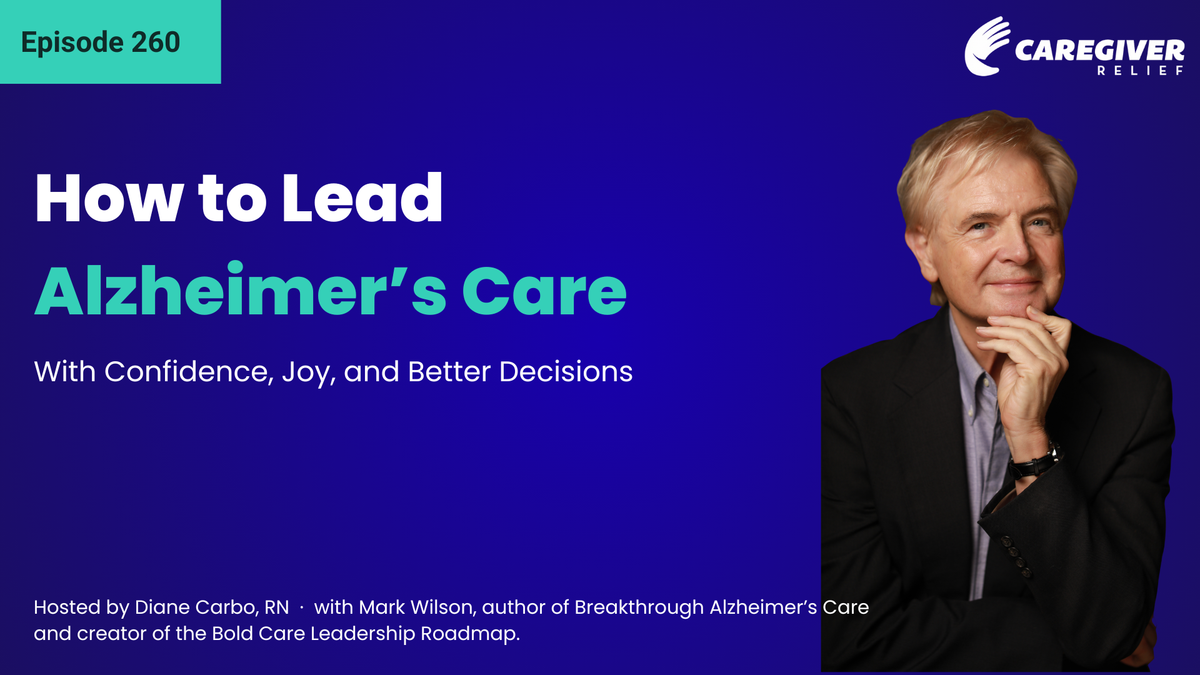
Host Diane Carbo, RN sits down with Mark Wilson, author of Breakthrough Alzheimer’s Care. Mark transitioned from a 22-year corporate career as a Taco Bell leadership and HR executive to care for his mother full-time after her Alzheimer's diagnosis. By applying executive leadership strategies to caregiving, he helped his mother live three times longer, healthier, and happier than her original prognosis.
This episode explores how shifting from a passive caregiver to a Bold Care Leader can transform your dementia care journey.
📌 Episode Breakdown & Highlights
- Introduction & The Corporate-to-Caregiver Shift 💼➡️🏡
- Diane introduces Mark Wilson and his journey of turning executive talent development into dementia care tactics.
- Mark shares memories of his mother—a loving kindergarten teacher—and his immediate decision to step away from his career to care for her at home.
- Defying the Prognosis & Developing a Roadmap 📈💡
- After doctors estimated his mother had only five years to live, Mark set out to prove them wrong by researching actionable health, longevity, and activity strategies.
- Mindset Shift: From Caregiver to Bold Care Leader 👑 Target
- Reframing "I have to do this" into "I get to do this".
- Moving away from feeling like a victim to taking full accountability for every aspect of your loved one's care plan.
- Building and Managing Your Care Team 🤝📋
- Using HR principles to interview, hire, and evaluate in-home caregivers.
- Assembling an "extended team" including physical therapists, speech therapists, and mobile dentists.
- Managing doctor appointments: How to slow down "speedster" doctors using written question checklists.
- Financial Considerations & Home Safety Tips 🏠🛡️
- Navigating long-term care insurance and alternative care resources.
- Pillar 2 Focus (Safety): Simple, budget-friendly safety hacks—like using kid-friendly foam jigsaw floor tiles in the bathroom to cushion potential falls and rubber eating utensils to avoid injury/choking.
- The 5 Breakthrough Care Pillars 🌟
- You as a Bold Care Leader: Developing the proper mindset and emotional resilience.
- Safety: Transforming the home into a safe, comfortable space.
- Leadership in Action: Managing direct caregivers, doctors, and daily routines.
- Nutrition & Health: Mediterranean-style diets, safe swallowed foods (e.g., lentil soup bases), and evidence-supported supplements.
- Surround Sound of Love: Creating a physical and interpersonal environment full of joy, positivity, and familiarity.

📋 Key Takeaways: The 5 Breakthrough Pillars Outline
- Pillar 1: Leadership Mindset 🧠 Focus on inner strength by shifting your perspective to full accountability and keeping yourself high on the "mood elevator".
- Pillar 2: Home Safety 🏡 Prioritize practical risk reduction through simple hacks like using foam floor tiles in bathrooms, soft edge guards on furniture, and motion sensors.
- Pillar 3: Team Leadership 👥 Lead your care team effectively by treating doctors as employees, providing pre-written question lists, and building a supportive care network.
- Pillar 4: Nutrition & Meds 🥗 Promote longevity with soft, nutrient-dense foods (like lentil soup), safe supplements, and careful monitoring to avoid harmful sedatives.
- Pillar 5: Positive Environment ❤️ Foster happiness by maintaining daily routines, dressing in favorite clothing, and surrounding your loved one with loving, consistent visitors.
🔗 Resources & Connect
- Website & Tools: Visit boldcareleader.com for free caregiver tools, podcasts, and links to purchase Mark's book.
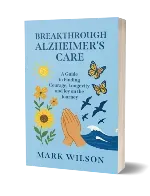
- Book: Breakthrough Alzheimer’s Care by Mark Wilson (Available on Amazon, Barnes & Noble, and Thrift Books).
- LinkedIn: Connect with Mark Wilson on LinkedIn.
- Instagram: Follow Mark Wilson on Instagram @boldcareleader.
- Facebook: Bold Care Leader
Podcast Episode Transcript
Diane: Welcome to Caregiver Relief Podcast. I'm Diane Carbo, RN, your host today. And today we are gonna talk about Alzheimer's care from a powerful and very personal perspective. What happens when leadership, love, learning, and advocacy come together in care of someone living with dementia? My guest today is Mark Wilson.
He is author of Breakthrough Alzheimer's Care. After his mother was diagnosed with Alzheimer's, Mark left his 22-plus year career as a leadership and human resources executive for Taco Bell to care for his mother full time at home. During that journey, Mark discovered that the same skills he used in executive leadership, talent development, training and breakthrough thinking could also be applied to dementia care.
But that was not just a professional challenge. This was his mother. His love for her, his passion to learn, and his determination to lead her care helped create what he describes as breakthrough results. His mother lived three times longer, healthier, and happier than anyone expected. Mark's book is both a memoir and a practical how to playbook for families navigating Alzheimer's and dementia care.
He encourages family caregivers to move beyond simply reacting to the disease and begin seeing themselves as bold care leaders for the person they love. Today we will talk about that shift, the mindset change his family's need, the five breakthrough care pillars that shaped his mother's journey, and why Mark continues to advocate through Alzheimer's support groups, legislative advocacy in Washington, DC, and Sacramento, California.
He also does fundraising and, patient rights work.
Diane: Mark, thank you so much. I have a common thread through 95% of my podcasts, and it is a family member that identified a problem, an obstacle or challenge, and they provided a solution for it. So I am really, excited to introduce your book and, talk about the road map.
But before we get started with that, can you tell us a little bit your, about your mom and what made your relationship with her so special?
Mark: Oh, yeah, I'd love to. my mom was amazing. talk about a loving, caring person. Unbelievable. she worked as a kindergarten teacher. But somehow always had enough time for my sister and She would help me with my schoolwork, she would care about me.
I mean, she was just the most loving, personal, amazing woman on earth. And she ... Her parents were born in Sicily, and so she's like first, you know, second generation Italian with, you know, with a family
Diane: Oh
Mark: just love, love, love.
Diane: Oh, I was married to an Italian. I understand that.
Mark: No anyway, so it was so funny because when my mom was diagnosed with Alzheimer's, I didn't even think about it.
I knew I wanted her to stay at home, and I knew I could care for her. I don't know how. I didn't know how. I don't know a thing, nothing about caregiving, but I'd figure it out, better than any facility. So it was like, people thought I was crazy. I was in the middle of a successful career. I was too early for even qualifying for early retirement, but I knew I was going to quit and take care of her.
It was like, it wasn't a hard decision. A people thought I was crazy, but to me it was a really easy decision, and it was I tell people it was the hardest thing I've ever done, but it was also the most rewarding thing I've ever done in my life.
Diane: And you know what? I hear that from so many that leave their jobs.
They have taken, a look at their career. Their, many of them don't want to leave their career, but feel obligated for the love, because they have a love of their parent that, overcomes any movement forward, career movement in their future. So, I applaud you for that because that is a difficult decision to make, especially 'cause you had no clue what you were getting into.
Mark: I did not. it's so funny. I mean, but I've also been a really good learner. I knew I'd learn things, but I didn't know anything about Alzheimer's. I didn't know anything about caregiving.
Diane: Yep.
Mark: I was totally ignorant. And, have when you're an executive in a field, you really get to be kind of an expert.
So this is like going into a, brand new field. It's like
Diane: Yeah. Well, you know, Mark, 99.9% of the family caregivers out there are clueless as to what to expect, and they, learn as they go. They make lots of mistakes, and they are overwhelmed with the expectations placed on them. So let's, so when your mom was diagnosed with Alzheimer's, you made that major decision to leave your executive career at Taco Bell. What, what led you, to make this decision? That, that's a tough one.
Mark: Yeah. No, I appreciate that. it's so funny because when she was diagnosed, I was classically in a little bit of denial. It's oh, I think she's just getting, Mom was getting a bit older, But my sister, she's a lot more assertive in some ways than I am. She'd be like, "No, we need to get her tested. There's just, I don't, something is wrong." So we did get her tested, and this, the neurologist at, UC Irvine's Alzheimer's Center- who's, like, written books. she's young, but she's also, like, one of the leading minds in the field.
I pulled her aside. I said, "I don't really think about this disease, but how long does my mom have?" Because, and she said, your mom has both Alzheimer's and a vascular dementia, and she has some coronary issues," which I knew about. She says, "Those things together, I would guess, hard to say, but maybe five years."
Diane: Yeah.
Mark: And at that time, my mom was in her early 70s, and in my head I thought, "Five years? That's not long enough." and it was so funny. I don't want to get too, off color, but basically in my head I was thinking, "I'm gonna prove this little bitch wrong."
Diane: You know what? You can say that. You can say that because, I like that attitude, especially because you have a vast experience in leadership, human resources, talent development, and training, and I can see talking to you, I can see the little wheels the cogs moving in your head, you know. So how can I make her, wrong, and what's, how can I make my skills also apply to
Mark: Oh, yeah
Diane: Alzheimer's care?
Mark: Yeah. Yeah, that was exactly what I was thinking. I was going that's not acceptable, and I don't know how I'm gonna do that, but I'm gonna help." She's gonna live a lot longer than five years, and she's gonna be really happy because that's as important as living longer.
You want, you don't want to be miserable while you're living longer. You want to be happy while you're living longer.
Diane: Exactly.
Mark: And so I researched, as soon as I got that diagnosis, I spent so much time. I read everything I could. I'm used to dealing with executives, so I would call leaders in the field and, you know and insist on talking to them, whether they're neurologists or Alzheimer's leaders, and I would pick their brains. And anyway, I found out obviously there's no cure for the disease but there's dozens and dozens of small things that can be done that help with health, longevity, and happiness, and I just compiled a list of dozens and dozens of these things, and then I figured, okay If my mom could take these things, you know, if it's a supplement or a nutritional thing, if she can take 'em and she can tolerate the activities that I created, why not?
Just, like, do it all. I just, I don't know, I don't know what's gonna work best, and but it didn't matter, it didn't matter. It's like, if I threw everything in, in the kitchen sink I figured, okay, some of these things are gonna work 'cause there's some evidence. it's not like FDA approved stuff, but
Diane: Yeah
Mark: there's some evidence that all these things have some benefit, so I thought, just do it all as long as she can take it all.
You know what's really cool about the field right now is it is the people, the, the experts actually are available to talk to people
Mark: yeah
Diane: if you press enough. I just find that I've, I'm a bold nurse, I'll call anybody up, "Hey, will you do a podcast with me?" right.
And, you know, sometimes you have a gatekeeper. but the other thing that you make a point about is the activities, and I want you to know that one of the things that the research shows is doing something new and different every day is good for you, even after, while you're diagnosed with dementia.
And activities can actually slow down and physical activities, mental activities can actually slow down the progression of the disease, and it sounds like you were successful at that. So I want to get into about your book.
Now you
Mark: Okay
Diane: describe the difference between being a caregiver and being a bold care leader.
I love that title. Thank you. Bold care leader. That's me, I'm the bossy older sister, you know? Everybody, I'm the know it all. I used to be hurt by feelings when my family called me that, now I embrace it. But why is this shift so important for families?
Mark: Yeah. No, there's a number of parts to that.
I talk about this in my book, but the number one thing about being a leader is a mindset shift. So and I see a lot of this. I lead support groups now, and I see these people coming in and it's like, you know, they don't know what to do. And so one of the first, and they're miserable, and the first thing to shift is just reframe it to say, okay
Diane: Yeah
Mark: instead of this being a horrible burden. So rather than go, one mind shift, first mind shift is think about not going from I have to do this to I get to do this. It's a privilege.
Diane: Yeah.
Mark: And so that positive mindset is a good first step, because a lot of people don't think of it as a privilege, but it is.
Diane: Yes.
Mark: the second mindset is it's like, okay, I'm a caregiver, I'm kind of hanging on, not sure what to do, to you're an accountable care leader, which means it's your responsibility to lead all aspects of your loved one's care, whether it's direct care, whether it's doctors, coming up with activities.
Whatever it is, it's not just, barely hanging on like those, like the old cat thing, it's just hanging on by the thread. You have to lead all aspects of care and have a roadmap and a plan, and a lot of that I kind of share in the book. And then there's a lot of thing, some, a lot of people feel like a victim.
"Why is this happening to me?"
Diane: Yes. "Why is this happening to my loved one?" Yes.
Diane: Yes.
Mark: Don't think of it as a victim. Think of it as, again, you have an opportunity to make a huge difference in your loved one's life. You can't cure the disease, but you can help them live a lot longer and a lot happier with your leadership.
Diane: Yeah.
Mark: So don't think of it, even though, yeah, you can argue you are a victim, but that mindset does not help you as a care leader. It doesn't help your loved one. And so these mindset shifts are, really important. And then, the, the first breakthrough pillar is you as a care leader is the most important thing.
Because if you're not a bold care leader and you don't really absorb and embrace all the different aspects of being a leader, which I talk a lot about in the book, then you're not going to help your loved one, and you're not going to help yourself, 'cause you won't be happy.
Diane: Yeah.
Mark: And if you embrace all these things, not only will you help your loved one, but you're going to be happy when you see them thrive. when my mom was doing well and happy and living longer, I would just beam from ear to ear, because I was making a big difference, and she was happy.
And the neurologist was so funny. They said, they would always tell me, "Your mom is doing remarkably well for where she is in her journey." And I would just think, "Okay, I'm on the right track then. I can do more then."
Diane: I love your talk about mindset, because my biggest thing is, I say it all the time, change your perspective, you change your life.
And you have a choice as a caregiver how you're going to approach and handle things.
And I love that you say bold care leader And I love that, but I have to tell you, there are so many people like yourself that don't know anything about the medical delivery system.
They know nothing about the disease, and, they are fearful. and the, sadly, Mark, I will tell you, many of them depend on the healthcare professionals that they're dealing with on a weekly, daily, or monthly basis to guide them. And what they don't understand is the majority of healthcare providers out there, the PCPs, even neurologists, don't understand what you're dealing with at home.
Mark: Yes.
Diane: They don't understand. So if you've had seen one case of dementia, person with dementia, you've seen one, only one person with dementia. Everybody responds to dementia differently. It's not a systematic thing. That's why I love that you put like this you created this roadmap, and you've, identified things during the journey where they may or may not be at any one time, and you give them solutions.
So I'd like to go into that more. What does it look like in a real life for a family caregiver to stop not only reacting to the disease, but beginning to care, and lead care with more confidence and direction? I see that happens through your book.
Mark: Yeah, I would say, after you have sort of the mindset that you're the leader, in the book I talk a lot about ways to do that.
There are internal methods to get that leadership strength, and there's external methods, and, we can come back to that if you want. But once you have that clear vision that you're the leader and you have a strong point of view and you're high on the mood elevator, which is really important, then it's like, okay, how do I start?
And the, one of the most important things to do is to be a leader. And so in my case, after about a year and a half, of doing all the caregiving myself, I realized I was not a great caregiver . I was not. And I was getting burned out already, and it was
Diane: Yep
Mark: and I was getting tired, and I wasn't spending enough time on all these dozens of tactics I wanted to try to help my mom.
So I realized that I had to bring in some home care help, which I did, and then I kicked in my HR basics hat, and which is in the book. I talk about how do you interview a caregiver, what questions to ask, how do you evaluate them, how do you assess their, a trial shift, what do you look for, and all that's in the book too.
But you, but if you can get some care help and think of yourself leading others in your mission, then that's a big deal. And I ended up finding through agencies the most amazing caregivers ever. I made some mistakes in the beginning and then I would fire people if I didn't like something they did.
Diane: Yep.
Mark: And I'd go back to the agency and I'd look for more people. And it worked. so I ended up with a number of, good, really strong caregivers that stayed with me forever. In a high turnover environment, they didn't leave. I mean, I had these caregivers for, like, six
Diane: That's a testament to you providing them with everything they need to be successful at taking care of your mom.
Mark: It makes a big difference. And so yeah, you find great people, and then the agency paid them whatever they paid them. So it wasn't about money. It was about. Well, I think it was partly about the mission. I was really clear that their role was to help me help my mom live a lot longer, healthier, and happier.
Diane: Yeah.
Mark: And I couldn't do it without them, and they knew that was an important mission. Yeah. And then, of course, I would recognize their good work. I would, you know, help support if they had a, a birthday, whatever, and we would celebrate [00:17:00] those things. So they were like getting to be part of the family.
Diane: You did bring your HR in.
Mark: Yeah, yeah. They were part of the family, and I think that's another reason. Yeah. Because continuity with dementia patients is very important.
Diane: Is key, yes
Mark: and so if you can keep great people and your great team and lead them effectively, hugely important.
Diane: Yeah.
Mark: So the team itself is really important.
And then I call it the extended team is just as important. The extended team are the, not the direct, help you with dressing and bathing and all that, but doctors. I had physical therapy come to the house every week for years 'cause to your point, physical strength, not falling, movement.
Diane: Yeah.
Mark: Yeah. All very so important. I had some speech therapists come in 'cause my mom lost her speech early on.
You know, I even had a home dentist because my mom would bite on dentists. and there at one point, in the middle of her journey where she, we went to the dental office and he, she like chomped on this guy's fingers, and I said, "Okay, well, I got to find a different solution."
So I found a, home care dentist named Kim. She's got a great little firm called Smiles On The Run. And she had, she knew how to do dementia care, and she would come to the house, and she would do the cleaning, full dental, cavities, whatever it was. And so these resources were all key, but this is, these were all part of the extended care team.
So I looked at, you know, finding and keeping and coaching and motivating this extended and core care team is a huge part of leadership. Because you want them to be best in class. I didn't put up with anybody that was just average or poor. I would, I'd say, "Okay, I can find somebody better." so that, to me, that's leadership.
All that's really a good part of it. and to share with everybody the mission. Your mission is to help me help my mom live a lot longer, healthier, and happier. And the, the toughest part of that team were doctors, to your point about, they don't like to think that they work for you, but they do.
You have to think of them as working for you, the leader. You lead them,
Diane: And you know what? I say that. I say, when you're talking to a doctor
Mark: Yeah
Diane: you have to remember you're paying them.
Mark: Yeah.
Diane: You, they are your employee. And people like are, "Oh, no," but it's true.
Mark: Yeah, yeah.
Diane: It's true. I like that approach, and I encourage the, to be prepared and approach doctors
Mark: Yeah
Diane: with, not fear, but confidence.
Mark: Totally.
Diane: And make them talk to you and and to understand, make sure that you understand
Mark: Yeah
Diane: exactly what they're saying.
Mark: Oh, that's so important. Well, I kind of looked at it as, as I did when I was in the corporate world.
I mean, I had people on my team that knew a lot more about their specialty that they were responsible for than I did.
Diane: Yes.
Mark: But I knew enough about what they were doing to be able to ask good coaching questions and to evaluate
Diane: Yeah
Mark: whether something was good or not good. So it's the same thing with doctors.
You're not going to be as smart as they are in certain areas. But with the internet, and there's so many good resources, I would find out enough about whatever my mom was going to the doctor for. Whether it was a dementia thing or a physical thing, and I'd learn enough about that through the internet.
And I talk about some of the resources in my book. There's some, on the university websites. You know, there's some great websites, I talk about all those in my book, that you can find out enough about whatever the medical issue is, that you can ask good questions of the doctor and know what the answers are and evaluate alternatives.
Because you want alternatives. If the doctor will come up with some idea, but if it's, if it doesn't, if your intuition and your reading doesn't feel right, then, ask more questions or get a second opinion, or you have to manage that process, regardless of what the doctor's like.
It's really, really important,
Diane: One of the things that I want my listeners to understand, you may not be able to pay for home care services, and you may, I know that there are areas where they have mobile dentists, and they even have home visiting docs.
I don't know how many of them exist anymore with, since COVID.
But it's a blessing to have somebody like that come to the house. But what I encourage is if you aren't able to pay for services, there is a way through developing what I call a Caregiver Relief Group, and it's, putting, creating a care team around your person, your family member, with people that you know, siblings who often want to be uninvolved or, extended family members, church members, and you really can build a team. The team is only to provide practical assistance. That means they don't provide the hands on. They won't help you with dressing and bathing and those things. Now, there are ways you may be able to get those paid for if, in different ways, if resources through the VA, if you have, your spouse was a vet, or you were a vet.
There are states that if you have spent down and you're going to be qualifying for Medicaid, there are Medicaid waiver programs that will pay for care in the home, or even pay you to be care, to provide that care in a home, so that they're not put in a nursing home. There are things like that you can explore, so
Mark: Yeah
Diane: I just want everybody to understand. But the bold, what you're, what you can do is still follow this Bold Care Leadership plan because it all needs to come down to you leading a team of people and being asked to help
Mark: Well, I'm glad, Diane, we're glad you mentioned the financial part of this because I was, you know, I had savings.
I was, okay financially, but the biggest benefit I had was my dad unfortunately died very young. He died in his mid-50s.
Diane: Oh, wow.
Mark: And I was responsible for my mom's financial situation.
And my dad's insurance agent sort of came out of the blue and said, "Something you may wanna consider is getting long-term care insurance for your mom."
Diane: Yep.
Mark: And I didn't know anything about it, but I thought... He said, your mom is financially dependent on you. If something happened to you, you still want her to get care, and so this is a good reason to do this." And she was this was, she was in her 50s, so she was healthy. And so I did get it, and oh my gosh, what a great thing that was.
I mean, it paid for so much of the care that I needed.
Diane: And that's a blessing.
Mark: Oh, yeah. So but for listeners, if your loved one already has Alzheimer's, you won't be able to qualify. But if they don't have, if they don't have it, and with the percentage of people getting dementia and Alzheimer's pretty high, look into getting long-term care insurance if they're healthy now, or for yourself.
And because it's just, it's so funny 'cause in the book I mention this as a, as an important idea. It probably paid six to seven times more back to me over the many years my mom was dealing with this that I paid into as premiums. And you think about it, how many investments pay 600 or 700%, return on your investment?
Not many. So it's a good thing.
Diane: And again, long-term care insurance, if you've purchased it, if you did not purchase the cost of living rider
Mark: Yeah
Diane: the rates of home care when you bought the plan 20 or 30 years ago is not going to provide all the coverage you need. And, you know, I have a book on my site about alternatives to long-term care insurance.
But there are, you know, I've done evaluations for long-term care, patients that have been on long-term care, insurance, and I've seen, it is so wonderful when it works. It absolutely is.
Mark: Yeah
Diane: but some people are shocked because they didn't buy, the cost of living rider, which is
Mark: Oh, yeah
Diane: so expensive
Mark: You gotta get the inflation protector.
Diane: Yeah. Yes, yes, yes.
Mark: Definitely. Yeah.
Diane: and it's really left people surprised and disappointed with what they purchased.
Mark: Yeah.
Diane: But now, I know caregivers feel like they're not qualified to lead care because they're not medical professionals.
What would you say to a daughter, a son, a spouse, or a family member who feels overwhelmed and unsure?
Mark: Well, again, I think you can learn enough about these things pretty easily on the the web. And I didn't know anything about it either, but I quickly, you know, would research things and Google things, and it's remarkable how you can learn pretty quickly
Diane: Yeah
Mark: whether it's the medical part of your care or basic caregiving things like, how do bathe your loved one, how do you keep your I mean, in my book I talk, I've, one of the pillars I talk about is safety. It's pillar number two.
Diane: Oh, yeah.
Mark: And there's a lot of
Diane: Really important
Mark: there's a lot of things to learn about keeping your house, safe.
Diane: Yeah.
Mark: Or if your loved one is a facility, how do you evaluate the facility to make sure
Diane: Yeah
Mark: they're managing safety well? Because
Diane: Yes
Mark: common sense is if your loved one's not safe
You know, they're not gonna live longer, healthier, and happier because they're something's gonna happen to them and, they're gonna break something, break a hip or a knee, whatever, or get a concussion if they fall.
You don't want any of that, 'cause all that's, negative health, negative longevity, and negative happiness.
Diane: Yeah.
Mark: So safety is really important, and I have lots of checklists in my book about what to do for safety. I have some kind of lessons learned about that, that I did.
But there's a lot, there's a lot to know about safety, but it's basic.
It's not hard, and it's not expensive to make your home safe. I mean
Diane: Right
Mark: I think all the things that I did that are in the book you could do for a couple of hundred dollars basically. So it's not expensive.
Diane: I tell my, most of the homes, and I try to encourage people to make their home their partner if they're going to plan on aging in place.
Mark: Yeah.
Diane: So as you make changes to your home, remodeling or something if this is the home you're absolutely going to live in until the day you die and then I suggest when you make remodel, you get a certified aging, in place specialist in to make recommendations, or an occupational therapist who has
Mark: Totally.
Diane: in home care that will come in and tell you, like, there are universal designs that are good for anybody with a disability, but the majority of homes in the United States are made for a young body and not an aging body. Yes. So you can over time make changes, like the, the knobs on the doors when you develop arthritis and stuff are be are better with a handle.
So when you're
Mark: Totally. All those things
Diane: Yeah. All those things, yes
Mark: and they're all, and they're not, they're a lot of these common sense, like the grab bars that you can put in.
Diane: Yes. Yeah, yeah.
Mark: You know, not expensive to put in to
Diane: No
Mark: for, help, to help you when you get off the toilet or help you in the shower
Diane: Yep
Mark: or whatever. And then I knew that my biggest fear was my mom not falling, and so that was, like, really, really important both from safety and a selection criteria for my home caregivers
Diane: Yeah
Mark: to be super safe on walking. But I knew that the bathroom was, a little bit more dangerous than most aspects of the house because we had carpet.
Diane: Yeah.
Mark: We had carpet, which is better than hard flooring.
Diane: Okay.
Mark: But the bathroom had hard tile, and so I kind of took some plays from kids, that I know there are these foam, jigsaw tiles that you can kind of put together. And I put those in the bathroom so that if my mom ever did fall, she never did, but if she did. Then it's a lot better
Diane: It would lessen your fall
Mark: to land on a foam pad than it is on a hard pad.
Diane: Oh how wonderful.
Mark: So that, and that was easy. Yeah. And they're not expensive. You can buy like
Diane: Yeah
Mark: a bathroom space of these tiles for maybe $25. I mean, really
Diane: Interesting. I've never heard that perspective before.
Mark: Oh, it's good.
Yeah, really good.
Diane: Oh. And then I would've never thought about that
Mark: other little things too, it's like I thought, okay, my mom would tend to bite on things. That was one of her things. And I thought, okay, well two things. I know when, as Alzheimer's, progresses, sometimes Alzheimer's patients have trouble swallowing and
Diane: Yes
Mark: and all that. So I, the two things I wanted to do was I wanted to, I saw that there are these, I went to Walmart one day and I saw these kid, the kids section, these little rubber utensils, and I thought, "What a great idea for my mom." A is they're small, smaller, so the portions will be less, which will make her less likely to choke.
She'll have easier portions. And they're rubber. And so I thought, okay, if she did bite on them, she's not gonna, break her teeth on rubber.
Diane: Yeah, exactly. Yeah.
Mark: And so we used those, and that's, again, borrowing from kids. It's like, okay, that made a lot of sense, and it was great 'cause my mom could, feed herself, and I wasn't worried about big portions and choking.
Diane: Yeah.
Mark: And if she ever bit on it, she wouldn't, hurt herself. So there's lots of those little tips. other things that are
Diane: That's an awesome tip ...
Mark: again, from kids
Diane: Yep
Mark: edge guards. Edge guards are so simple. They basically are a stick, so you can, on the edge of furniture or whatever,
Diane: Yep
Mark: if your loved one ever fell, they're not gonna crack their head open if they have a rubber, soft edge guard. And so
Diane: Yeah
Mark: a lot of little things like that you can put around. And, I had some motion detectors so that you know, if me or my loved, or the caregivers had to step away for a moment and my mom moved or got out of, bed or a chair, you knew she was on the move 'cause the motion detector then would go off an alarm.
Diane: Yes.
Mark: And those are, like $20. They're really cheap. So there's a lot of little things like that I talk about in the book under breakthrough pillar number two, which is safety. All really easy, simple, but common sense things and not hard to do,
Diane: What are the last three pillars?
Mark: Okay, so the third pillar is the leadership part.
That's the, kind of the biggest section of the book. How do you lead direct caregivers? How do you lead extended care team like doctors? I have lots of tools and techniques and tips and learnings, all the way from, you know, when do you fire a caregiver? When do you fire a doctor? how do you slow, I call it a speedster doctor, the ones that want to rush through.
Diane: Yeah.
Mark: How do you slow them down? I have a list of good question I have a list of good questions to ask the doc. This is one of my favorite things. I would, I still do this now. I would write out questions for the doctor and I'd, and that, then I would make a copy of it and actually hand the doctor the list of questions.
And sometimes, in the book I have a lot of good questions you can draw from, but if I had like seven or eight or 10 questions that, and I'd hand it to the doctor, I said, "During this appointment, I want to, go through each of these questions and I want your answers to each one." Some doctors will go along with that and they'll actually like that.
Other doctors look at it like, you lost your mind?"
Diane: Well in fairness, and this is a problem with our medical delivery system, a doctor is only reimbursed for a 15-minute appointment.
Mark: Right, I know.
Diane: And in that 15 minutes, so they have to see 25 to 30 patients a day. So that's why they're expected to...
And I love your questions because that's exactly what I tell people to do.
Mark: Yeah.
Diane: Expect those questions to be answered and fight for your time.
Mark: Oh, yeah.
Diane: I don't care. If he needs to take more time with you, then damn it, you need, you deserve to have
Mark: Totally
Diane: those questions. But the doctors, they're like so money motivated, it's, "Okay, next, next, next."
Mark: Well, yeah, that's It you said it, basically. If they can see, if, let's say they're, let's say 15 minutes, okay, so their appointment is sort of, insurance company will pay them whatever they're paying them for 15 minutes.
Diane: Yeah.
Mark: Now, if they could see five patients in 15 minutes, they're going to make five times what they would normally make.
Yeah. Yeah. So that's why they want to rush you through and why they only spend two to three minutes with you. so my strategy number one is the list of questions. That usually worked pretty good, and you actually hand the doctor the questions so that you don't have to shout at them and ask them in case they ignore you.
the other option that I only had to do twice for, I call it the speedster doctor, is you sl- while your loved one is being looked at or talked to, you slowly walk in front of the door And you don't actually you know, you don't like, you know, NFL football player, block them. But there's a subliminal message that you're sending when you're standing in front of the door
Diane: Yeah
Mark: that says, "You're not gonna rush out of this room this quickly, man."
Diane: Yeah. Yeah.
Mark: and it does work, but it's like a backup plan. The, the questions are better.
Diane: Yeah. Having prepared questions and letting the doctor know you expect them answered, I just want... I encourage, in my patient care advocate course, I tell my listeners and followers to, record conversations, ask permission, and record
Mark: Nice
Diane: responses to those questions.
Mark: Oh, that's a good idea.
Diane: Because it's when you hear something, you know, you're already feeling stressed. The doctor's in a hurry. They want to get through to their next patient. And, and you're stressed, and you're anxious, and you're worried about your loved one. So take the time to ask to record those conversations, and then document them because you can I encourage when you create your team, that you share that information with your team so you're all on the same page.
Mark: Totally.
Diane: And one of the things is, You may have a problem you're dealing with. One of the things you need to consider is, You may have, one perspective, but one of the other teammates may have a totally different take on what the doctor said.
Mark: Yes.
Diane: And this is really good because you, it encourages conversation between the team, and it helps you, create a, the ability to create a care plan that everybody follows and agrees to.
Mark: Yeah. And No, it's all good.
Diane: Yeah. Yeah,
Mark: so under this broad leadership pillar number three, I include, like, with the direct caregivers, I include a lot of tactics in there that help.
I mean, we talked briefly about music before the show started, how powerful that was.
Diane: Yes.
Mark: Art projects, daily outings, so long as your loved one can walk safely and all that.
Diane: Yes.
Mark: So all these things are really good. That's not... And then, so that's breakthrough pillar number three. it's a broad section with lots of tools and resources for leadership.
Number four is
Diane: So I want to interrupt one minute.
Mark: Yeah, please do. Yeah, no problem.
Diane: In fact, the only thing I want to say is with the daily outings you said if they can walk safely. If they can't walk safely and they're in a wheelchair for outings, they still need to go outside
Mark: Definitely and get around. Oh, yeah. No. No, so
Diane: Okay. That's the only thing I was going to bring.
Mark: No, no, no. In fact, actually, I'm glad you mentioned that, because even though my mom was able to walk with her physical therapy
Diane: Yeah
Mark: I felt she was much safer in a wheelchair. So we actually, we would
Diane: Yes
Mark: take her out in the wheelchair.
Diane: Yes.
Mark: Plus, we could cover a lot more ground. My mom walked
Diane: Yes
Mark: she would walk slowly, so we could do a lot more things in the wheelchair.
Diane: Yes.
Mark: and we had fun with it actually, because my mom being a kindergarten teacher, I would decorate the wheelchair with stuffed animals and fun things.
Diane: Yes,
Mark: yes. and so when we'd go on a daily outing, my mom lost her speech, but she was still there. You could, you know, her personality
Diane: Oh, absolutely
Mark: was still there. She understood.
Diane: Yeah.
Mark: And so when kids would walk up to her, and they would just, like, beam when they'd see her wheelchair full of stuffed animals and pictures and things. And so they'd come up to her and they'd like, you know, look like, "Can I touch your stuffed animal?" And you could just see my mom just smile when these kids
Diane: Yep
Mark: because she loved kids. She was a
Diane: Yeah
Mark: kindergarten teacher forever.
Diane: That's beautiful. That's beautiful.
Mark: And so even though she couldn't talk, you would just see her and be so happy.
So yeah, the daily outings, so all that's under the broad leadership
Diane: Yeah
Mark: umbrella. So that's number three. Number four is, is a little bit of a catch-all pillar too. It includes, nutrition, which is- really important both for
Diane: Yes
Mark: avoiding Alzheimer's and for extending life once you have it.
Diane: Yes.
Mark: So I totally changed her diet. you know, we went from, normal eating and junk food and all that to super, Mediterranean-like diet with, with, very little red meat. No, actually no red meat, because I was worried about her swallowing it. and to vegetables and fruits and...
And I figured out That if I created a base like lentil soup which has protein, fibers, all this, and then I would add things to it like strain you know, kind of cut up really finely chicken or other things in there, that was good because it was the right consistency. It wasn't too thin, the lentil soup.
It wasn't too thick, and you could add things to it. And I did the same kind of a thing with oatmeal in the morning. I could add fruit, cut up fruit in it. And it was the right consistency for swallowing safely. And so totally changed her nutrition. That part of, part number four, and then I also added supplements.
I researched, there's like dozens of supplements. Now, the doctors don't like supplements because they're not, quote-unquote, "FDA approved," but I figured, okay, in my book I have a list of about 15 supplements/vitamins that, that have some evidence of helping with- cognitive health or physical health or both.
And I figured, okay, if there's some evidence that they could help and they didn't hurt her, or had bad side effects, then why not? So I did all these, I mean, the dozens of different supplements and nutritional things, and I would start out with really, really a low dose of a supplement. It's, for example, like turmeric.
There's lots of them in the book. But I did a really tiny dose, and I thought, okay, if my mom could take it and it didn't have any side effects, then I would slowly go up to, what the recommended amount. And so I do that for all these different supplements. And I think, again, I don't know what caused what, but it doesn't matter.
It did help her. She was much healthier, much happier and lived a lot longer. So supplements, nutrition, and then medications. I talk a lot about various medications. Some are designed for for Alzheimer's and dementia patients, and others are other medications for elderly people that you have to be watchful of.
So, you know, obviously, elder people who have, cholesterol, they have to take statins and they But some things, like, a lot of doctors, if your loved one is a little agitated, will prescribe these tranquilizers, or sleeping pills. Not a good idea, because most sleeping pills that are not natural, like melatonin, you know, or some other things like that are okay, prescription sleeping pills, take away from your brain health.
They don't add to it. And tranquilizers and, things like that, same thing. Yeah, your loved one's a little agitated, so the tendency to, like, knock them out, and that's not a good idea because
Diane: I hate that. I hate it, I hate it.
Mark: Yeah.
Diane: And the problem with that is if you do not know what type of, dementia that your family member has a tranquilizer can actually have a paradoxical and opposite effect
Mark: Yep
Diane: and cause more agitation.
Mark: Yep.
Diane: And that usually happens with people with Lewy body dementia.
Mark: Yes, you're right. Yeah.
Diane: Yeah, so you know, it's really important that when you... And there is the Beers, B-E-E-R-S, like the drink, criteria that will give you information on what you should and not, should not take over the age of 65.
Mark: Yeah, those are all really good.
Diane: Yeah.
Mark: So in my book I talk about, which ones to be watchful of, like you just said.
Diane: Yep.
Mark: And then substitutes. Like if your loved one is not sleeping, some natural things you could do, and then some you know, some other things that are nothing to do with medicine you can do to help your loved one.
Diane: Yeah
Mark: and yeah, so that number four include, basically is you know, prescription medications, non-prescription supplements and nutrition, and how you think about all those things. So that's number four. And then last pillar number five is an interesting one. it's basically I say create a surround sound for your loved one of positivity, love, compassion, and caring.
Diane: Yes.
Mark: And there's two parts to that. One is the physical environment, and then the people environment. so here is a thought I had. I did a interesting project at Taco Bell. I worked with a senior leader, in marketing, and we had, we were given, he and I were given, 17 restaurants in Tucson, Arizona that were basically our playground.
Basically it said, "These are the 17 restaurants. You can do anything you want as a playground to try new ideas in marketing and sales, and HR, and people." And so we would, we just tried all kinds of crazy stuff. Some of it really worked, some of it didn't. But one of the things I learned from a consultant that I brought in, that he called them touch points.
And so the idea is that when a customer thinks about going to a Taco Bell, and then they walk up or drive up, they have experiences. They feel things, they see things, they
Diane: Yes
Mark: and when they walk in, they interact with a worker or whatever. And then all the way through the process to even after they leave they'll have feelings, and thoughts, and senses.
And so I thought, "Well, taking care of my mom's a little bit like that."
Diane: Yeah.
Mark: Because she's gonna have touch points that are, gonna make her either safer or happier, or less safe or less happy throughout every single day, week, hour, you know, whatever. So that's why I was really thoughtful about the safety part, which is breakthrough pillar number two.
And then I thought, "Okay, I want her to be surrounded by caring, love, fun, and familiarity." So we created the physical environment that was like that. So everything around her. We, she would do these drawings, we would post them around the rooms so that she's could see her work and be you know, she would smile at the drawings she did and she would like it.
And then we'd put, again, like stuffed animals around. We'd put other things that she would like, that she knew. And we basically kept her environment. and her caregivers would help her get dressed every day. I mean, it wasn't, we didn't wanna create like a hospital setting where somebody's in pajamas all day or something.
Diane: Exactly.
Mark: We wanted her to be as normal her day as possible, including, getting her dressed and putting makeup on, whatever things she'd like. So it was like, kinda getting familiar with the rest of her life.
Diane: Yeah.
Mark: And so that's part of breakthrough pillar number five, the physical environment.
And you want them to be safe, so if you have to put something in there to be safe, we would, like I had little bed rails for her so that if she got up in the middle of the night, and a caregiver was not paying attention, whatever
Diane: Yeah
Mark: she wouldn't fall. But we would then put afghans over the rails so it didn't look like, you know, a sterile thing.
So it made her look comfortable, and it was fun.
Diane: Yeah.
Mark: And then it also was a benefit safety-wise 'cause these things are soft. She's not gonna cut her skin with a afghan over it. Anyways, things like that. And then the people environment is another thing. So here was my
Diane: Yeah
Mark: screening part. I wanted everybody who had any touch or contact with my mom to be fun, loving, caring, and familiar. So familiar meant not a lot of, turnover, new people.
Diane: Yeah.
Mark: I tried to keep continuity and kept, keep the best people I could. And then everybody had to be fun, loving, caring. I didn't want any curmudgeons to have any interface with my mom.
That included caregivers, that included
Diane: Yep
Mark: you know, physical
Diane: Family members
Mark: physical oh, even family members, yeah.
Diane: Yeah. Yeah
Mark: friends. And so I would, I would look for that, for people I hired. And then, of course, I would coach people If they didn't, I'd say, "Okay, here's the goal.
We want ... Here's what I want for my mom. Can you do it?" And then they got the idea, and if they would play along.
Diane: Yeah. Well, one of the things that, that people don't understand about dementia is your, the, there are so many different types and there's so many different parts of the brain that are impacted that
Mark: Yeah
Diane: and there are some people that don't understand what you're saying, or they're at a level of dementia where everything, every stimulus hurts them or makes them fearful or anxious. And one of the most important things is that you approach a person with dementia calmly and with a smile on your face.
Mark: Yes, yes.
Diane: You want ... Because, and they will pick up on your stress.
Mark: Yeah.
Diane: So if you're a family caregiver and you're stressed to the max and you just want to hurry up and get something over, that is not a good way to approach your loved one. You really need to take a deep breath and change your perspective, change your mindset, and approach it differently, because they will pick up on what you're feeling and how you are acting versus what you are saying.
Mark: Totally. You're spot on.
Diane: Yeah.
Mark: You know, sometimes we think because our loved ones have lost some of their capability, they're not there anymore. They are there 100%.
Diane: Oh, yeah.
Mark: My mom would be so in tune with how she was being treated. So for example, you know, one of the selection criteria I had for doctors was how they respected my mom.
So some doctors would be great at that. I mean, I can give you a couple, names. But they would come in and they would ask how, even though my mom couldn't talk
Diane: Yeah
Mark: but they still showed her respect. They'd look at her and go, "Oh, how are you doing, Mrs. Wilson?"
Diane: Yes. "
Mark: I love your blouse," or, "I love your skirt," and Yeah ... "You look so pretty." And she would, she knew what they were talking about, so Yeah ... she would laugh and she would smile.
Diane: Yeah.
Mark: And others would, ignore her because she couldn't talk, and so
Diane: Yep
Mark: and
Diane: That makes me crazy.
Yeah, yeah. Having to reach out.
Mark: so that was like a that was a selection criteria,
Diane: Yep, yep.
Mark: They'd have to have a lot of other amazing strengths for me to overlook that.
Diane: Yes, yes, yes. I get that.
Mark: So yeah, so all those things are part of the people environment. And it's so funny, because familiarity is also important.
Because I know in my support groups I lead, when your loved one forgets who you are
Diane: Yes
Mark: it's so devastating. But kind of watched and, you know, I'm kind of observed my mom. If someone came in and saw her more often than once a week, she would remember who they were.
Diane: Yeah.
Mark: But if they came less than once a week, she wouldn't know who they were.
Diane: Yeah. Which is why this continuity and, so important. So all the people that came in would come in no later, no more than, no less than once a week. and so those people, she knew who they were, and they, she was comfortable with them and she was happy with them. And so that might be a
Diane: She may not known who they were, but she remembered how they made her feel.
Mark: Yes. Yeah, I think both. And I think they knew
Diane: Yes
Mark: she knew who they were and how they made her feel.
But people who came in, like, you know, once a month or something, she wouldn't know who they were.
Diane: Yeah.
Yeah. Yeah.
Mark: And so that's a learning for all of us. see your loved one regularly.
If somebody's gonna neighbors and friends, have them come regularly.
Diane: Yep. Yeah.
Mark: Because uncertainty and, you know, and foreignness are scary, for Alzheimer's patients. And you don't want that. You don't want that for them,
Diane: Yes.
Mark: But that's all part of don't want that pillar number five, the, surround sound of love, caring.
And the reason why it's so important is obviously for happiness.
Diane: Yeah.
Mark: That's, some, if you feel loved and compassion and having fun, you can be happier. And I do think there's a connection, again, I can't prove it, but I think there's a connection between happiness and emotional health and physical health
Diane: Oh, absolutely
Mark: longevity and
Diane: Yeah
Mark: and health and healthy living. Because those things are connected. If you're happy, you're probably gonna live longer, and you're certainly gonna live happier.
Diane: Yes. Yeah.
Mark: But that's why these five pillars, I say, work as a system. They all reinforce each other. You know, if you're missing any of these, whether it's safety or a good team, you're not, your loved one's not gonna live as healthier or as longer, as long as, as they would.
If you, if all five of these pillars are working together as an integrated system, your loved one's gonna be a lot better off,
Diane: The other thing about your book, is that it actually does give the family caregiver a roadmap. And it provides them with solutions to challenges that they face, and that is something that is desperately needed because they, there's so much going on today that, the expectations of what's placed on a family caregiver is unbelievably unrealistic, and that's why they need to have a team and they need to have guidance of
And I love the thought of a roadmap.
Mark: Yeah, thanks. And I've been told that the, that people really like the reference section. I have a really long reference section organized by topic.
Diane: Oh, okay.
Mark: So whether it's safety or, you know, being a stronger leader, I've got several books and resources in each of, like,15, 20 different topics that caregivers have to at least be semi, ognizant of.
And they can look at the resources in the book and say, "Okay, yeah, this is an article I could pick up or look online or a book or whatever." So they can learn more, you know, from the reference section I have in the book. So yeah, I couldn't be more excited. It's so funny. I mean, I never even thought I could write a book.
But it's so funny. I did a couple podcasts for UC Irvine's, Alzheimer's Center, who I knew the director over there, after my mom passed, and they said, "Ah, I heard you did some really creative things to help your mom. Why don't you, we have a little podcast series as part of the university. Why don't you go on a podcast or two?"
And I did, and people came out of the woodwork. They said, "Oh my gosh, I've never heard so many powerful and creative ideas for caregiving"
Diane: Yes
Mark: "that you have. Why don't you write a book about it?" And I thought book. I don't know how to write a book. I've never written a book before. but I sat down one day and, not long after I heard that feedback, and tried, took some notes, and some more notes and more notes, and six months later I had a draft of a book, and then I had to go learn about how do you find a publisher and stuff.
And so I'm excited about it coming out. And it's gotten, it's got some amazing reviews, from, from dementia neurologists, which I'm surprised it got any doctor positive feedback 'cause I'm a little critical of doctors. But they love the book. and Alzheimer's leaders and Alzheimer's associations and
So anyway, I couldn't be prouder. my goal now is to just get as many people to learn and benefit from my experience. I mean, I'm a really good learner and I figured, okay, I'm gonna, I'm gonna learn by doing, and then maybe somebody's gonna benefit, from my learning. That's my goal right now.
Diane: The nursing process, Mark, is, learn one, see one, teach one. Oh. Do it, and then teach one.
Mark: I haven't heard that. I like it. So I love that
Diane: Yeah, so you, what you're doing is you've actually show them the process, you actually explain how to do it so they do it, and then it's really good for them to teach their teammates
Mark: Beautiful
Diane: on how to do it, because that's learn, see one, do one, and then teach one.
Mark: Yeah. Thank you. That's, I love that. I haven't heard that before. I love it. That's really good.
Diane: Yeah, it's a, that's a nursing process.
Mark: Nice.
Diane: But I learned that in the Dark Ages of nursing. Mark, for the caregiver listening today who is exhausted scared and trying to do the right thing, what is the first step they can take towards becoming a stronger, more confident care leader?
Mark: Well, I think the first thing, and I get, people being exhausted, especially 'cause there's no kinda quote, unquote, "uncure," a cure for Alzheimer's. It's easy to be devastated.
But the first thing that I'd keep in mind is that, despite that there's no cure, you as caregiver can make an amazingly positive difference in your loved one's life. And if you have that mindset that, okay, it's not hopeless, you can make a difference. Yeah, you can't cure it, but if you can have your loved one live a lot happier and longer and healthier, wouldn't that make you happy?
I mean, it made me happy. And so that's the mindset to have. and I think that's number one, 'cause that gives you hope, it gives you the feeling that you can make a big difference. Now, your loved one with Alzheimer's, this is another thing, I see this in support groups, people don't like the fact that their loved one may not appear to be grateful to them because they can't speak or they just don't, have that part.
Know that you're helping them even if you're not getting thanks or recognition. So be confident that you're making a positive difference in their life, and they appreciate you so much. They may not be able to express it, but they love you like you love them. They care about you. And think of it as part of love.
I think about love as sacrifice. And if there's love without sacrifice, but the strongest love is when you're willing to sacrifice for that person, because you care about them and you want to make a difference in their lives.
Diane: Yeah.
Mark: And that's what you're doing with caregiving.
You're sacrificing because you love them, and they love you, and they're grateful even though they may not be able to tell you that,
Diane: With the sacrifices, I just, I want my listeners to know no caregiver in the universe should have to sacrifice their emotional well-being, their financial well-being, their spiritual being, or, any other type of well-being, for, to provide care for another.
And that's why it's so important to have books like Mark's available, where it teaches you how to build teams. it helps you, actually will help you to set boundaries and to have a good experience versus a poor experience providing care.
Mark: Yeah. Thank you. And in fact, I spent a lot of time in the care pillar number one talking about how do you stay positive and motivated.
And there's lots of methods to do that, internal methods, external methods. And that'll keep you high on the mood elevator, and when you're low on the mood elevator, that means you're blaming other people, you're a victim, you don't know what to do. You're not gonna be happy.
Diane: Yeah.
Mark: And so the book has a lots of tactics on how do you stay high on the mood elevator, where you're grateful, you're happy, you're making a difference, and you believe that what you're doing is hopeful and positive.
And so there's, it's not just the, some words. There's tactics in the book about how do you go up the mood elevator so you can be a better leader and be happier as a leader too.
Diane: Mark, how do my listeners find you and your book?
Mark: Well, there's a couple ways. I'd suggest you go, if you want to learn more about the book, I have a website that just a couple of months ago came out called boldcareleader.com.
In that website, I have some more information about the framing in the book, and also, some links to purchase the book on either Amazon or Thrift Books or barnesandnoble.com. But you'll learn more about the book and make sure it's right for you, from the, on the website, and then also easy links to purchase the book.
I also have some other tips and some, some free tools you can get on the website, if you provide your email. And then I have, this podcast will be on there. I have some of the podcasts I've done, which will give, give you more information about caregiving and so forth that I've covered in some podcasts and,
And so there's lots of different resources on there. But yeah, if you want to just, buy it, go on amazon.com, Breakthrough Alzheimer's Care. If you want to learn more about the book, you can check out my website, boldcareleader.com.
Diane: Great. Yeah. Thank you so much for sharing your experience with us, because it's desperately needed, and I appreciate that.
Mark: Thank you.
Diane: I really do.
Mark: You have a wonderful podcast, Diane. I love I've listened to a couple of your sessions.
Diane: Thank you.
Mark: You're wonderful, and I love the passion for caregivers you have and the experience that you share, so thank you.
Diane: Oh, thank you so much. I appreciate that. to my family caregivers out there, you are the most important part of the caregiving equation. Without you, it all falls apart. So please learn to be gentle with yourself. Practice self-care every day, because you are worth it.
Caring for a loved one can be overwhelming — but you're not alone. If you have questions, big or small, our expert team is here to help.
👉 Click here to Ask the Expert
Our Resource section can help you find the information and tools that you need. We have courses, videos, checklists, guidebooks, cheat sheets, how-to guides and more.
You can get started by clicking on the link below. We know that taking care of a loved one is hard work, but with our help you can get the support that you need.
Click here to go to Resource Section now!