Dementia Communication for Families: How Children Can Stay Connected With Grandma with Evan Bass Zeisel - Episode 257
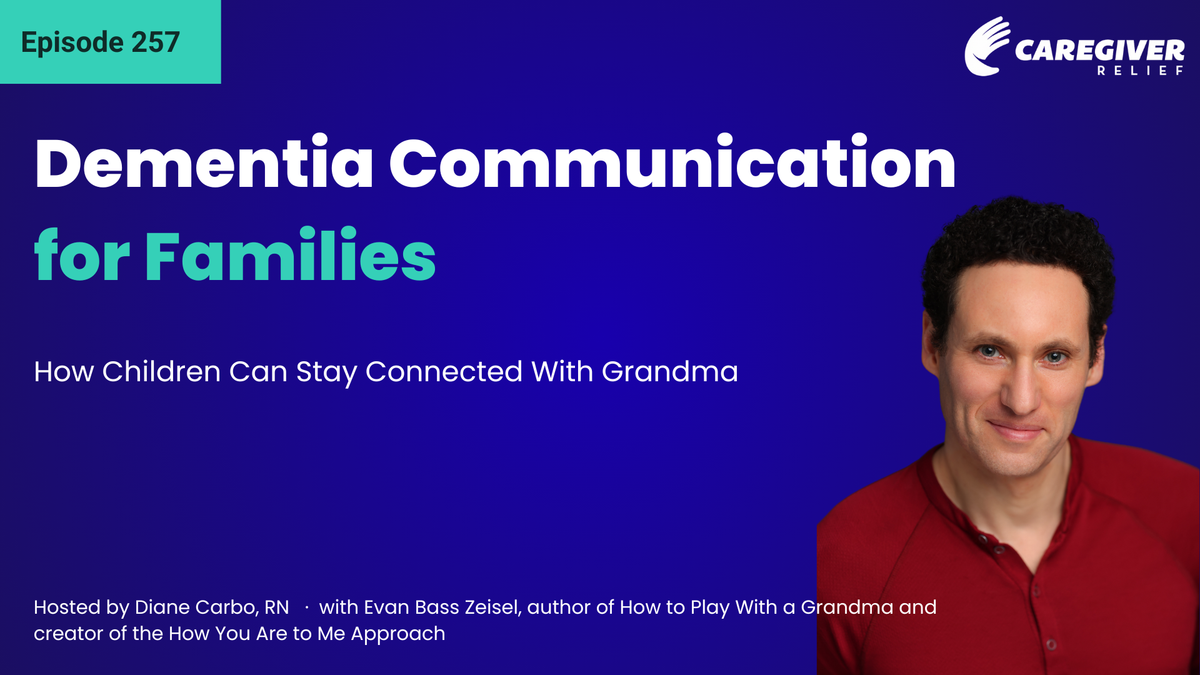
In this heartwarming and practical episode, host Diane Carbo, RN sits down with Evan Bass Zeisel—author of How to Play with a Grandma, creator of the How Are You, Me? approach, and dementia advocate—to explore how families can transform caregiving through empathy, play, and presence.
💡 Key Episode Highlights
- 🤝 The "Squeeze and Release" Technique: Evan shares a brilliant, non-verbal physical tip to de-escalate situations when someone living with dementia grips your hand and can't let go.
- 🎭 The Power of Improv & "Yes, And...": Discover how interactive theater techniques can eliminate conflict, boost self-esteem, and encourage communication without judgment or correction.
- 🧠 Viewing Dementia as an Accessibility Issue: Why shifting our mindset from "they are lost" to "we just need different tools" (like Braille or sign language) changes everything.
- 💬 The Magic of Binary Questions: Learn why asking broad questions like "What do you want for lunch?" causes overwhelm, and how offering two simple choices preserves dignity, choice, and control.
- ❤️ Shifting to the HOPE Model: How to talk to kids openly about dementia, move away from fear, and foster meaningful, joyful connections with their grandparents.
- 🕊️ Self-Forgiveness for Caregivers: A compassionate closing reminder on why perfectionism isn't possible—and why giving yourself grace is vital.
📋 Episode Outline & Timestamps
- Introduction: Children, family dynamics, and dementia
- Guest Spotlight: Evan Bass Zeisel’s background in non-pharmacological dementia care & interactive theater
- Inspiration behind How to Play with a Grandma & environmental dementia care
- 💡 Pro Tip: The physical "Squeeze and Release" hand grasp method
- Insights from the NIH/NIA Scripted Improv clinical trial
- Why depression and aggression are often responses to correction, not just dementia symptoms
- How children's books can destigmatize dementia and teach the HOPE model
- Validation vs. Correction: Joining their reality instead of pulling them out of it
- 💡 Communication Tool: Using binary questions to give choice without overwhelm
- How parents and children can use play to stay connected
- Where to find Evan's work & supporting local bookstores
- Closing thoughts: The importance of caregiver self-care and self-forgiveness
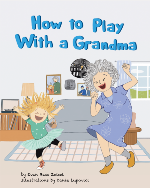
📚 Featured Resources & Guest Links
- 📘 Book: How to Play with a Grandma by Evan Bass Zeisel
- 📱 Instagram: @ezeitgeist
Podcast Episode Transcript
Diane: Welcome to the Caregiver Relief podcast. I'm Diane Carbo, RN, your host today. Today, we are talking about one of the most tender challenges families face when someone they love is living with dementia, how to help children understand what is happening, and stay connected in a way that feels safe, loving, and natural.
Children often sense that something has changed. Grandma may repeat the same question, forget names, lose her place in a conversation, or no longer respond the way she once did. For a child, that can feel confusing, frightening, and even personal. My guest today is Evan Bass Zeisel, author of How to Play with a Grandma, and creator of the How Are You, Me?
Approach. Evan's work brings together dementia education, creative practice, improvisation, empathy-based communications to help families build meaningful moments of connection. He was part of the National Institute of Health and National Institute of Art funded scripted improv. It was a clinical trial which explored the use of interactive theater and improvisation to improve communication and quality of life for people living with dementia.
As a trained improviser and dementia advocate, Evan teaches families how simple ideas like presence, active listening, play, and thinking can change the caregiving experience. This conversation is about helping children and families move away from fear, correction, and frustration, and towards connection, compassion, and joy.
Diane: Evan, thank you so much for joining me today. I'm so excited. I want my listeners to know Evan sent me a copy of his book, How to Play With Grandma, and I'm very impressed, and I'm excited that we're sharing this story with you today.
Evan: Well, thank you for having me. I'm excited to have this conversation.
Diane: Yeah, me too, because it's desperately needed. can you, start by sharing what inspired you to write How to Play With a Grandma?
Evan: Yeah. I have a sort of very diverse background in, dementia, caregiving sort of experience. I grew up and my father, managed and maintained, dementia facilities in New York and Massachusetts, and so I grew up in these facilities.
His company focuses on- addressing or sort of supplementing dementia care by creating, non-pharmacological approaches in the environment to help with, playing to the strengths of dementia. So they focused a lot on the architecture of the facility so that there was, always a hearth, a fireplace area people could sit down at.
There was a garden, but the garden was circular, so people could walk around, but they never felt like they were... like, got to an end. That, hallways always ended in a big room, so when they got to the end of the hallway, they went in the room. You could walk around the room, and then you exit the room, and you can keep going.
So there's never like a locked door. And even the exits, I always remembered, had murals over them. So it was a pretty thing, and you didn't notice there was a door there. So there wasn't a door of "Oh, I need to get out here." It was in, playing to making it as comfortable as possible and away from the potential, negatives or the no's that can happen with dementia. And I, you know, grew up kind of visiting my dad at work. what happens when you have working parents and you have to
Diane: Yes
Evan: go somewhere. And that sort of,taught me a bit about interacting with individuals with dementia because it wasn't, oh, these people have, this disease that they're living with and you have to do something, it was when somebody comes up to you and is chatting with you, it's nice to talk to them.
And, if they want to hold your hand, it's okay, but if, if they one, one aspect of, sometimes with dementia is, gripping. they grip the hand and, don't wanna let go. It's sort of a
Diane: Yes
Evan: non, something that you can't control. And like,if this happens, there's an easy response, and it's called, squeeze and release, which is highly recommend.
I don't talk about it in my book, but if you're, somebody with dementia is grasping your hand and they won't let go, instead of trying to pull your hand away if you give their hand a squeeze with your hand and then release, they mimic it. And so then they'll squeeze and usually release, and then it's a really easy way of,deescalating the situation if you are feeling a little trapped with your hand.
Diane: Evan, I love that approach, and I want you to say it one more time. I want my listeners to pay attention because this is such a valuable tip that is,you don't hear very often, and I love that. So
Evan: Yeah
Diane: the squeeze so
Evan: definitely
Diane: and release. Yeah.
Evan: Yeah. So squeeze and release, and it's essentially sometimes when people with dementia, they're holding hands, and oftentimes, the physical connection is a beautiful thing, and it
Diane: Yeah
Diane: it makes them feel connected and, it's a loving thing. However, sometimes brain process-wise, they lack the ability sometimes to realize that they're not letting go.
Diane: Yes.
Evan: and most people's instinct if somebody's holding their hand and not letting go is to try and, pull away from it, which
Diane: Yep
Evan: causes a conflict. And so this one is maybe it's a,Bruce Lee style of, go with, water. But the idea is squeeze and release. You squeeze their hand, that they're holding your hand with, and then you relax your hand.
Diane: Yeah.
Evan: And they will instinctually mimic it, and so then they squeeze back, and then they release.
And during that release is when you can, gently separate. And it's
Diane: Yeah
Evan: also almost, like, a loving thing 'cause,when you squeeze somebody's arm or you know
Diane: Yep
Evan: when you're giving a hug, you give, a, a squeeze sometimes.
Diane: Yeah.
Evan: That there's also that instinctual thing of, oh, this is a loving move, and then they match it
Diane: Yeah
Evan: which then also facilitates, releasing the grasp.
Diane: Oh, I love that. I really appreciate that tip because it's, I've worked in dementia care units, and one of the issues that I have a problem with now is most people that work in dementia care units are not trained
Evan: Yeah
Diane: on behavioral approaches.
And, I love that your dad was looking for ways to approach so there was no medication required, and that, that's, I love that because I don't like zonking somebody or,
Evan: Yeah
Diane: you know, or if you give them a medication and they have a paradoxical effect, which means an opposite effect, for my listeners out there, where you give them something that's supposed to calm them, and all it does is escalate them.
That's usually
Evan: Yeah
Diane: with oily bodies, and it's, it is hard to deal with. So I'd like to prefer not to use any medications if at all possible.
Evan: Yeah, I mean, I think it, depends on the patient each time, but Absolutely when, especially when things are not working the way they should.
Diane: Yes.
Evan: and sort of the thing that I learned there, and then I'll go into sort of my additional experience.
Diane: Yes.
Evan: But the one of the big things I learned is there's, the pharmaceutical side, but there's also the non-pharmacological side in which
Diane: Yeah
Evan: there are so many things that spoiler, we can do for free that doesn't cost anybody money
Diane: Yeah
Evan: that can greatly improve the quality of life.
And just, I think of it as you know, we have conversations with people, we interact with people, and then, when they have dementia, we try and have the exact same interactions and the exact same conversations, and it just doesn't work that way. And
Diane: No
Evan: if you think of dementia as an accessibility issue is one of the ways I've been thinking about it recently, where, if somebody is blind or deaf, we don't say, "Oh, no, they're gone. We've lost them." It's like, no, we have braille. We have
Diane: Yeah
Evan: things that help the blind. It's, we just
Diane: Yeah
Evan: adjust it. If somebody is deaf, we don't say, "Oh, they're gone."
It's, oh, we, lip-reading, and we have
Diane: Yes
Evan: sign language. we've adjust, and it's
Diane: Yeah
Evan: it's almost like the same thing. I, have this very odd analogy, but I'm like, my wife is pale and can burn more easily in the sun, and I'm not like, "Oh, she's gone." Yeah. It's we just put a little more sunscreen on.
We've got
Diane: Yep
Evan: sunblock, and she
Diane: Yep
Evan: just uses it a bit more than I do.
Diane: Yeah.
Evan: But it's not... It's just everybody's different, and so if we can realize, oh, when people have dementia, we need to adjust how we interact to play to their strengths and avoid their weaknesses, it can change the conversation entirely of how we interact and their quality of life.
Diane: Beautiful. Yes, yes.
Evan: And so then I'll, segue that into my experience. So I learned that even more so when in, I think it was 2011, I joined, the Scripted Improv Project, which is the NIH and NIA funded, clinical trial. And as a part of that, I helped develop, test, perform, and then build training for interactive theater with the dementia population.
And the really cool thing about the Scripted Improv Project is there were two performers, and then the entire audience in the round were individuals who had dementia at differing levels. And throughout the play, we would cast eight to 10 characters in the play from the audience, and the individuals with dementia would play the characters. And the... It very much solidified in me the power of improv because a lot of the techniques we used in building it and then in performing it were very much in the line of yes, and, which is a, the foundation of improv and designing essentially a safe space that no matter what they said as a character in the play, it worked.
That they could say... One person was like, "Oh, we're leaving this room, and we're going over here." And one of us was like, "Let's do that." And then we like left the play and, and you know, and of course the nursing staff was like, And we're like, "We got this." like, "Trust us." And then of course that person knows how to guide that person back, and we like did a little
Diane: Yeah
adventure on the side and then came back, and they're like, "We're back. Okay." And it's-
Diane: How fun
Evan: amazing how much you can open, and that opened my eyes to a lot of the, I think, like misnomers related to dementia, where
Diane: Yeah
Evan: when we went in to do the, the play testing, we'd do them at facilities, and we would not know the level of dementia of any of the individuals
Diane: Yep
Evan: what stage they were, and we just assumed, essentially assumed that they could do everything until they showed us visu- either visually or auditorily that
Diane: Yeah
Evan: something wasn't working for them, and then we adjusted.
Diane: Yeah.
Evan: And we had one person who we cast as one of, the, the main characters.
Didn't realize that person was known for being aggressive at the facility, but because we just yes and played to it, we made that character a little bit snarky and a little bit and because we did that, everybody started enjoying all of the comments that this person said and, like, laughing with that person
Diane: Yeah
Evan: and applauding them. And you could see the personality change of, "Oh, now I'm gonna play into this."
Diane: Yeah.
Evan: And by the end, they were highly enjoying it, and the, the staff came up afterwards and was like, that was amazing because usually she's just yelling and this," and we're like, "Oh
Diane: Yeah
Evan: we just thought it was part of what she decided to do." and, but then she was less aggressive afterwards.
Diane: Yes.
Evan: And we had another person
Diane: Yeah
Evan: that I'll never forget, where we had four different plays, and one of the plays, there's, a murder mystery, but we... And you go to help get clues.
And we went to one person and we cast her as the Chatty Cathy, sort of the gossip in the town.
And she was very talkative. At one per- point, she broke into a spoken word, like, poem that she created on the spot, and it was amazing.
Diane: Oh, my gosh.
Evan: And we were like, "This is great." And then afterwards, her children were in the audience, and they went and chatted with her, and then they came up to us afterwards, and it, blew our minds.
But they were like, "Thank you so much. Our mom hasn't talked in two months, and we thought
Diane: Oh, wow
Evan: she was gone." And 'cause she had withdrawn.
Diane: Yes.
Evan: And I think
Diane: Yes, yes
Evan: the, one of the bigger things that I realized is this idea of depression and aggression being
Diane: Yeah
Evan: a sort of, quote-unquote, "symptom of dementia"
Diane: Yeah
Evan: that it's
Diane: Yeah
Evan: it's not a symptom of dementia. It's a, a tertiary symptom in the sense that, and I always think in terms of empathy, if every time I said something, somebody said, "No, that's not right." "Oh, I'm gonna correct you. You were talking about this, but now you jumped to this. you should go back.
I think you forgot it." I'm gonna either start going, "Okay, everything I say is wrong," like I start feeling shameful. Either I'm going to withdraw so that I don't say anything wrong or I'm gonna start getting aggressive 'cause then nobody's gonna challenge me because they don't wanna talk to me.
Diane: Yeah,
Evan: And it's like they're doing this in response to what we're doing.
Diane: Yeah.
Evan: And if we adjust what we're doing, potentially these people who are aggressive or depressed won't be either. And we like
Diane: Yeah
Evan: improve their quality of life, but also as a caregiver, we improve our quality of life because then we don't, we're not trying to help fix somebody who's depressed.
We're not dealing with somebody
Diane: Yeah
Evan: who's aggressive. We're saying, "Okay, I can play to the strengths that make them feel good about themselves," and then that helps everybody.
Diane: You know, that's an important point you're talking about is even in the, the middle to late stages of dementia, there is still the need for us to have a good sense of wellbeing.
Feeling productive, feeling part of a community or even in society, and that gets lost totally in when you're providing care for dementia. Now I want to talk about children because, you wrote this book. What possessed you to write the book,
Evan: So yeah, so I started thinking about what unique thing I could bring to the conversation.
And being an actor and a writer, producer, as an artist, I saw the ways that art, interactive theater, I'm did a short film How You Are To Me, about dementia and integrating in sort of some teaching techniques, and I realized, like what I can bring is using art as a means to have that conversation, and not in a way that's like hitting you over the head, this is education.
But
Diane: Yeah
Evan: this is really fun or beautiful, and then oh look, I happen to be learning some stuff while I'm enjoying
Diane: Yes
Evan: this book.
Diane: Yeah.
Evan: And I have an almost four year old and a just-past one year old, and both of them love to read. My four year old, we read a lot with her.
Diane: Yep.
Evan: And in reading these children's picture books, it was amazing to me how much she absorbed from them and she learned.
And sometimes
Diane: Wow
Evan: that I learned, and I was like, oh, you can do it so simply with a mix of, the illustrations and words, and sometimes there are few words.
Diane: Yes
Evan: I often think of, I did an analysis of, the top 100 children's picture books over the years and thinking like, "Okay, what did I like about this one?
What didn't work?" And, fell on some of my favorites that now my daughter has. But there's Rabbit Listens is one that I think is amazing, and it's just about a, a kid who is building a structure and then it gets knocked down, and then these, each animal comes to try and tell the kid how to react.
And the kid doesn't want to deal with that until the rabbit comes and just sits, and listens, and lets the kid go through its emotions
Diane: Yes
Evan: and then just is like present.
Diane: Yeah.
Evan: And it's, but it's very simple, and it, but it's beautiful the illustration. And then there's, Drawn Together, which is another really interesting one that has almost no wor- no written text in it.
It's almost all illustrations, and it's about a grandchild, who is like a second generation American, and then a grandfather who is, doesn't speak English, and they're, they're visiting, and they don't really communicate. But then it turns out the grandson, draws comic books and the grandfather was a calligraphy comic, artist.
And so then
Diane: Oh, wow
Evan: the, it turns into them having a conversation through their art
Diane: Yes
Evan: and building this world and fighting a dragon together. And it was like, oh. and it's all about communication.
Diane: Yes.
Evan: Yeah. And it, it's just there's so many sort of books in this realm of like here's a theme, but the story is so entrancing.
And it made me kind of think of, in retrospect, how stained-glass windows started in churches, right? They're stories related to, the religion. in Christianity,
Diane: Yeah
Evan: with churches, it's like the Bible. And it was teaching it to people who couldn't read.
Diane: Yeah.
Evan: And it's, oh
Diane: Yeah
Evan: it's making it accessible. And I guess following on this accessibility idea. And I thought, okay, could I do something interesting for dementia in this sphere? And a lot of the dementia books I found relating to children, and in the children's
Diane: Yeah
Evan: picture book sphere, were very much the like, "We're gonna sit down and have a conversation about how Grandpa is going to a facility, and it's gonna be great for Grandpa.
And he'll
Diane: Yeah
Evan: really enjoy it at a facility." And it's like, this is really just like a, not necessarily a positive model that we're talking about. Or other ones
Diane: Yeah
Evan: it's like, "Grandma doesn't un- you know, won't understand some things when you talk to her, but don't be scared." And it's like it's not, that's not... I wanted toteach this hope model.
Diane: Yes.
Evan: And a lot of the things that I saw w- were I don't know, less hopeful and more, "Oh, we just gotta deal with it." And
Diane: Yeah
Evan: so that's the, the impetus. I was like, okay, I think I can create something from that. I've got all these experience.
I did, you know, the short film. I used to use the short film to, as a teaching tool at dementia conferences. for a year, I did once a week, social media videos that were, like, 60 seconds or less that were like here's a non-pharmacological dementia tip. And so I'd built a repertoire of here are different things that could be helpful.
And then I essentially was like, okay, what... the 80/20 rule. you can get 80% of the way there with 20% of the effort.
Diane: Yes.
Evan: What, which would have, which techniques would have the most impact and be simplest to use in a, an illustrated picture book? And I whittled it down, and then it was building from there the story I wanted to tell, and then working with our amazing, or the amazing, illustrator, Dani Lupivicci, to design the characters and, we had a lot of fun with them. The, the grandmother is visually based off of my maternal grandmother but also my, you know, some of my other grandparents, both oddly, in-law and not.
And then the granddaughter in it is based off of my four year old in looks. And so then, and we played from there and built, and it was, a wonderful experience for me because this was my first children's picture book, so it also was an education
Diane: Yes
Evan: in how do we build these characters?
Oh, we have to design the entire inside of Grandma's apartment so we know what looks where and where things are connected.
Diane: Okay.
Evan: It was, yeah, very fascinating, but also really enjoyable because we were creating this thing of we can create something beautiful that hopefully will help change that conversation.
Diane: Well, I think you really did a good job, and that's why I was excited to have this conversation with you and help you promote your book because I loved the graphics. They were adorable. I loved my grandma and, I love the way you presented the grandma. She adorable.
Evan: I give her a lot of energy.
I feel like
Diane: Yes
Evan: a lot of times people
Diane: Yes
Evan: think "Oh, somebody's getting old. They can't do things." And it's like
Diane: Yeah
Evan: they actually really most people really enjoy doing things, and as long as they're physically able
Diane: Yes
Evan: they probably will continue to do them as much as they can.
Diane: Absolutely. I can tell you, I worked in senior behavioral health, and, even in the middle stages of dementia, I would have many old women, that wanted the little Italian ladies and the little Asian ladies would wanna be cleaning all the time. they're going around cleaning the unit, and families would get upset like, "How can you let them do that?
Oh my God, that's" it was positive for them. They loved it, and I'm not gonna tell them they can't wash a window if they want to do
Evan: Well, it's, I mean, my... So my grandmother on my mother's side turned 101, just in beginning of this July.
Diane: God bless her.
Evan: And she played tennis through her 90s.
Diane: Yep.
Evan: And it... Because she always played tennis. She loved it.
Diane: Yeah.
Evan: And I'm sure, the women that were doing cleaning used to do cleaning at their houses, and it's this motor skills
Diane: Oh, absolutely
Evan: the things that they do and used to enjoy doing.
Diane: Yes.
Evan: It's built into them, and you don't lose that when you have dementia.
Diane: Yes. My, sons used to tell me, "Hey, Mom, can't you find a little Indian lady or a little Korean lady and bring them home and cook for us?" Because, they don't, they wanna do those things, and my boys loved all kinds of different foods, I just got a giggle about that because, people don't understand that if it was something they...
There are men that, a perfect example, I had a man that, worked in a bank. And every day, no matter what, he wanted to go to the office. So they created a little bank for him, it wasn't much, but he was able to do the tasks that he wanted to do. And, I love the, the ability to improvise.
You just, and if you do, I didn't know about this approach or technique. But I can tell you, it's just if you work with somebody and you find out what they like, what they wanna do, what they used to do, and can... And they're still interested and able to do it 'cause it's in their long-term memory you can really, improve not only their quality of life at the moment, but, it makes everything smoother for the entire family.
Evan: It's, yeah, it's episodic memory, which is memory recall, versus
Diane: Yeah
Evan: almost like motor neurons. It's in your bones.
Diane: Yes.
Evan: It's in your muscles. And I we have a, it's very playful in the, in How to Play with a Grandma, because I do a sort of fun twist on that where Grandma used to be on a football team.
And so then she's, playing this football, which I just thought was a lot of fun and, as a kid, you know
Diane: Yeah
Evan: my daughter really "Oh, they're playing football." But also embracing the fact that one of the things as people age but also with dementia is you lose your inhibitions a bit.
And so
Diane: Yes
Evan: you know, in the book, Grandma throws a pass and the daughter drops it, which my daughter probably would drop it.
She's not there yet. She's getting better.
Diane: Yeah.
Evan: But then, in this one Grandma just starts laughing at it and, making fun of it.
Diane: Yeah.
Evan: And instead of being like, "Oh, I'm ashamed I dropped it"
Diane: Yeah
Evan: really it's like, "Oh, let's embrace it. Let's have fun with it"
Diane: Yes
Evan: which is also something that I think we can learn from people with dementia who just, they don't care anymore about judgment from other people and they just
Diane: Yeah
Evan: have fun, and it's like we should do that, too. That's
Diane: Yes .
Evan: that's
Diane: Yes
Evan: make all of us happier.
Diane: Yes. Oh, absolutely. I had a little lady that, kept telling us about her boyfriend. This is in senior behavioral health
Evan: Yeah
Diane: again, with dementia. And she was, talking about her boyfriend and how he travels the world. And I said, "Do you miss him?" And she goes, "Oh, no, we talk every day." I said, "Oh, really?
Is he calling the unit?" She goes, "No," and she picks up her hand, she puts it to her ear, and says, "We talk all the time." Aw. And I was like, "Aw."
Evan: That's so sweet.
Diane: It was. It was, like, so sweet. And we used to have conversations about their conversations. And it's just, the family, it upset them that she believed this, but it was such a simple it wasn't a terrible delusion to have.
Evan: And that's... it's a very interesting thing, the idea of delusions and, people with dementia. And by delusions we don't mean, they're lying to themselves. It's that they essentially transport to another time
Diane: Yes
Evan: and they are living in that
Diane: Yeah
Evan: in their memory or in their brain.
Diane: Yeah.
Evan: This is real to them. And
Diane: Yes
Evan: I think it's important to have the discussion related to that because oftentimes Caregivers are, just as you said, they're like, "Why would we, join them in that?" Like, "What's we need to stop that. We need to help them and stop them from doing that."
And the question I always like to pose is, so they are living in something and it's making them happy or something's going on.
Diane: Yes.
Evan: Even if it's making them distressed
Diane: Yeah
Evan: how is ripping them away and telling them that their reality is wrong
Diane: Yeah
Evan: going to help them in any way? and
Diane: It does not.
Evan: And the idea of sort of yes, and going with it, and then guiding it. So if it's
Diane: Yes
Evan: a negative, if they're stressed
Diane: Yeah
Evan: acknowledging and validating that stress is real. They are
Diane: Yeah
Evan: experiencing it, even if it is not justified. You know
Diane: Yes
Evan: the, the classic one is "Somebody stole my keys.
A thief came in here
Diane: Oh, absolutely
Evan: and they stole my keys because I put them right here."
Diane: Yes.
Evan: To them, that's what they remember. That's what they believe.
Diane: Yes.
Evan: And yes, you know you always put the keys in this other place, and no thief took them, but being, by saying, that's not right. It's over here," you're
Diane: Yeah
Evan: completely invalidating their side, and
Diane: Yes
Evan: they're just gonna feel, "Oh, I'm wrong again," or "This person's trying to lie to me," because they believe it.
Diane: Exactly.
Evan: And instead of saying
Diane: Yeah
Evan: "Oh, no. let's look for them."
Diane: Yes.
Evan: And then you're like, "Oh, hey, look, I found them over here."
Diane: Yeah.
Evan: And then you've come to a solution. You haven't blocked their world, and then they're like, "Oh, yes, good job." Like
Diane: Yeah
Evan: "I must have put them there. I didn't remember." That's okay, 'cause we all do that.
Diane: Yes.
Evan: But it's amazing- The things that we try in the name of helping somebody, we actually hurt the situation or make it harder.
Diane: Exactly.
Evan: Oftentimes, I think of it in, this general conceptual approach of, believe that they can.
Diane: Yes.
Evan: Which is a really hard thing to accept because oftentimes a lot of people with helping do the opposite, which is, "In the name of helping, I'm gonna do this for them."
Diane: Yes.
Evan: And when you do that, you're taking away genuine choice and control, which
Diane: Yes
Evan: we all, you know, after being, I think two or three years old, really enjoy. My one-year-old actually has a bit of, need for control at that age. It's like, "Nah, nope, I'm not gonna let you feed me, but if you give me the spoon, I will mess it up entirely, but I get to do it."
Diane: Yeah.
Evan: And but it's
Once we have it, we ... That's infantilization, is taking away
Diane: Yeah
Evan: people's choices. And we I just tie back to one of the techniques in the book. We talk about, binary questions, and binary questions is this great technique. So with dementia, as it, it progresses, one of the things affected is episodic memory.
But another thing that's affected is, complex processing in the brain. If it's a complex task, it's hard to figure out all the steps that go into it.
Diane: Yes.
Evan: And, so an example in the book is like, "What would you like for lunch?" Now, normally, what would you like for lunch, it's easy for most of us to say, "Okay, let me" "do this." but if you break it down, it's okay, lunch is a meal. Lunch is a meal in the middle of the day. Okay. What are appropriate options to eat for lunch? What options do we likely have in the current area? Okay, of those options, which one would I prefer the most? And there's probably a beverage and a food.
Diane: Yeah.
Evan: Which of each of those... That's a lot of tasks.
Diane: Yes.
Evan: And so it can be overwhelming.
Diane: Yes.
Evan: and there are negative potential, of answers if you ask an open ended question and they give you a appropriate one, but you don't have it. "What would you like?" "Oh, I'd like a, a Omaha steak from this restaurant that we love."
Diane: Yeah.
Evan: "Oh, that is an appropriate answer, but I can't get you that steak."
Diane: Yeah.
Evan: "Well, like, you asked me. I wanted it." Now you create this conflict.
Diane: Yeah.
Evan: And and then other times it can just cause confusion 'cause they can't figure out the right thing.
Diane: Yeah.
Evan: And binary questions is you ask a question, but then you immediately offer two options.
And
Diane: Yes
Evan: What it does is it gives the person with dementia genuine choice and control. They get to choose between the two options.
Diane: Yes.
Evan: You're not choosing it for them
Diane: Yes
Evan: but you're also simplifying it so it doesn't overwhelm them.
Diane: Yes.
Evan: And then from the caregiving side, you are presenting two options that you know you can provide, and are probably easier for you than other options.
And so you're also setting yourself up for success of, not getting overwhelmed.
Diane: Yep.
Evan: And it's a simple way of doing it compared to oftentimes with the sort of, "I wanna help," approach, it's, "Okay, I know you like this food, so I made this and this is what you're eating."
Diane: Yeah.
Evan: And then either there's a chance [00:30:00] of I don't wanna be told what to do, so I'm just gonna say no because you forced it on me." Or
Diane: Yes
Evan: maybe they're not in the mood for that.
Diane: Yes.
Evan: And then, sometimes you just my wife last night, recommended ravioli, and I was like, "I'm not really in a pasta mood."
Diane: Yeah.
Evan: Like, I love pasta, just
Diane: Yeah
Evan: not tonight.
Diane: Yeah.
Evan: But you run into that. And so being able to give them that, that choice, and it's a very simple approach that anybody
Diane: Yeah
Evan: can do, and it both, you know, sets everything up for success. That there are ways, again, just to lean into providing better options.
Or for yourself and for them to improve their quality of life with, little tweaks.
Diane: You did it so beautifully in the book. what do you hope families take away from How to Play with a Grandma, especially families who are trying to help children stay close and connected to someone they love?
Evan: I would say, so the two biggest things. One is don't be afraid to have the conversation with your kid.
Diane: Yeah.
Evan: I think, if this book a just by itself allows you to start that conversation, then it has
Diane: Yeah
Evan: done its job. Because I think, people are worried that kids can't handle it, and so then they avoid it, but that avoidance creates, some tension because then the kid senses something, as you said, at the beginning
Diane: Yeah
Evan: of this podcast.
Diane: Yeah.
Evan: But then the parent's avoiding it, so the kid thinks, "Okay, am I not supposed to talk about this? What, something's wrong."
Diane: Yeah.
Evan: Instead of just, "Hey, this is what's going on and we just, we need to adjust some things. Like, when this
Diane: Yeah
Evan: happens, we could do this."
Diane: Yes
Evan: and, I think De-stigmatizing dementia as a disease and making it more as an accessibility thing.
Hey, Grandma, doesn't necessarily remember specific things, but if you ask Grandma her opinion about something that we know she loves, if she liked to cook and you ask about if this tastes, we bake something together and you ask if it's right, she will tell you when it's wrong and probably give you the correct ingredient that goes in it because she used to bake.
Or, you know
Diane: Absolutely
Evan: if she plays football Grandma will
Diane: tell all the family secrets if you give her an opportunity.
Evan: Yeah, exactly.
Diane: And
Evan: If you like, for Grandma or Grandpa, if they like football, instead of
Diane: Yeah
Evan: talking about specific moments, if you watch a game and talk about the game, "Oh, was this a good throw or not?"
Like a... They'll be there, and their personality, what they were good at or what they cared about before is going to be the thing they care about. If, they hated a specific team, they might start hating that team still, but even more. That there are ways to play into it, and that at some level, kids are, innately know a lot of these things.
Kids like to play with each other. Yes. They don't have the judgment.
Diane: Yes.
Evan: They enjoy, if, one of them makes a mistake while playing a game, they don't see a negative. They're like, "Ah, ha, ha, let's, maybe we're gonna add that to the game." That
Diane: Yes
Evan: they innately have this yes, and joining in, and adding to approach.
Diane: Yes.
Evan: Leaning into that is great, and the idea of the HOPE model, tied into that of it's, Grandma's going through something that's different, but Grandma's still there. And we can all connect with her or him if Grandpa them.
Diane: Yeah
Evan: We just need to adjust what we're doing.
Diane: Yes.
Evan: And I think that's hopefully also like intrinsically seeps into the parents' mindset too, that ... it's a children's book but the children's book is designed for parents to read it. And hopefully they get things out of it too. And we have, this, section at the back of the book which is, technique explanations, guiding exercises
Diane: I love that
Evan: guiding questions.
Diane: It, that's why I thought this book was even meant for adults that don't have grandkids. I will tell you right now, it is, the, that's the best thing about the book that I loved, because I don't have grandkids, but I love the story and the way... And we don't, this is a, a book that everybody that even works in a dementia care unit should read,
Evan: So, yeah, so I originally designed the sort of the ending sections- for Nursing staffs and social workers to be able to use this bookin a course or workshops
Diane: Yes
Evan: to learn.
Diane: Yes.
Evan: And very interestingly, that was the design, but feedback from parents, that have, have kids who have read the book
Diane: Yeah
Evan: they were like, "Oh, we love the back because we got to the back and then the kids really enjoyed playing the exercises and doing the"
Diane: Yes.
And I was like, "Oh."
Diane: Yes.
Evan: That's amazing.
Diane: Yes.
Evan: I wasn't even expecting the kids to. It was sort of parents but of course
Diane: Yeah
Evan: you know, don't treat kids like kids. They're
Diane: Oh
Evan: adults these days.
Diane: Absolutely. Absolutely. And I just, I love the book. I loved what you've done, and I wish you much success promoting it because it should be in every dementia care unit in the country,
Evan: from your lips to every dementia care unit's bookshelves.
Diane: Yes. Yes, yes. Evan, how do people find you and your book?
Evan: You can find me on Instagram, ezeitgeist is my handle, and the book is, I mean, you can buy it on Amazon. Oh. you can buy it on Barnes & Noble, online. the publisher is Bori Orealis Press, so boriorealispress.com. There's How You Are To Me, or sorry, howtoplaywithagrandma.com.
Diane: Yeah.
Evan: And then my personal favorite, 'cause I support local bookstores will not have it in their shelves, but you can go to your local bookstore and ask for it by name and author, and they will order it, and it will be the exact same price if you buy it online, except the bookstore then gets a percentage cut of the profits.
Diane: Yeah.
Evan: So you're supporting your local bookstore. So I'm always a fan of that.
Diane: I am all about the local bookstore. You know, they're vanishing, and that makes me sad.
Evan: Yeah. Yeah,
Diane: the local neighborhood bookstore. I create a permanent page on Caregiver Relief with the podcast and the script, transcript.
I also will have links to your book and, to your site and stuff. that's for future visitors to my site that come and, say, "Oh, what is this?" Oh, I'm gonna try to promote you as much as I can as well,
Evan: Thank you so much. And yeah, Thank you ... I got my, some AI thing. yeah, I mean, as you can probably tell, I'm very passionate about this area, and
Diane: Oh yeah
Evan: my goal is like I am too. The more we can help change that conversation to the HOPE model, the better everybody will be, the better the quality of life
Diane: Absolutely
Evan: of people with dementia, the better. Really I've had many conversations, and it's oftentimes with, children of individuals who have dementia who are overwhelmed.
And, I know Hilarity for Charity has, has grants for
Diane: Yep
Evan: you know, caregivers to just get a relief because it's, it takes so much.
Diane: Yeah.
Evan: goal is potentially if we have this ability to change the conversation, it will also make those caregivers' lives just slightly easier.
Diane: Yes.
Evan: Which also would be a huge amount of relief. Caregivers have the highest rate of depression among all caregivers
Diane: Yeah
Evan: because of the amount of work, but it's also, I think, because they don't know these conversations. They don't know, "Oh, I can make life a little easier."
Diane: Yes. And that has to be a goal for every family caregiver because, they are being challenged beyond, what is humanly possible to do,
Evan: Yeah
Diane: Once again, I thank you, and I wish you much success. To my family caregivers out there, you are the most important part of the caregiving equation. Without you, it all falls apart. So please learn to be gentle with yourself. Practice self-care every day because you are worth it, and get Evan's book.
Evan: And I also am a proponent of, practicing self-forgiveness, that I think caregivers are very hard on themselves because they can't do everything perfectly.
Diane: Yes.
Evan: And that for mental health, realizing it's an impossibility to be perfect
Diane: Yeah
Evan: and things happen, and this is from a parent as well.
Diane: Yeah.
Evan: It just, it's impossible, but it's okay, and everybody will be okay, and it it's great to say it's like it's okay to make a mistake.
Diane: Absolutely, yep, and try again later.
So thank you so much.
Evan: Thank you.
Caring for a loved one can be overwhelming — but you're not alone. If you have questions, big or small, our expert team is here to help.
👉 Click here to Ask the Expert
Our Resource section can help you find the information and tools that you need. We have courses, videos, checklists, guidebooks, cheat sheets, how-to guides and more.
You can get started by clicking on the link below. We know that taking care of a loved one is hard work, but with our help you can get the support that you need.
Click here to go to Resource Section now!