When a Spouse Dies: Grief, Healing, and the Continuing Bond of Love with Tim Bair - Episode 273
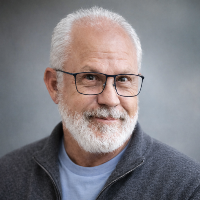
Bestselling author Tim Bair shares his journey after the death of his wife, Mari Lynn, and explains how writing, continuing bonds, spiritual connection, and greater awareness helped him navigate grief, chronic pain, and life after loss.

In this heartfelt episode of Caregiver Relief, host Diane Carbo, RN sits down with bestselling author Tim Bair, whose life changed after the death of his wife, Mari Lynn, in 2017 🕊️. Tim shares how writing letters to Mari Lynn became part of his healing, and how he came to experience what he describes as an ongoing spiritual connection with her.
Tim is the author of Ever Near: A Series of Love Letters Between Soulmates Transcending Our Understanding of Life and Death and the forthcoming Wisdom from Beyond the Veil: A Series of Life Lessons on Grief and Healing 📖. He also opens up about chronic pain, caregiving, intuition, fear, and the possibility that the bond between two people can continue even after physical death.
This conversation is not about telling anyone what they must believe. It is about making room for personal experiences, continuing bonds, and the different ways people find comfort and meaning after loss 💙.
🔥 What You'll Learn in This Episode
- 💔 Grieving a Spouse: The loneliness, loss of identity, guilt, fear, and uncertainty that can follow the death of the person who shared your life.
- 🧭 Identity After Caregiving: What happens when you lose both the person you loved and the caregiving role that shaped your days.
- 🔗 Continuing Bonds: How a relationship can change after death without erasing the love that was shared.
- ✍️ Writing as Healing: How Tim's letters to Mari Lynn became a tool for grief, reflection, and hope.
- 🌗 Intuition vs. Emotional Reaction: Tim's thoughts on telling the difference, and how fear and personal beliefs can shape our experiences.
- 🌱 Purpose After Loss: Living with decades of chronic pain and finding meaning after injury, caregiving, and bereavement.
- 🤝 Respecting Different Beliefs: Why healing does not require agreeing on what comes after death.
📋 Episode Outline
- 🎙️ Introduction: Diane Carbo, RN opens with the question: what happens to love when someone we cherish dies?
- 👤 Meet Tim Bair: Bestselling author of Ever Near and the forthcoming Wisdom from Beyond the Veil.
- 💔 Life After Mari Lynn: Grieving the death of a spouse and the loss of identity that can follow caregiving.
- ✉️ Writing Letters to Mari Lynn: How a personal expression of grief grew into an ongoing spiritual connection and thousands of pages of reflection.
- 🔗 Continuing Bonds: Making room for love that continues after loss.
- 🧠 Intuition, Fear, and Belief: How they shape our experiences of grief and healing.
- 🩹 Chronic Pain and Purpose: Finding meaning after injury, caregiving, and loss.
- 🕯️ Honoring Every Path: Respecting people who hold different spiritual beliefs.
- 🌅 Learning to Live Again: Rebuilding life without leaving love behind.
👥 Who This Episode Is For
This conversation may be especially meaningful for widows, widowers, family caregivers, hospice families, older adults, grief support communities, and anyone struggling to rebuild life after a profound loss 💜.
🌐 Connect with Tim Bair & Resources
- 📚 Books: Ever Near on Amazon (and the forthcoming Wisdom from Beyond the Veil)
🎧 Press Play. You Don't Have to Grieve Alone.
Death may change a relationship, but it does not erase the love that was shared 💞. Listen to this episode, then share it with a friend, a neighbor, or a fellow caregiver who is carrying loss right now. Your kindness could be exactly the comfort they need today 🤗.
Disclaimer: This interview reflects the guest's personal experiences and spiritual perspective. It is not intended as medical, mental health, or grief counseling.
Podcast Episode Transcript
Diane: Welcome to the Caregiver Relief podcast. I'm Diane Carbo, your host today. The death of a spouse is one of the most life-changing losses a person can experience. You are not only grieving someone you love, you may also be grieving the life you shared, the plans you made, the routines that gave your days meaning, and the person you were when the two of you were together.
For family caregivers, the loss can be especially complicated. Caregiving may have become the center of daily life. When the person dies, the caregiver may suddenly be left with grief, exhaustion, unanswered questions, and uncertainty about who they are now. My guest today is Tim Bair, the best-selling author of Ever Near: A Series of Love Letters Between Soul Mates Transcending Our Understanding of Life and Death, and the forthcoming Wisdom From Beyond the Veil: A Series of Life Lessons on Grief and Healing.
After Tim's wife, Mary Lynn, died in 2017, he began writing letters to ho- to her. Those letters became the beginning of what Tim describes as an ongoing connection that inspired thousands of pages of teachings and reflections on grief, healing, intuition, consciousness, fear, and the enduring nature of love.
Tim's journey has also included decades of chronic pain following a severe back injury, caregiving, physical limitations, and the challenge of rebuilding a meaningful life after profound loss. Today, we will talk about what happens when a spouse dies, how continuing bonds can support healing, and why moving forward does not mean leaving the person we love behind.
Diane: Tim, thank you so much for, joining us today and sharing your, a very intimate story.
Tim: Oh, I'm really glad to be here because, this part of the story, the caregiving process, often gets overlooked because most of the places I speak or talk or share with are more interested in the metaphysical after she passed.
Diane: Ah.
Tim: Which is a story in and of itself.
Diane: Yes.
Tim: But, yeah, the, the process to get to, when she passed and beyond that, is often not discussed.
Diane: Yeah, well, hopefully you'll share that with us today.
Tim: Yeah.
Diane: Now, before we discuss grief and loss, would you tell us a little bit about Marylynn and, what made your relationship so special?
Tim: We found each other and altered our entire life structure so that we could, better parent our children. She had two daughters. I had four children. This was back in 1995. That process eliminated every friend we ever had.
Diane: Oh, wow.
Tim: Yeah, it was crazy. It was really crazy.
We had, we were dealing with her divorce, my divorce, death threats from spouses, a great deal of anger dumped on the children for what was occurring. So that's how we came together. and, through all of those storms, we found that we carried this blissful inner peace just by being together.
Diane: That's beautiful.
Tim: The best way to describe it is she and I existed in the eye of a hurricane. Everything external to us was crazy and swirling, and, difficult for other people to understand how we survived.
Diane: You know what? I'm sure in today's world, it's very difficult for people to understand because we're a society and culture of just throwing things away.
We don't, in order to stay married, you have to have commitment, and you have to overlook flaws, and you have to be forgiving. And, today, you know, people are married three, four, five times. and in my day when I was growing up, it was only Elizabeth Taylor that married that many times.
Tim: Yeah. Absolutely. Yeah.
Diane: But we are in a disposable society where if you're unhappy or don't like one little thing about a person, you have a reason to move on and find someone else. So
Tim: Absolutely, I understand that. what our friends found most amazing and actually unbelievable, they thought we were just pretending.
We never had a cross word between us, ever.
Diane: Wow.
Tim: Not once. There we're adults, we're people, we had things we disagreed about, but those discussions were always, framed around how can I express myself without hurting the other?
Diane: Wow, that's a different concept as well.
Tim: And that was from the very beginning.
And through that kind of life, we had incredible miracles and synchronicities happening all the time. And, even when I had my injury, those things continued. We found the perfect house to live in. a drunk driver destroyed both of our cars. And the car that we ended up with, while we hated it, it was the perfect car for her to drive me to doctor's appointments in after my injury.
So there was this constant churning of miracles. Sometimes we didn't even notice them till we looked back on it.
And that was, basically the first five years of our marriage was crazy external stuff, internal bliss.
Diane: Wow
Tim: And then I decided that, I was 39 years old, I wanted to be in the best shape of my life, by the time I turned 40.
So I started working out in the company gym. I reached my goal. I was in really great shape, when I turned 40, and shortly after that I fell in the gym and, basically destroyed three levels of my lumbar spine.
Diane: My back is traumatized from decades of nursing. And
Tim: I don't doubt it
Diane: I'm from the olden days of nursing where we didn't have a lot of tools, and I did physical rehab, and orthopedics, and we did so much lifting, tugging, and I too suffer from chronic pain from the top of my neck to my sacral area.
And it's very frustrating, because, nowadays they have machines that are, that they're using much more than we ever did. But even pulling somebody up in bed all the time, it makes a difference. So I understand chronic pain, I really do.
Tim: It was. I didn't understand until recently how debilitating my life was.
I mean, you can remember the things that you can't do.
Diane: Yeah.
Tim: But your brain kind of filters out how bad the pain was.
Diane: Yes. Yes, yes.
Tim: So I thought just for grins I would feed in my medical history from the charts, as well as the current diagnosis, with all my surgeries and the resulting things like that, and I put that into an AI model and I think AI wanted to swear.
It was, between my second and third surgery, the best pain model it could come up with was that I felt the intensity of active childbirth for eight straight months.
Diane: Yep. And I won't let them touch my back. I'm not having back surgery.
Tim: Oh my goodness. The only people that come near my back are energy healers that don't touch my back.
Diane: Yep, yep, yep. So I wanna talk about Mary Lynn.
Tim: Sure.
Diane: She died in 2017.
And you began writing letters to her. What led you to write that first letter, and what happened as you continued writing?
Tim: Well, this is kind of where the metaphysical comes in. the letters aren't actually from me, they are from her.
Diane: Ah.
Tim: which is a different way of thinking. after she passed I had, mobility was still an issue. This was you know, 17 years after my injury. And I had time, trouble walking to the mailbox at times.
But I started getting impressions that she was still here. I started getting actual having conversations with what felt like her.
But I could best do that outside. It's like the house restricted that feeling. And so I would go outside and I would try to go for a walk. Eventually, I couldn't walk anymore, and in 2005, instead of feeling this compulsion to get outside where I could actually communicate with her and have conversations about, we talked about everything, from what my, our kids needed to, it was just incredible. I felt this compulsion to sit down with a blank piece of paper and just start writing.
And these, these letters that I have, about 450 of them, are actually dictate, dictated from her.
And if you were to read my writing and then her writing, it is two completely separate people. There is just no question.
Diane: Wow. Wow.
Tim: And so I literally have about 400,000 words of her writing in a document. finished the second book, working on the third, and already know what the fourth and fifth are gonna be.
Diane: Oh my gosh, so you're really feeling and before we started this,our podcast here today, you were telling me you were not even a reader and didn't like to write.
Tim: Oh, goodness.
Diane: And you're being this prolific writer now. It's amazing.
Tim: Writing an email, just a single paragraph email, used to take me 30 minutes.
And sometimes it still does, trying to get the wording right if I'm writing. If I'm sitting down and taking this sort of etheric, dictation my hand, it's like my brain sort of disengages. I know what I'm writing. But I can write 10 pages in 45 minutes.
Diane: Wow.
Tim: So it's a totally different experience.
You know, it's not some strange out-of-body experience. I don't like to think of it as channeling somebody from the other side. To me, it's just an, a continuing relationship in a new way. It's the same, it's the same voice. It's the same humor. It's the same general direction. It's the same as it was in 2016.
Diane: Wow.
Tim: As, as it is today. So there's really no change other than her physical body is not here.
Diane: When a spouse dies, people not, people often feel as though they have lost a part of themselves. What did you experience during those few first weeks or months, and, what do you wish other grieving spouses understood about this kind of loss?
Tim: Initially, I mean, her illness was such that we knew this was coming for 15 months.
So the progression was we actually, I don't know, I suppose we cheated a little bit in that we were able to go through the actual grieving process together.
I wasn't working because of my injury.
She could no longer work, so we basically just sat on the couch and had conversations about what my life would be like, what, we planned. She actually wrote a list of the perfect Palm Springs home, in 2016.
And I moved into it in 2019.
Diane: Oh, my lord.
Tim: We had done that with the home we were living in when she passed.
Three years before we bought that home she wrote a list, and we found the exact home.
Diane: Oh, wow.
Tim: So the physical loss is absolutely there, and I still feel it today. Even, what is it? Nine years passed beyond her passing, I still find that I take two coffee cups out of the cupboard.
And that still kinda takes my breath away. there's an absolute... I still wake up, half the bed is slept in, half of it is not.
Diane: Yeah.
Tim: Those moments are not, not ever gonna go away, I don't think.
Diane: No, they won't. I can tell you right now, you know they won't
Tim: And to me, in my particular circumstance, I can recognize that, but then go back out and sit in a chair and take a letter. From her. So while she's not gone, she's just not here.
If that makes sense. And I think
Diane: Yeah. Definitely
Tim: and I think that, I think that if I could share anything about my experience, it's kind of that.
That as we're going through the grieving process, sometimes we hear a song that makes us reflect on what we're missing.
Who's to say that song is not meant to help us remember the joy of the experience of first knowing it?
Diane: That's beautiful. Yeah. Now
Tim: You know? That... Yeah, go ahead.
Diane: I'm gonna say traditional grief advice sometimes suggests that people must let go or find some kind of closure. Your work focuses on the idea of an ongoing connection, which I find amazing. What does a continuing bond mean to you, and how can it support rather than prevent healing?
Tim: I'll answer the second part first.
Diane: Sure.
Tim: That's okay. The information that I get is all about healing. Not just emotional healing or healing from grief but through the process of working with what I've been shown. I have no mobility issues right now. I have no physical pain.
Diane: You're very blessed
Tim: And that all occurred beginning about two years ago when I actually started listening to that part of her message.
Was that, that I didn't need to experience what I was experiencing if I chose not to. my back is still messed up. I'm fused from L3 down. I have all sorts of I have eight current diagnoses that should generate pain.
I experience none. So the physical healing is a little different. Now emotional and grief healing, what I do, doesn't bypass those feelings.
They're still there. They're very much still there. and at times they're raw.
Diane: Yeah.
Tim: But what it does is give me a place where I can take a little vacation.
Diane: Oh.
Tim: I don't have to, I don't have to sit in that, in that moment when I realize I've pulled two cups out to pour my coffee. I have now have two cups in front of me and that, the way that takes your breath away. I don't have to sit in that moment.
Diane: Yes.
Tim: I can, respond to that moment with, "Yes, that hurts, but"
Diane: Yeah. Yeah
Tim: There's this other aspect of what I do that, that doesn't eliminate the feeling, it softens it. A friend of mine who's an author talks a lot about, grief begins to soften when you can move that extreme feeling of loss into a nostalgic feeling, into nostalgia, where you start to blend the joy of the origin story of joy back into the moment of loss, and that transition starts to take you out of not the grieving process- but the pain. The suffering of the grief is what changes.
Diane: I have never been able to do that with my mother or my son. So my mother died when I was very young, so I have not gotten through that, that grief process to the point where I look with nostalgia. I mean, I do, look back with fondness at some of the things, but the pain is still there.
First, my mom died unexpectedly. And She had just been told she had beat cancer and, died, had a pulmonary embolism on the way down on the elevator as she left the oncologist office and she died that night. And my son committed suicide. So he had a terrible pain condition and, it was awful.
I know, I saw what my dad went through when my mom died. I mean, he was transformed into a different man. and he had been with my mom. They were together, what, 25, 30 years, when she died. So 20 years. 20, 25 years. So it was very challenging. But how did you experience the communications between you and Mary Lynn after her death, and how do you, did you determine what felt meaningful and authentic to you?
Tim: I was just writing about this the other day. The thing that felt, clued me into that it wasn't profound, over-the-top spiritual teachings. It was the fact that it sounded exactly like her.
Diane: Ah.
Tim: That I was having an, an internal dialogue with myself and another total different consciousness that was so familiar, that's what made it profound. It wasn't the profoundness of the message, it was the familiarity and the simplicity of this is her that made it, that made a difference. and, I don't know about the rest. it just for me the messages, applied to what I do have changed my life in a profound way. after my injury, she cared for me for 17 years. As a matter of fact, I was still in such difficult condition that the day after she would go to chemo, she would drive me to physical therapy.
Diane: God bless her.
Tim: And, you know, what we ended up with was this, kind of mixture of we never knew who was caring for whom if that makes sense, through the process. as her illness progressed, I was, changing IVs. I was giving her injections. I was draining her lungs. I was doing all those things. and she was still driving me here and there. And, it wasn't until... She passed in May. It wasn't until mid April before I took the keys away from her and said, "You can't do that anymore.
Diane: Oh, wow.
Tim: Yeah. she would be sitting in the chemo chair, and I would be sitting beside her so medicated that I was falling asleep, and she would recognize it and send me back to the car to lay down. And through
Diane: she was always, taking care of you in some way.
Tim: Always. Always, always, always. And what the dynamic that we've actually found is, for us, is that the one who was at the low point the love of, from that person was supporting the caregiver so that the caregiver could do things that were beyond their physical capacity not because they loved the person they were caring for, but because the person they were caring for loved them so much that it just was this, I don't know, this sort of conjunction of, emotions that just floated us both the whole way through.
Diane: Now, some listeners may believe strongly in communication after death, while others may be uncertain or skeptical. I know I've heard the skeptics. How do you share your experiences without asking people to accept a specific spiritual belief?
Tim: I think that the easiest thing to do is to just give them the space to not believe it.
Diane: Yeah.
Tim: And to say, does it matter where the information came from? Does it matter where this particular teaching or this perspective came from? Yeah. Just set aside the where and listen to what and how.
Diane: Yeah.
Tim: And it's okay to... I actually don't care if somebody believes or not, I really don't.
Diane: Yeah.
Tim: Yeah. Because, one, it's changed my life substantially. I don't exist in a place where I'm in physical pain anymore.
Don't even think about it. Don't take a pill, don't do anything. So it's changed my life, so I know that there's kind of proof in the pudding.
And that gives me confidence to say some of the things I say, and it allows me the space to let somebody else say, "I don't believe it.
I don't believe you're getting that from there."
Diane: Yeah.
Tim: And that's fine. Okay, if I'm not getting it from there, set that whole part aside and just read what she's written. Does it make sense to you?
Does just one sentence touch you in a way that changes how you see things? Yeah. And if it does, accept that.
That's all you have to accept. and if none of it is acceptable, I'm okay with that, too.
Diane: Yes. Yes. Yeah. one of your discussion topics is the difference between intuition and emotional reaction. So how do you personally distinguish a quiet inner knowing, from fear, wishful thinking, or intense emotions of grief?
Tim: I think you've actually almost defined it yourself.
You know, there's if something occurs in your life and you react to it, I think you're already in that space of generating fear or grief or something like that's unnecessary.
We all have those moments when we just know something, those gut feelings.
Diane: Yeah, yeah.
Tim: And so we're all familiar with the distinction to a degree.
Diane: Yes.
Tim: For me, if something is occurring outside of myself, I always step back now.
The first thing I think of is how does this affect me really?
Does this person's anger change my life? Does this particular loss alter my inner being?
Diane: Yeah.
Tim: And I think that to one degree or another we'll find that answer is almost always it hasn't changed a thing in reality. Now, it may change what I have to do to cope with it. There may be a physical response that's required to cope with it, but your inner peace is yours, and it's a choice.
And if you choose to react and respond to something external to you, that's your choice. And once you realize that you are, you control how you respond, then it's easier to step back and be in a separate place that those things are swirling around you like the hurricane and the eye of the storm.
Diane: Now, you use the phrase belief is a valve.
Tim: Yeah.
Diane: Now, what does that mean, and how might our beliefs either open us to healing or keep us from feeling trapped?
Tim: Well, again, it kind of is self-descriptive. because what I choose to experience is based on what I believe about it.
And literally what I believe, Many times we assume the beliefs of those around us. Our parents have raised us a certain way. Culturally we're in a certain place. We're in the United States. That creates a whole set of belief systems.
Diane: Yeah.
Tim: And everything around us, our church systems, our government systems, all create beliefs.
But at some point we have to choose which one of those things are important to us and which are not.
Diane: Yeah.
Tim: You know, at some point you can actually say that this belief that I've carried since childhood no longer serves me. That as I've become an adult, I see it from a new perspective and it's not necessarily doing me any good.
I need to review that and see if I need to alter it or scrap it altogether and form something else. If that kind of makes sense.
Diane: Now, for someone who is newly bereaved and may barely be able to get through the day, what are two or three general practices that can help them feel connected, supported, and less alone?
Tim: Oh. Left, left alone is an important one, I think. Because so many times, others tell us what to believe or have expectations about how we should respond to our own grief. And one thing I've found out is not only is my grief specific to me, but it's also specific to the loss I incur.
So exactly a year ago, I was losing my, my German Shepherd.
That's different than losing but it's identical, but completely different, if that makes sense.
Diane: I know I, as a dog lover, I totally understand. Yes.
Tim: And I mean, he was a force of nature. He was a 150-pound German Shepherd that took care of me.
He would carry packages from the mailbox for me. It's 100 yards here. So he was really a big part of my life. but again, I think that for me, allowing the grief to be real.
Diane: Yeah.
Tim: And not, ignoring it or pushing it aside. It seems that we will do whatever it takes to avoid pain.
Diane: Yes. Yes.
Tim: And that doesn't do anything but cause the pain to be bigger when it does come back.
So if we allow even for a few moments for us to feel the loss, maybe in its entirety, or maybe it's just that moment, again back to the coffee cup.
Maybe it's just that moment that we allow ourselves to experience that and we can learn to say, "Yes, but."
Diane: Yeah.
Tim: We can move to that place. For me, where I find the peace to go beyond those things is often just through quietness, through recognizing my breath. Maybe watch... I live in a place where there's are lots of birds and wildlife.
I can experience peace from that loss by watching a hummingbird.
Diane: Absolutely. Absolutely.
Tim: and when I when we realize that is possible
Diane: Yeah
Tim: We can start create a pattern, to create a pattern, a pathway for that to exist without the hummingbird.
Intentionally.
Diane: Yeah.
Tim: We can find that place of peace intentionally, rather than being overrun by the feelings of loss.
Diane: Tim, does this, connectiveness that you still have with your wife, many are going are, I know they're wondering, does this hold you back from meeting someone else and loving again?
Tim: This is a question that I used to get all the time. When the first book was released, I had that question often, and I misunderstood it
Diane: Oh, okay
Tim: to a degree. I was thinking that, that the question was specifically about me and what I thought
Diane: and no, it's just about people in general
Tim: and really the question was about other people. So my response initially was, internally to me it was like, "Have you not heard what I'm talking about? I'm still in a relationship."
Diane: Yes.
Tim: And then quietly one morning when I was writing, it's like, no,you're misreading the whole thing.
And my experience with what I've been told and has been shared with me is to do what brings you joy.
It's, it has nothing to do with, there could be feelings of disloyalty and all sorts of things that come along with that. I have friends who cannot stand to be alone, and just months after, after their passing, they're married to someone new.
Diane: That's my dad. Yeah. He, my mom died and he got remarried. even with four kids in the house, he was, he had to have a wife. Yeah.
Tim: And I think that's important for those of us who choose not to do that, to acknowledge
Diane: Yeah
Tim: that this is such a wide path. and the process to remain a whole person is different for each of us.
Diane: Yes. Yes.
Tim: And you know, those who find companionship quickly and those of us who don't need it
Diane: Yeah
Tim: can find ourselves in judgment of each other
Diane: Yeah
Tim: in an instant.
You know how could you do that? From both sides, how could you not do this? how. So so to me, the answer is literally find what brings you joy in your life and do that. Yeah. If another relationship is important to you and it's joyful, do it.
Diane: Yes.
Tim: For me, I would caution that, you're not just doing it because and you wind up with someone who does not bring you joy.
Diane: Yes. yes. '
Tim: Cause that's a real possibility that
Diane: It absolutely is, yes. Yeah.
Tim: The anxiousness to fill that hole, you can fill it with something that's completely incompatible with the filling of it. It creates a bigger one. and so to me, that would be the only caution.
But for me personally, I don't feel that need.
Diane: Yeah. Now, did you replace your dog with another dog?
Tim: I have not yet. Because this is the thing, is, He was such an integral part of my life. And, those are my friends who understand the spiritual side of animals recognize that he and I are connected in the same way my wife and I are.
And so my thought is when it's time, the right dog will just walk down my driveway and be a part of my life again.
Diane: And that's gonna happen. It will.
Tim: It absolutely will. As a matter of fact, two nights ago, a couple of dogs I had seen before came down my driveway, just lovely animals.
They are a Great Pyrenees and golden retriever mix.
Diane: Oh, wow. Wow.
Tim: So they are, they... Not only are they strikingly beautiful but they're the most compassionate animals I've ever seen.
Diane: Yes. Yes. Yes. Yeah.
Tim: So yes, it's going to happen. it will happen.
Diane: Yeah.
Tim: And I'm not worried about it a bit.
Diane: Yeah, I was just curious because so many say they're not gonna get another dog because of the pain and the loss and the love they experienced, and then a year or two later they have a new dog because they were able to love again, and that's what I was curious about.
Tim: I think it's, again, it's important.
Diane: Yeah
Tim: And it's based on the person that, that's experienced the loss. I drove my mom to the vet to have her puppy laid to rest.
And she swore on the way there she was never gonna get another dog.
And on the way home in my car she was on all the websites looking for another puppy.
Diane: Oh, God bless her. Yeah.
Tim: So she recognized that was something that was really important for her to have.
Diane: Yes. Yes. Yes.
Tim: And that's, that was, you know, bless her for that she recognized what she needed.
Diane: Yeah. Yeah, and that's the thing. that's why I was curious about a- another relationship in the future, if you saw that.
I was just curious
Tim: For me, no. For everyone else, go for it, if that's what,
Diane: Yeah, exactly.
Tim: Another thing is I've learned, is that, I should never say never.
Diane: Oh, I've learned that a long time ago. Yep.
Tim: That while today that is my sentiment in this moment, that is the way I feel.
I don't know if my next trip to the grocery store is gonna change my life. So I have to recognize that and kind of live in that space. Right. Kind of one of I'm set where I am, but have anticipation and opening for whatever occurs.
Diane: Yeah. Oh, that's lovely. That's very beautiful.
For the widow, widower, or caregiver listening today who is afraid that healing means forgetting or betraying the person they loved, what message would you like to leave with them?
Tim: Okay. This is kind of a big one, and it applies to physical healing as well as this.
To me, there's a difference between curing and restoring to what it was and Healing doesn't mean that you ignore what happened.
It means you exist beyond what happened.
In a space that is, peaceful to you and joyful to you and those things.
Curing, we talk about curing cancer. That's a restoration back to where you were.
Diane: Yes.
Tim: And some and the entire medical profession is based on curing and not necessarily healing.
Because I can exist with an injury or cancer or any of those things in a complete state of joy, which is what is healing, but not that.
Diane: Yeah.
Tim: It doesn't... I don't need to address the physical infirmity to heal. I don't need to address the totality of grief to heal from it. It is not the same thing.
Because in a state of loss, in this physical form, you can't put it back. It's impossible. Yeah. But we exist. and that's what the grief to me is trying to understand the loss in such a way that we can restore it.
Diane: Yeah.
Tim: And I don't think that's possible.
Diane: Now, are there any particular lessons from Marylynn that continue to guide you on your daily, in your daily life?
Tim: Yeah. One of the, one of our primary teachings, and we go over it all the time, and it's going to be the title of one of the upcoming books, is The Simplicity of Hard Stuff.
Diane: Oh, wow
Tim: That once you... That it is not hard to climb, to understand climbing a mountain.
It's not hard for me to...
I can understand going to the grocery store. The easy way to do that is in my car. The simplest way to do that is walking.
One requires a lot of effort, maybe some forethought, making sure you take water and all those kind of things. So the simplicity of what... I think this is where we're actually headed with a lot of our work, is reducing the complication of life into the simplicity of existing
Diane: Wow.
How do we move forward while continuing to honor the life we shared?
Tim: Well, for me in my circumstance, that is the entire point of my life
Diane: Yes
Tim: Is to sharing what she's telling me with, with others.
Maybe sometimes they're not ready for it. and the way I see it is the books I write, the things I post online, all that kind of stuff, it's like I've got this big pan and there are different little drips of water- into the pan, and the pan is always gonna be there, and at some point it'll be full enough and it's fine. How do we exist though, how would Someone who does not have my experience.
How would they exist through the grief and honor those that they're around?
You know, I think that the movement of it is gonna be the honoring.
Initially my house, everywhere you looked there was a photograph of Marilyn. everything I did was based on that. and it, slowly that's not been necessary. I experience that connection without having to look at a picture.
It's more of a, to me, a space of understanding that the loss is always there and you're not walking away from it. You're kind of expanding away from that, if that makes sense. You maintain the relationship that you had.
But you're not actually moving away from it. You're building a bigger bubble around it if that makes sense.
Diane: Yeah. it kinda does to me.
I've had a lot of loss in my life, so I understand, life goes on. and it's different, but I think that there's gotta be some comfort in knowing that they're still with you in some way, shape, or form as you go along with your daily life. And, to actually have letters, I mean, I can see me doing that in the future, connecting with one of my sons or something like that.
Say, "Hey, sit down and listen to this." Say, "Take this note."
Tim: Yeah. It's great ... this is a thing that, like I say, I have several author friends who kind of work in this space of what you would think of as afterlife communication.
Diane: Yeah.
Tim: And their point is we're doing it already.
Diane: Yeah. Yeah.
Tim: My children don't, have my experience. and they choose not to.
Diane: Yeah.
Tim: And it's hilarious because I'll be talking to them, and they said, I did this because it's what mom would've done."
And to me, that's like, mom told you. How did that, how did you come to that conclusion in a unique situation you've never experienced before, in a situation that you and she never spoke of before?
Yeah. How did you know what she thought you should do?
Diane: Yes.
Tim: How did you know, how did you know that? And I think we all have those experiences. I think that, a young lady working in her kitchen, knows grandma's recipe. How does she know it? she was too young when it was going on, but there it is.
Diane: Yep. Yep.
Tim: Yeah. So we, I think we all have those experiences. It's just are they intentional or do we let them live in the background?
Diane: You know, when you put it that way, it becomes clear for me. Because there are times when I just feel like I used to say, "I wish my mom was here. I wonder what she would do."
And then an answer would come into my head, and I'm like, how did I come to that conclusion? But I've always pooh-poohed it. I never thought about it as a connection, at all,
Tim: Yeah. like I say, I think it's a natural thing that we do. And it's so natural it feels normal.
Diane: Yeah.
Tim: And you know, normal in not the good way. Yeah. Normal is actually what it is. to me, I've started trying not to use the word normal much. Yeah. I use common and uncommon.
Diane: Yeah. Yeah.
Tim: Because normal suggests a set of rules that society believes in.
Diane: Every person experiences loss differently.
Tim: Yeah.
Diane: Some people find comfort through faith, prayer, nature, dreams, writing, memories, support groups or a sense of spiritual connection. So you know, others may understand continuing bonds as carrying forward the values, lessons, traditions and love of the person who died. So there really is no correct way to grieve, and it does not
What I see, Tim, and what I've learned is, healing doesn't mean forgetting. and people think, act that way. And it doesn't have a timeframe, and that's really important that I people say, "Aren't you over it already?" Are you kidding? Don't ... I lost a mother at a young age, and I lost a child.
You know, he was an adult child that, left our life, way too soon. But so I'm sorry if I didn't get over it fast enough for you, 'cause I find those kinds of things offensive, but.
Tim: Another one that's, equally offensive but they think they're being gentle is when they say you should move on.
Diane: Oh, yes. Yes.
Tim: It's like, no. No. Yeah. I can overcome some of it, but moving on makes, makes no
Diane: I've had that said to me a lot makes no sense.
Tim: This is not a grocery store that I've come home from.
Diane: Yes, yes, yes.
Tim: This is a part of my life that is integral, that will always be part of my life.
And to suggest that I should move on is back to the honoring, dishonoring question.
Diane: Yes. Exactly.
Tim: And I choose not to dishonor that. if I develop another relationship, it's going to be unique because that person's going to have to accept a non-bodied etheric person in our lives.
Because I am not moving on from this.
That, I just won't do it. And I suppose if that connection wasn't there, if I found a new relationship, that person would also have to be aware that I'm gonna wear a wedding ring on a chain around my neck for the rest of my life.
I am not moving on.
I can include you in my healing but you are not going to require me to drop a part of my life that is that significant.
Diane: Yeah. And I think that's meaningful, in so many ways. Tim, please tell our listeners where they can learn more about you and find your Substack publications, and even purchase Ever Near and Wisdom From Beyond the Veil.
Tim: Wisdom From Beyond the Veil is still working its way through Balboa Press, and it will be available I think in the next month or two.
Diane: Okay.
Tim: Ever Near, the easiest place to find it is Amazon. Just type Ever Near and my name, and it'll pop right up and it's there. and you can have it usually in a couple of days.
My Substack, is basically just Substack, @TimBear. Okay. I'm writing articles on Medium, another platform that's similar to Substack, and that's Medium, @TimBear. I do, On Substack I do, daily posts, daily notes with some of my photography. and, usually a quote or an inspiring thing that I heard on my walk that morning, that'll find its way into that day.
As well as a weekly article on Substack. And on Medium what we're doing is walking through the process of the first time I heard her voice and what that was like. So weekly there's kind of a serialized version of that story.
Diane: Cool. thank you so much for joining me, sharing such, personal information.
We all grieve differently, and I appreciate your perspective.
Tim: I have enjoyed this so much. This is, this was fun.
Diane: I have too. I love that you embrace grief in a different way, and, because, I've dealt with it many times in my life. And I'm seeing a lot of widows now, and widowers, and, they're struggling.
So I hope they find you and your books and, connect with you, because I think you have a beautiful message.
Tim: Thank you so much.
Diane: Thank you so much. Thank you. To my family caregivers out there, you are the most important part of the caregiving equation. Without you, it all falls apart. So please learn to be gentle with yourself.
Practice self-care every day, because you are worth it.
Caring for a loved one can be overwhelming — but you're not alone. If you have questions, big or small, our expert team is here to help.
👉 Click here to Ask the Expert
Our Resource section can help you find the information and tools that you need. We have courses, videos, checklists, guidebooks, cheat sheets, how-to guides and more.
You can get started by clicking on the link below. We know that taking care of a loved one is hard work, but with our help you can get the support that you need.
Click here to go to Resource Section now!