Dementia Caregiver Support: How HōttoCare Helps Families Find Relief with Dr. Sharon Tapper - Episode 274
Dr. Sharon Tapper explains how HōttoCare helps families navigate dementia care, coordinate services, understand Medicare's GUIDE Program and find meaningful caregiver support and relief.
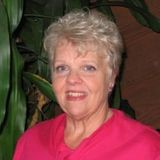
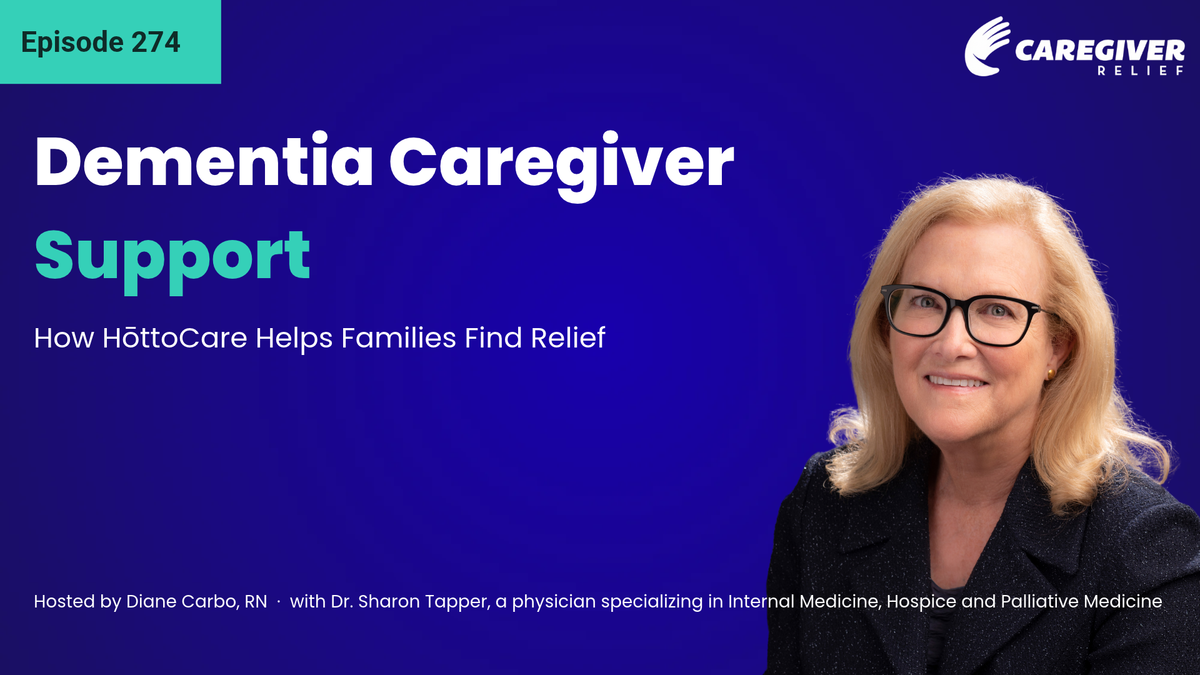
In this episode of Caregiver Relief, host Diane Carbo, RN speaks with Dr. Sharon Tapper, a physician board certified in Internal Medicine and fellowship trained in Hospice and Palliative Medicine 🩺. Dr. Tapper supports people living with dementia and their caregivers through HōttoCare, a physician-led dementia-care and caregiver-support organization.
Dr. Tapper explains how HōttoCare helps families through dementia education, care navigation, resource coordination, caregiver coaching, ongoing check-ins, and respite planning 🤝. She also walks through Medicare's Guiding an Improved Dementia Experience (GUIDE) Model and how eligible families may receive dementia-care services without out-of-pocket costs 💡.
🔥 What You'll Learn in This Episode
- 🧭 What a Dementia Care Navigator Does: Having one trusted person help coordinate care.
- 😮💨 Less Stress Through Coordinated Care: How a connected care team can reduce caregiver overwhelm.
- 🚨 Support Before a Crisis: Why caregivers need proactive help, not just emergency help.
- 🌿 Respite That Protects Everyone: How respite care supports both the caregiver and the person receiving care.
- 🏛️ Medicare's GUIDE Program: Who may qualify for this dementia-care model.
- 🕊️ Palliative-Care Principles: How they can improve the dementia care experience.
📋 Episode Outline
- 🎙️ Introduction: Diane Carbo, RN on why families caring for someone with dementia often feel overwhelmed and unsure what comes next.
- 👩⚕️ Meet Dr. Sharon Tapper: Internal Medicine, Hospice and Palliative Medicine, and her work with HōttoCare.
- 🏡 What Is HōttoCare? A physician-led dementia-care and caregiver-support organization.
- 🧭 Care Navigation: Education, resource coordination, caregiver coaching, and ongoing check-ins.
- 🌿 Respite Planning: Why time away protects the caregiver and the person living with dementia.
- 🏛️ Medicare's GUIDE Model: Coordinated dementia services and caregiver support for eligible families.
- 💬 The Emotional and Practical Realities: Exhaustion, grief, uncertainty, and the value of one trusted guide.
- ✅ Key Takeaway: Supporting the caregiver is essential to improving quality of life for the person living with dementia.
🌐 Connect with Dr. Tapper & Resources
- 🏡 HōttoCare: hottocare.com
- 💼 LinkedIn: Dr. Sharon Tapper on LinkedIn
🎧 You Should Not Have to Navigate Dementia Alone
If you are caring for someone with dementia, press play on this episode today 💙. Then share it with a sibling, a friend, or a fellow caregiver who may be running on empty. Support is out there, and this conversation is a great place to start 🌟.
Podcast Episode Transcript
Diane: Welcome to the Caregiver Relief Podcast. I'm Diane Carbo, RN, your host. Caring for someone living with dementia is about much more than managing memory loss. Family caregivers frequently find themselves coordinating doctors, medications, home safety, changing behaviors, community services, and future care decisions, all while coping with their own exhaustion, worry, and grief.
Many caregivers never know where to turn for help. They may receive information from several different professionals, but no one is connecting all the pieces or checking on the caregiver themselves. My guest today is Dr. Sharon Tapper, a physician with more than three decades of experience caring for people living with serious illness.
Dr. Tapper earned her medical degree from the University of Maryland, and completed her internal medicine residency at UC Davis. She is board certified and holds fellowship status in internal medicine, hospice, and palliative medicine. After losing family members to cancer and becoming a cancer survivor herself,
Dr. Tapper shifted her focus from primary care to palliative and hospice care. She went on to create a home-based palliative care program designed to meet the needs of seriously ill individuals wherever they lived. Dr. Tapper currently works at HottoCare, a physician-led organization that supports people living with dementia and their family caregivers.
HottoCare helps families through dementia education, care navigation, resource coordination, caregiver support, and ongoing check-ins and respite planning Today we will discuss why dementia care is so difficult for families to coordinate, what a dementia caregiver navigator actually does, and how Medicare's GUIDE program may help eligible families access comprehensive support.
Diane: Dr. Tapper, thank you so much for joining me today. You spent many years working in primary care before focusing on hospice and palliative medicine. How did your personal experiences with cancer and serious illness influence the direction in, of your medical career?
Sharon: Diane, first of all, thank you so much for having me on the podcast.
I really am, thrilled to share, the GUIDE program and HottoCare with your listeners. so for me personally, I was a primary care physician and, developed a cancer, I had a brother die from, and I was in my early 40s. I had three small children. And, I thought about leaving, the profession altogether at that point.
But, after reflection, and, speaking with others, I decided to change my focus. when you get a serious illness, diagnosis, excuse me, a lot of things go through your mind. it can be dementia, it can be any illness. You kind of see your life in front of you. You do a lot of what if-ing, and there can be a lot of fear associated with a serious illness diagnosis.
So I decided to really, go after that fear by, becoming a hospice and palliative medicine physician and working in the field to help families, and their loved ones cope with a serious illness, all the aspects, the social, emotional, physical, spiritual type, issues that can come up when someone's facing a serious illness.
And so it's been very rewarding for me and, I felt very honored to be, able to develop the program that I developed where we could go into people's homes, with a team that included nurse, social worker, physician, chaplain, and really help people wherever they were, feeling sick and, suffering.
Diane: Well, that prepared you very well to work with HottoCare. I think anyway, 'cause when a family first receives a dementia diagnosis, they're often given very little guidance and, about what comes next. So what are some of the most common challenges families facing during those first weeks and months and year, after a dementia diagnosis?
Sharon: I think, really what happens is, again, there's a lot of fear. You're not sure what comes next. You're not sure what your options are for treatment for care. You know, you go along in life and you have a vision of how you think your life will be, and then you get a diagnosed with something serious, and all of a sudden, I would call it the road less traveled.
Your, life takes a different, path, and it's unknown. You had in your mind planned, your future, and everything's up in the air at that point. It's sort of like, "What's going to happen now?" how will my loved one, what kind of care will they need?
How will we be supported, financially? What's going to happen socially, All sorts of, what can I expect down the road as far as the seriousness of the illness, and how it might progress, and what are my treatment options? I mean, I could go on and on, but there's so, so much of that happens when you get a diagnosis.
Diane: Sadly the majority of PCPs out there have no absolute little to no knowledge about dementia. And there is very little guidance or support from the front end, primary care end of, when you get that kind of diagnosis. I find so many still feel lost and, when they come back from their PCP and the PCP, says, that everything's okay, they're normal.
And I'm like, "No. Not when you get a dementia diagnosis." And even wandering, I've had issues with clients, that the doctor said, or, and the nurse in the room would say, "Oh, don't worry about it, Just, keep the doors locked." It doesn't work that way with wandering, So I'm really excited to learn about what HottoCare is and why its model is different from traditional doctor's office, home care agency, or even short-term case management.
Sharon: Great. I want to preface the description of HottoCare by saying right now there's between 6 and 7 million people living with dementia in America, and they have about 13 million caregivers that take care of them. They're unpaid which, translates into hundreds of billions of unpaid work that's being done by these, what I call, heroes of the healthcare.
I consider the caregiver and the, home health aides to really be the heroes of, healthcare in my experience.
Diane: They absolutely are.
Sharon: You know
Diane: Absolutely
Sharon: two-thirds of the caregivers, are women that care for people with, dementia. And, 30% of them are over 65. So it's sort of, here you are, thought you'd be retired, and you're caring for a loved one, with dementia, or you're working with a family caring for someone with dementia.
So it really crosses the whole spectrum of people. So the history of HottoCare is really about the history of the guide program. And Medicare, shockingly, I think had a aha moment, through their, Center for Medicare and Medicaid Innovation. It's called CMMI. And, decades of research have shown that if you support the caregiver of the person living with dementia number one, that's probably the most important way you can support that person living with dementia
Diane: Amen
Sharon: to support the caregiver.
And it turns out when you support the caregiver, you defer transfer to a higher level of care, like a nursing home or some other place by on average two years. So that saves Medicare a lot of money.
Most people want to stay in their home anyway. I'd say 97%
Diane: Exactly
Sharon: if you do the surveys, want to stay at home. And so this, if you're supporting the caregiver, you're helping that person stay at home longer, and you're helping the caregiver, be able to cope and manage caring for somebody with dementia.
The thing about dementia is that the trajectory of the illness, in other words, the timeline of the illness between diagnosis and when somebody passes is, can be very long.
It's not a curable disease, unfortunately. But, we do have some treatments that can slow it down, but it's, Alzheimer's disease, which is the vast majority of dementias, there are other types like frontotemporal, Lewy body, vascular, and some dementias are combinations of those.
But for the most part, we really don't have a cure. And it has, a very long time that you're caring for someone, and it may start off as mild, then progress to moderate or severe, and the needs of that person, get, more complicated. And, the caregiver, is such a long commitment to care for those people.
So Medicare, Basically created this program called the GUIDE Program. It's called Guiding, an Improved Dementia Experience. That's what it stands for, and people in your that are listening can Google that, Medicare GUIDE Program. our program right now is in the state of California. We're actually in the entire state of California.
There are about 300 GUIDE programs nationally, and what they do is they offer support for that caregiver of the person living with dementia.
Diane: That's a concept that the majority of my caregivers have never heard or experienced. It's sadly been one of the biggest missing pieces. So I'm- I'm shocked that, Medicare actually is acknowledging that we need to protect our caregivers because, they're becoming seriously ill and dying before the person they're caring for passes.
So tell me, what is the eligibility, for the, GUIDE program?
Sharon: So let me tell you a little bit about the GUIDE program.
Diane: Yes, please.
Sharon: And, first of all, you can go to our website, hottocare.com, and you can read all about it if you'd like.
Basically, it is a multifaceted program that includes, help with diagnosing dementia or staging dementia if needed. We can do the, a clinical component where we have physicians or social workers or nurse practitioners available if needed. We really try to work with a person's regular medical team.
Our goal is not to take over the care of the patient. It's to augment or supplement or support the care they're already receiving. So we have that component, and then there's the other component which we have care navigators that, have A roster of people, caregivers they help. And we have support groups, we have education, there's monthly check-ins.
There can be a home safety assessment that's done for the family. and we have a care plan that we write that we share with the family and the regular medical care team. And, the, biggest bonus that Medicare is offering, which I know sounds too good to be true, but it's really true, is that they offer money, that they give to us to contract with home care agency or adult day programs that totals between 2,500 to $3,000 a year, and it's a use it or lose it benefit that, renews every July 1.
And that, basically translates into 19 four-hour sessions at home of home care or 25 days in an adult daycare center for that person with dementia. So it doesn't sound like a lot, but it's free to the family. All the things I'm talking about with this program are completely free for the family, and that
Diane: Even if they're on Medicare Advantage?
Sharon: So that's what I was going to get to. Okay. The eligibility.
So the eligibility right now is for people with traditional Medicare.
Diane: Okay.
Sharon: And, with or without Medi-Cal, they can be Medicare/Medi-Cal patients. They, right now Medicare is not opening this up to Medicare Advantage. My hope is in the future that will be, offered because it's such an important service.
Medicare, so when, somebody is ... What happens, if you're not sure you're eligible, you can go to our website hodocare.com, and it says, "Am I eligible?" And we will check that for you, 'cause a lot of people don't know if they're eligible.
Diane: Yes.
Sharon: You don't need a doctor's referral. Anybody can refer. We prefer to have the caregiver, be the one to, sign up because many times the person living with dementia just doesn't have the wherewithal to do it on their own.
Yeah. Yeah. So we prefer to have the caregiver's contact, to find out if people are eligible, and they can, again, check our website or also they can text the word hi to 76dementia. That's the other way you can get into the system if you don't want to use your computer or your phone, other than to text sub hi, the word hi to 76dementia.
But we will check your eligibility. Once somebody's deemed eligible- There's some series of forms that are filled out that Medicare requires. They take about 20 minutes to fill out.
And again, it's all done virtually. The links are sent, they're about five minutes a survey to your, cellphone or your computer.
And if people don't feel comfortable using that technology, then we can arrange for a human to help fill out the forms. The, the forms do things like, check the stage of dementia.
Sharon: Cause dementia can progress. It checks, this level of stress in the caregiver, things like that. And Medicare is following those metrics.
They want to see that caregiver quality of life improves. That's one of the metrics they're following. and they of course, they look at things like total cost of care. The, the idea is if you're supporting the caregiver and they have a backup person or you know, team to call 24/7, that you don't necessarily take somebody to the emergency room or they may not even need to be hospitalized if you have that backup system.
So in any case, that's how you would enroll in the program. Fill out the forms, then we submit every two weeks to Medicare, and believe it or not, it's a one week turnaround. Can you believe Medicare is gonna let us know within a week if
Diane: Be still my heart.
Sharon: But yes, they really want this program to be successful.
And, Dr. Yumi Taylor, who, is our founder, I just have so much respect for her. She has not only a degree to be a internal medicine physician, but she has a degree in clinical informatics from Stanford, and she has developed an extremely elegant system that works virtually, to get people onboarded and to do all the, bells and whistles and, you know, T-crossing and I-dotting that Medicare requires.
And she has really developed an incredible system which has allowed us to spread so fast throughout the state.
Diane: Yeah, dealing with the government with the regulations and, it's very challenging, and if you have just one word misspelled in an important section, it gets sent back to you.
It's very challenging. So I really appreciate that somebody took the time to create a system that, tries to encourage movement forward.
Sharon: Yes. Yes. And it works. And we have so if somebody is, is deemed eligible and they go through those things and get approved by Medicare, the, our care assistants help people onboard that way, and then they're assigned a care navigator, and that care navigator is the person that, It just helps them navigate the, any problems they might have and escalate them up to the clinical team if necessary.
We do, like I said, a care plan, which is a plan for if your listeners don't know what that is, it's a plan, just a plan of care. So it's just has some information about the person living with dementia, about their caregiver, what their needs might be now and potentially in the future.
We also have access to prescription information, so we can see the medications the person living with dementia has been prescribed, and 100% of, the people we're enrolling need to have their medications, reconciled or revamped. They need to have some stopped, they need to have some doses changed, and occasionally medications added, and that's a big deal because lot of times if you're on inappropriate medications, it can make the confusion worse.
It can also create a unsafe situation, for example, for falls which is a big issue for people as they're getting older and in the dementia population. This medication reconciliation is what I would call it, is wonderful. We always communicate with the prescribe, the, the prescribing, clinician when we wanna make a change, so we're in communication with the regular medical team.
Diane: I love that because one of the things I tell every senior is you should every six months go, when you at the doctor's, have them go over your medications. Because we don't have a system right now, I know it's going to change, but we don't have a system right now where your specialist communicates to the primary that they've given medication and changed it or whatever.
And what I find after my decades of nursing is doctors continually add on meds, but they never subtract. And I really encourage families to, members to say, "Hey, what can we eliminate or even decrease the amount?" Because as you get older, you don't, you detoxify your medications differently, and you may not need something, at that dose anymore.
You may need it at a lower dose. But that is something that is ... But, in all honesty, 15 minutes is all a doctor gets, to be reimbursed, so we're really, really being challenged here as to getting good care. What I love is you also have a dedicated dementia care navigator.
Sharon: Yes.
Diane: That one consistent point of contact is, can reduce stress.
I know I did care management, catastrophic care management, and I was the point of contact. You get to know your families, you get to know what's going on, and it, when you're that familiar, with the case, it just makes things and the communication go so much better and easier. So I really like that, approach.
Sharon: Yes, we have, care navigator, well, we have huddles multiple times during the week just to talk about cases. We have, care navigator educational sessions and special training that's done. For example, one of the big stressors for caregivers are behavioral issues.
Diane: Yes.
Sharon: Absolutely. Either, say, wandering or aggressive behaviors or inappropriate behaviors.
Diane: Yeah.
Sharon: And, so being able to coach that navigator, that, caregiver on how to deal with and deescalate those issues and, is a huge, burden that is taken off their shoulders, and knowing they have somebody to call, you know, if there's a problem.
We always try to do non-medication ways of mitigating
Diane: Absolutely ... behaviors.
Sharon: And then if we have to use medications, but we really want to teach that caregiver those non-medication ways of helping to, deal with the various behaviors that can happen as somebody's, living with dementia and it's progressing.
Diane: So the best part of HottoCare's guide services is the respite care. That is so desperately needed, and, it's never, it's hard to find affordable inexpensive respite care that's reliable. So I love this concept. Could you tell us more about that? I know you mentioned it earlier, but, I'd love to
Sharon: Yes, I'm happy to mention it again.
Because like I said, when I first heard it, I was like, "This has got to be a scam. It can't be real." But
Diane: Yep, yep it is real.
Sharon: Medicare's actually giving money for people to get, these caregiving help, which is so important. So they give, once a person is deemed eligible, they have to have moderate to severe dementia, so it's not for somebody with what's called mild cognitive impairment or mild dementia.
And as I said, most dementias, especially Alzheimer's, will progress to a moderate
Diane: Oh, absolutely
Sharon: to severe over time
Diane: It's just a matter of time.
Sharon: Yeah. but, and we actually will stage people when they, sign up for the program because many times they were given one diagnosis, but they've progressed and they've not necessarily been retested. As you as, I just wanted to go back to your point, having been a primary care doctor and now with computers they say you have to work an average of 27 hours a day to get all your work done
Diane: Yes
Sharon: between the computer and seeing people.
Diane: Yes. So, we all know there's not 27 hours in a day.
So my heart goes out to those primary care,
Diane: Yes
Sharon: clinicians. But, and so they don't necessarily always have time to do this testing. We're able to do that. Absolutely.
Diane: Yeah.
Sharon: Not only that, but the neurologist and the geriatricians, we're getting people sent from major universities around here in Northern California because their clinics are overrun.
They can't handle the volume of people that need the service, so I just wanted to put that in there. But in any case, the respite what respite means for people that don't understand, 'cause, even our care navigators we had to explain the word respite. Respite means rest, that you're giving the caregiver a rest, and it's paid for by Medicare. They give us that money, and then we contract with home care agencies or adult day centers. There's a vetting process that they have to go through that Medicare requires. Having said that, we, like I said, we're statewide at this point, and if we have, a person living with dementia that already has a home care agency, we will do our best to, vet them and get them in the program.
People might not understand the difference between home care and home health.
Diane: Yes.
Sharon: So home health, and Diane, you could probably explain it too, but home health is where you actually have somebody like a nurse come into the home, deal with things like medications, wound care, all sorts of different things.
A home care agency is someone that can help with what's called activities of daily living bathing and dressing and cooking and those types of things. But, and certainly be a companion if that caregiver wants to go out or even go away for a weekend if they want to consolidate their hours and do it that way.
So, that's what a home care agency does. And then the adult day programs are places where your loved one or the person living with dementia actually goes to stay for the day, and they have activities at these centers for people specifically with dementia. And some, it depends on the area, some of these programs will, provide meals and transportation to and from, and it just depends on the particular area that you're in as far as the adult day center.
Diane: I'm curious. Is anybody offering nighttime care yet? Like instead of daycare, nightcare
Sharon: You know, it's, certainly possible, and yes, the answer is yes. It's, you can use those hours however you want. And you just work it out with the home care agency. Now you know, people have said to me, what happens after those hours are used up?"
Well, it's 19 four-hour sessions. It doesn't sound like much, but it can be a huge, advantage to that caregiver. After that, it's paid out of pocket is what happens. Yeah. Families will pay out of pocket.
Diane: Yeah.
Medicare has moved to a cost-sharing platform. In fact, in the home health, industry Medicare's no longer paying for a nurse to go into the home like they used to, and, we're seeing a lot of unsafe discharges to home. And that nurse was the last frontier, and, it was so important that the nurse see, because they're educating, they're assessing, they're communicating the needs and making recommendations.
That piece is missing right now in our healthcare. So when I hear that Medicare is actually paying for something where, that people are getting respite, I have hope.
Sharon: Yes. Me too. And you know, you learn so much. I'm sure you know this, Diane.
Diane: Yeah.
Sharon: When I, developed the palliative care program and, you know, I worked on the team as well, one of the teams.
Going into the homes, you learn so much about a person when you see their home environment. we were talking about medications later, earlier. I remember going into one woman's home, and she had two brown garbage, I mean, grocery bags filled with medicine bottles. And, that's what she was trying to navigate all of those bottles in those two grocery bags. I will never forget that at, 'cause who knows whether she ever brought that
Diane: I did home care
Sharon: into the doctor's office. What?
Diane: I did home care.
Sharon: Yeah.
Diane: So, who knows? So I've seen those things.
Sharon: Yeah. If she ever brought that into the doctor's office, you never know.
And of course, that's so unsafe, and many of them were expired or you know, it was just, So those are the, that's just one little example of the types of things you can see
Diane: Yeah
Sharon: going into that home. So the home care agency piece of this is, very important. and a home safety assessment, as I mentioned earlier, can be done by these home care agencies.
They can go in and do it.
Diane: I love that because it's not getting done before a person's going home from the hospital. I mean it's horrendous. And it frightens me because I've seen people that need a hospital bed be sleeping in a chair, an uncomfortable swivel chair, because the bedroom's upstairs, the accessible bathroom's upstairs.
They have steps to go to, and they can't do the steps, and there's nothing on the first floor. You know, we're being challenged right now. One of the things that I recommend that every, caregiver does is create a care team partner approach, and have people that can provide, care, not to your family member, but practical assistance to the caregiver.
Have somebody. Ask, and people will help if you just ask. be specific about what you need. So you ask somebody to take the dog to the groomers or, "Can you bring a meal, once or twice this week?" Or, "Can you sit with Mom or Dad," or whomever they're caring for, "for a few hours and bring an activity so that, he can be interacting and I can run to the doctor's or something?"
There's always different ways you can get respite care, but you have to be creative about it. And that's why I love this because you're actually having respite care.
Sharon: Yes. And you're not, and Medicare is providing it through HottoCare or through a guide program. I want to comment about that, Diane.
Because I have, again, dealt with so many families facing serious illness-
Diane: Yeah
Sharon: And needing, having caregivers. And like I said, two-thirds of the caregivers for people with, dementia are women. And as women, and I'm sure there are lots of men out there, too, so I don't want to, exclude men.
But for many caregivers they don't know how to ask for help. They're used to serving-
Diane: 100%
Sharon: they're used to giving, and they're not used to receiving. Okay?
Diane: Yeah. Yeah.
Sharon: And one of... I have to tell you, and as a medical provider, when I got my cancer, it was very, it was very hard for me to receive, 'cause I was used to being the healer and giving, and then all of a sudden I had to receive.
Diane: And, I'm getting goosebumps here. I saved all the cards and well wishes I got, 'cause I considered those, them sacred.
Sharon: Yes.
Diane: And almost a prayer that people will send you their good wishes. And so when I sit down and I talk with people that are caregivers, I try to explain that Part of their learning, for life will be to learn how to receive. And that it will be a gift. That it will be a gift if they can actually become the receiver.
Diane: Yeah.
Sharon: Because people want to give.
Diane: Yeah.
Sharon: And it's a show of love and caring that they have- It is ... for you as the caregiver. So it's a way that you're giving them a gift by letting them give to you. And so that, and that's really what life's about. It's about love and caring and you know, making, helping somebody be less stressed if you can. So that whole part about accepting the care, and accepting the help I totally agree with. What I recommend, I have, someone I know whose husband has dementia, and he was just diagnosed with acute leukemia, so she's got
Diane: Oh
Sharon: multiple things going on here. So I advise someone not the, not her, someone else to do that coordination for her. Yes. I advise either a, a adult child or a good friend to do that organizing of. And I ask her, I go, "Just make a list of things you think you might need, even if you don't need them now.
A meal" a ride for you to, for your, spouse to the doctor or to the pharmacy or wherever. Or, you want to go take a walk or something. So that you can make a list and you know that you have so many people that want to help. And just put that out to the universe, and I'm sure people will want to help.
But like I said, it's really, really difficult for people to make that transition into receiving rather than giving, especially caregivers.
Diane: Sharon, I am 73 years old. I started caregiving at a very young age. I've got a big Irish family. I took care of my mom with her, between the age of 17 and 19.
She had cancer, and I cared for her. Of course, I had, I was the oldest of four, so you're always caregiving. Went into nursing, so I'm also a professional. So you know, it's always me giving, giving, giving. And when I was injured, it's a personal growth experience. You have to say, "Oh, suck it up, buttercup."
You know, you've got to ask for help. And one of the things that, we have lost in our culture is a sense of community. And, so that's why so many seniors or aging adults are thinking, "I don't want to become a burden to my family." And if you had a sense of community, like I worked, in Philadelphia.
Outside of Philly is a Quaker community, and they are very, it's an inter-, generational living system, and they have a nursing home with a daycare in the middle of it so that they can actually see the children during the day. And if things go well, the kids can come and visit with the elderly or they'll have activities together.
And the whole community, even in the nursing home, they're passing water. They sit vigil when somebody dies. Nobody is looked upon as a burden, and that's the way our culture should be. but it's not, You're getting older, everything you're doing is looked at as you're, it's a burden on the society.
It's a burden on the Medicare system. It's a burden. And we have to change our thoughts process on that.
Sharon: Yes. I think, having done palliative care for so many years it's such a common theme.
Diane: Yeah.
Sharon: People don't want to be a burden to the ones they love, and I actually have that conversation with families many, many times.
What I say to people is that, the pain you have is from the love you have.
Diane: Yes.
Sharon: And if it, the tables were turned, would you feel, you know, would you want your loved one to feel, excuse me, that they were a burden? And the answer is always no, I wouldn't want them to feel that way. I can say, though...
Start over.
I can say that, when caregivers get stressed it wouldn't be unusual for them to consider the person they're caregiving, they're caring for, a burden, because they don't have an outlet to help with their stress.
Diane: Exactly, 100%.
Sharon: And they can get a lot of anger, and they can get a lot of depression or all sorts of different emotions. That's why this program is so great, because they have a place to turn to help them with that. And again, it's because it's such a long time that they're caring for the person living with dementia.
Diane: The average journey is five years, but some go ... I have one of my sisters-
Sharon: actually 10 to 12 years, yeah.
It can be
Diane: For dementia now, 10 to 12?
Sharon: Well, it can, it's a range. And again, there's different types of dementia.
But it can be from, it can be five to 10 years. It depends. You know 50% of dementia is never even diagnosed.
Diane: Yes,
Sharon: yeah. So many of it, many times it's not even diagnosed. But, it depends on what you read, but it can be five years.
It can be up to 10, 12 years even.
Diane: Well, I have a client whose dad had 20 years. She was home. He was very ... It was a slow progressive dementia, and he was still able to go to his, AA meetings with his buddies even up until the very last few weeks before he passed. and it was just a very slow progression of the disease.
So she was in that home for 20 years.
Sharon: Yes.
Diane: And that, it's a long time, and no respite. No respite.
Sharon: Right. Yeah.
Diane: And it's really, really hard. the respite was when he would get out to go with his buddies, which was, like, every other week, and it was just for two or three hours. But,
Sharon: And wouldn't it be great if she could at least get 19 four-hour sessions or-
Diane: Exactly.
Sharon: or a, a weekend or whatever, you know a full day, to go here or there. That would be huge. Yeah.
Diane: Well, you know, it's the first you're actually providing the first step towards relief. And that's wonderful. One of the questions I want to ask is, dementia, there are so many different behaviors that happen, and one of the things I have a hard time with is the family members have no idea how to deal with these behaviors.
So you have this, dementia navigator, care navigator. Do they help them with
Sharon: Yes
Diane: that type of thing?
Sharon: Yes. We have, like I said, our navigators are trained and in dementia care. Yeah. And so they have tools that they use, to help train the, caregiver on how to deal with difficult behaviors.
And, there's also educational material that the family can have access to as well, the caregiver. If they also prefer or want both, they can have both. There's a whole library of educational materials. And, and again, it's somebody they can call and it can be monitored. And, as I said earlier, we really try to do non-medication behavioral, dealing with behavioral issues first.
Diane: Yes. I agree.
Sharon: And there's lots of things that can be done non-medication wise, and then if a medication is needed, our, medical team will get involved and again, coordinate with that person's regular medical, team that they have, their, you know, primary care or neurologist or geriatrician, whoever, or all three sometimes if needed.
And we have access, to the medical record. In California, where a lot of, people are on Epic or Cerner are the two big electronic records. But we have access to that. We have access to their prescriptions, as I said earlier, so we can see all that. And so all of that is coordinated with the, regular team.
Diane: That's awesome. That's really awesome. One of the... I had a situation where a gentleman had his mother in assisted living, and she had, was in the middle stages of dementia, and she started becoming aggressive and, wild. And it went on for a period of two weeks where the facility told her, told them that they were gonna have to find placement for her.
And one of the thing, the first thing I said to him is, "Frank, did your mom get tested for a UTI," urinary tract infection? I said, "Take her to the ER because she's having these behaviors. if it's not a UTI, then have her ad- ask to have her admitted to senior behavioral health." it turns out to be a UTI, and she was septic.
She was going septic. And there's things like that
Sharon: Urinary tract infection, yes.
Diane: Yes.
Sharon: And so things like that, Diane, and pain. Yeah. Yes. Pain can manifest the same way.
Diane: Exactly, yes.
Sharon: And so sometimes just giving somebody Some, acetaminophen or Tylenol to see if it helps.
Can also, and you know
Diane: Absolutely
Sharon: it may be the progression of the disease, but that's what our navigators are trained to look for other causes.
Diane: And that information is priceless. there's no price you could put on somebody asking the right questions and giving the caregiver guidance to find a solution to a problem, so I love that.
Sharon: Yes Yes
Diane: Dr. Tapper, before we close, is there one thing you wish every family caregiver understood about caring for someone living with dementia?
Sharon: Well, first of all, I'm going to, tell you what I wish the, the medical team understood. So I wish the medical team understood that the relationship is not a dyad relationship, patient clinician. It needs to be a triad, relationship with patient, or person, medical, personnel and caregiver. You need to have, especially when you're living with dementia, you need to have that caregiver there in the room, or on the video visit because that's where you're going to get really what's going on with that person living with dementia.
And it can help your 15-minute appointment to have
Diane: exactly
Sharon: the caregiver there. It's not going to make it, longer, it's going to make it shorter. So that's my one message to, anybody from the medical profession listening. For the caregiver, my message is, that it's a good thing we're now recognizing, meaning Medicare, that you are valuable and that you make a big difference in the lives of the people you care for.
And, Medicare wants to support that through the guide program, and we at HottoCare want to implement that guide program and help caregivers as best as we can. There is help out there. You're not alone. That's my big message to the caregivers.
Diane: Thank you for sharing your experience, your knowledge, and helping families understand that dementia caregivers do not have to manage every part of the care alone.
I love that. So how do people reach you, and how do they get more information on HottoCare?
Sharon: So we have a website, hottocare.com. You can just put that into your browser.
You can, if you want to see if you're eligible, like I said, we're currently in the state of California. We are looking to expand, but right now we're in the state.
You can text the word hi, just H-I, to, 76-DEMENTIA. That's also a phone number you can call, 76-DEMENTIA. Or you can again, go on the computer and just type in Hotto, H-O-T-T-O care.com and find out about our program. If you're not in California and you want to know about other GUIDE programs, you can, just Google Medicare GUIDE, G-U-I-D-E, and you can get a list of, there, like I said, there's about 300 organizations nationally that were picked to be, GUIDE, program implementers.
Diane: Wonderful. Thank you so much for your time. I really appreciate it. I think my listeners, will be calling, looking for GUIDE programs. And it's a good thing.
Sharon: That's our biggest challenge, Diane, is getting the word out. So once people find out about it
Diane: Absolutely, absolutely
Sharon: They really said, "I can't believe this is too good to be true."
So thank you so much.
Diane: Yeah. Well, thank you for sharing. to my family caregivers out there, you are the most important part of the caregiving equation. Without you, it all falls apart. So please learn to be gentle with yourself. Practice self-care every day, because you are worth it.
Caring for a loved one can be overwhelming — but you're not alone. If you have questions, big or small, our expert team is here to help.
👉 Click here to Ask the Expert
Our Resource section can help you find the information and tools that you need. We have courses, videos, checklists, guidebooks, cheat sheets, how-to guides and more.
You can get started by clicking on the link below. We know that taking care of a loved one is hard work, but with our help you can get the support that you need.
Click here to go to Resource Section now!