Still Here, Still Me: Embracing the Person Living with Dementia Right Now with Marilyn Raichle - Episode 172
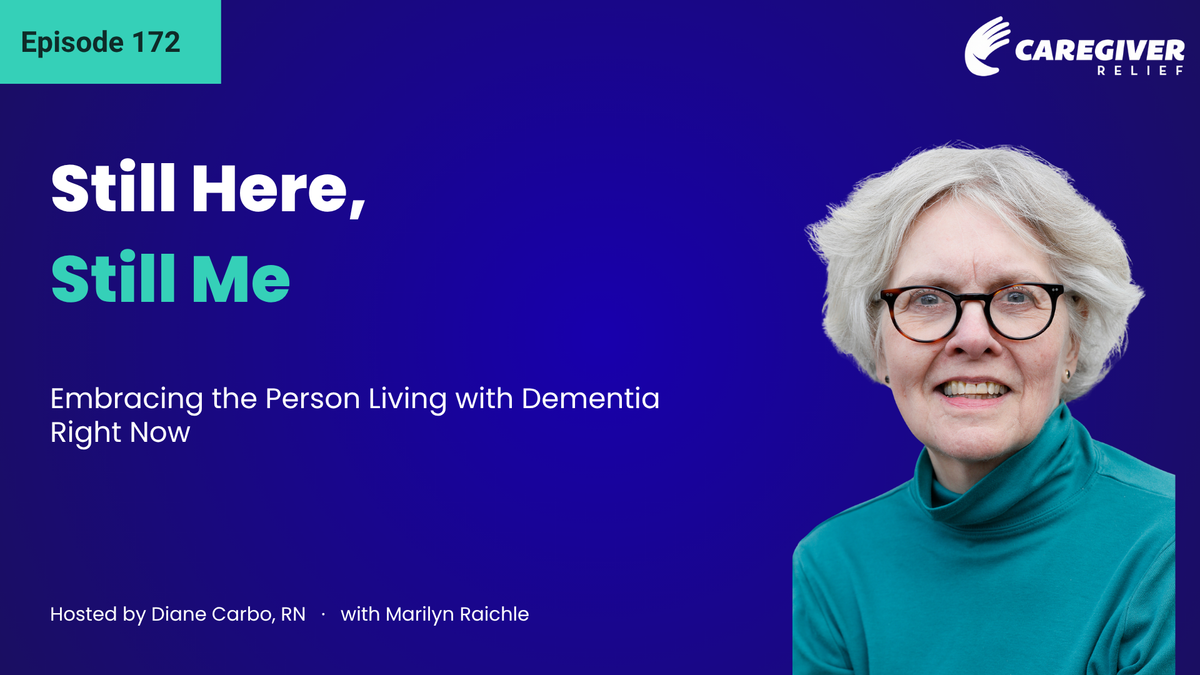
In this deeply moving episode of the Caregiver Relief Podcast, host Diane Carbo sits down with Marilyn Raichle, author of Don’t Walk Away and founder of The Art of Alzheimer’s. Marilyn shares a radical transformation: how she went from a daughter planning to "walk away" from her mother’s diagnosis to becoming a "care partner" who discovered a world of joy, laughter, and hidden gifts.
If you are feeling bone-tired, grieving a loved one who is still sitting right in front of you, or struggling to find a "spark," this conversation is the breath of fresh air you’ve been waiting for.
📖 Episode Highlights
- The Promise to Walk Away: Marilyn recounts the moment her mother asked her to "walk away and live your own life" if she ever got Alzheimer’s—and why Marilyn ultimately couldn't keep that promise.
- Art as a Bridge: How a simple painting class revealed a "stunning" creative side of her mother that Marilyn never knew existed, proving that the person is still there, just expressed differently.
- From Caregiver to Care Partner: The "aha moment" when Marilyn realized that her own energy and presence directly impacted her mother's well-being.
- The Power of Play: Heartwarming (and hilarious) stories of playing Scrabble until age 96 and the famous "Silent Night" to "Polly Wolly Doodle" piano medley.
- Innovation in Care: A look at the Maud’s Awards, which celebrates the most innovative dementia care programs in the country, from youth-led art initiatives to "Meet Me at the Movies".
✨ Why You Should Listen
"Sometimes your brain just gets in the way." — Marilyn’s Mother
This episode isn't just about the hardships of memory loss; it's about the enduring humanity that remains. Marilyn reminds us that while we can’t change the diagnosis, we can change our perspective. By "hopping on for the ride" and entering their world, we find that people with dementia are still capable of giving love, teaching lessons, and sharing a deep, belly-aching laugh.
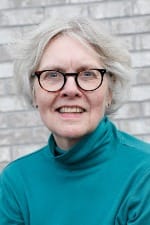
👤 About the Guest: Marilyn Louise Raichle
Marilyn is a dedicated advocate for changing the narrative around dementia. You can follow her journey and work here:
- Facebook: Marilyn Louise Raichle
- LinkedIn: Marilyn Raichle
- Instagram: @raichlem
💡 Marilyn’s Closing Advice for the "Bone-Tired" Caregiver
- Relax & Smile: They mirror your emotions; if you are calm, they are more likely to be too.
- Listen & Ask: Don't ask "Do you remember?" instead, ask "What do you think?".
- Share Joy: Find one thing you both enjoy for just five minutes a day.
Podcast Episode Transcript
Diane: Welcome to the Caregiver Relief Podcast. I'm your host, Diane Carbo, a registered nurse and fellow caregiver who's been right where you are. Today's episode is called, still Here. Still Me, embracing the Person Living With Dementia. Right now, my guest is Marilyn Rakel, author of the Beautiful book, don't Walk Away, founder of the Art of Alzheimer's and the executive director of MOD's Awards for Innovation in Alzheimer's Care.
Years ago, Marilyn's mom sat down and said, when Alzheimer's comes, promise me, you'll walk away and live your own life. Marilyn couldn't do it. Instead, she stayed and discovered joy, creativity, and a deeper love than she ever imagined possible. So if you've been mourning the person you, your loved one used to be, if some days you forget that they're still here.
Still themselves, still bringing gifts. You haven't opened yet. Lean in. This conversation is going to feel like the first breath you've taken in a very long time.
Diane: Marilyn, thank you so much for joining me and sharing your story. we were talking before this podcast started.
she's got some incredible information.
Marilyn: Wonderful to be here. Thank you.
Diane: Yes. Now before we dive into the heavier parts of the journey, can you take us back to the moment your mom first sat down with you and said, when we get Alzheimer's, just walk away. And what was going through your mind and heart when you heard those words?
Marilyn: there are five of us kids in the family, and we were all so young. I can't actually remember. I just remember going, yeah, that's true. we all decided that. Whatever mom said was fine and they were in going to be in a good place 'cause they were members of this fabulous assisted living facility, continuing care facility called Horizon House.
And so we all grew up just knowing that the, what we grew up with was Alzheimer's is like a death only, like worse than death. And you should walk away from it and you shouldn't think about it. Mom and dad are gonna be fine. So walk away and let them live their lives. Stay out of it. And that's how we all felt.
and I have a sister in New York, a brother in San Francisco, and the three other of us live here. And so when mom started to develop, memory loss, we all just thought, that's, that's fine. We'll just walk away. That's what we did. and it was only after the res and I. And I, I have to start right at the very beginning.
I was not a care family caregiver who had the toughest jobs on the planet. Yeah. They're operating without a net. I had a net, I had Horizon House. They were basically taking care of most of mom's care.
And I became the person who filled in. and so when I became the family caregiver, which is it.
A misnomer. I took care of doctor's appointments and I visited them once a week, maybe twice whenever I had to. to do what I could to keep them occupied. Dad was developing, Parkinson's, so he had his challenges, mom, memory loss. And and the reason this happened is that when I came back from graduate school.
In 2006, there were no jobs. 'cause it was during the recession. And that's when my family said, okay, we're gonna pull our resources, we're gonna give you some money and you're gonna do the family caregiver.
Diane: I have to ask you, you've been very honest about this, and you didn't wanna be a caregiver. it wasn't in your nature.
So what was the very first thing that made you realize you, you just couldn't walk away?
Marilyn: first of all, I couldn't from the very beginning because it was my job. And they were my parents. So there was no question that I, and plus I was being paid not a lot, but being paid so, okay. I couldn't, that's what I was going to do.
I didn't wanna be there, I didn't know anything. I didn't wanna know anything. But there I was, okay. And whenever I was there and doing what I needed to do. Mom's words were always in the back of my mind, walk away. I would always look at the clock. I was not a good caregiver. and so it was only after dad died that things changed and mom and dad had been married and best friends for 72 years.
They adored one another. And when dad died, mother was incredibly bored. And so I took her to this painting class that they, offered at Horizon House for people with memory loss. And I didn't expect anything. She didn't ex, she thought it was a stupid idea. And so I took her to this class and the painting was stunning.
I had no idea it was this painting of flowers and it was so beautiful. And that's. When I got hooked because I wanted to see, first of all, I had to take it because otherwise she'd throw it away. So I would go to the painting class. I would take her to the painting class. 'cause if I didn't, she wouldn't go uhhuh.
And when I, the class was over, I would save the painting that she would throw it away. But they were always so interesting. they were really beautiful and some, then she started to transform things so that. Prim Roses became this little creature with legs and you never quite knew what was she thinking when she did this?
It was so fascinating. So it was fascinating. Yeah. And and then of course I made a business out of it. I started the Art of Alzheimer's because every time I would show her mom's art to anybody, their first comment was always, I had no idea.
Diane: huh
Marilyn: And that's when I realized that Alzheimer's is scary and art isn't.
And art immediately cut through your fear and enabled you to look at it and be so interested that you might wanna learn more. And then you could have a discussion, but only after you hook them with something as fascinating as the art. And it could be music, could be all sorts of things, but with mom, it was her art.
and I will admit, for the first six months, maybe it was longer. I was more interested in mom's art than I was in mom, and that I would get there, I would take the art, and that I would immediately go back and start working to amplify its impact to a larger audience. And that's how it was for about, I don't know, eight months.
And then one day I noticed that her painting to me. Looked like it was deteriorating. It looked like she was losing interest. The same scratchy lines, the same colors, the same figures, and it started to look not like that. Fascinating stuff I'd been seeing.
And so I got her the day of the painting class early.
'cause at this point I was only going to see mom once a week at her painted class. Being perfectly honest and. I got there early and we did everything she liked to do. We looked at this, the view, we took a walk, we played Scrabble. We played Scrabble every day until mom died, and I took her to the painting class and her painting completely changed.
There were these warm animal images.
There were different colors, and that's when I had my aha moment and I went, oh, I get it. I play a role in this. We're partners in this. And that's when I moved from becoming a caregiver of someone who was, oh, poor thing, who needs my help to mom's partner, her care partner.
And from then on we were together building a life for both of us. And that's the moment that changed my life completely. it was. It was the best decision I've ever made in my entire life.
Diane: That's fascinating. 'cause many caregivers don't have the experience or see, but I have to tell you, Marilyn, one of the things I tell all my listeners is if you change your perspective, you change your life.
Yeah. And you went from, seeing somebody who's suffering from dementia to. Actually living with dementia and you're still finding little gifts every day within your mom that you and her connected. And I find that fascinating.
Marilyn: Yeah. And it was so much,so it got to the point where it wasn't that I had to see Mom, it's that I needed to see more that, and one of the, so I, the first thing of course I learned was to let go of the woman who used to be.
Yes. And to embrace the woman who's with me in the moment.
Diane: Yes.
Marilyn: And the other one was
to realize, I assumed that mother always was excited to see me.
Because after all, I'm her daughter. And then I realized that actually far more important to her were all her companions in assisted living. That she, in fact, had a new family. and fortunately for me, they were willing to accept me as a member of their family.
So I had six new moms and it was they were so wonderful and Mom had two best friends, Gloria and Kathleen, and, but all of these women were just so wonderful. And so I would get, I would now there every single day. and every single day I learned something and every single day I was happier.
it was just the once, they had a new member of the community and they wanted to introduce me to her, and they said, her name is Lauren. Her name was actually Flora. And they said her name was Flora. And I said, Lauren, and then they said, flora, and I said. Laura and they were very patient with me, and they finally got me to realize they were saying Flora.
And so mom and I were walking around the halls,a little bit later that day. And Flora came up. She was in a, had this delicious Italian accent and she looked at me and she said, do you know my name? And I said, flora. And she had this wonderful big smile and it was so happy. Oh, and so that just.
and you have to understand that I grew up in a family where the word love was never spoken. We just, it was an assumption. And I don't know if you're familiar with Scottish Calvinists, where emotions are basically an indulgence and
Diane: Yes.
Marilyn: Yeah. so we knew mom loved us because it was her job.
Diane: Yeah.
Marilyn: And that's all you really needed to know.
but it was never spoken. And now I was just surrounded by love. It was just such a wonderful, exhilarating experience and I got to actually experience love and express love without fears of being told and so it was just so every day I learn something about. How to best enrich the lives of people living with dementia.
But every day they were enriching my life too.
Diane: Again, change your perspective. You change your life. 'cause so many caregivers get stuck in that suffering mindset,
Marilyn: right?
Diane: And here you are looking for the good or the special moments in your day with your mom. I love that.
Marilyn: Yeah, and everything was special with mom.
playing Scrabble was special with mom. She was, and because we, she was very, I used to say about mom that she was distilled to her essence. But she was incredibly funny, very competitive, very needed friends, all sorts of wonderful things, and none of that changed. She was basically that same person, different expressed, but she was still incredibly competitive.
But as was I so playing Scrabble was like,
Diane: I was gonna win. I'm surprised she could still play Scrabble with her dementia, but it's a long term memory.
Marilyn: and she played, this was interesting. She played until she was. Almost 96, but at like in the latest years, later years, she couldn't make words.
So we would count the scores of the tiles.[00:14:00]
Diane: Oh, that's
Marilyn: but one day she really surprised me, and this is what I'm always reminding myself, you're always gonna be surprised, don't presuppose, because one day, and this was probably when she was 95, we were playing Scrabble and she was asking me if dog was a word. All of a sudden she stopped and she looked at me and she said, sometimes your brain just gets in the way and made JUUL on the triple.
And I do that to this day, that if I'm having a hard time coming up with a solution, I'll say, sometimes your brain just gets in the way and I will stop and I will just calm down, and then nine times out of 10, the solution will come to me. You always hear that thing about, you become the parent and they become the child.
Mom was always my mother, she was always teaching me something, always.
Diane: You're very lucky because so many of our caregivers, and I know you know this, with working with people, with, family members that have dementia, there are some that they just don't know. I've had men think that I was their wife when I was the nurse and, or an old girlfriend, and I always play along.
I just,
Marilyn: see. I always know who I was. Yeah, mom didn't always know who I was, but she was always happy to see me.
Diane: Yes.
Marilyn: And that was enough.
Diane: Yes. Yes. And I've had that experience as a nurse when I would go on to the dementia unit, the patients or the residents, whatever you wanna call them, wherever I was, whether in the hospital or in a memory care unit.
they just want,they like when you laugh, they like to hear laughter, they like to hear, see you, smile. And, and if you talk to them in a positive way, like we had one little lady in one of the units that just paced all day long. it was all day long and she wouldn't eat.
So we got the nurses, everybody had a drink for her, and every time she'd make a lap. We would go, oh, here and give her a drink. And even if she took us a Gulp or two, we got to keep her calories up. 'cause everybody on the unit agreed, we will offer her a drink. It was marked with her name so that she could go by a couple times if she didn't want it one time, she'd wanted another.
And you just have to do those kinds of things to suit instead of us. Changing, expecting them to change to conform, to whatever we're doing. We really need to work at changing their, changing for them to succeed in their environment.
Marilyn: Once I worked with the staff at, 'cause being of value was always important to people.
Yeah. And mom, something that was utterly abundant in people's lives. Especially if they were mothers. And so mom didn't have that anymore. And so I worked with the staff one day, we got to the dining room early for lunch and they had all these napkins and they put all the napkins on the table and mother and I said, mom, would you help us fold the napkins?
So she. Immediately, quickly folded all the napkins and put them at every table. and when she wasn't looking, I just, all the napkins and I went and threw them down on the table again and she did it again. but
Diane: I used to do that with towels and washcloths. When they're folding, they wanna fold, just unfold them and do the circle.
If they don't know and they're happy and busy, that's all that counts.
Marilyn: I turned to mom and I said, mom, you're the folder in chief. And she just beamed. and just little things, but it was always working with e everyone there and that, the people on the. the floor. So mom ate at the, what I called the ladies' table and they were like the men's table.
and I was telling you this earlier, that, that when I would get there, I would give everyone shoulder massages and I would always ask first. And I say, would you like a shoulder massage? And some would look at me like they didn't know what I was talking about. Then they'd see the woman next to 'em going, oh, and they, and so one day.
And I've been doing this for a long time and one day Gloria, who is one of mom's friends, came up to me and she said, do you tuck your wings in a handkerchief when you're not here? Oh, best compliment I've ever received in my entire life
Diane: that Oh my, that's a beautiful thing to say to you.
Marilyn: Yeah, and it was just, everything was like that.
It was just this peaceful, lovely. Place, and this is going to really, there are some people, when I would tell this story to most people when I tell this story, they, they look at I'm insane. to go to assisted living to visit my mom and looking forward to it as a place of peace.
They would just look at me like, I'd say and most,and I, again, that's why I say I'm not a home caregiver because a home caregiver is busy. They've got lots to do. And they don't have the support that they need.
Diane: Yeah.
Marilyn: and so it was easy for me. I was lucky. But then when I had a friend whose mother was starting to develop memory loss and I said, okay, see if you can do this.
Take five minutes, find one thing that the two of you enjoy doing. It could be simple, could be looking at the sunset. It could be taking a walk, could be listening to music. It could be singing. Just find one thing and try it for five minutes.
And you might find that you wanna do that again and again because you're going to see your mom or your dad enjoying life.
You're gonna see that joyous side of her, and you're going to want to learn more. You wanna see more? Because you know that whole thing about I want her back. You know that awful question. Do you remember or don't you remember? Which is the worst question on the planet? Because no, of course they don't.
Makes them upset. Makes you upset.
Diane: Yes.
Marilyn: Best to not go there. And so this way it was like it was easy. Mom and mother had this fabulous mother played the piano from the time she was like a little kid until Forever and. At a certain point, she couldn't read sheet music anymore, and so she came up with her own special medley, which she played without variation for years, and it started with Silent Night, and at exactly the same moment every single time, it would morph into Polly.
Wally Doodle all day.
I took videos of her doing this because it was so fascinating because she was, and her playing until she was, the day she died was impeccable.
Diane: Yeah. Wow.
Marilyn: And it was always in the last four years, it was always this medley.
Diane: Oh, wow. one of the things that you talk about is laughter. And I'm talking real deep belly laughter, which we all need.
And that became a daily part of, your days. can you share one of those absurd, hilarious moments, that still makes you smile?
Marilyn: Gosh, now I'm trying to remember one. Everything with mom made me laugh. gosh.
Diane: I think just the silent night into Pauly Wally Do all day is pretty hilarious.
Marilyn: That was wonderful. those things, see it was, it's hard for me 'cause they didn't like me laugh out loud. They made me laugh inside. They were just making me everything with mom.
Diane: Yeah.
Marilyn: walking, taking walks. Taking walks. She did, she was a power walker, so we would walk around. Halls every day. one day, one day she really shocked me.
'cause I would say, okay, I'll see you tomorrow. of course I knew she wasn't gonna remember that, but it was a nice thing to say, I'll see you tomorrow. And when I got there the next day, around 1130, the nurses said, oh, thank goodness you're here. She has been looking for you every single moment since seven 30 this morning.
She'd been making phone calls looking for me, and when I got to her room, she and Phyllis, her next door neighbor, were seated by the phone with a list. Phone numbers. And mom looked at me and said, oh, thank goodness you're here. I was so worried, and I never said it again.
Diane: yeah,
Marilyn: but it was, and we, she was just so wonderful.
And in our family, I was raised to win. I was raised to win. I was raised to beat other people. I was not raised to calm down or be quiet or think of other people I needed to win. And so all of a sudden I'm in this whole different world where it's all about being together with people and it's all about listening, and it's not about winning.
It's about listening and living. It was a huge. It was just a change for me. It was not the way I was raised. it was, and it was just learning how to listen. And the other thing I never learned how to do was to ask questions. I could ask questions if it would help me win, but that wasn't the point. That wasn't the point to listen to someone.
But Mother had this one thing she would say over and over again. She would say, what do you think Seattle's gonna be like in 50 years? Sometimes she would change the timeframe to 500 years or 250 years. And so at the beginning I would come up with ideas, may maybe it'll be like this and this.
And then I would change the subject. 'cause it was boring to me,
Diane: Uhhuh.
Marilyn: And then one day I realized she kept asking this question over the years. I thought, if she keeps asking it, it must mean something to her.
So for the first time. I said, what do you think it's gonna be like? And that was interesting because all of a sudden the floodgates opened and she started to tell me all sorts of things,that maybe we will all fly, there'll be no room.
And she said, maybe women will start wearing skirts again
one day. But because she,
Diane: of course,
Marilyn: she never wore skirts. But
Diane: uhhuh,
Marilyn: this was the thing with her grandmother. Would be upset that women weren't wearing skirts. So one day I organized all my brothers and my sisters and my nieces to visit her and we were all wearing skirts.
Diane: That's hilarious.
Marilyn: And I arranged for mom to actually be wearing a skirt.
'cause I got there early. She was wearing a skirt. And so we spent the afternoon together, all wearing skirts. And mother was so relieved when she could finally take the skirt off.
Diane: Oh, that's
Marilyn: funny. I miss you so much.
Diane: Oh, i bet you do. one of the things that you bring up is the community saved you, that sense of community. what does real community look like to you as a dementia caregiver, and how does one start building it if they feel completely alone right now?
Marilyn: that's the challenge because it's.
For one, if you're in an assisted living facility, it's easy because you can reach out, you can spend time, you can learn, and I wish, the one thing I wish assisted living facilities would do is to give you a lot of information about what they had been doing before they entered the facility. But they, their,
Diane: I agree.
Marilyn: If you had known, you would've had more questions to ask. So it's easy 'cause you have so many frames of reference and you have opportunities for people to do things together. In Seattle, it's easier because there are so many activities that are available for people who are living with dementia and their care and their families.
And so that there are lots of opportunities for respite. There are lots of, memory cafes there, there dancing programs there, there art programs, their music programs. There are lots of things. I would give people a list of all the resources in their neighborhoods, in their communities, where they can start to, reach out again for people who are juggling a family, a job.
It's harder. really hard. So it's okay, do you have a community, a senior center nearby? reach out and ask people's advice. And if one had, if I had a magic wand, I would, one reason I wrote the book was the art immediately connects with people, but the other was I wanted people to take a walk with me and mom and to realize that people living with dementia are valuable human beings.
Who need and deserve our support to live with happiness. making some various big assumptions there. Number one, most people don't think people living with dementia can live with happiness.
but if I did, they would realize, okay, these are wonderful people. They need support. They need all sorts of activities and programs that are available to them and to their families that will enrich their lives.
Diane: And one of the things, Marilyn, that most. Caregivers do not do, or they neglect is activities. They don't see the benefit of them. And in actuality, they can have somebody come with their parent, their parent or whatever, but I always encourage them to try to do things with them.
But that's a, that's when you can create connectivity. you see each other, you can have moments of, Of, that you'll put in your memory bank for the rest of your life. And it just, it makes everybody happy. And the other thing I want people to understand is you went in with a positive attitude of love, of caring, of wanting to be involved and caregivers are tired and worn out.
And a person with dementia senses your. Emotions. A sense is how you are feeling. And they pick up on them, they mirror it. And that is something that really people really need to consider when they're taking care of a loved one. Because if you take, approach it with soft and smile and of interest, they'll re respond in kind.
Marilyn: What That was the, one of the first lessons I learned was that I was, I called mom and I was telling her I was, had this horrible day at work and I was telling her about work and all of my problems, and I could just feel her
Diane: Yes.
Marilyn: Starting to pull away. And that was the last time. And I immediately changed the subject to the, something wonderful she was gonna have for dinner that night.
Yeah. but I never did it again. And I cried because. I couldn't do that with mom 'cause she was always this rock, this, But yeah. 'cause she absorbed all my anxiety and made her upset.
Diane: Yes.
Marilyn: and that's a, it's a, it's true. It's absolutely true.
Diane: So we do as caregivers have the ability to change ourselves, our perspective, our, the way we approach things and the way we respond to things.
It could immensely change how your person with dementia is going through their dementia journey. and I love that. I love that. Now I wanna talk a little bit about the art of Alzheimer's. you said creativity is blooming everywhere, for families at home that they're, they don't feel they're artistic or their loved one is an artistic, what can they try tomorrow, that will bring them joy.
Can you explain a little bit about your program?
Marilyn: the art of Alzheimer's and it's in a advance because of the 'cause of mods of words. And I wish I should bring it back because it was the art was so fabulous. and so I've saved it all. but the art that the ability to create something
in the moment was the most important thing that they are actually engaging. Something really important and enjoying themselves. With Mother, it wasn't the art that interested her, it was the people around the table. It was the ability to have a community that she was talking to. Sometimes she would finish early.
She was really fast and she'd sign her thing and then take a walk, and then she'd walk around the halls and see this group of people at the table and she'd say, may I join you? And she'd wanna do it again. So that, that just sitting down with your mom or your dad and painting something I don't think is, it isn't enough that it was that taking them to a place where they can in a group, paint something, they're all painting a model on a table.
singing is easier because, you can sing and listen to, your favorite songs and they mother can start singing. Once you started to sing something from a German opera and it was like, where did that come from? but so that singing is easy. art, I would sit down, I would see if you can find at your local senior center
Diane: A painted class. and. Maybe you could talk to your, and again, this is hard because if you're a family caregiver, you're busy.
Yeah.
Marilyn: Really busy, and you want to take someone somewhere. So starting your own one is not gonna be the best solution. But even sitting down together and with your mom and putting something on the table and then starting to draw it, let's say, let's draw this together.
And what was interesting, mom and I only painted together once. Because they were gonna, they threatened to maybe say she couldn't go anymore because she was starting to drink the paint. And so I would, I got there to make sure she wasn't drinking the paint. So I painted with her first time I'd ever done that, and at the end we'd looked at our paintings and she said, i like mine best.
This is the first time she had ever acknowledged one of her paintings as one of her own.
Diane: Oh wow. Her
Marilyn: competi most of the time. She said, i didn't do that Uhhuh most of the time. She said, i didn't do that
Diane: Uhhuh.
Marilyn: and so that was it. And after about a half an hour that she'd forgotten, but it was that moment that she was so competitive.
but painting together, and again, I think what went, I was always looking for, and what I found so interesting about the painting was that sense of total engagement. Once mom started to paint, she would start to hum. She wasn't. Paying any attention to me.
Diane: Oh, wow.
Marilyn: I wasn't, it was just that moment she was in the zone.
Diane: Yeah.
Marilyn: and so it can be quiet. It can be quiet, sitting down and painting something if your mom is just focused on the painting, that's great.
Diane: yes.
Marilyn: once the very last painting she did. 'cause mom had started to, wasn't that engaged anymore. She was 96. She wasn't paying that much attention.
And one day my sister Jeanie from New York was visiting and Jeanie's an artist. And so mom joined the painting class and she said, oh, look at all those circles. I think I'm gonna, mom was drawing circles because it was the, Model was a bunch of apples. Mom was drawing circles. Oh, look at those circles.
I wanna draw circles. And Jeanie started to draw circles and mother started to hum and Jeanie started saying, oh, those circles are so interesting. And she, Jeanie kept coaching her and at the end. Of the class or their time together. Mom didn't wanna stop painting and it had never happened before.
Diane: Oh, wow. Wow.
Marilyn: We just wanted to keep painting and that was really interesting. And and I'm not an artist. but we were both so engaged in our paintings when we painted together that was the important thing.
Diane: Yeah,
Marilyn: exactly. Was the activity we were expressing. And it wasn't about talking, whereas singing.
Diane: Yeah.
Marilyn: and drumming. I once took her to a drum circle.
Diane: Oh,
Marilyn: hopeful. And that was really interesting because mother didn't quite understand what everyone was doing there, drumming on things. But she is enjoying the fact that everyone was enjoying herself. But Phyllis, her next door neighbor who never spoke, ever.
She would too, but she would never speak and. It turns out, I wish I'd known this. She'd been a music teacher in her youth. And so she all of a sudden started to drum and she was so into it that she was drumming on my back.
Diane: Oh, wow.
Marilyn: and for the first time I heard her voice, she started to sing.
Diane: oh my.
Marilyn: So you never know what's going to tap into something deep that's been. that's not given a chance to express itself.
Diane: I had a patient in senior behavioral health, totally catatonic. She was laying in a jerry chair and I had, one, I had a hospice company come in that had a guitarist, and she came in and she started, I learned that this woman, the catatonic patient was, A gospel singer, and I will tell you, I got, and I still get goosebumps when I see it, because she had been with us for months, no response to anything. And all of a sudden, the, my, my friend with the guitarist playing and doing these gospel songs, and all of a sudden she starts singing gospel music.
It was like everybody stopped in the whole unit and they're all coming to see her to, like they couldn't believe it. But it was something deep within her, and that's why I feel like what you're saying is so important for my caregivers to understand is there are parts of your loved one that you think are out of reach, that if you keep trying long enough and find things that they used to do and love, you might reconnect with them in another way.
Marilyn: It's like that Naomi Fell experience where she was the woman who had been completely disengaged and never spoken. She started to sing a gospel song tour, and that all of a sudden she heard her voice and she started to sing with her.
Diane: Yes.
Marilyn: Yeah. It was,
Diane: it's touching and it just, tears come to your eyes sometimes when you see it because you just know that this is a moment that, It's a gift. And we've actually touched that patient and connected with them in some way that's probably been in there that needed to come out and didn't. and after that, we would play music with her. She would sing all the time.
Marilyn: Yeah.
Diane: It was just, we didn't know.
Marilyn: Yes, because, and then the other thing that, I should have mentioned this earlier, 'cause it was one of those moments where I just went, oh mom, you're so interesting that.
I had this huckleberry bush in my backyard and I would pick huckleberries, and I don't know if you've ever tried to haul a huckleberry. A huckleberry is like the size of a tiny little ball, and they have these little stems that you have to take off. And so mother would always wanna help. So one day I brought all these huckleberries and I laid out this damp cloth and I put them all on the cloth, and mother just started to haul them like this.
Diane: Oh
Marilyn: wow. She was so fast. She was so fast. So from then on I brought mother all my huckleberries to Hull and I would just, I would say, oh, thank you mother. That is Wonderful that you can do that. You can't, I can't do that.
Diane: we all have a need to feel wanted. We all have a need to feel loved, and we also need, have a need to be productive.
nobody wants to sit around and do nothing, not intentionally anyway. So if you do something that motivates, it's, they'll, it's amazing. Just amazing.
Marilyn: she, it was interesting. I also had this big dog. it was 98% wolf.
Diane: Oh, wow.
Marilyn: I know. I didn't know that at the time, but 98% Wolf and Mother would arrive and Betty or Chester would come out of this big, huge bark, and mother would immediately reach down and pet the dog and then spend the rest of the time at my place talking to the dog.
Diane: That
Marilyn: will be neat trying to feed it treats. She would always take a treat and try to eat it first. Oh, and then put it down. I said, no, those are for the dogs mom. And so she did this, and then when it came time to leave her, only goodbye was to the dog. Oh,
Diane: that was the most important person in her life in that time.
Marilyn: Exactly. it just so that it again, it, that's that moment of you learn to just calm down. Yeah. And listen.
Diane: Yes.
Marilyn: I used to tell people, just ask a question and hop on for the ride.
Diane: yes.
Marilyn: Because it's not about you. It is not about how you would feel if you had dementia because you don't, and you won't know how you would feel.
It's about them. and it was when I learned to just chill.
And not to try to change anything, but to just live in the moment.
Diane: Yeah.
Marilyn: Living in the moment. Accepting that. there's so much if. I so wish that every home caregiver had opportunities for respite so that they could relax, so that they could have opportunities to enjoy their loved one in a calm and wonderful way.
But also then just to relax.
Diane: you bring up a good point. One of the things I do is, and I'm creating a guide for this because we are in a cat, we're in a public health crisis right now, is to create, what I call, the caregiver relief team or the care team partner group. But you have people in your lives that will give, help you with practical assistance, Yes. Pick up the meds and stuff. But if you have somebody who does activities and loves to do activities, invite them in, ask them to help with your loved one and. I see that as a way of getting regular, ongoing respite for even if it's, if they come and say, stay with your loved ones, you can go to the doctors and they're entertaining them or whatever.
it makes your day, it makes your life easier. 'cause caregivers neglect themselves. Yes. And 63% of them become seriously ill or Die before the person, they're caring for passive because there's no affordable respite care. And, we have to get creative on how we find our breaks. And I think that activities is one of the most underutilized, processes that we use.
Marilyn: Activities and the opportunities to have a community in which they're doing them is even better.
Diane: yes.
Marilyn: Having friends, that's one of the things I learned really late on is that the understanding of the enduring humanity, the enduring personhood.
That, that they, things that never leave us, whether we have dementia or whether we don't.
Diane: Yes. Yes.
Marilyn: The need for friends and the need to, everything you're talking about, the need to have, laughter, the need to have value, the need to love and to be loved. Once I was visiting. And Suzanne was looking at this very lifelike doll and holding it in her arms. And I was going around and giving everyone their massages.
And I got to Suzanne and I said, with the doll with cheek, like a massage. And she pointed to its toes and together we massaged her teeth and the toes.
Diane: yes.
Marilyn: And again, it's like just go where they're going.
Diane: yes. Hey, it's not everybody that can play a silent Night into, holly Wally Alday.
So you just have to go with the flow.
Marilyn: Yeah. Yeah. It's just, and plus take pictures of it because it was so cool.
Diane: Absolutely. Absolutely. Now I wanna tell, talk about MOD's Awards.
Marilyn: Oh, yeah, you
Diane: now leave MOD's Awards, and you're celebrating the most innovative dementia care programs in the country. In fact, I just want you to know, I recently interviewed one of your award winners, Zia tv.
Marilyn: Oh yeah. Allison.
Diane: Yes. Allison? Yes. it was a lovely concept. It's just a great idea for, dementia, care. what is one innovation that you've seen recently that made you think, yes, this is how we need to care for people.
Marilyn: Oh boy. first of all, let me just start that. Maud's Awards gives awards every year, and it was begun by Richard Ferry, whose wife Maud developed dementia in 2013, and he was looking for ways to enrich her life and to bring happiness to her life, and he couldn't figure out anything.
So he started this award program where we give away a hundred thousand dollars every year for innovations in Alzheimer's care.
You can there and bring it. One is the category is making connections, bringing people together. one is supporting care partners, one is cultivating health and one is this obscure. Category, which is treating by design, which is creating environments that support Healthy and, but there've been so many.
So we're entering our seventh anniversary. We start on March 13th for new applications. They're very simple. and they're always. They're always shocking when you hear all the applications. They're so inspiring. But one has always stuck me. Haley Richmond, this wonderful woman who started doing this when she was 11, her grandmother developed dementia and she started making pictures.
So she formed this nonprofit organization, i think she was 11, maybe 12, that has kids create. Pictures and share them with people who are living with dementia. And it's now in all 50 states. Oh wow. And it's now all over. It's now like in many different countries. And i think she just got an award from Prince Charles.
Diane: Oh, how amazing.
Marilyn: And again, it was just like you see a need in front of you. What brings joy to people? She started to develop games and puzzles that they could share and they started to go to senior centers. All sorts of programs that could be used anywhere. And that's how she started. And so we gave her ah, Maud's awards, i think it was four years ago, three years ago.
I should have perused them all. They're all, another one was the, I'm still here program. I don't know if I've ever heard of the, i'm still here Foundation. and John Sissel, who wrote the book, i'm Still Here and. He, there's a foundation where they have, they started the meet me at the movies, program and the meet me at the museum program.
And now they actually give out seed money for innovation programs, every year. Wow. And so they got an award and I think it was 22. it, it's. The program. And I will, and it wasn't me who was in charge of this. I did, I have nothing to do with who gets the awards, but Elder Wise, the program where mother painted and which changed her life, her changed my life.
They got an award, many years ago.
Diane: cool.
Marilyn: Yeah, elder Wise is just this fabulous arts program, which
Again, could be a model for everywhere. any, and mother was started at Horizon house and any senior living facility could actually have a program like this.
Diane: Yes, you're right.
Marilyn: And so they're all programs, not just that are doing wonderful things, but it's also about programs and how we do a handbook every year so people can see all of these innovations and they can contact them with them if they're interested in, replicating them at their program or in their life.
Diane: Awesome.
Awesome. I wanna give a you to give a closing gift to our listeners. If there's a caregiver listening right now who loves someone with dementia, but is bone tired and running on empty, what's the one message you want to carry in their heart? After this conversation,
Marilyn: relax, smile, listen. Ask questions and share joy.
Diane: That's beautiful. That's beautiful. Marilyn, how do people find you and reach out to you?
Marilyn: they can reach me at Mods awards, which is marilyn@modsawards.org. the book Don't Walk Away also has a website, called Don't Walk away.org. it's available and on Amazon and soon we are hoping will be available at Barnes and Noble.
and the one thing I will say about the book is it's an, it's a happy book. I stopped reading books about dementia because they were so depressing.
Diane: Yeah.
Marilyn: and this book is happy and it will make you laugh. it was,
Diane: and caregivers need that.
Marilyn: it's happy. it starts out, in our family, which was ghoulish.
but it ends with this realization that everything that improves the lives of people living with dementia improves the lives of people everywhere.
Diane: I agree 100%. Yes. Now, thank you so much for spending and sharing your beautiful story, your beautiful concepts. I love your attitude and i hope that my caregivers out there that are listening will, appreciate it and get your book, because I think we all need a laugh.
and to my family caregivers out there, you are the most important part of the caregiving equation. Without you, it all falls apart. So please learn to be gentle with yourself. Practice self-care every day because you are worth it.
Caring for a loved one can be overwhelming — but you're not alone. If you have questions, big or small, our expert team is here to help.
👉 Click here to Ask the Expert
Our Resource section can help you find the information and tools that you need. We have courses, videos, checklists, guidebooks, cheat sheets, how-to guides and more.
You can get started by clicking on the link below. We know that taking care of a loved one is hard work, but with our help you can get the support that you need.
Click here to go to Resource Section now!