Special Needs Caregiver Burnout: Caring for a Child With IDD Across a Lifetime with Dr. Katrina Ostmeyer - Episode 241
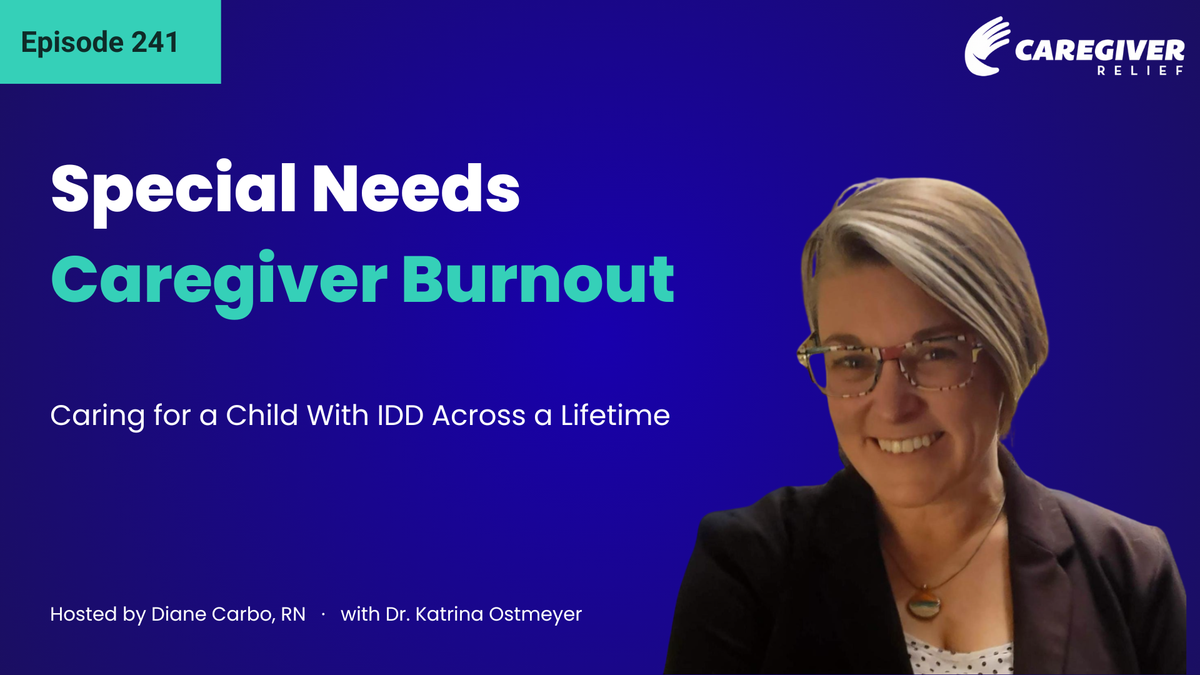
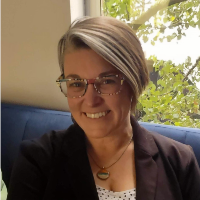
In this episode of the Caregiver Relief Podcast, host Diane Carbo sits down with Dr. Katrina Ostmeyer (licensed psychologist, BCBA, and founder of Beyond the Individual) to dive into the heavy realities of special needs caregiver burnout, complex behavior, system failures, and how to build truly sustainable family support.
Episode Outline 💡
- Introduction & The Lifelong Caregiving Reality ♾️ Diane introduces Dr. Katrina Ostmeyer and frames the unique, lifelong challenges faced by parents of children with IDD.
- Defining IDD & Balancing Autonomy 🧠 Dr. Ostmeyer explains what intellectual and developmental disabilities encompass, emphasizing adaptive functioning and the delicate balance between supporting independence and safety.
- The System Shift at Age 21 🚧 A discussion on the dramatic cliff families face when school system safety nets vanish at age 21. Dr. Ostmeyer highlights broken system realities, including 14- to 17-year Medicaid waiver waitlists.
- Recognizing Special Needs Burnout & Piles of Recommendations 🧯 How diagnostic "to-do lists" overwhelm families from day one. Plus, identifying early warning signs like overwhelm, anxiety, resentment, and isolation.
- Reframing Complex Behaviors as Communication 🗣️ Why behaviors (including aggression, self-injury, or defiance) serve functions—like gaining access, escaping discomfort, or communicating pain.
- Overcoming Public Judgment & Systemic Fatigue 🛑 Addressing the demoralizing judgment caregivers experience from schools, strangers, and relatives. Dr. Ostmeyer touches on Acceptance and Commitment Therapy (ACT) to help parents stay grounded in their core values.
- Practical Strategies for Building Sustainable Care Plans 📋 Moving beyond "paper plans" toward coordinated care. Tips on prioritizing immediate needs, advocating for family bandwidth, and utilizing case managers or crisis waivers.
- About Beyond the Individual & Final Words of Encouragement ✨ Dr. Ostmeyer shares how her clinic supports families across 44 states via telehealth, followed by a warm closing reminder to practice self-care daily.
Key Takeaways to Remember 📌
- Behavior is Communication: Instead of taking challenging behaviors personally, view them as an attempt to meet a need or escape a stressor.
- Prioritize over System Overwhelm: You don't have to tackle every recommended therapy all at once. Protect the family's overall bandwidth first.
- Advocate for the Whole System: A care plan must support the parents and siblings, not just the individual receiving care.
Connect & Resources 🔗
Podcast Episode Transcript
Diane: Welcome to the Caregiver Relief Podcast. I'm Diane Carbo, your host today, and today's conversation is a little different from some of our usual topic, but it speaks directly to the heart of caregiving. We often think of caregiving as something that happens in stages. We care for our young children.
Later in life, many of us care for aging parents, spouses, or loved ones facing illness. But for parents of children with intellectual and developmental disabilities, caregiving often does not follow that pattern. The needs may change, the behaviors may shift, the systems may become more complicated, but the caregiving role may continue for a lifetime.
And that can bring a kind of exhaustion many people do not fully understand.
Today, I'm joined by Dr. Katrina Ostmeyer, a licensed psychologist and board-certified behavior analyst who specializes in neurodevelopmental pol- profiles, complex behavior, and co-occurring mental health conditions. She is founder of Beyond the Individual, where she works with children, families, and systems to create interventions that are evidence-based, practical, and realistic for everyday life. Dr. Ostmeyer helps families and organizations move beyond check-the-box services and toward care that truly fits the person, the family, and the support system around them. Today we're gonna talk about special needs caregiver burnout, lifelong caregiving, guilt, anxiety, complex behavior, and how parents can begin to build support that is sustainable.
This is an important conversation for every parent who loves a child with IDD and wonders, "How do I keep going when there is no clear finish line?"
Welcome, Katrina. Dr. Ostmeyer, Before we begin, can you share a little bit about your work and what led you to focus on this topic?
Katrina: Yeah. First of all, thank you so much for having me, and it's one of those careers where I would love to say that I was a person, "This is what I always wanted to do," and just,
But reality is, I am a person who likes to say yes to opportunities. I'm excited about new things, and I started down this path in college when I started my, first job in college working with, group homes, and working actually with, youth with delinquency and mental health concerns. And through that found behavior analysis, and through behavior analysis started learning about autism and neurodevelopmental disabilities.
And through that I, w- worked in this field throughout graduate school, which for a PhD just takes a while. So had the opportunity to experience a lot, learn a lot of new things, and kept seeing that we were doing a lot of systems management, not just therapies and things like that. And, started to, in my early career, see systems that didn't work or broke down or we do things because this is how we do things, not because it's what works for this person or the systems around them.
And that led me to, going off on my own and starting Beyond the Individual.
Diane: I love that. I absolutely encourage everyone to have person-centered care profile, but I think it's really important for, kids with IED. And, for those listening, Dr. Ostmeyer also works with adult children with, IDD.
Now, when we say IDD or intellectual and developmental disabilities, what does that include and why is it important for families to understand the term?
Katrina: Yeah. So intellectual and developmental disabilities is a pretty broad category of people. and these are individuals who have what we call adaptive functioning, delays or difficulty.
So they maybe they need help, planning meals or taking their medicines. Maybe they need help all the way up to, using the bathroom or communicating and advocating. with the intellectual and developmental disabilities piece, that can look a lot of different ways. So we can see people with what we call cognitive disabilities, or those, if they...
We say if you take an IQ test and it's low, and these are individuals who maybe have problem-solving, difficulties, so they're going to need support making decisions. and that even can be a very wide spectrum, from people who have almost no communication abilities to those who can communicate quite well, but maybe don't fully understand, the decision-making process.
And then those with developmental disabilities, and these do, Think of a Venn diagram, because these can overlap and they can also not overlap. but with those developmental disabilities, it's often, looking at social development. so understanding people's perspectives, being able to develop relationships, understanding when people are taking advantage of them, and so on.
Diane: You know, I just had a conversation this morning. I walked on the beach on, at sunrise with a, a dear friend, and her nephew is coming to visit with her for a few days. Now, her nephew is 42 years old. He is, an adult child of and has IDD, and he lives with his sister and her husband. the mother recently passed.
And they had a water main break, and he's always been able to s- live, stay a few days. In fact, he enjoys a few days by himself. And he's, because he lives in the house, he's knows the house, he's comfortable. But when you were saying about, you know, they are unable to, handle some situations, because the water is off for a few days till they get it fixed, He doesn't like being without water.
He's like, "No, no, no, I want my shower. I want this and I want that." Well,they are going away for a few days. It'll be fixed, but he's afraid that something's gonna happen when they're gone. And so that's why he's coming to visit his aunt in Myrtle Beach, from Florida, because he says, "I, I don't wanna worry that something's gonna go wrong with the house and I won't know how to handle it," which I thought was very insightful
Katrina: Yeah
Diane: for him.
Katrina: and that's a, that is one thing is like, I always, when I talk about working with people with IDD, I always like to talk about balancing autonomy and decision-making with also, what are the needs and safety and making sure that we're meeting the needs of both that individual and those around them who are helping care for them.
Diane: Yeah.
Katrina: Because we want him to have that decision. and what great insight to say, "You know what? I'm just not sure I can handle this on my own."
Diane: Yeah.
Katrina: And that's okay.
Diane: he's quite a character. He's quite a character. a very... You know, he's Special Olympics, he's into all kinds of sports, and he's well cared for.
He did live in a group home for 15 years, now he's living with his sister since his mom passed. But many people think of caregiving as something that happens during childhood or later in life with aging parents. How is caregiving different for parents of children with IDD?
Katrina: Well, I think I'd first of all start with the differences in the systems that we have
Diane: Yes
Katrina: to support our children versus our adults. I'm very familiar with our systems here in Kansas and Missouri. I'm in the Kansas City area. And the, one of the challenges is, of course, every state has different systems of care, different- Yeah ... supports. And the accessibility in those states is also quite different.
So whenever we have people moving, that, that can be very difficult. in childhood we do have these safety nets, to capture some of these
Diane: Yeah
Katrina: services and support. So every child gets to go to school, and that is six to eight hours of time that is taken that we don't have to go arrange care, figure out, if somebody's sick.
Diane: Yeah.
Katrina: They get to go to school.
Diane: Yeah.
Katrina: And, here in Kansas, that's up through 21 years of age for those with IDD.
Diane: Yeah.
Katrina: But then when we hit 21, all of a sudden, even though that these individuals maybe still need educational supports and they have a lot of things they can learn to, for independence, they get cut off.
Diane: Absolutely. And that's when I get calls from people that are caring for their parents, and all of a sudden they've got a sibling that is also they turn 21, and what do they do? And that's why I was so glad when, you were willing to do this podcast with me because it's a lifetime of caregiving.
And can you explain what that looks for when a child's needs do not simply resolve with age?
Katrina: And I think that is one of the things is, and it's unfortunate our systems really are based on age rather than what is need at that time
Diane: Yes
Katrina: because there's just so much learning that we can see. We can see continued, while it's not necessarily rapid like we tend to see in early childhood, we can see continued growth and independence.
And I even think about, 21-year-olds who don't have IDD, and there's a lot of growth that's happening through trial and tribulation there.
Diane: oh, listen, until they're 30, males, especially, I had two sons, so I can at I can attest to, yeah. They need support.
Katrina: but it still looks a lot different, right?
Diane: And Yes, it does
Katrina: and one of the unfortunate things is right now we have inadequate systems, and so here in Kansas, for example, the waiver that we have to help provide Medicaid services and some additional support services for adults with IDD, there's a 14 to 17-year wait list. And so if I don't know about this when my child is three I'm out of luck when my child is an adult if I don't have the means to support them on my own, which is and we don't really have there are systems out there to help these families, but also you're already stretched as thin as you can go with a child sometimes with IDD. And so it's just one more thing, and it can get put off.
Diane: Yeah.
Katrina: but it is, it's frustrating.
Diane: It's a problem through our whole system. I've worked with, young, young people with head injuries.
And that's another thing, they're 18 to the eight males 18 to 24 feel like they're invincible. They do something stupid, and they have care that's needed for a lifetime for them. And ... While it's not, something they were born with, I just see our healthcare system, it is broken so badly. but it has been for decades, and it's only getting worse. Many parents with children with IDD experience burnout.
I see it with my friends and family members even when they're doing everything right. can you talk about that a little bit?
Katrina: Yeah, and I will say this is something where especially when you have a younger child who gets a diagnosis, of some kind of IDD, whether that be like global developmental delay, a genetic disorder autism, you'll get this diagnostic report, and it says, "Here's all the things that you should do. You need to go do ABA. You need to go do speech therapy. You need to do occupational therapy. You need to go get genetic testing. You need to look at this medical thing. Make sure they don't have a and so the list goes on.
And this is one thing I, I also teach, and, when I'm working with students, I say, "We need to look at our recommendations," and it's one of the reasons that first of all I say, we don't just paste everything on there because this is what we do for autism, for example. we need to think about this with the family, provide the information, but also let's take a step back and say, "This is overwhelming already.
What all do they really need to do?" and I think that's where we start to even see that first piece of burnout is you go in for answers
Diane: Yeah
Katrina: and you get a to-do list. And nobody sits there and says, "Let's prioritize this." you're not gonna do everything. And if you do, you're gonna just drive yourself crazy driving across town, like going to all these appointments, and it's actually not that great for the kid either, 'cause they're tired, they're cranky, they're not learning.
Diane: Yeah. And
Katrina: So the first thing I talk with parents about is, let's, for your child, let's prioritize what are their current needs, and what are the things you need to prioritize now, and what are the things that you need to prioritize outside of your child? Because if we are not taking care of the system around them, the parents, the siblings, it can be hard for siblings then we are not, this, we're not gonna get our optimal outcomes anyways. So
Diane: Yeah
Katrina: start first with prioritization.
Diane: You know, I had, from a personal experience, my oldest son was, injured while he was in the military, and here I am, this seasoned professional who has done care management, catastrophic care management with the million dollar cases and stuff, and, I was working, as a visiting nurse, and so I was able to, between visits, contact people within the the medical delivery system of the military, God bless us, and I know that I have PTSD just for...
And that was just for a, a, an eight-year period. And my son eventually is no longer with us. he chose to leave us, so that's always hard for me, but, I just, I know the exhaustion and I just recently have, I have a neighbor who has a sister that's my age who's developmentally, or challenged and, She's lived with them since her mother died.
And she was biting her nails really bad, and she finally let them grow, and they're looking ratty. And I said to the, the, said to her sister, "Oh, you can you know, learn to teach her how to, file her nails." She goes, "I don't think she's able to do that." And she goes, "Don't add another thing to what I need to do for her."
And I'm like, "Oh, my gosh." But I've seen this with so many others, people that have given their lives to take care of another, and it's just too much.
Katrina: Yeah. It can be so all consuming, and
Diane: Yes
Katrina: and it can, and it really is that, you know, people feel guilt. Like, you feel resentment
Diane: Yeah
Katrina: and guilt for having the resentment, 'cause you love this person
Diane: Yes
Katrina: fully, and you wouldn't change them or make them different necessarily. But it is a lot of work. And when we don't have the appropriate systems and supports in place
Diane: Yes
Katrina: it does tend to fall on, one or a handful of people to do all the work, which, of course also on top of, taking care of themselves.
Our caregivers are also aging. They need more time to take care of themselves even.
Diane: yes.
Katrina: And so there's this piece where without additional supports and systems of somebody to take some of that load, it does become a, almost unmanageable
Yeah ... if not unmanageable.
Diane: it absolutely does.
So what are some early signs of special needs caregiver burnout that parents may overlook or minimize?
Katrina: Yeah. And I think it can look a lot different based on where they are in that aging process. so some of these things, we do look at just first of all anxiety and depression. and we do see for caregivers in general, anxiety and depression is higher for individuals providing care to another person.
But it also is something that amplifies burnout, because it, it takes a lot of energy to worry. It takes a lot of energy if you're feeling depressed to get out of bed and do things. And so one of the things that we'll look at is, some of those, co-occurring mental health conditions that go along with that.
Resentment, I think that's one thing is, I have, family and friends who are, very, I'm very close to, who have, children or, growing children who have other needs too, and one of the things that we, I hear a lot is overwhelm. That is another sign of burnout. I feel so overwhelmed, I don't even know where to start.
Nobody understands. and I have, my sister has, has a child with autism and it's one of those things is sometimes one of the first things I do when she calls me, I say, "Are you asking for advice or are you venting?" Because I give advice. When you're venting, that's the wrong thing to do.
But
Diane: Yeah, exactly.
Katrina: Yeah, but what I found is sometimes I would give advice and really she needed to vent, and, she said, "You just don't, you just don't understand what it's like. You can be the professional, but you, look, you'll never be in this position." And, you know, I think that's something that is a sign of burnout as well.
It's
Diane: Yes
Katrina: I don't want the advice. I want
Diane: Yeah
Katrina: I just wanna be heard, and I want it to be easier. Yeah. And I know it can't.
Diane: Yeah. Yes.
Now you work with complex behaviors, and that's so important because there, when you have somebody who is, not behaving well and has a lot of negative or even aggressive behaviors, there's no place that anybody will accept them into out, in an institution.
And it's very challenging. So how can families begin to understand behavior is a form of communication, and instead of simply seeing it as defiance or failure on their part?
Katrina: Well, and this is where I'll sound really clinical, so
Diane: That's okay. That's okay
Katrina: If I go too far down a tangent.
Diane: Yeah.
Katrina: And so as a behavior analyst, when we look at behavior, we say all behavior is functional, and it serves two main functions.
It's either to gain access to something or to escape and avoid something, that's uncomfortable or aversive. And so when we're looking at that as behavior as communication, we're often looking at, what we call socially mediated, escape and avoidance and, and access. So for example, I think about my nephew sometimes.
He'll get a little ornery look in his eyes, and he will
Diane: Yep
Katrina: go do something. and he knows he's not supposed to, but he's like, "Nobody's talking to me, and they're all looking at my little brother right now, and I would like some attention right now."
Diane: That's normal for every older sibling. I'm the oldest of four.
Katrina: Hello. I love the look of the oldest sibling.
Diane: I know those feelings.
Katrina: Yeah. and so he, whereas, my daughter, who's the same age as him, will just tell me. She's like, "No one's paying attention to me."
Diane: Yes.
Katrina: Why isn't anyone talking to me?" Or maybe pout. Yeah. he's gonna, he may go do something, knock something off the counter or things like that.
Diane: Yep.
Katrina: Or even I think about when he feels overwhelmed or overstimulated, he'll say, you know Bye Aunt Katrina, and go to walk out the door, which, or even go into the hot car in the summer, which is very scary and something that we watch for. But even that behavior we know pretty well, like, okay, we know he's done with us all and he wants to go have some time on his own.
But the concern is, he's not making choices that are safe, because he's gonna go sit out in the hot car, which we can't do that, right? Right. And so when we look at those behaviors as communication. Now, we can also see behaviors that are, related to more internal stimuli. So I might see aggression or self-injury when I have an, a client with pain.
So somebody who's maybe engaging in head banging, maybe they're having migraines or allergy issues or things like that. and I work quite a bit of what My work is working with individuals with IDD and OCD, or obsessive compulsive disorder. And we see some of these repetitive behaviors, and that may, that's to escape from an uncomfortable feeling or thought.
And so we can't always see, and we can't always control the things that are out in the environment because they might be internal to that individual, and we have to sleuth it out.
Diane: Yes. You know, having worked with head injuries and I'm also a dementia care specialist, one of the things I try to make my listeners and caregivers I work with understand is when there's a behavior, don't think of it as being defiant or, take it personally.
They're trying to tell you something in their way that they're no longer able to tell you. So it's the same with, children with IDD, even adult children. And, it's just, it's challenging and you have to have the right approach at the right time and it takes work. Now, there
Katrina: A lot of work.
Diane: you know what? You're always on 100% of the time. You have to be aware. It's like you sometimes with some kids, I had my cousin, her oldest, her firstborn had ADHD, oppositional defiance disorder. He had it all. And when we would go visit, my sons and her sons were both this, all the same age.
As soon as you heard his feet hit the ground in the morning, no matter how old he was, you knew that you were getting prepared for quite a challenging day. and this was it. He was bullied in school, and there were so many things, but, that happened and it made me sad.
But his dad was a runner, and he loved to run. This kid loved to run. So it was a good way to get out his energy and all that negativity that he dealt with. And he does, he's employed right now, and I think, and he's living on his own, so they did a lot of things right. But if it... I'll tell you what, to get to that point is not easy.
And one of the things, I see, and I know many parents feel judged by schools, providers, family members, and even strangers. How does that judgment add to caregiver stress?
Katrina: Oh, gosh, yeah. You hit a nerve for me right there.
Diane: Yep. Yep, me too. That's
Katrina: Oh, Yeah, and I think one of the things is it is so hard to feel judged, and then also when the very thing you're getting judged for is the thing that you need to be doing.
And so I think about learning, working with families on, complex behavior, sometimes we need to let the behavior happen.
Diane: Yeah.
Katrina: And doing so in a safe way, right?
Diane: Yeah.
Katrina: And so that may be in a public space. That may be, for my kids that are, have more like that ADHD, or high functioning autism, or, level one autism is what we call it now, profile, that might be your kid's gonna say something inappropriate or maybe even rude, and maybe we don't wanna correct it in that moment because it's gonna make this a much bigger issue
Diane: Yeah
Katrina: than it would if you just let it go right now, we'll deal with it later. Yeah. And then people are like, "Aren't you going to correct your child?" And I'm like, "Well, you wanna see a big meltdown? I will right now." but
Diane: And I've been in those situations where the meltdown has occurred in public, yes.
Katrina: Yep.
And it's one of those things where it makes more guilt, more anxiety.
Diane: Yeah.
Katrina: Nobody... it's like you, you're doing the right things. and I've even experienced this as a parent, And it's also one of those things too where as a caregiver, you're usually, your child's biggest advocate.
Diane: Yeah.
Katrina: And trying to coordinate and advocate for what your child needs. And when people are judging you or saying "Oh, they're just, they just need to do X, Y, and Z," and not listening and understanding and respecting that experience that they have, it's not only damaging, but it's also incredibly demoralizing because you are constantly being told to do four different things by four different people.
And so we talked about coordinated systems of care as well. and then you have to decide what's the best one, and, most people with a child with IDD didn't go to school for this. And so
Diane: Oh, not at all. It's just thrown on you. And as it is happening with every family caregiver out there right now, you know, things are happening.
But when you're, the child is born to you, you learn as you go, and it's really... In fact, after a while, more than the doctors and the people around you because you've been dealing with it for so long.
Katrina: Yep, and I think that's something as professionals, it's a trap we can fall into where we know best because, you know I've got this PhD and this piece of paper, and we fail to listen
Diane: Yeah
Katrina: to what is the experience, what's going on, what's going on for that caregiver in the moment. Because when I'm working on behavior, I'm teaching people to do things differently, not so much the child who's here for treatment.
Diane: Yeah. Yeah.
Katrina: And if I have a caregiver who's like, "I'm just so exhausted, once that screaming starts, I just feel like I can't take it anymore" If I am to say, you just have to," I mean, that is, one, not very empathetic, No ... but, two, it, they may not have it in them. And so we need to look at
Diane: That's true
Katrina: what is better.
Diane: Yes. You know what? I say our healthcare system, whatever you're dealing with, wears you down to a point where you just and I think sometimes that's the goal, 'cause after dealing with the military medical delivery system, I was exhausted, and, we're dealing with that now in, in healthcare overall, is just you have to stay on top of it, and you have to fight, and you have to...
Plus you're expected to do so much more. Behaviors are so challenging to handle when you have no control of the outside world and what's happening. And, yeah, I've had people like I said, I worked with head injuries, and I would, I had to transfer some, adult children with head injuries to, fly them to another city, and the behaviors in the airport can be, were challenging.
And people look at you like it's your responsibility. "Can't you control that kid? Can't you control that person?" And I'm like, "Oh my God." and it is challenging. it wasn't hard for me, 'cause I did it for such a short period of time, when I was transferring or helping get them to back to their home after being away.
But what kinds of support actually help families in real life, rather than just sounding good on paper? That's the meat of all of this.
Katrina: Yes. And I always think about, and I probably sound like a broken record, I come back to systems, but very first thing is coordinating systems. I think one of the most, damaging things that we can have are these piecemeal systems or silos that are not
Diane: Yeah
Katrina: communicating effectively. They lead to redundancies, first of all which is additional stress and work for caregivers, and we can actually make, situations or behavior worse, because we're dealing with things in different ways. And so the very first thing I would say is no matter what systems you're a part of or what services you're accessing, they really need to be coordinated.
Which, of course, falls on the caregiver much of the time. But it is one of those things where, like our services always advocate and I talk with families about- Unfortunately, at the end of the day, I also have limited bandwidth, and I have to ensure that, we can maintain the roof over our office and everything as well.
And so here's what I can do. What are the ways that we can talk about, and what resources do you have so I can either connect you with services that help with coordination, such as case management?
There are some free services that can help with just educating us all, because I don't know all the systems inside and out because I'm a psychologist or behavior therapist, and so I'm not as good with recognizing how to access the systems.
And then also within our practice we'll say "Unfortunately, because I do need to pay my staff, I have to ask for payment for some of these services." But I said, "How much do you want us to support you?" And we talk about what are the resources, what are the things that we can do to help support in the most cost efficient way.
Diane: Yeah.
Katrina: So coordination is the first thing. I think the next piece is we want to look at, unfortunately we have to be planning. like I said, if I don't help a family get into these waiver services at age three, they're not gonna have them at 21. And
Diane: Can you believe that?
Katrina: It is
Diane: You know, I thought it was bad.
I have, I, was looking for senior housing up in New Hampshire. My helping my son open his clinic. I live in Myrtle Beach, and when I went up there, I said, "Oh, let me find senior housing." And there was a seven-year waiting list for senior housing. Are you kidding me? And now you're telling me a, a 15-year waiting list for..
Oh, my God. how is that happening? and all it comes down to is there's no funding for it.
Katrina: There's no funding. And, you know, it's one of those things, and I will say I'll get on my soapbox for a minute.
Diane: I think Oh, I get on it every day.
Katrina: Yes.
Diane: So welcome. I'll share it with you.
Katrina: Yeah. I do..
It makes me so sad that so many people can have so much, and then for those... Because there are those that can't do it for themselves. And it's not just individuals with IDD, it can be any variety of things going on or, you know, just how they grew up and things. And I just, I do find it incredibly disappointing, especially here in Kansas, the things that we're passing laws about that don't matter, and maybe are hurtful to people even, in my opinion.
And we're not figuring out how to fund our education system and our social services. I just
Diane: Yeah
Katrina: find that deplorable, honestly. But,
Diane: Yeah, our healthcare system has moved to a cost sharing platform. Medicare in fact, I literally took a course on insurance to see what they're teaching people, and it comes...
They come right out in the course and say, "The high deductibles and high co-pays are meant to deter use of benefits." So to me, we only have the illusion of healthcare. And, our priorities are so wrong on different things. you know, I don't know how we're gonna turn that around, but, yeah, we're expected to pay more, for our healthcare if we can afford it, and if you can't, then you just do without.
Katrina: Then you do without, right? Which leads to
Diane: Ugh
Katrina: all kinds of things, and, additional costs because
Diane: Yeah
Katrina: when we don't... it's kind of like your car. If you don't take care of the little issue, it turns into a bigger one.
Diane: Yes. Yes. Yes.
So how can parents build a care plan that fits not only the person with IDD but also the emotional physical, and practical limits of the family? That has gotta be the most challenging thing that you do.
Katrina: And I think this is one of those things where this is really hard for parents to do, but they have to advocate for themselves and the rest of the family in addition to their, child or adult, affected by IDD.
And it's, because at the end of the day, what we get taught a lot of times in school is we focus on what's best for this person, and I don't think that we're great at teaching that this person, we want them to have autonomy, we want it to be about them, and we want their person-centered care plan to be about them as a person.
However, if we don't address the people around them, we're not going to have a good care plan. And I think it's, sometimes I try to coach families especially, I work quite a bit with families and doing IEEs, like going into the school, it's like here are some of the things that you can't, you need to advocate for.
Here are some of the, things you need to express about your experience with your child and the thing that you're doing. and what will happen if we don't have like coordinated care or, hey, you know what? This is my bandwidth. This is what I need from school,
I do think it, so it's one of those things is you have to learn how to advocate for yourself, and people are going to judge you for it, because they're gonna say they will
How dare you, right? Or that self, people are going to have the judgments that they have. And one of the things that when I work with caregivers, I do a lot of acceptance and commitment therapy or ACT. It's about saying, "What are your values? What's important to you?" And taking those values directed actions, because it's what's important to you, and you have to do it knowing that other people are gonna have different values than you, and they will judge you for them.
Because not everyone is a, is great at ACT. Ideally, it'd be great if we all just let everybody be and didn't judge each other, but it's just a fact of life. But, it's how do I do that with knowing that's happening?
Diane: How do you work, how do you do that with an adult child?
Katrina: So with that, with like how do you advocate for
Diane: Yes, and get the care resources and care Get the care resources that they need because people are getting older. And right now we have a silver tsunami upon us. We already have, not enough youth to take care of our seniors. We have solo agers and childless couples that are gonna need care. And, my, the most vulnerable population is going to be these adult children with IDD who may or may not have someone to advocate for them.
Katrina: Yeah. And so this is something that's really hard because at the end of the day, you have to, you can advocate for changes in systems, but we all know that is a long and arduous process.
Diane: Yeah.
Katrina: And even with the advocacy, the systems, there's compromise that's made and the systems still are inadequate.
Diane: Yeah
Katrina: we've got decades, of research showing that. And so some of it is you have to recognize what can you do and what is your bandwidth, and then what are you gonna do with the systems and supports that you have. Now, one of the things that I really encourage families, especially of adult children, there's two pieces.
One is I say how do we help continue to build skills? That's part of what my job is to help build skills and autonomy, because the more skills they have, the fewer behaviors they have, the more, flexibility and options you have for placement and care. And unfortunately, there are individuals who are going to need higher levels of care, and they're not going to be able to access them, and that is honestly the hardest thing for me. But it is having some acceptance with that at times. But then the other piece is saying, and let's work on getting that case management because even if you're not on these waivers and everything, there are, here in Kansas at least, case management services to help you finding that group home.
If we're in a crisis, we have something called the crisis waiver, which helps jump the wait list
Diane: Yeah
Katrina: for the IDD waiver. How do you build the case? And I always say having that person who knows the system is going to be the best thing for you because you're gonna get people like me, who I'm gonna say "Here's the thing that I'm good at, and I can tell you what to do."
But you need somebody who's gonna help you look at everything all together.
Diane: Yes. Care managers try to be I know, I've done it for decades. You look holistically at the person and the family to see what's best for each situation. And, resources especially for mental health or behavioral, challenging individual, behavioral, behaviors, these, they're hard to place.
There's hard to find resources, and, it is challenging. But, I know, in Pennsylvania, we had, a program where they sent out behavioral specialists that they were just high school students or college students that were trained in how to handle behaviors as, as a platform for those on Medicaid.
And it did what it ... It was a little Band-Aid on a big issue that is still not resolved. Th- and that was decades ago that w- that happened. I don't know what they're doing there now, but as I've gotten older, I've been a nurse for 54 years, I'm seeing less and less, more cuts in everything we do, Dr. Ostmeyer, than, and we're more financially responsible to pay for the services and care that we need. In fact, one of the things I learned with the military medical delivery system, it's delay, deny, and wait to die. And we now mirror that, with our present system. So I know the challenges every family caregiver faces, that ones with, that have a lifelong, caregiving journey, it's even worse for them.
So, what do you say to parents who feel exhausted, guilty, and afraid to admit they're burned out?
Katrina: That there's, first of all, it's giving that space without judgment. I think
Diane: Yes
Katrina: that's so important. it's saying let's... And then the next question is, what do you need right now? 'Cause even though that decision can be, a lot, if it's like I don't know, then I might say, do you need to vent like I do with my sister?
Diane: Yeah.
Katrina: Or do you want advice? 'Cause I think that's one of the things is when you're burned out, sometimes you just need somebody to empathize.
Diane: Yes.
Katrina: And think that's really hard.
Diane: Not to respond and tell you what you need to do. But just to hear you and listen to you.
Yes. Yeah.
Katrina: And so that would be what I encourage every caregiver, is to find those relationships, those outlets, their support groups, their, you know, whatever those are, because you have to take care of yourself in that way.
Diane: Yes.
Katrina: Because if you just hold it all in and bottle it up, it just leads to your own mental illness. Exactly. And internalizing issues, right? And guilt
Diane: Yeah
Katrina: and shame. and so that's number one, is get those outlets. then the next thing is having that support, having people who know the systems, because the reality is the systems are inadequate.
Diane: Yes.
Katrina: And very few people are going to get their needs met through these systems, or met to the degree that we would like to see them.
Diane: Yes.
Katrina: And that's where choices come. and I think having somebody to help you make those choices is so important, because that's a lot of responsibility when you're making the choices for another person's life and somebody you love.
Diane: Yeah.
Katrina: Because emotion
Diane: Exactly
Katrina: takes over.
Diane: yeah, and I tell my listeners and I tell my family caregivers, decisions based on emotions are poor decisions. They're always going to be poor decisions because they lack logic, and that's really important. Now, I want to have you share your work at Beyond the Individual.
Tell my listeners about that platform that you have.
Katrina: Yeah, so we are a multidisciplinary clinic. We provide behavioral therapy, mental health, and speech, services, and with the goal that we and we take a systems approach. So we do work with individuals who maybe have more traditional mental health concerns, and a lot of those can be caregivers, honestly.
Diane: Yeah.
Katrina: Coming in for a weekly therapy session, all the way to individuals who need more intensive services, such as 10 to 15 hours a week. And then also we work within our, what we can do, to help essentially get what we call the ticket to additional services. So things like diagnostics and, unfortunately here in Kansas and many other states, services are blocked by having certain diagnoses, unfortunately.
And or, assessments of like, ability to be independent and such. So we provide those as well. and so we really focus on how do we provide these services in a way that is individualized, considers the system, and does it in a responsible way to lead to, maintenance and not needing us anymore.
Our goal is to get people in and where they don't need us, or if they need us, it's like a once a month check-in we do
Diane: I love getting to that point.
Katrina: It, you know, that's,
Diane: it's a beautiful It shows that I've done my job, that it was a success. Yes. Yeah. Yeah.
Katrina: Yep, and so we do work, while we are based here in the Kansas City area on the Kansas side, we do home and community.
I started this business in my minivan, driving three to four hours away, to provide specialty services and working with other waivers to train staff and school districts. Yeah. so we do training for systems, and then also, we provide telehealth and can do so in 44 states.
Diane: Awesome. That's pretty incredible.
Yes. Telehealth is where it's at right now. In fact, they're doing teletherapy. PT is done by telehealth. speech is being done by telehealth. That as an old rehab nurse, Lord have mercy, I don't know how that is effective, but, it's cost-effective I guess, and that's where we're going.
So because we have a shortage of doctors, we have a shortage of specialists, because the reimbursement's so low, we're just a, a mess in our healthcare system right now. But we, have to look at each other and support each other and lift each other up, not drag each other down, which I find a lot people do with all the judgments they face.
Katrina: Yeah. I agree.
Diane: Yeah. Dr. Osmer, how do people reach you? What tell them about how to find you.
Katrina: Yeah. The best way to find me is to go to our website at www.beyondtheindividual.com. we do have a Contact Us form, but also our phone and email. I'm abysmal at managing my own email, I will it goes to our admin, and, that person will actually get people set up with a free consultation if they're interested in our services as well.
Diane: Great. All the links will be put on, we create a permanent page on my website, Caregiver Relief, and at the bottom, we will have all your social links, a link to your website so that my clients can, or listeners can find you in the future.
Katrina: Wonderful.
Diane: Well, thank you so much for your time. Now, to my family caregivers, you are the most important part of the caregiving equation.
Without you, it all falls apart. So please learn to be gentle with yourself. Practice self-care every day, because you are worth it.
Caring for a loved one can be overwhelming — but you're not alone. If you have questions, big or small, our expert team is here to help.
👉 Click here to Ask the Expert
Our Resource section can help you find the information and tools that you need. We have courses, videos, checklists, guidebooks, cheat sheets, how-to guides and more.
You can get started by clicking on the link below. We know that taking care of a loved one is hard work, but with our help you can get the support that you need.
Click here to go to Resource Section now!