Lights, Mirror, Action With Kenneth Monaghan PHD Director of Neuroplasticity Research Group - Episode 112
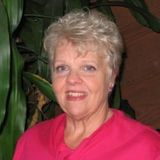

Are you a caregiver for a stroke survivor, feeling overwhelmed and unsure of what to do next? Do you worry that the journey home from the hospital is the end of recovery? This week's episode of the Caregiver Relief Podcast is here to turn that fear into hope and action! ✨
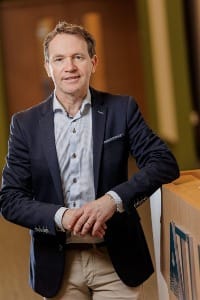
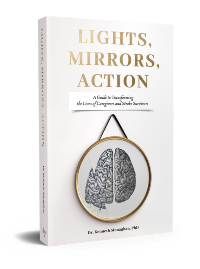
We were honored to sit down with the incredible Dr. Kenneth Monaghan, Director of the Neuroplasticity Research Group and author of Lights, Mirror, Action. He shares a powerful, scientifically-grounded message: recovery doesn't stop when you leave the hospital. In fact, the home environment can be one of the most powerful places for healing to happen.
This conversation is a roadmap for transforming the lives of both caregivers and stroke survivors. Dr. Monaghan bridges cutting-edge neuroscience with the practical, everyday realities of caregiving, offering simple, inexpensive, and effective strategies to support the brain's amazing ability to heal itself.
What You'll Discover in This Episode 🎧
Here’s a sneak peek at the incredible insights Dr. Monaghan shares:
- 🧠 Understanding Neuroplasticity: Dr. Monaghan breaks down the science of how our brains can change and rewire themselves at any age, based on our experiences and actions. He explains that repetitive, simple exercises are key to influencing this change.
- 💪 The Power of Belief (The Milkshake Story!): Learn about a fascinating study involving milkshakes that proves how our beliefs create real physiological responses in our bodies. This highlights why a positive mindset is crucial for recovery.
- 🪞 What is Mirror Therapy?: Discover a simple, inexpensive therapy using a basic mirror that can have "miraculous" results for some stroke patients. It tricks the brain by using visual feedback to help recover movement in a paralyzed limb.
- 🤝 The Caregiver's Crucial Role: Dr. Monaghan discusses how caregivers can be the most important part of the rehabilitation team. He shares advice on how to encourage independence rather than enabling, and how to be flexible with therapy schedules to combat post-stroke fatigue.
- 📈 How to Track Progress (and Why It's GOLD!): Recovery happens slowly, and it's hard to see small changes day-to-day. Dr. Monaghan explains how using a simple smartphone video to record movement or walking can be "pure gold dust" for motivation, proving that progress is being made.
- 🤖 The Future is Here: Tele-rehabilitation: What is tele-rehab and how will it change care? Dr. Monaghan explains how technology allows therapists to monitor, guide, and motivate patients from afar, putting the power of recovery directly into the hands of the family.
- 🧱 The Power of Praise (The LEGO® Story!): Hear the story of a brilliant experiment with LEGO® bricks that demonstrates the profound impact of praise, encouragement, and acknowledging hard work. It's a lesson every caregiver needs to hear!
Find Dr. Monaghan 🌐
Want to learn more from Dr. Ken Monaghan? You can find his book and get in touch with him here:
- Book: Lights, Mirror, Action is available on Amazon.
- Website: www.lightsmirrorsaction.com
This episode is packed with hope, practical tools, and a new perspective on stroke recovery. Don't miss it!
Podcast Episode Transcript
Diane: Welcome to the Caregiver Relief Podcast, where we bring you real conversations and practical tools to help family caregivers and those they care for. I'm your host Diane Carbo,
Diane: and today we're diving into an inspiring and scientifically grounded approach to stroke recovery and caregiving. I'm honored to be joined by Dr.
Kenneth Monahan, director of the Neuroplasticity Research Group at a TU Sligo Ireland, and author of Light Mere Action, the Guide to Transforming the Lives of Caregivers and Stroke Survivors, Dr. Monahans work. Bridges, cutting edge neuroscience with the everyday realities of caregiving, helping stroke survivors and their care partners, not just cope, but thrive.
His guide is more than a book, it's a roadmap for hope, resilience, and transformation. Today we'll explore how neuroplasticity can change the course of recovery, what caregivers can do to support the healing process and how light mere action can help rewrite the story for thousands of families worldwide.
So let's jump in Welcome, Dr. Monaghan. Thank you so much for joining me today. I know you have a busy schedule. Before we get into the science and strategies, could you share a little bit about your personal journey, like what led you to focus your life's work on stroke recovery and neuroplasticity?
Ken: Yeah. Diane, thank you very much for having me on, your program. It's a, it's, a real honor. I've listened to many of your shows and they're so valuable for caregivers and stroke survivors, so it's a great honor to be invited. I was explaining to you before we started that I qualified as a physical therapist 33 years ago.
and I have been working in rehabilitation settings. I've been working in, sports injuries and orthopedics, and I've had two. I'd say two different careers in that time. So the first 16 years of my life,I specialized in sports medicine and I worked with sports teams, elite teams, and,worked in private clinics.
And I eventually, went back and did my PhD and I got a university lecturing job in a school of physiotherapy. And of course. I thought I'd be there for the rest of my life. it was in Dublin. I actually come from Northwest Ireland, county Donal, or I live in county Donal. and. One night at Christmas time, about 22 years ago, my life changed when I went to a concert with a very famous Irish singer because I met my wife Maria at that concert, and she was from Donegal.
And so what happened was for a few years, I tried to live in Donegal and work in. University in Dublin and eventually it got to the stage where it was so ridiculous, driving up and down that, I eventually was lucky enough to get a position in a local university in Sligo. So that's the Atlantic Technological University.
Around the time before I had left, I had become very interested in, therapies like mirror therapy and therapies that were being used for neurology patients, especially stroke patients, and. When I, came to Northwest Ireland and when I started working in Sligo, around that time, I had, I had been asked to see a number of different patients in their own homes who lived close by to me.
And one patient in particular was like a light bulb moment to me because, Dr. Frank Mccartin was this man's name. He was a medical practitioner, had a stroke, and he'd just been discharged home. And when I saw that man. I suppose I, it really dawned on me that, he was so frustrated, after being discharged to his own home.
His family, who were all around him wanted to try and help him, but they were almost afraid to do anything in case they made him worse and they wanted guidance. And of course, that's why I was asked, to come and see him. And what I realized from working with Frank was that there was definitely a need for some.
Material, some. A piece of information that could be given to caregivers and to stroke survivors before they go home to, to explain to them that, going home shouldn't be a time that you dread, going home. your home has really underestimated, advantages for you. In recovering after a stroke.
so I worked with Frank and I was able, because I was in his own home, I was able to use some of the innovative therapies that I was interested in. the likes of mirror therapy, a thing called cross education of strengthening, which we might discuss later. sensory substitution was another idea and.
When I started in the university, around that time, I set up the neuroplasticity research group, which you've mentioned, and thank you for that and. I have, over the course of the last 15 years, I have been awarded over 2 million euros in research funding, and I have had six PhD students and a number of master's students who all worked to develop new technology, pieces of equipment and, systems that could be used for patients to help them, to do, to recover in their own homes.
And the, I suppose the term for all of this is tele rehabilitation or telemedicine, which is becoming very important. But that said, even though I run that research group, I always felt that pa, most patients, 90, 99% of patients and their family members could easily run a program in their own homes using these principles.
But not having to spend any money are very, spending very little money. That's why I decided I would write the book Lights Mers Action. Of course, MERS, was, very much around mirror therapy, but the idea was. We would give people a little bit of a roadmap. first of all, we would explain to them what neuroplasticity was because I think if nobody understands what that is, then you're going to really struggle to believe that you can recover in the long term after a stroke.
explain to caregivers why your home is such. So it has such advantages in very simple, easy to understand terms and then, to give people a starting point of a program that they could run in mornings and evenings. So I have all of that information in there and, thankfully it's been, the book has just been out over a year now, and I have to say the responses to it has been phenomenal really because, people all over the world have used the book.
I try to send the book. in PDF form to anybody that will, would like it or like the information. and I am seeing and hearing back that what I experienced with Dr. Frank in his home, thousands and thousands of other people in America, Australia, Canada, they're experiencing the same thing. There's a fear of going home. There's a feel feeling that your chances of recovering after stroke are gone. if it hasn't returned. The book is giving people confidence. It seems it's giving people easy to understand information. it's not the absolute. Bible by any means, but it's certainly a good reference that can get people started and get a conversation going.
And people like yourself, Diane, who are, working to encourage, to give people support and to, pass on the message that you know, when you get discharged home, there are certainly brilliant things you can do, people like yourself. In all the different states in America that I've met and all over the world, you're doing a fabulous job because this is the big message.
It's such a simple one that, we want to, we want that dark cloud that sits over people before they are discharged home. We want to get rid of that. We want people to be more positive,for very evidenced-based reasons. And, that's probably what we'll discuss a little bit later on. So thank you very much for having me on the show.
Diane: I'm excited you're here. It's a very timely topic here in the US we have a caregiver crisis. We have a public health crisis. we have our. First of all, we are having our seniors with strokes being sent home way too early. It's, it's really unfortunate and the care needs to be done by the family caregiver in the home, and I'm a strong advocate for aging in place.
Support in your home and in your community. And I love the fact that you have a solution to a problem that we are now facing, because caregivers are going to take be the providers. That we're once doing things with the family member that were once done by healthcare professionals. And, you're right, telerehab is in the future.
It's here now. And, people don't understand that. So before we get into, all of that, I'd like for you to just, explain what neuroplasticity is and then mirror therapy. Explain what that is.
Ken: Yeah, certainly. neuroplasticity is essentially means that your brain is capable of changing its structure at any moment and time based on everything that you experience.
You listening to me here now talking, that's changing your brain cells. you getting up in the morning looking out through your window is changing your brain cells. your brain changes all the time based on not just things you do physically, but also even things you do mentally. So if you think about things, it's changing your brain structure.
And I suppose this has been a big revelation over the last, 20 years or so, was that. Before this, we felt, there was a feeling that your brain was, was fixed in terms of its structure and really wasn't so plastic and couldn't be adapted. I, you've probably heard of this person, Diane, but for your listeners, there's a brilliant book, by a man called Norman De.
And the book is called The Brain That Changes Itself and Norman is absolutely legendary within the world of neuroplasticity. And I remember reading his book and it was, again, another light bulb moment because, he was talking about. This idea, this fact that the brain can change itself in response to everything you do.
And because of that, nowadays all of the stroke associations in the world are finally saying to patients that, the best way to get your recovery is to do very simple exercises, but do them repetitively over and over and over again. So now we were at a stage where, the people who are prepared to keep at the therapy and keep at.
the rehab for the longest and who, and obviously people need help to do this, but the, all of the guidelines, especially in the UK and the Irish guidelines in, in terms of stroke, rehabilitation, are saying that repetitive exercises, obviously safe things to do, but safe exercises that are done repetitively seems to have a huge influence on changing the structure of your brain.
and so in neuro, that's what neuroplasticity means. And of course, as I. As I might've said earlier, if it's not explained to you, Diane, if you're, God forbid you have a stroke and you're been discharged home, if you don't in your mind, understand that there's a thing called neuroplasticity, and if you don't understand very simply that.
Your brain based on everything you do can change and it can help you to get a better recovery. If you don't understand that, then you're going to struggle to keep doing the therapy at home. Or if you don't have somebody that can explain that to you as in your family members, then. you are going to find it a struggle.
And to me that's the starting point is just education of people. what they've found in medicine nowadays is that when patients become more actively involved in their therapies, patients do much better. I think. 20, 30 years ago when I started out, Diane, and when you worked as a Regi registered nurse, I'm sure this was probably the way we were, patients probably were a little bit afraid to ask their care, their professionals or, in case there were being Absolutely, they were like passive.
I think medicine was very passive, but now it's been very identified that if you actively get involved and you discuss with your doctor, you discuss with your physical therapist, your occupational therapist. What therapies that you think work best for you and not be afraid to do that, then you are going to get a better, program built for you and it's actually what you should aim to do.
So being actively involved in your therapy is a very important thing as well. And it's, these are the small little pieces of information that patients should never be afraid of. I think we're getting to a stage in medicine. I, it's funny. I have a lot of arthritis in my hip. And, probably a year or two ago I went to an orthopedic surgeon, just to have it checked.
'cause I was, I suppose I was afraid, in case I, I needed to get something done with it. and it was so funny, even though I specialized in orthopedics for 20 years of my life, Uhhuh, when I was in there as a patient, I almost felt paralyzed because I didn't, I nearly didn't want to tell him.
His job. And, and,I think people experience that. So I need the exercises. I should,
Diane: that normal people do experience that. But when you're a nurse Yeah. you're so used to going up against doctors and telling them things. I just, I'm just the opposite of you. I'm like, what do I need to do?
Ken: What can you
Diane: do better? but I think the point is that, right?
Ken: Yeah. I think the thing is that. As medicine nowadays, there's a lot of scientific evidence to, to so show that if you explain to patients very clearly, why their therapy should work for them, if the patient actively understands why a therapy works and explores different therapies and Gives their opinion on what they think works. So if I'm your therapist, Diane, rather than me saying to you, you have to do A, B, and C therapies to get better, what I might, what I'd be more inclined to do is say to you, there's 10 therapies, Diane, that could work for you to help you recover after your stroke, and we can do them all at home.
I'd like you. Trial, each one of them and you tell me which ones you got the best response from, or you got the best feeling with, and in that case, then you're gonna be more likely to do those for a longer time and probably get a better response. So the secret now is to provide a menu of things that people can do that are safe and that have evidence behind them, but, and let the person themselves decide.
Now, that said in my book. I had to, start with a kind of a plan, at least to get people started. So I made some suggestions. but at the same time, I'm very clear that, if you hear of a therapy that has some evidence behind it, that can be, done inexpensively in your own home and you try it and you think it works really well for you, then go for it.
Go and use that. I got a great exa, actually, I got a great life lesson with Dr. Frank one time. When I was working with him, because this was about 20 years ago. And the gaming machines, the we, that people, that, they hold the handle. And you remember when they started off, they were really revolutionary.
Oh, yes. And. At that time, the, we had a little balance board. They had a board you could stand on and you could play a game where it was like a golf game where if you moved your way. I did it often. Yes. And but I'd heard of this and I'd heard that there were some therapy units using it, and I was mentioning it to Dr.
Frank. By pure coincidence, a neighbor of his younger, a young girl, had one of these, and so we arranged for it to come down and I couldn't wait. I was so excited for him to use it. When the arrived, we set it up and Frank, he stepped his first leg onto it and then he put a second leg onto it and almost instantaneously he hated it with a passion.
He absolutely hated it. He wanted to get me off this, get me off, and it was such a shock because, I thought. Any therapy that has potential, this man is going to use it, he's going to like it. he hated it because there was like a cognitive element to it and it obviously didn't like, so it was a great learning that, don't take for granted that every therapy, no matter what.
People say about it will suit every patient. it's exactly, it's, it's very simple advice. so I suppose look at that was, that's what neuroplasticity is. And you asked me, the second question was, what is Myer therapy? Murrow therapy was a therapy that was developed, in the early nineties, and it was never invented originally for stroke patients.
It was, or it was developed originally for patients who had phantom limb pain. Diane, God forbid you again, you say you lose your right hand in a, in an accident, there's going to be a 19 5% chance that you're going to have a condition called phantom limb pain because the missing information from the hand that's gone, the brain is going to struggle.
With all of that, and it manifests itself as pain. So what this brilliant Indian researcher, Rames Andron, figured was he thought, he figured out that if you take a mirror, a simple $10, $15, meh. And if you sit at your table and you position the mirror standing up. Sideways so that the reflective side of the mur is facing your good hand, the one that's still there, and the stomp hand, the hand that's missing is placed in behind the mur, and if you tilt your head so you can see inside the reflective side of the mur.
Does that make sense? Yes. Yes. you'll see the image of your good hand moving, but when you look at it in the mirror, it will actually look like the missing hand. And of course, that's the key thing to mirror therapy it. The visual information from the reflection sends. Sensory information up to your brain, which helped the brain to, desensitize and it was like a miracle cure for these people.
And it was a brilliant, find. So over the years, a lot of research groups and including our own, have done research with neurotherapy for stroke patients because in the same way, if you can't, if your hand can't move as paralyzed or you very little movement, and you cover that hand with a murr and you look at.
The movement of the good hand. some of the patients that we've used in our clinical trials have had almost miraculous recoveries with that, not everybody, of course, I would be lying to say that everybody has, but definitely it's been shown to be very safe therapy. And, very inexpensive because you can set this up, you can buy murer boxes on Amazon and they're relatively inexpensive.
If you really want to, you can just buy, go down to your local,home store and more, or whatever the chains are in America. And you just buy a simple mirror and you can set it up on your table at home. and it's definitely something that I would think is worth using. Is that okay?
so that's what mirror therapy is and it's as I said, for some patients it can be miraculous and we've always examples of people who have these brilliant recoveries and we also have examples of people who didn't get such good. So you just always have to keep that in mind.
Is that okay? But definitely I've never seen any disadvantages from it except for. Patients being sometimes a little bit disappointed if it isn't, if it doesn't react straight away, you know that
Diane: the message you are giving me is you should be or to the listeners out there is. You need to be flexible and be open to new and different, therapies to find out what suits you the best.
Ken: Yes, AB Abso absolutely and not be afraid. And I suppose the thing is that, you will not be able to carry out a brilliant rehabilitation program for, physical rehabilitation program in your own home unless you have some person to help you. Usually, because most people need a little bit, even if it's only for company, even if it's only for somebody to explain something to you.
But in a lot of cases, it's somebody to help you do little tasks. In a safe way that you probably wouldn't, be able to, in case you'd fall or you'd, in case you'd damage yourself. but the other important thing that a caregiver or a family member can do for you is they can explain very simple concepts and principles to you that I believe you need to understand which, which really works so well for you.
And look it. We've always known that, there's, we've, we, you've heard people talking about self-belief, Diane, Yes. And if you don't believe that you have the potential to recover, then you are going to really struggle. can I tell you a very simple story about that, Diane?
Just for your listeners, I would love. It's a very simple story. It's called the milkshake story. And you, maybe you've heard this before.
Diane: I have not.
Ken: there's a brilliant researcher, there's a brilliant psychologist in Stanford University, and she is, she has. Done a very simple experiment with her students where one day she made a specially designed milkshake for them and she told them that it was very high in calories, so high, they probably wouldn't need another meal for the rest of the day.
And then what she did was two or three days later, she took the same group of students and she gave them a specially designed milkshake. But this time she told them it was low in calories, so low that they'd probably need two or three meals for the rest of the day. Wow. Now as you can, as you can imagine, it was the same milkshake.
Isn't that right? Okay. But what they were measuring was how much of a hunger hormone those students produced in the hours after they took what they believed was a high milkshake, high calorie, or a low calorie milkshake. And here's the results of this were astonishing. What they found was when the students believed that they were drinking a high calorie.
Smoothie or milkshake. Their bodies only produced one third of the amount of hunger hormone in themselves for the rest of the day compared to when they believed it was a low calorie. Now that's an extraordinary thing to find out because the only logical. Explanation for that is that their brains, which essentially acts like a pharmacy It created a physiological response in their bodies based on what they believed or on what they thought. Isn't that right? So if you know that, that. Experiment took place and the significance of it. Now, you know that if I'm coming out of hospital and I in my mind believe that going home is a positive experience for me and that I can, I have benefits of going home and that I can recover at home.
Then my brain is going to release growth factors, growth, chemicals, endorphins, whatever it is that gives my body the environment to allow that to a much better chance of that taking place as opposed to the opposite, which, you know, if I'm going home and I have the dark cloud over me and I don't believe I have a chance, or I think that's my.
My real chance gone and that I really, my, my best chances of recovery are probably over then that belief system is also going to risk. Create a response in the body and it's probably going to be the opposite. it's hugely important that a caregiver or family member is always very positive with somebody.
And also, relays to them, some of these simple messages on a continuous basis. We need to, we prime people for this. We teach people this information. and that's why caregivers and family members can play such an important role. we've always, we've always heard of placebo effects and no SIBO effects, which are the opposite.
Isn't that right? And that goes on with everything in life. And anybody would be foolish, And I think what's changed in medicine, and maybe in your time as well as me as myself, Diane, is that. 30 years ago when I started off, I think there was a feeling that if a treatment or if a medicine or something had a placebo effect to it, then it was to be shunned.
It wasn't to be that was like trickery. And we shouldn't, we, shouldn't we shouldn't value that.
Diane: But
Ken: nowadays we, we know so much more about the power of your brain and the power of your beliefs that nowadays. We harness those placebo effects. Yeah. And we know that you can do that and we're not doing anything wrong.
Is that all right? And for your listeners, another very good resource as a book that would really talk to them about a lot of what I've just talked about is a book, called The Expectation Effect. I'm for, I'm forgetting the author's name, David. I might think of it again, but the expectation effect is a book that every person I believe should read is full of scientific evidence and talks about how powerful your brain is and how powerful your belief systems are. I'm saying to people here is that. there's an awful lot more to recovering from an illness. Not just stroke than simple exercises and simple therapies and simple things. there's an awful lot more to the kind of priming and the preparation of people's that makes such a big difference.
and you probably would agree with this, Diane, and I've seen it in my own practice as a physiotherapist the most. Probably the biggest thing that I've learned in my 30 years as a physiotherapist is how important the psychology is in terms of a patient getting better. patients get better,
so much depends on who's the therapist is that's treating them, how their doctor that treats them, what, how, what's their reputation, how do they dress, how do they talk to them? All of these things play such a role and such an important, crucial in patients getting better. and I suppose it's no harm to illuminate these things and bring it out into the open and say to patients, these are important things. So I discuss a lot of these things in different chapters as a starting point for people. But all. Ultimately, recovering from an illness, eh, therapies you can do can be very simple, but you just need to believe in them and also, carry them out very repetitively and be willing to work really hard and you'll give yourself good chances.
I think.
Diane: I love you have the message that you include the family caregiver along with the their loved one in recovery fam and the family caregivers typically are unprepared for anything that they do, and one of the things they have a tendency to do is to enable somebody to, They, I always, I'm an old rehab nurse and one of the things you have to, I tell my family caregivers is you have to be patient and in some ways you're gonna appear to be lazy, but you have to let a person do as much for themselves as they possibly can, and then you intervene.
And so many caregivers are, feel so rushed, to hurry up and get dressed and get moving. Get them fed and stuff that they do. A lot of things that the person can do for themselves. And, how do you address that in your book? how a caregiver should not enable, but encourage.
Ken: Yes. look at a very pertinent thing here is that most stroke patients suffer from, an unusual type of tiredness, that they, they call fatigue and it's.
it's very distinctive to stroke patients themselves. it's a very extreme form of tiredness. and unless you experience that yourself by all accounts, you can't know how debilitating it is. Isn't that right? Exactly. And actually, in one way, when you think about it, so when a stroke patient, especially in those early days, wakes up every morning,they're, they sometimes can't predict how tired they may feel after.
Yep. What went on the day before, I suppose if you even think of it from a practical point of view, a lot of the schedules in rehabilitation hospitals, sometimes don't always work out so well because if I'm a physical therapist, I have to schedule patients at a certain time and some of those patients have to be seen early and some people are seen closer to lunchtime.
Some people are seen in the afternoon.
Diane: Yeah.
Ken: Now if it happens that you've had a stroke, Diane, and you're really tired in the morning time when your therapy is taking place, then you're not going to benefit so much at that because you don't really have so much choice. and I suppose this is, these are the small little things that.
Being at home allows you to have a little bit of advantage because if you wake up in your own home and you tell your caregiver or your family member, look, today's the day when I'm awfully tired this morning, I'm probably not gonna benefit. I really, maybe I could try my therapy in the afternoon.
then you have that flexibility and you can start your program a little bit later. It's such a simple thing, but it's that flexibility that can be very beneficial as well. So look, I do,we do talk and there are. Chapters, there's a chapter that specifically says this, that you're going to try and help people, but you have to talk to them and be, be aware of how they're feeling and probably get into that.
I suppose it's the practice of doing that, be a. be somebody that talks and ex and asks the person and the patient how they're feeling and not have that, as you say, you have to do it. Look, we have to get started at nine o'clock this morning now. Yeah. If we don't get, then we won't get our 10,000 repetitions done.
Yeah.
Diane: Yeah.
Ken: We have to have the flexibility Of course. And we understand, and that's of course part of the trustworthiness that, is so valuable. With a family member or, a spouse or a loved one. and those are the things that will develop and help and are hugely valuable, and can be seen in somebody's own home as well.
and you see the other thing too is that. A lot of stroke patients will potentially have some, sometimes emotional issues and cognitive issues that can happen. Yeah. And the brilliance is that often, sometimes these things can go a little bit masked in rehabilitation settings or in hospital settings.
you often patients don't even realize themselves. But when we get back to our own homes with the sight, the sounds, the smells, we start to actually act normal again. A little bit. We become ourselves. And We can sometimes detect things that we couldn't detect so easily when we're outta that environment.
And your caregiver and family member may notice that. And, that's important,in the bigger picture as well. So these are just, again, some of the small things that we discuss in the book, but very valuable to, I think it's just to give pa caregivers and family members' confidence that, what they suspect is definitely does take place.
And,a little bit of recommendations around that.
Diane: One of the things that you mentioned earlier is family caregivers have a tendency to be afraid to, they're, they think they're gonna hurt the person, create doing procedure or a treatment on them. how do you address that?
Ken: I suppose acknowledging that at the start is the first thing, because my experience over the years would be exactly that, that, and even in a non stroke setting, when patients, when patients come to me in my private clinic and if they have a, a sore neck or a back or sore shoulder or something like that, almost inevitably they're likely to do no therapy.
Are exercises rather than too much because they're afraid that they'll harm themselves. Isn't that right? Absolutely. So I very rarely ever come in. Absolutely. And a patient has done too many exercises and made themselves worse.
Diane: Yes. It's
Ken: more likely they've done nothing because they're afraid. Yeah.
Isn't that right? Yes.
Diane: Yeah.
Ken: And of course you see the role as a physical therapist or your medical doctor a lot of times is purely to just reassure patients that they're, you're not going to do them and selves any harm. All of the guidelines and the science. That currently is out now is very much saying that, patients should really be aiming in an ideal world to do a couple of hours of therapy every day if they can, if they're, if their fatigue levels and if they're motivational, all that will allow them to do that.
the UK and British guide, the UK Irish guidelines mentioned two to three hours a day, but it's not rigid, But the thing is, and what you can do is you can break those that into small packages. do 10 or 15 minutes here, take a break, 10 or 15 minutes of another little thing, take a break, introduce a little bit of walking as third part of your therapy and things like that.
So I explained to, caregivers about that. and, not to be afraid that. The likelihood of person having another stroke, is not so strong. Once once you've been through the hospital system, once your medications are sorted out, your blood pressure issues, the, the risk factors are usually a lot of them are taken care of by the time you've, gone home for your rehabilitation.
So you should feel a lot more confident. But there's one other thing that's very important in this process, and it's the whole issue of being able to prove that you're making progress. Diane, the way that. When I see patients sometimes who come into my clinic and if they've had a sore shoulder, and if they're only able to move their arm to here when they come on day one, and then when they come back a week later and they've done their exercise and they can move their arm to here, which.
Which to them they hardly notice, but to me it's 10 or 15 degrees more, which is quite significant.
Diane: Yes.
Ken: When I prove it to them, when I measure that, and when I showed them the difference, it's oh my God, did it really improve so well? Oh my God. It's that's nearly half the battle. So being able to prove.
To a stroke patient that they are making progress is almost one of the most important things to be able to do in a person's home. my analogy to this, Diane, and you may remember this with your own, children years ago, but when our children were small, we measured their heights on the wall.
And I'm sure there's a lot of people have the little charts on the wall and then you see. Their grandmother, their granny and granddad who haven't seen them for a couple of months, come in and they go, oh my God, James got so tall and we're looking and we're saying, did he? And of course we put him back on the wall and we see that he went up by that a little bit.
Diane: Yes. And the reason
Ken: we can't spot that is because his progress has happened so slowly.
And with stroke rehabilitation. It's often the exact same way. So I have a very nice chapter in the book, which gives a couple of very simple examples of how you can measure, do simple measurements that in your own home that can show a person that their strength or their movement or their walking ability, can improve and even look a very simple video.
I do it in my clinics, as well. Now that people, now that everybody has a smartphone, usually, And I've seen this with some of the stroke patients where we ask, I'll take a video of somebody walking up and down their car, their hallway. And then I show, we repeat that every week or every two weeks.
And it's amazing when you show that to a person two or three weeks later and you, and they can see Qualit qualitatively wise, that, they're taking a bit of a longer step. That they weren't before. They're not shuffling as much. They, there's a more fluid walking and all it was two simple videos that took 30 seconds each.
But when they see that. That's like pure gold dust. That's because it's like absolutely, oh, I'm getting better. I'm getting better, and there's no better motivation. So a family member can do that as well if they have the confidence and the guidance. if you're looking after somebody, I'd be saying to you, Diane, definitely I'd be taking a video of that hand that can only do very little movement.
I'd be taking 15 seconds, 20 seconds. Asking them to try and do stuff. And maybe on day one it's very, it's almost imperceivable that they can do anything. But then when you do a week later, then you suddenly start to see the little triggers of movement and you compare those two videos. that's priceless.
That's where you can see the bit.
Diane: Oh, it absolutely is. Yes.
Ken: so small things like that. And I suppose, look, I do understand that it is, patients, stroke survivors don't. you become very self-conscious of how you are and of course people don't naturally want videos taken of themselves, but explain to them that it's only for the purposes of showing if you've made progress.
Diane: And it's so hard to detect small changes. So doing that can also be very simple advice as well, Tele Telerehab or teletherapy is the future. It's here now and some people are already, some therapy practices are already doing that. Can you explain to the audience what that entails and how it's going to impact them personally?
Ken: look it, we, I saw this in our own house there, about a month ago where, our insurance providers now provide the opportunity that if I want to have a doctor's visit, if I want to, yeah.
Check out my health, or my child's health that, and if I ring up my local, medical practice and they tell me I can't have an appointment for three weeks, I can go on to my health provider and they can offer me the opportunity to basically have an appointment over the internet.
Yeah. So when I open, when I go on, so they schedule the appointment and usually it only takes one or two days. So that's a great advantage. It's like me. Facing you now, Diane, and you're the doctor and I'm telling you my symptoms and you are asking me certain questions and usually you find that you are going to be able to, for the most part, give me an awful lot of the care that I normally would get in a desk in front of you, in the office through the internet.
And you see what's happening nowadays, with. With your mobile phone is that, companies have created little pieces of equipment that you can give to a patient. So for example, if you have suspected high blood pressure, there's pieces of equipment now that can be attached to your mobile phone that can measure your blood pressure on a regular basis.
Yeah. so there's pieces of equipment that can be given to people to take home and then relayed through the internet. So essentially, tele rehabilitation is the same thing. Doing that for patients over the internet. so I can, I can guide you with exercises. I could provide videos that could show you how to do your homework.
And in some of the technology that we're working on in our research lab, we do that. we, for patients that go home after strokes, we provide them, with a platform, which is essentially a website. That when they go on there, they can watch the videos that they need and actually that's very helpful because sometimes in the old days we used to give patients little pieces of paper and they had to try and nearly figure out what the exercises were.
nowadays we give them very specific videos that show you how to do it. And actually, it's even gotten to the stage where the computer now has software and things that can, if you, if I move my arm up in front of it, the computer can almost. Very accurately tell me how much movement I have.
Yeah. So where I could move it to there. It'll tell me that's 90 and move it to there. It tells me it's 95. So now you can get huge information that can be, relayed to people. one of our, one of our systems. that we've, we're in the process of doing a clinical trial with, when a patient is discharged after a stroke, we give them two or three pieces of equipment that they can do, their rehabilitation therapies with.
but the pieces of equipment have technology on it that measure, it records everything the person does and it sends it back to the cloud and back to me so I can wake up in my house here in, in North. West Ireland you could be doing using the equipment. And when I wake up and I go onto the computer, I can see that Diane definitely used the equipment yesterday because it's told me, it can tell me how well you've used it and I can decide whether I want to have a chat with you today, or if I see that you didn't do it, I might say, oh, I better get in touch with Diane and see how she's getting on because she didn't do anything yesterday.
I wonder if she's sick or I wonder, is she, is there something going on there? Does she not like. The therapy, and I can definitely see if you're making progress. So in one way, the potential for a lot of this is very, I'd say it's very enticing or, encouraging for insurance companies because sometimes, sometimes it can be a saving, patients sometimes don't.
Sometimes need to have one-to-one therapy all the time. Sometimes they just need the confidence to know that somebody is out there if we need them. Isn't that right? they've done a lot of studies where, if you give patients the access to taking pain medication for people with chronic pain, you find that overall they actually take very little of it, because.
They know they can take it. So that knowledge is empowering. And the same thing, if you know that you can call me at any stage or make an appointment to ask me about a problem, you tend never to ne really need it. you try and figure things out yourself first. So telemedicine is very much a.
Doing things over the internet or providing equipment that people can use. And it really is probably the future because with the world's population growing, the amount of people getting older in society, yeah, there won't really be enough centers around the, in the states. Definitely in Ireland it's the same.
There won't be enough doctors available to have one-to-one therapy in the future. what's predicted. So the likes of these things. Which sometimes can work even better than face-to-face. definitely has huge potential.
Diane: I love that it puts the responsibility of your recovery on you and your family, and you choose what you're, what you can and cannot do.
And I really like that. and you explained Teletherapy really well to me. 'cause I was wondering how in the world are they gonna do that? And because as an old rehab nurse, I, I. Back in the dark ages. I've been a nurse over 50 years, so I laugh when you were saying, oh,it has, you'll have equipment that will actually measure.
I thought found that fascinating. Yes, because I know how I am, I'm like. I don't want, I can be contrary. I will tell you I can be contrary, but when it comes to, if an expectation of I know you're watching me and if I'm going to, I use that equipment or not, I will definitely get my butt out of bed.
And whether I'm dragging it or not, I will make an effort and I really like that approach. You're right.
Ken: just even that fact that you know your therapist, you know that the therapist will know if you did your therapy, that even by itself, if it only ever did that, it's a great encouragement and a motivation for people to get out and do stuff,
Diane: absolutely.
Ken: So what were, I have so
Diane: many clients, I'm sorry, I have so many clients that actually they just lie to the therapist. Oh, I did 'em, and your family member's going,no, you didn't. And the therapist tells you, we don't listen to you. We have to listen to the patient. the patients can't get away with, fibbing anymore.
Ken: Diane, I am, I'm gonna tell you one more story that I think your listeners might enjoy, and it's just to illustrate a very important point for your ca you know, for family members. But, so the story is, it's, it's a story about Lego. Do you, did you ever play with Lego and did your kids ever play with Lego?
Yes,
Diane: absolutely.
Ken: So again, a brilliant psychologist in Duke University. This time Dan Arai is his name. He did a lovely experiment with people and what he was doing with Lego. But what it was he was trying to figure out is imagine I gave you a little Lego set to make that might take you 10 or 15 minutes and I pay you $10 to make that.
Okay? And when you've, when you have. Finished it and you bring it back up to me, I'll give you another set, but this time I'm going to only pay you $9 50 for it. And when you bring the third set, I'll pay you $9. And for every set you bring up, you get paid less and less and less. And they wanted to see how long would people go before they decide it wasn't worth their while.
Is that all right? Does that make sense?
Diane: Oh, that's fascinating. Yes. Which,
Ken: which is a great, interesting thing to do now, like every experiment there was a twist, right? When Diane, when you bring your, piece of, Lego made up to me
this is how I'm going to respond. I'm going to look at it, I'm gonna say, oh my God, Diane, that's so brilliant.
So I'm gonna praise you. I'm going to write down in my book that you did it. And more importantly, when it's, when I take it, I'm gonna put it up on the shelf behind me. So when you are making the next one, you see the one you just did and you've got a record there, is that okay? Uhhuh. Now in the other group, when you come up to the researcher with your piece made, he or she's gonna take it from you.
This time, no response. There's gonna be no praise. There's gonna be no tick on the box that you did it. In fact, he's going to take the piece of Lego and he's going to break it up in front of you, and he is gonna put it in the leg, Lego bin under the table so there's no record. Now behind you, they're both going to pay you $10, right?
But very different response. Does that make sense?
Diane: Yeah. What do, absolutely.
Ken: What do you think happened?
Diane: to me, I would think I'd be devastated 'cause somebody destroyed the, all the work that I did. and then to have, and to have it demolished in front of me would be like. I don't like you very much.
I don't like, again,
Ken: and you're, and of course you're correct. The people who got the praise, the recording, the acknowledgement, all of that, they almost worked twice as long as the people who got the demoralization and no praise and no acknowledgement. So do you see the concept or the message, which is very important here?
Diane: Yes.
Ken: People. And this, I know this in my work as well, in my working environment. When you, if you want people to work well and work hard and work long, you must praise them. You must encourage them. You must record what they've done. You must, you must show them a record of what they've achieved.
And if you do that, they'll work almost twice as long and This has relevance for stroke, rehabilitation, the same as any other work. So if you are my caregiver, Diane, and you are all the time saying, God, Ken, you're, come on. You're doing a great job. You did a great job yesterday. Look, you're working so hard.
I realize you're doing it. I'm recording all the repetitions you did. And look at yesterday, three, three weeks ago you were only doing 10 times with the hand. Now you're doing 15 and 20. It's oh, we've got a record. and. That type of encouragement and that type of praise. you don't have to be doing a college degree to have those skills.
Sure. You don't. Exactly. You just need to realize that kind of encourage and motivation is so valuable to keep a person going and keep them and that experiment about the Lego really is. Is a very interesting concept. So the opposite is if you want to demotivate people, if you want to completely demoralize and demotivate people, your work colleagues or family members, don't praise them for what they do.
Don't acknowledge the work they do. Don't record it. Don't put, give them a wee pat on the back at any stage. And you see that's what happens in a lot of workplaces all over the world, isn't it? And it's, and even more so as you go up the ranks, sometimes people don't think you need to get praised.
But we all do. We're all. We're all human beings. we all respond to that information. So a very simple, advice for your listeners again.
Diane: Yeah, I love that. Ken, I wanna, Dr. Ken, I wanna thank you so much for spending so much time with me. you've got such valuable information here. I'm going to make sure that we have a link to your book and a link to your site.
But, how can people reach out to you or find your book?
Ken: look at, my book is available on any Amazon site, of course. and you know how people can probably contact me best is, through my email address, which is my first name, Kenneth, K-E-N-N-E-T-H. dot my second name, Monaghan at. A TU ie. So that's my working email address and people are very welcome to contact me there.
If people would like a PDF version, an online PDF version, A PDF complimentary version of the book, just email me to that and I'll send you the book. I think I sent it to you, Diane, and if some of your listeners want it, please feel free to send it to them. I'm. I'm not to try, I'm, I just want people to get their hands on this information and hopefully find value in it.
I do a weekly LinkedIn newsletter, so LinkedIn is probably the social medium that people will find an awful lot of information from me. Okay. so just look me up on LinkedIn and you'll find my weekly newsletter as well. I do have a website lights ww dot lights mers action.com as well, so that's how people will get in touch.
But definitely the email and the LinkedIn are two really good, sources to try and actually get in touch with me. Is that okay?
Diane: Absolutely. Thank you so much for spending and sharing such valuable information. I know you're very busy and I appreciate this to my family caregivers out there, you are the most important part of the caregiving equation.
Without you, it all falls apart, so please learn to be gentle with yourself. Practice self-care every day because you are worth it.
Caring for a loved one can be overwhelming — but you're not alone. If you have questions, big or small, our expert team is here to help.
👉 Click here to Ask the Expert
Our Resource section can help you find the information and tools that you need. We have courses, videos, checklists, guidebooks, cheat sheets, how-to guides and more.
You can get started by clicking on the link below. We know that taking care of a loved one is hard work, but with our help you can get the support that you need.
Click here to go to Resource Section now!