Innovative Compassion: The Power of Therapy Dogs and Differing Approaches to Dementia Care with Janet Kuebler - Episode 92
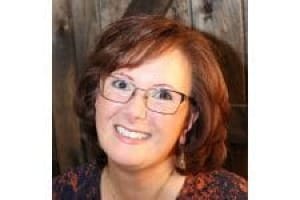
Join us for an uplifting and insightful episode of the Caregiver Relief Podcast with special guest Janet Kuebler, a certified senior advisor, certified dementia practitioner, and certified Montessori dementia care professional. Janet, the owner of Right at Home of Somerset and Hunterdon Counties in New Jersey, shares her personal and professional journey into the world of elder care, which began unexpectedly when her mother-in-law, who had multiple sclerosis, was left without a caregiver. This experience inspired Janet to purchase a Right at Home franchise in 2007, dedicated to providing the kind of compassionate care her own family needed.
In this episode, we dive into two inspiring topics: the healing power of therapy dogs and the transformative impact of the Montessori method in dementia care.
Episode Highlights
A Journey Born from Personal Experience
- Janet's caregiving journey started at age 12 when her mother was diagnosed with metastatic breast cancer.
- The unexpected passing of her mother-in-law's primary caregiver, her husband, highlighted a great need for reliable home care.
- Janet and her husband purchased a Right at Home franchise in 2007 to address this need.
- The most rewarding part of her work is helping families, sometimes at the beginning of a care journey, and seeing clients become independent again or return for more help later in life. One client shared that Right at Home allowed her to be a daughter again, and her kids to be grandchildren, instead of caregivers.
The Healing Power of Therapy Dogs
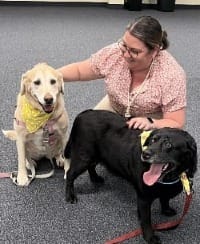
- Janet was inspired to incorporate pet therapy after one of her dogs, Amy, needed a purpose after her companion passed away. Amy became a therapy dog through Bright and Beautiful Therapy Dogs.
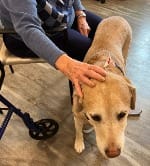
- Her therapy dogs typically visit facilities, where residents, especially those who can't have their own pets, absolutely adore them.
- In one memory unit, a woman who hadn't spoken in weeks began talking to the dogs. Another time, a resident on the phone with her nephew excitedly exclaimed, "My girls are here, my dogs are here!".
- The training for a therapy dog includes not just basic commands, but also exposure to loud noises and medical equipment like wheelchairs and IV poles, to ensure they remain calm and non-reactive. They are also trained not to pick things up from the floor or lick people in case of medicated lotions.
The Montessori Approach to Dementia Care
- Janet is a certified Montessori dementia care professional and a certified dementia practitioner.
- Montessori-based dementia care is person-centered and individualized, focusing on a person's abilities rather than their losses.
- This method encourages activities they can successfully complete, such as refolding towels, doing simple puzzles, or helping with dinner preparations.
- Unlike traditional care models, the Montessori method rejects a one-size-fits-all approach, tailoring activities to the individual's interests and stage of dementia.
- Simple at-home tips include:
- Offering limited choices to avoid overwhelming the individual.
- Giving them time to respond when speaking to them.
- Using music to make tasks like showering more enjoyable and less agitating.
- Breaking meals into smaller, manageable portions and eating with the person to encourage better intake.
- Redirecting conversations without using the word "remember". For example, instead of asking, "Do you remember your old home?" you can ask, "Tell me about a favorite room in your home".
A Message for Caregivers
- Janet's advice to overwhelmed caregivers is: "Don't be so tough on yourself. Do not feel guilty. You're doing the best that you possibly can".
- Help is available from organizations like the Alzheimer's Association.
This episode is a powerful reminder that out of personal challenges come meaningful solutions, and that there are always new ways to bring joy, purpose, and peace to the caregiving journey.
Podcast Episode Transcript
Diane: Welcome to the Caregiver Relief Podcast. I'm Diane Carbo, a registered nurse and your host, and I'm so glad you're here with us today. If you're feeling overwhelmed, searching for hope, or looking for new ways to support your loved one with dementia, you are in the right place.
Diane: Today's episode is one that will uplift your heart and expand your perspective.
I'm joined with the incredible Janet Kuebler, a woman whose personal caregiving journey led her to a powerful mission. Janet is a certified senior advisor. A certified dementia practitioner, and this is the one that I love the most, certified Montessori dementia care professional and the owner of right at home of Somerset and Hunterton Counties in New Jersey.
She brings not only professional expertise, but also a deep compassion and lived. Experience to the conversation. In this episode, we're diving into two inspiring topics, the healing power of therapy dogs, and the transformative impact of the Montessori method in dementia care. What makes Janet's story so compelling is how personal it is.
Her journey into caregiving began unexpectedly when her mother-in-law who was living with multiple sclerosis was suddenly left without a caregiver. That moment changed everything and led Janet to take a bold step purchasing a right at home franchise in 2007 to provide the kind of care her family needed.
So grab a cup of coffee or tea, take a deep breath and settle in. You don't wanna miss what Janet has to share here. Her story is a powerful reminder that out of personal challenges comes meaningful solutions, and that there are always new ways to bring joy, purpose, and peace to the caregiving journey.
Janet, thanks so much for taking time out of your busy schedule to share your story with my listeners. I've been looking forward to this for, a long time to have this conversation with you.
Janet: Thank you so much, Diane, for inviting me to be on your podcast. I really appreciate that.
Diane: Oh, I'm excited.
can you tell us a little bit about your background, Janet, and explain a little more what led you to the world of caregiving and elder care?
Janet: so if I wanna go back to, I'll start with the beginning of that type thing. When I was 12, my mother was diagnosed with metastatic breast cancer, so she needed help From then on, she did live another 25 years.
but she did need some help with, activities of daily living from that. And then when I was married in 1989, my mother-in-law had ms. Her primary caregiver was her husband Bill, and he, passed away unexpectedly. And then the caregivers that, had lined up family caregivers for Joanne didn't last long.
Like I say, one lasted less than 24 hours and one lasted a little bit more than 24 hours. And Carl being the oldest of four. It was a family discussion among the kids what to do and we could not find reliable home care for her. She was at home. We actually ended up having her youngest and his wife move in with her and take care of her, until her end of life.
And we realized at that time that there was a great need for home care and we had the opportunity with the right at home franchise that, covered Somerset in hundred and counties in New Jersey to purchase that. my husband and I decided to buy that, and then I ran it for probably about 13 years.
obviously with help in the office, but then my husband joined about five years ago.
Diane: the caregiving story about your in-laws is incredibly powerful. and it seems like it, what you went through, you, it still influences your, work today. So now you run right at home for, it's been what, two decades?
Janet: Yeah, almost two decades. 18 years. Almost two decades.
Diane: Wow. So what has been the most rewarding part of this journey for you?
Janet: I think, that in terms of that, when you're helping families, it can be at the beginning of a care journey and then sometimes we'll call them, they won't need any help. if they come outta rehab after a broken hip.
Yeah. And then we get them back to being totally independent again. We've had people who I call hospice graduates. they'll be on hospice and you as a nurse will understand this, then they'll get well enough to be off hospice. They do come back to us in the long run, for more help. But we had one, woman who she was in a facility in assisted living and we helped her.
She had a hip replacement, we gave her some more help. She ended up, being, not using our services for two or three years and then coming back toward her end of life. And I think that's rewarding. And it's also when we help families and relieve them. We have one client who said we let her be a daughter again and her kids be grandchildren again instead of caregivers.
Diane: I love that. and having repeat customers come back is a testament to what you're doing and the care you're providing because most people, most companies I can say, ha don't have the track record to have people wanna come back because of some of the issues with their staff. And,I think that's a big testament to how you run your office.
Thanks. So I am very excited about this topic because I had four greyhounds and you provide therapy dogs in dementia care. So I'd like to talk about your certified therapy dog and what inspired you to incorporate pet therapy into your caregiving services.
Janet: Okay, so we've had dogs, since right before we were married.
I wasn't a dog person. My husband is a dog person. I'm the cat person. Okay. And in sets of two, and then probably, I don't know, maybe the third set in, I'll say. we had Amy and Maggie actually passed away from cancer. Amy was a little lost, we'll put it that way. She, Sure.
Since one of them is always typically bonded to me. So she was bonded to me and she needed a purpose. And the only way that she could come with me around was if I turned her into something to do with visits to facilities. Yes. And I looked into it and, she became a bright and beautiful therapy dog.
So she was grandfathered into the, the basic one and two classes for, because she was 12 and a half, 12 and a half years old. then she took the pet therapy class, and then we passed with Bright and Beautiful Therapy dogs.
Diane: I love that. I had four greyhounds and when I got into, marketing and sales and care management.
With, nursing, I wanted to stay, continue to stay in nursing in some way, so I would do agency nursing and on the weekends I didn't work. I would take, I had the, out of the four greyhounds kisses, my oldest Greyhound was the most sociable. Energetic, happy girl that would tolerate anything. She, kids didn't bother her, equipment didn't bother her.
The earth could be falling off around her and she was just mellow. And, I just love the, interaction. So how do your clients typically respond to visits from the therapy dog?
Janet: Actually you would kinda laugh at this, Diane. I don't, my dogs don't usually go to our clients. They go to facilities.
but the residents love them. They were, yeah, so there was a little bit of a calendar mix up internally at, the assisted living went to last Friday and they Uhhuh calendar. The girls were but not on another. And people were just thought we weren't coming. And so we did some individual rooms 'cause they weren't downstairs.
Uhhuh thrilled to death. And the one she was on the phone with, I think her nephew, and she kept calling him my calling the dogs. My girls are here, my dogs are here. I have to, oh. So funny. So they all love them,
Diane: Yes.
Janet: it's a break in their routine. Yes. It's if they had pets before and they couldn't bring them with them here.
Yes. And they are, we always make sure it's okay because they're big dogs and these are places that I've been before. So some people, would prefer smaller and then I'll just ref tell the facility to contact bright and beautiful therapy dogs to get smaller dogs to come. Yeah.
Diane: I actually was in a facility where they brought in a therapy pony.
Yes. And that was amazing. it's so funny, but people respond differently and those that love animals or love pets definitely benefit from it. have you seen any especially memorable reactions?
Janet: sometimes in the memory unit, a lot of times people aren't, as, as a nurse, aren't speaking as much.[00:10:00]
Diane: Yes.
Janet: And we'll come in and it's usually the visits that we do are usually monthly in facilities. Okay. we'll get back to the memory care and one woman who hadn't spoken in a couple weeks started to talk, she'll talk to the girls. Oh, isn't that amazing? are amazed about that. Or someone who doesn't really speak, just mumbles yes or no will start talking about their own pets that they had.
Yes. Which is awesome, right? 'cause you want that.
Diane: I love those moments because those moments are times when they've connecting with their past and connecting in the real world now. And I just think that's amazing. I love to see that. and another. Especially with the Alzheimer's or dementia patients because it's so therapeutic for them.
I know many facilities, have cats that they keep on the units. And the cats. of course, I always enjoyed the one memory care unit I went to in Philadelphia, outside of Philadelphia. it was in Doylestown, Pennsylvania. They had kitty cats and on the nurses. drug cart when we were passing meds was a light, laser light thing to, to play with the kitties.
And I was always bad because I would to tease the kitties to play while I was passing meds and it was just entertainment for the. The patients and they really do enjoy that.
Janet: Oh, they do. We have, one family, their mother did pass, and they're using, the pictures of her with the dogs in her memorial service.
Oh, that's, so they just told me that Friday. That brought tears to my eyes.
Diane: Oh, that would mean too, that, that would bring tears to my eyes too. So can you explain to our listeners what, is the training process different for a therapy dog versus a typical pet?
Janet: it, it depends on, you need a well-behaved dog.
So a lot of times people, most people will get them to sit, stay, lay down all of those basics. Like the canine, good citizen test. okay. But they add in equipment and loud noises,
Diane: but.
Janet: That's part of the training, right? Yeah. And they'll have, the hospital, they'll try and do something that simulates a hospital bed.
The IV poles. 'cause they don't want the dogs noticing a catheter, an IV or anything when you go into a hospital room. Then they'll put the wheelchair and the crutches out. I'm lucky because we have access to all that equipment. So I just brought it into my kitchen for my dogs so that they were walking in and around it.
Diane: Oh, what a cool thing to do. That's smart.
Janet: And I think, the other thing that they do is they want them to have, a good stay in weight so that you'll put the dog in a stay or a weight, whatever you wanna call it, and then you walk away from the dog. Come back to them, walk away again, and then call the dog and you're probably at least 30 feet away when
are away from them so that they stay there and don't follow you. That's the idea behind it, just in case you get separated. But they look at it like if you take dogs to a high school, but changing of classes, if you're in the hallway, when that happens, the dogs can't be reactive. or reactive to other dogs.
They test that too. Yeah. They have that as part of it and a leave it a good, leave it so that they don't pick up things from the floor. Anybody feels they can't kiss when they're in there. because in case anybody has a lotion that's
Diane: medicated. yep. I can see them just licking the Ativan gel off somebody's arm or Oh, then you have a very drowsy, dog.
Janet: Not good. and then you don't, can't treat them while you're in there.
Diane: Exactly. Exactly. So now you have a very specialized approach to dementia care, and I really find this fascinating and I wanted to, e explain the Montessori approach. you're also a certified dementia practitioner and you use the Montessori approach in your, method, in your approach.
can you tell my listeners that are unfamiliar with that? What is Montessori based dementia care?
Janet: it's more person based so that when you're coming up and you look at it like as a nurse with a plan of care, so you want this individualized for what someone can do, so you have to really evaluate where they are on their dementia journey.
Part of it is helping the family understand, So that, for instance, when I was doing one, I call them meet and greets when we're discussing our services with the family. Yep. so the client, potential client needed to have an activity and so we were folding towels, and then I would just take the basket, go in the other room, unfold them and bring them back, and that Family. But the client, potential client was totally fine with Refolding towels. Yes. They're looking for something that they will do. that you can help them do to foster some independence too. 'cause it doesn't really matter if they're not bothered by refolding the towels. We shouldn't be either, if they're not bothered by matching pictures in the morning and the same things at night, we shouldn't be bothered either.
But you find a task that they can do that they used to enjoy. It might not be the thousand piece puzzle, it might have to be a 20 piece one, but you have to it that way. Or if, and to. Try and figure out what they used to do. So in the evenings, a lot of times people get agitated and they ne they'll call it sundowning, which is not necessarily what it is, but that's just an expression that's used, in dementia care.
Finding activity that they can do. One of the activities is,Preparing dinner. So if you're not in a facility and you're in a home, there's nothing wrong with having them chop vegetables using, a safe knife. Exactly. Cut you and to put things in a crockpot. Yeah. They're doing something that's helpful.
And yes, you do have to plan ahead and figure out what to do, but you come up with a project so that. They have something to do when you're trying to get other things accomplished. you approach people, you don't approach them from behind. You know all this. I do. Your listeners probably know this 'cause they've been listening to you for a while too.
We don't approach people from behind. We approach them from the front. We get down to their level. We don't, throw the lights on in the morning if, that type of thing. You walk in more quietly. You don't wanna startle people. It's those approaches. But you really have to look at it as individualized.
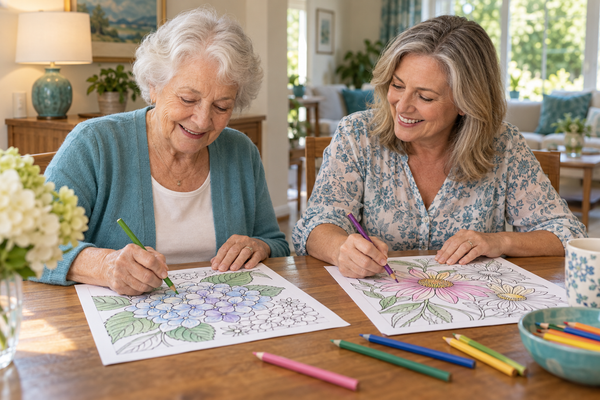
So it might be if you're in a memory care unit and they wanna do coloring well, you might have to have different coloring books for the people at different stages. And sometimes you might have to sit next to somebody and somebody else can do the project more independently. So it takes thinking about things like that.
Diane: when you were talking about the puzzles, I recently did a podcast on a company called Timeless Presence. And what it is it, they've created products. For success in activities for those in the middle to the later stages of dementia. And when you were talking about puzzles, I wanted to say, oh yes, they have everything so that they're all squared off and you can't have the unsuccessful, they'll always have success.
And I thought that was a really cool approach because you don't want your loved one with dementia to get upset or frustrated. family members don't understand. There is what they call rehabilitation and habilitation. Rehabilitation means you can recover and improve what your over time, your abilities.
We lose that with dementia and all you have is habilitation, which is just managing and trying to maintain the same base level. Now everybody with dementia eventually is going to decline, but it's really important. I know families get upset, I'll tell you what, I've had a lot of little old ladies of all different cultures that their families get upset because all they do is wanna clean,
and they wanna wipe. And we, I giggled, I was working at a senior care facility. a behavioral health unit, and this little lady was so sweet. she was a little Asian lady and all she wanted, she just wiping every down, every counter. She was cleaning the place spotless and the family was really upset and.
It was, but it was keeping her happy. Yes. And it just gives them a sense of wellbeing. And it doesn't matter what the activity is. it's something that they're used to. I've been into many facilities where, men want to have tools and they want, they're used to, pounding with hammers and stuff.
You may, you need to, get tools that. Are a lot of the children plastic tools are big enough. They're just plastic and safer to use. But you have to, I had, During COVID, I was helping a woman. I helped her. She's going blind and her husband had, dementia and he was starting into the middle stages.
He had lost his ability to communicate, and they were an older couple that had only been married for two years. It's just a sweet. Love story, in their late seventies, and he was from England and he had the most expressive face, but he couldn't communicate and she, even with her blindness, could still see, and she, she cooked and baked every day and she'd make him, she wouldn't.
In some way, and it was so good, and when she was busy with things, she'd give them a. and it, and he did well, sure. you had to follow him around and stuff, to make sure that, he wasn't throwing dirt on under the rug or whatever. But it made him useful and it really worked for them.
'cause she worked at keeping him busy and entertained. And I think that's why, because he couldn't communicate. verbally and his facial expressions showed everything he was, he was like a Jim Carrey, a, a young Jim Carrey or an older Jim Carrey, with his face the way it was. And it was just wonderful because they communicated even though he lost his ability and she gave him his dignity every single day, which I just thought was amazing.
Janet: No, it's that they need a purpose, right? We need to figure. That's good for them. And they also feel like the energy in the room. So if you're upset before you walk into somebody's room or to see them, you really have to let go of all of that negative energy. Yes. Or the positive so that you don't set anyone off the wrong way.
You have to. Exactly. It's the smiling. It's, but it can't be a fake smile. Yes. And then find things. And that's why I say we have to, help the families too. Because of them more, than it does
Diane: well, families don't understand that a person with dementia is truly living in the moment. they're mindfully living because they're, they can't focus or have the inability to look to the future, and they're losing their past.
So they, and they may have lost, like with, my client's husband. They may have lost their ability to communicate. So what do they have? They have only you or the surroundings to pick up on the tension or the vibes in the room, if you will. I tell people you have to make sure that.
You are, approaching them in a soft, gentle way, with a positive approach. 'cause if you're anxious or you're upset or you're angry at them, it's going to pick up. They're gonna pick up on that and it's not gonna be good for you. It's gonna be very ugly because they get anxious too, and then you have to calm them down.
That's hard to do It really is. So it's better to prevent. so how does the Montessori method differ from more traditional care models for dementia?
Janet: I just think that it's more person centered Of looking at something as this is the group activity that everyone's gonna do the Montessori method, just like with children.
Diane: Yeah.
Janet: Picking their, their education based on their interests and their abilities instead of one size fits all. That's how we look at it. and we're fortunate because obviously we're doing the one-on-one care, yeah. Able to do more of that. it's more difficult in a facility if you have a, a member, you know that a member unit 20 people in it.
Diane: I, have all my clients create for their dementia family member, create a person-centered care profile. I have two different ones. One is for in the home, like when you have a right at home. Worker come into your home. they have these forms that will do everything from what their abilities are.
And I'm sure you're, you have your own system for that. But, what I've done is I, what do they like to eat? what are their products that, what underarm deodorant do they use? what products do they use to brush their teeth and can they still do that or do you have to do it? And then I always ask them to fill, do one for, the ho when they go into the hospital.
'cause I'm, I don't know, I'm coming across clients that are in the emergency room for days at a time. anymore the weights. and it's really frustrating. So I have them create a one page, and I know you've seen these before, they're in assisted living facilities, but I want them to know what, one of the things, what I want you to know about me.
Is, and it may be, their nickname or something that they like to talk about so that people can approach them and feel as if,and feel familiar to them even though they're a stranger. And I think that's really important that families. Focus on, and it also makes the healthcare provider, or the professional, see the person as an individual and not a diagnosis.
And I think that's really important.
Janet: No, that is, that's a very, it's a good idea to make sure that, the hospital personnel know. fortunately if any one of our clients is doing that, they have their caregiver with them, so that's, yeah. Yes. Families don't always have that benefit of being able to stay.
Diane: Yes,
Janet: at circle. So hopefully the hospital personnel are reading that and, helping with that so that they don't have an issue with that particular client who has dementia where Yeah, they have to bring in some either chemical or physical restraints. We don't want that.
Diane: No. And you definitely don't want a chemical restraint with dementia if you don't have to because.
Lewy body dementia, just for the listeners out there is the most misdiagnosed of all the dementias, and it's the second most common. It has many psychiatric,symptoms, signs and symptoms, so it's often misconstrued or misdiagnosed, not as Lewy body dementia, but as a mental health issue. And when you're given a, a medication.
Such as, to re to calm down because they're stressed or anxious or frightened. It can have, what they call a paradoxical or opposite effect. And somebody with Lewy body will get more agitated and more aggressive and, So it's really important that people really try, the family members, try everything they can to make the healthcare professionals aware that if they don't, if they haven't gotten a definitive diagnosis, that you really want to avoid the chemical restraints as much as possible.
That's my thoughts.
Janet: that's the best thing. So you want. Aware of where they are in their journey so that they understand and hopefully, I realize that when you're in an emergency room, there are emergencies going on and it's crazy and hectic. So I get it as calm as possible, for anyone who's in there.
And a lot of times the professionals don't have that luxury, right? Because they have to take care of things. So that's why the best thing is to have somebody who knows. If
Diane: possible. Exactly. And that's why, organizations like right at home are providing a service where it allows continuity of care and follow up.
And that's really important. And, there's always somebody there if the family member can't be there to advocate for the patient, and that's the most important thing, or to communicate to the family that. There's some things going on that they need to get involved in, because there's some misunderstanding with the behaviors or whatever, because it does happen, Lord knows.
I know It does happen. Oh, it does.
Janet: that will happen in a hospital because of course there's just like I was talking about with the dogs and the training about the That's gonna set people off too, because it's a difference in what they're used to and. Chaotic. It's loud and chaotic.
Diane: Yes. Yes. A lot.
and the noise. It real, it is frightening to many of them. so Janet, what are some simple ways that family caregivers can bring Montessori principles into the home even without formal training?
Janet: they can think about, that person's typical day. Before they either retired or they had a diagnosis of dementia.
What did they to do? What were they interested in so that you can maybe take those things like you were talking about a puzzle that's all squared so you can, you're not gonna fail at it. What's that person like to do? let's say somebody really like to sew, maybe they can't sew now.
But match some things or, say, okay, here's like a pattern for a dress, mom. What, which of these materials do you think might be a good one to go with it? And what could we put as trim? Ask their opinion, ask them to do that. matching squares, if they ever made quilts, putting them together, things like that.
and even if you've heard the story 2000 times, pull out the photo album. And ask them to explain things if exactly right. Tell me about these pictures. What's going on here? try never to use the word, remember that we try and take that outta the vocabulary, right? We don't wanna say that. and if they're asking to go home, you can ask them to tell you about that home.
Tell me what, what your best memory is in that home. You could ask, that way you can just say, tell me about a favorite room in that home. And then there you're redirected them. In a way that they're gonna tell you a story and they're not gonna be trying to look to escape that room, that house, that type of a thing.
Diane: Those are little you can do. Those are little, and, families, have to realize that don't offer more than one, two things. don't say, do you want this, or this? It doesn't work. You have to limit your choices and sometimes you have to say, Is this okay? And just give it to them, or I made you a drink and drink it.
there gets to a point where they're not able to connect. So many sentences. And families also get upset when they're slow to respond. And they have to understand that when you're doing something with a person with dementia, they have slowed responses. They have, their connections aren't always connecting immediately, and it may take a while for them to think, to get to understand what you're saying.
Always give them time to respond as well, which I think is really important. and don't give up. Keep trying, anything and everything that they used to do. I have a story. I did a podcast the other day on music and memory. And, one of the things that surprised many of my clients is I had a gentleman who had been institutionalized his whole entire life.
Very sad story, but when he was young, he, they were very poor and his mom would take him into the opera, sneak him into the opera, and here's this guy who's big and burly and had, was a boxer. Had, dementia and when the only thing that would calm him down was opera music. Oh, wow. and I, so I tell people, don't judge a book by their cover because you just don't know.
How did they know? Because he would say words like Italian words and, one of the nurses picked up on it and they started playing opera music, and he was so happy. it's really sometimes investigating what they did when they were younger, much younger, because that's the memories that they have, and you just have to work at it a little more.
So that's.
Janet: Music is my favorite trick for getting people in the shower. Oh, good job. That's a good tip. Listeners pay attention so that make, the shower the bathroom inviting, right? You wanna make it warm, you wanna make it cozy. You have, you make it smell nice. And sometimes if people like to dance too, you can dance into the bathroom, right?
yes. That is a trick. And I also have, usually when their appetite is decreasing, right? A whole day of food. You know this Diane, it overwhelming, but someone will eat a whole sandwich if you present it at quarters. Exactly. Exactly. And then there's nothing wrong with here's your meal for dinner and you're just breaking it up into smaller pieces.
You don't have to have the green beans mixed with the protein mixed with the salad on the plate. You can do half the green beans, let 'em finish that, give 'em the next thing. And a smaller piece. Yes. Always sit down with people when you want them to eat and drink. Exactly. They're not hungry. If you sit down and you start eating your sandwich, they're gonna sit next to you
Diane: and start eating.
People don't understand that a lot of seniors lose weight because they're eating alone and they, if you, there's more interaction and, a better appetites. When other people around them are eating. So if you just sit and take, your time. one of my favorite things to do was, they call them feeders where you have to sit and feed patients.
And, that I loved, being able to sit and talk with some of these, patients. Some of them would respond, some of them wouldn't, but they always ate better when, I'd sing to them or tell them a story. or if they had a, I knew about their life or something, I'd talk about their family after over time you get to know their history and, they just eat better.
They drink and do everything better if they're with interacting with somebody else, a lot of times. Always. Yep. Yeah.
I've been around a long time, Janet. So Janet, if you could give one piece of advice to a family caregiver who's feeling overwhelmed right now, what would it be? Don't be so tough
Janet: on yourself. Do not feel guilty. You're doing the best that you possibly can.
Diane: Yes.
Janet: And there's help out there. It might take you a little bit of research to do it on your own if you can't hire outside help.
Yeah. the Alzheimer's Association, has, help out there, tips and tricks and so there's, it's out there and you might need to reach out and talk to somebody. Like with us, we don't always get end up with them, the families as clients, but we've given them solutions to their problems.
Diane: yes. Yes, exactly. I wanna thank you so much for taking time outta your busy schedule to talk and share. I love sharing about the therapy dogs and I love the Montessori approach, and I hope more clients and listeners out there will look for that approach in their future care needs, because it's really important.
And, how do they contact you at, in your area for your right at home business?
Janet: the office number's 9 0 8 2 8 1 7 9 6 1, and the website is www.rightathome.net. Backsplash West Central dash new. Dash jersey.
Diane: It's a horrible, put that link on the end of the page.
Janet: A horrible website name. I know that. So just call the office?
Diane: Yeah, just call the office. Okay. To my family caregivers out there, you are the most important part of the family caregiving equation. Without you, it all falls apart. So please learn to practice self-care. Be gentle with yourself because you are worth it.
Caring for a loved one can be overwhelming — but you're not alone. If you have questions, big or small, our expert team is here to help.
👉 Click here to Ask the Expert
Our Resource section can help you find the information and tools that you need. We have courses, videos, checklists, guidebooks, cheat sheets, how-to guides and more.
You can get started by clicking on the link below. We know that taking care of a loved one is hard work, but with our help you can get the support that you need.
Click here to go to Resource Section now!
You might also like this article:
 Diane Carbo
 Diane Carbo