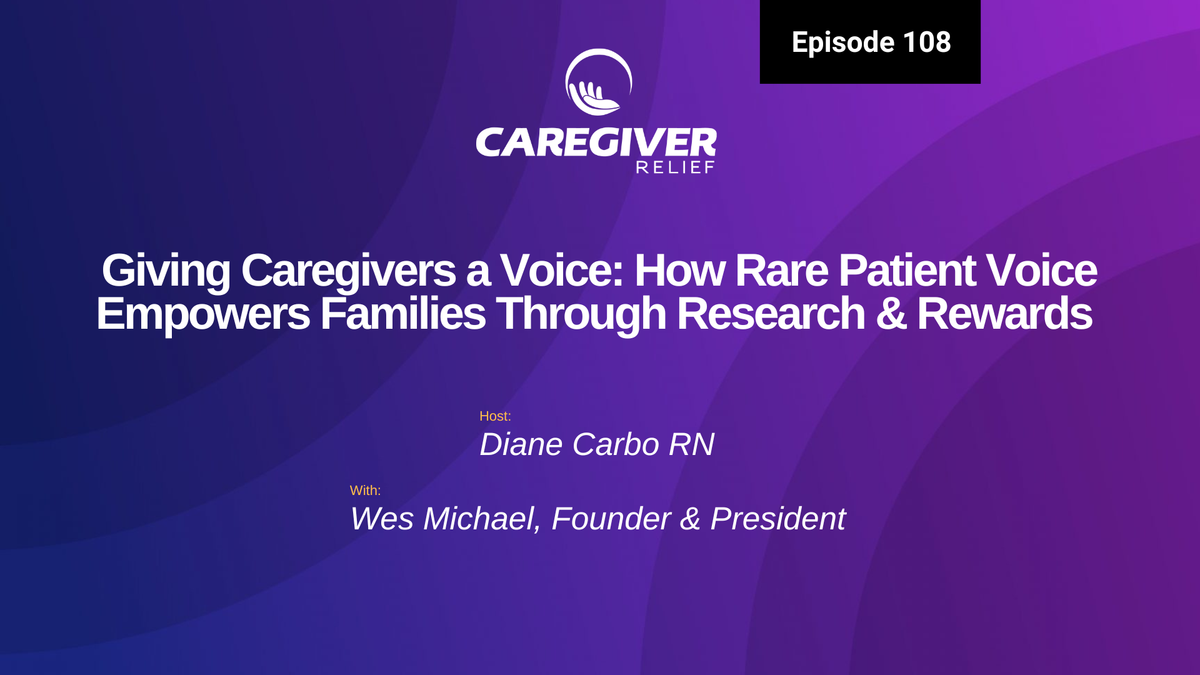
Giving Caregivers a Voice: How Rare Patient Voice Empowers Families Through Research & Rewards with Wes Michael, Founder & President - Episode 108
Family caregivers are the unsung heroes of our healthcare system, providing over $650 billion in unpaid care annually and often facing immense personal, emotional, and financial challenges. But what if your invaluable experience could shape the future of healthcare and provide you with financial compensation? 🤔
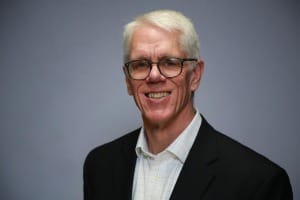
In this episode of the Caregiver Relief Podcast, host Diane Carbo sits down with Wes Michael, the founder and president of Rare Patient Voice. Wes has built an incredible platform that acts as a "matchmaker," connecting patients and caregivers with paid research studies. It’s a space where your voice is not only heard but also valued and rewarded.

Ready to find out how you can make a difference and get compensated for your time? Tune in to the full episode!
What You'll Learn in This Episode 📝
Here's a sneak peek at the inspiring conversation between Diane and Wes:
- What is Rare Patient Voice? 🗣️: Wes explains how he went from marketing research for Cheerios to creating a platform with over 180,000 participants across 1,500+ conditions.
- How It Works 🤝: Learn how Rare Patient Voice acts as a matchmaker, connecting your experiences with pharmaceutical and biotech companies who need your insights—all while protecting your privacy.
- The "Invisible" Patient 💔: Diane and Wes discuss how caregivers are often the "invisible second patient," with their own health and financial well-being taking a backseat.
- Get Paid for Your Time 💰: Your time and insights are valuable! Participants are compensated at a rate of $120 per hour for their contributions. Wes is proud to have paid out over $15 million to patients and caregivers.
- Who Can Join? 🙋♀️: It's not just for "rare" conditions! Caregivers and patients with any and all conditions, from diabetes to asthma to Alzheimer's, are welcome to sign up.
- Your Privacy is Priority #1 🔒: Wes details the strict security and HIPAA-compliant measures in place to ensure your personal and health information is always kept confidential.
- The Power of Your Story ✨: Discover how your real-world stories and feedback can influence everything from clinical trial design to the services that companies offer patients and families.
"The most important thing is, oh my God, somebody cares to hear what I have to say. I have a voice, I have an opinion. I want them to hear this. And then, oh, by the way, the money's nice." - Wes Michael
Get Involved and Make Your Voice Heard!
Being a caregiver is one of the most challenging jobs in the world, but your experience holds immense power. By participating in research, you can help create better treatments, services, and support systems for future generations.
Ready to share your story and earn compensation for your expertise?
- Sign Up: Visit RarePatientVoice.com to join the community.
- Connect on Social Media: Follow Rare Patient Voice on Facebook, Instagram, Tiktok and X.com for inspirational stories, study opportunities, and live events.
- Connect with Wes: Find Wes Michael on LinkedIn.
Don't let your experience go unheard. Listen to the full episode and share it with a caregiver who needs to know their voice matters! ❤️
Podcast Episode Transcript
Diane: Welcome to the Caregiver Relief Podcast, where we support, educate, and uplift the unsung heroes, family caregivers. I'm your host Diane Carbo, an rn, an advocate dedicated to helping you navigate the challenges of caregiving with confidence and compassion
Diane: Today I'm thrilled to welcome a very special guest, Wes Michael, founder and president of Rare Patient Voice. Wes has created a groundbreaking platform that connects patients and caregivers with opportunities to share their lived experiences through paid research studies.
With over 180,000 participants across more than 1500 conditions, rare patient voice is helping caregivers and patients alike get their voices heard while being fairly compensated for their time and insights West brings about. Over 40 years of market research experience, a genuine passion for patient advocacy and a mission to help improve the lives of those living with health conditions and those caring for them.
Wes, thank you very much for joining us today. I'm excited to learn more about your program.
Wes: Diane, I'm happy to be here. it's, caregivers. Do so much. And so it's always good to reach out to them, talk to them and see if there's any way we can help at least a little bit.
Diane: they're so ignored and they're it, they really are our caregivers and so any little bit I can do to share with them.
Any knowledge or. Of a program or anything that will help them. I'm willing to do that. Yeah. Great. So before we dive in, can you tell us a little about yourself? What led you to go from background in marketing research to founding rare patient voice?
Wes: it's funny. Yeah. So I was, I used to do marketing and marketing research for food for Cheerios and Wheaties and for McCormick Spices.
And then, in the nineties, I got into the healthcare field. I knew nothing about it, but I, nobody's born knowing anything. Doctors aren't born knowing anything, so it's like you can learn things, right?
Diane: Absolutely.
Wes: And so I got into that and, I, one, I saw, yeah, people are excited about their cereal and their spices, but they're really what's more important than their health or their kids' health, or whoever their loved one's health.
And,so they really wanted to share their stories. It was great to talk and interview them. But it wasn't always easy to find 'em. Yes, especially those with a rare disease because you there, there's things in market research called research panels. You could have a million people, but the math will tell you'll have three with hemophilia.
So what if you wanted to talk with to 20 people with hemophilia or 20 caregivers, of kids with hemophilia? And so I saw that little bit of a disconnect. And, and through some of the work I had done, I found out how to recruit people. It's sticking with hemophilia, go to the hemophilia conference where people come from all over the country, all over the world.
In some cases,
Diane: yes.
Wes: Set up a table a booth, talk to people, let them know of opportunities and so I knew that had worked and I said, someday I'm gonna do this where I am. I work and to be honest, I started in hemophilia 'cause a client had Ansys. I didn't know whether it would ever go beyond that, but I would go to the hemophilia events and it worked.
People signed up there in interested, they knew that we were real people 'cause they saw us some purposes. We knew that they were real people. Our clients loved that. We knew that they were real people. And, and then it started to grow. I went to Ms. Walks and, and then now, as you said, over 1500 different conditions.
and I, and as much as I hear you, you hear about all these conditions and rare, I keep hearing about new ones that I hadn't heard of.
Diane: Yes.
Wes: because it's just amazing. yeah, so I didn't really plan to do all that, but it happened and it was, you could tell it was meant to be because every time I'd hit a problem it would.
Something would help solve that problem.
Diane: Yes.
Wes: and people said, how did we get along with that? You? I'm like, I don't know, but it's, so it's worked very well. And the other thing that's really worked well, I have to say, I started now 12 years ago with this. And it's grown so much.
It shows that the companies out there, they've always talked about patient centricity, but I think they're doing it now. They're doing more and more of it. They're wanting to talk to patients and caregivers is a key part of it. Yeah. And so many of them, when they use the word patient, they also mean the caregiver because, a child with a certain condition can, can't speak for themselves or,a, a senior with Alzheimer's or anybody with an a l.
the caregiver is their spokesperson.
Diane: Yes.
Wes: So we have to remind people, do you do, are you also including caregivers in this study? and more often than not, they are.
Diane: caregivers are so ignored about everything. they're the, invisible second patient in the room when the doctor
Wes: is
Diane: ing and a lot of their health issues go unaddressed.
Oh,
Wes: definitely.
Diane: They really do. And it's, and they're probably developing conditions that, that you'll be doing look,
Wes: research. Yeah,we did a survey. I actually, I could send you this. A few years ago among caregivers.
Diane: And
Wes: just asked them about,what all the things they do are and how it's affected them.
And I remember presenting to a group and I said, all the caregivers, I said, I'm not gonna tell you anything you don't know. You know how tough it, but I'll put some numbers behind it, because there's so many tasks that people have. And each task is a subset of tasks. there's. transportation issues with folks.
There's financial issues that impact people 'cause they're caregiver and all of a sudden they, they may not be able to work themselves or they may have given up a dream job because of what they need to do to take care of someone. There's certainly emotional issues, right? Yeah. There's so much. And then what do they want most?
If I only could get competent help. To take a little bit of time off this 24 7 'cause it's 24 7 calling, if you will. So anyway, it's, it's amazing. You're right. they're the hidden, hidden gem that's keeping healthcare together and it's not being paid for.
Diane: Family caregivers provide over $650 million a year in unpaid care.
Wes: Wow. Yeah. And
Diane: they pay dearly for that because 63% of family caregivers become seriously ill or die from the chronic stress of carrying somebody before that person passes.
Wes: Yeah. So then, so it's a, it's even a worse situation, right? So it,
Diane: it is. So the, and so I'm really, the patient has no
Wes: one left to care for them, and the caregiver has driven themselves too far.
Diane: Yes, they have. and for those who may not be familiar, what exactly is rare patient voice and how does it serve patients and caregivers?
Wes: Oh, yeah, that's the great question. So what we do, we're, we like the position, we're like a matchmaker. we go, as I said, to events and all, and people sign up with patients and caregivers with any and all diseases.
Now we have the name Rare in our voice,in our title. But over time, We work with any in all conditions. We found that,I just didn't realize people had that, couldn't find 'em. they can't, they come to us for e so we let people sign up and when people sign up, what we do is we get requests every day from research firms.
We reputable companies that do surveys, that do interviews. They're generally doing it on behalf of pharmaceutical or biotech firms. When you have a new drug coming out, or a treatment, or a service. They've always talked to physicians and that's important, obviously, but more and more what about the people that are going to use it?
Let's talk. So they talk to them. So they come to us and say. or those biotech firms will go to a research firm and say, we wanna talk to 20 people with the lupus, or we wanna talk to caregivers of hemophilia patients or caregivers of SMA, whatever it might be. Yes. And they develop a survey. They develop an interview, they figure it all out and they go, oh my goodness, how are we gonna find these?
Then that, that firm comes to us and we say, oh, we have X people who've signed up and we match make, we send an email out. You don't call who answers the phone Now, you get all this. Yeah. Every, all my best friends apparently are called potential spam, on my phone and, we send an email out and, we tell people what it, what it's all about.
Has a, an hour zoom interview on the topic of so well if some disease or some condition, and we pay people for it, we pay people. At the rate of $120 per hour. So if it's an hour interview, they get $120. If it's a half hour online survey they would get $60. And I'm proud to say we paid out over $15 million since we got started.
Wow. And I love that because people, when we ask people why they do it, that's not the first thing. The most important thing is, oh my God, somebody cares to hear what I have to say. I have a voice, I have an opinion. I want them to hear this. And then, oh, by the way, the money's nice. It helps. It helped the holiday.
Yes, it helped me. My grandson had a birthday or it was Christmas, or you know what, it helps people. Yes. and to me it's like the people should be rewarded for their time. Their time is valuable. Caregivers, they don't have a minute to spare, so their time is very valuable. Yes. so that's what we do.
we,we're the matchmaker. We have folks, we protect their identity. We don't share their names with anybody. Everybody gets along. Alpha numeric code. So our clients will know what code did it. They'll do the interview or they'll see the survey results, but they don't know who did it. We don't see the results.
We don't see the I, but we know that, Mrs. Smith did it and we pay her. So it's really a great system to keep people confidential, yet give them a chance to say what they wanna say, and that's. If you're in these pharmaceutical companies and you're making decisions, there's a lot of decisions to be made, which, how do we set up our clinical trials, or how do we go to market or what's the, what should we promote the most?
Or what is, are people confused about? They can't just guess at the answers. They need to talk to people.
Diane: Yes. and
Wes: so that it's a real win-win. Patients love it, that somebody cares and they get paid. The clients love it. we send out an email within a day, they start getting responses, so they're happy to get folks and hear what they're to say.
That's cool. and we charge 'em a fee. So we're happy too. We pass. Yes. Yes. It's a win all the way around.
Diane: So what kind of studies do participants typically. Getting involved in. And can you give us some examples of how their feedback has influenced, real world decisions?
Wes: Yeah. There, there are so many different things.
it's whatever issues, a company might have. So often it's when it's a new, they're working on a new treatment, a new drug, a new, a medicine of some kind. And, it's, they don't, it doesn't even have a name yet. Or if it does, nobody's saying, and they'll have a written description of it.
They typically call it Product X 'cause it doesn't. Okay. and they wanna get feedback on that written description. do they understand it? would they talk to their doctor about it? and patients and caregivers love it. 'cause it's like a sneak preview of drugs that hopefully will soon be approved and be available.
Diane: Yes. So
Wes: they get it is, it's Ooh, I'm gonna look for that. Because that sounds like it serves a need, something that we don't have yet. that, so often it's, it could be a,a Zoom interview where they read that or show that description and they get your feedback, they want your feedback.
or it could be an online survey that, that does that as well. there are also, studies where they want to go into someone's home. If so, obviously you've volunteered for that. My wife says,no. We'd have to. We'd have to vacuum, but,but they'll come 'cause they wanna see what life is like.
People can talk, but you could see, oh, wait a minute. not only do they have a child with a disease, there's two other kids they have to care for and they have to balance whatever they see the real world. Yes. and how it goes on. And I think that's so important. For companies trying to think of not just the drugs, but the services that the patients and the caregivers might need.
Diane: and we also have those with, the sandwich generation where they're taking care of their young children and the elderly parents. That's a real challenge in itself as well.
Wes: And then they have no time left for their absolutely none at
Diane: all. So now you recently conducted a survey of 735 family caregivers.
Yeah. What were the most surprising or impactful findings?
Wes: Yeah, I think,I, in 2020 hindsight, I guess it's not surprising, but how, emotionally drained. how psychologically. impacted people are by that, that weight, that, they're doing it out of love, but it's a never ending, task without a break.
that takes away from everything else. And people, the comments people have are just amazing. It'd be like, my friends. they think, I don't wanna be friends with anymore. That's not the case. I just don't have time. I can't get away from my child or my, my, my loved one that I'm taken care of.
and even family members don't always understand what they're going through.
Diane: I encourage all my caregivers to create a care team partner approach to, have people around you that will, provide practical assistance. Transportation is one dog sitting, walking, Pet sitting, even just having meals being brought in on occasion or on a regular basis, there are, if uninvolved family members and uninvolved siblings, they should be able to, or extended family members should be able to provide that support, help with the laundry, help with the cleaning, hire a cleaning late.
If there somebody else in the family, the primary caregiver doing all the work, there has to be someone that gives them relief. And this can be done on a volunteer basis as well as paid, but and the pay should be coming from the uninvolved extended family members. I know nobody wants to hear that, but that's the reality.
Wes: It is gotta be shared somehow. there's
Diane: gotta be shared so often
Wes: and we have a situation like this and I bet virtually everybody has a situation like that. one or more folks may live close by to the patient and others may not. Yeah. And obviously if you don't live there, it's not as easy to do things, but as you're saying, there are ways to contribute to help with that.
Diane: Absolutely. it shouldn't
Wes: all fall on the person that like we live 10 minutes away from my father-in-law and he's 94 and he was doing great until recently and he's, really gone downhill and he's got care and all that. Is my wife out there every day? Is she taking care of things? Do we get calls in the middle of the night?
Diane: Yes.
Wes: and her relatives are. well-meaning and all, but they just can't be there as often,yes. Yeah. It's nice to, I think you bring up a great point. It's almost lay out a plan of hey, who can do what, but if you can't, there's other ways, as you say, to financially continue.
Absolutely.
Diane: There's research somebody can do from long distances. There is, medication management can even be done from long distance and somebody managing the medications. when they're ordered and you know what, all getting everything together in, in an organized fashion, there are things that people can do.
In fact, even activities. Activities are a big part of everybody's life. They should be. Yeah. And caregivers don't utilize. Care, activities as a way to get a break or a respite, but have someone in to come and, play music or color or whatever they like to do or are capable of doing.
It's possible to get little breaks.
Wes: Yeah. and every break helps as You just need to take a breath.
Diane: Absolutely.
Wes: get away for a second, take a walk. At the very least. Yeah. Because people are ignoring their own health and, mental as well as physical. And you can't do that. and it'd be nice if people 'cause then guess what? You're gonna need a caregiver and Yes. Yeah. It's let's prevent some of that,by getting those breaks as. as possible. but you have, it's work to get that to happen. you gotta work with your other siblings.
Absolutely. Whatever might be. Yeah. So
Diane: what do you think is the biggest misconception society has about family caregivers from your response to the,
Wes: I think, I th I, I guess they don't realize, one thing that people don't think as much about is the financial impact it has.
Diane: Yes.
Wes: and so many people would tell us, someone was like a Harvard MBA.
But her kid comes first and she, all of a, and they, and people,they can't do that full-time job or any job 'cause they have 24 7. Yep. And they have to move to a different location. Yes. 'cause they might need to be near a medical center that handles that particular disease. and it is obviously constrained marriages.
And then if a marriage falls apart, the financial issues get even worse. Even worse. Yes. So it's ama I think people just think, oh the finances are not part of it, but. it's one of many issues, but I think it's somewhat invisible to people how important that can be. And then it's again, if you wanted to get some help.
And you have to pay for it. Where's that money come from?
Diane: statistics show that, 25 family caregivers spend about 25% of their income Yeah. On providing care for another.
Wes: So they've lost income on the one hand and are spending out more on the other. Yes. It, yes. it's a real, it's a real tough situation.
Diane: Now financial support came up as one of the most requested forms of help. How does rare patient voice help address that need?
Wes: we help in a little way. I think it's, by the fact that we do compensate people for taking part. And, as I said, at the rate of $120 per hour, we have folks hundreds of every year that we have to send a 10 99 to, meaning they've earned over $600.
Wow. and that the other opportunity we have. As, it's called, we call it referral partners. So people, patients know, other patients caregivers know other patients. Absolutely. Yeah. We were dealing once with a,doing SMA, spinal Muscular Atrophy herbal condition. dealing generally with the parents and when we say parents, right?
More often than not, what, who is it? It's the mom, right? Yeah, the
Diane: mom.
Wes: some dads, but again, moms,it think caregiving falls much more heavily on i in my family, which my wife's care, taking care of her dad more than, how it goes. But anyway, yeah. it's just nature
Diane: of the, our culture.
Wes: yeah, exactly. The care, the female is the caregiver and the male is the breadwinner. All of. The women are earning bread as much.
Diane: Yes. Yes. Can any caregiver or senior join? Rare patient voice. And what's the process like for someone who's interested in study? Yeah, anybody with any
Wes: kind of condition.
it's funny, sometimes we'll go to an event and somebody says, I don't have anything. I'm like. I don't have a bucket to put you in. I have to put some, but any, it doesn't have to. People have diabetes or high blood pressure or asthma. It can be any and all conditions. Again, not that it's not necessarily themselves, but the person they're caring for.
Diane: Yes, you're
Wes: a spouse of somebody and you might say, they don't need me as a caregiver. you qualify as a caregiver if you're involved at all. If you're going to medical. and different surveys will have different questions to, to how they might define it. But so virtually anybody either has something or is watching somebody with that.
and so if somebody is that and is interested, they want to, they wanna take part, share their opinions and their stories and earned compensation, we, we welcome everybody to sign up. they can go online. Rare patient voice.com and all, all over, you'll see sign up here or a link to sign up.
That reminds me where I lost my train on the earlier question is,how we can help folks, the referral partners. So if some people, patients know other patients, so they spread the word, or they might be in a support group, or it could be friends, relatives. We pay $10 each for people.
We don't ask you to send names because that's not, but if you tell somebody and we can give you your own link. So we can track, you can say, you can put it in an email or put it in a Facebook, and they sign up through that link. We give you the referral partner credit, and we have folks that make it like a part-time job.
Every week we're sending a checkout to them. or a gift card, whatever they prefer. and so again, that's another way if you're, some people are very, social, they know a lot of people, they spread the word and they love to do that. And so that they can make, again, you're not gonna get rich, but it, every $10 adds up.
Diane: it does. now are there protections in place to ensure the privacy and ethical treatment of participants?
Wes: That's the most important thing. all your information is important, but health information is so important. There's no reason any of that should be out and available and anybody can see.
So what we do is, one, we never share your information with anybody. We don't, you don't, you're not getting any ads from us. The only thing we do is send an email when we have a study that might, you might be interested because of the conditions you have. or your patient, your loved one has, we'll send you an email if we see a match and we go through, believe me, this is important stuff for us. We go through, auditing and security. We're what they call I ISO twenty seven oh one certified. So we have to be very careful how are we keeping this data? We keep it in these HIPAA approved,Platforms that,so people can't just break into it. We don't share it. Yeah. And we work with our clients to not put anything like in an email. It's gotta be very secure. So we take that very seriously because. Our business is based on trust. If people don't trust us, yes, we're outta business. So we have to do it. it's obviously the right thing, but we have to do it just to stay in business.
Diane: exactly. And, HIPAA compliance is taken very seriously by everyone because, you'd lose your business if you weren't HIPAA compliant.
Yeah. that's, people need to understand that. For caregivers who may be hesitant or unsure about participating. What would you say to encourage them?
Wes: I always tell people if, you're the boss, if you're not sure, try something. you don't have to do any. We can send an email and you can decline every single one. That's totally up to you. But if you start an interview. and I never have this happen because the interviewers, the, for the companies that work with it, they're so nice. They're so empathetic, they're so knowledgeable. But if somebody asks you a question you don't want to answer, you know what I tell 'em. You're the boss. You could be like a politician. You don't have to answer that question. You know how they always answer the, they say what they wanna say no matter what the question was. Yes. Yes. if they're putting you in a position where you don't, you can just decline. You're the boss. Yeah. Don't let anybody force you to do it. If you're doing a survey and you don't like it, you can just stop it and quit. Yeah. So I tell people, so don't worry. Again, we very rarely get people do that, but if you're, hesitant about starting, realize at any time you can drop off, nobody's gonna bug you. Nobody's gonna do anything about it. It's your right. You can always do it. We even do something. I love this. One of our folks thought of this,we, I said, we send an email and we have a study. we might send two or three reminder emails over the course because you know how people are. They see it on their phone and they say, when I get to my at home, I'll do this. And they might forget. Yep. Yep. So we wanna remind people, but we don't wanna annoy them. And we have a button for people to push where they can say, I'm not interested in this study, but don't kick me out altogether. I wanna do other studies. But don't send 'em any reminders. 'cause then, and we're happy to. Okay. They don't wanna do it. We're not gonna. Put two or three more emails in their inbox. That, that can annoy people. So we wanna make it so people like us, and like to do it. We don't want to be.
Diane: absolutely.
You want people to participate. Yeah. voices are, need to be heard. You're giving a platform, an unusual platform, but a much needed platform for family, seniors, caregivers and, parents of young children with disabilities. yep. Conditions. Absolutely. So what's the most rewarding part of your work that you do with rare patient voice?
Wes: I think it's when we go out to these events, these patient events, it could be a walk or a conference, fundraisers for these different, conditions and disease. And I'll see people or the caregivers of folks. With just horrible diseases. everyone's worse than the one. and I'm amazed. I'm like, wow, these people are, and they're here 'cause they're fighting it, they're doing something. Sometimes they have lost their loved one, but they still come because they say, I want to help. Yes. Help others. And, I like, I think, I'm not seeing 'em on the day they got diagnosed. That probably was not the best day, but they've. Taking that and they're doing something about it. They're raising awareness. They're coming in here. Yes. They're helping. And that's so inspirational and to so many people's just all on a day's work. So many people, in their, that, who family members have a rare disease, if they haven't found an organization, they start their own. That's how these organizations get started. you know I,
Diane: yes,
Wes: they do. and you got, it's just a, it is, it's so amazing to have people have that, that they pull back some more energy. 'cause they're doing that on top of everything else they're doing. You can imagine a caregiver with all the work they do, and then on top of that, they say, we gotta start a group, a support group, an advocacy group. and it's just amazing to me. So that to me is so rewarding. That's
Diane: amazing to me too because caregivers are exhausted and when they have the fight in them to do something more than a above and beyond it, it's always incredible to me, that they're doing it. But the, it's a lot of it's done out of love. Yeah. A lot of it's done out of con concern. For, future generations. it may be a genetic thing and they're just really willing to put that effort in.
Wes: I know some people, I've heard some say, I wish I'd paid more attention in biology class in high school. And then they become as you can, they become an expert. Yes. more than family doctor about a certain disease. 'cause they've put all their energy into understanding it and doing it and trying to find a researcher that might study the disease that might help people in the future. It's amazing.
Diane: I recently did a podcast with a bodybuilder and she's over 60 and I have to tell you, she, She has worked with MS patients and Parkinson's patients and found that they didn't have to heavy lift, but just lifting weights. Yeah. Could delay or the progression of the disease and it's amazing. So there are things out and she just found that out just by start doing research and working. Yeah. Out and learning these things.
And then she had these clients come in that said, Hey, can you help us? And she did the research and found that, and, it's amazing what she's doing. So there was different things like that, that people don't know about. O
Wes: one of our, one of our, staff members. has ms, actually several have it, but one has ms and he's always going to the gym, and it's the best thing you can do is,he's taken that lesson to heart. Absolutely. It's absolutely, let's delay the decline, or stop the, yeah.
Diane: anything you can do to delay the decline and give you a better quality of life for a longer period is really important to everybody. So now Wes, looking ahead, what's your. Vision for rare patient voice. And how can seniors and caregivers play a bigger role in shaping the future of healthcare?
Wes: Yeah, the most important thing for us is to constantly have more folks. 'cause no matter what we have, people want more. Yeah. They want, we can get 'em 20 people with lupus with a specific. Criteria, they want a 30. So we're always looking to in invite more people. That's why I love people to join. I love people to become referral partners. we love that. 'cause the more we have, the more we can offer. Yes. and then people will have a voice because everything people say. is,you're good with statistics. You've quoted some from a thing, and statistics are very important, what really moves? People are stories, right? And yes, and an executive at some pharma company, he might see a pie chart and he might see this and that, but then when he sees, an interview with a caregiver talking about what it means to her, yes. That, that, that's what gets action more than anything. I think it's a combination of all of that, but. but people have to realize how powerful their stories can be. you may hear a lot of the groups that go and have to lobby. They do the state legislatures and they go to Washington and there's nothing more powerful, than being there and either in person or video and talking. Because diseases, no, no political party, right? If anybody, yep, exactly. You can really make a statement about what needs to be done and, so true with caregivers, as we're talking about, if there are a way. To financially help them out from the billions that they're putting into it without any compensation?
Diane: yes. Absolutely. Wes, I wanna thank you for your time today. please tell my listeners out there how they can find you.
Wes: Ah,a couple ways. our website is always real good. We have our, thing on that's rare patient voice.com, and then I'm big on LinkedIn. just, okay. Think I'm the only Wes Michael out there on, on LinkedIn. our team has wonderful Facebook page. okay. They're always and we have 45,000,followers on it. So I encourage people 'cause they'll put Inspirational messages they'll put when there's a certain study going on That we look for more. they'll put lots of news, that people find really interesting. it's, so I encourage people to go there. They even have some Facebook Live things where, we'll, yes, some of our folks will get on and have a little, talk or a show. It's just terrific. But, I'm more on the business side, so I'm a little bit more involved in LinkedIn, so I might see those things before I see the others.
Diane: I wanna thank you for your time and let my listeners know all that information that he's just giving will be put at the bottom of our page. Okay. I create a page for every podcast with a transcript and at the bottom I always put the links to the businesses and all of your excellent media and stuff. Excellent. thank you so much for your time and I'm looking forward to sharing this with others.
Wes: Very good. it's been a pleasure, Diane.
Caring for a loved one can be overwhelming — but you're not alone. If you have questions, big or small, our expert team is here to help.
👉 Click here to Ask the Expert
Our Resource section can help you find the information and tools that you need. We have courses, videos, checklists, guidebooks, cheat sheets, how-to guides and more.
You can get started by clicking on the link below. We know that taking care of a loved one is hard work, but with our help you can get the support that you need.
Click here to go to Resource Section now!