End-of-Life Planning Essentials: Insights from Compassion & Choices with Jessica Empeno - Episode 177
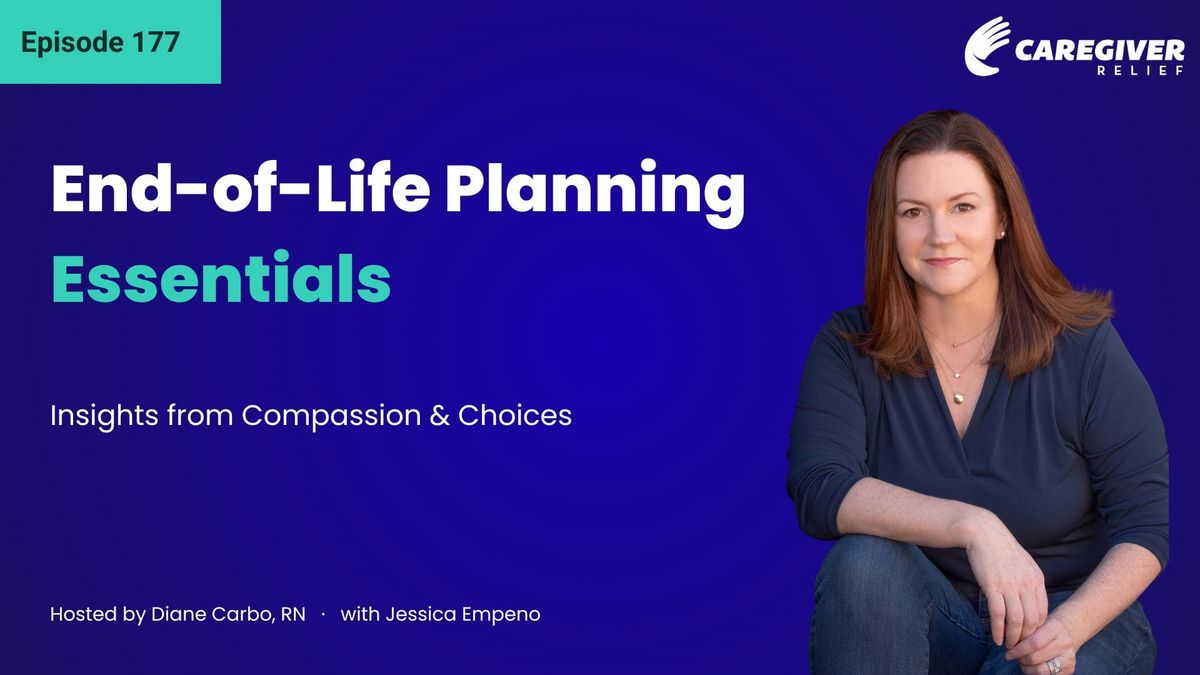
Death and dying are topics we often avoid until a crisis hits, but being proactive is one of the greatest gifts you can give your loved ones. In this powerful episode, Diane Carbo, RN, sits down with Jessica Empeno, a medical social worker and National Director of Clinical Engagement at Compassion & Choices. Together, they demystify the complexities of advanced directives, the nuances of dementia care, and the evolving landscape of medical aid in dying.
If you’ve ever felt overwhelmed by the "what-ifs" of the future, this episode provides a clear, compassionate roadmap to ensuring your values are honored until the very end. 🕊️
📝 What You’ll Learn in This Episode
- The Power of Proactivity: Why you shouldn't wait for your doctor to bring up end-of-life planning and how to "walk the talk" as a caregiver.
- Dementia & Planning: Specialized strategies for planning when a cognitive decline diagnosis is involved, and why timing is everything.
- The 3 Pillars of Planning:
- Educate Yourself: Understanding your prognosis and options like hospice and palliative care.
- Talk About It: Using tools like the "Dementia Deck" to start lighthearted yet vital conversations.
- Write & Share: Why an advanced directive shouldn't be hidden in a safe deposit box.
- Palliative Care vs. Hospice: Clearing up the misconception that palliative care is only for the dying—it’s actually a road to wellness and symptom management.
- Medical Aid in Dying (MAID): A deep dive into the legalities, the strict eligibility criteria, and why it remains patient-directed.
- Legislative Hurdles: How the Assisted Suicide Funding Restriction Act of 1997 impacts Medicare and out-of-pocket costs for patients.
🛠️ Featured Resources & Tools
- Access free toolkits, 30-second educational videos, and state-specific advanced directive forms.
- The Death Deck / Dementia Deck: Conversation starters to break the ice on tough topics.
- Roadmap to Empowerment: A brand-new initiative designed to demystify healthcare options.

💡 Notable Quotes
"Your wishes can't be honored if people don't know what they are. Advanced directives are not something that should be filled out and then tucked away for safekeeping." — Jessica Empeno
"Knowledge is power and empowering... The best way to ensure you receive care that aligns with your values is to do some planning." — Jessica Empeno
🎧 Why You Should Listen
Whether you are a professional caregiver or a family member supporting a loved one, this episode offers the "relief" of clarity. Learn how to navigate a complicated healthcare system, advocate for your rights, and find peace of mind through preparation.
Podcast Episode Transcript
Diane: Welcome back to the Caregiver Relief podcast where we provide support. Insights and a little bit of relief for those on the front lines of caregiving. I'm your host, Diane Carbo, rn, and today we're tackling one of the most important, yet often overlooked topics, end of life planning.
Joining me is Jessica Empeno. She's a master's prepared social worker. She's also a medical social worker with advanced certification in hospice and palliative care. With more than 25 years of experience in healthcare and community organizations, Jessica specializes in dementia care, caregiver support, and guiding families through complex medical decisions.
She's currently. The National Director of Clinical Engagement at Compassion and Choices where she leads nationwide efforts to improve end of life care, expand options, and empower people to direct their own journeys.
Diane: Jessica , thank you so much for being here today. I'm really excited about talking about this topic because it's not talked about enough and people do struggle with planning end of life.
Jessica: Thank you, Diane. It's a pleasure to be here and just as you said, this is a really important topic, so appreciate the opportunity to be able to talk with your listeners today.
Diane: can you start by telling us about your role at Compassion and Choices and how the organization helps navigate end of life decisions?
Jessica: Absolutely. So for more than 40 years, compassion and Choices has been the nation's largest nonprofit organization, really dedicated to that end of life experience and to making sure that people have the information that they need, that they feel empowered to make decisions that align. Their care and their resources.
So that, as you can imagine, requires a variety of approaches and a multitude of perspectives. So in addition to our legal and legislative advocacy work, we also work to a lot of engagement with the community, professional education. Really reaching out to make sure that everyone has this information.
And so Compassionate Choices has a ton of free resources and information on all of these topics, and our goal is to make sure that people have what they need to make their own decisions about what aligns best for them.
Diane: I thought that we were addressing end of life issues with the Medicare wants you to have a once a year, time to sit.
They give you a 40 minute appointment to sit down and address your care. I thought they were going to address end of life care or a planning with me. I have everything in place. I know, 'cause if I'm teaching it, I better be walking the talk.
And I have to tell you, I was so disappointed.
My nurse practitioner who I love, because not once did she say, do you want, do you have an advanced directive in place? do you wanna talk about your end of life plan? do you have a power of attorney? And I think, and then I, if hit me, this is why people aren't, very proactive because their doctors aren't proactive.
and I educated her. Good
Jessica: for you.
Diane: it's so important because people think that they're going to live forever and that they're going to stay the same and never deteriorate. They have all these, this misinformation about death and dying. Like you just wake up one day or you don't wake up one day and there's so many.
Perspectives to that. So I wanna talk to you about why, could you explain to my audience why advanced plan care planning is so crucial, especially for those living with dementia? And how can families start these conversations early?
Jessica: Yeah, this is really an important topic because, like you just described, it's something that is not talked about enough.
I think we wait for others to bring it up. not everybody is as comfortable bringing it up as you are. and you know what, in my experience, I have found that many people have thought about what kind of experience they want at the end of life. A lot of people say they wanna die peacefully at home in their own bed.
Some people prefer to be in a hospital. They don't wanna have to worry about what happens at home and making sure they have the care, somewhat time to say goodbye. Others want, they hope to go more quickly. But regardless. Not many people are talking about those wishes and even fewer than are completing advanced directives and making sure that others are aware of what they want and when dementia is part of the picture, that throws a whole new aspect to planning in there because we have a sense of how that disease is going to
Progress and we need to be able to plan for it because we know that person will eventually lose the capacity to make their own healthcare and medical decisions. So having those conversations as challenging as it may be, is really essential. And regardless of, what a good end of life experience and living right up to the end looks like for somebody, the best way to ensure that you receive care that aligns with you, your values, your priorities, your preferences, and honors who you are, is to do some planning.
Diane: Yeah.
Jessica: So there are three main recommendations. That I offer around end of life planning.
And the first is educate yourself.
Diane: Yes.
Jessica: Get that information. Knowledge is power and empowering. So do you feel like you have a good understanding of what's happening with your health condition? Do you understand your prognosis?
If you have been diagnosed with dementia, do you understand what the progression of that disease will look like and what to expect? do you have a good sense of what the future will hold? maybe it's talking through some what if scenarios with your healthcare team also, it's understanding what are your healthcare options.
Do you understand what hospice is? Yeah. Do you understand how to choose the hospice? Do you know where to go to find those resources? Like compassion and choices?
Diane: Yeah.
Jessica: do you understand things like medical aid and dying and whether that is an authorized option in your state? And what that eligibility criteria is?
Because there is very strict eligibility criteria, so really understanding what's going on can then guide the next steps. And so the second thing I highly recommend is talking about it. You've got to have those open, honest conversations. Talking about it is the number one thing that you can do to not only plan for the end of life, but to make sure that you get the care that you want, that you are hoping for.
start by giving some thought to what matters most to you. What does that good experience look like? Maybe what, are there things that you're hoping to avoid? What are those things, right? Being clear about that and then sitting down with the important people in your life to talk about it.
Open up a conversation. you might start by saying, this is something I've been thinking about. I wonder if you've thought about it too. And because a lot of us. Might have somebody in our life too. Maybe somebody that we're caring for, right? Somebody whose health is declining, somebody we care about that.
Maybe we'd like to have these conversations with them. And right now hearing what their thoughts are, especially if you're a care partner, a caregiver, a family member, hearing what somebody else's thoughts are might be the most important thing at this time because we're watching their health decline.
So the more you can have open conversations about it, and there are some wonderful strategies and tools that you can use, if you're not familiar with the death deck. Or now there is a dementia deck. that can be a really fun and more lighthearted way to start some of these conversations and get, those thoughts out there, those wishes out there, and really help with, decision making.
Diane: Those are good points.
Jessica: Ideally, these conversations are not just a one time thing. Yeah. So this isn't just happening at your Medicare annual, check. No. These are conversations that need to happen on an ongoing basis, and they definitely need to happen anytime there's a change, right? Whether there's a divorce or we're, we have a new diagnosis of a healthcare condition, or we just notice that things are changing.
Dust that off, start that conversation again and hopefully we're doing that proactively, right? Because if you wait until there's a big decision to be made, somebody's in the hospital, somebody's in crisis, your options might be fewer. Your stress level is definitely higher, and it's harder to have these conversations.
The last part, number three, you gotta write it down and you gotta share it. And we know that not enough people are creating advanced directives. Only one in three adults in the United States has an advanced directive.
And even fewer are sharing that advanced directive with the people that need it. So having these conversations is the place to start and then get to filling out paperwork that really captures your wishes. So if you're living with a serious illness, you might wanna also include a pulse or a m, which is actually assigned physician's order.
so if you are wishing for, let's say, do not resuscitate, if you really wanna focus on comfort care, having a pulse in place is. A really effective way to help ensure that happens. Your wishes can't be honored if people don't know what they are. Advanced directives are not something that should be filled out and then tucked away for safekeeping.
They do not belong in your safety deposit box, right? Everybody needs a copy. Including your physician, the nurse practitioner that you see, every time you go to the hospital, the person that you choose as your decision maker, they know only need a copy, but they are the most important to have conversations with so that you can prepare them for if and when they need to make decisions on your behalf.
Diane: Absolutely.
Jessica: So those three things are some of the best things that you can do. To plan for the end of life experience that you hope for.
Diane: When I was 16, my mom, I became my mom's caregiver. She was diagnosed with, lung cancer. And in those days you just, and she never smoked a day in her life. So I took care of her.
And when she, her last visit to the oncologist, 'cause in those days they did cobalt treatments. And, her skin was burned. I felt rif horrific. I felt hopeless. I was scared 'cause I was taking care of my mom. My dad wasn't around to help. He was out working. And, so I, and he would never, ever let us talk about death and dying.
We weren't allowed to say the C word cancer and stuff. So my, I grew up, not, I grew up just the opposite. I wanted everybody to talk about death and die, and I'm very open about it. So I really appreciate,what your organization does. Compassion and choices, because. People have no idea.
I'd like to address some common misconceptions about end of life care and how does compassion and Choices work to dispel them.
Jessica: I think there are a lot of common mis misperceptions out there. and it really comes from, historical avoidance of the topic. that fear that if you talk about it, you're gonna make it happen.
it comes from a lack of information. there's a lot of misperceptions and misunderstandings about what hospice is, and so compassionate choices is working to really address all of those things by making sure people have. Accurate information about what things truly are.
So our website is full of resources that explain and define these things. even on YouTube, we have a series of very short, 32nd videos that define some of these commonly used terms. Things like comfort, care, or quality of life. advanced directives even. These are terms that are used very frequently, but not always explained well.
Diane: Yes, I agree.
Jessica: So really working to make sure that people have accurate, reliable, current information,is one of the biggest things that we are doing. And it's a constant effort.
Diane: it has to be, because I actually, I can't tell you how many times I've heard people say hospice is killing my parent.
And I'm like. Why, where are you getting this idea? because they don't understand the death and dying process. They don't, they think they're starve, we're starving. People we're, and they don't understand the complications that happen. When a body starts shutting down and you're giving them feeding tubes, or, they don't understand that when you're old and your bones will brittle, brittle that, chest compressions from CPR break ribs and cause severe pain and that the defibrillator that they use can burn your skin.
And yes, they have no understanding of that. And then I think, It's just it's their lack of understanding and knowledge. But, some people are just happy to argue about that. they know you're still killing my parent and I really try to overcome that. But.
Jessica: Yeah. And we have, I know people believe if you're not doing everything possible, then you don't love that person, right?
There's food to love . You must feed. So you know that, that sort of thing. And we can still honor those while we help people understand the reality of what's happening to that person based on their condition and their decline. And so often, most people's. Impression of death and dying is what they see in movies.
And on tv, which is definitely not how things tend to go. And then if you combine that with a hesitation to talk about it, lack of access to correct information. and we do also have problems with, there are a lot of equity issues and barriers. To accessing care in our communities. And so if people are struggling to navigate a very complicated healthcare system, if they are struggling to have conversations in a language that they are most comfortable in or find materials that, are easy to understand, then all of those things really are working against people.
And not giving them the information that they need to make informed decisions about their care.
Diane: I was doing some reading on the site and I see that Compassion and Choices is actually has a model for emergency settings where they're integrating palliative medicine. could you talk about palliative care?
'cause people think it's you're dying and it can also be a road to wellness, but they don't understand that. But I'd like for you to address how it benefits patients, families, and providers.
Jessica: Yeah. Yeah. So palliative care, first off, let me say, is not end of life care.
Diane: Exactly.
Jessica: Palliative care is a specialized type of care for people of any age, at any stage of a health condition.
It is designed to support the physical. Emotional, spiritual and practical needs that people have when they are navigating life with a serious illness.
Diane: Yeah.
Jessica: And so the team approach that palliative care really, uses means that you have this team of people that are supporting you through that journey, through that illness, and really looking at how do we keep you comfortable?
How do we manage not only pain, but all of the other symptoms that people can experience, right? Shortness of breath and anxiety and depression, and, whew. sleeplessness. So this team really works together to address all of those things. How do we keep people out of the hospital? How do we make sure that they have the information that they need, that we are planning ahead?
So palliative is a really important approach to supporting somebody that is living with a serious illness. And what a lot of people don't realize is that palliative care can be provided while somebody is still receiving disease directed therapies. Meaning, let's say if you are living with cancer, for example, and you are going through treatment, palliative care is a wonderful addition to that.
To help manage all of those symptoms and side effects and the impact that treatment and the disease is having on your life and your family. and it's really about, supporting what quality of life means to that person and helping them achieve it. So palliative care, in an emergency setting.
Takes all of those things when someone is potentially in a crisis, but also pauses, like in an emergency room, for example, to say What's happening with this person? What are their goals here? Let's not go by the default standard of, all of the treatments. Do they have an advanced directive?
Is there a healthcare decision maker? Are they living with a serious illness? so it's really bringing all of those principles and strategies into an emergency setting as well.
Diane: I love that concept because emergency rooms, people are sitting in them for days. Sometimes they're not getting the care that they need and they're, everybody goes right to hospice and they don't understand that I'm a care manager and I.
I can tell you palliative care is a blessing for so many families because they not only help support the signs, the symptoms that you're having and try to resolve them or offer a solution to 'em, but they off also offer, education while and on the death and dying process or getting on the road to wellness.
and we don't have enough of that anymore because our stays at the hospital are shorter and shorter. And, family caregivers are expected to do care once provided by, medical professionals. So we are at a place right now where it, we're at ugly time in our healthcare system where, it, it's, we have an onslaught of, Aging adults, hitting, our, it's a silver tsunami and we don't have enough use to be able to take care of them. And, Medicare has made so many changes. They, that reimbursement is so low. It's cost, cost, Caused a shortage of doctors, a shortage of specialists. Nurses are unhappy and afraid and hate the job because they're expected to do more with less and they're not able to do the education.
I've been a nurse for 54 years, and when I went into nursing. we were able to sit and talk to our patients and explain things, and now the nurses go in, give them pills in their medicines, and that education is not there like it used to be. And it's, and the doctor's offices don't do it either because they don't have the time.
They've got, the government. strangulating government regulations, they need to have somebody to do the pre-op, somebody to do the, length of stay increases at the, for their patients in the hospital. there's so much that, our care to our patience is lacking. Now, I wanna talk about, I.
Compassion and Choices defends. our efforts to actually, I wanna talk about, medical aid and dying, if you're comfortable in discussing that because I think that we really need to, have a standard of patient directed end of life care. can you tell me what, how compassion and choices is a addressing that?
Jessica: Absolutely. And if it's okay, Diane, I'd like to also explain what medical aid and dying is.
Diane: Absolutely. '
Jessica: cause people may not necessarily be familiar with it. Yes. and again, this is another area where there is a lot of misinformation and misconceptions, about that. medical aid and dying is an option for care, part of a person's care at the end of life.
it is an option for terminally ill adults. Who are, in that final phase of life to choose to request a prescription from their, healthcare provider that allows them to essentially control the manner and timing of their death. I mentioned in that, that this is for terminally ill adults only. So this is really for people who are, have a prognosis of approximately six months or less to live.
They have that terminal diagnosis, and this is something that is absolutely patient directed. So like you said, this is really about a person's choice, meaning. The person who is terminally ill, they have to make this request. They control this process from beginning to end. Okay? They are requesting this, they are making the decision that this is what they want.
Another person cannot make this request on their behalf. so if we have a situation where somebody has. Lost their ability to make decisions. If they're experiencing cognitive changes or confusion and they're not able to communicate their wants and needs and understand the implications of their request, then that won't work for them.
So they do have to be able to make their decision right up and including the time when they must self-administer the medications. So medical aid and dying. Not euthanasia because this is not a situation where, someone else is administering the medications. It's not done by iv euthanasia is not legal anywhere in the United States.
we now have 14 jurisdictions in the United States where medical aid and dying has been authorized, in just the last few months. The new law in Delaware went into effect. the law was signed in Illinois and will go into effect later in the year, and the law was just signed in New York one week ago.
and also will go into effect a little bit later into the year. So it's important for people to understand there are very strict eligibility criteria. and while this is a person's option to choose as part of their end of life care, not all healthcare providers will offer it. Or support it, because part of the law gives them that right to opt out, or to basically,not support it in the same way that others might.
So it's important to have a conversation with your physician, with your nurse practitioner, to talk to them and say, this is something I'm interested in. I'd like more information and if I'm eligible, is this something that you will support for me? It is a process. There is a multi-step process involved.
and so people will need that support all along the way. Part of what we advocate for around medical aid and dying is not only that people understand what it is, but that also they are considering this as part of their end of life journey. There is a continuum of care and options at the end of life.
This is one. So we, a lot of people, in fact, the majority of people who consider medical aid and dying are enrolled in hospice. At the time of their death, and they are at home and so this is part of that care. So in addition to, raising awareness and providing education, compassion and choices really leads the way when it comes to the legislative work to not only pass these laws, but to protect these laws.
we are regularly seeing, Pieces of legislation being introduced, attempting, not just legislation, but actual lawsuits as well. attempting to, remove medical aid dying as an option. lawsuits that want to invalidate, and have it, declared no longer an option for people. we have an amazing, compassion legal program, our end of Life justice center that is.
Working so hard to protect not only medical aid and dying, but really all end of life options. they work to ensure that advanced directives are being honored, removing some of the laws that really restrict people's options and. and actually I would offer, to your audience that, our legal team is interested in hearing from folks that maybe have experienced that, or could use that support right now, where their options are not being respected, their advanced directive, and then being honored, things of that nature.
we also wanna connect with other legal experts who want to join us on that journey and be a part of that effort, because it. It is a big one.
Diane: it is overwhelming. Big one. And, I have a question for you. I work with dementia patients as well. I don't understand how people move towards stages of dementia.
And you're saying you have to have six months or less to live? I understand that, but some people go. Become unable people that have dementia, like I'm very an advocate that, I don't want any extra stuff. I want a pulse when I get to the right time so that I don't have anybody doing anything to me to extend my life unnecessarily.
'cause I have chronic pain. So my question to you is. people go through stages of dementia and they are not able to advocate for themselves. Can their. Power of attorney with the understanding that they're honoring this, that they don't wanna continue to be a burden to their family. How does that work?
that's the iffy part for me, because I'm all about it. I, I feel very strongly about having that option. but I know if you don't have the right power of attorney or if you have two powers of attorney and one doesn't agree with the other, there's a big challenge. So I'm just curious, how do you address that with people with dementia?
Jessica: Yeah, this is a very common question that we get. So medical aid and dying in every jurisdiction where it's authorized requires that the person is able to make their own request and make their own medical decisions at the time they are eligible. In other words, when they have that six month prognosis.
Yeah, and you're right, by the time a person living with dementia is in that final phase and considered terminal, they will have lost. Their ability to make their own decisions probably have even lost their ability to communicate clearly what their wants and needs and wishes are.
So for people that are living with dementia, advanced dementia, medical aid, and dying, is not likely to be an option for them because they can't make that request.
So they can't comply with the requirements of the law. Medical aid and dying does not allow someone else to choose that option on behalf of another. So even if it's in an advance directive, your healthcare power of attorney, your surrogate cannot choose medical aid and dying for you.
Diane: Okay. Thank you for clearing that up.
'cause I didn't understand about that, but now I read that there's an assisted suicide funding restriction act of 1997 and it interferes with many states moving forward on supporting the, medical aid and dying movement. why is repealing this important for making end of life options more accessible?
Jessica: So the assisted Suicide Funding Restriction Act of 1997 was a piece of legislation that was signed immediately after the first medical aid and dying law. The Death with Dignity Law passed in Oregon, and this was a very quick reaction at the federal level to that law, and it has stayed in place largely untouched since then.
What this act does is it prohibits the use of federal funds, okay, for any service or medication or item that intentionally causes another person's death. So in other words, that means that Medicare dollars, which are federal dollars.
Diane: Yeah.
Jessica: cannot be used for aid and dying care cannot be used for aid and dying medications.
Okay. So there are, different interpretations of that. of course. but we have had clarification that this does not prohibit hospices. This does not prohibit hospitals or other healthcare providers from supporting medical aid and dying. It just requires that they be aware that they're not using federal funds to support that.
So what that ends up looking is, for example,hospices will provide as they're required to do per the hospice benefit, all of the medications that, their patient needs. For their comfort, for their terminal care. However, hospices cannot provide the aid and dying medications with those same federal dollars.
So it ends up being that in this example, medical aid and dying people then are responsible for paying for those medications out of their own pocket.
Diane: Gotcha. Oh, that's good. You cleared that up. 'cause I was wondering how that would work. Compassionate choices defends. it's actually, there are efforts out there trying to weaken the medical aid and dying laws, and then there's those that impose religious directives that limit patient's choices.
what are you doing to overcome that?
Jessica: like a lot of our work, there are policy efforts underway. so really helping to inform, patient directed healthcare policies. We are working to raise awareness, empower patients, and then there's also the legislative and the legal advocacy realms where this comes up.
are there, laws that exist that threatens a patient's right, to access end of life care, or, weaken. The, power of an advanced directive, for example. So we are looking at just a wide variety of ways, and part of the tricky element of this is, the United States is built on this model where a lot of our laws get to be decided by the states, right?
There are some federal laws. But a lot of these kinds of healthcare laws, advanced directive laws vary by state. and so that is one of the things that we have to be very mindful of and look at is, sometimes it's a state by state, sometimes even county by county approach to this work.
Diane: Okay.
Jessica: And that's an important thing for people to know, especially, bringing it back to the, end of life planning is if you're looking at completing an advanced directive, you need to make sure that you're using the form that is specific to your state.
Diane: Absolutely.
Jessica: And if you. Maybe you live in one state and receive your care in another, or if you frequently visit or travel to another state, you might even wanna have more than one advanced directive because not all states recognize other states documents.
Diane: Oh,
Jessica: just to make it complicated.
Diane: yeah, of course. It's the government. could you tell us about the Roadmap to Empowerment Initiative? Ah.
Jessica: Thank you for asking about this. So the Roadmap to Empowerment is a brand new, really exciting resource guide and toolkit that is, currently in development. It will be coming very soon.
So keep an eye on our website. This is a project that has been, Basically a passion project for compassion choices for a number of years now, and it's really designed to provide people with the essential information that they need to make informed healthcare decisions. So understanding how things work, demystifying, the different options that are out there.
And that's a really big, new initiative that will be coming very soon.
Diane: Oh, good. I'm excited because I think we just need lots of education and if you have tools that you can share with others that, and pass it around, I think that's really important.
Jessica: Yeah.
Diane: Just because, tell us how people can reach you and then, tell us how people can donate to compassion and cares.
Jessica: Absolutely. Thank you. So the best way to reach Compassionate Choices is, through our website. so compassion and choices.org, or you can even shorten that to c and c.org. All of our resources, information, materials are on our website. And then there's also our call Compassion, which is our 800 number.
So 1 802 4 7 7 4 2 1. And that's how you can connect with our end of life consultants, our compassion legal program. If you are looking for specific guidance or assistance, just need finding that right resource material for you. our team is available there. And thank you so much for asking about how to support, because all of the work that we do is really supported by the community.
So we, as a nonprofit organization, we do incredible work to raise funds in order to be Able to continue this effort for people. going to our website also is a great way to, donate support, look at how you can support us. you can make online gifts, but also if you wanna call the 800 number and speak to a member of the team directly and even talk about, different ways that you can support different programs that you can support, our team is happy to talk to you about that as well.
Diane: Thank you so much. That's really important information and I thought this was a very important topic with the tsunami of seniors coming our way, to my family caregivers out there, you are the most important part of the caregiving equation without you at all falls apart. So please learn to be gentle with yourself.
Practice self-care every day.
Caring for a loved one can be overwhelming — but you're not alone. If you have questions, big or small, our expert team is here to help.
👉 Click here to Ask the Expert
Our Resource section can help you find the information and tools that you need. We have courses, videos, checklists, guidebooks, cheat sheets, how-to guides and more.
You can get started by clicking on the link below. We know that taking care of a loved one is hard work, but with our help you can get the support that you need.
Click here to go to Resource Section now!