Beyond Managing Decline - A Holistic Approach to Senior Care with Emma Soy RN, BSN, MA - Episode 87
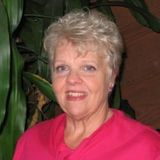
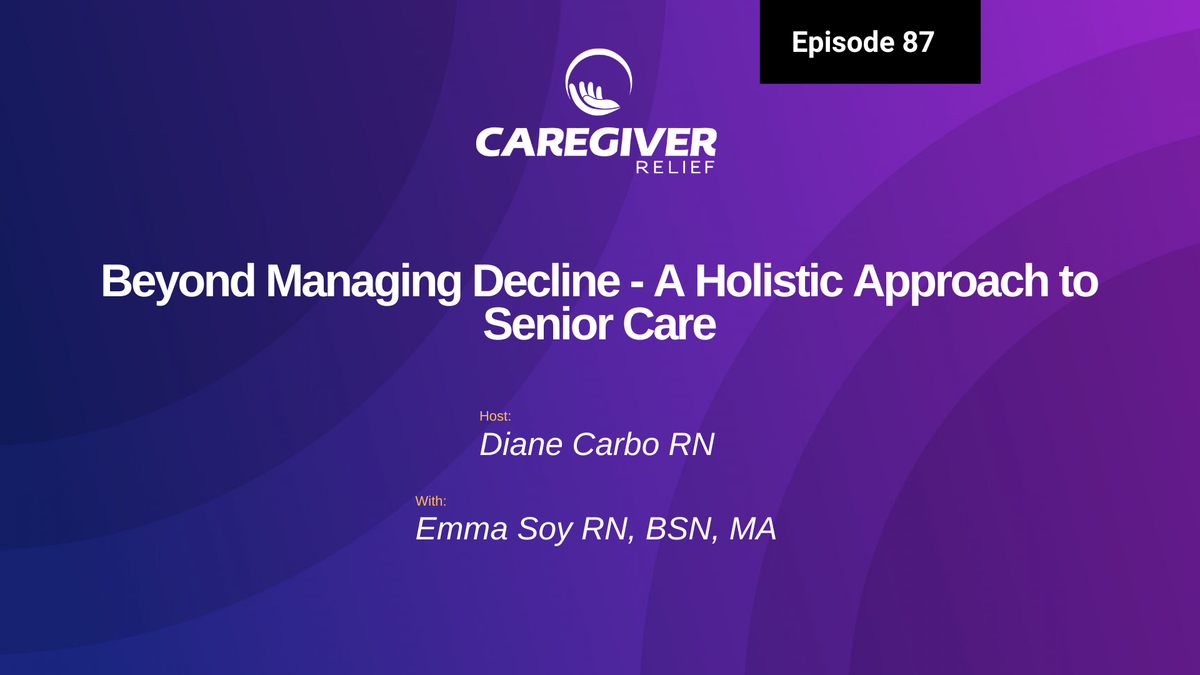
Welcome to a truly transformative episode of the Caregiver Relief Podcast! 🎉 In this powerful conversation, your host Diane Carbo, RN, sits down with Emma Soy, RN, BSN, MA, founder and CEO of Gentle Shepherd Care, to revolutionize our understanding of senior care. This episode is a must-listen for every caregiver, especially with the alarming changes in Medicare guidelines leading to unsafe discharges. 🚨
What's Inside This Game-Changing Episode?
Emma shares her deeply personal and pioneering philosophy, challenging us to move "beyond managing decline" and embrace a holistic approach where seniors don't just survive, but thrive! 🌱
You'll discover:
- A Personal Journey into Home Care: Emma’s inspiration for creating Gentle Shepherd Care stems from recognizing significant gaps in how people plan (or don't plan) for aging, where they age, and the true costs involved. 🤯
- The Critical Mind Shift: Learn why we need to move from merely managing decline to actively supporting a vibrant, meaningful life for seniors. Emma emphasizes that aging is not a disease, and many chronic conditions in older adults are often considered reversible in younger individuals but accepted as permanent in seniors. 💡
- Frustrations with Traditional Home Care: Diane and Emma expose the limitations of basic home care, which often focuses solely on Activities of Daily Living (ADLs) like cleaning, feeding, and medication reminders, leading to continued decline. 📉
- The Power of Holistic Senior Care: Dive deep into the Gentle Shepherd Care model, which approaches care from a body, mind, and spirit perspective. This includes critical, often-overlooked elements like proper nutrition, hydration, sleep, mobility, and holistic management of chronic diseases. Emma highlights that older adults' nutrition is frequently very poor, lacking vital nutrients for healing and energy. 🍎💧😴
- The Seven Critical Mistakes Family Caregivers Make: The biggest mistake? Focusing solely on daily tasks (ADLs) and not prioritizing the overall health and thriving of their loved ones. Emma stresses the need for education and a mindset shift away from accepting decline as inevitable. 🤔
- Assisted Living vs. Holistic Home Care: A crucial discussion unfolds about the realities of assisted living, often based on a "social model" rather than a medical one, and the shocking lack of personalized care despite high costs. Emma argues that home care, particularly her holistic model, offers "Cadillac care" with one-on-one attention, ensuring quality and comfort that's often missing in facilities. 🏡✨
- Real-Life Transformation Stories: Hear inspiring examples, including a client with Alzheimer's dementia who thrived at home, maintaining her cherished routines and dignity, thanks to a personalized holistic care plan that focused on activities and comprehensive support rather than just basic needs or institutionalization. This showcases how quality of life and even disease progression can be positively impacted. 💖
- The Unsung Value of Professional Expertise: Emma passionately explains that families pay for her expertise and a tailored care plan, not just a caregiver. This professional guidance ensures that seemingly simple yet vital actions, like properly administering medication or assisting with mobility, are effective and truly supportive. 💪
- A Crucial Piece of Advice: For overwhelmed caregivers, Emma's message is clear and powerful: GET HELP. Diane reinforces this, emphasizing that seeking help is a matter of survival for caregivers who often feel like failures if they ask for support. 🙏


This episode is a call to action for every caregiver to demand more, expect better, and realize that a vibrant, dignified life is possible for seniors, even in their most vulnerable times. Don't miss out on this vital conversation!
Remember, you are worth it, and you don't have to do this alone. ❤️
Podcast Episode Transcript
Diane: Welcome to the Caregiver Relief Podcast, the space where we come together to have honest, heartfelt conversations, share valuable resources and support one another through every step of the caregiving journey. I'm your host, Diane Carbo, rn, and I'm so grateful you're here with us today.
Our topic is beyond managing decline, the holistic approach to senior care. I'm joined by Emma Soy, the founder and CEO of Gentle Shepherd Care, who brings a deeply personal and transformative philosophy to aging. Today we'll explore what led them to create this approach and why helping seniors thrive, not just survive, should be our new standard.
We'll talk about the critical mind shift from simply managing decline to actively supporting vibrant, meaningful life. We'll discuss the seven critical mistakes family caregivers make and how you can avoid them. This is a must hear for every caregiver.
and we'll also cover some powerful real life transformation stories that show what's possible when families choose a different path. The key takeaway for today is you don't have to accept decline as the only path. There is another way, one that honors the whole person and their potential at every stage of life.
And remember, you don't have to do this alone.
Join our caregiver relief community, a warm, welcoming space where you can connect with other caregivers, ask questions, share stories, and find support from people who truly understand. Visit community dot caregiver relief.com to join now. Because caregiving is one of the hardest and most meaningful things you'll ever do, and no one should have to do it alone.
And if this episode speaks to you, please take a moment to like, share or comment. Every click helps us reach more caregivers who need encouragement, resources, and hope.
Diane: So let's get started. Emma, I'm so excited to have you share your concept on how home care should be. I see it was a pioneer in changing the way we do home care. It is a wonderful concept and a very timely topic as I'm seeing so many unsafe discharges to home under the new Medicare guidelines. So welcome.
Emma: Thank you very much, Ms. Diane. Thank you very much for having me today. I'm so excited to be able to not only share my, some of my ideas with you and your audience, but thank you for having me to even, I see that you're doing some great work. I am so excited about the work that you are doing for caregivers.
So needed.
Diane: I'll tell you, I'm just disseminating information. You, on the other hand, are making a huge difference and I can't wait to get into this topic because home care is becoming frightening right now, and you're change and having done home care, I can tell you what you're doing is you truly are a pioneer that I hope the world takes on, that you take the world on by storm.
So Emma, can you start by sharing a little bit about your background and what inspired you to create General Shepherd Care?
Emma: Sure. I've been a nurse for over 35 years. I keep saying over 35 because I stopped counting and I know you are a fellow nurse, so you know what I'm talking about. Yes. I remember when I was the youngest nurse around, but now I'm like the old nurse around.
Diane: hey, I'm 72 years old and been a nurse for 52 years, girl. Oh
Emma: wow. Yes, yes. So you are a youngster to me. I'm so, you're a veteran. You're a veteran. so as a nurse, I've done, how nursing is, I love nursing. Nursing give us opportunity to be able to do so many different things, so many experience, so many different kind of experience that the opportunity, in nursing.
So I've taken a lot of those different opportunities. So I've done different things in nursing and. One of the things that I did, I moved from Chicago to here down south. And when I moved here, and I thought with all the experiences that I've had, and I've worked in care as a care manager for a very long time, and so as care management, caring for the older adults, I thought, I'm gonna continue to do that.
So then I continued to do care management, but one of the things that I discovered was the home care piece that was missing. And so I decided to add on home care services. But, my goal at that time was to help the older adults who wants to age in their own place, in their own homes or wherever they call home and to age, in place to grow old with dignity, to age, with dignity, to thrive, to,
Not just exist, but also have quality of life. Those were the reasons, those were the things that were going on in my mind. And when I started the home care company and I discovered many different things, I discovered during the time that I started the Home Care, I discovered three things.
Number one, very little. Most people do not plan on how they wanna age. They don't plan on how they wanna age, where they want to age, and they have no idea how much aging costs. And I wanna tell you, aging in America is very expensive. And so when people, when someone call me. a family member call me mom or dad is 97 and they hearing for the first time home care services are $35 an hour.
They having a heart attack. I'm thinking, well, this is the first time that they hear that. So those were the three things that I discovered and I thought,
Diane: Hmm,
Emma: wow, okay, that's a missing piece that we need to do in home care. and so you asked me why this is why.
Diane: I worked in home care and I worked for, out of Philadelphia, the Visiting Nurses Association and
What I saw, this is 10, 15 years ago, and what I'm seeing now is frightens me even more. We, Medicaid for years has always had unsafe discharges to home. Nobody wants to provide services to anybody with Medicaid, I'm used to that and you learn to work with that, but now I'm seeing unsafe discharges to home because of Medicare clients, because the reimbursement rates are changing.
now you talk about a critical shift from managing decline to helping students thrive. What does that mean to you personally and professionally?
Emma: As I said, when I discovered nobody, just, nobody planned on how they want to age. And when I say how they want to age, I don't think people really understand that.
Like how you wanna age, how you wanna age means that you can just watch yourself decline. You can watch yourself grow old with chronic diseases. the triplets I called it, the three pills I always find in every older adult, pill box is something for their blood sugar, something for their cholesterol, something for, blood pressure.
So I find that most of 'em, have something like that, that I call it the triplets. And so you just take it as normal. You take it as normal. And people just watch older adults, they just go down and decline. it's like everything that the older adult complain about, we attributed it to aging.
We said, the person is getting older. That's accepted. it's not, aging is not a disease. Most of the chronic diseases that older adults are living with, we say to all younger people that they are reversible. But when older people have them, we tell them that they have to live with it.
Diane: Exactly. one of the things that I've seen over the years, first of all, I had a grandmother who lived to be 98. And she was a very healthy woman and she was very, I can remember my grandfather had his first stroke when he was, when I was young and we had no salt in the house,
And when we learned the government was moving that fat was bad. And moved all the fat out of our diets and replaced it with sugar. So I can remember my grandmother serving ice milk, that's what it was called. Not cream, but ice milk. And I grew up drinking, skimmed milk, all my life.
Because we couldn't have that bad fat. And now, here's the thing. Grandma always had her cookie jar and candy jar. And, I was pre-diabetic and it's just because I was, eating on the run. When you're a nurse, you just do that. You don't eat well.
I would like to ask you, what were some of the most frustrating things you saw in traditional home care that made you say there has to be a better way.
Emma: Okay. So traditional home care is this Ms. Diane traditional care, is this a family call? Usually a family will call you.
the reason that I say family will call you because older adult will never call you and say, I need help.
Diane: Yes.
Emma: A family member will call you and say, my mom needs help. Because that older person that, the child of the older persons, it would be their responsibility. But because they work, because of the things that they have to do, they're not available.
So they look for help. And usually what they're looking for help is, this is activity of daily living. I need someone to help my mom with cleaning up in the morning when she gets up. Make sure she brushes her teeth, Yeah. She takes a shower and she doesn't fall. she has a meal.
She just helps. She eats and she takes her pills. usually when a family member call for home care, that's what they asking for. The activity of daily living. And make sure that she's clean her bathroom and things like that. And that's what basic home care offers.
Basic home care offers. medication reminders, meal prep, cleaning, clean help with personal care, light housekeeping, that's basic. When I started to offer those kinds of things, Ms. Diane, I noticed that my clients keep declining. There are so many other important things that I could have been doing for them.
To keep them so they can thrive. Because these things do not let help people thrive. They just help people exist.
Diane: Exactly.
Emma: And I, found there are many things that older adults were missing and we were not providing to them. And so that's where I come with holistic. Home care, holistic home care means that I'm approaching the care from body, mind, and spirit and everything that person needs to be able to thrive.
Number one, most older adults, nutrition is very poor. Yes. Not just nutrition, but the nutrients. You talk about nutrition, just because somebody eats a meal, that doesn't mean it's nutritional.
Diane: That's true. Very true. And so
Emma: when I looked at the nutrition of the older adults, most older adults, I've, the nutrition is very poor.
It doesn't matter whether that person is living at home or in the most prestigious, independent living. Okay's true. Let me give you an example. I have a client living in an independent living, so the family called me and said, all she needs is she just needs medication reminders.
She just needs some, she can do other stuff. She's still able, she can wash herself, take her showers and things like that. She doesn't need anyone else. She just need medication reminders. Now, because I have caregivers in the building that can just pop in and make sure that the person take their medicine, we can do medication reminders.
the son was out of town and the son was out of town, and mom fell. and he called me and said, if I can go and have a caregiver take a look at the bandaid that the mom put in there. I'm like, she needs more than that. Let me go see it as a nurse. Okay? I go in there to check on the care and the mom as a nurse, I found the mom, it was 98 degrees outside that day.
it was 6:00 PM She still have a robe. This is the person he thinks can take care of herself? Yes. She still have her robe on, it's 6:00 PM She's been sleeping all day long. Her mouth is coated dry. She had, like an Ensure a can of Ensure that was like halfway. That means that's probably all she had all day long.
She hasn't had anything. She has a dog in the house. the place is full of pee and things like that, and she's all bubbly. She's all alert and then things like that. But she's losing balance. She's poor, balanced. She's walking around. She could fall any time and I noticed she hasn't had anything to eat all day.
I look in her fridge, even though she lives in independent living, who provided a meal. I look in the fridge, she has almost nothing in there. I go in there. I said, you need to be drinking. I give her a bottle of water. I said, we need to be having this water. I gave her some water and I, and it was past dinner time almost.
So I went downstairs to get her meal, to bring her dinner. I brought her dinner. Guess what they were serving that day? They were serving fries and a burger. So I brought to her a fries and a burger. Here's what I say. No older, the time for fries and burgers for older adults are over. Yes. When we were young, they told us not to be eating fries and burgers when we are 75, 80 years old.
This is, that's really the time. You shouldn't be eating no burgers and fries for dinner. So there are so many things that we could talk about that dinner, that meal, but those are the kind of things that you see older adults, their nutrition was, it's very poor. or the, so the missing very vital nutrients to allow their bodies to be able to heal itself.
Yes. When you give the body what the body needs, Ms. Diane, you know that Yes. When you give the body what the body needs, the body will heal itself. Exactly. So when older adults don't have the proper nutrients, they, yes, they are falling apart, but they're not, remember not only that, with the aging process.
Now if I'm going too much or too fast, let me know. I can slow down. No, you're doing fine. if you are the older adults as you are aging, the way your body used to, make things like cells, rejuvenating the cells or stem cells or things that to give you energy, you don't have that anymore.
So you no longer, your body's not making it. So if your body's not making it, you gotta be getting it from somewhere. So where do you get that? You need to get it from good nutrition. Not just food, but good nutrition. So if you're getting that from the good nutrition so then you can have the energy that you need.
So you, see not only people, older adults are not getting the nutrition that they need, but they don't have the energy. So they become weak. Poor balance. And that's where falls come in.
Diane: Yes.
Emma: So you have older adults falling. So you have the poor nutrition, you have the poor hydration.
They're not drinking, and they don't have the energy, then they're not moving. So since they're not moving then that causes them, it's become A cycle, right? you get the sleeping, you get all the stuff to receive, and then they continue to take nothing.
They take those pills from for chronic disease, but those pills doesn't really take care of the chronic disease. It just manage the chronic disease. Does that make sense?
Diane: it does. And in fact, I will tell you that, my listeners really need to listen and pay attention here because seniors that are in independent living or in assisted living
no matter which one they're in, you need to want, the families need to monitor them on a regular basis. Especially if they're not going down for meals in the facility or, I tell people right now, I tell my clients all the time, assisted living is one of the most dangerous of all the medical delivery systems.
And they all are shocked and say, why? first of all, it's based on a social model. Not a political model. So therefore, A social model requires that you're able to ask for help direct your care, Express your likes and dislikes. that's not always possible in,
for seniors. Especially memory care units. Which don't started about.
Emma: Yeah.
But you know what, miss Diane, I say, this is what I say to people every time. If you decide to bring your family to an assisted living, you need to bring someone like me, like a geriatric care manager
Diane: Exactly. With
Emma: them.
Because then we can help focus in the managing of the care of that person. Exactly. And this is the message that I have that makes home care different, Ms. Diane, that I don't know how to bring that message to people to see the value. The ca, if you want your loved one to have quality life as they age, the care need to be managed.
Diane: Yes.
Emma: So the same reason that all the reason that family just call me for, help 'em with activity of daily living. That's the whole reason why they placed their loved one in assisted living too, is to help with that activity of daily living because that's all they know, that person need, the person need much more in order to thrive.
Diane: Exactly. I recently had a client, that has a mother that just turned 104. In New Jersey, they flew back to New Jersey to see her, to celebrate. She is living alone in her home, that she's lived in her whole life independently. And last year they finally, because I've been working with them, they finally got her to agree she has seven hours of help every day.
And what are they doing? I said, look, don't, you don't want someone to come in and just sit there with her. Get them to have an act activities list. Make sure they're making her a good meal because people eat better when they're with somebody versus a long, and that's why community. eating is really nice.
But for a lot of people, for seniors that are depressed or Have other issues, they may not have the initiation to even walk down to the, cafeteria or dining room area to eat because it's just not in their heart to do it. And they need someone to nudge them along.
And that's what I see makes a big difference as well.
Emma: and, miss Diane, I say that, families, if they knew, and this is what that I'm working on, if they knew what geriatric care manager could do for their loved ones,
Diane: yes.
Emma: I don't talk about every other. Geriatric. I'm talking about me like what I do.
Yes. Managing chronic diseases help manage the health of the older adults. I don't know how to express that. How to explain it better than to say every older adults need to have a plan. Like how, I can give you the plan and you can implement it or someone else can implement it. But it cannot be continue.
It cannot be basic. mom eats, what is she eating? okay, the other day I went to somebody's house. You know what they eat for breakfast? Cheerios. Oh no, stop that. The Cheerios for breakfast. Why are we feeding older adults? Cheerios for breakfast, who already have borderline Alzheimer's dementia, sugar,
Diane: building
Emma: that inflammation in the brain.
Why are we doing that? So if you want the person to thrive now, that is, if you want to, that's, this is not for everybody.
Diane: Yes,
Emma: because you can continue the train. You can continue to do the things that you do now. Eat your Cheerios, eat your burgers for fry and fries for dinner. It's just, then you're gonna have the life that you have
now. what is it? It's the chronic, it's the decline where the person is unable to do things. Now, who wouldn't want to just keep on aging and still be able to be independent? Every time I speak to someone, that's what they want. Somebody. They wanna be independent as long as possible.
What keep people from being independent as long as possible? Number one is the, if the brain does not work, number two, if the body does not work.
Diane: Yep. What, people don't know, my listeners may not realize is seniors don't get enough protein. With lack of protein, we have muscle wasting. Really good.
I have worked with seniors in their nineties that were still lifting weights. there's a lot of things that people can do. My grandmother exercise, I know you don't know who this is, But Jackal Lane was, yeah, I know who Jackline Lane is. Yeah. Oh, do you?
before Richard Simmons was Jack And my grandmother exercised with him every morning. And she walked everywhere, which is unusual in the States. And she's an American, a pampered princess even. But, she was very healthy and very active and they had a very active social life, even well into her nineties.
Which is awesome.
Emma: which is the same thing when you hear the Blue Zone, when you hear talking about the blue zone. different part of the co the world, the blue zones. you know about the blue zone?
Diane: Yes.
Emma: Yeah. The blue Zone has areas where older people are aging.
It's chronologically, but they're biological. They're still doing things that they used to do. They still doing gardening. They still doing carpeting. They used to doing different things. And why they attribute it because of their lifestyle. Exactly. Number one, the stuff they eat.
Diane: Yes,
Emma: And so you have all those people that are living in their hundreds Yes. Who are living over 90-100. And still, because aging is not a disease, just because somebody's aging that doesn't come, just should not automatically come with decline.
Diane: Emma,
I wanna talk about the seven critical mistakes family caregivers make. What's the biggest one you see over and over again,
Emma: over and over again? the number one mistake. Older, families are making the number one mistake families are making, number one is caring. Focus on daily just task ADLs.
Yes. They think all the family need is the daily task. And if they can keep on, if they can keep on clean, if they can keep 'em to take their medication and they think that's all they need and that's not all they need. Not if
Diane: I see that.
Emma: Not if you want them to thrive.
Diane: Yeah. And life is more, it's interaction, it's social interaction, it's exercise, it's, there's so many pieces involved to.
Living and
Emma: there's so much more involved in living beside clean me, wash me, feed me.
Diane: Yes. Exactly. So tell me, Emma, how does the General Shepherd model help families avoid these mistakes?
Emma: Number one, they need to be educated. Yeah. Okay. So that was the number one mistake. I have seven, and they can get a copy of it.
But number one, and every time I think we're talking again, we have two other series and we'll, yeah, we have two more in the series. Yes, yes, yes. But they need to be educated. Number one, they need to change the mindset of older people. Just aging is a disease. Yes. They need to take responsibility because most of the number one issue that I see people do, miss Diane, is people not taking responsibility for their health.
They turn over their health to Dr. Jay, Dr. George, Dr. Jen. Yeah. Dr. This, Dr. That I love Dr. John. I love Dr. George. But let me tell you, in the healthcare system, we take care of sick people, not well people.
Diane: Exactly.
Emma: So our model is always looking for disease. If you don't have a disease to treat, there is nothing to do for you.
and then we disregard the invisible signs of things of aging that we can help people with.
Diane: And doctors in all honesty right now, it's not like the old time doctors come in and they get to know you and know the family, and know the situation. Doctors are supposed to get in, evaluate you, assess you,
Emma: write you a prescription,
Diane: write you a prescription all within 15 minutes.
Emma: Yeah.
Diane: And that's what Medicare reimburses for. And people aren't getting the quality care and nothing makes me crazier. And I tell all my clients, you have every six months you should be in the doctor's office with your med list reviewing it and saying. What can I take away now, or what can be discontinued or what can be decreased because mm-hmm.
I'm finding that doctors don't take time to review these things, so we as consumers should be taking responsibility for our own health and our own actions. Yeah. Saying, Hey, do I need these? Can I get rid of some? Because as we get older, we metabolize our medications differently, and we respond differently.
I have people that take 20, 30, and 40 pills a day.
That's absurd.
Emma: Yeah. Yes, yes. pills become the other meal that other people have because they have so many things that they take and like in the morning for dinner and all that stuff. But Miss Diane, you said something, you said two important things that I wanted to get back to.
You said older people. Don't. So you asked me the mistake that families make, number one, I said the focus is wrong. Focus. The focus is not clean. Me, wash me might take my medication. My the focus should be health. Yes. The focus should be how healthy. Now the, here's the thing. I will talk to somebody about who I am, what I do, and they'll say, well, my mom is 80 and she's doing well.
what do you mean she's doing well? what are you using? What measure are you using to say she's doing well? She's 80 years old, chronologically. She's 80 years old. Do you know biologically how old she is? What have you done to say she's doing well? So now you are waiting until she falls.
You are waiting for the falling for the fall, and then now she falls and then she start to decline. And then you say, well, she was doing well until the fall. No, she wasn't doing well until the fall. She's 80 years old. And so unless we are doing things like those things, the foundation, things like nutrition, the hydration, the sleeping, the nutrients, if the replacement on, unless we adding important things, we are taking things that are needs to be taken.
we are replenishing the body. Unless you are doing these things, you cannot tell me your mom is doing well at 80.
Diane: Exactly. That's very true. So tell me, Emma, what's the difference between a holistic senior care and conventional care models? Yeah. And can you give us some real life examples?
Emma: The conventional care model is the person who comes to me who wants like that, like I told you, help my mom with the activity of daily living.
Clean her, feed her, and that's what you wanna pay for. That's all you want. The holistic care is the per is where I come in. I do a complete, assessment. I look at the person biological age and chronological age, meaning that if they are 80. Where are they? biologically And next time we can talk about the difference,
yeah. So people know the difference between biological age. I may as well cover that biological age and chronological age. If you 80 and now with technology, miss Diane. Oh my God. So many things that we could do. We can see how old you actually are. Yeah. So it, like right now, today I'm 57, but I'm 42 biologically.
Why? It's because of the things that I do. My body function as a 42-year-old, if I don't take care of myself, my body could either function as a 57-year-old or a 67-year-old.
Diane: Exactly,
Emma: because biologically the different parts of my body, either my brain or my body, that's how old I am. Does that make sense?
And that's what causing my decline when my biological does age does not match my chronological, my goal is to either have your chronological age, match your biological age, or go back.
Diane: I have taken care of, here's a perfect example. I'm in a very upscale, continuing care retirement community in Philadelphia, outside of Philly.
And the lady that, is a research scientist at 97 years old. And she was having a history hip replacement and going back to work . As a science, cancer research. Yes. Yes. At 98. And she took one pill. One pill, and I've had so many in my life that I have had that, they've made those life choices.
and it's really, affected them as far as their quality of life and what they're able to do. So people don't have to age and have dementia, they don't have to age. And have a lot, some dementias are preventable and people don't understand that.
You're talking about vitamin deficiencies. Oh my lord. Yes. there are over a hundred different dementias. And with those, some of them are reversible. yes. The ones where the poor nutrition is one. Yes. it's very big and people don't realize that.
Emma: Yeah.
So you are asking me what the focus is. So the focus is, I wanna look at the person from a holistic Yeah. Not just the do they need the food, they, this and that. So I look deeper. I look at the biological age, the chronological age, number two. we look at all their labs, we look at the markers, the aging, the markers.
They have age markers, the markers of aging. We look at those to see where the person is, what can we do with them, the A one Cs, the inflammation levels and all that stuff. We look at their hormones level. So when we look at those to see where are they at, because I wanna know, because those are the things that are going to cause your decline.
Yeah. So I look at the aging, the markers, and I look at your biological age, and then now we have something to work on, work with. So based on those findings, based on your lab, based on those findings, then we start working. We start working on what do we need to do? And then, our five little method is we make sure that the nutrition, the hydration, the sleep, the mobility, and manage whatever the chronic disease that you have, how can we manage it holistically as much as possible.
Diane: I's that approach because, people don't understand that I recently had an interaction with a home care nurse that was, I was angry. I was really, really angry and I was trying to compose myself, which I don't always do when I see incompetence. And I had a neighbor that was sent into the hospital for seizures.
she was having them, she's 15 years post a heart attack where she had not enough oxygen to her brain. She's probably having these seizures over the last 15 years, but they have been ignored or not picked up on. And she goes in the hospital, a UTI triggered her seizures. So we have all this.
The stuff. She gets discharged home and the doctor in the hospital doesn't have, or the discharge planner, which having been a discharge planner and care manager like you, I'm like appalled. She didn't order a home care nurse. She ordered this lady pt. Now I had to scream and holler and yell because they said, oh, she doesn't need a home care nurse.
Oh, this is when I said, you need outside case management like you, because what I found was that the nurse, they didn't give a nurse. And then when the nurse came in, she didn't address her seizure medication and she didn't address her urinary tract infection, which it turns out she kept telling us, even with her short-term memory, and she's young, this lady was in her, early sixties.
she kept saying, I know I have a urinary tract infection. And everybody poo-pooed her and they sent her home like that. Long story short, I had to have the agency send out a nurse. She opened it up. Didn't address any of this. And I'm like, she's on new seizure medications. I said, you need to do a, urinalysis, because she said she has a UTI.
Well, she said she doesn't have any symptoms of a UTI. And I went, I don't care. I said, yeah, seniors don't always show symptoms.
Emma: except for their seizures or their confusion and know whatever.
Diane: And I know she's thinking, oh, this old nurse, what? Yes. Yeah. So she's just being a bossy bitch.
Well, welcome to my world. Yeah. Yeah. Thought she did have a UTI. Yeah. people don't know what they aren't, what they don't know. The families don't know what they don't know.
Emma: The families do not know what they don't know. Yeah. And so that is why I said what you're doing is very important, miss Diane, more than because families are sent home with very little knowledge of the care of their loved ones.
And to be able to have someone like you providing the professional education for families like that, this is priceless.
Diane: thank you Emma, and I appreciate that. But you know what, I have seen so much happen in healthcare, the decline in healthcare over the years, and that's why I keep doing what I'm doing because I family caregivers are now be 63% of family caregivers become seriously ill or not Yes.
Before the person they're caring for.
Emma: Yes,
I cannot begin to tell you the frustration that I have.
Diane: Yes.
Emma: when we cannot bring this message that you just the statement. This statement you just made. Yes. To a family caregiver for them to accept and to say, whoa, that is true.
I need help, help me.
Diane: Here's something that will really be a wake up call. When I started my first website 20 years ago, it was called Aging Home Healthcare. At that time, 50% of family caregivers. We're becoming seriously ill or passing before the family impersonate. So it's already jumped up to 63% and
now, with the changes in Medicare reimbursement The family caregiver, we're just gonna be killing them off. All that sounds terrible, but it's unrealistic. We have no, affordable respite care. We have nobody, we have people that have no background in healthcare at all being expected to provide care.
Emma: Yes. That is one. Professional care. Yes. Professional care. Yes. because I think, I don't think people know what we do as nurses. No. they probably just think like we passed medications. Not knowing that the critical thinking that we put it in everything. and I'm talking about nursing our age. I'm not talking about the nurses today.
Diane: Yes.
Emma: That is who goes take care of someone. Who has a wound, but that nothing tells them that they need to do wound culture. So I'm not even talking about those kind of nurses. Yes,
Diane: yes, yes. when I see a wound, what do I think of? Oh, you gotta increase the protein, you gotta get some, zinc and vitamin C in them.
And I look at it from a totally different perspective than the new nurses out there that don't have time to perform, to do that kind of thing.
Emma: Yeah. Yeah. And then we have to look at what reimbursement is doing to, to people too. Yeah. The good thing is the service that I provide is private. That is for the person who wants that extra help, care for themself and who are willing to pay for that.
And and a lot of seniors don't have that. A lot of families don't have that extra money. They, depending on the support of reimbursement for Medicare or insurance to cover, which insurance do not cover and Medicare do not cover. And the cut is cut. It's cut, it's cut. I remember when I used to do home health a hundred years ago, where as a home care nurse, I could go to somebody's home, for like a whole year to make home visit and things like that, to make sure these things are done.
Nowadays. It's like I, I don't know what they get, like couple visits, couple nursing visits.
Diane: Oh, just a couple. and even. Ot, PT and speech are almost no. Yeah. And it's really sad. Yeah. Emma, how do you train or guide caregivers differently in the General Shepherd approach?
Emma: so the way I train them, approach is this education, right?
So my dream is to be able to offer continued education for families that are under my care so they know what's going on with their loved ones. If they are interested. Again, as I tell you, I don't know if it's society see older people, so different than I see it, or they, how you see it.
Diane: Yes.
Emma: I'm trying, that's what I'm trying to do to educate families not only how to care for the loved ones, but to bring these kinds of ideas to the ones who care to awake 'em. To stop to, it's like an interruption because this is the trend. This is how people think about aging. And I come in with this other thought and said, no, aging is not a disease.
And then people are like, what? What? Okay. Just because somebody's 80, 90, that doesn't mean they need to decline. You need to put 'em in a nursing home or assisted living. If you're bringing someone to an assisted living, bring me with you so I can create a plan of care of how they need to treat your mom and dad.
And that wakes me going like, why? Why would I do that? I tell them, if you are already paying this kind of money for an assisted living, why don't you make sure that, this is the care you get.
Diane: Yes. you know what, that's the other thing about assisted living that I, I think that people don't understand.
You're paying big bucks. I mean big bucks to just have independent living. You have nobody there in the building. Or if there is, there's one nurse that, will be called in if you, put it on your fee schedule. 'cause everything is a la carte. So if you need meds given, that's paid extra. If you have, what laundry services, that's extra.
You want a blood pressure check that's extra. So my thought,
Emma: say it louder. Say it louder. Because I know people in the home, I don't know. for my area, people think the solution is assisted living. Oh no. They keep thinking like, oh, home care is very expensive. Let me bring my loved one to assisted living.
Because they have 24 hour care that is not 24 hour care. They have no idea who's taking care of their loved ones. First of all, like you just said, they have one nurse in the whole building. What? She's not working 24 hours a day. Okay. Yeah. They're gonna call her if something is needed. Well, me too. I have a home care company.
I have a nurse on 24 7. Yeah. So if some, if something is at home, they need something they can call a nurse to talk to a nurse 24 7, just like the assisted living, there is no difference because the assist the nurse is really not seeing your mom every day.
Diane: I will tell you, I was A-D-O-N-A director of nursing in a very upscale, very posh, wealthy section of Philadelphia.
I mean, it was, the Steinway in the lobby, the wait staff in the dining room with their hats and all that fancy garb, and it was one of the most unsafe places I ever worked. Yeah. And when I tell people that they're shocked, but I have horror stories and I will share them at another point, or if somebody's interested, I'll talk to them about it, but yeah, we'll talk about that.
Yeah. Yeah. But I do want people to know that what you are offering is home in the ca care in the home that not only makes a difference and provide services, but you're doing it probably at the same rate or a little may, if more. At least you're getting better quality care than if you were assisted living.
Yes, I already know that.
Emma: Yes, yes. It is more, it is more to care when you getting care, but. You are getting Cadillac care compared. Don't compare Nissan with Cadillac because you're talking about comfort. You come in. So if you are looking for quality and comfort, it's always home. It's always home.
And if you're going to take your loved one, and I'm saying if you have to, because a lot of time families have to do what they have to do. Yeah. If they have to go to assisted living. That's why I said bring someone like me as a care manager, I can support someone anywhere. What does that look like? Ms.
Diane, if you take me to an assisted living with you, I oversee the care of the loved one of your loved one. First of all, we'll create a plan of care of what you want, right? Yeah. Now you, part of it is you want quality food, for example, nutrition, because not everybody should be eating the same food. For example, if you want somebody to have nutritional food with the kind of nutrients that you want them to, you have to pay attention to that.
Don't just throw that. Don't just leave that up to the beautiful assisted living. because this is important to mom's life. This is how she's going to thrive if she doesn't have the proper nutrients. So we are gonna create that. We are gonna create everything that I create at home. I'll give it to you so your mom can have that in assisted living, and I will, supervise it to make sure that it's being done.
Yeah. So that will cost you an extra thousand dollars a month while you are already paying 10,000 a month for assisted living. So you may as well,
Diane: Emma, what clients and my listeners don't understand is that, we are in a public health crisis. We don't have enough people to take care of our elderly.
And, it's a very serious issue as we have the silver tsunami. the baby boomers are retiring, the youngest of the baby boomers are retiring by 2030 or will be a retirement age, and the oldest of the baby boomers are turning 80 in 20. So we've got, all these issues that we have to face. And what I'm seeing, Medicare is moving to an accountability care organization.
That's a joke from the government, I think mis misnomer, but I won't go there. I will tell you right now what they're doing is it's going to be a cost sharing. Plan. So you are a person that, if you want the care that's being recommended, you need to have somebody that is willing to pay for it.
they'll say the government has become in between the doctor and the patient. And the government is the gatekeeper for everything, and they've screwed up our healthcare royally. What was a good program where we did provide care for even our poor, and I saw it all the time. I was always proud of how we provided care.
Since managed care has come in like Obamacare, forgive me. We're not, I'm with you, I'm with you. We don't have that safety net anymore so that nobody's getting good care.
Emma: Yeah. Can I tell you the sad thing is, here's the sad thing. I have my son who's in med school. Okay. God bless him. And I was talking to him about my holistic care approach, and he said to me, be, now remember, you know he's in the system already, right?
Yeah. So he says to me, mom, this is a good idea, but who's gonna pay for that? That's number one. He says, number two, he says, ma, I understand that you are, this is a good idea that you're saying, but we don't see old people like that.
Where's he gonna school? He's at Chapel Hill, he's in med school. He said to me, he says to me, mommy, society don't see older people like, and he's just telling me the truth. Yes, yes, yes, So to, to him, he said to me like, you, like this is such a dreamy world you are in. because you talking about a topic that is, that's not how we look at older people.
Yes. Yes. And so I see it in the eyes of people as I explain this. Number one, the older person themself, Ms. Diane. Yeah. kind of give up on that. they're not gonna be doing this. All the stuff that I'm telling them, they're really not motivated. Some of them are not really motivated to do any of this.
They're like, oh, whatever. I'm, they've given up.
Diane: They've given up. Yeah.
Emma: They've kind of given up, my sister's gone. My, my wife is gone, my husband is gone, whatever. I'm just waiting for Jesus to call me home, kind of thing. Right? Yep. They have children. I took visit to say what? Like, what?
Okay, I just wanna make sure she doesn't break her hip kind of thing. Yeah. So I'm looking at it. When, when he said that to me, I'm like, yeah, I'm probably, I'm, I'm probably. Preaching not to the gospel at all, and not to the pre choir at all. Yeah.
Diane: But
Emma: I'm hoping the more I speak this, someone will listen and somebody will stop.
Again. I'm stopping people from their regular thinking to make people think that there is a better way of taking care of older people instead of letting threat and let of just decline. Like, I had a patient who, who told me he, she took care of her mom at home and she said so many times, the doctor told her, you, there's no way you can do this.
This is too much. You need to put her in assisted living. You need to. But she said, and I used to take care of her mom at home, and she never told me she was looking for assisted living. She said, Emma, I never told you, but she said so many times, I visited so many places. She said, one thing that I saw, they were so lonely.
She said, I'll go to those assisted living. And I said, those people were they were doing nothing but watching the walls. Emma, she says, nobody comb their hair. And Emma, she said, they were just glaring. And I saw thought, wow, I cannot hit my mom like that. Now, miss Diane, those are the, daughters that I'm talking to today.
Yeah. The ones that really want to give their mom the best of care, even at the last. On the last day on Earth, her mom was in hospice. And she says to me, you know what Emma, the hospice nurse was caring for my mom as though she was dead, but I was taking care of her as I, so she can live. Even though, not just because I know she wasn't dying, but while she's here, she's living, I needed her to live.
Diane: Emma, I'm gonna share a story with you about my father. My father was a letter carrier. And he worked hard all his life. My mom died when I was a freshman in nursing school, and, she was young. She was in her forties and I was only 17. So I'm the oldest of four. Anyway, my dad gets us through life.
we all graduate. We're all productive human beings. And, he's retired and he had bought into a timeshare and every other year he would save his weeks so that he'd have six weeks and he would go to Hawaii. And he loved Hawaii. It was his favorite place. So when you're talking about hospice and stuff, my dad received a diagnosis of pancreatic cancer after a Whipple procedure.
Oh. So, you know, he was bad. And the doctor said to him, Lee, you only have a few months. And the first thing outta my dad's mouth was, oh no, I'm not gonna get to go to Hawaii. and I said, wait a minute. in front of the doctor and everybody here's me the bold nurse at, you know, the bossy one little sister.
I said, dad, you're not dead yet. Yeah. I said, and we're living in Pittsburgh, Pennsylvania. And I said, dad, if you feel well enough to go, we could put you in hospice over there just as well as here. Yeah. So you wanna go for six weeks and you're feeling well enough to travel. Then you go, so he did, he was able to go and in fact, when he was in hospice over there, this is why I know exactly what you're talking about, they took him off hospice the first week because he had this rejuvenation of spirit.
He had an amazing six weeks. The day before he was, and I said to him, dad, if you pass over there, I'm okay with that. Are you okay with that? we're a big family. They're all screwy. You do what you wanna do. Yeah. And he said, if that's fine.
So we agreed to that. But he came home and he died a few months later. Because he had a, he was laid out in a Hawaiian shirt and a lei. but you know what, I can tell people right now, you don't, you can live life up until the end, even under hospice now. Hospice, yeah. Now wouldn't even think about letting you do that because they, it's all about reimbursement, but
I can tell you yes. That I tell people all the time, you live life until your very end, and you have the ability to do that with the right approach.
Emma: And then the thing is within, with hospice, Ms. Diane, just because somebody, if somebody's hospice, the kind of care that you want, like your mom, let's say your dad wanted to go to, anybody wants to go to Hawaii, they don't need to be signing up.
they can pay for hospice. They can pay for somebody to. End of care, life care to you. Yeah. wherever you are, because the reason that you sign up under hospice is so they can get the benefit Yeah. Of them paying for it. But the life, the end of life care can be provided by new provider.
Diane: Well, absolutely. the big, big, growth of death doulas and end of life specialists. Yep. It's a whole holistic approach. And the holistic is the key here, Emma. And that's why I love your approach to care because we have a growing, army of healthcare professionals that are concierge nurses, concierge therapists, ot, PT, and speech because they are going to provide care for those that can pay for it and want Yeah.
Yeah. Because we are seeing families being expected to provide care that once was provided by healthcare professionals. And it's going and it's very dangerous right now. Yes. And it's going to get worse.
Emma: Yeah. And that's why and those are the people that I really wanna talk to. The people who care.
Diane: Yes.
Emma: The people who want the better, something better, someone who can afford it because yes, we do need to pay for the professional care. and so yes, it is out of pocket. It is. But we do provide the care that is not, that it's not comparable to the basic care that you receive, which is clean me, wash me, take my medicine
Diane: because that Yeah, there is life to be lived.
if, yeah. People will put processes in place. Processes, yeah. You live to live your life fully.
Emma: Yeah. Put a pathway. We have a method. We have a pathway. We, that's what make our home care different. It's not just like when, we go, on the wind, oh yeah, watch me.
The, yeah, this is part of it. But there is so much more to living and thriving beside clean me, wash me, and take my meds. As I said, you could take, you could eat. What are you eating? Cheerios is not meal. It's not food for old people. Hot dogs and burgers and fries are not the meal that we feel.
Social energy. That should be an older adult's, schedule. in all the other parts of holistic care that comes with it. Yeah. The sleeping has a whole, and next time we'll talk about that. that has a whole process for these kinds of things. So nutrition is the one that I wanted to talk to about today.
That's great. and yeah.
Diane: Now, have you seen any, transformation stories that stand out, Emma? Like where a family or a client made this shift and saw a major change?
Emma: So I I have a care, I have a client. I had a client she passed away who lived in, and again, this new, this concept is very new that I'm trying to get people to accept.
Because this change take time for people to accept. It's a new model. When people hear, oh, I have to pay extra. They're like, okay, give me the old one. the, so it's a process.
Diane: Yes, yes.
Emma: so I have an, I have a client who used to live, close by and she used to live on the lake and her kids who live out of state, that's one of the reasons that they used to have me on, hit me on board.
She wanted to, the kids said, I never wanna put, and she had dementia, she had Alzheimer's, dementia, God bless. And her, they said, her daughter used to say, I don't, I'm not gonna lock up my mom. Because she says memory care. I just lack up places because they're not doing any different, anything different to make to change to for the disease.
So they're locking her up. So she said, no, I don't want her to lock up. And then she says, if something is wrong with her, I don't want you guys to run around back to back and forth to hospital with her either. Just I want her to be home as long as possible and be like, well, I want her to thrive. And so the other thing is with her, she gets, I want my mom to wake up whenever she wants to.
Yep. I don't want her to be an assisted living. She's gonna, she has to be up by 6:00 AM Yeah. And she doesn't wake up until 10. Yeah. So she said, I want her to have her own schedule. So then that's where the holistic come, she wakes up whenever she wants to. Usually she wakes up at 10 o'clock in the morning.
Yeah. Okay. And then her day is structured like, okay, we don't have a structured day. It is whatever she wants to do. Mm-hmm. If she wants to get up, she wants, she's used to getting up and go walk, take a walk. We go take a walk with her. Yeah. Now she's not able to express herself the way, but she'll take her walk and she'll knock it at the door.
Boom. Like we say, oh, she wants to take a walk. And so we are not yelling at her because she's knocking the door. But it's, this is her way of telling us like, I need to go take my walk. And so she'll take a walk and she's like knocking at the door and then, okay, let's go. We go take a walk. She comes back, she does whatever she wants.
We have activities, whatever. She loves her magazines and she watch 'em. She cuts her magazine, whatever she wants to do. She can, she has three bedrooms. She can walk in any one of those rooms whenever she wants to, and we just make sure she does. She's safe, she does whatever she wants to. she drinks a glass of wine every day at 4:00 PM and she has that every day.
And so her life was this, and she's watching. She wants to face the lake. She was right on the lake and she's watching her. She is living, she watched the birds. She feeds her birds. She goes to the garden. She does what she can. She and she lived with Alzheimer's dementia. Okay. She doesn't have to be locked up.
She doesn't have, she can live the life. She can eat what she wants and the things that we feed make sure that she eats the quality food because we the one who's feeding her, right? Yeah. Yeah. We feeding her. So we make sure that the things that she's eating is proper. Her sleep patterns, like whenever she's going to sleep, we make sure we have a whole routine, how she sleeps and quality.
We monitor her sleep at night. How is she getting up? Is she waking up in the bed Because we had a camera watching her. Is she waking up at night? Why? And then so we monitor her, and didn't give her pills. She really didn't have anything. Like even with Sundown, we find ways to make her quiet because we know the time between four and six and how she gets, worked up and things like that.
So we create activity around that and she passes right in her home, and that's the story. For her.
Diane: You know what, Emma, I love that story. And what people caring for someone dementia don't understand is activities are as important to the patient as they were when before their dementia diagnosis.
Yes. And, it gives them a sense of fulfillment. It gives them a sense of dignity, it gives them a better sense of wellbeing if they can do things that they love and enjoy. And it's also a way to avoid challenging negative behaviors that occur.
Emma: Yes. And the issue, the reason that people place people, with me, Alzheimer's and dementia and memory care units is because they are unable to manage the science symptoms.
They are unable to manage them. And so they think, well, what do you think when they put 'em in assisted living, there's no cure in there.
Diane: In fact, you know what, having had, been a DON and have toured many memory care units, the majority of them are, and I will say 99.9% of them are just locked units to keep somebody safe.
Yeah. Should have activities around the clock for those that are sundowning or whatever. they should have things that are in place. and they don't have, they're not even staffing according to the acuity. So the pe people that are, have dementia, I hear horror stories of people saying their family member wasn't fed.
in memory care after they're paying like 10 or $12,000 a month for this unit, and they're even coming in and finding their loved one soaking wet with urine because nobody was in there to take care of 'em. And that's on, that's just, and I hate to see this, say this, but corporations are taking money and they, and because they're not regulated as a, like other organ, other, uh, medical delivery systems are, the assisted living are taking advantage of that.
And it's really sad. And that's why I tell families you have to have, and you're a perfect example of why they need someone like you in this, in involved in these care. In the care.
Emma: Yeah. But when people say home care is more expensive, Ms. Diane, they're comparing one-on-one care and one to 20. Yes, exactly.
So yeah, the assisted living can charge you $10,000 a month because they take, they have 10 or 20 other people. They have one or two people taking care of them.
Diane: Yes.
Emma: So where at home you have one person taking, doing one-on-one care. Yeah. So it's all about what you want, what you're looking for. I have a doctor currently that I'm using some of her method for, she wrote a book on reversing Alzheimer's.
Okay. And I'm using, some of her method in my Alzheimer's for my Alzheimer's patients. She actually have clients, she has a memory care unit, Ms. Diane, where she is applying just nutritional changes. Interesting. And she's reversing people's behavior and she's discharging people from her unit
Diane: that's amazing.
I will challenge
Emma: just nutrition, just managing their nutritional level.
Diane: Wow. I do know that people, can slow the caregivers don't realize that they have the ability to slow the process of the disease by providing, good nutrition exercise, getting them socially interactive. Other things.
Emma: Hydration. Yeah.
Diane: Yes. And hydration. Exactly. And those are things that are missed, I think, in the community settings, like in memory care or assisted living. And that's why I love that, you're offering this at home because people don't understand what a gem of how valuable this is to you to improve the quality of life for their senior.
That you can actually delay the progression of the disease, better long, quality of life for a longer period of time.
Emma: Yes. And it, and those things sound so simple that Ms. Diane, but it's so sim simple. Why don't people do 'em? It's because they need a profession. they sound simple.
But they need a professional, point of view or aspect. Yes, yes. That we have a way of delivering those things that make it effective. to finish, let me give you a quick example. I had a client one time who called me the, I cannot get because, you know, people with Alzheimer's dementia, it, we have issues with eating meds.
They don't take their meds or showering. Those are big issues and families can get older people to do. Yeah. So she, he calls me, he says, Emma, I just found all my mom's meds under her pillows. She has not been taken 'em. I give it to her and I watch her and she takes 'em and she hides them and things like that.
She's not, and I said to him, okay, this is what we are gonna do today, Emma. How do I get her to take her pills? I said, oh, no problems. One of the ones that are important that she must take. Okay, here's, okay, let's go. Okay. I said, you're gonna do. Take apple sauce. She likes applesauce. Yes, she likes, okay. Yep.
We're gonna take these. We're gonna put them with apple sauce. We're gonna feed them to her. You're gonna give it. She said the first day he did it, he's like, Emma, you are so smart. I'm like, it's not smart, it's expert. I just,
Diane: common sense.
Emma: But it's common sense to me. Like to me, I've done it a hundred times.
we have done it a hundred times. I have
Diane: to tell you, people don't know how valuable our knowledge is and here we are. That's what I'm talking about. That's what I'm saying. No, and I want, I want my listeners to know we throw a wealth of knowledge. We know so much because we've lived life. We know the system, we know everything about it.
We know the ins and outs, the good, the bad, the ugly, and we wanna help at just let us.
Emma: And yes, we are experts in this thing. I go to a client's house and the wife is, has this, her husband who has Parkinson's and he's declining and he's at the edge of the bed and she's like, Emma, how do I get her up?
How do I get him up? I, I, God, okay. Let's put a pull sheet in this bed. Okay. Just like what's a pull sheet? I make a pull sheet and I put it in them and then we just screw them up. He say, oh my God, Emma. Yeah. That's the expertise. That's what you pay me for. Yeah. They don't just come for free. I spent years learning how to do these
Diane: things.
Little. Yeah. They look simple. That make a huge difference. Just one tiny little thing. that can make a life easier for the caregiver and the person they're caring for. It's huge. It's huge.
Emma: So that's why when someone asked me what I have to pay this for a caregiver, I said, no. You're paying for my expertise.
Diane: Yes. Yes. Because
Emma: I am sending a caregiver with expertise and be behind, to take care of your mom with me. With me behind them and I give 'em instruction guidelines, how to do I take your, each person is different. I don't have a cookie cutter care plan. I have a care plan for your mother and for your father.
What is going on with them? and I'm behind this caregiver to tell 'em, do this, do this, do this, do that. So that's what you paid for, not the caregiver.
Diane: Exactly. So Emma, what's one piece of advice you'd offer today to a caregiver who's feeling overwhelmed and unsure what to do next? Get
Emma: help.
Diane: I love that because, you know, get help.[01:05:00]
One of the most challenging things family caregivers do is they feel totally helpless and hopeless. And they also feel that they are a failure if they ask for help.
Emma: Yes. and the help is valuable and there is value and that and the help. And you can't put a price on getting expert help.
Diane: Exactly.
Exactly.
Emma: 'cause if you don't, you're doing it at the detriment of your own health
Diane: Exactly. And with what's happening now in today's world, with Medicare reimbursement, putting more and more pressure on the family caregiver, we really need to let people know, we're out here, we're here to support you call me.
Emma: Yeah.
Diane: reach out to me.
Emma: I telling you, are a gift to caregivers to be able to have such an experienced nurse who's been through so many things, who've seen so many things out there, giving people this kind of education.
Diane: And I'm 72 years old and they, and I'm invisible.
Yeah,
Emma: yeah, yeah, yeah. And you are like, you bringing this body of knowledge. You know how in nursing we always talk the body of knowledge. yep. We have this body of knowledge that is out there in the internet today with the technology. People anywhere can have access to you anywhere in the world. They can get access to this and care.
And America is the same care everywhere. Every older person, no matter where they are, could you know, could get,should, yeah, should the best time of their life. it's the most vulnerable time of their lives. They should be able to get the best, even until the last breath on this earth.
Diane: That's my philosophy
Emma: and I'm doing it for all, all for people. I hope somebody will do it for me too one day.
Diane: I'm hoping as well, my son's a crna. He is a nurse anesthetist. he puts people out for a living, so I'm not hopeful he is gonna be able to take care of it. yeah. I laugh about it, but that's nursing humor to my family caregivers out there.
I wanna remind you, you are the most important part of the family caregiving equation and without you, it all falls apart. So please learn to be gentle with yourself, practice self-care every day, and please don't hesitate to ask for help. It's a matter of survival because you are worth it. Thank you, Emma, for your time, and I'm looking forward to our next one.
Thank you for having me today.
Our Resource section can help you find the information and tools that you need. We have courses, videos, checklists, guidebooks, cheat sheets, how-to guides and more.
You can get started by clicking on the link below. We know that taking care of a loved one is hard work, but with our help you can get the support that you need.
Click here to go to Resource Section now!
Caring for a loved one can be overwhelming — but you're not alone. If you have questions, big or small, our expert team is here to help.
👉 Click here to Ask the Expert