Aging in Place Without Compromise with Erica Sell - Episode 173
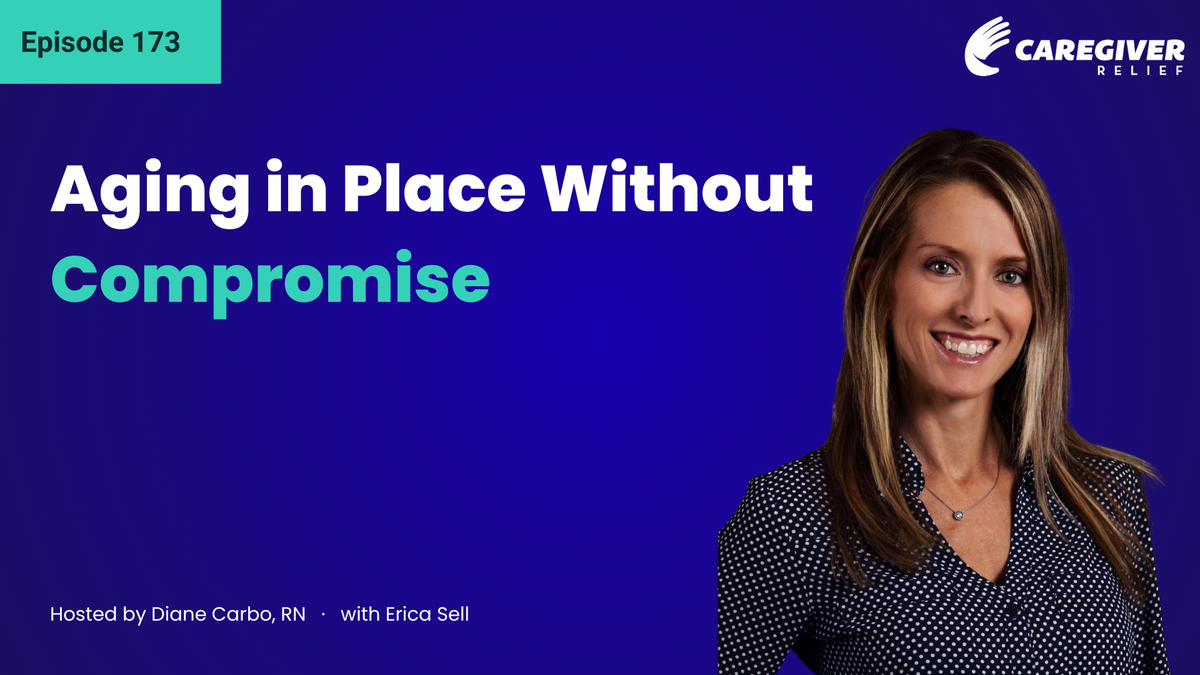
In this episode, Erica Sell flips the script on the traditional warehouse model of medical equipment. If you’ve ever feared that needing a hospital bed or a walker means turning your home into an institution, this conversation is for you. Learn how Universal Design and innovative technology are making it possible to stay home longer, safer, and happier.
📋 What You’ll Learn in This Episode
- The "Beauty" of Modern Medical Beds: Discover adjustable high-low beds that look like traditional furniture with padded headboards but offer advanced hospital-grade positioning.
- Bathroom Solutions Without the Remodel: How products like the Shower Buddy or Nuprodx can provide configurable bathing solutions for a fraction of the cost of a full renovation.
- The Truth About Medicare: A candid look at why Medicare is covering less and how to navigate the "cost-sharing" landscape.
- Psychological Freedom: A moving story about how a custom power chair returned a veteran to his community after 18 months of isolation.
- Simple Safety Upgrades: Low-cost tips including motion-sensor lights, higher Kelvin bulbs, and "color distinction" for floor transitions.
💡 Episode Highlights
- The Shift in Mindset: Why Baby Boomers are demanding dignity and choice rather than institutionalized settings in their homes.
- Bathroom Hacks: Avoiding expensive remodels using track systems that allow users to transfer in the bedroom and slide into the shower.
- Medicaid Pilot Programs: Innovative ways some states, like California, are beginning to cover home modifications like stair lifts and ramps.
- Saving the Caregiver: How a lateral rotation mattress automatically turns a patient, saving the caregiver's physical health and preventing pressure sores.
- The "New Seatbelts": Why grab bars are essential safety tools and why aging should be worn like a "badge of honor".
- Navigating the Bill: Pro-tips on using "self-claim forms" to get higher-quality equipment while still utilizing Medicare allowables.
✨ Resources Mentioned
- Harmony Home Medical: harmonyhomemedical.com
- Educational Videos: Visit the Harmony Home Medical YouTube channel for guides on hospital beds and mobility aids.
"Aging is a blessing. You've made it, you've learned... I would say rock it like a badge of honor." — Erica Sell
Podcast Episode Transcript
Diane: Welcome to the Caregiver Relief Podcast, the show dedicated to supporting family caregivers with practical advice, expert insights, and real hope. I'm your host, Diane Carbo, a registered nurse and longtime caregiver advocate. Today's episode is one I'm especially excited about aging in place without compromise.
My guest is Erica, sell, founder and CEO of Harmony Home Medical in San Diego. She's a certified assistive technology, professional, a certified agent in place specialist, and a true innovator in the home medical equipment and accessibility solutions.
Erica grew up in a medical equipment family. Saw the limitations of the traditional warehouse style model and decided to do it differently. She built a beautiful showroom . Experience Focused on dignity, choice, and real life solutions that don't sacrifice style.
Today we're gonna flip the script on how most people view medical equipment from last resort to smart empowering tool that helps seniors stay in their homes they love longer. Safer and happier.
Diane: Erica, thank you so much for, joining me today. I appreciate your taking your time out.
Erica: Thank you, Diane. I'm excited and honored to be here.
Excited to talk about my favorite topic.
Diane: I'm giggling as I'm doing this because baby boomers are absolutely demanding. They, they do not want institutionalized setting in their home, and I love that we're having, we're now coming into an era where, people like you. He listened and are now resolving that issue and providing a solution and an incredible solution to make people happy, as they remain in their homes.
Erica: Yeah. Choice and education is everything. Yes. And when I came into this industry as an adult, so I grew up working in this industry as a kid in the. Traditional style that Medicare focused warehouse model,
Diane: Uhhuh.
Erica: and it was only when I came back after college for a family emergency when my mom allowed me to do some of the complex rehab projects.
So the measuring for showers and stair lifts and custom chairs and stuff that were inside of people's homes. And they were generally for regional center, which is up for developmentally delayed kids. And I said, why don't you know, why don't you show these rolling showers and these ceiling tracks and these like stylized beds?
Why don't you show 'em to our Medicare patients, in your store? Why don't you do a retail store? She said, oh, Medicare doesn't pay for it, so people aren't gonna pay for it. they won. They won't come out of pocket for things. They only want what Medicare wants or pays.
Diane: Yeah.
Erica: And I said, I don't, I think you're wrong.
I think they will like, this is so much better. Yeah. she said, no, they really don't. And so I ran off after getting her store saved. That was a rough time. She had a really large embezzlement and, we managed to pull through and keep her business like for another, about eight years after that.
But I went back to San Diego and I started in the Delmar Fair with a tiny little booth just carrying the nicest of the scooters, the nicest of lift chairs, which are uncovered, a roll and shower demo to see will people be interested?
Diane: Yeah.
Erica: And they were. And so it started from there and I did, a tiny little store and packed it just with everything that is just the best of the best.
And we've grown from there. And people really, they wanna know what's possible. And what's available, and if Medicare covers some of it, great. Yes. But unfortunately the way that it's been going is that Medicare has covered less and less since I entered the industry
Diane: 100%. In fact, Medicare is moving to a,
cost sharing platform. And now everything durable medical equipment is almost not covered for most things at all. And, even in like skilled care, the Medicare Advantage plans in skilled care want to charge 200 to $400 a day copay to be in skilled care after a stroke or a total. It's ridiculous.
And I just had a good friend, who is doing cardiac rehab and it's $150 a day copay for him to walk on a treadmill three times a week.
Erica: Yeah. Oh,it's crazy. And I've seen it from the beginning with, it was called Competitive bid, where we had to bid against each other and it reduced rates 42% across the board for products.
In that time, prices have barely changed, but the cost has probably gone up 42% in the last 10 years. So a lot of vendors have gone out of business and continue to go out of business, and that's why we just stay creative on ways that we can do new used financing. rent to own. Different ways to help people be able to afford it.
And we also do a pretty decent donation recycle bin, where we bring in equipment, refurbish it and put it back out.
Diane: That's awesome.
Erica: gotta do what we can to try to make this accessible to people
Diane: and we're living longer. and seniors are trying really hard to remain in their homes as they age.
They need medical equipment, durable medical equipment, they don't want their house to look like a hospital. So what are some of the most stylish and discreet options available today?
Erica: the best one I think for people coming home that they don't realize exists sometimes is gonna be the adjustable high-low bed.
This one is, it is a pricey one. But if you are going to be very reliant and you're gonna be, using your bed for years, they last for decades. So if you have a good prognosis that you're gonna be living at home for years to come, it's well worth it. And what they are beds that look just like a traditional home style bed.
So padded, headboards, beautiful sideboards, really pretty. But they go really high, really low. And the ones we carry even do forward and reverse t trendelenberg.
Diane: Ah, okay.
Erica: It's all the advanced positioning you get in a long-term care hospital bed at a facility. Yeah. But in this beautiful package, so when someone's coming home, your loved one's coming home from the hospital, they're already, psychologically setback, they're discouraged, they've had an incident.
the last thing they wanna come home to is like a metal brown. Bed with their gray walker next to it and the yes, white patient lift. So all those products, we take them, we make the bed makes it just feel so much more like home. And it makes their psychological and their emotional outlook so much better.
And then the rollators and even the transfer devices, we have better looking, more streamlined solutions for all of it.
Diane: one big fear is expensive remodeling,especially the bathrooms. What equipment solutions can you help someone with who becomes less mobile, avoid a full bathroom renovation?
Can you do that?
Erica: Yeah, we sure can. So we've done, we can do just a replacement of remodeling with something called a shower buddy. new products. There's another brand that makes this in there tub or shower track systems where there's a little track down on the floor. And there's a chair that rolls out to the bedroom.
So you transfer safely in the bedroom and then roll that chair into the bathroom and click it into the track and you slide it across the shower or the tub ledge.
Diane: Oh wow, that's fascinating. No,
Erica: spring in the bathroom.
Diane: Yeah. Yeah. And you can
Erica: toilet from it as well. Roll it over. The toilet, it has the commode opening and you use your existing toilet.
Or you could use the, commode bucket if you wanted to.
So they're configurable in a myriad of ways, so most bathrooms can be accommodated, even little bitty bathrooms with this product. And it starts at about 3000. And for a tilt version, you can get as high as like 6,500. It can get expensive if you need Tilt and tilt would be, if someone has no seated balance, if they're have a, a LS or a stroke that makes them unable to sit upright, then you can use Tilt.
But even at 6,000, it's a lot less than a minimum of about 15,000 for bath and remodel.
Diane: Yes. What's that product called again?
Erica: Shower Buddy is one.
Diane: Shower buddy.
Erica: Okay. And a new products N-U-P-R-O-D-X.
Diane: Oh, okay.
Erica: The both of those are the brands.
Diane: Okay.
Erica: And they make these configurable bathing solutions.
Diane: that is wonderful because that's one of the biggest challenges so many seniors have.
And,they're always looking for a way to do it cost effectively. 'cause they wanna, right now they actually have to stretch their healthcare dollars because what we're finding is right now, they've, Here's a perfect example that I wanna share with you. Medicare has moved, like I said, to the cost sharing platform, but they've also done something, they've cut Medicare benefits to the skilled facilities and where we once had 90 to a hundred days of rehab.
they still say we have it, but we really don't because, Medicare has cut the reimbursement so that a facility makes a higher level of reimbursement not providing therapy. So what we're seeing is people are going home with traditional Medicare in the first 20 days, that 20th day they're home.
even if they're not ready. And I know people say,no, but I can tell you I, I've seen it way too much. And then if they have a Medicare advantage plan, they're going home the 11th to the 14th day. what's happening is.
Erica: Yes. they're trying to reuse home health or replace facility stays yet, about five years ago, they cut the home health reimbursements
Diane: Yes.
Erica: And making it focus on, ICD 10 codes, diagnosis codes.
Diane: Yep.
Erica: And if you're not progressing, so they cut it short.
Diane: Yep.
Erica: so they cut the f the thing they're relying on now years back and now they're cutting the facilities and relying on that thing. Yeah. And it, so they just keep pulling back. I don't know if most people know there you can after Home Health for a while, use Part B Medicare for private physical therapy at home.
Ah, there's not a lot of companies that do it here in San Diego. Physio to Go is a company that does it. but they can come and make a exercise plan and pick up where Home Health left off. For a duration and I dunno how long that is. And then they can convert to private pay once their billable cycle wears off.
But there's a little bit more therapy available from that part B section.
Diane: What I've learned from home care is they're not paying the nurses, so the nurse who should be going out to assess the patient. perfect example. A client I had that had, seizures. She had a heart attack 15 years ago. She started, she's probably always had seizures, but nobody picked up on it.
They were getting really bad and she also had frequent urinary tract infections. they sent her home saying she was independent with a wheelchair. No potty chair, nothing in the house at all, and she had 15 steps to get up to her bedroom, which had a handicapped accessible bathroom. We couldn't get her up there and no bed to sleep in downstairs.
It was horrific. it's, that's why I love hearing the solutions that you have because, I wasn't there the night she came home. I was, out of town, but the next day I came home and, my roommate's daughter was in student nurse and she ran out and bought her a potty chair, a commode.
And it's they pick the cheapest and it's not the best solution.
Erica: No, I wanna speak to that a little bit about the bathroom being upstairs. This is something in my industry that I, one of the, another reason why I expanded into home accessibility and why I've done my business the way I have is that when, when I was seeing my clients getting sold, walk-in tubs and stair lifts, things I didn't do right when I opened my business.
Diane: Yeah.
Erica: Getting hard sold in their homes by. Almost like a used car salesman type of setup. And that's the stereotype, but high pressure sales. Oh,
Diane: yes.
Erica: High pressure sales to do a bathroom model. And they were doing things like a bathroom remodel on a second floor without addressing the long-term care plan.
Diane: Yes.
Erica: Or doing a stair lift to upstairs. 'cause they want stair lift. They wanna get upstairs now. But not addressing the fact that they had a tub in the en suite and a walk in downstairs.
Diane: Yes.
Erica: Yeah, there's a full picture, a lifespan to consider. And so that, that's another place where harmony shines.
And I hope more people in the industry, more people can just find, experts in the space to talk with before they make their decisions. Because it's not a single incident, it's a lifespan of mobility considerations.
Diane: And that's one thing that most families, especially seniors, they feel like they're being bullied.
Or, or they, and they need something and they're afraid. If they don't take it, they're not gonna have any other options. And then there's the family caregiver who's like trying to make a decision, but they have not a clue what they want. And they think this person is the expert and they are put under high pressure sales and they purchase a product that.
Like you said is not good for the long-term, result for the family. Because the person, because like he, Catherine couldn't get up to the,it took, she slept in a bamboo chair for weeks because nobody would even get her a bed. I, we used the potty chair 'cause we couldn't get her to the bathroom.
This is silly, but my roommate has a disabled home. she's disabled, and we lived two houses down, so we, I literally Gabby the student nurse and I actually put Catherine in a wheelchair. Dr. Brought her down to Tara's house and gave her a shower.
Erica: That's awesome.
Diane: Isn't that awful?
Erica: yeah, it's awful.
It's awesome you guys did that for her, but it is it that she had that already? So she probably need to make another purchase that she wasn't planning on of a stair lift to be able to keep her house being her house for life.
Diane: Yes, exactly. and that wasn't given and the fact that the facility said she was independent, you don't send an independent home person home with a wheelchair.
And she was a big fall risk. it was, I went round and round with this. Place, but it was a rehab hospital and I did rehab, so I know, but
Erica: it's
Diane: just,
Erica: one silver lining in the insurance world for MySpace right now is Medicaid programs. Oh. But most of us aren't on Medicaid. Yeah. there are ways people can move their assets around to get on Medicaid if it becomes, the last resort for getting things done.
Diane: Yes.
Erica: And, in San Diego, and in California it is, they are doing this pilot program where they're covering home accessibility modifications. A stair lift, a vertical platform lift and modular ramping. So we've been able to go into mobile homes, for example. and put in $20,000 modifications of their patio and vertical platform lift and Medicaid is paying for it.
the best one is Community Health Group. The best Medicaid, h HMO is Community Health Group to cover these. And I've never seen it done before. We've been doing it for almost two years now.
Diane: But California's going broke. So I don't know how long that's gonna last because I saw it when I was out there living, that they provide these, they create these wonderful programs that pay caregivers to, or pay the family member or caregivers in the home.
And then when the budget runs out. The people do. And that's just Medicaid everywhere in, in the country. Yeah. But I love that platform and I hope that it lasts.
Erica: we do, I hope it saves money of people going to skilled nursing so they see the value. I hope
Diane: so. I agree. And you know what families are gonna try to do, with Medicare Advantage, when you hear two to $400 a day copay and they're looking at you, they want you to stay for at least 30 to 90 days.
No senior can afford that. that's more than their monthly bill would be more than their, social security check for most seniors. And then, the other ones, it's Going into the retirement. And that's what people have to understand that, they're going to have to spend down.
I encourage family members. I like the way you said you can, there are ways to get ready for spending down and getting prepared for, to qualify for Medicaid and you're absolutely right, but you don't have a look back period in your state, do you? where they look back five to seven years to see where your money went.
Erica: I think we do have one, but I don't think it's that long.
Diane: Oh,
Erica: I don't know the ins and outs of it. if we have one, I think it's one year, but I'm not positive. Not, that's not my,
Diane: there used not to. there, it used to be they didn't have one and I didn't know. Not at all.
Erica: Okay. Maybe they still don't.
'cause I know I've had friends in the industry that's what they did. They just, they moved and rearranged people's assets and to trust other family members and so forth and could get them onto Medicaid. So maybe they don't have a look back still.
Diane: Yeah. Because here in other states, if you move things into a trust and stuff, but before that, look back period, five to seven years or wherever, you have to pay that money back in order for your family member to qualify for skilled care.
So it's really challenging.
Erica: Yeah.
Diane: I encourage every family caregiver that has a family member with money to create their own, Family caregiver agreement so that they get paid and as long as they do it, as while they're providing care and not as a lookback, that is a way to save money for, to get paid, but also to spend down, and as you're working, you, you're getting paid to so they can qualify for Medicaid.[00:20:00]
Erica: Absolutely. And all things point to just us having to be more of our own advocates and preparers for what aging looks like. and I think if people have the ability to prepare single floor living, save money for the right equipment. And utilize their home as one of their resources. So the, a spare bedroom or two, to do the trade for caregiving assistance, yes.
To room and board for someone and bring down that cost for in-home care. if, when it's, for me, I think that is a setup I will have in my house to help offset my cost. You of course, need to be. Careful and bond the person and, carry the right insurance. Just protect yourself. Make sure that you don't get a bad apple,living with you.
Given what home care costs and what's going on with skill care and everything, that is an affordable way to use something that you may have, a home. Yes. To be the one help offset some of your costs.
Diane: most homes in California are one floor, and that's not so in the north or the south.
Now the south has more of the one home, but, a lot of the one I'm here at Myrtle Beach and a lot of homes are built on stilts. Yeah. Because they're at the beach. So people don't have that luxury of always having one floor and many turn their dining room. or they're eating kitchen into a bedroom for their family member when it gets time.
But, Erica, can you walk us through some real life examples of clients who were able to stay in their homes longer because they embraced the right tools early?
Erica: Yeah, absolutely. oh, share one, couple first and then, and the heartwarming one about a gentleman at the power chair. so a lot of couples caring for each other because of everything that we just talked about.
Cost of caregiving and cost of assisted living, skilled nursing, all of it. and I had a client who was doing her husband's roles. he had gotten a pressure sore and had gotten really difficult for her and she called us very desperate 'cause she was running out of money 'cause she was doing, nighttime caregivers.
She was doing all of his care during the day, but she just couldn't. Stand anymore to be up every two hours doing this book. She's I'm not sleeping, I'm not, I'm losing my mind. I'm so un unwell. I dunno what to do. And I'm running out money. 'cause I have to have eight hours now 'cause I just, I need to go to sleep for a little while.
Diane: Yes.
Erica: And we were able to show her that there's something called a lateral rotation air mattress.
Diane: Yeah,
Erica: and we were able to put him onto a lateral rotation air mattress that would automatically do his turns all through the night and through the day, and it. Drastically changed her life. she had his, bed alarm and his call monitor.
He could, wake her at night. But she was able to sleep again all through the night. His pressure sores were able to stay resolved. He was very high risk. He had a long history of decubitus
Diane: uhhuh.
Erica: She was able to keep him well and keep her sanity for another three years. he was very elderly and but three years on her own and keep her home.
Diane: The other thing, it saved her body 'cause she wasn't getting up as a nurse, I can tell you my, I have chronic pain from all the lifting and tugging and pulling of patients over the decades and it's challenging. So you probably saved her body to not have to turn as often. she's still gonna have to do skincare and bathe him and stuff, but that's minimal compared to having every two hours.
They don't even do that in the hospitals anymore, and it's absolutely necessary that, and they should, they cause more harm by not being proactive. But
Erica: yeah, she loved her husband so much and she was meticulous as she could be about her care, but she was at her wits then She wasn't.
Diane: Oh, they all get that way.
We just push. We're pushing more and more onto the family caregiver than ever before They're doing. Treatments, they're expected to do everything that was once provided by. Professional nurses. Yeah. And or therapists or aides. And it's just, it's cruel, it's inhumane and but it's the reality of our healthcare right now.
Erica: Yeah. so people will though, if people will embrace some of the tools and really come and learn and find out what exists. 'cause there's a lot more out there than people know about and what they find on Amazon or online. I have a lot of people purchase the wrong equipment online and ask us to buy it, and it's unfortunate.
And we only buy brands that we sell because we vet those brands and we know their value brands.
Diane: Yes.
Erica: yeah, so I really advocate education and that's why we did our showrooms, with lifts inside of them, with showers inside of them. 'cause we didn't wanna do that hard sale in the home. We wanna educate in a safe space and let people make their decisions.
But another co another couple. One story that like, oh, I just always loved, was so the psychological barrier of your loved one, wanting to use equipment. that's a big deal. Like people don't wanna use a walker, they don't wanna use a power chair. Yep. It's things are ending if I give resolve to use this product.
And it's the opposite. Yes. I had a client who was a big strong, and he was a veteran. He was really big in his community. He'd go to the coffee shop, everybody knew him. Awesome guy, but his mobility got worse and worse, where eventually he couldn't get to the coffee shop. Then he couldn't get to his neighbor's house, but he still was like, I'm doing my stuff, I'm doing my shit.
I'm, I don't need that. I don't need that stuff. And then he was only able to be inside and he was doing his ADLs. His life had gotten this big and he was a big guy. And finally his wife convinced him, 'cause she was a power chair user of ours for years. He already was familiar with power chairs. He just wouldn't do it.
So it took about a year, maybe a little bit longer, 18 months of not leaving his home. And he had a fall, and it was the fall that finally he said he is like he finally gave in that he. He needed a wheelchair. He needed some powered mobility in his wife. To go the distance. So we did it. We got him a chair, we customized it.
It had tilt on it. It like met every need he had, and when he used it to go outside and go to the coffee shop again, he went into the coffee shop two years after the last time he'd been there and the baristas in there still remembered his name and he broke down and cried right there. He was so happy. To be in the community.
And he and so happy that no one had forgotten about him. He felt like he had been lost.
Diane: I love that story because so many people see, have the mindset that a mobility aid, no matter what it is, if it's a walker, a cane to a power chair as a sign that they're giving. And, there, and you and what you did was help them view that tool, gave them greater freedom.
And people don't understand that. They just don't understand it. It's freedom to be able to go out. one of the funniest things I always giggle about is the. senior that says, that's for old people. They won't wear their, they don't wanna walk with their walker because they might be old. and I've had 80 and 90 year olds tell me that, it's oh my god, vanity.
I'm like, but if you wanna be able to go out to the restaurant or you wanna be able to go do something, then you don't wanna worry about falling. This is an answer or solution for you. Yeah, and it's we could decorate your wheelchair or your, whatever, your walker.
Have fun with it. Yes. These
Erica: things you love keep your life for as long as you can. Keep your life.
Diane: Absolutely.
Erica: And unfortunately in this country, we don't wear age like a badge of honor. We don't honor. Yes. Our elderly and our seniors enough. it's sad. In other cultures that's not true. There's cultures where the wisdom is held on a pedestal and honored versus here tucked away in a closet.
In a facility or something. So I hold the narrative around. That can change, but. Getting old is a blessing. you've made it, you've learned, you've been through so much, you're still here. There's so much that you have to share with the youth that are trying to come up in the world. Yeah, I would say rocket, like a badge of honor.
Diane: Absolutely. I agree. can you give me a, a suggestion of a few simple, affordable upgrades that most homes can add today that can make a huge difference in the down the road?
Erica: Yeah. Grab bars. Easy peasy. Everyone must have their grab bars. I have my grab bars. Grab bars are like the new safety belts and we didn't use seat belts in cars and now we all do.
handrails also the, there's a lot of tech that's just really simple motion sensor lights at your front door.
Diane: Yep.
Erica: Making sure you don't have to fiddle for something to have the light, you need to get your keys Or even I like on my door, my bio, like my coated lock too uhhuh. And while we're walking in with a bag of groceries and trying to find our keys and fitting, it's just, staged for a fall.
Yeah. So that color distinctions, The non-slip tape with color distinctions if you do have steps or things like that. Or flooring from tile to carpet. The transition piece between, as we get older, our eyes need twice as much light to see as they did before. 40. Yep.
Diane: Yep.
Erica: We can throw some color into our, flooring, into our transitions where we have a step, a threshold, or a flooring change.
That's very helpful.
And then changing our light bulbs to hire Kelvin, that takes almost no money, just a little bit of a handyman help or yourself or a neighbor to change the bulbs to hire Kelvin's.
those are very low tech, easy, low cost things you can do in your home. and then as far as equipment goes, I would say using the things like rollator in a walker.
what, you know when you need it. right when you need it, right? When you find yourself walking on furniture, you find yourself holding the wall or you're looking for what the next piece of furniture is that you can anchor to
Diane: Uhhuh
Erica: get a $75. So we have two types of. The regular walker's a $65 and an $85 one is gray, others is pink and blue.
Or flowers like, get how
Diane: fun.
Erica: Get the pretty one if you want. but those, mobility and balance aids, like bed canes, little rails next to your bed or next to your chair, a little walk in your home. To give yourself something to balance with when you're in the limbo of, your bedroom to your kitchen, to your bathroom,
Diane: right?
Erica: It was are really simple, really low cost items to give yourself some peace of mind.
Diane: Erica, you addressed lighting. And, I wanna ask about flooring and furniture placement, because that's often overlooked. And what subtle changes can dramatically improve safety, without changing the look of the home?
Erica: so removing rugs. Is a big one. Removing loose rugs. I have some people who will fight desperately for the rugs. if you're going to keep a rug, it must be super low ply, and you have to put the double-sided tape on all the corners.
Diane: Okay?
Erica: so we wanna remove things that are toes can catch and trip on.
And then for furniture, I see a lot of people who need to declutter in their house when need clear spaces. Trying to make,three foot pathways at a minimum, anywhere where you stand up and, transfer. Have a five foot turning radius in front of you. So next to your bed, next to your favorite sofa chair.
Have five foot circle in front of you to be able to safely transfer and not run into anything.
Diane: good points
Erica: and then clutter that might be in the way. Cables, cords. Stuff on top of countertops. Just trying to minimize some of the things that might tie us up.
Diane: What trends or new products and home accessibility are you most excited about right now?
Erica: I'm excited that it's, it is everywhere that it is no longer just accessibility. It's really transitioning into universal design. Which is the same, they're synonymous, but it's been more widely accepted as a aesthetic in Europe for years. And now it is more and more accepted here. We have really, pretty grab bars and really, beautiful linear drains for making zero threshold showers.
things that are, very easy use. no threshold, high traction that have been around forever. But they were always relegated to this accessibility category where now those features and just universal design type design, concepts are used out the gate in a lot of settings, not just senior living per se.
and I love that, that in the past homes were designed for the five foot 10 male. It was that was the 1950s build. That's what I've been taught, at least it was for,the veterans who had gone to work, come home, we're building all the 1950s homes for that man, and the doors were narrow, steps everywhere.
Yeah. And so we've thrown that out the window and that's excellent.
Diane: Yeah. The doorknobs were knobs, not leavers. I know and from, I'm from Pittsburgh, Pennsylvania, but have lived all over the country. And most homes, in are built like their old homes. We have old communities. They're built for the young body, not the aging body.
So I really encourage my listeners to, when you're making home. Improvements or renovating the home. Get an, a certified agent in place specialist there, because they can't a CAPS person, you're caps right. You're a caps. Yeah. And it just makes a difference because you're preparing for the future.
I don't care if you're in your forties or fifties. If you plan on staying in your home and you're not going to be moving, then you need to make those, changes over time. if you're gonna renovate the bathroom, talk to somebody about, if this hap if you have a history of blood, high blood pressure, are you going to get a stroke or if you're a diabetic, do are, do you have issues with, High blood sugars and,where you may have amputations in the future. there's all kinds of things, but with universal design, it can make it so that everything's smooth for you, when you're looking for the future. So I love universal design.
Erica: Absolutely. It's good for everybody.
Hence the universal
Diane: yes.
Erica: Here for all people to use. so I love that's becoming more of a thing and that they're making more products, to make some of those processes easier. Some of the retrofit, rolling shower pans, there's more companies in the market now than before. So there's just more options when it becomes more widely accepted.
Diane: Yes. you've built a suce successful business, during tough in the industry. Changes like Medicare cuts and they're, every year they just cut and cut. what advice could you give caregivers who feel overwhelmed navigating insurance and cost for equipment?
Erica: that has been a major thing. So I would say to familiarize yourself with a couple,we'll call with one thing that can help offset the cost.
So the, a BN if you are gonna go through a company that is billing insurance or for yourself, the self claim form. So people should get the products that work for them and the products that they actually need.
Diane: Yes.
Erica: Like a lightweight wheelchair instead of a 45 pound wheelchair. Yep. But Medicare only covers, in general, the K one, like 40 plus pound wheelchair.
but there's something called the, it's a self claim form, or if you're working with a company, that you're, that's doing direct billing and they're getting you a chair. You can advocate for yourself to say, Hey, I want this other chair, I want this 25 pound strong back chair. That's a brand I love.
and I just wanna pay the difference. I want you to bill and I'll pay the difference. Of what this chair cost from what the Medicare allowable is.
Diane: Yes.
Erica: And if you buy it from a someone like Harmony, so someone who does have an NPI number and we do HCPC, like Hpic code the equipment, you could also submit our receipt with your self claim form to get the reimbursement of what the allowable is.
So it helps a little bit. And you still need to get your doctor prescription and justifying chart notes.
Diane: Yes.
Erica: But you can offset the cost. Of covered items that way. And then the other thing is to get educated and make a game plan with a provider like Harmony. because you don't need to buy things twice or buy the wrong thing.
Diane: Yes.
Erica: So if you first lay out what are the different things I might need and I need now and then I may need later, what are some products that can cover all of those needs? What are some products that I may need now that I need to upgrade later? If you can get a bigger. Scope of where we're going.
and then plan from there on how we access those. And with our company. And there's other companies out there too, doing the refurbish, like the used and the rental programs can really bring costs down. And there's a lot of good equipment that's, been with somebody for a little bit, but it's got a ton of life left in it.
Yes, put a new nutri cushion on it. Get a new mattress, but your bed frame's excellent. There's a lot of things you can do there, to get the product at a better price. Make it more affordable for you and plan.
Diane: Yes, and I just encourage all my listeners, do your homework, contact people like Erica at her office and, other organizations and ask them questions.
Tell 'em what you're looking for because I'll tell you right now, I did rehab. Nursing doctors don't always know. What the patient needs. And
Erica: they don't know what's covered either. They don't tell and they don't know what's covered.
Diane: And those are all issues.
Erica: It's covered. They think I wrote it down, it's covered.
I had someone come yesterday with that.
Diane: That's not right. It's not the truth at all. And families are always shocked, and I can tell my listeners right now, be prepared. Medicare has cut so much over the decades that we're at a, what I call critical mass. you're gonna have to privately pay for everything, if it's recommended or you do without Medicaid.
Patients have done this for decades, but now our Medicare. it actually mirrors the military medical delivery system, which I've worked with very closely and it's disastrous. So Erica, I wanna thank you so much for your time. You've got some exciting information there. I love the fact that, you can get some really nice equipment that doesn't look like a hospital in the home, and I think that's really important.
how does my, audience reach out to you?
Erica: So our website is harmony home medical.com.
And on YouTube the same, if you just put Harmony Home Medical in the search, you'll see our channel. I would recommend people go on there. I do have some really great videos. especially if you search like how do you use the hospital bed or differences between this or that, some of the educational videos on there can be really helpful and they can watch that and then get in touch with us, through both of those channels.
our emails and our phone numbers are on my webpage and I try to continue to put out educational content to help people on this journey.
Diane: That's awesome to my family caregivers out there, you are the most important part of the caregiving equation. Without you, it all falls apart. So please learn to be gentle with yourself.
Practice self-care every day because you are worth it.
You might also like this article:
 Diane Carbo
 Diane Carbo
 Diane Carbo
Caring for a loved one can be overwhelming — but you're not alone. If you have questions, big or small, our expert team is here to help.
👉 Click here to Ask the Expert
Our Resource section can help you find the information and tools that you need. We have courses, videos, checklists, guidebooks, cheat sheets, how-to guides and more.
You can get started by clicking on the link below. We know that taking care of a loved one is hard work, but with our help you can get the support that you need.
Click here to go to Resource Section now!