10 Medicare Mistakes You Can’t Afford: A Conversation with Danielle Kunkle Roberts - Episode 103

📢 The latest episode of the Caregiver Relief Podcast is here, and it's a game-changer! 🎧✨ In this must-listen episode, host Diane Carbo sits down with Medicare guru and author, Danielle Kunkle Roberts, to talk about the biggest and most expensive mistakes people make with Medicare. This isn't just a podcast, it's a roadmap to saving thousands of dollars and gaining peace of mind! 💰🗺️
Episode Highlights: Medicare Mayhem & Money-Saving Moves! 🤯
- Procrastination is a Problem: Don't wait until the last minute! ⏰ Rushing into Medicare decisions can lead you to a call center that's focused on sales, not your personal needs.
- The Big Choice: Advantage vs. Medigap: A huge mistake is not understanding the difference between a Medicare Advantage plan and a Medigap plan. If you start with a Medicare Advantage plan and want to switch to a more comprehensive Medigap plan later, you might have to pass medical underwriting. This can be a real issue if your health has declined. 🤕
- What Medicare Doesn't Cover: Medicare doesn't cover routine dental, vision, or hearing care. 👓🚫 The most shocking thing for many families is that it also does not cover long-term custodial care like assisted living or in-home help with daily activities.
- Skilled Nursing Surprises: Medicare only covers up to 100 days in a skilled nursing facility, and that’s only if you had a qualifying three-night hospital stay. 🏨 After the first 20 days, you start paying a daily copay of over $200. Facilities may also discharge patients early, even if they're not ready.
- The Cost-Sharing Crisis: Medicare is shifting towards a model where you're responsible for a larger portion of your healthcare costs through high copays and deductibles. 💸 This is especially hard on seniors with a fixed income.
- Protect Your Financial Future: Your Medicare premiums can be affected by your income from two years prior. A major financial event like cashing out a 401k could significantly raise your premiums. 📈
- Find the Right Help: Work with a licensed Medicare insurance broker who can help you navigate plans and understand the fine print. Their compensation comes from the insurance companies, so there's no out-of-pocket cost for you! 🤝

Podcast Episode Outline ✍️
- Introduction 🎤
- Host Diane Carbo introduces Medicare expert and author Danielle Kunkle Roberts.
- Discussion of common mistakes, surprises, and the changing landscape of Medicare.
- The Journey to Boomer Benefits 💼
- Danielle shares her inspiration for starting Boomer Benefits to help people with the confusing Medicare system.
- The agency now focuses exclusively on Medicare and related products due to the overwhelming need.
- Top Medicare Mistakes 🛑
- Mistake #1: Procrastinating and making last-minute decisions.
- Mistake #2: Not understanding the difference between Medicare Advantage and Medigap plans.
- Medicare Coverage Reality Check ✅
- What Medicare Part A (hospital) and Part B (outpatient) actually cover, including deductibles and co-insurance.
- A deep dive into what is not covered, such as dental, vision, hearing, and long-term care.
- Navigating Skilled Nursing and Rehab 🏥
- The limitations of Medicare's 100-day skilled nursing coverage.
- Why facilities may discharge patients early and the high out-of-pocket costs.
- The Shift to Cost-Sharing 📉
- Discussion of how Medicare's cost-sharing model impacts seniors on a fixed income.
- The lack of coverage for custodial home care, leaving families with the financial burden.
- Planning for Long-Term Care 👵👴
- Danielle's advice on planning for long-term care with insurance or financial products.
- The risks of a "Medicaid spend down" and why it should be a last resort.
- Comparing Advantage vs. Medigap 🧐
- Essential things to look for in a Medicare Advantage plan: provider networks, formularies, and prior authorizations.
- The danger of being swayed by "fluffy benefits" like grocery cards or gym memberships.
- Avoiding Costly Surprises 💡
- How your income from two years ago can impact your premiums.
- Rules for delaying Medicare enrollment if you work past age 65.
- Final Thoughts & Resources 📚
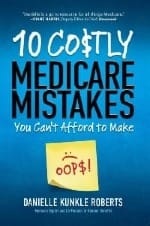
- Danielle discusses her book, 10 Costly Medicare Mistakes You Can't Afford to Make.
- Information on how to find Boomer Benefits online and their free Medicare Q&A Facebook group.
- Diane's final message to caregivers: practice self-care because you are worth it! ❤️
Don't wait to get the answers you need! 🗝️ This episode is packed with critical information that can save you from a financial nightmare. Listen to the full episode of the Caregiver Relief Podcast now and prepare for the future with confidence! 💪
Podcast Episode Transcript
Diane: Welcome to the Caregiver Relief podcast. I'm your host Diane Carbo, a registered nurse and caregiver advocate with over 50 years of experience supporting families through every stage of the caregiving journey.
Diane: Today I'm thrilled to welcome Danielle Kunkel Roberts nationally recognized Medicare expert educator and bestselling author of 10 costly Medicare mistakes you can't afford to make. Danielle is the founding partner of Boomer Benefits, a top medicare insurance agency that has helped tens of thousands of Americans confidently navigate their Medicare choices.
In today's episode, we'll uncover the most common and most expensive mistakes people make when enrolling in Medicare. We'll also shed some light on some of the surprises families face what a loved one needs, skilled nursing, rehab, or an at-home care, and why Medicare may or may not cover what you expect.
And we'll also talk about the Medicare landscape is shifting towards more cost sharing, lower rehab reimbursements, and reduced home care benefits, and what that means for your financial future. So grab a pen. You're gonna wanna take notes for this one. This episode will literally save you thousands of dollars and help you prepare better for aging with confidence.
Danielle, thank you so much for taking time outta your busy day. I really appreciate this. Oh, it's my pleasure. you've helped tens of thousands of people through the Medicare maze, which is horrendous. It's so confusing. What inspired you to start Boomer Benefits and what keeps you passionate about this work?
Danielle: That's a great question. I've been doing this for about 20 years, and when I first started in the health insurance industry, I wanted to help people and this seemed like a good way to do it. Insurance was always confusing to me before I became an insurance agent and learned all the lingo. And we were working with a lot of small groups back then.
These are often, business owners in their forties. And so I started getting phone calls from them about, Hey, do you know anything about Medicare because my mom or my dad or my aunt uncle's turning 65 and nobody can figure this stuff out? And after, I don't know, five or six times, someone asking me that question, I thought, maybe I should take a look and see what's so scary about Medicare.
And then of course, down the rabbit hole we went, Medicare is a huge national program with four parts, 10 Medigap options and thousands of drug plan and advantage options. So of course. It's no wonder people find this confusing when their whole working life, they've been given insurance that their employer chooses for them.
Yes, and we started working with it and it quickly just fell in love with boomers, that whole generation, my parents' generation, and we have been working with them ever since. And now we don't do any other type of insurance except for Medicare and related things to Medicare, like dental and vision type coverage.
We don't do group anymore, and that's just because the need is so great with so many boomers aging into Medicare over this last decade or so.
Diane: Yes. And there's more coming. Oh my gosh. We've got, it's true. The silver tsunami is here.
Danielle: Yes.
Diane: Now your book is called 10 costly Medicare Mistakes You Can't Afford To Make.
What would you say is the most common mistake people make when enrolling in Medicare?
Danielle: I can think of two that are really important to me to mention. the first is if you wait until the last minute, you're very likely to make a mistake. Medicare is something that people dread and so sometimes they procrastinate this decision and then what happens is at the last minute when they need to make a quick decision, they end up calling an 800 number that they see on TV or a postcard that they got in the mail, and they find themselves, working with a call center that may be attempting to enroll you as fast as possible into something to make a commission or a sale.
Exactly. And not really doing a needs evaluation and making sure that they match you with an appropriate product. Yes. The other thing I wanna mention is that there's basically two different ways that you can shore up your Medicare benefits. You can enroll in a Medigap plan with the Part D drug plan, or you can enroll in a Medicare Advantage plan.
But what many people don't know is that if you start off with that Medicare Advantage plan and later you wish, or you want to change over to the more comprehensive Medigap coverage, in some states, you may have to pass underwriting to do And this of course can be a real problem if now you've been on this Medicare Advantage plan for a while, and there are some health conditions that would prevent you from getting a Medigap plan in certain states.
And so it's a really important decision that you need to make up front. You really need to know what you're buying.
Diane: Actually they've changed it. So that, from my understanding, 'cause that's where we're being told is if you are on a Medigap program for longer than 11 months and so many days, you're only allowed to stay within a Medicare program.
You can no longer go to traditional. And that's the, that message I was getting about this because I've done, I worked for nursing home chains, I worked for, home care agencies. And anytime we had a patient that had a Medicare Advantage program, we would always change them back to traditional Medicare because their benefits were better, for them.
And yet, They're saying you can't do that now because they're Medicare is going to a cost sharing program, which means we're going to be taking more and more responsibility on of what we pay for. and I've got lots of experience, or I have lots of information on what's happening out there with that kind of thing.
And it's making me crazy because, people think that Medicare Advantage is wonderful until they get it, and we'll talk about that. But yes,
Danielle: of course.
Diane: most people believe that Medicare covers all their healthcare needs in retirement. Can you clarify what Medicare actually does cover and what it doesn't?
Danielle: Yes. This is a good question as well. So if we talk about Medicare, we wanna remember that this program was created in 1965, so it was modeled after the old Blue Cross and Blue Shield type of insurance where you have hospital coverage and outpatient coverage. So for 40 years, Medicare didn't even have outpatient drug coverage.
I had clients back in 2006 paying $10,000 a year for their diabetes medications or more because there wasn't drug coverage and original Medicare A and b. Part A is your hospital coverage. Part B is your outpatient coverage. And that covers inpatient and outpatient healthcare services. A lot of the same services that you're used to getting from your healthcare providers, but there are deductibles, co-pays, and co-insurance that you pay.
For example, Medicare Part B or outpatient coverage only covers 80% of the bill that you get from a provider. And so you would be responsible for the other 20%. That's a really important piece that we need to shore up with additional coverage. And then there are some things that just fall outside of Medicare altogether.
one of them, would be things like, dental vision and hearing coverage. who would think that when you turn 65 and you need this probably more than you ever have in your lifetime, that it wouldn't be covered. But in 1965 when they were rolling this out, it wasn't standard for group health insurance to cover those things.
And the American Dental Association also wasn't crazy about being included in Medicare, so they left those things out and that has never been corrected. It's. Things that you have to add to your coverage if you're in original Medicare. Sometimes on the Advantage plans there can be some of those benefits, included, but they can be very limited and there might be a small network and these are things that you need to investigate whether that coverage is really gonna provide what you've been used to.
And then of course, probably most, applicable to this podcast would be Medicare doesn't really cover long-term care. And I have had some Yep. Really disappointed adult children who have mom or dad in assisted living now and find out that we have to spend down all of their assets to pay for that.
Because while Medicare will cover doctor's appointments, just like it always has when you're living in assisted living or nursing home, it doesn't pay for the rent to live in that nursing home or assisted living. And it's very expensive. So this means that people need to be thinking about this in their fifties and either purchasing long-term care insurance or planning with their financial advisor for how they're going to private pay that in the event that they end up needing long-term care.
Diane: people don't understand that they have to pay out of pocket for assisted living. And one of the problems I have is the memory care units in assisted living. It's great if you're independent, it's based on a social model, not a medical model. So you, the patients or the residents in these, assisted livings are supposed to be able to direct their care, acknowledge you know, what they wanna do, and do things a lot independently.
and that's not happening. I think that memory care is, and they're not. They don't. and with all the money people pay out of pocket for, to avoid being in a nursing home, they still aren't getting the quality of care in these facilities because the facilities aren't, aren't, staffing according to acuity levels.
I see. skilled facilities, like in memory care where the patients are declining, they're not able to express their needs or their. Concerns and there's, 20 patients and two aids. And that's so wrong because yes, D level, especially for dementia care. and that frustrates me, a lot because people aren't getting the care they needed.
And really there's nothing special about any of these memory care units. And I know people are gonna say, oh, I'm horrible, but I know what I've seen over decades of nursing and they don't have behavioral specialists. They don't have 24 hour activities. They don't have a lot of things they should have.
When you have a person with dementia that they can, that needs care,it, they need people to be fed. They need people to be changed a lot. they become incontinent and that's getting missed a lot. I think that people don't understand what they're paying for. So let's talk about skilled nursing care.
What does Medicare cover when someone is admitted to a rehab facility? And what are the real out-of-pocket cost beneficiaries need to be aware of?
Danielle: Yeah, so Medicare will cover, up to 100 days in a skilled nursing facility provided that you have a qualifying. Three nights stay in a hospital. So a good example of this would be you go in for a major surgery and while you're recovering, maybe you need wound care, you're transferred to a skilled nursing facility.
Medicare covers the first 20 days. But after that, you start picking up a daily copay, which is a little over $200 a month. And the reality is that a lot of these, nursing facilities often find that patients can't pay for it. So you'll find that on the 20th day, they will start encouraging people to be released to their family sometimes when it's not even, they're not actually ready for that.
And yes, the skilled nursing piece is critically important and there are Medigap plans that do cover that so that you would be able to have the whole a hundred days. But another thing that we've dealt with in years in the past has been they will. Only cover that nursing care if the person is improving and being returned to independent living.
And we have seen many examples over the years where someone is in a state of decline, they're not going to be returning to independent living, and therefore the skilled nursing facility will, discharge them. And this can catch families off guard. So another reason why it's so important to have podcasts like yours so that people can plan ahead and know these things before they get into them.
Diane: I'll tell you right now, we only have the illusion of healthcare with Medicare. We don't actually have, in fact, the a hundred days of coverage for rehab really doesn't exist. I know it's there, but I will tell you, Medicare has lowered the price of the reimbursement rate for therapies so that patients, the facilities make more money if they don't provide therapy.
And it's astonishing what I'm seeing out there. It's, I'm very concerned because, the people on Medicare Advantage, whether they've had a stroke or back surgeries, that doesn't matter if, even if you're not ready, they will give you 11 to 14 days in a coverage, and then they cut it off and tell you have to be private pay to continue to get that care.
The other thing with Medicare, with a supplement is the reimbursement's still really crappy and they don't, the facility loses money if they keep you in. and you have to keep appealing, and that's a whole nother process. I don't know if you're aware of Danielle. I know you know, The process for, appeals, but you don't know the games that are being played.
facilities will say to a family member, we're gonna be sending you home and the family's all in an uproar. And they call me and I said, you gotta appeal it. Call the appeals process. do the fill out the form, start the process right now before they write, dis or they're discharged and the facilities will come back when the appeals person calls them and say, we haven't written the script yet.
They're really not discharged, and this will go on for several days. Now that game has changed where families are where the facilities are actually telling the people now the family members. You can appeal this if you want, but if you lose the appeal, you are going to have to pay, maybe double your copay.
and we want some of that money upfront. And this is going on,it's really scary. I have seen a, and the facilities,they're disappointing me some. I'm an old rehab nurse, as in seasoned. I know how I've taken care of quads, paras, strokes, head injuries, all kinds of disorders.
And, one of the things that I'm seeing is I had a neighbor, she's six two. Tall woman and she came, they sent her home. She had a heart attack, 15 years prior, had short-term memory issues, started having seizures, which she's probably had her whole time at, but they were micro seizures. They were starting now to be much bigger so that people can see them.
And she went into the hospital because she was having seizures and urinary tract infections. She came at home after a few days in the hospital and she fell as soon as she got in the house. And I wasn't there. I would've said send her back. But they didn't do a home care eval. they sent this woman home with a wheelchair.
She had 17 steps to get to her. Bedroom and her handicapped acce accessible bathroom. She had no bed on the first floor. No way to get up to the first floor because though they told me that she was independent, she was far from it. And they had this kidney shaped a bamboo chair, and it was swiveling.
And that's what she slept in for days. Oh. Bless her heart. They didn't send her home with a potty chair. They didn't send her home with,a nurse for home care. I can't believe they said, just have the PT come out. And I'm like, wait a minute. She has seizure meds, she has UTIs. She needs a nurse to go in there, but they don't wanna send a nurse if they don't have to because the reimbursement rate is not good for nursing.
Yeah. So it's just really frightening. And, she was in and outta the hospital and we had to fight each time she recently passed. And, she was much too young. But, the facilities can't, they can't take care of them. And another neighbor, because I live in over a community, an aging community, another neighbor, her husband has MS in remission.
He's 70, he's doing really well. And, but he's a severe diabetic. He started having back problems. He was in and out to the ER twice for having back issues. The third day, they had to send him to the hospital because he couldn't walk. they didn't, they sent him back. anyway, his Medicare Advantage program, they actually are charging him $250 a day copay.
Yes. Who can afford that?
Danielle: Yes. And I'm so glad you brought that up because, what we often see with Medicare Advantage plans and I will, in full disclosure, I will say, About half of all people on Medicare now choose Medicare Advantage plans. Yep. At my agency, I would say about 20% choose them because we go to great lengths to inform people upfront of what they're buying.
And when you call a one 800 number because a sports celebrity on TV told you about a great Medicare advantage plan. Exactly. You are likely not getting a summary of benefits in front of you. And one of the most important things about buying coverage is to look through that summary and say, if I have a surgery, this is what it's gonna cost.
If I go in the hospital, here's what I'm gonna pay per night. If I have a skilled nursing facility, this is what's going to cost me. And what we find, and this is something I've shared numerous times when I've been on Capitol Hill meeting with legislators about improvements to Medicare, is that when you sell a Medicare Advantage plan that has a zero premium and a grocery card.
And a free pink Cadillac in your driveway when you wake up tomorrow morning, because the man on TV told you that's how it would be. These folks are not thinking about the day when they might need a skilled nursing facility. Thank you. And if there's a copay on a summary of benefits that you know you can't afford, then that is coverage you should never buy.
Diane: I actually have a book on my site called Medicare Advantage Buyer Beware. And I wrote it several years ago, and now it's the Medicare's even worse because they're no longer letting you go back to traditional Medicare. They're pushing us more and more.
The irony here, Danielle, is nothing has changed. The rich will pay for their care. They don't have any problems with it. The middle class will take out reverse mortgages or sell assets to get the treatment and the care they need and for decades, I can tell you the poor have done without and are struggling because I've seen it.
Even with the VNAI was shocked they didn't even wanna take Medicaid. Patients and doctors don't wanna take Medicaid. Facilities don't wanna take Medicaid because the reimbursement rate is so low. So what do we having? What we have now is facilities. Are no longer able to, sustain the staffing, the patients feeding them and stuff.
And a lot of places are closing because the reimbursement, the skilled facilities where everybody stayed for 90 to a hundred days, in the past, up until this year, all of a sudden, people are cured rapidly, but the money went away. there, that pocket of chunk of change that helped them sustain the long-term care side where they're not using skilled benefits anymore.
The custodial side of, nursing and the Medicaid reimbursement for a nursing home, is like maybe a hundred dollars a day of that for one person in a nursing home. It used to be, I know 20 years ago it was $60 in Pennsylvania and no facility can. Manage that. You've got staff and that's why the, you have no staff.
You, have staff pushed to their limits. They're not providing good care. There's, issues all over the place with poor food and the places look dumpy. I know I work for one of two of the biggest chains in the country, and what I saw was horrifying.
Danielle: Yeah, we need to do better, better as a nation.
I was reading once that,I think it was Japan where they don't have this problem at all because they have this societal tradition that the children always take care of the parents and that there's not this sort of issue. And in America, especially with current generations, that's not always a guarantee.
I've had adult clients tell me that their kids aren't gonna be involved in this and they're trying to plan ahead for them, their own selves. Maybe they don't have a child that can take that on. And even if you have, I know that you've met many people like this. You have an adult child that's an excellent caregiver.
The stress and the strain on that caregiver for taking care of them and then adding to that, trying to fight with insurance companies for benefits that you have a right to, it can be really overwhelming.
Diane: I don't know if you know the statistic or not, but I tell my listeners frequently 63% of family caregivers become seriously ill or die before the person they're caring for.
Wow. And that's, and I will tell you right now, when I started my first website, aging home healthcare.com, about 20, 25 years ago, I was shocked when the statistics for the family caregiver were at 50%. So now here we are, 15, 20 years, or 15 to 25 years later, and now it's 63%. And now with everything that's happening with Medicare, we're gonna go to a hundred percent because there's no respite care, there's no support for the family caregiver.
They are ignored. They're another patient that, is ignored and they make great personal sacrifice financially, their emotional wellbeing and their physical health, to provide this care. So we have to do something. We have to make some changes where the family caregiver is provided for as well.
Danielle: Absolutely. And the caregiver benefit is minimal in Medicare and you can't, there are people that just don't bother to apply for it. So the other thing I also wanna mention, is sometimes even before you get to the need for full-time caregiving, there can be folks that just need short-term home healthcare.
And the benefits in Medicare are so limited for that as well. We get questions all the time with, children saying, my mom, she can live. Oh, she can live by herself, but she needs somebody helping with cooking and cleaning. There might be some tidying around the house that needs to happen. And unfortunately, Medicare does not provide a benefit for any type of custodial care.
So the care that you get in that situation will need to be something, like that you need help with activities of daily living. Bathing, dressing those things and also need skilled care. At the same time, if you don't have that skilled care component, there is no custodial benefit for home healthcare for Medicare.
And so you find these caregivers burning out before they even get into full-time caregiving for mom or dad.
Diane: Exactly. Exactly. Now we're seeing a, this shift, of Medicare moving to a cost sharing model. how are you, how is this change affecting the pocketbooks of seniors, especially those on a fixed income?
Danielle: there are some things that are up in the air right now and there's, I will share with you, and you probably already know this, but Medicare is quite political and there's a lot of pushing and pulling that goes on in Washington DC You have one party that favors Medicare Advantage. You have one party that favors original Medicare and Medigap plans.
And so this can sometimes, cause unintended effects. So right now, when you have original Medicare, we have the same deductibles and co-insurance that you have right now, that we've had for some time. And you can shore that up really well with a Medigap plan or a Medicare supplement that will help you pay for that.
And that's great. what we're starting to see though, is even original Medicare now is doing a test model in six states to, Require prior authorizations for certain types of care. And until now, we've only seen that kind of prior authorizations really happening mostly on the Medicare Advantage side.
And all of this has to do with just not enough funding. There's not enough funding for the baby boom, the number of people working and paying into the system right now. There's not enough money to cover the tremendous population of people that are needing this care at this time. And because of that, we have to be planning outside of Medicare for all of these things in advance.
Diane: the other thing that we have going is Obamacare is also suffering because, they have, I just took a course to sell insurance. I'm not intending on selling insurance, but I wanted to see, what, what was going on in the Medicare industry. And one of the things that I really learned through the whole thing that shocked me is they're blatant, the government's response to handling our benefits is to make our copays high.
High deductibles, high copays, high out of pocket expense so that we, they deter the use of benefits. when you have people that are on Medicare Advantage, especially young disabled people, when they're expected to pay 35 or $45 for a PT session, and PT needed for, three times a week for six to 10 weeks.
Peop they can't afford it, especially on the little pid, piddly, security checks, social security get check, they get, so to deter use of benefits is not a way, there's gotta be a more cost effective way. Our government did nothing to cut the cost. Of healthcare, all they did was give our healthcare dollars to the, insurance.
Forgive me, the insurance companies to manage the care. And all they did was hire a bunch of gatekeepers. And those, so our healthcare dollars are going to s support the insurance industry, the buildings they work in, the staff that they work in, the benefits for those staff and the bonuses that the CEOs get, because they've cut costs and prevented people from receiving care.
And, for the first time ever, the, American, medical association, the physicians have, stood up and said, we can no longer take these cuts in Medicare. They are actually, making less than they did 20 years ago. And they have more government regulations and hoops they have to jump through, which is very frustrating because they need triple the amount of staff, it used to be a doctor and his receptionist, then maybe a lab person, but that was it.
Or the receptionist was also the lab person and now they have to have somebody to do pre-ops, somebody to work on denials, somebody to get continued lengths of stay and updates. It's incredible. And it's just, that's why we have this, the unintended consequence of our in government policy makers getting involved in our medic medical, his medical delivery system is, we have a shortage of doctors.
We have a shortage of specialists, and we have a shortage of nurses. And we're having a shortage of therapists because nobody's getting paid. In fact, I'm gonna tell you recently I just did a podcast with a home care company and they provide a lot of home care for Medicaid clients, and that is unusual.
It's terribly incredibly. Awesome that they do that. 'cause nobody wants to work with Medicaid and they're in Virginia. And one of their providers was actually the insurance providers was actually calling their clients their 70, 80 and 90-year-old patients or subscribers to their insurance and are saying, how long does it take you to take a shower?
How long does it take you to eat? How long does it take you to do certain things? And what they are is these are bean counters trying to cut back on the time that they allot things for. And that's what Medicare has done. They have cut back and cut and cut so that there's no give anymore. And in fact, that's where I learned that they don't order nurses.
if you have man Medicare Advantage for home care because the nursing is not separate, it's included with the one. They pay, that they get the reimbursement they get for that client for that day. That shocked me. Yeah. And they're not keeping up with the salaries. It doesn't keep up with their workers' comp that they have to have.
So there's a lot of things that are impacting why home care agencies are closing, in fact. people, I'm really disturbed now because people aren't dying fast enough. They're put on me on hospice, and if they don't die in a certain period of time, they take 'em off. really?
How
Danielle: does that happen? and that's. That's something people don't know too sometimes, when they go on hospice, they'll drop Medicare Part B because Part A covers hospice. Yeah. But then if you're pulled off of hospice, now you have to wait before you can re-enroll in part B and you can go the rest of your year without outpatient coverage.
So when people ask us about this, we tell them, no, keep both Medicare A and B right until the end, because we don't know,that there you may not somehow recover and then B, without that coverage, it's well worth keeping, through the end for your loved one, just to make sure that, they, if they go longer than six months, if they're not needing outpatient care again and then having nothing.
Diane: Yes. Good point. Now, we were talking, a lot of people assume that Medicare is gonna cover home healthcare when they need help, but in reality, the Medicare home care benefit is limited and changing. what should families know about this and how can they prepare financially?
Danielle: I can tell you what I did for my own family, which was about 10 years ago.
I, connected them with a great agent who works with long-term care insurance and I made sure to purchase a policy for my parents that would allow them to have, five years, of care, and that could be in their home or in the facility. And I knew that would be important because with Medicare, if you need home care, again, it's only gonna be provided if you also need skilled care.
And then that's assuming that the skilled care nurse is going to want to help with something like preparing a meal or cleaning your house, which is not what their job is. And they will do it.
Diane: And
Danielle: that's right. And that benefit, is a three week benefit usually at most. So we should, we, the way that we should consider Medicare in terms of home healthcare and long-term care, I tell my clients to assume it provides none.
And then we need to have a solution in place for that. and if there is something that Medicare. Does kick in some little bit and we're able to get something that's great, but it shouldn't be the main solution. And if you have, people that don't know this, which is often the case, this is something that can then end up being quite a burden for your children to try to figure out if you are not, if you're at a point where you're either too ill or too weak or not competent enough anymore to make those, calls for yourself.
Diane: Now, what are some ways that retirees and their adult children can plan for long-term care needs that go beyond what Medicare will cover?
Danielle: I know there's, been some involvement in the insurance products of that cover long-term care. So there's your traditional long-term care policy. what's great about these is they are very customizable and you can, Set up for a two year benefit or a five year benefit, you can bri an inflation rider to make up for the inflation and medical costs. But the downside to these is they can be quite expensive if you don't purchase them early enough and they can also decline you. So if you don't make this decision until you already have a chronic health condition, you may find that the long-term care agency won't.
Cover you. So insurance companies have come up with other products and although we don't work with these at my agency I know this from referring people out for long-term care needs, there are now life insurance products that you can buy where if a terminal illness is diagnosed, they will advance the death benefit to be used for long-term care.
I know that there are annuities that have riders for long-term care in them as well. And so some of these products may be available to you even if someone is too sick to qualify for a traditional long-term care policy. That may be something that you can look into. And then of course, if there's nothing like that, you're facing what we would call a Medicaid spend down, meaning you have to spend down your assets so that you qualify to be put in a Medicaid bed, which is not always in your best interest.
It's not necessarily right in your hometown. They can send you to whatever bed is available in your state and it's not a good situation. So we want that to be a very much a last resort.
Diane: From my personal experience working with two of the largest nursing home chains in the country, I can tell you they prefer three years of private pay in a nursing home.
And people are spending that in assisted living. And then when they come to the nursing home, they have spent down. Yeah. Everything. And they don't, and they just go on Medicaid and it's gosh, and Medicaid is, doesn't re that they reimburse at such low rates. I can see, tell you about horror stories, but, I think that people need to understand that there are things that you have to do to protect yourself and that's be aware of what's going on and,know that everybody's gonna end up in a skilled nursing facility for even just a recovery from, a hip surgery or heart surgery or something along times.
And they need to know that it's the way of the future going to skilled care. Now you're gonna go home and be in trouble.
Danielle: yeah. And when we see folks that enroll in a product they don't understand, what they may decide is, let's say they're having trouble, getting. Into a facility with their Medicare Advantage plan.
You'll often have the facility telling them, we want you on original Medicare. you have to wait till the next election period. You can drop your Medicare Advantage plan and you can return to original Medicare. But what they don't tell you is that if you had that Medicare Advantage plan for longer than the 11 months, like you mentioned before, you don't have a guaranteed window to get into a Medigap plan.
Exactly. Now you're paying 20% of all of your outpatient expenses and you have your deductibles again. And they're not prepared for that either. Yeah. So when people make decisions at the last minute without during their research. The big words confuse them and they tend to just buy the hype. And you really wanna work with a licensed broker that knows what they're doing in terms of Medicare, so that you pick a plan that's gonna cover for your medical needs where you need it to.
And then you also need to work with a long-term care expert or a life insurance expert that offers products that have that little bit of long-term care benefit in there. Those are both of the pieces that you really need to be getting a handle on, long before you're in a place where you can't make those decisions easily for yourself anymore.
Diane: I did agency nursing and, that meant, when I was doing marketing and sales, or I was working for these long-term care, positions, I was a regional manager for census. And I can tell you that one of the things that people don't realize is that, the costs that go into things and, I know Medicare Advantage plans are very popular, but many families are shocked at what's not covered when care is needed, and I've seen it so much. what are some of the most important things to look out for when you're comparing Advantage versus the MedCAP? The Medigap? Yeah.
Danielle: So the first thing I always like to tell people is the advantage plans have a network.
And they have, if they have a built-in drug plan, which most of them do, it has a formulary. Yeah. So you should not enroll in any plan before, without checking first that the plan has all the providers that you need in its network. And this doesn't, isn't just your doctors, but it can be specialists, it can be the hospital that you prefer to stay at.
It could be your durable medical equipment provider. Yeah. You wanna make sure that all of those, are in the plans network. Then you need to look. The other thing,
Diane: I'm gonna interrupt you for a minute because I also come across, they may be in your plan, but you better call to see if they still have room.
Under that plan for new patients, because that's another issue that happens when they take a Medicare advantage, is that they say, oh, my doctor's in the network. This is gonna be awesome. And then they call to set up and the doctor's office says, we've met our quota of how many we can take from that plan.
And,we can't take any new clients. So now they have to find a new doctor under that plan and. It's hard. It's really hard to do.
Danielle: Yeah. And it can be especially hard in rural areas where yes, there isn't an, a huge network and you're trying to deal with a network that is. Yep. one of the things that we do at our agency, when we have someone that wants a Medicare Advantage plan, we do all the legwork upfront.
We make sure that the plan, the providers are in the network, the drugs are on the formulary. Then we go over page by page, the summary of benefits, and we recommend that the clients make a call to their doctors making sure, is anything changing with this network? Are you still going to be in it next year?
Because they can change from year to year, they can drop out of the network midyear. And these are all things that a directory are, those things, it's not going to tell you. And then when you're looking at your Medicare Advantage plan. you should never be enrolling in an advantage plan because it has a gym membership or it has a $50 a quarter grocery card.
Those are not the reasons that we choose health insurance. We choose health insurance for when we get cancer, when we have a heart attack or a stroke. Yes. When we have a chronic illness that's gonna need regular care and the day that we may end up needing a skilled nursing facility. So you have to go through a good agent, and this is what my team does, is we go through the entire summary of benefits upfront and say, okay.
Are, we're on page three, Mrs. Jones. Let's take a look at what some of the costs are. When you go to the doctor, here's your copay, here's what a specialist copay is, here's what your hospital copay is. And then this gives a client an opportunity to say, wow, I really actually can't afford these costs.
What are my options? Sometimes it might be that you add on a, hospital indemnity policy to help to pay for the hospital copay. And other times it might just be that considering your usage, whether a Medigap plan, even though the premiums are higher, might make more sense because you don't have the regular copays on most Medigap plans.
And even on a Plan N, that copay is limited to $20. So depending on your medical usage. Sometimes going with the cheaper insurance isn't necessarily the right fit. If somebody has a three or four doctor visits a month, the copays that you would pay on an advantage plan can quickly add up to potentially more than what you would've spent on your Medigap plan premium.
Exactly. And so working with a professional to choose a plan that's appropriate and make sure that you're thinking about all those questions is really important. And I will mention for your audience, when you're working with a Medicare insurance broker, you don't actually pay anything to the broker.
our commission is provided by the insurance companies. And that's great because we can then look at all the plans out there that we represent to find one that's a fit for you. And then we're going to go over everything with you. Make sure you understand your benefit. Yeah. And then ultimately, whichever insurance company you choose will pay your agent or broker.
You don't have to come out of pocket for that. So sometimes people are reluctant to work with, A licensed Medicare insurance agent because they think they'll have to pay something. In reality, it works just like car insurance. I have an auto insurance broker and every year when my auto insurance comes up for renewal, I contact her and she shops it for me.
And sometimes I stay with my current plan and sometimes I switch to another one to lower my premium. But I don't pay her anything. She gets compensated by whichever insurance company I ultimately choose. And it works the same way with Medicare. And that is how you really wanna choose a plan, not for the fluffy benefits.
I like to call them fluffy benefits. Oh, a little gym membership is really nice. And yes, $50 that you can spend on a, in the vitamin catalog that they put out once a quarter, that's great. But it's not the reason that we choose our health insurance and we don't wanna sacrifice our future care for an immediate benefit or a convertible to cash benefit right now.
we wanna make sure that we have insurance that's gonna pay for the big things if we encounter them.
Diane: I love that advice and I'm, I tell people all the time, get my book, or my, like my neighbors, I said, don't get that plan. You're gonna be sorry. And they did it because, oh, we got not just a free membership, we got eye and ear coverage.
And I'm like, and dental, oh, isn't that nice? Then now they're like several thousand dollars in debt because they had this copay. And, of $250 a day. And,the first thing they did is, at the end of this month, last month, they changed it traditional because they had to, they, they hadn't had the plans too long.
And they said, why didn't you tell us? I did tell you, but you couldn't get over the, I call 'em the shiny new object. Yes. And it's the carrot that they put out to the seniors, like they think they're getting something and when they really do limit their access to specialists or, like you were saying this, they want to pre-auth everything.
And that's why so many doctors are leaving the industry because the good doctors, because the government, they know the care
Danielle: their patient needs and sometimes they can't get it because their insurance company won't cooperate. Yeah.
Diane: Yes. and they're taking, oh, they're taking the, the place of the doctor. Patient relationship and it makes me crazy. Yeah. So now, if someone is approaching Medicare age, what are two or three things you'd urge them to do right now to avoid costly surprises?
Danielle: So the first thing is some people don't realize that your Medicare premiums, are based on your income. So decisions that you make when you're 63 and 64 can impact what you end up paying for Medicare when you are 65 and 66.
That premium, the standard based premium for Medicare is what most people pay. But if you have income, above a certain limit, which I think this year, it's if you earn more than 106,000 as an individual or 212 as a married couple, they're gonna pull your tax return from two years ago and that's going to potentially inflate your in, inflate your premium.
So sometimes we'll see people and when they're 63, they cash in, a big 401k or take a big distribution out of an IRA or they sell a piece of property that has a big capital gain on it, or they take a settlement, from an employer and a huge cash benefit hits their tax return for that year. then, and two years later, this if it'll hit your Medicare premiums and you can pay, hundreds of dollars more per month for your Medicare parts B and d if that happens to you.
So you always wanna work with a good financial advisor who can help you make those decisions. And when they're looking at everything, sometimes you might be able to, spread a benefit, let's say a cash settlement over a period of time so that it hits two different years instead of one year. And, this is an important thing to look ahead of.
Also, we have a lot of people today working well past age 65. Yeah. And. You can delay your enrollment into Medicare. Under certain conditions. This means you're working for a large employer that has more than 20 employees, and in that scenario, that group health insurance is primary, and Medicare is secondary.
So you can delay your enrollment into Part B in that scenario. But if you work for a small employer, Medicare is primary, and if you don't enroll in Medicare, you have a small employer that is counting on Medicare to pay the 80%. Primary coverage. And your small employer will only cover the 20% thereafter.
Yeah. And so we see people miss that because they think the rule applies to them, that their friend told them about, but their friend worked for a large employer and this senior works for a small employer. Yeah. So you want to know going into Medicare, if you're still working exactly which parts of Medicare you can delay based on your group size.
Which parts that you need to enroll in right now so that you don't get stuck with a late penalty later that gets added onto your premium that you'll pay every month for the rest of your life. Exactly. So those are two, things that I would tell you. And all of this comes back to do your research early.
You can go to medicare.gov. They've completely revamped that website in recent years. It's got a lot of great information in it. You can head to YouTube. There's lots of videos about Medicare there. Our channel is Boomer benefits. You can watch my talking head all day if you want to, explaining lots of concepts about Medicare.
Medicare will send you a handbook, the Medicare and You Handbook that you can carefully read. there are books like mine that you can purchase on Amazon, so give yourself six months to a year. Of research that you do in whatever format you learn best. If you're a reader, hit the website or some blog posts.
If you are an audio visual learner, you're gonna wanna head to, YouTube or potentially buy a book on audiobook about Medicare so that you can start learning some of this terminology in a time when you're not rushed and you don't have to therefore make a quick decision that might be ultimately really bad for you.
Diane: And nothing about,Medicare and the gut regulations are intuitive. they're not customer friendly. They're not, it, they make no sense to people and that's the way the government likes it. Yes. I've got a question for you, Danielle. I know that, president Trump has signed a bill that is, making the drugs.
In our country, affordable. he wants the pharmacies to charge what they charge other countries. 'cause we have a system where the pharmacy benefits managers are the people that determine what drugs, what the costs are. And every pharmacy benefits manager has a different formulary. That's why I laugh when they say, you have to know the drugs you're on before you, you purchase your policy.
the stupidity of that is seniors change meds all the time and what's not on that formulary may cost. As a non-formulary drug, double, triple what you should be paying. So my question is, are you hearing any rumblings about Part D going away and, the elimination, and I'm praying for that of the pharmacy benefits managers.
Danielle: I think that if we could get rid of that middleman, I think we would make some really good headway. I don't think we'll see Part D go away. Okay. I think that for any political leader or party, that would be political suicide because it's a very much needed benefit and now that people have had it for 20 years, they're not going to go quietly into paying cash for their meds.
But what I am concerned about is the Inflation reduction Act had some unintended consequences that affected Part D itself. The good thing about it is you used to have an $8,000 cap on Medicare Part D out OFP Pocket maximum. Now it's 2000. It'll go to 2100. next year in 2026, but when they made this change, this suddenly shifts so much money that was in the patient's pocket onto the insurance company.
And so we have gone from 20 something carriers offering two or three plans each on part D to seven insurance carriers that are offering one or two plans each. And if we continue to see the premiums on these plans go up, the formularies will get skinnier and skinnier, and we'll have more medications that people are gonna have to pay out of pocket or file an exception for or get from Canada or another place.
So if you see, say. Three or four more carriers pull out of the Part D market. We could potentially collapse the Medigap market because if people can't afford the A Part D plan and the formulary isn't covering what they need, they will almost feel like they have no choice but to go into a Medicare advantage plan.
And this would be a true disaster. And I have been shouting it from the mountaintops for the last year in every visit to Washington DC that I've taken because it's a piece that I feel like is missing the potential threat to the Medigap market that the. If Part D continues to escalate in premiums, think about somebody coming into Medicare.
It
Diane: shouldn't though. It really shouldn't. And my reason why is there a thing called my free pharmacy. I looked into it now. there was a divorce and they had to close the business. But here's a man who was a pharmacist that did a plan for a family member. One person was, $20 a month.
The other, if you had a family plan, it was 49 95 for a family plan, and you got any generic drug sent to your home, a 90 day supply for free. And here's my point is most of the drugs we have out there have gone to generic and they're made pennies on the dollar. And we as Americans are taking that. Here's a perfect example.
I was on a drug din. It is an antidepressant, but I was taking it because I have chronic pain and they were trying, I couldn't take gabapentin. I had a bad reaction to things and I can't take pain meds. So I took duloxetine. Now, here is a med that should cost me just a few dollars. I was told that I hit my donut hole.
For seeing my, this drug and the next two months we're going to be $700 a month for this drug that should have cost me $5 for the next two months. And that's greed. And that's the pharmacy benefits managers. And one of the things you're seeing is, companies like GoodRx and SingleCare have come out.
And they show you, again, they're pharmacy benefits managers and they're deciding what drugs they're gonna make for cheap and which ones they're not. 'cause I use my mail order pharmacy, I use GoodRx and I use SingleCare. I do my research. But if we pay the same prices on drugs that other countries pay, it's going to be incredibly cheap for.
Almost every medication, of course the new ones I get, but then the prices of other drugs from other that go to other countries, they also have to, acquire those costs as well. Take them in and raise their prices up. The American should not be responsible for keeping the big pharma and, in research and discovery and let the rest of the world benefit from that with not, paying anything.
So I think that, that's just my personal thought, that the drugs are gonna be so affordable that they may not need this or, there. Except for maybe the higher cost drugs that, but then again, I'm saying it should be cost sharing with other countries so that we all pay, it's equal. And Americans not covering the cost of research Yeah.
And stuff. A hundred percent.
Danielle: Yeah. We should not be subsidizing the rest of the world getting cheap medications because they fleece Americans. Yes. So if the president is successful in negotiating, that it will be truly historic and change, I think a lot of lives for the good, but I'm always suspicious of what things the pharmaceutical manufacturers are gonna do to make sure that they get their buck somewhere or another.
And where we see it now is. Yes, people can use GoodRx and SingleCare for the generic medications, but when you need an $8,000 oral chemo med, you need a part D plan. And if that Part D plan exactly costs you $150 a month, you may end up on an advantage plan. And then now you have the Part D coverage built in.
But you have these higher costs when you have needs for skilled nursing and you've got prior authorizations and you have a network. it's like people feel like anywhere they turn, they're gonna have some sort of challenge.
Diane: I have seen our long-term policymakers, our long-term. F politicians, shame on all of them. Democrats, Republican, they have known for decades, more than 30 years that seniors hit their donut hole and they stopped taking their meds, or they cut their meds in half or whatever to stretch them so they didn't have to go out of pocket for those, those drugs.
And it's really sad they used to get the doctor to order double during the period so that they could share save half. there were all kinds of things going on, and because of that, 125,000 deaths un preventable deaths occurred because our policymakers and big pharma chose financial, financial improvement, and gain over the taking care of the very citizens that they are.
Providing care for or, and have elected them. So it really frustrates me because, yeah. I've listened to several pharmacists say that, this shouldn't be, we shouldn't be paying these drugs. And that's why that gentleman created that pharmacy plan. And it made sense because if you can do all the generic drugs, which are literally pennies on the dollar, and you realize that the pharmacy benefits managers are doing this for nothing but greed, I just have hope that, something's gonna happen.
That, 'cause, over the next four years that seniors won't have to do that. I think that we'll finally have a level of playing field, fingers crossed, but Lord knows the unintended consequences of everything. Yeah. there's always many, Obamacare brought healthcare to our knees. We no longer it, it's just sad, but Yeah, so you tell us more about your book, 10 costly Medicare Mistakes you can't Afford to Make. Who should read it and how can it help families avoid financial disaster as they age?
Danielle: So the reason we wrote the book is at my agency we have a team, it's called the Client Service Team, and they only work with our existing clients when they run into inevitable problems that happen with Medicare. There is primary secondary issues with Medicare. There are appeals that need to be filed when something isn't done right. Yeah.
Sometimes people get a late penalty that isn't actually due more often than when we deal with the most is you get a bill in the mail and you're not sure if you actually owe that. And you shouldn't just pay it until you check. And so our clients, they call us whenever any of those things happen. We help them with all of those things. Appeal, writing, bill, research. It's a free service that we offer.
And so I asked the client service team manager, what are some of the mistakes that you see people make that you saw last year and the year before that? And the year before that, and the year before that, what are the same mistakes that people do to Medicare make over and over again? and let's find a way to get that information out to the public so that they can avoid these mistakes going in.
And so we sat down and analyzed all the data on our phone calls that came in from our clients and came up with the 10 things that we see people get wrong over and over again. And we created a book about it. people should read the book if you're new to Medicare or. Coming into Medicare. It's a great read when you're say 64 so that you can understand some things going in and make good choices about your supplemental insurance.
But we also find that it can sometimes be good for people on Medicare who don't understand some of the terminology. Their agent tells 'em the word deductible and they don't really know what that means and they get it confused with out-of-pocket maximum. yep. We provide that kind of stuff in the book. the book is not a money maker for the agency.
We sell it for $10 so that we can get the information into the hands of people. It's enlarged print. If you order the paper back, if you have Kindle, it's even cheaper. You can, I like Kindle because my eyes are aging and I like to be able to enlarge the font on the books that I read guilty. And so that's a great way, to do it as well.
And we just came out with the audio book version, so if you happen to be in any of those buckets or you've encountered a problem with Medicare and you don't understand why, the book may be helpful for anyone in those situations,
Diane: tell people how to find you.
Danielle: So we are Boomer benefits online, boomer benefits.com and on all the social media channels. And then I'll leave your guests or your audience with this. we operate a free Facebook group, and you don't have to be a client to join the group, it's just any question you have about Medicare.
So if you are on Facebook, search for the group, Medicare q and a with Boomer benefits, and this will drop you into our Facebook group. We've got over a hundred thousand Medicare beneficiaries in there, and myself and my team are in there 365 days a year answering questions. And the great thing about it is we have such a great group of beneficiaries in there now that, they help each other.
sometimes someone will post a question and before I can even get an answer out, two or three other people will say, oh, I went through that and here's what happened for me. So sometimes just being able to talk with your peers about these Medicare decisions can be comforting and we would encourage you to join and come in there with your questions and we'll make sure that you get some answers.
Diane: That's awesome. Yeah. We'll put a link on our page that we create, on this podcast page so that they can find you and get to your, 'cause that everybody's got questions about Medicare and Medicare advantage. You bet. Thank you so much for your time and your knowledge, Danielle. It's just wonderful.
And, she, I want pe my listeners to know Danielle isn't the normal, 800 number that you call because they are out to look for who, what, who pays the highest premium or ca or,bonus to them, a commission to them. And I see it all the time and it is, they're not always in the in looking for what's in your best interest.
But, and I love that you have a system in place where you can support seniors that's in a way that handles them. And, the fact that you have the customer service even after is incredibly awesome because Oh, thank you. Never know who to call, I just was, yeah. Oh, that's awesome.
Danielle: Yeah. it's been a great conversation with you today. I've loved being on your podcast. Thank you so much for having me.
Diane: Thank you to my family caregivers out there. You are the most important part of the family caregiving equation without you at all falls apart.
So please learn to be gentle with yourself, practice self-care every day because you are worth it.
Caring for a loved one can be overwhelming — but you're not alone. If you have questions, big or small, our expert team is here to help.
👉 Click here to Ask the Expert
Our Resource section can help you find the information and tools that you need. We have courses, videos, checklists, guidebooks, cheat sheets, how-to guides and more.
You can get started by clicking on the link below. We know that taking care of a loved one is hard work, but with our help you can get the support that you need.
Click here to go to Resource Section now!
You might also like this article:
 Diane Carbo