When Bipolar Disorder Touches Your Life: Finding Balance, Boundaries, and Hope with Michael Schneider - Episode 219
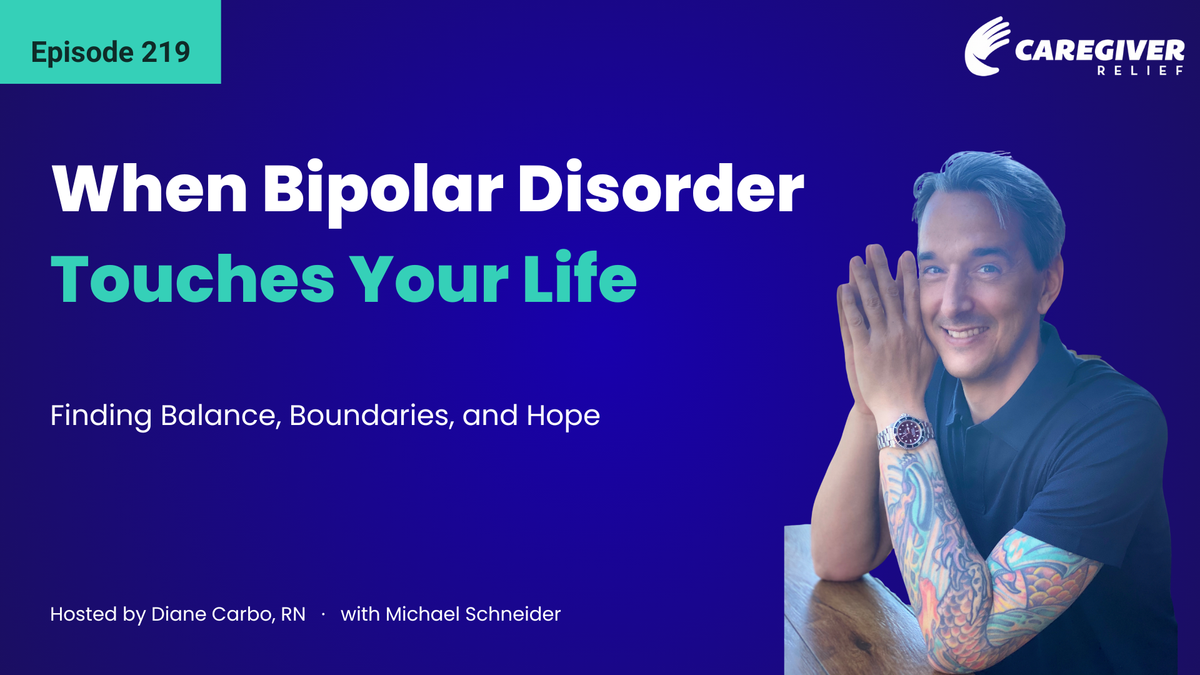
In this episode of the Caregiver Relief Podcast, host Diane Carbo, RN, sits down with Michael Schneider. Diagnosed with Bipolar Type 1 at age 18, Michael’s early journey was marked by involuntary hospitalizations, a traumatic jail experience, and periods of homelessness. Yet today, he has lived 26 years completely episode-free.
📋 Episode Outline & Key Takeaways
🔹 1. The Trigger and the Breakdown
- The High-Achieving Trap: Michael was a "Type A" high school senior, valedictorian, and athlete under immense pressure.
- The Trigger: The passing of his grandfather served as the genetic stress trigger, plunging him into a deep, silent depression for his entire senior year.
- The Shift to Mania: On graduation morning, his depression instantly vanished. He threw away his prepared speech, ad-libbed in front of 2,000 people, and began a rapid "cycle up" into hypomania—buying cars, starting companies, and jumping out of airplanes.
🔹 2. The Rock Bottom: Crisis and Incarceration
- Michael details a terrifying behavioral health crisis that led to being arrested for trespassing while manic and hyperverbal.
- Due to a lack of understanding of his condition by correctional staff, a confrontation led to him being severely beaten by a guard and held on a $1 million bail.
- His parents intervened, transferring him to a psychiatric hospital where he finally received his formal diagnosis.
🔹 3. Meeting "Paco" and the 12-Step Revelation 🤝
- After years in the "revolving door" of hospitalizations and stopping medications, Michael's parents utilized tough love and told him he had to figure it out on his own.
- Michael met Paco, a tattoo artist and recovering alcoholic in AA. Paco noticed that Michael’s descriptions of mania perfectly mirrored how addicts describe their drug of choice.
- Together, they used the 12 Steps of AA to treat mania as Michael's "drug of choice," teaching him how to drop the victim mindset and take absolute accountability for his mental health.
🔹 4. Helpful Support vs. Enabling 🚫
- The Caregiver's Dilemma: Michael notes that when a person is manic, their insight drops to zero. They truly believe they can do no wrong.
- When is help actually helpful? Michael emphasizes that support becomes effective only when the individual raises their hand and is ready to accept it. Prior to that, well-meaning caregiver interventions often just enable the cycle.
🧠 What "Ownership" Looks Like in Mental Health Recovery
Taking ownership means moving away from blaming doctors, parents, or systems, and looking directly in the mirror. For Michael, this meant strictly adhering to the daily, practical "brick and mortar" routines of management:
- 💊 Taking medications exactly as prescribed every single day.
- 💤 Prioritizing a strict sleep schedule (8 hours a night).
- 🧘♂️ Practicing daily meditation, mindfulness, and gratitude.
- 🩺 Having the patience to cycle through multiple doctors and medication combinations until finding the right fit.
"When I became accountable for my recovery, doing those things became something that I wanted to do because I was the one who was owning it and I was the one who was driving." — Michael Schneider
✨ Connect with Michael Schneider
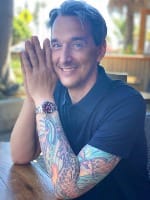
Michael left a successful career in technology to dedicate his life to serving the bipolar community. He now works professionally as an inspirational speaker and mental health coach.
- Website: michaelschneiderspeaks.com
💖 A Message to Our Caregivers
To our beautiful family caregivers listening out there: You are the most important part of the caregiving equation. Without you, it all falls apart. Please learn to be gentle with yourself and practice self-care every single day—because you are worth it.
Podcast Episode Transcript
Diane: Welcome to the Caregiver Relief Podcast, where we help caregivers, patients, and families navigate the healthcare system with knowledge, compassion, and hope. I'm your host, Diane Carbo, RN, and today's episode is one that will resonate deeply with so many of you because bipolar disorder doesn't just affect the individual, it touches everyone around them.
So whether you are living with bipolar disorder yourself or are caring for someone who is, you know how complex, emotional, and at times overwhelming this how overwhelming this journey can be. My guest today is Michael Schneider. He brings a perspective that is both deeply personal and incredibly powerful.
After being diagnosed with bipolar disorder at 18, Michael experienced a rapid decline that led to a behavioral health crisis and involuntary hospitalization. What followed were years of instability, repeated hospitalizations, and even periods of homelessness. But what makes his story so important is what happened next.
For the past 25 years, Michael has lived episode-free, and he credits that transformation to one key shift: ownership. In this conversation, we're going to talk about what that really means, why so many caregivers struggle with knowing how much to help, and how boundaries can actually support recovery, not hinder it.
This is an honest, eye-opening discussion about what works and what doesn't, and how to find balance without losing yourself in the process.
Diane: Michael, thanks for spending time on this, very important topic with us today and actually being so open about your personal experience. I really appreciate that.
Michael: Of course. Of course. Thank you, Diane. Thank you for having me on the podcast. I'm really, just thrilled to be here, so thank you.
Diane: Michael, I've worked also in senior behavioral health on and off through my life, and I know bipolar, impacts families in ways nobody understands or realizes unless they're experiencing it.
So, I would like you first to, to take us back to when you were first diagnosed with the disorder and what was happening in your life at that time.
Michael: Absolutely, yeah. So yeah, it was my senior year of high school. So actually that was a pre-diagnosis, but my senior year of high school, I was a high academic achiever, athlete, heading in the right direction a lot of people would say, and under a lot of pressure to figure out where I was gonna go to college, what I was gonna do with the rest of my life, keeping up my grades, and so on.
Just normal academic and scholastic pressure of a high school senior. And then my grandfather, my mother's father, died at the beginning of my senior year, and they say that bipolar disorder is a genetic trait that can be triggered by stress, and that was apparently for me the straw that broke the camel's back, and I went into that, that triggered my bipolar disorder, and for me that manifested as depression.
So I spent my senior year of high school in a, at a depression, a deep depression actually. I didn't even, didn't know what it was called, had no words for it, just knew that I only wanted to stay in bed and that I was terrified to, to walk the halls of my high school. But that was the beginning for me.
The diagnosis came a little later after I ramped up into mania, but that was the beginning of the bipolar for me.
Diane: I find many, bipolar individuals are diagnosed in those early, eight, high school to college years. It is, the stress we put on our youth to perform. I know I went to nursing school at that age, and it's a lot of pressure to perform and to, exceed, especially it sounds like you were a type A personality and, were willing to really work hard.
Michael: Yeah, that's true.
Diane: Now. Go ahead. I'm sorry.
Michael: No, I was agreeing with you. I was a strong student. It was a lot of pressure that was self-imposed. My parents were, my parents actually encouraged me to back off, and I would, I was having none of it.
I was, I put all the pressure on myself and I popped.
Diane: Yes. Yes. Now you experienced a rapid shift from being a high achieving student to a behavioral health crisis. What was that period like for you?
Michael: Yeah. The period so it actually started graduation morning. I woke up the day of graduation from high school and my depression was gone.
I felt great, like capital G great. All of the uncertainty and insecurity and lack of confidence, that all just shattered and fell into a million pieces next to me when I woke up that morning, and I felt confident and ready to take on the world. That was the beginning of what's called ramping up in, in bipolar circles.
Diane: Yeah
Michael: I start I cycled up actually. started ramping into what's called hypomania and then that, the I was valedictorian of, of my high school. That night I was supposed to give a speech, and I looked at the speech that I had written while I was depressed and threw it in the garbage and basically ad-libbed my valedictory speech to an audience of 2,000 people and that was the, just the tip of the iceberg for that summer,
Diane: to I bet that was quite a speech
Michael: it left its mark, that's for sure. it was very, I was very direct about what you should do, what I thought you should do with your life and that kind of thing.
Diane: Yeah.
Michael: but that led to, basically the summer from hell for my parents. I believed more and more emphatically over the course of the summer that I was doing the right thing.
I could do no wrong. I had more and more energy, more and more confidence. I started a company. I bought a new car. I got in car chases with police. I jumped out of airplanes. Like all the, all the
Diane: Yes
Michael: the hypomanic stuff that you hear about, that was me, that summer, and it was endless conflict with my parent.
My parents didn't know what was wrong with me. My parents had no, no understanding of mental illness whatsoever, had never heard the word bipolar disorder before, had never heard of it. Didn't even know what depression was.
But that was the beginning and that, that led to actually me getting, I went on a, I went out to visit friends who had started college before me and toward the East Coast.
And on the way back from visiting friends on the East Coast, I lost my wallet and stopped at a college in Maryland to visit a friend, and ended up getting arrested for trespassing. I was just a I had no ID. I was just walking around looking for this girl, so who's this guy looking for this girl? So I got arrested for trespassing.
And then I was taken to Baltimore County Detention Center, which is jail. That's jail. That was not fun. I didn't have, what they would call the right attitude for being incarcerated. I didn't think I deserved to I didn't think I deserved to be there. so I, I had a real attitude problem.
Like who are you to talk to me and tell me where to go and what to do and blah, blah, blah. And the Baltimore County Detention Center responded to that attitude problem with a correction of having a guard, a correctional officer beat me almost unconscious
Diane: Oh
Michael: in a el- in an elevator, Oh
going up to solitary confinement, which is where I was being housed.
And in saying that I assaulted him, and then that, that my bail was raised to over a million dollars, and, I mean, that was
Diane: Oh
Michael: that was the, my experience in Baltimore. Fortunately my parents got involved, got a lawyer involved, got me transferred to a psychiatric hospital in Maryland, and that to answer your previous question, Diane, that's where, that when I was diagnosed.
So I basically
Diane: Gotcha
Michael: walked into the hospital and just started rattling off a mile a minute hyperverbal manic stuff about how I thought I was gonna die, and the doctor talked with my parents and said, "Mr. and Mrs. Schneider, your son is bipolar."
Diane: Yeah. Yeah. Could, Michael, for those that don't know what hypomania means, could you explain a little bit about that?
Michael: Yeah. Sure. So mania for me at least mania came, gradually over time. it increased over time. So it started, what, like I said, with my, on graduation morning where I just felt better and felt more confident, and that escalated over time into hypo, hypo being sub.
Diane: Yeah
Michael: hypomania of having just extreme confidence, needing less sleep, being hypersexual, being hyperverbal, Mania for me, and not for everyone who's bipolar, but mania for me a bipolar Type 1 patient, mania for me, full mania is psychosis. So I detach from reality. I believe that I am saving the world, and I am, and that is my mission, and I'm on a mission to save the entire world from itself, and that, it's not based in reality at all.
Diane: Yeah.
Michael: that's full blown, that's full psychotic mania for me. But on the way there is hypomania, which is this tremendous burst of energy that you feel and competence.
Diane: I know someone that is in a constant state of hypomania.
Michael: Ah.
Diane: It's a young woman, and she's loud and boisterous, hypersexual. Her parents are dealing with a lot of things. and I'm the one that said, "I think she's, I think your daughter's bipolar." And they were, no." Again, it was parents were getting divorced, and that stress of her moving into a new home and going through all of that had, exacerbated her condition or set it off.
And, yeah, it's been challenging for the parents to deal with that. So I know what that's
Michael: Yeah, and the thing that, and you probably know this as well as I do, the thing that gets really challenging for parents and for loved ones and for caregivers is when I am ramping up, when I am manic, my insight goes to zero.
So it's not like
Diane: Yes
Michael: someone can come up, walk up to me
Diane: Yes
Michael: and say, "Michael, you're acting a little weird." My belief is that I'm doing I'm right in what I'm doing, and
Diane: Yeah
Michael: and there's nothing stopping me from doing that, including starting companies and jumping out of airplanes and everything else,
Diane: I, worked in, like I said, in senior behavioral health, and I have seen seniors in their 60s and 70s, and even into their early 80s, come into the hospital and be totally manic. And, you know, this is something that families have lived with. And I've also been on the other extreme where, they have
I've had patients come in that were almost catatonic because they had come down from their high and were now at their lowest low. It's really challenging for families. and right now we have a lot of pressure to take care of our family members at home. There are family caregivers also suffering from bipolar.
So that's why I felt an interest in hearing your story and hearing your approach because there are people out there suffering right now that will probably benefit from listening, to your story. During the years that followed, you faced repeated hospitalizations and instability.
What do you think was missing that prevented lasting recovery?
Michael: What was missing? What was missing
Diane: I'll tell you what I feel is missing, for me my perspective from the professional side, our mental health delivery system is, lacking in so many ways, and there's poor coverage for it. Now, you did have insurance coverage, I'm sure, under your parents for a certain period of time.
But our mental health delivery system is lacking in, support and, proper approaches to care because it's not available to everybody.
Michael: Yeah, I would say that was less the case for me. I was very fortunate. I had a
Diane: Yes
Michael: supportive, loving family. I had a support network of friends.
I had people who really cared about me and wanted to see me get better when I was struggling through. It was my late teens and early 20s. the thing that was missing was with me, and it was my lack of ownership of my illness. So it was that, what was missing was that I was going around blaming everyone else, the doctors, my parents, the correctional officers, the hospital staff, the whoever, blaming everyone but myself for my problems. And when ownership took over, and we can talk a little more about how that happened,
Diane: Yeah, that's what I'm interested in. 'Cause when you describe ownership as the turning point in your life what does that ownership really mean when living with bipolar? I'm very interested in hearing your perspective.
Michael: Absolutely. So let me tell you. It's, so I, Let's see. I had just gotten released. I just, had a manic episode, was just released from the hospital. My parents had finally had enough and said, "Michael, you are on your own, so figure this out and good luck."
So a little tough love from my parents, which was
Diane: Yeah
Michael: which was, which actually probably helped save me. I was I had nowhere to go. I lived in a halfway house for, a number of months, so was, had nowhere to call my really my own home. And during this kind of rocky time, I'd had, my girlfriend had broken up with me.
I was kicked out of Stanford. I was kicked out of school. I again, walked into a tattoo studio in Redwood City, which is a suburb a little bit south of San Francisco and met an artist and described to him a tattoo that I had an idea for, and that was the beginning of a friendship. Paco was his name.
And Paco, Paco listened to, over the course of getting the tattoo, we became better and better friends, and we were going through similar experiences. he had recently broken up with his girlfriend, and he was financial struggles and all this stuff, so we bonded really closely really, really well.
And eventually I told him my stories of mania. So it makes for entertaining dialogue. So I told him my this is a story, and he said, "You know, Michael, the way you describe your this mania," because he had never heard of it before
Diane: Yeah
Michael: the way you describe this mania sounds.
I'm in AA, and the way you describe this mania sounds a lot like the way alcoholics I know describe their alcohol or addicts I know describe their drugs."
Diane: Yeah.
Michael: So he said, "What would you think of saying mania was your drug of choice and working the 12 steps with me and
Diane: Wow
Michael: seeing if we can help you stop having these episodes?
Because if you don't, you're not gonna make it to 20." I was 22. "You're not gonna make it to 25, and I like spending time with you. I'd rather have you alive than dead, and you're not gonna make it if you don't figure this out because you're gonna, you're gonna die."
Diane: that God put him in your life
Michael: He did
Diane: for a reason. I really believe that. I believe that. I mean, and that he had the insight. He knows nothing about mental health issues. He knew obviously of addiction with his, if he belonged to AA, and he saw that as a way to approach your, illness. unbelievable. Unbelievable.
Michael: But, I just walk happened to walk into this shop in Redwood City.
And happened to have come across the right guy with the right vision and the right understanding and the right insight. And thank goodness for Paco, man, because he, what happened from there, and that, to, to answer the rest of your question, Diane what happened from there is we worked the steps. And from... And addiction isn't part of my story. I don't have a dual diagnosis. addiction just thankfully isn't part of my story, but AA very much was. we worked the steps, and what I learned from Paco and from AA was how to take ownership of my illness, how to realize that I was the one who had to be responsible for my care, for doing all of the daily habits of a responsible bipolar person. So taking medication every day, going to therapy, going to getting medication adjusted, exercising, getting sleep. All the kind of brick and mortar or you know, routine that goes along with being bipolar.
But I had to take ownership of it, and to that, up until then, I hadn't. So what I want, before then, what I would do is I would have a manic episode, I'd be hospitalized, I'd get put on medication. I'd get better. I'd get out of the hospital. I'd feel better. I'd stop taking my medication and then end back in the hospital, and that cycle, that revolving door of mania, that goes on for some for some bipolar people for a long time, for their whole lives sometimes.
Diane: Yes. Yes.
Michael: that all came to a crashing halt when I took ownership of my illness and stopped doing this and started doing this and looking in the mirror at who had to take ownership for my illness.
And it's been now 26 years since my last episode, since I started working with Paco.
Diane: God bless Paco.
Michael: Yes.
Diane: We all need a Paco in our life.
Now for caregivers listening, how can they recognize when their support is helpful versus when it may be enabling?
Like you said
Michael: Yeah
Diane: the first thing you said was, "My mom, they tough love.
They kicked me out of the nest." and that was y- you saw that as a positive thing. and I know I'm an adult child of an alcoholic. I've gone to Al-Anon and adult children groups for when I was in my 20s and 30s. And, one of the things they always talk about is tough love.
You've got to make that person, see themselves and, take ownership of what they are doing and take ownership of their life. And, I had never heard that for bipolar, so I'm finding that very interesting. But I know that I grew up knowing how, codependent and enabling people. And I really, here at 73 years old, I am much healthier and, don't tolerate a lot of things, that are going to, that I see are going to negatively impact another person.
Michael: Yeah. I would say The difference is when the bipolar person asks for help, when they're ready to accept help, that's when help is actually helpful versus enabling. So for me, I had my parents hired lots of lawyers, paid for lots of hospitals to put me up in lots of apartments, took care of me. But it really wasn't until I made the shift of I was surrounded by people begging me to get treatment, and none of that made the slightest bit of difference until I raised my hand and asked for the help.
Diane: Yeah. One of the issues, that many people with bipolar that I have seen and dealt with over the decades is they don't like the medication they're put on and the way it makes them feel, and they don't like that flatness that they feel or the ability not to be able to feel. Can you talk about that a little bit?
Michael: Yeah. The, so there are, especially, when I was diagnosed 30, whatever, 35 years ago the medication landscape was a lot different than it is now. So there are, there are it certainly was,
Diane: yes. Yeah.
Michael: There, there are a lot of options, and I've been on the same mix of medication for the past 25, 30 years,
Diane: Wow
Michael: taking the same stuff.
Diane: Yeah.
Michael: And thankfully for me, I worked with a really gifted psychopharmacologist named Terry Ketter out of Stanford who got me on the right combination of medication, and we just stuck with that.
But the thing that I would say to people who are diagnosed and also to their caregivers, their family, their loved ones, is it takes, bipolar disorder, and mental illness in general, takes a lot of patience.
Diane: Yes, it does.
Michael: So it takes patience, first of all, not even the medication, to find the right doctor that you click with, someone who calls you on your BS, and someone
Diane: Yeah
Michael: who doesn't let you get away with stuff. it took me probably 10 doctors before I found Dr. Ketter, and then it took a combination of probably five or six or seven or even more different medication combinations to find
Diane: Yeah
Michael: the one that worked for me. So it just, it takes patience and
Diane: Yeah
Michael: it's really, it goes back to actually, something from AA, is taking things one day at a time.
So if
Diane: Yeah
Michael: if you can be patient and take it a day at a time, it takes some time to get it figured out, but I'm living proof that you can do it.
Diane: You know, you're very blessed because you've had, insurance to help you along the way, or parents that were willing to pay. There are so many out there, and I guess that's what I see is the ones that are not able to be patient because they can't afford to be because their insurance coverage. Managed care is we'll give you one, one visit to the psychiatrist or psychologist," and, and then the medications, there's that whole ballgame where, trying to get the right medications and, not being able to afford the meds that may be new and up and coming or ones that are, they're tried and true according to your insurance plan. So it's very challenging for many people out there. But I really like the approach of, the 12-step program that you look at because if you can take ownership, it's like maybe you can be more patient
Michael: Yes
Diane: with those things. So
Michael: I think so. I think so. and it's not just, it's not just I have a daily meditation practice, a daily gratitude practice. Like, I try to stay mindful of just kind of things in general.
And I think that the foundation of my recovery was certainly back a long time ago working with Paco when I took ownership.
That was what made the difference. And everything a world, an entire world, a wonderful, beautiful world has opened up for me since then. I've had a successful career in technology. I have a family of four, a loving family of four, Or four, four kids, I should say. A family of, it's a family of six.
So me and my partner and our four kids. you know
Diane: Oh, how wonderful.
Michael: Yeah, I've gotten I've been to some incredible places, done some incredible things.
Diane: Yeah.
Michael: It's been like the world just opened up when that shift happened. it's like a tanker ship or a cruise ship makes a little shift in direction and starts going this way slowly, this way.
Diane: Yeah.
Michael: Like that shift for me, the root of that, the beginning of that was all thanks to Paco and taking ownership. And all wonderful things have come as a result of that. What I've lived a really, a, just a blessed life, and it's been thanks so much to that.
Diane: So how did you start incorporating, like the routines, habits, or structures that have helped you maintain your stability?
Michael: It's interesting. I always knew what they were because there's no ambiguity about that, right?
Diane: Yeah. Yeah.
Michael: You meet a competent doctor, and the doctor says, you have to get eight hours of sleep a night, you have to take medication every day, you have to do this."
Diane: Yeah.
Michael: And it's, For me it was, for me, I was on the revolving door of doing it and stopping, doing it and stopping, doing it and stopping, and so on, until I took ownership. And when I took, when I, when I became accountable for my treatment, my recovery I'll call it, when I became accountable for it, when I took ownership, that was when, like, doing those things became something that I wanted to do because I was the one who was owning it and I was the one who was driving.
Diane: You talk about accountability and, caregivers and families often misunderstand, accountability in mental health recovery because it's not discussed much.
You're rarely heard, "You're responsible for your own actions" from a mental health provider, when somebody's in crisis.
But we are. I mean, I learned that through my decades of, Al-Anon and adult children. how do families or even caregivers that are living with bipolar, how do they start to take accountability for their mental, own mental health recovery?
Michael: For their own recovery, it would be, I can speak to my experience.
For me it was, in AA getting called on my BS and the stories that I was telling myself and telling other people. I was a brilliant storyteller. I had a whole arsenal of things I could tell you about why shouldn't be on medication. And
and when somebody sat me down the cool thing about AA is it's pretty, it's a pretty simple philosophy. And it's if you follow, if it's laid out to be followed step, literally step by step.
Diane: Yes
Michael: and the outcome for me was, it was taking that accountability and stopping the blame and the victim and all the, all that stuff that just led to more episodes and more hospitalizations and more incarcerations and more tied to restraint beds and all the, all that bad stuff that happens when you're struggling with bipolar disorder. Yeah, that it all turned around.
Diane: So Michael, how do people find you? You have so much information and you've been through so much.
How do people find you and, reach out to you when, if they need help?
Michael: Oh, I would love to, I would love that actually. So you can reach me through my website.
My website is michaelschneiderspeaks.com. So it's M-I-C-H-A-E-L S-C-H-N-E-I-D-E-R S-P-E-A-K-S.com and there's a contact us page on the website.
You can reach out to me through that, or you can email me at michael@michaelschneiderspeaks.com. any way. I'm happy to I'm really I left a career in technology to start a chapter of my career in service and service to the bipolar community.
So if anybody wants to reach out to me, I am more than happy to have the conversation.
I work as a speaker and a coach, professionally now. So I have a number of coaching clients that I work with, and I have room for more. So if there's, if there's someone that I can help, coaching or not coaching, it doesn't matter. There's somebody that can benefit from talking to me and learning my story and hearing from me, I'm more than happy to be of service.
Diane: Oh, you sound like a friend of Bill.
And I must tell you that what I've learned about the AA is I've had clients, I had this one gentleman who was a sponsor for, many in his AA group over the decades, and as he got older and he couldn't get to the meetings, they would come and bring him.
Michael: Ah.
Diane: And that, and the camaraderie and the support that they give is unlike it's like the guys in the military, I've seen the bonds that my sons have had being in the military, and it's unlike, anything you've seen. Maybe if a sports, the guys have a camaraderie with their own team.
But, yeah, you just sound like an AA sponsor . Which is good because it's, I love the AA approach, and people dis- poo-poo it and discount it, and it's real. It's affordable, and, nobody will put up with your BS in a meeting. It... They'll call you out, and it's those times.
Because families are afraid to do that a lot of times.
Michael: Yep.
Diane: Yeah. And, so I really appreciate you taking time with us today. Mike, I do have, I create a permanent page on with every podcast on Caregiver Relief. And the links to all your social media and that you've provided me, with your website and stuff will be on my site as well.
So they'll be able to follow you in the future. So thank you so much. I appreciate you. to my family caregivers out there, you are the most important part of the caregiving equation. Without you, it all falls apart. So please learn to be gentle with yourself. Practice self-care every day because you are worth it.
Caring for a loved one can be overwhelming — but you're not alone. If you have questions, big or small, our expert team is here to help.
👉 Click here to Ask the Expert
Our Resource section can help you find the information and tools that you need. We have courses, videos, checklists, guidebooks, cheat sheets, how-to guides and more.
You can get started by clicking on the link below. We know that taking care of a loved one is hard work, but with our help you can get the support that you need.
Click here to go to Resource Section now!