The Unexpected Caregiver: What to Do When a Parent Suddenly Needs Help with Lance A. Slatton - Episode 246
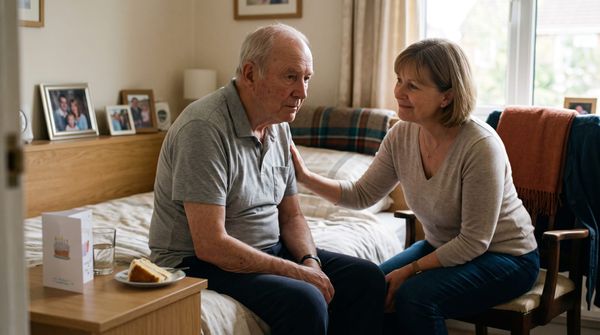
Becoming a caregiver often happens overnight after a fall, diagnosis, hospital stay, or sudden decline. Learn what to do first when an aging parent suddenly needs help and how to move from panic to a care plan.

In this episode of the Caregiver Relief Podcast, host Diane Carbo, RN, sits down with Lance A. Slatton—known as the Senior Care Influencer, senior case manager, host of All Home Care Matters, and president of All's Authors. Together, they dive into the overwhelming reality millions face every day: becoming a family caregiver without warning or preparation.
Lance shares his personal journey of caring for his father, offers actionable strategies to replace panic with a clear plan, and breaks down how to navigate sudden crises, dementia, and home safety.
💡 Key Takeaways & Core Lessons
- The Core Mantra: "You don't have to solve the next five years in the first five hours."Focus on safety, get organized, build a team, and move from panic to a plan.
- The Invisible Workforce: Nearly 1 in 4 US adults (over 63 million) are family caregivers, making it one of the largest invisible workforces in the country.
- Detecting Hidden Needs Gently: Older adults are often private or protective. Bring up care topics casually using third-party stories (e.g., "A friend was telling me about their parents...") during family gatherings rather than forcing direct confrontations.
- Crucial Early Planning: Everyone aged 18 and older should have advanced directives (such as Five Wishes) set up. You don't need a lawyer to state your wishes clearly before a medical crisis hits.
- Caregiver Snapshot First: Before downloading apps or buying fancy binders, compile a clear 1-page summary: diagnoses, medications, allergies, doctors, emergency contacts, and mobility or cognitive concerns.
- Dementia Care Insight: "If you've seen one person with dementia, you've only seen one person."The disease affects everyone differently. Blame the disease, not the person, and always restore dignity by giving your loved one a daily sense of purpose.

📋 Episode Outline & Timestamps
- Introduction & Episode Overview
- Welcome by host Diane Carbo, RN.
- Guest introduction: Lance A. Slatton.
- Episode sponsors and community resources (MyVitalVault.net, Caregiver Relief Community).
- What is the "Unexpected Caregiver"?
- Lance's story: How 2 weeks of helping his father turned into 3 years of 24/7 care.
- Why nobody prepares or trains for caregiving like they do for parenthood.
- The growing caregiver demographic and crisis management.
- Overcoming Senior Privacy & Denial
- Why aging parents protect their privacy or fear losing independence.
- Practical tips for starting gentle, non-threatening conversations about end-of-life planning and advanced directives.
- The power of tools like Five Wishes.
- Immediate Steps After a Crisis Hits
- Safety checks first: Bathrooms, floor clutter, lighting, and grab bars.
- Creating a basic Care Snapshot.
- Navigating hospital discharge and accessing Durable Medical Equipment (DME).
- How to work with Area Agencies on Aging and primary doctors (even without immediate HIPAA access).
- Transforming Personal Experience into Community Resources
- How Lance transitioned from medical school prep to founding a home care company, launching a podcast, and joining All's Authors.
- Navigating Dementia with Dignity & Purpose
- Why dementia requires an individualized approach.
- Separating the disease from your loved one's identity.
- Creative ways to bring purpose into their day (e.g., "bringing the bank home").
- Caregiver Roadmaps & Closing Words
- Lance's book: The All Home Care Matters Official Family Caregivers Guide.
- Announcement of Lance's upcoming 700+ page resource book: Caregiving in America.
- Where to find Lance Slatton online & final encouragement from Diane.
🎧 Why You Should Listen
Caregiving can feel like being tossed into a stormy sea without a life vest. Whether you were unexpectedly thrown into caregiving today or have been navigating it for years, this episode is packed with practical wisdom, safety protocols, and compassionate advice to help you regain control.
👉 Hit play above to listen to the full discussion and replace panic with a clear plan! 🌟
🔗 Resources & Links Mentioned
- 🎙️ All Home Care Matters Podcast: allhomecarematters.com
- 👤 Lance A. Slatton: lanceaslatton.com
Podcast Episode Transcript
Diane: Welcome to the Caregiver Relief podcast. I'm Diane Carbo, RN, your host. Today we are talking about something that happens to millions of families, often without warning: becoming the unexpected caregiver.
One day you are suddenly the daughter, son, spouse, neighbor, or friend. Then suddenly, after a fall, a hospital stay, a new diagnosis, or a noticeable decline, you become the person everyone looks to for answers.
You don't have the training. You don't, you may not even know what questions to ask. You may not even know what your loved one wants as far as their end of life planning, but the responsibility lands right in your lap anyway. My guest today is Lance A. Slatton, known as the Senior Care Influencer. Lance is a writer, author, healthcare professional.
He's also a senior case manager at Enriched Life Home Care Services, and the host of the award-winning podcast and YouTube channel, All Home Care Matters. He's also the president of All's Authors, and the author of the All Home Care Matters official family caregiver's guide. Lance brings years of experience in senior care, home care, caregiving education, and caregiver advocacy.
Today, we are going to talk about what families need to know when caregiving begins suddenly, what mistakes are common, and how caregivers can begin moving from panic to a plan.
Diane: Lance, thanks for joining me today. I know you're really busy with your own podcast and, your own business. Like many people, they know you as the Senior Care Influencer and the host of All Home Care Matters.
What led you into the world of caregiving, senior care, and family caregiver education?
Lance: Thank you, Diane. It's always a pleasure to be here and to help support family caregivers however we can. Before I get into a little bit about my personal story, there's a line that I really want families to remember, and it's this: You don't have to solve the next five years in the first five hours.
Start with safety, get organized, build a team, and really replace that panic with a plan. And for me personally, caregiving did not begin with a plan. My father had came to stay with us for what we thought originally was just going to be a couple of weeks, and it became almost three years of 24-hour care.
And so that's what I mean by the unexpected caregiver. Your life can change before you even realize you have stepped into that role.
Diane: Yeah.
Lance: No one hands you that manual when your parent or loved one suddenly needs help. You're learning while your heart is breaking, while decisions have to be made, and while everyone is looking for answers.
Diane: It's very painful. even if you're a healthcare professional, I've helped many healthcare professionals that suddenly became a, family caregiver, and they're in a panic. They have no idea. They're unprepared. So when you hear the phrase the unexpected caregiver, what does that mean to you?
Lance: For me, it really is unexpected, just like the name implies.
Diane: Yeah.
Lance: And what I mean by unexpected, for those that have had children, we planned, we prepared, we went to, you know, appointments leading up to the, sometimes the day before the delivery.
Diane: Yeah.
Lance: And, you're getting the nursery ready.
You're having the baby shower. You're picking out names. A lot of people read books and, talk to other people that have had a baby, and, the expected grandparents are giving you advice and, suggestions. But nobody does that for family caregiving. Nobody's reading books before they become a family caregiver.
They're not going to classes before they become a family caregiver. They're not modifying their home and making a room for that loved one that might need care, because it's not something you expect. And so when it happens, often it's very unexpectedly. You might find a diagnosis that a parent got, and you might have a generalized conversation, "What are we gonna do when Mom needs this or that if it, if the disease or the diagnosis progresses?"
But that's often where it stops, They're not going the extra step and educating themselves about all the resources and, learning about the different, support systems that are available in their communities or in their state. And so when it does happen, often it's very unexpectedly, and then you're all of a sudden in this, whirlwind of panic and stress and pressure, not only emotionally, but even physically.
If you have a dad that's, a good-sized man and, now all of a sudden he's gonna need transportation assistance, not with your vehicle, but from the couch to the chair to the bed to the shower and, all the other things, how are you gonna do that safely? what devices are available?
For us, I was actually pursuing medical school, Diane, and nobody ever used the word caregiver to me or to my wife, who was also a, a great help during this time. Though she'd already graduated, started her career, I was still pursuing, higher education. I was working in the university in the labs.
I was doing some student teaching, and nobody understood what I was doing. What... they never said, "Oh, you're a family caregiver. Have you looked into respite care? Have you talked to the area agency on aging?" It was just, just like myself. I just was a son helping to support my father, and never looked into any of these things.
I never even used the word caregiver, and it was never used towards me. And we can get into this aspect of the story if you'd like, but that's what changed the entire trajectory of my career. Right now, according to the AARP and the National Alliance for Caregiving, there's 63 Americans, so that's nearly one in four adults, who are a family caregiver, and that's not a small private issue happening, behind closed doors.
This is one of the largest invisible workforces in our country.
Diane: Yes, and it's going to get bigger over the next few years as the, baby boomers turn 80 very soon, and the youngest of the boomers are hitting 65 and going to start retiring. So we already are terribly unprepared for what's coming as far as being able to provide services and care.
And the family caregiver, often, as you're saying, it becomes unexpected, and I call it- you're doing crisis management at that point in time. And it's very challenging. and you know, in all honesty, there are many seniors out there, I'm working with a family caregiver right now, that his parents are in their mid-80s, and they're still working every day.
They're property managers or whatever. They have a big portfolio. And he was telling me he knows nothing about what their health conditions are. He knows nothing about what medications they're on. He hasn't, they have not shared it. he's not power of attorney, over anything. And, I've been telling him, you have to, start functioning like a detective.
And doing some, being stealth about what the knowledge that you gather, so that you can be prepared. there's, two-fold things there. A lot of seniors are very private and in denial, and they think that they're going to go on forever, which puts the, the other family members in a very different situation.
But in your situation, your dad became seriously ill right away.
Lance: Yeah, well, you know, and two parts to that. I want to respond to the first thing about this family caregiver you're supporting.
Diane: Yeah.
Lance: That is so true. A lot of times you're not gonna be aware of what your loved ones, and I say loved ones 'cause it could be a brother, it could be a spouse
Diane: Yeah
Lance: but typically it's the parent. they're very private, and that's somewhat a generational thing as well, and there's some pride there. You know dealing with, families for almost 15 years with our home care company, we've seen every scenario you can think of. A lot of times, oftentimes, the wife is protecting her husband because she doesn't want the family to know there's something wrong with him. She's being a dutiful wife, and she's doing what she thinks is right. And there's a fear there as well. If they know something's wrong, because they're thinking back often to what happened with their grandparents where
Diane: Yes
Lance: "Oh, we're gonna put them in the, the old folks home." it's totally different than it was back then.
Diane: Yes.
Lance: You know, dementia was a senility. It was a mental health, more of, schizophrenic, psychiatric issue. So things are looked at and viewed very much differently than they were back in the, say, '50s, '60s, and I'll even say some of the '70s
Diane: Yes
Lance: and even into the early '80s. And so the, the mom is being protective, right? Not necessarily out of harm or ill will, but she just thinks that's what she should do. Because they're afraid of being taken out of their home and put somewhere else, or just taking out the one and, now they're separated.
And then the other is sometimes the children, I encourage them, have a conversation. Just pull that Band-Aid off. And I get it. My father was very much the same way. But you don't have to do it in an aggressive manner or a threatening manner.
Diane: No.
Lance: I tell families, next time you're at a family birthday, we just had the Fourth of July, a family gathering, Thanksgiving, you pick the holiday or the event, and then when you're in the kitchen or you're just watching a game with Dad or whatever the case may be, bring up a friend of yours.
The old thing, "I got a friend who's wondering," And say, yeah, they were saying their mom, was having some issues with their dad and, they were saying they wanted to do this. They went, "What do you think about that, Mom? What do you think about that?" And just very casually, and kind of open it up in a non-threatening way, and you might get some insight into, what your mom and dad are thinking.
And then the other issue is sometimes children are in denial too. We've seen this where
Diane: Oh, absolutely
Lance: yes, my
Diane: Absolutely
Lance: yes, my mom, my dad, there's nothing wrong with them. Because they don't want to accept that, something could be going on,
Diane: Yeah.
Lance: 'Cause it makes us face our mortality.
Diane: Yeah.
Lance: And so, you know, the sooner you can just have gentle, non-threatening, casual conversations, try it. Because, you don't wanna have to make a decision in the middle of a crisis. And something we share with families when we're meeting with them, when they're trying to decide, okay, do we wanna take this next step for our mom or our dad, we say, whether you make a decision now or in the future, just make sure you make the decision when you can make it so that it's not made for you.
Meaning if it gets so bad, sometimes the decisions can be made where you don't have a choice, and that's the worst-case scenario that we like to see families have to go through.
Diane: Yeah. I also encourage, adult children, hey, say to their parents, "Hey, you know, I..." Because I encourage everybody to have a, an advanced directive
Lance: Yes
Diane: In place at the age of 18. I know people think that's absurd, you've got to start thinking about it, and what you want at 18 and what you want at 30 are totally different. And
Lance: Yes
Diane: then what you want at 30 and what you want at 50 or 70 years of age is totally different. So I encourage every family to even stop and say, "Hey, we're looking at, making some, our will and our end of life planning in case something happens to the kids," or whatever.
Just open it up and say, "What would you do in this situation?" just Absolutely be gentle. Like, help us make some decisions, Mom and Dad. or, if somebody in, you're always hearing about the, right now we've got a lot of movie stars passing and, for some, seniors, that is meaningful.
And you have to ask, what they had and what, were their plans when they were going through their death and dying, because some of them are coming out like, they didn't have a will, they didn't have an advanced directive, and there's families fighting. there are reason are opportunities with the news even to find, reasons to bring the subject up on an ongoing basis, but do it gently because sure as, it's inevitable they'll shut you down if they're not ready to talk.
They'll just cut you right out.
Lance: Yeah, and Diane, I would say to that too, I could not agree more. I was actually in my early 20s and I was taking a hospice and palliative care course and, you get your course outline, your syllabus
Diane: Yeah
Lance: the books you need. And, we go to the class on the first day and one of the books, or it wasn't really technically a book, it was more like a manual, a booklet- that was not on the syllabus, was Five Wishes. And
Diane: I love Five Wishes. Yes. I encourage everybody. Yes. Yes.
Lance: And
Diane: Tell them about that.
Lance: yes, I was probably 20, 21 at the time and taking this hospice class and, you already know hospice is gonna be a lot about end of life and things and-
Diane: Yeah
Lance: But we had to purchase it, and then we had to fill it out, and I picked it up and I'm looking at it, and I, you know I wasn't really naive to the importance of it, but I was naive to the fact of, well, I'm only 20. Why do I need to fill this out? You know
Diane: Yeah
Lance: this is silly.
Diane: Big deal.
Lance: But I filled it out and, as the course went on I'm like, that's actually very smart because
Diane: Yeah
Lance: I could have a car accident today. I could have, some kind of crisis befall me, and I've never had a conversation like that with my parents. And I've become one of the biggest proponents of Five Wishes. I've had Joanne Eason, the president
Diane: Me as well .
Lance: of Five... Yes.
Diane: Yes.
Lance: And, then, after her we had, Jim Touillon, the founder of Five Wishes, who is just a remarkable, remarkable man.
Worked in the White House and his, was, Mother Teresa's personal attorney. And just an incredible man that, he took those experiences and wanted to help the aging in our country.
Diane: Yes.
Lance: But Five Wishes is applicable to anybody 18 and over, and you don't have to have an attorney to fill it out, and your wishes will be respected.
Diane: Exactly.
Lance: So, you know, that's another great tool for, opening up these conversations for people.
Diane: Yes. Well, I did nursing, rehab nursing, and, 18 to 24 young adult males, head injuries, spinal cords quadriplegics. So I'm very well aware of, why it's important to have it at, an advanced directive in place at a very young age.
Lance: Yes.
Diane: And I know people look at me and roll their eyes, but it, there's a reason. you don't know what I know, and, just listen. Take a time to listen. what are some signs that, a family can notice or observe that, their older adult may not be safe managing everything alone anymore?
Lance: Yeah. first I would start with the immediate questions.
Is mom or dad safe today?
Diane: Yeah.
Lance: And then from there go, do they understand their medications? Can mom or dad get to the bathroom safely? Can they eat? Are they eating appropriately? Can they be left alone? And do we need to check in on them at night,
Diane: Yeah.
Lance: And then I would start first by the, taking the first step is creating a simple care snapshot.
It doesn't have to be complicated, it just needs to give the family some clarity. a care snapshot could include, their diagnoses, their medications, their allergies, doctors, pharmacy information, emergency contacts, any mobility concerns that you have, cognitive concerns.
A caregiver's first tool is not an app, a binder, or a spreadsheet. It's really the clarity. knowing who their doctors are, knowing what medications they're on, what, if anything has changed, what is unsafe, what's giving you concern, and who in the family has the authority to act, Yeah. Families should also know where those legal, like we've been talking about should know if they have legal documents, where they're at, Loved ones don't automatically give an adult child legal authority, as we've been discussing to make these decisions.
Diane: Yeah. And there are many, reluctant seniors who want to keep everything secret and private, until a crisis occurs.
And one of the biggest, problems is falls. Falls are the number one independence robber of seniors. One fall can prevent you from ever returning home again. So, you know, you have to be prepared, by looking at the environment. So that's very frustrating when the seniors aren't cooperating.
I know I deal with that with several clients and it is, it's crisis management. But, you know be a detective and just do what you can to learn things. Check their medications out of their cupboard, and see who the doctor is. Write these things down. ask them, when they do go to the doctor, can you go with them?
And if they say no, but can you can ask, "Can you at least sign a HIPAA form so that if something happens to me, the information can be released?" Because they don't realize that, everything, if they, if the family doesn't have access to that information, they're not gonna be able to make a decision, and then it's, the, the medical delivery system is going to make decisions for you.
And that's tough as well.
Lance: Yeah. Absolutely.
Diane: So a family gets the first crisis phone call, a fall, a hospitalization, or a sudden change. what should they do first?
Lance: Yeah. Well, the first thing I would do, like we said, the unexpected caregiver is not an unqualified because they're overwhelmed.
They're overwhelmed because the role is just, enormous. Aging is not just a medical issue, it's a family issue. It's a financial issue, a housing issue, a workplace issue, and I always enforce the dignity. It's also a dignity issue. When that fam- when that parent suddenly needs help, that adult child often becomes the scheduler, the advocate, medication manager, transportation coordinator, financial organizer, and emotional support system overnight.
Diane: Yeah.
Lance: The first thing you need to do is find out, one, what are the discharge instructions if they are coming home from the hospital, like in my situation? If they're not, find out what are the needs that are not being met, what are the safety concerns? Is the home safe? Some of our parents and grandparents, when they have the current home they live in, they've probably been there for many years.
Is there a bathroom on the main floor? Are they gonna be safe to go upstairs to now shower and use the restroom? There's... A home safety evaluation can be done by the family. We do those for families all the time, which, there's never a charge for that. We're just here in Michigan.
But I say that to say it's not just simply looking at where the bedroom and bathroom is. are there cords laying across, walkways? Is there rugs that have non-slip resistant on them? are they gonna slide on the floor? There's a lot of things you need to take into account to avoid those falls like you're discussing.
And if the answer is yes, there's a lot of safety hav- hazards, a lot of things can be changed and modified to make it more safe- Sure ... without any cost. moving a slippery rug out of the bathroom. making sure that there's no cords in a, high-trafficked area. If they get up at night, is the hallway and the bedroom, got lighting that they can ex- easily access so that they can see their way to the restroom or the kitchen, wherever they need to go?
And, start going room by room. And even the outside, Do they have a lot of steps leading up to their front door? You know, are they going out to the garage to leave the home? There's a lot of factors that families can take, kind of initiative on to make sure that at least the home environment is as safe as they can make it.
And if there are some things that you need to purchase, they're gonna be low cost. bathroom, you don't want mom or dad grabbing the towel rack to get in and out of the shower, 'cause that's usually just a drywall, drywall screw into the drywall. You know get it into the stud, get an actual grab bar.
I always recommend putting two up in the shower, one longways and one sideways. And do you need a shower chair? There's things that you can do to make the home environment as safe as possible. And there's also a thing called DMEs, durable medical equipment, that through your mom or dad's Medicare, some things can be provided at low or no cost to them that can help make their home safer
Diane: You know, I always recommend it.
I did home care for many years, and one of the things, that we always did was a, ask the doctor to order a home safety eval.
I don't know if that's reimbursed anymore, so it used to be a, an OT would go in and check the house and make recommendations. is that even a thing that they can do now?
Lance: 'Cause I'm seeing a lot of unsafe discharges to home. Well, yeah, yeah.
Diane: And honestly and the home evals aren't being done, so I'm just curious there.
Lance: Yeah. I can't speak to whether they can come at no cost just to do a home safety evaluation. That I do not know.
Diane: Okay.
Lance: But I do know if the doctor writes a script for home healthcare, which is good for up to nine weeks at a time
Diane: Yeah
Lance: for a specific medical condition they will do, at request, a home safety eval. Okay. I know, like for us, with our company, we're a trusted resource to our, area agency on aging. And they will call us and say, "Mr. or Mrs. Jones needs a home safety evaluation." Okay. We do not get reimbursed for that.
We do not charge for that. We are glad and happy to go out there because
Diane: Yeah
Lance: we want people to be safe, Yeah. It's not about dollars and cents at that point. Yeah. So I would also contact your local area agency on aging because, again, you're not gonna get a home health prescription unless your doctor has a specific healthcare need that you need addressing.
And not everybody's gonna qualify for that, just because they don't wanna have to necessarily leave the home to go to PT. So if you can't get the home safety eval through your Medicare, then I would contact your local area agency on aging and ask if they have any resources that would provide a home safety evaluation.
Diane: That's a good point, 'cause it used to be I could always call as a care manager and say, let's have a, a home safety eval done." But I, what I'm seeing right now is happening, though that is not being done, and I'm, it was disconcerting to me. So I was wondering if that had, the reimbursement has changed, and most likely it has.
How can families create a basic care plan when they are overwhelmed and don't know where to begin?
Lance: Well, I kind of like to say, when you notice or you're starting to think there's a problem, now is the time to act. So start jotting down some concerns that you have. Then start gathering, like we discussed earlier, your parents', medical conditions, their medical history.
Start evaluating, are they using any assistive devices like a cane, walker, wheelchair? If not, are you expecting that they should be using these things? Get a list of all their medications, their pharmacy that they use. And again, start having a conversation, if not with your parents first, if you have siblings, start discussing the things that you're concerned about and that you're noticing or observing with your siblings, because they may be noticing or they
Diane: Yeah
Lance: might have different input that you're not aware of. And then start discussing, how can we best help support Mom and Dad so that they can safely age in place? And then take all of your notes that you and your siblings have, and then if one of you are the power of attorney over healthcare, maybe having a, a casual conversation with your mom or dad's primary and just say, "This is what we're noticing.
What is, what are you noticing? What do you think we should do?" And I always like to say too, Diane, I don't know if you've used this 'cause you've been a nurse for, many years and have so much experience. We always tell families, if there's not a POA, they'll say, "Well, the doctor won't talk to us because I'm not, you know, authorized."
Diane: Yeah.
Lance: And we say, "That's true. They don't have to talk to you, but they can listen to you." Yeah. And so there's nothing against the law. There's no HIPAA violation by you
Diane: Correct
Lance: requesting a phone call with the doctor. And just right up front say, "I'm not asking for any information, but I have important information I would like to share with him, because I know Mom's coming in, later this month to meet with him and I want him to be aware of this."
Because let's be honest, we're not always the most, you know, forthcoming, any of us, with, some concerns we may have, but our loved ones may have for us.
Diane: And that's a good point. You can call and they will listen. I was actually in an emergency room with a friend who has... She was driving her truck. We were out to lunch, and she had a stroke while we were in the truck. And I pushed her, we got over. She just had garbly goop speech at the time. So I pushed her over and we drove right to the hospital. She had TIAs before. Yeah. Mini strokes or early signs of a future stroke. And, I took her, and when I was there, I was, just a friend, and she had two sons, but I would go and check on her often.
She was out in the country in Pennsylvania. And, she would tell... She was lying to the doctor about everything. Yeah. How compliant she was. And I said to the doctor, this is not, she's not compliant as a diabetic. She's not this and she's not that." And he put his hand up and said, "I don't want to hear what you have to say.
I'm listening to her." Wow. And I was like, So I went outside and I said, "I don't have HIPAA. Yeah, I don't have anything to, here to gain, but you need to see the true story about what she's dealing with." "Because I want to make sure she gets proper care." And, but it's funny because other families have told me they've also been dismissed you know, and that's why caregivers feel like they're invisible sometimes.
And it's very frustrating. Yeah. But now you own a home care company. And you do case management, and you also, Are support, your family caregivers with community resources. how does that help, the family caregivers in what you do? Because this is not something that is every caregiving agency offers.
Lance: Yeah. Well, I would say we're probably different than a lot of home care
Diane: Yes
Lance: companies. we got into this, as I shared, I was pursuing medical school, and it was the experience of what we went through with my father, which was supposed to be a couple of weeks, turned into almost three years, seven major surgeries.
And we had home health care coming sometimes six, seven days a week, which knowing home health care, that's very abnormal. It's usually one to three times a week. And that went on for almost three years, when he wasn't having a surgery or in the hospital. And that had a profound impact on me.
And realizing, here I'm pursuing medical school, we have home health care coming to our house almost every day. We've had multiple surgeries, multiple hospitalizations with the same surgeon. All these people, we had a three-year rapport with them, and never once did they ever point us or share with us any resources whatsoever.
My father was a veteran. Never any VA benefits that were shared with us or resources.
Diane: Yeah.
Lance: And it was just very profound, Diane. I can't even begin to explain that. And so when I went to have lunch with a good friend of mine, he was in a professional building and, you know, preparing for medical school.
I had done EMT training and paramedic training, worked in cardiac critical care and the ER, so I'm not, some green leaf here that doesn't know anything. And never knew anything about home care or respite services or any of these things. And there was a home health care company hiring in my friend's building.
And I shared, I was working in the labs at the university. I was doing student teaching. And for any of us that have worked, a college job through the university or college that you're at, you realize and can appreciate, you're basically paid minimum wage. But it's great because it matches with your, schedule, your course load.
So you can work when it's convenient for you, which, I really appreciated that. But also being newly married, I needed to make a little more money than that. And so I stopped into this home health care company and it said, "Now hiring. Immediate openings," all this stuff. And I'm like, "Well, I wonder if I would qualify for this.
I've worked in ER, I've worked in cardiac critical care." And I go in there and ask to learn about the jobs, what's required, what are they hiring for. They couldn't give me an answer. They didn't, they had no idea. And I left there. It's just very perplexing, You have a help wanted sign, but
Diane: Yes
Lance: you don't know what you're So I left there. And for whatever reason that day, I had this epiphany and I called my wife and I said, we should start a company that helps people like us." I said, "There's gotta be a lot of other people out there, my goodness," And not realizing there's an entire billion-dollar industry out there called home care.
And so we thought, or I thought I invented the wheel, and then we discovered I had not. But I loved the idea, and I thought it'd be such a great way to help people. That's the only reason I ever wanted to go to medical school, was to help people.
Diane: Yes.
Lance: And so we started our company, and I didn't start it 'cause I'm a healthcare person, I'm not a business person.
I don't really look at dollars and cents, and I just wanted to find the best way to help people. So we started going all over Michigan, and we would do educational events. we had, like, eight, nine caregiver support groups all over the state. We would do fun events at all over the state, like Lunch with Elvis, Lunch with Neil Diamond, and you know, all these games
Diane: How fun
Lance: and things.
Diane: Yeah. Yeah.
Lance: Oh, I loved it. It was fantastic.
Diane: Yeah.
Lance: we did that for the first seven, eight, nine years we were in business, and all of a sudden, there's this thing called COVID happening on the news.
Diane: Oh, God, yes.
Lance: And so we made the decision to say, "You know what?
Let's stop our public gathering. Our company and our staff are essential. They'll continue going into the homes and, helping people." Well, getting information from the health department in different places during that early stages of that first two-week lockdown, we discovered pretty quick, you know what?
This isn't gonna be over probably after this two-week period, so we gave it another two week, and then it was like, okay, this might go on for a few months. So I literally heard a podcast one night, and I thought, "Man, this would be a great way to get the information out to people when we can't-" Yes
"meet with them in person."
Diane: Yeah.
Lance: And so we started the podcast in, May of 2020, and here we're going into, July '26. it's been going really strong, and so we're continuing to just get information out to people, support them.
Diane: Yeah.
Lance: We still do some of the public events, but not as much because the schedule just doesn't allow for it now.
Diane: Yeah.
Lance: We just acquired Al's Authors earlier this year, and now we're helping, to get these, books, out there to the public, and we have a beautiful digital library that we, created on the Al's Authors website. And so we're getting it out there now, but much more in a digital format than, in an in-person format.
Diane: Sso you are the president of Al's Authors.
Lance: I am.
Diane: Yeah. So what should families understand when caregiving begins because of dementia, memory loss, or cognitive changes?
Lance: Well, my first tip is always just, if you've seen one person with dementia, you've only seen one person. that's, not to make a connection or to make light of, but, my father had developed a wound from a fall.
That wound developed into osteomyelitis. The etiology of my osteomyelitis is gonna be the same for him as it is for pretty much anyone else barring any, you know, side effects or, complications. But if you get a diagnosis of dementia and your friend has a diagnosis for their loved one of dementia, it doesn't mean it's gonna be the same path that you're walking together in the sense of, there's different forms of dementia, and every form affects everybody differently. Often, sometimes you need a second opinion. You might get a misdiagnosis the first time, and so you go to another one. I always recommend going to a specialist, because they're gonna have better insights than just maybe your primary care doctor will.
Maybe not, though. But just because you get an experience or your friend sharing their experience of what they went through doesn't mean your experience is gonna be the same. I've seen people, Diane Where, they were very outgoing, very extroverted, just the light and, life of the party, and then they got a diagnosis of dementia, and then all of a sudden they're very introverted.
They became non-verbal. They were very, standoffish and just weren't happy anymore. But then I've seen the, the opposite, where a person prior to a diagnosis was very introverted and quiet and didn't like to go to public gatherings and parties and didn't really socialize much, and then all of a sudden now they are the everybody's story's gonna be different.
Diane: Everybody's different.
Lance: And, yeah.
Diane: Yes.
Lance: And
Diane: I've had clients that have had their parent for, like, 13, 15 years, and the decline for that, their type of dementia was so slow and incremental. It was like little tiny stairsteps. And then you have some that, overnight they go from being, outgoing and, busy being active and physical to all of a sudden they're withdrawn, they're unhappy, they're miserable, and they're angry or agitated. So it just depends on the person and the type of dementia that they have. But you're right. There's, and it also depends on what part of the brain that they're, has been impacted. people don't understand that it's not, a cookie cutter approach to dementia in any way, shape, or form.
Lance: Absolutely. And, you know, one thing I really want to stress is, your loved one may say things that are hurtful, they may do things that are hurtful.
Oh, yes. But don't take it personally, as hard and as that sounds
Diane: Yeah
Lance: and as easy as it is for me to say, because it's not your loved one, it's the disease. It's the dementia.
Diane: Yes.
Lance: It's not your loved one. Be mad at the disease, but not at your loved one.
Diane: Yeah.
Lance: And respect your loved one's dignity as much as possible, because they're still a person.
Diane: Yeah.
Lance: They're still your mom, your dad, your spouse, whoever it may be, and you just need to be there for them because they're gonna have less and less ability to, be there for themselves. And, giving them a purpose is so important. we had a person who literally was a banker for 30-plus years.
They became the president of the bank, just very, high-level job, and they loved the bank. The bank was their life. And they got a diagnosis, and then they would just sit in a chair and, they were just, miserable, and that's putting it nicely.
Diane: Yeah. Yeah.
Lance: And so we told their daughter, we said, "You know what?
Your dad loved banking. That was his life."
Diane: Yes.
Lance: "He doesn't have much purpose right now." "You need to give him purpose." And she said, I can't take him to the bank. They won't let him in the door,"
Diane: Yeah.
Lance: And we said, "No, bring the bank to him."
Diane: Exactly.
Lance: I said, "Go
Diane: Yes
Lance: go get a, go get $100 or $200 in just coins
Diane: Yeah
Lance: and then get a bunch of, you know, coin rolls.
Diane: Yeah.
Lance: Set them out on the table. Make it feel like it's very important."
Diane: Yeah.
Lance: "Tell him the bank needs this done by the end of the day
Diane: Yeah
Lance: and they're counting on him." And that brought that man back to life.
Diane: Yes.
Lance: And he does that every single day.
Diane: Yes.
Lance: And he doesn't know he just did it yesterday. He feels purpose again, and
Diane: Yes
Lance: purpose for our loved ones with dementia is so crucial to helping them on this journey.
Diane: Ronald Reagan, loved to rake leaves, and his, Nancy would have leaves put out in the yard every morning, and every day he would rake leaves.
It gave him a sense of purpose. And That's beautiful I know, isn't that? And I think that what, you know, and a lot of families get upset. when I would do, I did behavioral health and some of the little old ladies, the little old Italian ladies would go around cleaning all the time.
That's, that was their life. they would be cleaning our, tops of the tables or whatever, and the families would feel like that was, that we were using them as slave labor. They just wanted to feel.
Lance: Yeah.
Diane: If you want to wash my windows, go right ahead.
Lance: Yeah.
Diane: But, you know give them a reason to have, a reason to get up and have a purpose in life. 'Cause just because you are, you have dementia doesn't mean that you still don't have a sense of you don't have a sense of, needing something to do. Right.
Lance: Absolutely.
Diane: And I think that's really important. And yeah, so I love that.
Yes. bring the bank to them. Absolutely. I do. Now you wrote a book, the All Home Care Matters Official Family Caregivers Guide.
Lance: Yes.
Diane: Tell me about that, 'cause it's designed to help families navigate care.
Lance: Yes. It's, a good friend of mine, Laurie Labay, She had me on when it first came out.
I know
Diane: Laurie, yeah.
Lance: Yep. And she, her and I actually produce a show together, Conscious Caregiving with L and L, which is just a great show. And she had me on when the book was published, and she said, I was reading through this." She goes, "It's not a book, it's a map."
Diane: Yeah,
Lance: a road map and it just, at the moment I wasn't thinking, clearly on what she meant by that.
I go, what do you mean?" She goes, no matter where somebody's at on their caregiving journey, just like if I was gonna come visit you in Chicago, Diane, I'm gonna use my GPS as soon as I pull out of my driveway all the way until I get to your location."
Diane: Yes.
Lance: But if I turn the GPS off halfway there, even though I'm halfway there
Diane: Yeah
Lance: I still need the GPS." So this book is that map. Yeah. Whether you're just starting out as a caregiver, or you're halfway through, or you've been doing it for years, no matter where you're at on your journey, the book is still gonna help navigate you there to when you no longer need the guidance. And so that's really the purpose of the book, is helping to guide these family caregivers.
And I never wrote it for anything other than what I wish I had when I was caring for my father.
Diane: Yeah.
Lance: There wasn't a book given to me. There was no, like I said, resources or anything. And so I write a lot of articles for, a lot of the, well known healthcare, news sites. And those are articles, right?
You
Diane: Yeah
Lance: start and read to the end, and it's done. But this is something that encompasses the entire journey. It's a good, easy read. It's only, 130-some pages. I will share some breaking news with you. It's never been said publicly, but, I've been working on a book the last, three-plus years called Caregiving in America, and I think it's gonna be one of the, pillars of books for caregivers when it's published later this month.
And that book has resources for every state in the back. So you could go right to Illinois. It'll list Illinois resources. You can go to Michigan. All 50 states. But then we have a section, national resources, so ones that are available federally to anyone and everyone, regardless of where you live at in the United States.
But then there's a you know, it's a tome. it's over 700 pages, so it's filled with information, and, I'm very proud of it.
Diane: It sounds like a, a case, a care manager notebook, a resource book.
Lance: I hope so. I hope so
Diane: Yeah, I hope so too, because, it's desperately needed out there.
We don't have enough, youth to care for our seniors, so we really have to get creative. how do our, my listeners find you?
Lance: Oh, sure. if they want to learn more about the show, All Home Care Matters, they can go to allhomecarematters.com. If they want to learn more about All's Authors, that's allsauthors.com.
If they want to learn more about me, it's lanceaslatten.com.
Diane: Thank you so much for your time, and to my family caregivers out there, you are the most important part of the caregiving equation. Without you, it all falls apart. So please learn to be gentle with yourself and practice self-care every day, because you are worth it.
Caring for a loved one can be overwhelming — but you're not alone. If you have questions, big or small, our expert team is here to help.
👉 Click here to Ask the Expert
Our Resource section can help you find the information and tools that you need. We have courses, videos, checklists, guidebooks, cheat sheets, how-to guides and more.
You can get started by clicking on the link below. We know that taking care of a loved one is hard work, but with our help you can get the support that you need.
Click here to go to Resource Section now!
You might also like this article:
 Diane Carbo
 Diane Carbo
 Diane Carbo
 Diane Carbo