The Sandwich Generation Handbook: Care for Aging Parents, Raise Children, and Prevent Burnout with Dr. Irina Koyfman - Episode 250
Feeling pulled in every direction at once?In this episode of the Caregiver Relief Podcast, host Diane Carbo, RN, sits down with Dr. Irina Koyfman, DNP, NP, founder of Affinity Expert and author of The Sandwich Generation Handbook. Together, they dive into the silent struggles of caregivers caught in the middle—caring for aging parents while simultaneously raising children and managing careers. Dr. Koyfman shares both her clinical wisdom and deeply personal journey, offering a practical roadmap to overcome decision fatigue, set boundaries, and prevent severe burnout.
Listen to the full episode above to hear how you can take control of your caregiving journey without losing yourself! 🎧✨
Key Episode Highlights
- The "Sandwich Generation" Defined: Why so many caregivers fail to recognize their role, often brushing off intense responsibilities as just "helping out family".
- The Emotional Toll & Guilt: Understanding the underlying emotional weight, decision fatigue, and constant guilt of feeling like you aren't doing enough for either generation.
- A Practical Toolbox for Daily Relief: Simple, actionable steps—from organizing a paper/digital crisis folder and snapping phone photos of medications to delegating tasks to family members effectively.
- Navigating the Workplace & HR: How to uncover hidden employer benefits, ask about FMLA or flexible working arrangements, and talk to your employer before burning out.
- The "4 Ms" of Geriatric Care: Essential questions to bring to your parent's primary care provider: What Matters, Mobility, Mentation, and Medications.
- De-Prescribing & Advocacy: Why caregivers must advocate for regular medication reviews to eliminate unnecessary prescriptions as a loved one's needs change.
- Mind-Body Health & AI: How chronic stress impacts physical health, plus a preview of Dr. Koyfman's work using AI as a helpful, practical companion for caregivers.
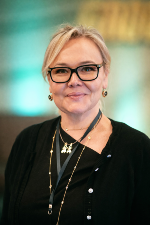
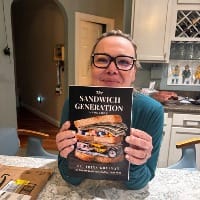
 Dr. Irina Koyfman
Episode Outline
- Introduction
- Diane Carbo introduces the reality of the sandwich generation and guest Dr. Irina Koyfman.
- Inspiration Behind the Handbook
- Dr. Irina shares her personal story balancing a high-level job, children, aging parents, and a 90+ grandmother.
- Why Caregivers Don't Self-Identify
- Discussing the lack of public awareness, systemic reliance on family caregivers, and the shifting healthcare system.
- Workplace Strategies & Setting Boundaries
- How to approach HR, ask for flexible options, delegate household duties, and stop assuming your parents can't handle small tasks themselves.
- Mind-Body Connection & Burnout Signs
- How chronic cortisol release leads to long-term physical health issues like high blood pressure and diabetes.
- Practical Organization & The 4 Ms of Care
- Creating document packages, letting go of perfectionism, and asking providers about the 4 Ms.
- De-Prescribing & Finding Meaning
- Eliminating unnecessary medications in late-stage care and finding comfort in knowing you are never truly alone.
Resources & Links
- Website: Sandwich Generation Resources
Podcast Episode Transcript
Diane: Welcome to the Caregiver Relief podcast. I'm your host, Diane Carbo, RN. Have you ever felt like everyone needs something from you, but there is no space left for yourself?
You may be caring for an aging parent, raising children, supporting a spouse, working, managing appointments, answering phone calls, handling medications, solving family problems, and trying to make sure no one falls through the cracks. This is the reality of the sandwich generation. Many caregivers in this season do not even call themselves caregivers.
They just say, "I'm helping out mom," or, "This is what families do." But over time, the emotional weight, the decision fatigue, the guilt, and the constant pressure begin to take a toll. Today we are talking about what it means to be caught in the middle, and how caregivers can begin to find their way with practical tools, emotional validation, and support.
My guest today is Dr. Irina Koyfman, a board-certified nurse practitioner, Doctor of nursing practice, founder of Affinity Expert, and author of The Sandwich Generation Handbook, a box of tools for finding your way. Dr. Koyfman brings more than 25 years of clinical experience caring for aging adults and people with complex chronic conditions.
But she also understands this journey personally. Her book was born from her own experience of caring for multiple generations, while also trying to build a career and life. This conversation is for the caregiver who feels pulled in every different direction, but still keeps showing up.
Dr. Koyfman, thank you so much for joining us today. That you have such valuable information to share. I'm looking forward to hearing more.
Irina: Thank you, and please call me Irina.
Diane: I can do that, Irina. Before we talk about the sandwich generation, can you share what inspired you to write your book, The Sandwich Generation Handbook?
Irina: Yeah. So I was running a very successful program in one of the health insurance companies, overseeing 300 clinicians. I had a high schooler and a middle schooler. My father had dementia. My grandmother was 90-plus years old. She actually died two weeks before she turned 100.
Diane: Oh.
Irina: A disabled uncle, and I must have been in one of those, Teams meetings or Zoom meetings and somebody saw my face, and they ask, "How you doing?" Or, you know, something, to be polite, and I think I probably broke down and said how, I don't know, I'm tired, I'm busy, I'm stretched, I'm whatever. And the person said, "Oh, you're a perfect sandwich generation." So this was about 10 years ago, and I came from Ukraine in 1992, so English, even though I've been here longer than I lived there, I still consider myself, English second language.
Diane: Yeah.
Irina: So I said, "English second language?" Like, what do you mean sandwich generation? I've never heard that term before."
Diane: Yes.
Irina: And the woman had explained to me that, it's when you're taking care of the younger and the older. and to be fair, I think, even thinking now, it doesn't have to be necessarily parents and children. It could be, some people have pets, and they call them their children. It could be taking care of pet at home and maybe, ill mother.
So I think it's just anything where you are feel like you're being pulled fr- by different directions, and maybe even, I like that analogy, candle burning from both ends.
So I remember that. That was kind of the seed that was planted in my head. And of course at that time, you can't see the forest for the tree. You're busy, you're running the company, you're doing this and that. But after pretty much everybody passed away, peacefully, and it was a long journey, and my mom, thank God, is, young and healthy. My kids are, to book last year.
So my daughter was already finishing law school, the other one was a senior in high school. I said, "I wanna write," like, I wanna do something for people, for me 10 years ago, like when I was so busy and so tired, and didn't have resources and time for myself. And remember, I'm also a practicing nurse practitioner, I have board certified in dementia, in AI, and I've always been in kinda the space of care coordination, so a little different perspective as a, like a primary care provider.
Diane: Yeah.
Irina: I was like, "What would I wanna read?" Like, when I don't have time, and nobody has time at that point to read a book.
Diane: Yeah.
Irina: But I said, "I need to make it so digestible." So I wrote a book, I think it took me probably over a year from like inception to publication. And I thought long about how to make it so when you're tired and busy and you don't have time and money, and maybe you realize that you're struggling financially and that's your biggest thing, you just open to financial problem chapter, and it's three to four pages. It's like what it is, what you can do my personal story.
It's usually some fun and funny, 'cause Diane, I always say, if you can't learn to laugh, like your tears
Diane: Yeah
Irina: if they're not coming from laughter, they're gonna be coming from crying.
Diane: Yeah.
Irina: So you might as well learn how to laugh and pivot and, take it with humor. And it's, a few pages. A few pages and every chapter has resources. Everything was designed for, everything is free, everything that's available is free, and then I also give some, options for people that might, have more money and wanna pay. But I really designed this for pretty much anybody to be useful.
Diane: Irina, one of the common threads throughout all my podcasts is a, the guest speaker always has been a family caregiver. And they identified a problem, a challenge, or an obstacle, and then they decided to help others after them by providing a solution. So I love this.
Irina: Yeah.
Diane: And, one of my dear friends calls herself, she's a panini.
Irina: The multiple layers, not just
Diane: Yeah ... yeah The multiple layers. Yes, yes, yes. so why do so many sandwich generation caregivers fail to recognize that they are actually caregivers?
Irina: I think it's a multi you know, problem. Number one is when I, probably a few years ago, Diane, when I was just thinking about writing the book, I was thinking, "Do people even know what sandwich generation is?" And I'm very active on LinkedIn and Facebook. I have thousands of, friends or followers, whatever you want to call it, and I put a question in and I said, "Do you know what sandwich generation means?"
And even within communities that Like, I went into the groups that are literally, like, caregivers, the group was called Caregivers. Not Sandwich Generation, but Caregivers or Caring or whatever. And even there, only 70% of people knew what sandwich generation meant.
And in my, you know quote unquote research just asking everybody, I would say that it was more like 30 to 40% of people knew in general what sandwich generation meant. So I think just the term is not familiar, so we need to do a little better job in explaining. And I do think that when you're a caregiver it does make a difference if you're caring for one person versus two versus three versus four versus job. So I think it's almost like the niche within the niche of caregivers.
Diane: Yes, it is.
Irina: So number one, yeah, I think it's just lack of information, lack of education, lack of acknowledgement. Number two, up until last year I think that almost nobody talked about it. Right now AARP, there, there are, so many articles, you know, things are coming out. Medicare is doing research. I think it's a lot more, accessible now, that information, but it wasn't before.
And caregivers were always kind of like this I almost, I hate to say it, but from the employer standpoint, from the government standpoint, from anybody that will have to pay for it, it's like a hidden free workforce that if they don't acknowledge that they don't have to pay that, right? So if you were helping your mother or grandmother and, you're doing that and you're burning out and there's no other help, then you're just suffering by yourself.
But now I think with millions and millions of people that are in that caregiving, space and being sandwiched, there's more and more help that's coming out from the government and from, like nonprofits and things like AARP to actually help and pay them so they can care for their, loved ones without, truly like losing their houses and losing their minds.
Diane: I think that what I'm seeing from my end is the family caregiver is the single largest pillar of the long-term care industry. They have been for decades. It's getting worse now with the baby boomers, reaching 80 in the next few years, and the youngest of the boomers retiring in the next four years.
We really have a public health crisis. The other thing that we are dealing with as well, Irina, is that we have Medicare has gone to a cost sharing plan, they are. And they have also changed the reimbursement so low on so many benefits that we have that providers are, especially for skilled care, rehabilitation services, we are seeing patients being unsafely discharged from home at record rates.
And the family caregiver now is doing things that were once they're doing procedures and tasks and, things that a professional healthcare provider used to do. And it's very scary out there. I worry about the, the family caregiver, but I also worry about the, the, childless couples and the, solo agers, because I don't know what we're going to do. It's very dangerous out there. And as you say, so many are working caregivers. They would like to keep their jobs, and so many of them leave. So you understand this journey both clinically and personally.
Irina: Yeah.
Diane: So how did your experience shape the way you wrote the book?
Irina: So again, everything is based on my personal story, so I give people a lot of different ways of looking at things. But for example, I have a whole chapter on you working, what kind of questions you should ask your HR. And many people have no idea that some of the benefits are hidden, because employers are not really in, in business of showing you everything that you can have because then, they think a lot of people are going to start taking advantage and they're going to lose money.
Diane: Yeah. Yep. Yeah.
Irina: So many companies have and I don't want to say hidden because it's not hidden, but it's one of those things where if you don't know what to ask for, nobody's going to volunteer that information to you.
Diane: Yes. Yeah.
Irina: So I explain what to ask, if there are FMLAs, if there are flexible working. There's a lot of many companies do have grants, believe it or not, for to help people for their caregiving journeys, so a whole chapter on that. I also added my personal story when I made a choice, and luckily I was able to do that financially, and I realize not everybody could.
But I stepped away from my very, very busy, very stress-inducing job when, when so many of my family members just got worse. To my father-in-law went from literally taking a bus to the library, being that independent to use the computer and printer, to passing away within six months.
Diane: Oh, my.
Irina: And it's ... Yeah. So when things like that happen, I just realize that, if I don't learn how to- step away and be- Yeah do something that it's not going to totally break me. So I was able to do that. And again, like I talked about what you can do, what you can do if you don't have choice. There's many things that are available and possible. But when you're in that midst, as I always say, you can't see the forest for the trees and you're, it's, one step ahead of another.
One day after another. But I give people tools so they can, take a breath and like read three, four pages and, send the email to their employers, HR, see what they can do, nonprofits where they can ask for help and money. There are a lot that's available. We just need to learn. I feel like my book is like a navigation, almost oh, here's the image.
Diane: It's a roadmap.
Irina: It's a roadmap, exactly.
Irina: It's absolutely a roadmap. Exactly. Yeah. And it- I was thinking to name it Box of Tool or a Roadmap or a Compass because all of that is what I try to do with that book.
Diane: Exactly. and one of the biggest mistakes the working caregiver makes is not telling their employer that they have someone at home, and not looking at the options they have to see how they can do better. And, employers are having to really rethink how they're going to support a, a family caregiver because they're losing all their good workers.
Irina: Yes. Yes.
Diane: And it's really hard on them. and some, are willing to make accommodations in any way, shape, or form they can to help that, and I think that's really very important.
Irina: Yeah.
Diane: So what are some of the biggest emotional pressures, sandwich generation caregivers carry that other people may not see?
Irina: I think one of the biggest one is guilt, because no matter what you do when you're a caregiver, you always feel guilty about not doing enough or doing something wrong or not giving, your all. So it's literally, you're never satisfied as a caregiver if you have a guilt.
Diane: Yeah.
Irina: So guilt is huge. And you're taking care of your mom, you feel guilty that your daughter is not getting enough and vice versa. so I think guilt is huge. But I think also emotionally just not, Like I have a little bit of like a, a spirituality peppered through the whole book because I think that if we don't find a bigger purpose or something
Diane: Yeah
Irina: that helps us kind of connect to everything and everybody, to think and hope that there is, something bigger than us. That this world is not just a, you know, what peoples call, a jail or a daycare that we send. Like it's ... There's something bigger. There's something better. There is something that connects us all. I think then it's almost impossible to ever feel like you're successful in caregiving and in life in general. So I think it's just that the guilt and then inability to see the bigger picture, I think that's what every caregiver is struggling with without actually, naming it.
Diane: Yeah. I have a faith in caregiving section on my site. And over the decades I've realized that, Caregivers of faith that have a belief, I don't care what religion they are, that have a higher power are, handle caregiving better than those that don't.
And it's really hard, and I think that so many of them And it's not that their churches are helping them or anything, because I think churches in America have really dropped the ball, meant most of them, as far as how they are supporting seniors in their communities. but yeah, those of faith are, do, a somewhat better, they handle their journey better. And I do think it's because they don't, they look at the bigger picture.
Irina: Agree. Yeah.
Diane: Yeah. now your book is described, as you said, a box of tools. what are some of the first tools a caregiver needs when they feel overwhelmed and pulled in every direction?
Irina: Yeah. So I mean, there are, I can talk about that for probably an hour. But I would say that what I remember is, like a Facebook friend, somebody that I met maybe once or twice in my life, read my post and he said, "Oh my gosh, like that's where I am. I have children, I have parents, my child is, special need." So he bought my book and he wrote a really nice post on Facebook and he said, "Irina, even after reading the introduction, I did what you said I should do, and I feel so much better." And some of the things are, like, very easy you know, like
Diane: Yeah
Irina: buy a folder. If you don't have a folder. And I know I have papers all over the place and I have folders all over the place, but still organization is huge. So make a folder, Yeah. This is my daughter, this is my mom. Everything goes in, in folder. He said he felt so much better just by like doing, the little things like that.
Diane: Yes. Yes
Irina: Take a picture of medications and then have it, on your phone. So
Diane: Yeah
Irina: there are, my book has every possible solution.
Diane: I think Little practical suggestions.
Irina: Yes. Yes.
Diane: Yeah.
Irina: Diane, what I want to say is, in between my time of talking to you about the podcast, which was probably good three, four months and now I wrote another book and I called it AI Health Companion, and I'll tell you why.
Because one of my chapters in my Sandwich Generation book is about AI, where I just briefly explain, again, every chapter is like three, four pages, so they're very short briefly explain what AI is, how you can use it for caregiving. I'm giving some, you know, very, simple suggestions on like HIPAA. make sure, for example, people don't know that if you upload, let's say, your bill or your lab information or your medication list and people think, it's my computer.
I own it, and it's my AI. I registered and maybe I paid for it or it's free, that it's my information." But the truth is that it belongs to the universe now.
Diane: Yeah.
Irina: So as much as you wouldn't put your lab information or your bill and send it to 100 million post offices you shouldn't do that. So I just I explain that. I tell people what to do, where to press on the button to stop sharing your information. But Every person that I talk to about my Sandwich Generation book, once they read the AI chapter, majority of people then go into the AI and start asking more questions.
So I thought about four months ago, I said maybe I just need to write a very short, very simple on AI for caregivers just so they can
Diane: Yeah
Irina: have that as a separate, because then it's broken down by, what kind of questions you should ask the doctor, what are the prompts, how do you use it for medications, how do you use it for bills, how do you use for this and for that. I honestly forgot your question, but I think what I was going with that
Diane: No, you're handling it right now. This is where we're talking about and I love that. and has your new book been published?
Irina: It's been published. Okay. I literally, like last month.
Diane: Okay.
Irina: I have very few reviews yet because I'm not really, actively marketing it yet.
So I would love for your audience to maybe buy it. It's very inexpensive. Read it, give me a review. But I also want to say, Diane, that I will have a, QR code that I'll send to you so you can maybe post it to your audience.
Diane: Perfect. Yeah. ... If you'll send me that and, a picture of the book- yes ... so that I can put a link to it. Yes. Yeah. That would be perfect.
Irina: But I do want to say for anybody that cannot afford, even 13, $14 for the book, if they will just
Diane: Yeah ... email me, I'll send them free. It's not a book, but it's PDF where they can read where they can or print it out.
Diane: Yes. Yeah.
Irina: I would love to do that 'cause I want as many people as possible to just read and get the information.
Diane: Absolutely. Absolutely. One of the things I encourage my caregivers to do is to get a, fireproof, waterproof document holder. And in that create a crisis package. I want to write a crisis packet of, to make sure. And that is the packet you grab when you have an unexpected trip to the hospital or emergency room or even a natural disaster.
And it has all the stuff you would put in a folder, like their advanced directives, the power of attorney, their history of medications, and, all of that. I think that's really important because it's in those moments when, of extreme stress that you forget everything. You just forget everything.
Irina: Yeah. Agree. Agree. Yeah.
Diane: Yes. Yeah.
Irina: And I also teach very similar, but now in the age of, digital everything it's how to make it so it's on your phone, so it's, like readily accessible.
Diane: Yes. Yeah. Exactly. All of those things, but my thought was, we have states here in the country right now that have rolling blackouts and well, and you know, they're not gonna be able to have access to emergency or,
Irina: Yeah
Diane: energy. And what if you can't the internet goes down or whatever. Right. Yeah. Yeah. So I like, I encourage both, the digital as well as the a physical because you just never know anymore
Irina: You never know. Agree.
Diane: So what are some signs of, sandwich generation stress and burnout?
Irina: So for many people it's Well, I guess maybe I'll say this. When years and years ago, I think I must have been in nursing school, and we learned mind-body connection. Yes. I was like, "Oh my gosh."
Diane: Yes.
Irina: Of course. Like, hello, hallelujah. Because, everything we always learn kinda head up, that psychology, psychiatry don't touch that. Yeah. neck down, it's all physical. And it's really not connected.
So I remember 'cause came from, Soviet Union, and I remember we always, there was a saying, everything caused by nerves. That was the thing.
Diane: Yeah. Everything was in your brain.
Irina: Well, absolutely. But but when I was in nursing school, that was not, 25 years ago, that was not what we were learning, right? We were learning that, I don't know, infections only caused by you breathing, let's say the bacteria, right? yeah. And then you get infected. But we were not taught that if you're really, really stressed out and your immune system is down, that's when you get sick, not just when
Diane: I want you to know, I've been a nurse for 50 plus years. And when we went to school in the Dark Ages, I had eight weeks of psychiatric rotation, and during that rotation we talked about the mind-body connection. And every single disease, disorder, or syndrome we discussed we try, they also related it to a, anxiety, stress, you know
Irina: Yeah
Diane: overeating
Irina: Yeah
Diane: whatever you're doing. So I learned that very early, but in the time I went to nursing school, and I graduated in 1974, to present day, that has gotten lost. And that mind-body connection
Irina: Yeah
Diane: is so true.
Irina: Yeah. But I think pharmaceutical companies actually, you know, played Well a huge role in that.
Diane: Yes, yes, yes.
Irina: But when I went to school it was, there was no mind-body connection. But then we, it was just a little bit of that understanding. So then I fell in love with that, and I was like, "Whoa, that's exactly what it is." But then I kinda pivoted towards, everything comes from your mind. Because a lot of, psychologists will say, you can manifest, and you can change, and you can heal." So then I was like, "Oh, yes, of course everything comes from your mind." But now, I think that I'm so much older and wiser
Diane: I really think, Diane, that there's no connection, period. Meaning, in the best possible way. You're not gonna say that there's an eye-finger connection, right? Right,
Irina: Or there's a hair-nails connection.
Diane: Yeah.
Irina: Because we're one big organism.
Diane: Yes.
Irina: And I think the best way to look at it is not to even separate, because when we say there is a connection, then we imply there's a separation also, right? You can disconnect.
Diane: Gotcha, yes.
Irina: But when we'll say we are one, like the whole thing is one, and you have to really work on everything. Because if you only work on your mind and you're, let's say, you're going to sit on your sofa and meditate for 10 hours a day, but you're not going to exercise and you're not going to eat well, that's also not good. Unless you're a yogi somewhere in, Himalayas, we're not talking about those people.
So there is a lot that people, I think, can take in the wrong direction when they think about, mind-body connection. So my thing is it's all, majority of symptoms of burnout, of course, are physical. The headaches, the back pains, the, high blood pressure. people that get sick all the time. and I do believe that majority of it does generate from our mind being stressed out.
Diane: Yeah.
Irina: Because when we're stressed out, physiologically we release the cortisol, which is the hormone of stress, which is amazing hormone, and we need it. But, and you know, without cortisol, we would die, but not when it's actively, like, chronically surging. Then it becomes diabetes, and it becomes heart attacks and it becomes blood pressure.
We also release, hormones that increase our heart rate and blood pressure. So it is all connected. So for me I think that separating it is wrong. But I do have a chapter on physical and how it ties to emotional. I do have a chapter just on emotional health, but we need to, step away, step back, and start looking at ourselves as one organism that needs everything.
Diane: Yeah.
Irina: Right? Body needs to be nourished and exercised, and, good, music and water and relaxation. And mind needs something too. We need to read. We need to play music. We need to paint. We need to talk. So it's all connected. So if you ask me exactly about what side effects, let's say, of the stress, it could be anything and everything.
Diane: Yes. Yes. Yes. Well, you know what? I look at it as, stress, we're always in that fight or flight mode, and that's, it's just, you know, it's not good because it's sending out all the cortisol and all those hormones that, cause us to be unhealthy.
Irina: Yep.
Diane: Now, one of the problems every caregiver, I don't care if they're a sandwich generation, I think it's harder for sandwich generations to do, is to set boundaries.
Irina: Yeah.
Diane: They cannot set boundaries without feeling like they are abandoning the people they love. Let's talk about that. How do they begin setting boundaries?
Irina: Yes. I failed to mention that my book is also based on many books that I truly loved and adored and learned from. So I draw from people that are way, way smarter than me. And one of the books that I recommend in my book, it's called The Subtle Way of Not Giving a F
Diane: Yeah. Yes.
Irina: And that book taught me a lot of how to set boundaries, how to say no and how to recognize when you are being people pleaser. So a lot of it draws from that book. So I always say, if you have time, go read all, you know, all the books that I recommend in my but, I think, learning how to delegate, that was a huge one for me. And I've learned that by delegating, it's not... I don't even know how to say it. It's not that we're lazy or weak. It's
Diane: No, no, not at all
Irina: it's a sign of strength. No. I think it's a sign of strength when you can recognize
Diane: Yes
Irina: that somebody can do certain things. So I have a whole thing on delegation. What I do, Diane, wanna kinda point out, which a lot of us do, and I'm included, is that we assume that we need to do certain things for our loved ones because that's just our assumption. So for example
Diane: Yes
Irina: if, English second language, so if my mom would call me and say, "You need to come and translate this letter, that's really important letter," before I would drop everything and go. And one day, I actually have a story where, you know, I went to translate that important letter, and then my, my husband was away and I was pregnant. And, when... And I was schlepping the groceries for my other kid was at home, and I sneezed. And I like, my key was in the hole of the, the key was in the hole. I sneezed, and I literally peed my pants 'cause I was pregnant.
Diane: Yeah. Yes, yes, yes.
Irina: And then I started laughing so hard. I was really upset. I was pissed at myself. I was upset at my husband for not being there, everything. But I started laughing, and I was like, "Oh my gosh, I have to laugh." But, after that, I've learned to, I actually asked my husband to stop traveling for work, and yes, I recognize that it sounds pretty forward.
But we had a conversation and I said, does your boss know everything that's happening in your life?" he knows that I'm pregnant, but do they know that our babysitter left, for a whole summer and I'm by myself, that my father is ill with dementia, that my... And so he was like, "Well , no, you know, I spare those details."
And I said, "Could you please, in a conversation, tell him that even though, I appreciate, the traveling and I wanna help out, this is the situation I have right now at home, and can I please not travel until my, my, wife gives birth to a, a baby or when my babysitter comes or whatever?" He had a conversation with the boss, and boss was like, "Oh my gosh, of course. Great. that's not a problem. You don't have to travel for the next three or six months and whatever." so I always say number one, if you don't ask you're never gonna get an answer, right?
Diane: Yeah. Yeah, yeah.
Irina: And the worst thing that could happen is they'll say, "No, you can't," because of whatever reason. But there are other, I give a lot of suggestions of, other ways around it that you can do.
Diane: Yes.
Irina: But number one, I did this. So I kinda, helped my husband stop traveling. That helped me a lot. And then I think I read that book at that time, Subtle Way of Not Giving F, and it, it I think the name is misleading 'cause you do give an F. It's just like
Diane: Yeah. Oh, yeah
Irina: How do you, how do you give an F so you don't burn out and, you know, crash?
Diane: Yes, yes, yes.
Irina: So I started assuming, instead of assuming that my parents cannot do anything I started assuming that they can, and I started slowly pushing them towards doing it. So for example, when my mom said, "Can you call and schedule my appointment with my," whatever, "ophthalmologist?" I used to say, "Of course, I will drop everything, I call." Now I say, or, when I learned that, I said, "Mom, your English is good enough. I know your English. It's good enough. You should try calling and tell them, 'Please speak slowly. English is my second language.'" And pretty much every office, even 10 years ago, they either had a translation services
Diane: Yeah
Irina: or something so they can help you. She was upset initially, trust me. I know that, and she thought I don't care, and whatever. But we worked through it. She started calling and making appointments, and that was out of, off my plate. That's it.
Diane: Yeah.
Irina: Just me kinda, pushing her a little bit, explaining that she can, but it's also so much more helpful to them to feel like they're in control. they don't have to... I think it's hard for parents to, always ask their children, "Can you do this? Can you do that?" It also minimizes their, significance.
Diane: Yes.
Irina: So assume that they can until proven otherwise.
Diane: Well, you know, I'm an old rehab nurse. As in seasoned, not old.
Irina: That's right. I love saying seasoned. That's right.
Diane: But I can tell you one of the things about being a rehab nurse is you don't wanna create dependence. You wanna create and encourage independence. While you're, you need to let them, watch them eat and miss their mouth and do whatever until a point where, all right, let me help you, but you have to let people and you're, this is a perfect example, the ability to make an appointment.
Irina: Yeah. Yeah.
Diane: And your mom was assimilating. She, this was good for her. Yeah. And the sense of wellbeing and satisfaction and as well as she needs to be pissed off as long as we, as much as we are when she has to wait on the phone forever.
Irina: That's right. Yes.
Diane: But she has the ability, there's so many of them that have the ability to sit and wait for that phone call,
Irina: Yeah.
Diane: or sit on hold.
Irina: Yeah. Where, when we're doing, we're multitasking, taking care of kids, trying to work and everything else it's really hard.
Irina: Agree. Agree. Yeah. And I also have a whole chapter, again, they're very small, but on, letting go. And what I mean by letting go is, for example, when, I remember that when I started graduate school at Hopkins, and it was full-time doctorate program, the very first class, the, the professor said to all of us, like, "Learn how to delegate. Learn how to let go. You will not be able to do what you did yesterday tomorrow." And I was like, "Ugh, please. I'm Irina. Like, I will do it."
Diane: Yep.
Irina: Three weeks into it, I literally felt like I was, like, drowning and suffocating.
Diane: Yes. Yeah.
Irina: I sat my family down, and I literally, and I said, "Listen, I- I'm coming to you for help. I need help, and here are the things that, I would like for you to help me with." Yes. And before that, I can tell you that, there is a chapter on self-assessment, and why it's important is because I've learned what's called a battery self-assessment.
Where you just literally, it takes a minute. You sit down and you half of your list, it's like a battery. Something that depletes you and something that charges you. So I literally, like in my head, I didn't even write it, but I knew that, like cooking, it dr- like it charges me. I love cooking. That's something that I will not be able to let go Me too. Yeah ... unless it's like my last thing, right?
Diane: Yeah.
Irina: But doing dishes was my depletion. Laundry, I really didn't care much about it. Like I could do it. It was just the timing thing, so I was like, "Okay, laundry. I need somebody to help me with laundry." Food shopping, this and that. So I literally just left cooking for myself, and my kids and my husband, we worked out who's gonna do what.
And when my husband started doing dishes and they are all over the place, and I would open the cupboard, I was like, "Oh, gosh. Like these plates are not where they need to be," I learned to let it go. I was like, "Oh my gosh, but they're clean freaking dishes in my cupboard." Yes. Like, why do I
Diane: Yes, yes
Irina: who cares? Yes, I can make a scene or I can redo it, but why? You know?
Diane: Yes, yes.
Irina: And if the kids did the laundry and it wasn't folded correctly, so what? But I got an hour back to study and go to sleep.
Diane: yes.
Irina: So I think just kind of letting go of that professionalism and letting go of things, I think it's ego. "I like it this way." Who said your way is better than the other way, right?
Diane: Yes. So As long as you get the end result i- and is the same.
Irina: Yeah.
Diane: What do you care how you get there?
Irina: That's right, yeah. And so I think learning how to let go, delegate, and then let go, and just enjoy the results, like you said, of that versus, like, why would you rather, stand, do the dishes tired, upset, maybe crying and you know that they're done correctly? Or would you rather go to bed with a smile on your face knowing that you wake up in the morning and your dishes are clean?
Diane: Yes, yes. They may not be clean. They may not be in the perfect order, but they're clean.
Irina: Exactly. And that is the important thing. So I think,
Diane: yeah.
Irina: And I think as caregivers we're I think we want to have so much control because we feel so, like we want to feel in control because we're not empowered. And I think
Diane: Yeah
Irina: if you feel empowerment inside of yourself, knowing that you're doing this for bigger, there's a bigger purpose, there's a bigger picture, there's a bigger purpose, and then you'll feel empowered, then you don't need to have all that control.
Diane: Yeah.
Irina: So F dishes. or even if nobody does the dishes, go to sleep. Like the world is not going to break if the dishes are not going to be done.
Diane: Exactly. And you know what? Yeah, leave them so that somebody else can do them in the morning. That is one of the things that I encourage every caregiver to do, is to create a care team of people that provide practical assistance. You need the dog walked or taken to the groomer's or, the cat litter needs to be cleaned. Ask for help. People want to help, you just have to tell them what to do.
Irina: Yeah. And Diane, you and I are on the same page because I always, I also said you have to learn how to be direct but also strategic, meaning let's say that, I have a older brother and he's busy. If I'll just call him and say, "I need help with Mom," "Can you help me with Mom?" He'll say, "Sure," like, "What do you need to do?" What or, what. And if I don't have a plan, for example, now I feel frustrated. I was like, "Well, don't you know?" And this and this.
Diane: Yes,
Irina: Yes, yes. And there's resentment. It's, a lot of BS. But I think, again, assuming that they can do it. And I also say also this, for example, if, like your brother doesn't have a car, you can't assume that he can do the shopping, for example, right? Like if you really need help with food shopping for your mom you can't say, "Oh, I can ask my brother," because you, somehow he does the shop. Like you don't know what's happening. And he might has other ways that you don't know. So I always say choose few people and choose the task that you need help with. And then when you call them, you'll say, "Dear brother, I need you to pick up Mom's prescriptions on a monthly basis. This is the pharmacy. This is when they need to be done."
Diane: Yes.
Irina: Let them figure it out, let them take care of it.
Diane: Yes.
Irina: And let them come to you with, "What?" Yes. "Pharmacy might be an issue for me. What else can..." Like something so then
Diane: Yes, yes
Irina: but you can't just assume that people know. They can see you struggling and then you have all this resentment like, "Why can't, he help? Why can't..." you need to learn how to ask and what to ask for.
Diane: Exactly, 100%. and, don't be afraid to say, "Hey, I have this and this I need." and which one of those tasks can you do?
Irina: That's
Diane: right. give them a choice if you want, but other, but don't let them off the hook. Get them to do something
Irina: Yeah, yeah
Diane: 'cause you need the help.
Irina: Exactly. Yeah. Yeah.
Diane: from your clinical experience, what do caregivers need to understand about caring for aging parents with chronic or complex health conditions?
Irina: What an excellent question. I think, number one, I think that everybody needs to know that there is a lot of help available, and we don't know. So
Diane: Yeah
Irina: for dementia, I would say always go to, like, Alzheimer's Association. They have enormous amount of resources, help, money, and everything. Diabetes, American Diabetic Association. So pretty much I would say American something association. Always find resources and ask. I think it's very
Diane: important to I'm gonna, I'm gonna promote your book, AI, and say ask AI too.
Irina: That's right. That's right. And I... Yes. So ask AI, but I also say, you have to be careful with AI because some of the
Diane: Yeah
Irina: information is outdated.
Diane: Yeah.
Irina: And also AI can hallucinate, so always say, trust but verify. But, I like places like Reddit, which is, free social platform where people actually write, and they give a real honest feedback on certain things. I think what you need to know is that unfortunately you can never assume that your doctor knows and they are there to help you, which I don't mean to sound negative. It's... They are there to help. A, they might not know everything, B, they don't have resources, and C, they have 25 patients that they see a day. There's no way in the world, they're people too, that they care about your mother like as you do. So you have to learn how to become your own patient advocate and do not assume that things are gonna be done. So you have to learn how to hear is where you have to take control and charge.
Diane: Yeah.
Irina: Ask, I have a whole chapter on, how to ask for second opinion, how to navigate care, how to trust but verify. I talk about four Ms, which is very important in geriatrics, which I don't know why, but people are just not aware of it, but it's a whole campaign, made by American Medical Association I want to say. I might be wrong, but it's either AMA or American Physician Association.
But they talk about four Ms of, like, when you go see a provider, those are the four things that you need to talk about. First M is what matters to you. So have the conversation with your loved one and really understand. I have a story where, my grandfather, he was dying a long time. He had dementia, and I was in nursing school, and I loved him so much, and Diane, I was so selfish because I only wanted him to live one more day and one more day and one more day.
Diane: Yeah.
Irina: And I didn't see the fact that he suff- he was suffering so much.
Diane: Yeah
Irina: and I've never asked him, like, what matters to him. What does he want to do? And it's a whole long story, it's not for this podcast. But figure out what people want because what you may think that you want for your mom could be very different things that she wants.
That she wants. So the first M is for what matters. Second M is for mobility. Always figure out and think about the questions to ask about mobility, and in many different ways. Number one, learn, what kind of exercises the person can do and should do, what kind of devices and equipment they need. I had a patient that, for example, they use a walker, but the stairs are not really designed for a walker, so they use the cane on the steps
Diane: but they only had one walker, so they would fall on the second floor a lot. And once I realized that as a provider, I was like, all I have to do is order you a second walker so you have another walker on the second floor, so you don't have to schlep the walker or be without a walker." Yeah. So devices and for mobility is very important.
Irina: And, you know, falls, I don't know, Diane, if you remember, but, like, when I was in, when I was practicing nursing, we called, elderly that fell, and broke their hip, we called it kiss of death Because
Diane: Yes
Irina: pelvic fracture was kiss of death, right? So you want to protect falls as much as possible. So what matters is one M. Second M is mobility. Third M is, mentation, memory, right? So cognitive exercises, cognitive assessments to see where people are. and so just, like, I go into a lot of things that people do not know that they should be aware of to help them take care of their loved ones better.
And I'm sorry, the fourth M, of course, is medications. I'm a huge de-prescriber, enthusiast, and I think that every patient when they see their primary care provider at least once a year should come with a medication list and literally spend 10 minutes saying, "Can we look at all of the medications my mom or grandmother is
Diane: I encourage that and let's see," right? All the time. Yeah. Because, you know, and I too am a big de-prescriber Yeah. you don't need all these medications, and nothing makes me crazier that people get their medications, things added on and added on. Yeah. And nobody's subtracting.
Irina: Nobody. Nobody. And to the point where I remember that when my father, end-stage dementia, we had to place him in a long-term care because we just couldn't take care of him at home.
And again, I talk about that too, how I had to convince my mom, and it took me probably four or five months of, full-time convincing, to, because I said, "I need to now protect you."
Diane: Yeah.
Irina: He's at the point where he doesn't really know or care where he's at.
Diane: Yeah.
Irina: And it's on us to find a good long-term care, and we would visit him every day. But anyway, I convinced her. He's in a long-term care. And remember, end-stage dementia, end-stage, everything, and he was on, and he was diabetic, he, hypertensive, overweight, so he was on, everything from Lipitor for his cholesterol to, of course, insulin.
But as dementia progresses, as people eat less and less. He started losing a lot of weight, and I had to call meetings a few times with his providers, and I was like, "A," "let's de-prescribe. We need to lower the medication dosage." He almost fell because he was hypotensive. He doesn't eat as much. He needs less, insulin. We actually got him off of majority of his medications. Who needs Lipitor? Who cares about his cholesterol when he's dying at, he doesn't know where he's at? When he's dying, yeah. Like, why even add that? And, you know, every time you give somebody medication, and the, with dementia patient, it's always kind of struggle.
Diane: Yeah.
Irina: They don't like, right? So it's like why even do that? But many providers just, just, "Oh, you're doing well. Everything's fine. Just continue with And, and continue with your 15 medications."
Diane: And then it gets really hard, and it's expensive when it's unnecessary. They're terminal, and it's unnecessary to keep spending the money and providing medications that could be harming them because of the things of their body changing.
Irina: That's right. Yeah, yeah.
Diane: Well, I love the sound of your book. I can't wait to, see the AI one as well. What is one message, Irina, you would want every sandwich generation caregiver to hear when they feel alone, exhausted, or unsure how much longer they can keep going?
Irina: I think one message is you know that you're not alone.
Diane: Yeah.
Irina: That's truly the message, that has a very small A alone, as in, there is millions of us in the same boat. There are, hundreds of thousands that are, help available, so you're not little A alone. But there's also you're not a capital A alone, meaning that, there is something that connects all of us.
And, you know, we all, I read somebody said, and this might be a little too, woo-woo for many people, but it is truly, it's physics and cosmology. They said that in every breath you take, there are particle that were breathed by Jesus and by Muhammad and by Moses, because sheerly by the fact that they did the calculation of how much oxygen is in our atmosphere
Diane: And how we all ... When you think about that, like it just, you can't help but be in awe. It's oh my gosh, are you kidding me? I'm breathing the same molecule that maybe was breathed by Einstein and Jesus and, anybody.
So you I never heard, thought about that, but that's very interesting.
Irina: Yeah. Yeah. So I think we are connected in so many more ways than
Diane: Yes. Yeah
Irina: it's even possible to think of.
Diane: Yeah.
Irina: So just my message is know that you're not alone, and also that there is something bigger, something that we might not be able to see, we might not be able to understand, but everything you do is done for a reason. And I just wanna, wish everybody good health and good, peace of mind, and know that you have to take care of yourself, and know that no matter what you do, you are providing a tremendous help. No, it doesn't matter what it is,
Diane: Yeah.
Irina: As little or as big as it is, it's huge for people that you do it. Oh, and another very small message is don't wait for somebody to tell you thank you. Because if you wait for the loved one to tell you thank you, you're probably gonna be disappointed and feel resentful.
Diane: Yes. Yes. Yeah.
Irina: So hopefully know that the universe thanks you, and I thank you, and Diane thank you. And everybody that ever came before you or after you, thank you for what you do. and hopefully that would be enough for you to not feel resentful if your loved one doesn't thank you.
Diane: If you're worried, thinking about being thanked, those are the last words so many will breathe to you because your family members don't They're more self absorbed as they go into their, you know into their, process, disease process. Irina, thank you so much for your time. I'm really excited about your book. tell people how they, my listeners, how they can find you.
Irina: Yep. So the easiest, I think, way is if you just on Google and you just write Dr. Irina Koyfman, K-O-Y-F-M-A-N. My, everything comes up that I do. I do have a website that's called sandwich-generation.org.
Diane: Okay.
Irina: I'm on LinkedIn, Facebook, Instagram. I'm not on TikTok, but maybe. I'm on X, but I, yeah, I think if you just, if you don't remember, just write Dr. Irina, I also come up. That's probably the best way, the easiest way.
Diane: And we'll have all those links on our page. I create a permanent page, with every podcast, and in it, I put links to your book, links to your social media, and links to your website. So my listeners will be able to find you. So thank you so much.
Irina: Thank you, Diane. It's been honestly a pleasure. I love talking to you. It-You're amazing.
Diane: I love talking to you, too. we're on the same wavelength. God bless you.
Irina: We are very similar. Yeah. Yeah.
Diane: Yeah.
Irina: And if you ever have a chance, if you want to do, a shorter one on AI, I'll be more than happy to do one on AI.
Diane: Oh, we're definitely going to do that. I'll contact you about that.
Irina: Yeah. Yeah.
Diane: Yeah. Okay. All right. Now, to my family caregivers out there, you are the most important part of the caregiving equation. Without you, it all falls apart. So please learn to be gentle with yourself. Practice self-care every day because you are worth it.
Caring for a loved one can be overwhelming — but you're not alone. If you have questions, big or small, our expert team is here to help.
👉 Click here to Ask the Expert
Our Resource section can help you find the information and tools that you need. We have courses, videos, checklists, guidebooks, cheat sheets, how-to guides and more.
You can get started by clicking on the link below. We know that taking care of a loved one is hard work, but with our help you can get the support that you need.
Click here to go to Resource Section now!