The Power of Music for Dementia: Simple Ways Caregivers Can Improve Memory and Connection with Concetta Tomaino - Episode 226
Can music unlock memories and create meaningful moments of connection for someone living with dementia? In this episode, music therapy pioneer Concetta Tomaino explains how caregivers can use music to reduce stress, encourage engagement, and improve quality of life.
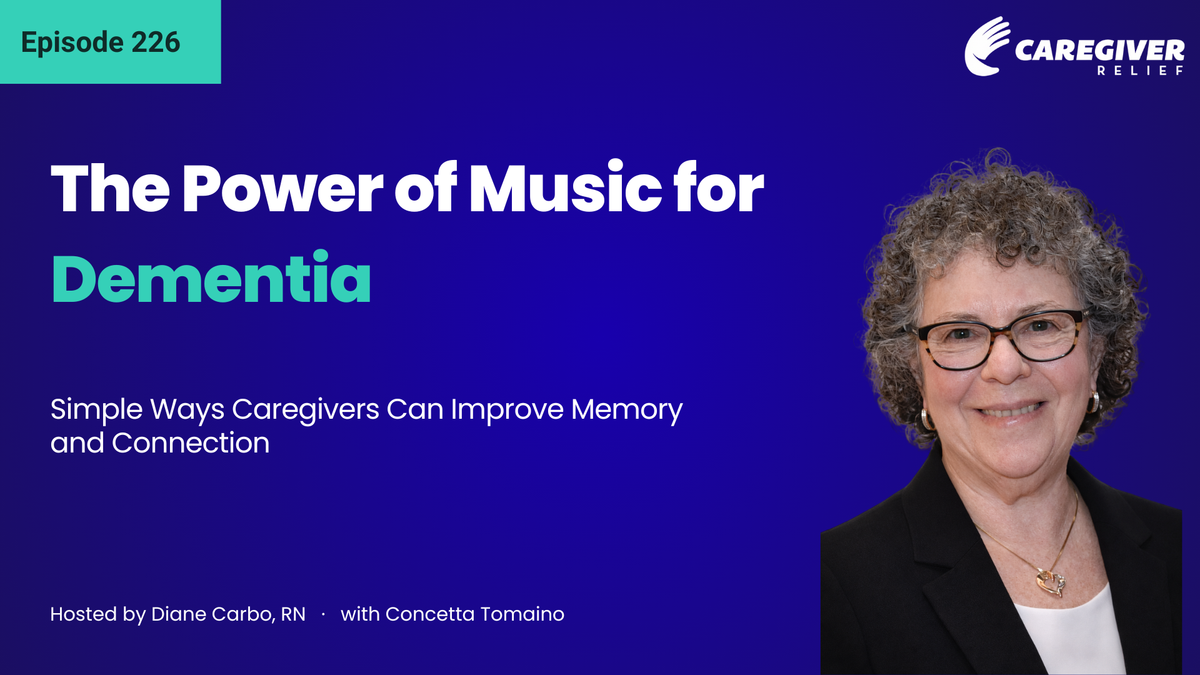
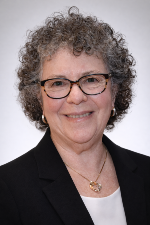
In this episode of the Caregiver Relief Podcast, host Diane Carbo, RN, sits down with Concetta M. Tomaino, the Executive Director and Co-Founder of the Institute for Music and Neurologic Function (IMNF). Together, they dive into the fascinating neuroscience behind music therapy and share practical, everyday ways caregivers can use music as an interactive tool for connection, behavioral management, and much-needed respite.
✨ Episode Highlights & Key Takeaways
- The Brain on Music: Unlike language or specific cognitive functions, music lights up every part of the brain. Because it stimulates such a vast neural network, it can bypass damaged areas and help individuals regain or improve function.
- The Power of Entrainment: The human brain naturally syncs to external rhythms. Slow, soothing music can actively lower anxiety and calm an agitated person, while steady, rhythmic beats can dramatically improve balance and prevent falls.
- Breaking Resistance: Daily tasks like showering or getting out of a chair can often cause friction. Incorporating a familiar song or a "dance" routine can ease that resistance and turn a stressful moment into a cooperative, joyful one.
- Becoming a "Music Detective": The most resilient music in our memory is usually what we listened to during our teenage years and early 20s. Finding these specific, emotionally charged songs is the key to unlocking connection.
🕵️♂️ How to Be a "Music Detective" for Your Loved One
Instead of simply leaving the radio on in the background all day (which the brain will eventually tune out), use music intentionally. Concetta recommends building distinct playlists tailored to different times of day:
- The "Movement" Playlist: Upbeat music with a definitive, steady tempo to help them walk, move, or do simple exercises.
- The "Calming" Playlist: Slow folk, classical, or environmental sounds to combat sundowning, ease anxiety, and transition into bedtime.
- The "Interactive" Playlist: Hand them shaker eggs or maracas from a music store and put on a karaoke channel or music video they can play and sing along with.
Tip for Caregivers: "Look at things that they do spontaneously to music because what we're looking for are things that they don't have to think about... If you can find the things that the person reacts to and responds to spontaneously, those are the entry points to getting them going." — Concetta M. Tomaino
🛠️ Resources Mentioned in This Episode
- Institute for Music and Neurologic Function (IMNF): imnf.org (Includes free caregiver resources, playlist guides, and training certificates).
- Music and Memory: musicandmemory.org.
- Spiritune App: A specialized app utilizing music entrainment to help manage stress, reduce anxiety, and improve sleep—highly recommended for both caregivers and patients!
- Book: The Power of Music in Senior Care and Wellness by Concetta M. Tomaino (Available on Amazon).
Podcast Episode Transcript
Diane: Welcome to the Caregiver Relief Podcast. I'm your host, Diane Carbo, RN, and a caregiver advocate. Today, we're talking about something simple but incredibly powerful. As caregivers, we often focus on medications, appointments, and daily tasks, but one of the most effective tools for connection, calming behaviors, and even memory is often overlooked.
That tool is music. When someone you love is living with dementia, communication changes. Words may fade, conversations become difficult, and as a caregiver, that loss of connection can be one of the hardest parts. But music reaches a different part of the brain. It can unlock memories, it can calm agitation, and it can create moments of connection even when everything else feels lost.
Today, I'm joined by Concetta M. Tomaino, executive director and co-founder of the Institute for Music and Neurologic Function, a pioneer in the field of music therapy. We're going to explore how caregivers can use music, not as entertainment, but as a meaningful, practical tool for connection, engagement, and even a few moments of much needed respite and relief.
Diane: Concetta, thank you so much for joining us today. I'm excited to share this topic with my listeners.
Concetta: It's a real pleasure to be here and I look forward to sharing some ideas and having this discussion with you.
Diane: Can you share what first inspired your work in music therapy and how you came to focus on the aging brain?
Concetta: Sure. I was a pre-med student, also a musician in college, and ended up studying music, in my later years in college and found out about the field of music therapy. And so as I was doing my master's at NYU back in the mid-'70s, my first clinical placement was in a senior care facility. And there was a dedicated dementia unit, but this is back in the '70s when still very little was known about Alzheimer's disease.
Diane: Yes.
Concetta: And most of these people were just left to be, as the nurses said, fed and watered because there was nothing there left.
Diane: Yeah.
Concetta: And it was horrible. People were screaming and some people were catatonic. but, my job was to play music for that unit. And as I started singing a song that I thought would be familiar to them at their age, given what I knew about popular music from somebody's childhood. Being something that people retain, I started singing a song, and people who were agitated stopped.
And people who seemed to be catatonic opened their eyes, and half of them started singing the words to this song.
Diane: Yes.
Concetta: So my background in music therapy, we learned about the psychodynamic properties of music and how, you can engage somebody emotionally through music. But my science geek background was begging the question: how does somebody with no cognitive function, how does their brain process sound vibration? 'Cause that's all music is, it's different types of vibration and signals that somehow have to be processed in our brain to give us the experience of music. So it told me then and there that there was something about music that was so resilient that even people who seemingly had no brain function left, according to the staff at the time, still could relate personally to something.
And so that was my quest. That's 1978. And then by good fortune in 1980, I got a full-time job at the facility where Awakenings took place with Dr. Oliver Sacks.
Diane: Oh, wow.
Concetta: and so he had just seen how rhythm could animate people who had been immobilized by a Parkinsonian type of disease. And I had seen how music could awaken people with dementia and neurocognitive impairment. So the two of us together worked for 35 years together to try to figure what that was. I mean, that started my interest in music and the brain, and there was really nothing written about it back then. And the field of neuroscience was just emerging as a, specialty under science. And so we started early on to try to connect to neuroscientists to see if they would be interested in helping us understand how and why what we did with music and the observations of improved function that were, maintained, not just a fleeting moment of improvement, but really maintained over time, why that was happening so we could advance the understanding of music-based interventions, music therapy, so everybody could benefit from it.
So that was the origin of the foundation of this, the Institute for Music and Neurologic Function, was to bring those worlds together, start dialogues with the neuroscience community, translate that into clinical practice, and then hopefully inform the public and Agencies that could benefit from it on how and why music was so crucial and important to be part of everyday care for seniors.
Diane: I was just getting into I was just started my nursing career in 1974.
Concetta: I see.
Diane: And, I know over the decades, I've seen how music, and even neuroscience, neuropsychology and stuff was incorporated into, our healthcare system. But it's... Can you explain why does music remain accessible in the brain even when memory and language begin to decline?
Concetta: Sure. What's so interesting is that for us to process music, I had mentioned that music first starts with vibrations in air. So it seems, and there's actually really great studies and imaging studies of brain activity, that the brain actually constructs all the components of music through various networks and through various levels of brain processing to give us the experience of music.
So technically, every part of the brain is lit up when we hear a piece of music. there's parts of the brain that deal with the timing element of music, the rhythm, the sound, the silence patterns. There's another part of the brain that processes the actual pitch of the notes that we hear in music.
There's a part of the brain that deals with associations and reminiscence, and that every time we hear a song, if we have an association, whether it's emotional or a memory that's associated with that gets processed there. And then over time, all of those consolidate into our experience of music that we love and that music that holds personal meaning to us.
And in doing so, when somebody, even if somebody has lost function in some way, music somehow has a way, because it stimulates so much of the brain, of engaging enough of those active areas to allow the person to bypass the damaged areas and be able to regain or improve function.
Diane: That's fascinating. I've seen patients with Parkinson's, with the rhythm, walk, without, not, without that stiff way they have. And I've also seen, when you stutter, what do they do? They teach it. and aphasia, you know, when you have aphasia, there are many that cannot say the words, but they can sing the words. And I've seen that over the decades. And I have a personal story. I was in a senior behavioral health unit, and I had, a friend come in to play music on the weekend 'cause there's no one, there was no activities on the weekends.
And I said, "Oh, can you come in on the weekend and help out?" So she did, and I had this, and I've told this story before, I had this little Black lady that had been catatonic and was in our unit for several weeks. And, we couldn't get a response out of her in any way, shape, or form. So I learned, and I knew nothing about music therapy.
I was totally ignorant. But, her family was there and I said, "Hey, what did she do? What kind of music did she like?" And she was a gospel singer.
Concetta: Oh, nice.
Diane: So the musician I brought in, my friend, started playing some gospel music. And Lord have mercy, this was a little Southern Baptist lady.
And she started singing. And, I mean her family's crying. They're all, you know, we found, it was just like an awakening.
You know? That's it just touched our hearts, and it was amazing. And they started using, playing more and more music for her to connect with her, and I just thought that was fascinating.
Concetta: That's, the emotional, connections we have to music that's meaningful to us one of the most basic elements. and any time we can connect to the sense of self, to the sense of identity
Diane: yeah
Concetta: through music, we have a way of, you were talking about connections, we have a way of really connecting to the person that may be struggling or lost to some kind of neurologic impairment. And in those moments There's the possibility of true connection. Even if they can't speak about it, even if they can't tell you what it means to them, there's a sense of knowing even in those moments that the person is aware and feels connected.
And that's crucial. That's like the ultimate benefit that music can bring.
Diane: Concetta, how can caregivers use music as a daily activity? 'Cause I have to tell you right now, daily activities are on the lower bottom of the list for caregivers, and they don't, they see them as, a hassle or unimportant compared to all the other things they have to do. But ac music as an activity can actually provide them with respite and even give them, a sense of connection with their loved one. Sure. And I, how do you, encourage them to not just do s- music as something passive, but something interactive?
Concetta: Sure. I know from talking to caregivers, one of the biggest struggles is when the person that they're caring for, whether it's a spouse or a parent, or any loved one that, that they're taking care of, that if the person is fighting them or, resistive not being, not helping out it's really a struggle. It makes the caregiving even more difficult.
Diane: Yeah.
Concetta: But we know that if you, it sounds so simple, but if you sing a song together, if you sing a song that the person knows that moment changes immediately, and the person isn't in the fight or flight mode and they're not resisting. All of a sudden, they, their body relaxes. They become, more able to engage, too. And so, that moment that seems to be so tedious and fraught with, challenges becomes so much easier. And it's just something as... And you could find a song, I'm sure everybody has a song that they both sang together that both of them know that has particular meaning.
Or it could just be, good morning. It could be anything, simple, but something that becomes part of that routine. I'll tell you a funny sto- a interesting story, and I tell this a lot, too, 'cause I met a gentleman who was caring for his wife, and he said that, and his wife had Alzheimer's disease, and his trouble was getting her to the toilet or to shower her, because once she was sitting in the chair in the living room, she would never get up, and it was like a real struggle to get her out of the chair.
But they used to love to dance all the time. So he found that if he put on, Duke Ellington and said, "Hon, let's dance," and just, literally just reach out his arm, she would immediately get out of the chair, and he would dance her around the house and then bring her into the bathroom.
Diane: Oh, that's so smart
Concetta: Yeah, just to break, it's almost like the person is, the resistance is so strong that the person can't initiate an action.
Diane: yes.
Concetta: And so if you could break that moment of resistance through easing it Through a music, some kind of music intervention you have a way of getting that person actively engaged and res- reducing the resistance.
Diane: That's a beautiful thought. I've not seen music approached in that way. let me dance you to the bathroom. I know that's, he's not saying that, but that was his intention.
Concetta: Yeah.
Diane: That's amazing 'cause it's, yeah, it's a normal reaction. You hear the music, you want to get up and dance, and, she was willing to do that. I love that. That's a beautiful way to interact with somebody. So how do we help caregivers choose the right music for their loved one?
Concetta: Sure. we do know that the music that seems to be the most resilient are the songs that were popular when somebody was in their teenage years, early 20s, only because that's the music that we associate with, finding out who we are.
Diane: Yeah.
Concetta: And those are usually very, major time periods in our lives where we identify with a group, a certain group or, having our first, date, first, emotional, challenges in love and friendships and all that kind of stuff. And so those, that music is so well-preserved. And then there's other songs that, maybe if the person went to church or, you know
certain ceremonies types of songs that they sang to their kids, songs that their grandmothers would've sang to them or their parents. So music that was somehow connected to other people. In fact, there was a very interesting study done by Peter Jernigan from UC Davis where he wanted to see why music that was, why music was so resilient in people with memory loss.
And so he did the study with his students, having them listen to music from, the past five years or so, and he found, and he had them rate it, whether it was related to whether they liked it or whether it had an emotional reaction, whether it reminded them of a person, place, or time. And what he found was that when songs were emotionally charged, were connected to a person, place, time, that there was a, an area of consolidation in the part of the brain, the medial prefrontal cortex, that seems to be still functioning in people with dementia and
Diane: Wow cognitive impairment.
Concetta: So because of that consolidation area- which is still active, the person can really relate. So the more information or the more associations or the more parts of the brain that are responsible for recall of that music, the more likely that music is gonna reach somebody.
Diane: I'm laughing when you were talking about, the teens and early, 20s, because I had my children at 23 and 26, and all I did for years was play Sesame Street
Concetta: music. Yep. There you go. That's exactly right. That would be... Yep.
Diane: So I can see... Oh. So you All the You have the blue songs I used to sing with them, the silly ones, and I'm just laughing now. Oh, I could hear me in the dementia ward right now. It's not easy being green.
Concetta: Yeah, exactly.
Diane: And then, and you got to have fun with it. You do.
Concetta: Oh, yeah. And that's the thing. The other thing, I hear caregivers say, "No, I have music playing all day long." And that's not good because because the brain does weed out, stuff that's in the background all the time, and stops paying attention. That's just a normal function of the brain. It may be that if a song that's familiar pops on, you may see your loved one sort of turn their head and, you know, show some interest.
But the best thing to do is to have it on periodically through the day. And, it's wonderful now, I'm assuming people know people's favorite songs, but they may not. And, the good thing is that streaming services like Spotify, do have music from certain decades and certain genres of music. before we... Years ago, when I was working with families, we used to put together tapes and, I work with Music and Memory, which is part of the institute, and, we, we do help caregivers put together playlists based on, a survey of favorite music or based on the person's age, ethnicity, where they grew up.
Things like that give us clues about the music that may be familiar to them.
Diane: I like that, and I like the idea of a playlist. And one of the things that I would suggest is, if you're unsure, play the song and, and see if your loved one responds to it in any way. If they do, that's definitely one you put on a playlist That's it right?
Concetta: And you may have and what helps, especially now with the fact that you can make your own playlists and have different channels.
Diane: Yeah
Concetta: you can have one for exercising and moving around, 'cause we know if a person is sitting in a chair all day, there's downsides to that. Their joints get stiff, their, skin breaks down and stuff.
So just getting circulation is good. So music that has a fast beat Dance music, whatever. So you can have an exercise track. You can have music that is soothing and relaxing. We know that could just be easy listening type music. It could be classical music. It could be, folk music, whatever. but music that has a slow rhythm, does something that's called entrainment.
The brain responds to rhythm be in a way that is, synon- n-not synonymous. It's, entrainment is when an outside stimulus causes the same response inside the brain. So when you're talking about Parkinson's, the rhythm of music actually turns on in the same tempo the motor areas of the brain, the motor networks in the brain to act in that time.
Diane: Fascinating.
Concetta: And We have a way of making those connections. So the entrainment is if you're playing slow music, if the person's very anxious, if you play slow music, the person will calm down. They're, they'll feel relaxed. that kind of music can also help if the person is restless at night, to play it, you know, a few minutes before sleep time to help the person ease into sleep.
And then there's other types of entrainment too, where actually frequencies, we have, there's programs that actually use the, that concept of entrainment with just types of sounds. many times these, these consumer products that have like ocean waves and
Diane: Yes
Concetta: bird songs and things like that, and environmental sounds that have these components of certain frequencies that cause this kind of brain response that can make you feel very relaxed. And so music does the same thing because of the way the auditory system influences our brain responses.
Diane: That's interesting. So somebody who has a family member who sundowns and they get anxious and they're, pacing, you would recommend, a quieter music, maybe not one from their generation? It's just something that appeals to, like the classical musics or like folk music or whatever?
Concetta: Yeah, and it could be something from their gen something that's gonna hold their attention to.
Diane: Okay.
Concetta: There may be a good time for the family member, instead of, getting anxious with the person because they're
Diane: Yes. Yeah
Concetta: trying to get them engaged in the way that could divert that anxiety into something that is calming. And so that might be a good time to do something, maybe, dance or sing or do something
Diane: Yeah
Concetta: that could divert
Diane: Yes. Distract them. Yeah.
And again, because sundowning is a sleep disorder, encouraging. I always tell my clients to, to, use lavender oil, give hand massage with lavender oil, spritz their pillow with lavender, or, and use lavender lotion on them at night. But also calming music
Concetta: Absolutely
Diane: would also help to maybe break that cycle of a sleep disorder and get them ready for sleep.
Concetta: Exactly.
Diane: And, have, maybe you'd have a couple hours of sleep that you normally wouldn't. I had a client in senior behavioral health that was a bird watcher, and his favorite noises and sounds were birds. and you know, We had a clock in the, behavioral, unit in the activities room that would go, it had different bird sounds every hour. And, but he would be in there, and he would wait to listen to those sounds. And he was always angry and upset, but for those few minutes he would like He listened. So I wished we had known more about this then because we could have just provided him with intermittent, bird sounds that would make him happy and calm him.
Concetta: Exactly. Yeah.
Diane: Yeah. That's cool. can you tell me some stories where you've, seen music unlock memories or recognition in patients?
Concetta: Sure. One of my early ones was a man who was admitted because, he had dementia. He was non-verbal. he wasn't moving around that much, so it was very hard for his wife to take care of. And they just, they were in the neighborhood. She literally lived a block away from the facility And it was a Jewish facility, so I used to play a lot of Yiddish songs.
This again, back in the early '80s. And so there was one song, Tumba Leleika, that every time I played, he would turn his head and look, but he wasn't actively engaged. But that song, he would always turn his head and look. So then, I decided. One day after the group program, I went over to him and sang it to him personally, and his face just lit up.
He still didn't say a word. But every day I made it a point to sing that song with him. And after a week or two, I forgot, he started making sounds.
Diane: Oh.
Concetta: And then he started singing it.
Diane: Oh, wow.
Concetta: And then once I called up his wife. I said, you c- your husband's talking." And she goes, "What are you talking about?" And I said, I sang this song, Tumba Leleika, and all of a sudden he's singing it." She goes, "He sang it to our children every night."
Diane: Oh, does that touch your heart?
Concetta: Yep. And and then he started talking, and it was almost like I had to jumpstart or unlock this block. And once he got going, he, until he passed away, and it was several years after that, he was speaking.
Diane: Yeah.
Concetta: So whatever caused that, his brain to freeze and lock or not be able to initiate, whether it was... It's almost like a pseudo Parkinson's where that initiation
Diane: Yeah
Concetta: issue
Diane: Yeah
Concetta: You know, is affected. But he was fine. And then there was another one, and I used to do this, we had done lots of research studies for New York State, for their dementia grant programs, and one was about changing the way staff thought about people who were non-verbal.
Because if somebody couldn't speak well, they, the staff assumed that they had cognitive impairment, and they were listed as having
Diane: Oh, wow
Concetta: dementia or something. And there was one woman who had a pituitary tumor, who had was given a medication at the time that caused tardive dyskinesia. You remember those
Diane: Yeah
Concetta: medications? and so she couldn't really speak well, but I knew that cognitively she was as sharp as anything. And the interesting thing with tardive dyskinesia is if you sing, that motor, that putting out your tongue, actually stops. And as, and after she sang, she was relaxed enough that she could actually talk.
And at that point, I actually did this in front of the unit staff, and they were totally shocked. They didn't know that she was cognizant. They were embarrassed then because they thought sh- that she wasn't aware. So things like that too, And then I've had people with you mentioned non-fluent aphasia by studies way back.
There is a specific music, speech therapy protocol called melodic intonation therapy, that speech therapists may use. But what I found is that if I found a familiar song that somebody who had aphasia could even sing a little bit of, if I use that song with them over and over again.
They would start getting their regular speech back. And so now with there's been studies that show that the crossover connections between language and singing are so strong that even if somebody has a major stroke on the left side of the brain where that type of aphasia tends to be, associated with in Broca's area, that the right side of the brain and the peripheral part of the left side start becoming active, more active. And over time the networks that connect them become thicker, and we see that there's actually improvement in the brain.
Diane: Wow.
Concetta: So it's using. So I've had several people with non-fluent aphasia speak again.
Diane: Wow
Concetta: after a stroke.
Diane: Are there any structured music-based activities, a caregiver can safely engage their loved one in while, the caregiver tries to reset their own,
Concetta: Sure. Sure. the wonderful thing about the internet and stuff is that, there's lots of music videos. There, if you can get some, not cheap sounding, but decent rhythm instruments, like real music instruments that the percussionist would play. So not the kids, the kindergarten kid toy ones, 'cause those have horrible sound. Something that you would get in a music store. It could be shaker eggs, it could be maracas, it could be a nice drum. And literally put on a music video and have the person play along with it.
Diane: Ah.
Concetta: It is incredibly engaging. People love it. And if you want, if you need some respite time, that would be a great way. Or if they're still able, if they're in the early stages and still able to read and follow, there's wonderful karaoke channels, on YouTube
Diane: Yes
Concetta: that you could sing along with. And even if they can't read all the words, there's enough prompts that they could do that. And you could do it with them, too.
That would give you some respite time. There's also, we talked about rhythm and Parkinson's, but it's also walking to a rhythm also helps with balance and reduces falls. So if a person is unsteady on their feet, using a strong rhythmic, piece of music with a very definitive beat to it, doesn't have to be a march, it could be a rock and roll song. But something with a really steady beat, to just walk around the house to help improve the person's balance is a great activity.
Diane: Oh, that's a good one. That's a good one. It could help towards, fall prevention.
Concetta: Exactly.
Diane: Yeah.
Concetta: That's the thing. The interesting thing besides, besides the cognitive problems, associated, you know, with falls being associated with cognitive problems, visual acuity, and also lack of sensation in somebody's feet
Diane: Yes there's
Concetta: something
Diane: Neuropathies, yeah
Concetta: the peripheral neuropathies. it's hard for the person to discern where their foot is because all those sensory inputs have been diminished.
Diane: Yes.
Concetta: But what happens is that when you have a piece of music where the timing of the beat is concurrent or in sync with when your foot hits the ground then you start to learn what that timing is of that distance. And so even if the person's having trouble with the sensation of it or the visual input of it, somehow they pick up that sense anew of where their foot is in space. So having that piece of music, that walking music. I had a gentleman, one of the residents, he was on short-term subacute rehab, who had a stroke.
He had a semi, hemip- paresis, so he wasn't totally paralyzed, but weakness on one side, and he dragged his affected side. So his left leg was dragging the physical therapist didn't wanna discharge him because he was afraid that if he was dragging his foot, even with a walker or a cane he would, his toe would catch something and he would fall. So he, my job was to get the man to, sway to lift his foot off the ground.
But what I found was, this was again back in the '80s, there was a, There was an album by Nat King Cole called Walking or something similar to that. And, Walking My Baby Back Home was one of the songs.
Diane: Yes. Yes.
Concetta: And so I put this on to him, and I said, "All I want you to do is to move to the music." But of course, he starts walking around the room, not walking it looks like he's, dancing. And then I ask- and absolutely every time, instead of stopping, you know how people walk when they have a stroke, they like
Diane: Yes
Concetta: take a step, then lift over their leg.
Diane: Yep.
Concetta: Put the cane down, so like one, two, stop. One, two, stop.
Diane: Yep.
Concetta: There was no stopping. It was continuous.
Diane: Oh, wow.
Concetta: And so as long as the music was going, he immediately lifted his leg and moved in time. And, and when I asked, I said, "Boy, that was amazing." And he goes, "Boy, I haven't done the foxtrot in so long."
And basically, in his mind, he just intuitively started doing the foxtrot.
Diane: Yes.
Concetta: and in fact, because he was doing side to side motion and front to back motion, the PT was ama- the physical therapist was amazed because his walking improved so much. The physical therapist was only having him walk between the two bars, the
Diane: Yes
Concetta: And they didn't do anything side to side. and over time, 'cause I worked with this man for a couple of months, he got his feeling back in his foot.
Diane: Oh, my.
Concetta: So again, that music, if you could find the right music it helps so much.
Diane: Oh, Concetta, those, these are really good tips that caregivers can use. I love it. if every caregiver listening today could take one simple step using mi- music to improve connection, what would you recommend they start with?
Concetta: I think the easiest one is thinking about the playlist and finding the familiar songs, being what we call a music detective,
Diane: yeah.
Concetta: and I know Justin Russo had spoken, to you earlier,
Diane: Yes
Concetta: to find those songs and to make a list, what are the songs that your loved one moves, it And look at things that they do spontaneously to music because what we're looking for are things that they don't have to think about because that gets in the way of doing. That when cognition is a problem, having to do something structured becomes the challenge.
Diane: Yeah. Yes.
Concetta: If you can find the things that the person reacts to and responds to spontaneously those are the entry points to getting them going. And so find the music that relaxes them. Find the music that they can spontaneously sing to. Find the music that they spontaneously move to and become active. Find the music they just gives them joy and lights them up. Those and make those lists, and it may take a little while, but it's worth it.
Diane: Yeah.
Concetta: It's worth it
Diane: It's worth it, yes
Concetta: have your go-to.
Diane: Yes. Concetta, how can people find you and reach out to you?
Concetta: Oh, yes. so there's a couple of things. We're, It's the Institute for Music and Neurologic Function, which is www.imnf.org. Caregivers, they may be interested. I wrote a book two years ago called The Power of Music in Senior Care and Wellness. That book is available on Amazon. And we also have a caregiver training certificate, so if anybody volunteers at a facility or they wanna get some, You know, the experience.
We have online courses. and or there might be a single one that they want, and then through Music and Memory, which they'll find on the IMF's website as well as musicandmemory.org, there's free resources for caregivers on on how to do the playlists, on how to, be the music detective and things like that.
I also consult with a company called Spiritune, and this might be good for the caregivers as well as their loved ones. The Spiritune app uses music entrainment to help you get to the mood that you want to be in.
Diane: Oh, I love that.
Concetta: Oh, so it's Spiritune, S-P-I-R-I-T-U-N-E, and the app is on, you can find on any app store. And it's not music that you would recognize. It's composed music specifically to adjust the way the brain is functioning, and so there's sleep tracks. There's, if you're anxious and you need to be, active or if you're anxious and you want to be calm, it has those transition moments.
Diane: Oh my.
Concetta: So I know people
Diane: I'm going to look into that for myself.
Concetta: Yeah. And so we, it's actually recommended for staff and caregivers because it works so well, but it was meant for general working population to deal with office stress and getting to work and all those elements.
Diane: They should make that every hospital in the country should provide that app for their
Concetta: Yeah
Diane: their nursing and their
Concetta: Absolutely. You bet
Diane: therapists and all the staff because it's a tough time to be a nurse in today's, culture.
Concetta: Absolutely. And this one, and we know it works. We've done some studies with some scientists who actually show the impact on reducing anxiety and
Diane: I love that. I love that. Thank you so much for sharing such valuable and important information. This is one of the best podcasts I would recommend to everybody because it's, it's not utilized, music is not utilized enough, and it has such powerful, results, if used properly. So I'm, I just love this, so
Concetta: My pleasure
Diane: Thank you again for your time. to my family caregivers out there, you are the most important part of the caregiving equation. Without you, it all falls apart, so please learn to be gentle with yourself, practice self-care every day, and make yourself a playlist because you are worth it.
Caring for a loved one can be overwhelming — but you're not alone. If you have questions, big or small, our expert team is here to help.
👉 Click here to Ask the Expert
Our Resource section can help you find the information and tools that you need. We have courses, videos, checklists, guidebooks, cheat sheets, how-to guides and more.
You can get started by clicking on the link below. We know that taking care of a loved one is hard work, but with our help you can get the support that you need.
Click here to go to Resource Section now!