Grief, Burnout, and Trauma: Tools for Caregivers with Edy Nathan - Episode 133

Caregiving is one of the most meaningful roles you will ever take on, but it is also one of the hardest. In this powerful episode of the Caregiver Relief Podcast, host Diane Carbo sits down with Edy Nathan, a grief and trauma therapist and author of It’s Grief: The Dance of Self-Discovery Through Trauma and Loss.
Together, they explore the "unspoken" shadows of caregiving: the grief that starts long before a loved one passes, the burnout that makes you feel invisible, and the trauma that can linger for years.
💔 Why We Don't Talk About Grief and Trauma
Grief isn't just about death. For caregivers, grief often commingles with burnout and trauma while the person you love is still alive. Edy Nathan explains that we often suffer from a "next" mentality—pushing away pain to get to the next task—which prevents us from processing our emotions.

Diane shares her own vulnerable story in this episode, opening up about becoming a caregiver at 16 for her mother. She discusses the anger, the "gallons of fluid" from medical procedures, and the silence imposed by her father regarding death. This suppression of grief led to a lifetime of feeling invisible—a feeling 99% of family caregivers relate to.
🕯️ Key Takeaways from This Episode
- The Invisibility of the Caregiver: One of the biggest signs of trauma is feeling invisible—like what you do doesn't matter and you aren't seen by family or healthcare pros.
- The "Trauma Bind": Caregivers often feel held hostage by their role, dealing with judgment from siblings or extended family while trying to provide care.
- Anticipatory Grief: You may mourn your loved one daily as they decline, especially in cases of dementia where they physically remain but psychologically fade.
- Guilt and Anger: It is common (and normal) to feel anger at the situation or guilt for wishing the suffering would end. Swallowing this anger fuels anxiety.
🛠️ The Liberation Protocol: 3 Steps to reclaim Yourself
Edy Nathan introduces her Liberation Protocol to help caregivers move from being "stuck" to finding freedom.
1. Embodied Curiosity 🧐
Stop and ask yourself: What am I feeling? Where am I feeling it? When was the last time you ate, showered, or laughed? This tool helps you check in with your physical and emotional self.
2. Empathy with Energy ⚡
We are often great at being kind to others but terrible at being kind to ourselves. Ask yourself: "If my friend was going through this, what would I say to them?" Then, say that to yourself. This shifts your mindset from self-criticism to self-support.
3. Radical Rapport & Boundaries 🛑
This means having enough rapport with yourself to set boundaries. If family members are judging you, you have a choice: crumble under the judgment or stand up for your mental health. As Edy says, "Would you rather be judged and crumble, or be judged and have boundaries?".
🧘♀️ Try This 2-Minute Breathing Exercise
Feeling overwhelmed? Edy shares a simple somatic exercise to clean your lungs and calm your nervous system:
- Inhale deeply.
- Hold the breath... hold it... hold it.
- Release it with a visible, audible "Whoosh" or sigh.
- Repeat 3 times to oxygenate your body.
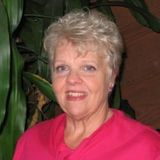
 Edy Nathan MA, LCSWR, CST
📢 Meaningful Next Steps
If you are feeling depleted, Edy suggests making a "Date with Yourself." Put it on the calendar. It can be just 5 minutes to listen to a song you love, call a friend, or hug your pet.
Remember: You are resilient. You are the most important part of the caregiving equation. Without you, it all falls apart—so please, be gentle with yourself today.
Connect with Edy Nathan: Visit edynathan.com or find her book, It's Grief: The Dance of Self-Discovery Through Trauma and Loss, at your local bookstore.
Podcast Episode Transcript
Diane: Welcome to the Caregiver Relief Podcast. I'm Diane Carbo, your host, and I'm here to bring you compassionate conversations and practical tools to support you on your caregiving journey.
Today we're exploring three difficult, but very real parts of caregiving. Grief, burnout and trauma. These challenges often go unspoken, but they impact nearly every caregiver at some point. My guest today is Edy Nathan. She is a grief and trauma therapist, a certified sex therapist, and an author of it's grief, the Dance of Self-Discovery through Trauma and Loss.
With decades of experience, Edy has dedicated her work to helping people navigate loss trauma and the hidden struggles that caregiving can bring. In our conversation, she'll share tools to help you recognize grief, prevent burnout, and begin to heal from trauma, [00:01:00] so you can move from simply surviving to living with strength and resilience.
Diane: So let's get started. Edy, thank you so much for joining us today. I know you're busy. You said you're moving, into a new office, so I really appreciate this. before we dive in, can you share a little bit about your journey and what led you to focus your life's work on grief, trauma, and sexuality?
Edy: Yeah. In the field of grief, you don't tend to choose it, it chooses you. And so I would say that, that the culmination of the losses in my life made me realize at a pretty young age that, that we needed some, different languaging around grief to,and an understanding of how it, Manifests. And the thing is what's so hard about grief is [00:03:00] that it, no one experiences it exactly the same way. And so to try to write about it, to try to discuss the feelings that one has when going through it or dancing with it. And I think of it as a dance because when you partner with it, it, I think is less,
it's less powerful. it's less scary when you say, you know what? I'm gonna learn about you. I'm going to be incredibly curious about you, how you walk with me when you come up, how you invade my sleep or enter my dreams, or how sometimes, I can't find the right words because it's grief.
And grief is masterful at making you feel like that internal chaos that's filled with pain, is it you, you feel like you're losing your mind, you don't even know who you are anymore. And I just decided that, I wanted to help people understand that whatever, that they're going.
Through with the grief [00:04:00] is, normal for them and to normalize it and to say, yeah, this is what it is. And what we've become incredibly skilled at is, pushing it away and doing the, I call it the next world. Okay. Next, next, next. Let's just move on. And in long-term care, where I actually run programs for frontline workers, social workers, nurses, that one of the, one of the greatest issues that, that frontline staff, deals with not only the grief, but the burnout and the grief, they love to commingle, right?
And the reason they love to commingle is because. When someone transitions and that bed is empty, that bed gets filled sometimes within an hour. And there is very little time to deal with and cope with and grieve the person who was in that bed. And it's that [00:05:00] next mentality, but.
Sometimes we have tremendous relationships with the people we care for, not always. And that next mentality affects our guts, affects our mental health, affects our ability, some, sometimes to tap into our own empathy and self rapport.
Diane: Now aie, you said that grief, burnout, and trauma are often hidden in caregiving.
And why do you think they're so rarely acknowledged?
Edy: Yeah.
Time. And, we do have something called the denial of death. And that denial of death, it keeps us sane because frankly, if we were thinking about dying all the time, we would all be nuts nuttier than we already are, right? so we do have this innate. Ability to deny so that we can have pleasure so that we're not thinking about dying and death all the time.
But if you're a frontline worker and you're either in a hospital or you're in long-term care or you're in [00:06:00] an ER or you're a physician that is, working at. MSK or, any of our hospitals that, that deal with, end of life care, palliative care, you, the denial of death, you're faced with it, right?
And so it takes time though to integrate a process of grieving when. it's not necessarily a loved one, but it's part of your work. It's part of your job, it's part of what you've chosen to do. even like death, doulas, what they've chosen to do within their lives. and. time is especially within, some of these settings that I've just mentioned, it's really hard to have your wits about you so that you can onboard someone while you're also grieving.
And what I suggest to people is take that five minute break, even though you believe you can't. Go to the [00:07:00] bathroom. Take some deep breaths. Say the name of the patient you might have just lost. Think about something that was wonderful or loving about them, or actually maybe something you didn't like about them, but give yourself a moment to honor.
what just was lost so that you can then just go on with your day and then put it into what I call the grieving box and meet with it later in the day. It doesn't mean you need to ruminate or think about it over and over again, but it does mean it least your Honor, something you just experienced.
Diane: I was a 16-year-old girl when my mom became diagnosed with, lung cancer. She'd never smoked a day in her life. and I became her caregiver between the ages of 16 and 18. And I, I'm the oldest of four. My dad worked two and three jobs to support his family. So [00:08:00] all that burden fell on me. And we're seeing this over and over again in the, with family caregivers.
One person is responsible for providing care and pro and taking care of others. my mom, I felt helpless and hopeless. She had a thoracotomy, which is an incisions in her upper chest wall, and gallons of fluid would come out of it unexpectedly at the most awful moments. you're ready for bed, you're tired, and she would lay down and it would just doze, and I felt such terrible sadness and.
Grief, but I didn't know it was grief then I felt angry. Angry at my mom for being sick, angry at God. I was born and raised a Catholic and went to Catholic school. I was just angry at the world and my dad wouldn't let us talk about her. possible death and dying. My mom, On Dece, December 17th of many years ago, was at the oncologist.
I was going to the nursing school right [00:09:00] across the street. And the doctor had just told her she'd beat cancer and 'cause she had radiation, I had to take her to all her treatments. I did all of her care to help her care for herself and skin and all of that. And, she was just, she was told. Louise, you beat cancer.
it's time to celebrate. go see Diane over at school, and 'cause she says, oh, we gotta go do some Christmas shopping. Long story short, she had a pulmonary embolism and died that night in intensive care while I was a student. And while you're talking about how grief affects you, burnout affects you.
You and trauma. I have experienced those as a very young girl and I have carried that burden with me my whole life. I, and that's what I know so many family caregivers out there are dealing with this as well. They're alone. And my dad wouldn't let us talk about anything about grief or death and dying at all, and it was thrown on us.
[00:10:00] So what you're saying to me I is really resonates and, I have lived my life so differently. I didn't know it. I give things away all the time in my mind, subconsciously I did not realize I thought I was going to die around the same age my mom did. And I didn't know that. And it really impacted how I raised my kids, how I did everything.
And now here I am at 72 and you know what? I've got an extra 30 some years, that I didn't anticipate I'd have, but, it did impact me. So that's why I read I, what you're saying really resonates with me. I have to ask you, How can caregivers recognize when their grief is starting to affect their overall wellbeing?
I was young, I didn't know, how, could you give us some ideas of how that anticipatory grief, we're seeing somebody decline before our eyes, our loved ones. are there warning signs that, oh, they could be thinking about [00:11:00] to, address.
Edy: There's one thing that you mentioned, and thank you for this, for your story about your mom. And it's obvious that you've done a lot of thinking about this and that you realized that you were preparing to die at a much earlier time than you, thankfully. you're thankfully still here. And, and that. you have insight into, not being attached to anything as well.
Diane: Yes. Yes.
Edy: and not being attached means just being able to consistently give things away. One, because like you really thought you were not going, you were going to die around the time your mom died the same age, but also because if you. You know the love object of the mother, right?
The love object of the mother is such an important love object. and even when the love object is disappointing or hard or cruel, [00:12:00] there's always this wish that, and dream that the love object could be different. And what dies with that love object is the hope of repair. And so I just, I wanna bring that up because I think that what you, the story you tell is a story that, that framed you and, look, you became a nurse.
how could you have become anything else but a caretaker or caregiver in, because in from 1615, like you were the caretaker, and then it was met. By silence. you were not allowed to talk about your mom or the potential of her dying within your home. and in that it makes you invisible.
And I lead right? I see you shaking your head. yes. With acknowledgement. And there's this thing that I, you asked, How do we know that we're being traumatized by the loss of a loved one or even the losses at [00:13:00] work?
Diane: Yes,
Edy: and I think that one of the key words is you start to feel invisible. You begin to feel like whatever you do isn't really going to matter and that you are not seen.
Diane: the majority of family caregivers actually feel that way. 99% of them feel invisible to everybody around them. Everybody that's right. Including the healthcare professionals. That's right. So that's a really good point to make.
Edy: That's right. Yeah. And one of the, one of the things that,I have a one year program that I'm doing right now in Canada. I've done a lot of work in long-term care. in Canada and opening it up now into the states, but they were willing to do an experimental program and what we've done, and I think that this is really important, People who are working within the hospital or within long-term care, they don't really have the kind of time. They're always [00:14:00] called into meetings. They're always, there's always things to do. So this one year program, so interesting is, was we did four straight months. Of one three hour training a month, and then I would meet with everyone for about a half an hour, one-on-one.
After that four month training, and we would every time we met for that three hour training, we covered a topic. And we, what we covered was trauma, and we covered burnout, and we covered, grief. And it was very interesting how much and or how little one knew about these topics as in terms of a deeper exploration.
And I blame that on our schooling. I don't, I, these are very smart people, but our schooling doesn't really go deep. And because we go into these positions. Not having some knowledge about grief, about dying, about, there are the [00:15:00] Elizabeth Kubler Ross's stages of dying. And then I have the 11 phases of grief, which are not about dying, they're about the survivorship.
After some you lost someone and and being able to teach this, and then the last. Part of the structure, the last, the fourth month, I talk about building trust and safety because if you don't have trust and you don't feel safe, and your patients don't feel safe, it's very hard and.
to, to calm down their nervous systems and to count, calm down your nervous system. And so you ask, what are some of the signs? One is that sense of invisibility. Another sign is a sense of, i, paranoia is too strong of a word, but almost as if you're hypervigilant to a point where you're looking around for danger.
You're looking around for fight and flight syndrome. The fight and flight syndrome. That's right. yeah, [00:16:00] and I'm not using the technical words because sometimes using, I find that using the technical words keeps us away from ourselves.
Diane: Yes. But
Edy: if we can say, I feel invisible, or I'm feeling like I can't focus or Gee, I just wrote a note in a chart. And I don't even remember what I wrote. Yeah, those are signs of burnout.
Diane: For the family caregivers, those really exist as well. The caregivers, they are so overwhelmed and they are, they do become hypervigilant because they're trying to fix something and stop a process that's going to continue.
They're going to lose their, that's exactly right. And
Edy: within the family care role, and I think that this is really important, is to understand. To have a greater understanding about grief, and that grief is non-linear. You talked about feeling anger. Anger [00:17:00] is under the umbrella of grief.
Yes, anger and anxiety. They love to just commingle and when anger doesn't get expressed. The other thing that I often hear families talk about a few things. One is their anxiety and their anxiety is really high, and I think that the anxiety is high because they're swallowing the anger. And when they start to swallow the anger, that's when the anxiety starts to like percolate and it bubbles.
Diane: And the guilt, it's guilt too. They feel and guilt. Tremendous amount of
Edy: guilt. That's right.
Diane: And it's exhausting.
Edy: Yes. and guilt for guilt. Not only for feeling that they may not be doing enough, but guilt for those secret feelings of. And this is a tough one. I just wish my loved one would die.
Diane: yes. And we don't talk about it. Nope. Okay. Don't. We don't talk [00:18:00] about it. But it's
Diane: real. It's very real. Thank you for addressing that because it is real and it does cause the caregivers, my family caregivers, a tremendous amount of pain and guilt because they're feeling like they just want this to be over.
But the pro the issue really that. Is not addressed. Edy is that the majority of our family caregivers are being having placed upon them. Care provided once by healthcare professionals is now provided by them. And, I don't know if you're aware of this diag this, but 63% of my family caregivers become seriously ill or die from the chronic stress of caregiving.
Edy: Yeah. That's between six and 18 months. Yeah. That, those are the statistics. Yes. Six to 18. If we can get them past the 18 month part there,I'm thrilled. But that six to 18 month period. and it's for the reason you just mentioned because of the stress and the, and there's a yes. [00:19:00] And to that which is.
That they haven't taken care of themselves. 100%. Yes. Yes. Yep. So what does that look like? They're not eating well, they're not doing any exercise. Yeah. They're, they're, they've, probably, lost touch with friends Absolutely. Some of their support system because they don't know what to say and they are so mired in the complexity of the trauma.
Yes. Of being a caretaker that they can't go beyond that and they're held hostage by the role. yes. And what I've created is something I call the Liberation Protocol. Oh, and the Liberation Protocol, because we feel so stuck and I talk about it. In with sexuality, I talk about it in trauma. I talk about it with burnout.
So the first tool within this protocol [00:20:00] is what I call embodied curiosity, which means you actually, as the caretaker, spend a minute to say, what am I feeling? Where am I feeling it? When was the last time I ate, showered? Talked with my child, went for a walk, and you can just fill in the blanks.
Yeah.
Diane: Yeah.
Edy: When was the last time I laughed? When was the last time I listened to music? When was the last time I gave myself permission to leave the house? Yep. So these are, and that's embodied curiosity. And that's the first tool within this liberation protocol. The second is empathy. Empathy, empathy.
I call it empathy with energy, because empathy takes energy. [00:21:00] And what I suggest to everyone as they're thinking about empathy, how am I gonna have any kind of empathy for myself? Empathy, yes. but what empathy can look like is okay, I want to imagine if my friend was going through what I'm going through, what would I say to them?
Because that's what I need to say to myself. Oh, I like that one. Yes. That's a good tip, right? Yes. Yes. What would I say to myself? Because chances are you're really good at being good to others, so be pay attention. What would you say to your friend who's in the same situation? and then I want you to think, gee, what?
What do I. What do I need right now? and I've been doing a really good job, or I've been hard on myself, and right now I'm [00:22:00] not gonna be so hard right now, I'm gonna just, I'm gonna do some breathing. I'm gonna maybe do a meditation. I'm going to actually just lay down, or I'm going to actually massage my feet.
Or massage my hands or massage my temples or do, this is a wonderful somatic exercise I do, where I have the hand on the chest and I go,
Bump-bump, bump-bump
and it's replicating kind of a self-soothing heartbeat. It's bump. Interesting. And what it does is it helps to change the mindset.
Diane: the majority of caregivers that I work with, they're always dealing with, judgmental siblings and. Uninvolved, extended family members, and they're always told that they're, it's not good enough or that, they are less important that everybody [00:23:00] else in the family, that's why they have this role and I hate this, but they'll say, you're not married.
I have family and stuff, and I can't, Take away from the importance of my job and my family. And you don't have that. And I think that's really hard for so many caregivers to deal with. I think you're right.
Edy: You're so right. You're so right. And that's where safety and trust, that fourth module that I teach is incredibly important because part of safety and trust is boundaries.
Yes. Yes. And that's where the third actually strategy comes. Protocol comes in, which is rapport. Radical rapport and radical rapport means that you have a rapport with yourself and you wouldn't let somebody you cared about. Be treated the way that you are being treated. And that's where, and it's really hard, but if people [00:24:00] are guilting you or judging you or critiquing you, it is very hard to stand up and have a voice.
But having a voice is incredibly important. And to say, yes, you have a family, and I may be single and I understand all of this, and. we have some choices that we're going to need to make, and this is, it is a hard move because it means that you are taking a stand for yourself so that you can be your best self and it, your family is not going to like you, but if your family is already judging you, would you rather be judged and crumble or would you rather be judged and have boundaries?
Diane: There you go. Yes. And limits. Yep. and that's really a hard thing for most caregivers because they are beaten down or they are people pleasers. I know. I've been one my whole life. And setting boundaries is really [00:25:00] challenging. That's right. And this
Edy: creates trauma. This is what creates the trauma bind and the trauma and being bound by it and.
What I'd love to share with you about trauma, you talked about six to 18 months. That's not just the burnout. That is actually the trauma that has that plagues. many care caregivers. Yes. And there is acute trauma. There's chronic trauma, and there's complex trauma means that there's multiple, and ma many different events that just come crumbling in, and it can be complex.
For a caregiver, if the family is coming in at them, the healthcare system is coming in at them, and then the person they're caring for is also has their needs. And so it's just, there's that traumatic imprint is happening from [00:26:00] three different. mediums, if you will.
Diane: Yes. And
Edy: then we've got chronic trauma, which is just repeated and prolonged, like the pandemic. and for a caregiver, if you think about that caregiver is again, can feel very trapped, can feel like they're being held like imprisoned by the role. And it can also be a gift because it might give them. A role that they never had before that is important to them.
Yep. and, but that chronic trauma can further be embedded by the family and further be embedded by the healthcare system, which is lacking in most of the time. And then there's acute trauma, which is a single individual incident. I don't think that a caregiver is dealing with acute trauma most of the time.
Most of the time. No. It's
Diane: definitely, it turns into
Edy: chronic or complex.
Diane: Yes, absolutely. And
Edy: it's not identified accurately.
Diane: Exactly. I agree with that. nobody sees it and, nobody's even talks about it, with care. No, and [00:27:00] it's really, it's very frustrating because the family caregiver provides over $650 million of unpaid care every year.
So we have all these people that are providing, that have no interest or no knowledge of ever. Being in the healthcare system. Totally. And now they're the largest pillar providing this care. They have. There's no affordable respite care. There's, they are. The ignored, the invisible. They all, it's a very, it's a very known fact that they all feel invisible to everybody.
Their family members, even the person that they're caring for sometimes doesn't appreciate them and treats them badly. And then we have so many that are dealing with a person they're caring for with dementia. So they're watching the person that they love, leave them and become somebody totally different.
they look like the person they love, but they don't act like that person anymore. [00:28:00] So there's a lot of different grief that's going on. Le levels of grief. Yeah. The hidden
Edy: layers of grief, not only for what. you, the person is living, their heart is pounding and they don't recognize you, and yet they are the person who birthed you or parented you or was a sibling of yours, and they don't, they are not recognizable to you and you begin to mourn them.
as every day there's a loss in their ability to recognize who you are.
Diane: Yeah. And the other thing they're doing, a lot of caregivers leave their jobs, as you said. they're not no longer communicating with their friends like they did. They neglect, I always tell them, your outside relationships are like a garden.
You have to water 'em, and give them sunshine. So if you're neglecting them, your relationships dry up. And one of the things I'm really interested about learning more [00:29:00] about your program is, life after caregiving. Life after caregiving is really challenging. So it is.
Edy: And so one of the, one of, one of the things that, so to continue with this, with what the program is, and the reason it was a, it's a one year program is because we've got these four months of pretty intensive training, but then I meet with everybody twice a month for individually for a half an hour.
Now it's a small group. It's six, seven people uhhuh. But what that does. Even those two half hour sessions, and they're not therapy. They're, do you wanna troubleshoot a case or what have you been feeling? Have like we're on a hiring freeze or whatever the case may be.
Or, I'm d I'm, I have a family that, that I'm trying to work with and in, in this long-term care environment and what we have been finding is these two half hour sessions once a month. Impact the [00:30:00] feelings of. invisibility and so they are feeling seen, they feel special, they feel like they're processing something, and even if we talk about the weather, they ha their brains.
Are feeling like I'm not part of the complex, the complexion of the politics of their work environment. That I'm an outside person and as a result, I'm able to give them exercises. I'm able to give them, A plan for the next two weeks of how they can do some self-care. And everyone is given exercises for their self-care.
And it really, seems to have made an impact for the people I've been working with.
Diane: Now, for a caregiver listening today, who feels completely depleted, what's the very first steps that they can take to begin moving from grief and burnout towards healing and [00:31:00] strength?
Edy: So I what we know about all of you out there who are caregivers, you are resilient.
Yeah. You are so resilient and as tired as you are, as exhausted as you are, I want you to remember that you are resilient and. I want you to remember a time before, before you became this caretaker, I want you to remember what gave you pleasure, what gave you some joy, and I want you to tap into that. And the reason I'm saying it is because we forget we have amnesia when we start to become embedded in that role.
Diane: Yep.
Edy: And then what I'd like you to do is I'd like you to make a date with yourself. I want you to put it on your calendar. I don't care how you keep a calendar, Google,or you have a written calendar. I want you to [00:32:00] make a date with yourself, and in that date, you're going to do one of three things.
You're going to listen to one piece of music that you adore. you're going to call a friend five minutes. It doesn't have to be more than five minutes, or you're going to do something for yourself, and that might be you sit there, you close your eyes and you breathe, and the kind of breathing you do look, sounds like this.
You take in a breath.
And you hold it, and you hold it, and you hold it. And when you let it go, you're gonna let it go like this.
Whoosh
Diane: Interesting.
Edy: And what you're doing is you're actually calming down your nervous system. and I do this exercise a couple times during the course of a day. What we know is three of those [00:33:00] good deep breaths actually clean our lungs. You do three of those consecutively in a day, you're actually oxygenating and cleaning your lungs.
Diane: interesting. And that's something anybody can do.
Edy: That's right. You walk with it. Like you can't say, oh, I forgot my, yeah, whatever. No, yeah. you don't need a phone, you don't need a person. You don't need anything maybe. And if you can't feel like you can't get away. Then go to the bathroom and close the door because there's a really good chance, unless you live in a really me messed up environment, and I hope you don't, that when you close the door to go to the bathroom, somebody is not barging in.
Yes, I would hope. I would hope [00:34:00] yes. Yeah. Now pets may.
Edy: Okay, the pet. Oh, so and did you have a pet? Yes. And this is a friendly pet, uhhuh. Then when you make a date with yourself and you're with your pet. You
can't think of anything else to do, allow yourself to go and hug your pet. yes. Feel it.
Try to listen to the pet's heartbeat. and what I'm saying I don't think is easy because there's always this state of an emergency that you feel like you're dealing with. Yep. So what I am saying, these exercises are not, they're, they can feel impossible. And I get that.
So start with a minute and then go to two and then go to three and see if you can last for five minutes. If you do, great. If you don't, that's okay too. See, there's no judgment. There's just, what can I do for myself in this moment?
Diane: Oh, I love that. Edy, how do my listeners find you?
Edy: So I'm, I'm, I have a website, ed nathan.com and you can find me there. [00:35:00] you can find me on Psychology Today. I do a lot of writing. It's a free, you just put in my name, ed Nathan. And, if you wanna learn more about, my, my work, go to the website, but also. on the website you'll see that I've got two courses. one is about trauma and really what I'm calling sexual grief, which we didn't talk about at all, but,
'cause that really wasn't the topic. But the other is also about grief, and that is a course through the Academy of Therapy Wisdom and those courses, they're not free, but there's certainly, wonderful, informative courses. You can also, I have a book called It's Grief, the Dance of Self-Discovery Through Trauma and Loss.
it is on Amazon, but please support your local bookstores. Go to the bookstore, order the book. And along with that, I have a wonderful journal that was recently published called Notes to Self. It's grief and there are three prompts on every page. It's only a three [00:36:00] month journal, so you can fill it in and then you can get another one and 'cause it.
It's hard to think, I'm gonna fill up this whole journal, but that's why it's a three month journal. And the three prompts are where are you stuck? Who are your superheroes who can help you with it or through it? And what's the metamorphosis you're looking for? And it's real, it's, it can be one word and I've got.
Four pages of lists of emotions, because it's really hard sometimes when you're in the caretaker role to identify what you're feeling. So I did the work for you. All you have to do is go to the back of the book and look, oh, I've got all these great words I can do. It's my cheat sheet.
Diane: Yeah.
Thank you so much for your time and your valuable information. I know today I learned some things that I didn't know about myself and I appreciate that to my family, caregivers out there, you are the most important part of the caregiving equation. Without you, it all falls apart, so please learn to be gentle with yourself.
Practice self-care every day because you are worth it.
Caring for a loved one can be overwhelming — but you're not alone. If you have questions, big or small, our expert team is here to help.
👉 Click here to Ask the Expert
Our Resource section can help you find the information and tools that you need. We have courses, videos, checklists, guidebooks, cheat sheets, how-to guides and more.
You can get started by clicking on the link below. We know that taking care of a loved one is hard work, but with our help you can get the support that you need.
Click here to go to Resource Section now!