From Partner to Caregiver: Navigating Life After Stroke with Lana Wilhelm - Episode 180
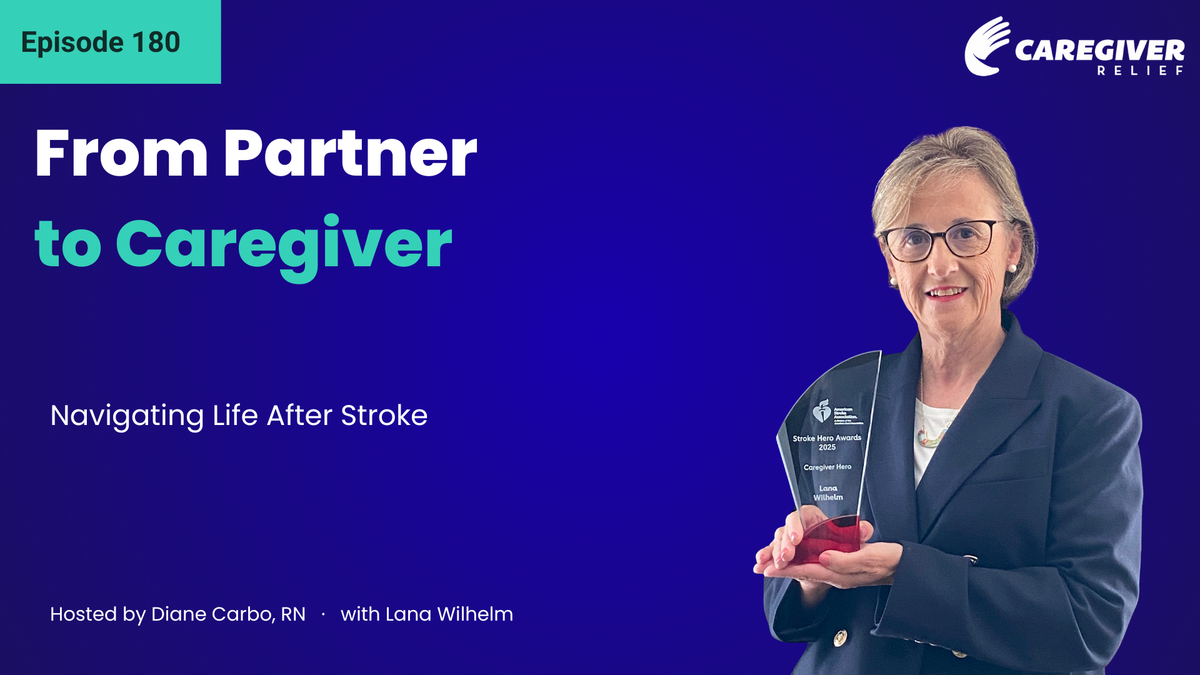
The transition from being a life partner to a full-time caregiver is one of the most profound shifts a person can experience. In this episode of the Caregiver Relief Podcast, host Diane Carbo sits down with Lana Wilhelm, a retired trauma and neuro ICU nurse with over 40 years of experience.
Despite her professional background, Lana discovered that medical expertise does not shield you from the fear, exhaustion, and isolation of caregiving. This episode dives deep into the emotional toll of stroke recovery, the shift in family dynamics, and why the caregiver needs just as much support as the survivor.
📝 Episode Highlights
- The Professional Paradox: Lana shares how 40 years of nursing didn't prepare her for the 24/7 reality of caring for her own husband.
- The Shift in Dynamics: Navigating the difficult transition from being a partner and lover to acting as a caregiver and decision-maker.
- Ambiguous Grief: Understanding that even when a loved one survives, caregivers often grieve the life and partnership they had before the stroke.
- The "Gap" in Care: Why medical professionals often overlook the caregiver's needs and how to navigate the "gray areas" of home recovery.
- Practical Advocacy: Tips on "becoming a detective" at the bedside, recording doctor visits, and setting boundaries with family.
💡 Key Takeaways for Caregivers
- You are not alone: Stroke recovery is a marathon, and there are resources available specifically for the spouse and family.
- Prepare for the "What Ifs": Lana recommends keeping a "crisis book" with financial and medical details in case the primary caregiver becomes ill.
- Find a daily purpose: It is essential for both the survivor and the caregiver to wake up with a reason for the day that isn't just medical tasks.
- Use your voice: Don't be afraid to ask doctors to "speak English" or to define what they mean when they say a patient is doing "good".
- Ask for specific help: Instead of "let me know what you need," give friends a list of practical tasks like filling the gas tank or doing laundry.

🔗 Connect with Our Guest
Visit Stroke Caregiver Connection to find Lana Wilhelm’s resources, guides, and support specifically tailored for those navigating life after a stroke.
"You are the most important part of the caregiving equation. Without you, it all falls apart. Practice self-care every day because you are worth it." — Diane Carbo
Podcast Episode Transcript
Diane: Welcome to the Caregiver Relief Podcast. I'm your host, Diane Carbo rn, and today's episode is titled from Partner to Caregiver, navigating Life After Stroke, and it's a conversation so many caregivers will recognize deeply. I'm joined by Lana Wilhelm known, a retired trauma and neurological ICU nurse, who spent more than 40 years caring for patients until a stroke changed her own family's life.
When Lana's husband experienced a stroke, she learned firsthand that. Professional experience does not shield you from the fear, exhaustion, and isolation that caregiving can bring. Today. She shares what it means to move from being a partner to becoming a caregiver, and why caregivers need just as much support as survivors.
So if you're walking this path, this episode is for you.
Diane: Lana, thank you so much for joining me today. I have also have been a professional nurse and a family caregiver, so I understand your challenges, and I'm glad you're sharing this with us because I don't know if listeners under understand, but a person that has a stroke is recovering the rest of their life.
They have to. and your family dynamics have changed. I know you're busy and I'm excited you're going to share your story with us, but can you talk about before the stroke entered your life, how would you describe your relationship with your husband and how was life before the stroke?
Lana: Absolutely. Well, thank you so much for inviting me onto your podcast. I think this is such a vital, service that you're providing because caregiving is a world all into its own.
Diane: It's,
Lana: prior to my husband's stroke, I, as you had shared earlier, I was a, I'm now retired, but I was, a neural nurse, a trauma nurse.
my husband was an engineer. he had retired. Several years prior to that and we had plans we were going to, I was gonna work a few more years. I was working as a case manager from home and we were gonna, see the world do the things that we've been working so hard, all of our life to, to do. And, we just never expect it.
any major things. His health was, he's diabetic, but overall his health wasn't horrible. there was really no indication that this was going to happen, so it was a little bit of a wow. it stopped us in our tracks, to be honest with you. And as a nurse you always feel like, wow, if something happens to someone in your family, you, it should be.
You think you're able to just jump right in and not a big deal? It's a lot different that than going into a hospital, working an eight hour shift and then coming home. Yeah. because you never leave your shift. It's 24 7. Yep.
Diane: And the other thing is with your case management experience, 'cause I was also a care manager and discharge planner, you just think you have all the answers, but all of a sudden it's so close to home that it's like you forget almost everything you've learned and it's really challenging.
Lana: Well,Diane, and it is challenging and I think, I thought I had all of the answers, but what I realized after my husband's stroke and being in a caregiver role, I didn't have all the questions. I didn't know the questions that people needed asked. I didn't know the gap in care, and it was such a large gap, it really took me by surprise.
Diane: Yeah.
Lana: and I think when I talk to other health professionals, they're the same way.
Diane: Yeah. Yeah. now you had decades of nursing experience. What felt the most different when you became the caregiver at home?
Lana: I think it's the emotional toll of it.
It's not something you can just. Fix.
Diane: Yeah.
Lana: I can't put a bandaid on it.
I can't give an antibiotic. I can't give an injection and that person's better. it's a marathon and you don't know what to expect.
The other thing with stroke that is so different that I really. Somewhat surprised by was that although all of our brains look identical, you could have the exact same stroke in 10 different people and have 10 different responses.
yeah. There's no, there's no straight line of recovery. And it's not, it's not linear by any means. it's very, you take a couple steps forward. Three or four steps back. Yeah. And you don't know what you don't know. no one prepares you for the emotional aspect of it. No one prepares you for the behavioral changes.
Yeah. it's very technical when you leave and you get your discharge planning, this is when you call the doctor, this is when you do this, it's very, black and white and caregiving is very gray. It's not a black and white situation by any stretch of the imagination.
Diane: Not at all. Nope. one of the changes that a spousal caregiver, experiences is the change from partner lover, friend to caregiver. And that is, that's hard in itself. Because of your whole life changes. Like you said, you had hopes, dreams, plans, and now you're worried about him eating, making, helping him dress.
and that causes issues on both sides because that the dynamic has changed so much and you're in totally new roles. I know family members, married couples who never go to the bathroom in front of their partner. there's things like that. there's boundaries and all of a sudden.
There are no boundaries.
Lana: Well, and then, the thing too is it totally changes your relationship. So there was a person before the stroke who you loved and you had a routine and you had a,
Diane: yeah.
Lana: A relationship with. And then there's the person post-stroke. And in my case, my husband physically is doing fairly well.
His is more the cognitive. He had a cerebellum stroke and so he, balance is a big issue and cognitive issues and that sort of thing. so on the outside he looks fine. and he looks
Diane: like the same person he was,
Lana: But he's not. But he's not, and so it's,
Diane: yeah,
Lana: it's very difficult. So when you have to.
Change your lifestyle. People don't understand that.
Diane: Yeah.
Lana: Yeah. if you have a broken arm, you can see a cast and you know someone's ill. Yeah. and he can fake it for a few hours, which is not uncommon. Yeah. but it truly changes, for, in our case, intimacy is. It just doesn't happen any longer because the balance issue, touching that side of the, but the stimulation is just too much.
conversations are much different. I now am now the husband and the wife and I had to take on both roles and although we can have conversations, I have to make those final decisions. It's not a partnership any longer. Yeah. and then there's days when he is great. On track and we can get things done, but he may not remember it the next day.
Diane: Yes.
Lana: So it's, that's really a challenge. I think the thing that, a lot of individuals. Are not told is that although your loved one is alive and well, you grieve it's grief that you're daily.
Diane: Absolutely.
Lana: You go through the stages of grief, you're angry, you're upset, you're how in the world did this happen to me?
and then that person, the stroke survivor is also so angry because, and frustrated because their life has dramatically changed. And, when you're in a house with someone 24 7, Tempers flare. It's just normal. Yeah. exactly. And you get frustrated and the other thing is you're in a house with that person, say 24 7, so you're never alone, but you're very lonely.[00:09:00]
Diane: Yes, yes.
Lana: Very, very lonely. And so it's really is a challenge. And so that, for me, that's probably been one of the toughest things.
Diane: I worked with head injury patients and survivors and their love and their family members, mostly the spouse. And, they talk of the same thing, the loss of intimacy, the loss of a partner to help make decisions.
The difference in the change in the dynamics. sometimes you're even acting as his mother. I, they don't like that, the men don't like hearing that, you're saying, get, do this, do that. Get dressed. don't put that on. Put this on. And. it causes resentment on their part too, because they see it as you're bossing them around, but they also know they depend on you for anything and everything if they're going to be successful in the, in their daily routines.
Lana: And Danielle know, the thing that I tell families so often, almost every family I talk to, is that you have to prepare for when the caregiver is sick. because, Who's gonna step in and take care of it. and it's not so much, just someone being there, it's just having everything written out.
I have a book that I think I got it on Amazon. It's like a, what do you do when you're dead? Type of crazy name book. But anyway, it, has everything in there that you need, all, from financial stuff to that. But a key component is really. When do you call the doctor for them?
What's their normal, what, when they get angry about this? What are some strategies, that sort of thing. So if I become ill or something happens to me, I know my children can step in and be like, okay, this is what I need to do. And it's critical that you do that because you're going to get sick, you're gonna feel bad, and you have to always think about what you can do to prevent, A readmission or having to be put in a nursing home when things could be taken care of very simply, from that standpoint. And I think that's, and kind of how I got into this. I was in, I was in the, I'll never forget, I was in the, ICU and I'm sitting there and I'm watching all this and I see other caregivers and they're just deer in the headlights and.
I, when we got home and my husband was stabilized and I was feeling all these things and journaling and trying to deal with it, I realized I do not want anyone else to have to feel this way. I Googled till the cows came home, I think, trying to find support, and there just isn't any or very little, very, very little.
there's a lot of support for the stroke survivor, which is wonderful and well needed. Don't get me wrong, but. The stroke survivor does not keep themselves out of the hospital. They don't, improve in rehab by themselves. And so it really is a team effort. And so that's where I kind of like, this gap has got to be closed.
There's gotta be something we can do. Yes. and so I've been working towards that.
Diane: You created the stroke caregiver connection.
talk about that.
Lana: absolutely.
Diane: Yeah. I'd love to hear about what you did, how you did it, and, explain to the people out there why you did it.
Lana: Okay. Well,again, I think that my main push to do it was I did not want anyone else to feel this way.
I could see the hurt when I looked in the mirror and the tears in the shower, and I thought as a nurse, as a health professional, I was. Said that I had missed so many opportunities in my career to help someone. Yeah. And then it hit home. And so I started off with, writing my first book Stroke and the spouse kind of helping individuals, from like the very beginning through the first couple years.
Just basic things. What questions you ask, when do you ask them? Yeah. And what do some of these words mean? What can you expect to feel behaviorally, spiritually, physically? What are some of the things that can happen? And then you know how to handle, they'd wanna start driving again.
It's like having a teenager. How when you first get 'em home, it's like having a toddler. How do you handle that and how do you feel not alone and have a resource. And then I, the hospital that my husband was at, that saved his life. I had gone there one afternoon and to share my book with them. And, their stroke coordinator, who was wonderful, said, let's talk more about this.
And so I started a, gosh, I've been a couple years now visiting every week stroke patients and their families, and I see probably, gosh, 20 families, 20 to 30 families a week, and just kind of. I don't talk medical, I don't talk nursing, I talk caregiver. And what I always focus on is the, what's keeping you awake at night?
What are the, what ifs you're dealing with? What if this happens? What if that happens? What do you need? Do you just need to cry? So that kind of evolved then into speaking at support groups. and then. just everybody just kept kind of start coming outta the woodwork. And then I thought, how do I get this message to a broader audience?
and so I work with the team out of New York. it's a PR team, sales and Woff. And, it was interesting the first time I met. They're like, oh, okay, yeah, we'll see. And then we met and they're like, there is such a need there. And they just jumped on board wanting to support this as much as they can.
So they've been helping me, getting it out nationally, getting it out, getting interviews, podcasts, and getting the work out to caregivers because they don't know where to go. so we developed, I then developed a website, which is now being revamped because, I just. I am a nurse, I'm not a trainer.
They're doing that. And we're gonna start, hopefully start a podcast, because trying to get, again, as much support for caregivers as we possibly can. So then I did, I found it, stroke caregiver connection. and really, to be honest with you, it's focused on stroke. But caregiving is caregiving.
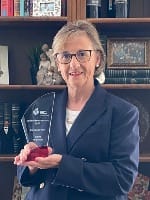
I'm learning. there's some things that are different with stroke, but overall, a lot of the things, same things,kind of fall into that. And then, American Stroke Association and last year awarded me the 2025 Caregiver of the year award and now wanna work with me as far as, okay, what can we do to help caregivers?
Diane: Yeah.
Lana: so they're starting to see the need. so it's been quite the journey. Diane, let me tell you.
Diane: Well, I'm excited for you and I have to tell you, as a fellow nurse, I love that you found a niche that is not being met a need , and that absolutely needs attention. one of the things you say is Caregiver, there's.
stroke caregiving, and then there's caregiving and a lot of that intertwines. I know most, or many caregivers feel invisible. I think spouse, caregivers even are more invisible, if that is possible. And why do you think caregivers are so overlooked during the stroke recovery?
Lana: I think part of it is stroke recovery itself is so complicated and so individualized that I think we as medical professionals, are focused on that patient.
And, in this day and age, a lot of hospitals are short staffed. There's just, they have to come in. They're trying to provide the best care they can for the patient, and so they don't see. The need or the family members don't say, I don't understand this. So I think part of it is, it's not that they don't want to provide the services, I just don't think they know what to provide and it's scary.
I was talking to a physician in at UCLA and she was really funny. She said, let me just explain. She goes. We as physicians, we go in for a couple minutes and pretend like we know everything in the world, and then the nurses take over.
Diane: We both have experienced that. Yes, yes, yes.
Lana: So she said, when a caregiver asks us a question. We don't know what to answer.
Diane: Yeah.
Lana: no, we don't. We're not trained that in medical school. We don't know. so we we'll get the social worker, I'll get the case manager and again, the social worker and the case manager. We are a little bit more in tune to that.
But nowhere near what we need to be,
Diane: Yeah.
Lana: Something that I talk to physicians about is, please stop going in and saying, do you have any questions? Instead, please come in and say, typically these are the questions I hear.
Diane: Yeah.
Lana: and please get the conversation started.
Diane: Yeah.
Lana: so I think that's why that gap is there.
I think the other thing too is, several physicians had shared with me as I was talking to them that. They feel like when they have a patient that's had a stroke or any catastrophic illness they have down to patients.
Diane: Yeah. that's
Lana: very true. A caregiver. Yeah. And if they don't keep the caregiver healthy and sane, a
Diane: hundred percent.
Lana: They're gonna have people in nursing homes, they're gonna have, there's a lot more problems occur. Yes. So I think they, there people are more and more aware of it. They just don't know what to do with it.
Diane: Yeah.
Lana: And it's scary.
Diane: Well,
Lana: we're
Diane: also dealing with,
Exactly. And we're also dealing with, a crisis right now.
Medicare has cut reimbursement so low for skilled facilities, for therapies that the facilities get more money if they don't provide therapy. And I'm seeing more unsafe discharges to home than ever before. And home care benefits have been cut. So the family caregivers feeling. Isolated alone and terrified because they don't know what to expect.
And that's why it's so important that, the stroke caregiver connection actually has that information and supports them. I've dealt with many people and with many different diagnoses and, I did catastrophic care management and, right now, Medicare Advantage plans. The copay may be 200 to $400 a day in recovery, in, in skilled care.
Mm-hmm. So we're really, we're really being challenged right now because, I took a course on insurance to, to learn about insurance. I worked for insurance companies. I did the retro review, I did pre-authorization, I did all that. And what I learned was during this course, and they come right out and say it, government policy makers, in order to manage the care, use high deductibles and high copays to deter use of benefits.
It is oh, and Medicare has moved to a cost sharing plan. So now not only is the family caregiver challenged with having to provide care and treatments once provided by the healthcare professionals, but now they have to find the finances to be able to do it and support.
Lana: and the other challenge that we have is that families don't all live in the same neighborhood anymore.
Yes. it's not, it's very, I guess it's very common to have family, children living in different states and for, me, for example, my daughter lives in California. and so that is a whole nother thing. It's like that family caregiver, you don't have those resources of people close by.
Yeah. And so how do you do that? And then how do you. Help that secondary caregiver, the son or the adult son or daughter. How do they deal with it? How do you, yeah. how do you help them through that so that they can help mom? the common question they always ask me, the adult children is, so how can I help my mom or dad through this, And I said, honesty is the best. I said, so often I hear adult children say, whatever you need, just let me know. Well, that's not really accurate because they can, you can't provide that. Exactly. you need to be really, have a family meeting and say, okay, I talked to, my significant other, my spouse, my family at home, and this is what we can provide.
and I said that way the primary caregiver knows what they're dealing with.
Diane: Yes.
Lana: because I hear so many times during a crisis, everybody's there and saying, whatever you need, but then time goes on and it's a should, and people go back to their regular lives as they should.
But then what do you do as a caregiver when you need that help? And someone said, oh, whatever you need, just call. And you call and they're like, oh.
Diane: Oops. Yeah. Yeah. The hesitation is a killer.
Lana: Yeah. So you just really need to set those, those guidelines up front, I had a young guy and he's like,I just can't, I travel, what can I do?
I can't get back and forth. And I said, well, what can you do? And he said, well,I can probably. Pay for like a nurse to come in or respite once a week. Yeah. I said perfect. I said, although your mom and dad would love to have you physically there, we're still your parents. We understand that's not gonna happen.
Yeah. The other issue is we're seeing younger and younger people with strokes.
Diane: Yes.
Lana: A lot of young families, that are dealing with this and, I see 'em anywhere from the age of 20 to, well, nineties. I don't do pediatrics. Those little ones scare me, but
Diane: yeah.
Lana: But20 year olds.
They had their whole life ahead of 'em and they, now they have this going on. So, yeah,
Diane: I did rehab and stroke rehab and I can tell you I saw very young people with strokes even 50 years ago, not to the degree that we're seeing it now. but one of the things I tell my caregivers is you need to.
Do re create a caregiver relief group. you need to look at how to get paid if you want that, because so many need, maybe not the spouse as much, but. Then you're talk then when you're dealing with spending down for Medicaid, it's the spouse can get paid with a family caregiver agreement in place, but it has to be done legally and it has to be looked at.
I also encourage them to, when somebody says they wanna help. Ask them, tell them what your needs are. And I so many caregivers, even especially the spouses, but they have no one to relieve them. Mm-hmm. And they'll have judgmental siblings or extended family members that tell you how, what you should be doing and how you should be doing it, but they don't.
Move forward and offer help in any way. So I
Lana: ask, how are you? How are you
Diane: exactly.
Lana: The patient, which is, understandable, sometimes you have to hear how are you doing? And and what can I help with? the other thing too is, they'll say, what can I do? What can I do?
And that's probably one of the. Most difficult questions people ask of a caregiver because you are so overwhelmed, you're so tired. Especially in the beginning, you don't know what you want. Only thing you really want is to turn back time. Yeah. And you can't,Yeah. And so like in stroke of the spouse, the stroke of the caregiver, each section, I kind of give a list of things that, that they can do.
Yeah. And I tell families, show 'em this copy and say, what are these things? Can you do simple things like. Can you fill up the gas in my car without me asking, can make sure the dogs are let out? Can you,maybe go over to my house and throw a little laundry in while I'm at the hospital?
just things without having to ask. Just be like
Diane: practical assistance that we leave you. And I even encourage, one of the things that caregivers overlook totally is activities. And the activities can give a spouse or a caregiver, the primary caregiver, a break from,the mundane of the daily living and.
It can, not only give them a respite break, but it can, have, you should have somebody coming in that is a, that loves to do that kind of stuff And help them, if, and if somebody like I love crafts and stuff, I don't get to do it because I'm always. Doing this, but, working on my site.
But, do they paint? Do they, are they, are there, do they like tools? And, sometimes you can't give them the real tools of the day that, that they used to use. But you can use, there's. Toy tools Now that may insult them, but or build something with them if a man likes to do that.
So there's things that people can do, and one of the problems most caregivers have is not only do they not ask know what to ask to be done, but some of them feel as failures if they ask for help.
Lana: Yes. It, you feel it's your responsibility.
Diane: Yes.
Lana: it's your responsibility. And, it's interesting you said about the art and everything.
when I was done in New Orleans for the stroke, international Stroke Convention, that was one of the things, several of the neurologists had talked to our group about is that. when one part of your brain is damaged, if you stimulate the other parts of the brain, what ends up happening is it strengthens it.
Yes. And you don't have to be a great artist. You don't have to be a great musician. It's not the end product. It's the process of doing, and it stimulates other parts of the brain. And I know it sounds crazy, but like vigil, VR is now up apparently. a very popular thing because it's you.
You're moving your arms, you're moving your hands and so it just was very, very interesting. But you're absolutely right, finding something. I was at a support group a couple weeks ago. We talked about purpose and we all had purpose before the stroke. you got up every morning and you had a plan of what you were gonna do, and the day didn't always go the way you planned it, but you at least had a general idea of what you wanted to accomplish.
Diane: Yeah.
Lana: After the stroke, you don't know from day to day what's gonna happen or what you're gonna deal with, and so you have to wake up. You have a reason to wake up each morning? Not, and the reason can't be to take care of someone else is what wakes you up in the morning. Yeah. It could be as simple as today I'm gonna read a chapter in a book or I'm gonna be in my yard.
Or it doesn't have to be start a foundation, it, I'm gonna do that. It could be very simple. that type of thing. Yeah. But you have to wake up with a purpose. And I think when people don't have a purpose for their day, whether you're the stroke survivor or the caregiver, you get lost.
Yes. You get lost.
Diane: Yeah.
Lana: And you feel like the day's over and you're like. Okay. What, why am I here? What was my purpose today?
Diane: Yes. Yes. And one of the things, we all have pictures of when we were younger and all the things we've done. sometimes just having somebody come in that loves to do activities, ask them to work with your loved one or your spouse on,looking at pictures and maybe if they'll know what it's about.
Maybe they can recall a memory. another thing is making, Music and memory is a real program that we have out there, and you make a playlist for your loved ones, with music that they enjoy. So it takes them back to, so those are good things.
Lana: absolutely.
Diane: yes. Now, what gaps do you see in caregiver education and support, in your journey?
Lana: I think first off, it's caregivers need an orientation before they go home. And I've been working, actually, I've been working on an orientation we're trying to get together, where it's goes over the key things that are gaps. okay, what can you expect? how do you make that transition to the nurse, to, rehab?
How do you make the transition home? What are the challenges you may deal with? those are probably the big ones. How do you, travel? how do you prevent them from getting going back into the hospital? how do you deal with family and friends and the change in the dynamics?
What types of emotional things are you going to be feeling? And then what kind of resources do you need? So it doesn't need, they just need an orientation type of thing. And then I think, a monthly. Support group, but also that kind of has a specific topic like, okay, this month let's talk about okay, they're now home.
What things are you dealing with? And you learn so much from each other. Yeah. And tip and tricksand just the laughter and just the comradery, type of thing. So I think that's one. I think the other gap that I'm really focusing on is how do you become a caregiver advocate?
For the hospitals, our rehab centers, how do we train, volunteers that may be, that are caregivers to help bridge that gap between the nurses and the, rehab specialists and the doctors in helping them understand what needs to be done. So for example, like I'll meet with a nursing staff and I'm like, okay, when you go in there, these are the kind of things they're dealing with.
I said, when you go in and there's that patient that has complained, or the visitor has complained 18 million times that the room is not immaculate. They don't care about the room being immaculate. They're so overwhelmed, they're so tired. It's the only thing they feel they have any possible control over.
Diane: Yeah.
Lana: And your response is very simple. It's like, what I really understand the frustration of the room and I will get housekeeping in there, but hey, let's just take a few minutes. it just sounds like you're so tired and you've been through so much. I can take care of that. But let's talk about you and what you need, 'cause they're really for help. Yeah. and the other thing is the hospitals right now are expecting the family to help take care of the loved one while they're in the hospital. Absolutely. They're ask, they're looking for the families to do the oral care and the bathing a lot of times. And, so the family caregiver isn't getting any kind of respite.
Diane: From providing care. And that's also overwhelming. But the staff is, there's not enough staff. There's not a nursing shortage that I'm well aware that, that nurses, they're just expecting too much in the hospitals that nurses leave in droves to look at other times, types of nursing, because they just can't do it in the hospital.
They're paying, they're getting paid a little bit. For doing a lot. And, when I got outta nursing, we did team nursing. I was the head of a team. I had an LPN, which they don't even allow on hospitals anymore, but they're gonna be coming back, I'm sure. and eight or two. And we worked together, we had 10 or 12 patients and we, we had our assignments, but we also helped each other.
There's no team support and help in, In a nursing home or in a skilled facility or in the hospital anymore. the aides are out there on their own trying to provide care. they don't, they're afraid to ask the nurse for anything because they're busy. The nurse is busy doing stuff. So it is challenging and it's really hard for the caregivers.
Sometimes the caregivers just have to. I don't know how to overcome that with them. that more than I do, right now.
Lana: I think the, I think it's, being aware of expectations. Yeah. And I think, in nursing, the biggest change I have noticed just. Being on the other side now is that nursing has become much more technical versus, hands on.
Yes. so it's amazing to me the lack of times they, to see a nurse actually take a blood pressure or to do a listen to blood sounds or, do a few. A full neural assessment. everything's by the computer. They're rolling around with that. and I understand that's where, it's, that was the future.
But I think we've lost something in that.
Diane: Oh, we did. Because during those times when we were doing that, we were also educating When you, when I bathed the patient, 'cause I did ortho, I did rehab. I did. Many different kinds of nursing. But the thing is, when you're bathing them or dressing them or helping them in some way, you're also assessing them.
You know what's going on with them and you're teaching them. I, it was, you had lots of teaching moments and that's the biggest,fail as far as I'm seeing. And I can see that's how stroke caregiver connection supports. I love your,[00:33:00] your. plan to teach the caregivers before they go home, what they may need.
You're, I just think that's, a wonderful approach because, not only are they not getting educated in the hospitals from the nurses, but they're not the home care agencies. Do not provide nurses because they're not reimbursed by Medicare for the nurses. Absolutely. So they have, which is sad because the nurses, the home care nurse is the last frontier.
I, I think where they go in, they train, they educate, they assess, and that, that's something we have totally lost because PTs, OTs and speech therapists don't provide those services. Mm-hmm. So I recently had a person, that came home from the hospital. She had a cardiac event and had a low oxygen to her brain 15 years ago now, she started having seizures.
She came home with a UTI and a, at fall risk and, new seizure medications. And they didn't have an, I couldn't believe they didn't have a nurse come out. I was shocked. they didn't even do It's different
Lana: world. It's a different world. But
Diane: I think it's,
Lana: I
Diane: think, and that's why I think what you're doing it's necessary and important.
And, caregivers need to know that they where to find that support.
Lana: Yeah. And the thing is when I go, I teach, or if I go into a room, I don't go in as a nurse.
Diane: Oh, yeah.
Lana: Yes. I's a caregiver. Yeah. I do not look at their chart. The only medical information I know is what they tell me.
Diane: Yeah.
Lana: because I don't, that's not my place.
Yeah. And a lot of times if they ask me a medical question, I'll help them how to phrase it and who to ask it to.
Diane: Yeah.
Lana: because I don't want that to be, my role, it's really from a caregiver, but the advantage of being a nurse in a caregiver position is. you pick up on things.
And so a lot of times they will share things with me and I'll say, do you mind if I share that with your nurse
Diane: yeah.
Lana: A good example as I was in with the patient and I had seen their, the family, gosh, probably two or three times about probably three times. And the wife finally said to me, she's I just don't know what, he had taken, the little blue pill that morning of a stroke.
And I was just too embarrassed to tell the doctor. Oh, that's so cute. And I said, I said, I totally understand. I said,I said, when they come in, they always say, what did you take the last 24 hours? Yeah. And I said, and, I said, you did nothing wrong. it's just part of it, not to worry.
I said, but are you okay if I share that with your medical team, just so they know? Yeah. And she said, could you please? 'cause I'm too embarrassed to tell 'em, So it's things like that. just having a conversation you can have on, a lot of times I'll go back to the stroke team after I make my round and be like, oh, this family, they had this person and this person had a stroke before.
This is the family history. Mm-hmm. Because I had time to sit there and they just start telling me
Diane: yes.
Yes.
Lana: And, so it's, I think it's been really advantageous.
Diane: Oh yes. One of the things I encourage, I have a patient care how to become a patient care advocate, course in manual. And one of the things I encourage every caregiver to do is record conversations when you're in the hospital or with the doctor because you're so overwhelmed with so much and the terminology.
doctors will talk over your head and nurses may talk over your head with. Words you don't even know, and you have to just say, whoa, whoa, whoa, whoa, whoa. Hey, could you talk with in simple English, simple? I don't know what those terms are. And make them define them for you because it makes it easier for you as you move forward to take care of your loved one.
The also the plus about recording is you have lots of other family members that are definitely gonna wanna know what's going on. So you take that recording and you share it and listen with them. You all have your own nerds, all different notes, but you also have different perspectives and that way everybody can sit around and talk about what their thoughts are and it starts not only creating a team of support.
And advocates for the, family caregiver, but the patient. And it's just nice for the primary caregiver to have, somebody that's there that also understands what's going on.
Lana: Absolutely. so I agree with you Diane, and it's just,never go to a doctor by yourself anymore, because I agree.
You all hear different things, you all hear different things, absolutely.
Diane: Yeah. Absolutely. and you know what you heard yesterday from the doctor and you're thinking about it the next day. If you don't have that re. Recording, you're going to think a million different things. and I always ask them, I encourage every caregiver to ask for the email of the doctor or the care manager, whoever they're dealing with, so that, and ask them, can I email you questions?[00:38:00]
That I have after I get home and let this digest this information. And I think that's also helpful because, they could, like with your kind of organization, they can say, Hey, I have here's the information I received. What kind of questions do I need to know?
Lana: Exactly. And that's what I do.
I do every stage. and who do you ask?
Diane: Yes.
Lana: who's the right person to ask that question to. Yeah. And I had a patient just the other day and the husband was like, I know they're gonna come in and talk to me. I said, okay, here's the questions you should be asking at this phase.
Diane: Yeah.
Lana: And he's okay, because I'm ready.
Diane: and that makes it so much easier for them because you've walked down that path, right? And you've lived it and your experience, you're able to share with your audience or your care, other caregivers. And that's amazing because that takes the onus off them and the fear and,
Because a lot of patients think doctors are God and everything they say is perfect and the doctors don't know what the caregiver needs, like as you, pointed out before and they don't know,What approach they should take for different things. So you have to ask, the right person.
And a lot of nurses that are in these facilities have never done home care, have never done other types of nursing, so they don't know what a caregiver needs as well. That challenging.
Lana: No, I agree with you. I do agree with you. I think that's critical.
Diane: Yeah. But you know what, you give the caregivers confidence that, they know, they're not gonna feel looking to, because many of them fear they're going to look ignorant or stupid to the doctor.
and the doctor only has, a 15 minute window where they have to listen to you. Assess, diagnose and treat all in 15 minutes in document. here's a silly thing I encourage my caregivers to do. Because they are seen as thought of as invisible. And I encourage this, I encourage them to put on a lab, coat on, have a clipboard with your question type thing, and a pen and paper and the recorder.
And all of a sudden you will see a doctors approach you differently. I always tell them, I put a little thing that says I'm a care team partner, and. Because all of a sudden they will see you as part of the care team. But it's just a little, I know that sounds silly, but it really works.
Absolutely. You put a lab coat on and all of that sudden you look really important and you have to, and I know we're laughing about it, but it's very serious. And if it changes the, dynamics of the team to notice the caregiver as part of the team, that's really important too.
'cause so many. Of the healthcare, or healthcare team dismisses the caregiver.
Lana: I agree. I agree. it's very frustrating and I got to see it firsthand. yeah. And, so I don't want, I don't want anybody else to feel that way. I
Diane: know what, I literally had a dear friend, she had A-T-I-A-A trans ischemic,attack.
She was driving her vehicle and I was sitting next to her big dear S one 50 truck and we were on a country road. So she started having garley goop come out. she just quit. She was very confused, so I stopped. I pulled her over. I. Pushed her over and I took her right to the hospital and
She had many of them that resolved over a period of time, so she never did anything about it. But at that time, I took her in and her blood pressure was high. And she was, her speech was coming back and the doctors asking her all these questions and she lied about everything. Yes. She's compliant with her meds.
Yes. She takes her blood pressure. Yes. She watches her sugars yet, and I said to the doctor, excuse me, but. That's not true. I want you to see a real picture and he put his hand up and says, I'm not interested in what you have to say. And I've seen, I've experienced that several times and I'm like.
Oh my God. Well,because the nurse in me, I'm like, and I went out afterwards and I said, look, this is the real story and you need to know it because then you'll be able to approach her differently. And, that's fine. Do it. It happens, and that's why it's so important that when you go to the doctor's office, you take someone with you because, it'll keep you honest.
Lana: We keep you honest and also you'll forget things.
Diane: Yes. Yeah. And again, I encourage people to record the conversations, ask the doctor if they mind and just, record that conversation. Because Lord knows by the time you get home, you're gonna have a hundred more questions. And then you email them and say, you know what you need.
Lana: Exactly. Exactly.
Diane: Now looking back, what. Would caregivers need the first few weeks or months? And what do you wish somebody had told you when you first became a caregiver?
Lana: I think the number one thing I wish they would've told me was, that good is a different meaning than what I think it is. And great has a different meaning.
I wish they'd told me what their expectation was. Lemme give you an example. you call that morning and you say, how was his night? Oh, he had a great night. Well, my interpretation of great is different than your interpretation of great. Their interpretation of great is. we didn't have a crisis.
his blood pressure was stable. Mine is. Wow. He's made this huge improvement. Exactly. it's, especially in rehab, I think if, knowing what their expectations are, what are we looking for recovery? it's, everything was wait and see. Wait and see. And I think if someone would've told me, okay, today our number one goal is if he gets to hear.
Diane: Yeah.
Lana: And then I could be like, okay, we got there. That's great. Yeah. so I think, that would've probably been the top thing. I would like them to know the other thing. And the second thing is that, this happens to over almost a million people a year. You are not alone, but it's hard to find resources.
Here's some place you can go.
Diane: yes.
Lana: and let them go, Yeah. that sort of thing. But I think the number one thing is really to define what, how they define good. How they define. Great. I was at the rehab and they came in, he was like, oh, he had such a great morning in rehab.
he took two steps, and that was great, but it wasn't. Great to me. Yeah, great. Is coming home. A hundred percent.
Diane: Yes. Yes.
Lana: use words like, okay, we ha we have some improvement. He's where we're we? We hope he's at, but be careful with the word you use.
Diane: that's very good.
one of the things I wanna make, the caregivers aware of too is there's a new thing that's happening in rehab that's I find very disturbing. they talk about patient's rights. And the patient can refuse to be turned. The patient can refuse to be clean. They can refuse all these things.
And what I am seeing is I actually had a patient come home with a stage, he's a diabetic, a stage three acute heel wound. And a sacral wound because they, he refused to be turned and they cause more harm than good and he's probably gonna lose his foot. and I think that it's really important that caregivers, ask.
To see all the skin on their heels, their butts, their elbows. check out those things and, and ha and ask frequently how is their skin? And if, and ask them, if they refuse something, I want you to call me because I need them to be turned, I need them. People don't understand that when you're causing harm that.
Can cost, one incident of a small, Pressure store can be as cost a hundred thousand dollars for treatment.
Lana: Well, and I think, there has to be a note in the chart and you need to talk to the facility. If they have cognitive issues, they are not equipped at that point to make those decisions.
And so I think it's, that's really key that, you have that conversation upfront saying, okay. He cannot make these decisions. Yeah. This is what he has to,
Diane: Yeah.
Lana: and then, and then document that. And you've, you're covered then with the patient rights. Exactly. But it just really kind of setting, again, setting the parameters at the beginning.
Diane: Yes. and caregivers don't know enough to do that. what happened with my patient here is they didn't even document his skin. So when he came home. He fell as soon as he got home and had to go back to the hospital because they, he hit the surgery he had on his back, became undone.
Lana: Oh dear.
Diane: Him and his wife. and the hospital's finding these sores and He had just been home for an hour from rehab and they didn't have any documentation of it. and that shocks me as well. and we're seeing that more and more. And that's why it's really important that, the caregiver, also has to be the detective.
And, it's hard for them. But then again, when you have people that like you that have stroke caregiver connection, you have the resources, the guides to support them. And I think that's a blessing and I think that's great. Lana, for caregivers listening who feel overwhelmed or alone, what do you want them to know today?
Lana: That they're not alone? And they're not isolated. That there are people out there, that care about 'em. There's people out there that are doing the hard work of figuring out classes, trying to, yeah. To do that gap. but the number one thing they need to do is use their voice and share what they need.
they may not know what they need, and that's just, they need to share that as well.
Diane: Yes,
Lana: I need to talk to someone that's been in my position. I think that's critical, but I really believe they just need to know that they are not alone. That there are people out there working very, very hard to make a difference.
Diane: And how do people find you?
Lana: the best way is to go to www stroke caregiver connection.com. That's the website. And I have a Facebook page and a LinkedIn.
Diane: I think you have a cover that I'll put on my, your page.
Lana: Okay, perfect. Yeah, and they can just get that on Amazon. It's, it's inexpensive. It's 20 bucks. it's the size you can put in your purse. so that's a great resource, for that. But I think the number one is to go to the website and I'm really excited because I'm actually, my next meeting is with our new logo and our.
Website looks. So yeah, they talk all this language. I have no idea what they're talking about, but I'm like, okay,
Diane: I know they're talking to us like a family caregiver hears a doctor talk to them.
Lana: Yeah, exactly. Yeah. I'm like, I can do content, I can do content.
Diane: Yeah, yeah, yeah, yeah. The other fest up. I don't understand.
to my family caregivers out there, you are the most important part of the caregiving equation. Without you, it all falls apart. So please learn to be gentle with yourself. Practice self-care every day because you are worth it.
Caring for a loved one can be overwhelming — but you're not alone. If you have questions, big or small, our expert team is here to help.
👉 Click here to Ask the Expert
Our Resource section can help you find the information and tools that you need. We have courses, videos, checklists, guidebooks, cheat sheets, how-to guides and more.
You can get started by clicking on the link below. We know that taking care of a loved one is hard work, but with our help you can get the support that you need.
Click here to go to Resource Section now!