Beyond Pain Pills: How Class 4 Laser Therapy Is Transforming Medicine with Phil Harrington - Episode 179
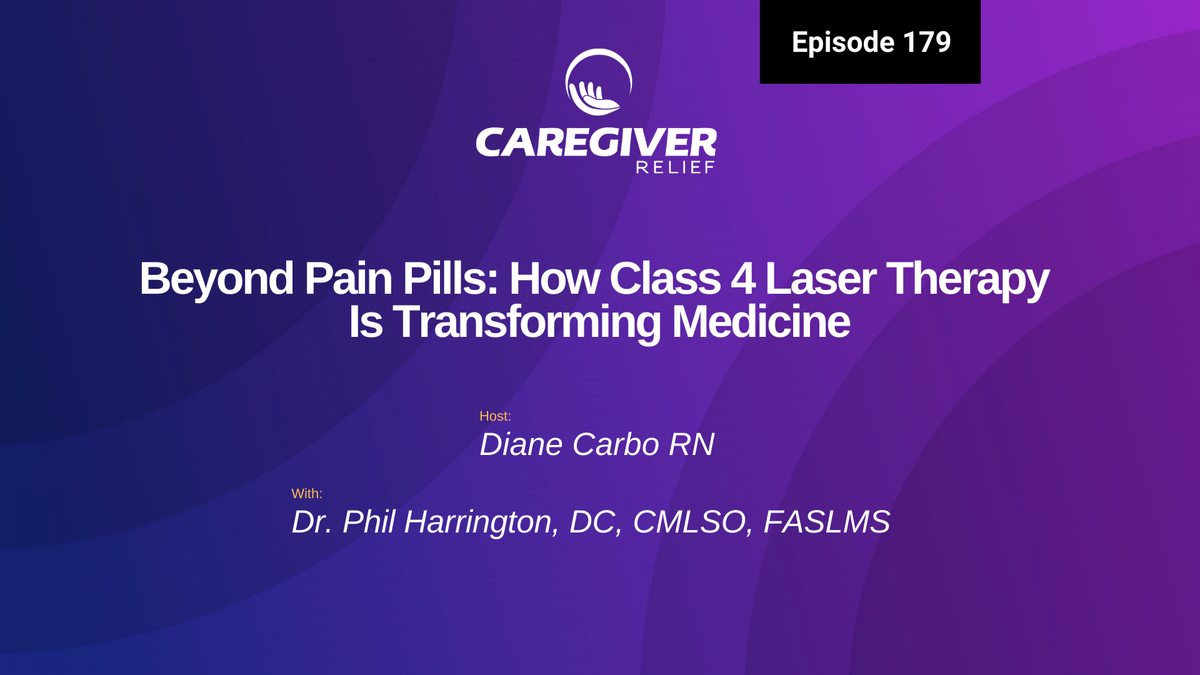
Are you or a loved one struggling with chronic pain, limited mobility, or slow healing? In this episode of the Caregiver Relief Podcast, host Diane Carbo sits down with Dr. Phil Harrington, a leading expert in Class 4 Laser Therapy and Photobiomodulation (PBM).
Discover how "light becomes medicine" to reduce inflammation and accelerate tissue repair without the side effects of medications or the risks of surgery.
🎧 Episode Highlights
- The Science of Light: Learn how "happy little photons" interact with your mitochondria to improve blood flow and metabolic activity.
- Laser vs. Red Light: Understand the critical difference between medical-grade Class 4 lasers and the "red light" devices often seen on social media.
- Breaking the Pain Cycle: Dr. Harrington explains how laser therapy stops the loop of "pain leading to less movement," helping seniors regain their independence.
- Real-World Results: From a 2-day-old infant to a 99-year-old with neuropathy, hear how this non-invasive treatment is changing lives.
📝 Podcast Outline
1. Introduction to PBM
- What is it? Photobiomodulation (PBM) is the official scientific term for applying light to biological tissues to trigger healing.
- The Discovery: It started with an "accidental" discovery in the 1960s when researchers noticed laser light made hair grow back faster in mice.
2. Why Class 4 Lasers Matter
- Coherence: Unlike LED lights that scatter, laser waves are coherent, allowing for deeper penetration into joints and muscles.
- Prescription Grade: These are medical devices administered by clinicians, specifically targeted for pain, arthritis, and injuries.
3. Common Conditions Treated
- Arthritis & Neuropathy: The two most common conditions for older adults. Laser therapy can help patients sleep through the night by reducing tingling and "burning" sensations.
- Wound Healing: Discussion on the potential for laser therapy to assist in post-surgical and diabetic wound recovery.
- Joint Pain: Relief for bone-on-bone knees, shoulder injuries, and "stiff" necks.
4. Safety and Expectations
- The Experience: Patients typically feel a mild, soothing warmth. It is non-ionizing and very safe.
- Eye Protection: Because it is a powerful laser, you get to wear cool "Elvis Presley" style safety glasses during the session!
- Integration: It works synergistically with physical therapy, chiropractic care, and most injections (though you should wait 7 days after a steroid shot).
5. Moving Toward a "100-Year Lifestyle"
- Dr. Harrington discusses the importance of staying active at every age and using laser therapy as a tool to maintain quality of life rather than "descending" into disability.
🔗 Connect & Follow
Stay updated with the latest in laser therapy technology and clinical results by following Summus Medical Laser:
- Facebook:Summus Medical Laser | Franklin TN
- LinkedIn:Summus Medical Laser
- Instagram:@summuslaser
 summus1
🚀 Why You Should Listen
If you are tired of the "rationing" of pain management or are worried about the addictive nature of pharmaceuticals, this episode offers a hopeful, science-backed alternative. As Diane shares, "Laser therapy has changed my life"—it might just change yours too.
Podcast Episode Transcript
Diane: Welcome to the Caregiver Relief Podcast. I'm your host Diane Carbo, an rn, and I'm here to help family caregivers like you. Find practical evidence-based strategies to support your loved ones while protecting your own wellbeing. Today's episode is one I know will bring real hope to so many of you who are exhausted from watching someone who you love, struggle with chronic pain, limited mobility, or slow healing.
The title of today's show is Beyond Pain Pills, how Class Four Laser Therapy is Transforming Medicine. In this conversation, I'm speaking with Dr. Phil Harrington, one of the world's leading experts in Class four laser therapy and photo biomodulation. Also known as PBM. Dr. Harrington has dedicated his career to researching, teaching, and advancing this powerful non-invasive treatment that's helping people reduce pain, decrease inflammation, accelerate tissue repair, and improve function without relying on medications or surgery.
Yeah, whether you're caring for someone with arthritis, neuropathy, sports injuries, or post-surgical pain or other chronic conditions, this episode will give you clear science backed insights into how light can actually become medicine. We will explore how Class four lasers work at the cellular level, the difference between laser classes, safety considerations, and real clinical results in practical ways.
This therapy is being used today in pain management, rehabilitation, and sports medicine.
This episode is sponsored by my vital vault.net.
Your all-in-one life organizer For aging adults and caregivers, it's designed to help you securely store your essential legal, medical, and emergency information in one easy to access place. Because when a crisis hits, being prepared can make all the difference. Join our caregiver relief community, a warm, welcoming space where you can connect with other caregivers, ask questions, share stories, and find support from people who truly understand. Visit community dot caregiver relief.com to join now. Because caregiving is one of the hardest and most meaningful things you'll ever do, and no one should have to do it alone. And if this episode speaks to you, please take a moment to like, share or comment. Every click helps us reach more caregivers who need encouragement, resources, and hope.
Diane: Dr. Harrington, thank you so much for joining us today.
Phil: Diane, I sincerely appreciate the, invitation and what a very warm welcome and that was a great introduction to our discussion today. So I'm very pleased to be together with you.
Diane: I will tell you, I'm very selfish about this topic and, I've my own personal experience, I've been a nurse for 54 years, nursing I did physical rehab, nursing, and, I also am noticing in our medical delivery system, they're. The government policy makers now are in the process of, not providing, pain management.
they're rationing our care. and people aren't even taking pain medications. When they're asked for them because they, the doctors don't wanna order them. I can't take pain medications. but I was using interventional pain management as A management to tool, tool for my, pain.
But I, that's also being rationed. So I'm being selfish here because I can tell you right now, laser therapy has changed my life.
Phil: that's great. I'm so happy to hear that and that, yeah, there are so many topics of discussion based on what you just said. yeah. but I think in the last, few years or decade or so,the limitations of the pharmaceutical based pain medications are becoming aware.
Yes. the addictive nature of some of those. pain medications and, really an emphasis moving towards, more, holistic, natural, less invasive things, which certainly laser therapy is completely non-invasive. And,using modalities and lifestyle choices that can help us to be active,and help to manage that pain.
Diane: for my listeners out there who may be hearing about laser therapy for the first time, how would you explain what it is and how it works in simple everyday language?
Phil: so it really is just the application of light to biological tissues that has a certain effect on it. And of course everyone knows that, you can see.
So obviously. photons of light can get into your eye and hit the rods and cones in your eye, and you can see, we know that plants go through photosynthesis. we know that when a baby is jaundiced, we put them under UV light and that helps with,helping the baby with the jaundice.
the whole science of laser therapy and photobiomodulation was really discovered shortly after laser devices were invented in the mid 1960s. There were. Very interesting animal experiments being done because this was a new type of light, this laser device, they were not sure what would happen when it would interact with tissue.
So in, in an animal study, they actually took mice. And it is a little bit sad because they induced tumors in these mice, but then they would shine the laser light on them. One thing they found is that it did not make the tumor grow any faster, but then also interestingly, it made the hair grow back more quickly.
and that was,oftentimes in science, there are accidental discoveries. it was that accidental discovery of shining laser light on tissue and finding that it helped that tissue to be. Healthier and act more efficiently. That's where it all started. So over the last few decades, there's been a lot of work done into understanding what are the proper parameters, what's the wavelengths or the color of the light?
How should that light be delivered? What's the power or the brightness of the light? What areas do we shine in so that the parameters of the laser being used have been discovered, but then more importantly. What happens when those photons of light go into the tissue? That's becoming more and more well understood and just basically.[00:07:00]
You have these happy little photons of light that come out of the laser device, and yes, they can go into the skin. They,the treatments are applied directly to the skin, and then they do penetrate several centimeters, several inches into the tissues in the skin, and they interact with different things inside of our body to really primarily help with improving blood flow, improving the release of oxygen from the bloodstream.
And improving metabolic activity in our mitochondria. So it helps our cells and our tissues to be healthier and as a result, it helps with managing pain, inflammation, and any sort of tissue damage.
Diane: And I can attest to that, but I wanna,talk about the different levels because, I have people that I say, oh my God, this has made my life much tolerable.
And they go, nah, it doesn't work. Or they'll say, I'm gonna go out and buy one of those mats you can lay on and use. And there's the, I guess they're red light. I don't know. Yeah. But I'm like, they're so that's not the same thing. I wish. Would you explain the differences to the. My listeners.
Phil: Right. So in the last few years, the whole term of red light therapy has become, very popular. I'm not a big fan of that term because. It is not an accurate description of what we're doing. We are not only using red light.
Diane: Yeah.
Phil: and then also it somewhat discounts or cheapens the scientific validation for what we're doing.
So I get it. I know that photo bio modulation, I know that's a big word. Or pbm, you could just say PBM or laser therapy. But that is the, the term that was agreed upon by a panel of experts from around the world in 2015. That's the official term in the Library of Congress subject headings list.
and it's really the social media influencers in the last few years, the people on Instagram and all these. TikTok and all these sorts of things that are promoting,[00:09:00] these red light systems that they call now, there is a dramatic difference. the device that I'm talking about, a class four therapeutic laser is a medical grade, a prescription grade piece of equipment that is administered, by a doctor or a clinician.
I know that there are many devices, direct to consumer units that are available. I'm not going to completely discount them because I know that for some superficial applications,putting it on your face might help with the appearance of, growth of collagen fibers in your skin.
And it might help, improving fine lines and wrinkles of that sort. But you have to understand that there is a dramatic difference between the two devices and you cannot buy. a red light LED device off of an online website and expect to get the same results that a class four therapeutic laser will get.
Exactly. You just have to understand the limitations.
Diane: yes. the reading I did is the level,of skin, the, that the light goes into the skin and beyond. The tissue is different from, the laser for.
Phil: laser light and I can't remember if I told you, Diane, I used to be a high school physics teacher.
Years and years ago. Oh, no, I didn't know that.
Diane: Okay.
Phil: So if you want, we can go into a whole, physics class today. But, but anyway,the key thing to remember about laser light is that the light waves are coherent. The light waves match up with each other in space and in time, and that makes laser a unique quality of light because it allows for deeper penetration into the tissues.
And it is more specific for. The chromophore, the elements in the tissue that will absorb the photons of light. LED Light emitting diode light is non-coherent, so it does scatter and spread out more easily. But again, I don't completely discount LED light. Because it does have some certain benefits and,one place that we are seeing it used quite a bit is in, it's called Whole Body Photobiomodulation.
It looks like the old tanning beds that we used to have. it's a bed that is full of these things. You lay in there,disrobed to your level of comfort, and,you get that exposure to the entire body. There are certain benefits for that. but again, understanding that the differences, the devices that I'm talking about, class four, therapeutic lasers are superior when it comes to that targeted treatment for pain, injuries, arthritis, and things of that nature.
Diane: 100%. I, I can attest to that now many seniors are dealing with chronic pain, but either can't tolerate pain medications or are being advised to limit them. And we, I know that.
Phil: Yeah.
Diane: so how does laser therapy fit into a modern non-drug pain management plan?
Phil: one way I like to describe it is in terms of, there, there's a feedback loop that happens and,
myself, I'm 61 years old and I'm starting to feel I, I played, football in high school and I have X-rays. Both of my hips are, starting to get some degenerative changes. So I know that if I do not. Maintain activity and stretch every day. Then I start to feel that arthritic pain in my hips and I have trouble sitting down and standing up.
so I totally understand. And there is a complete cycle that happens, be with you. When you start to feel pain, you move less.
so the joint moves less. So that means that the surrounding tissues and muscles tighten up. So the joint gets tighter so you feel more pain and you just go around that loop.
You go around and around that loop until you do something to break that loop. something that people can do at home and encourage this every day is find some way, find if you're, if you don't know how to do it, find someone who is able to help you do some nice, simple daily stretching exercises that, that activate all of your joints.
Make sure you're moving. All of the joints in your body every day. But if your situation has gotten to the point where you do have that persistent pain in the joint, then the laser treatment can help to break that pain cycle. Yeah, the laser treatment can help manage the pain. It can help to improve blood flow to the area.
if you get a laser treatment and then have someone do some assisted stretching and movement of your joints. Anything that you can do to get out of that cycle of pain is going to help you to be more active and more comfortable.
Diane: I'm, as you're telling me that, telling my listeners this, as a young nurse, we were always told, you gotta get up and moving, get those joints going.
And all my life, I've told people, you keep moving. And now here I am with the pain and I'm like, you gotta move. You're pa you're, this is payback for all the patients you push.
Phil: Yeah. It's so important. You have to do it every day. You have to do it every day. Yes,
Diane: absolutely.
Phil: Yeah.
Diane: So what are the most common pain conditions?
laser therapy helping with old, older adults.
Phil: I guess first off, I'll just point out that it can be used for all ages. I know we're primarily talking about older adults here, but a lot of older adults have kids and grandkids and great grandkids. the youngest patient that I'm aware of was actually two days old.
It was a patient Oh, that had gone through. It was a very difficult birth process, and they were worried about. damage to the brachial plexus and possible herbs palsy. so they did do laser therapy on the two day old infant and,and babies are repairing so quickly anyway, it was just, yeah, like three treatments later and everything was okay.
So that's the youngest patient? Yes, the oldest patient that I'm aware of. was,a lady named Claire. She was 99 years old and she was suffering with diabetic peripheral neuropathy. Yeah. And, she received a tremendous benefit. And it's funny, we have a video of her talking and after her.
First treatment with the laser. She felt so good that she, talked her daughter into stopping off at the,place to, to get a pedicure and get her toenails painted. so
Diane: that's
Phil: huge.
Diane: That's huge.
Phil: so these treatments, they are for all ages. All ages can potentially benefit and I know that we've talked a lot of, About a lot of the benefits. I don't ever wanna over promise anything.
Diane: Yes. Yeah.
Phil: but the benefit of laser is that it is a non-invasive treatment with really no side effects to it. and I think probably arthritis and neuropathy are gonna be the things that are. Most common in an older population, arthritis, that stiffness in the joints that, that,prevents you from moving, from walking from being active.
That, a pain that may wake you up in the middle of the night. And then neuropathy, that, that pain, down the legs into the toes and the feet that is perhaps causing numbness on the bottom of the feet, tingling that, that painful sensation that wakes you up at 3:00 AM so you have to rub your feet in the middle of the night.
those are two of the things that, that we see a lot of benefit for in the older population.
Diane: I read that it's even working for wound healing.
Phil: Yeah, no,
Diane: that's amazing to me.
Phil: Yeah. I have to be a little bit careful there because we do not have the FDA clearance for wound healing and Okay.
Have to you whatever appropriate disclaimer that I have. Okay. but it is tremendous and whether it is, in post-surgical situations or traumatic situations or even non-healing diabetic wounds, it is possible that photobiomodulation treatments can help. It really is incredible.
Diane: Yes. And that's what I found also fascinating. But now I know everybody always worries about safety.
Phil: Yeah.
Diane: So especially in the elderly. and I'm an elderly person, so is laser therapy safer for seniors? and or is there anything that you need to do with extra caution?
Phil: So the cool thing about it is that with these devices, we are using red and infrared light.
And, just one more reference to my physics teaching days. If you remember, you've got the. You've got the spectrum, and we called it Roy g biv. you have the colors on the rainbow. with red and infrared light, we're on the safe end of the spectrum, whereas on the other side is ultraviolet.
everyone is aware that ultraviolet exposure to ultraviolet. From the sun can cause problems with the skin. The cool thing about laser is we're on the other side of the spectrum, red and infrared. It's non ionizing. the laser beam, it's spread out. It's allowed to diffuse, so it's a low concentration of the light.
the treatment is very soothing, very relaxing. And it is very safe now because it is a higher powered laser device, there are certain eye precautions that we have to take. so you do have to wear. Oh, I was just looking to see, I get my safety glasses audio inside of my case. But you get a treatment, you get to wear this really cool pair of, laser safety glasses and you kinda look like Elvis Presley.
Diane: Absolutely.
Phil: But, but yeah, really that's the main thing. but, again, not, non ionizing light. That is dispersed. It's very safe, during the treatment, it's painless, or you may feel just a mild warming sensation. And,it really does just feel wonderful.
Diane: what does a typical laser therapy session look like and how long does it take?
And, what does the patient usually feel during the treatment or soon after?
Phil: Yeah. So one thing is that these treatments do have to be applied directly on the skin. so it, when you go to an office. Some offices will have either gowns or shorts that you wear or,in my office, I would just have people, I would just coach them, okay, we're gonna be doing laser treatment on this area.
Can you just please bring some baggy shorts with you to wear? and then I would just have them change in my office.
that way they were in a piece of clothing they're comfortable with. And then I didn't have to do the laundry, but it does have to be done on the skin. Now, for example, when we're talking about, the diabetic neuropathy, we will actually do treatment on the spine on the lower part of the spine first, because that's where those nerves that go to the legs originate.
That's where those nerves start. So we would do treatment on the low back first. And then down, on both legs. So whatever area needs to be treated, we just have to have that skin exposed. I mentioned earlier the treatments. You may feel a mild warming sensation. It's non-ablative. it's,painless treatment.
And typically you're gonna feel a nice, warm, soothing sensation, and especially if you. If you do some range of motion, in other words, if you move that joint, let's say we're working with an arthritic knee, you're doing a laser treatment on an arthritic knee. Once they apply the laser a little bit and then you do some, movement, some flexion extension with the knee, things feel looser.
it loosens up and it feels more comfortable. it's a really nice sensation.
Diane: I agree about that. 'cause I have bone on bone knees right now. Yeah. And I just had my first gel in, I'm trying to delay surgery as long as possible 'cause it's a really long recovery and it's seven. I'm gonna be 73 soon and I got a lot to do.
So I, its hard to fit it in to my schedule. And I can tell you betw with the gel and the laser, It's amazing. Yeah. I can't even begin to tell you.
Phil: and I'm glad you mentioned that because that's another safety thing that we should point out here. injections such as,that the gel Hyaluronic acid, Synvisc, any of the ortho biologic injections such as PRP or stem cell. Yes, we can use the laser together with all of those things. Yes. and there is a nice synergistic effect that happens between them.
Diane: I
Phil: actually, one thing we have to watch out for Uhhuh is if a patient gets a steroid shot, if you get a steroid shot, a corticosteroid shot in a joint, then we have to wait seven days before we laser that area.
Diane: Gotcha.
Phil: But all of the other things, laser plays very well together with all of those.
Diane: Yeah, I read a lot of research studies on it before I move forward with it, and I'm just determined I'm gonna delay surgery as long as possible, and it really has. one of the concerns caregivers often have and or people always worry about is they're actually wanting to improve their quality of life.
In your experience, what changes do patients and caregivers notice when laser therapy is working?
Phil: yeah, it's gonna be, could be a number of things. it could be noticing a better range of motion in the area. quite often we'll see that in the cervical spine, if you have trouble turning your head so far, or looking down, or looking up, you'll notice improved range of motion in the joints.
you'll notice, decreased pain in the joints and maybe more importantly is. And especially with neuropathy, you'll be able to sleep through the night. it is so important for us to get our, whatever our body needs, whether it is seven or eight or nine hours of sleep, whatever our body needs to get that complete, time period through the complete sleep cycle so that our body is able to rest and recover and regenerate.
There's getting to be more and more evidence coming out now, and how important that. Complete eight hours of sleep is on, helping the brain's glymphatic system to drain out garbage out of the brain, and reduce our chances of, getting Alzheimer's or other, brain related, diseases. relieving that pain in itself is good, but.
Having the effects on everything in your life, improved activity levels, it's gonna make your mood better. you're gonna put shopping back, carts back at the grocery store. You're gonna, you're gonna smile and be in a better mood. many benefits.
Diane: I will tell you I have, cervical, thoracic, and lumbar SI in my SI joints, pain from years of nursing and wear and tear.
I fell from a horse decades ago and I have a bad shoulder. that, and I have two knees that, have, need repairs. And I can tell you the biggest. Impact for me with the laser was sleeping through the night. I could actually lay on my bad shoulder. It's not bad anymore.
Phil: Yeah.
Diane: and have, and not be wakened up.
And I actually, I can actually tell you that I have most nights, 99 port. 9% of my nights are pain-free.
Phil: Good.
Diane: And that to me was, that's why I was so excited to have a talk with you about this 'cause people have no idea what the benefits of this are and how it can actually really improve your life.
In fact, my cervical. I suffer from migraines and I, and as soon as I feel tightness. I know that I'm getting to a point and because I can't have all the interventional pain treatments, this has been a wonderful solution for me. It absolutely good.
Phil: I'm very happy to hear that.
Diane: Oh my gosh. That's why I'm a big, big supporter of laser therapy, laser four.
Phil: That's wonderful.
Diane: Is it, is laser therapy something that you can realistically be integrated into ongoing care? And how do families usually approach, treatment frequency?
Phil: one place that it would be used for acute injuries. Acute conditions, and again, just emphasizing that we can use it on.
Patients of all ages. so we have many, young athletes competing that, that will get a sprained ankle or other, problem. laser would be used for. Just, an intense period of time, six to 12 treatments to help to, repair and recover from that sports injury. but for more of the chronic things, the arthritis, the neuropathy, there's going to be a period of intensive treatment.
It could be two or three times a week for six weeks, but then after that it may just be, a more of an as you needed sort of thing. what you're describing with your migraines or, yeah. Getting a treatment once a week or every other week just to maintain things. But, but again, when you look at the trade-offs between laser therapy being non-invasive with no side effects.
As on the other side of things, you have all of the over the counter and prescription medications that sometimes when I look at the,the side effects, of all of these medications, it gets a little bit scary. So if we can use a non-invasive way, use laser therapy. And laser alone can be beneficial.
But actually it's, it really, it works well with so many different things. We have mentioned the ortho biologic injections, but it also works well together with chiropractic or physical therapy.
Yeah.
Phil: spinal decompression or exercises. laser really, I just really encourage it to be a part of someone's, regular healthcare plan.
I'm.
Diane: 100% agreement with that. And that's what I do. I use it as another tool to help me get through, my aging years. Yeah. And it's been amazing. now if a caregiver or a senior is listening today and they wanted to take the next step, what questions should they ask a healthcare provider to see if laser therapy is appropriate for their situation?
Phil: Yeah. the first thing is gonna be the class of the laser device,class four laser. Just simply, it means that it is higher in power, which means that it is able to deliver a sufficient amount of light into the tissues. to treat everything inside of the body. So we would use lower power for something, more superficial, more towards the skin, and then higher power to get light deeper into the body.
So it really has to be a Class four laser. And then also just to make sure that they have been, adequately trained and properly using the device and have gone through,some. Training from the company, from a qualified person who's able to teach, doing this. and I'll just mention I do have my own personal website, dr phil harrington.com.
It's dr phil harrington.com. I have lots of information there. And on that I do have a contact. Form that I'm very happy to take questions from anyone. I get questions from all over the world through that. I, as you started out with your introduction, Diane, this has really been my passion in life.
being able to use this modality to improve the quality of life of people, of all ages and,it's just my opportunity, my way to try to make the world a better place.
Diane: I really appreciate that because, I had an experience where I have, my left SI joint has been very painful for over 15 years, and I've always favored that side of my body when I couldn't, I literally, I always felt like, I know this is terrible, but I felt like job of the hut, I always had to lay down and, I couldn't stand for long periods of time, couldn't, stand in.
Lines to shop or anything uhhuh. And when I visited people, I would lay down because it was comfortable. And then, With the laser. and what really concerned me is when I had my DEXA scan done, I started having osteopenia in that area and in my hip. And I was like very concerned because, hey, I've lifted weights, I've done everything I could possibly do.
and I did rehab nursing,thus the whole body being damaged. But, we picked our patients up then and put them back. So I can tell you that. that my research has found and it's relieved that pain. So now I can, I walk great. I don't have that pain. And, I do get, I feel like,the, tin Man that needs to go to get his, his oil.
Phil: I was hoping you're gonna say you feel more like Princess Leia. Rather than job of the hut, I want Diana, I want you to feel like Princess Maya.
Diane: I should be, yes. Oh, but I'm, I think of myself as the tin man that needs to go and get, oiled up, when I'm, when I go, because I know, I can tell what needs.
Needs attention at the time, and I just get, it's just amazing to me. and I'm very grateful to have found this and I'm grateful for you, sharing this information. now, what message would you like to leave caregivers who feel overwhelmed by pain management decisions?
Phil: the caregivers? yeah, I know.
Or the
Diane: seniors.
Phil: Yeah, I know it's a difficult choice. and, I guess just realize that,these treatments have been able to help a lot of people with a wide variety of conditions. And again, just to reassure you of the safety of the treatments and how there are really no side effects, to the treatments and the potential, the upside for helping them,recover from pain and disability and immobility, so that you can be active and enjoy.
on the years of your life. o one organization that we're starting to do some more work with is,an organization in chiropractic called the hundred Year Lifestyle. And,one of their themes that they talk about is, Our days march on, you're not gonna stop the clock.
the clock is gonna keep moving and you have a choice how to live your life. And some people, they get to an age, and then it's almost like an airplane descending. They just slowly descend. In their quality of life and that sort of thing. With the a hundred year lifestyle, what they talk about is more of maintaining that, stay as active as possible in all levels of your life.
Physical, mental, emotional, spiritual, stay active. And then, hey, when your time comes, then you go, then you move on to the next world. so I, I just think that laser is a good part of that message and living your life that way. So that you can be an active, participating member of society, however you choose to, to do that.
but yeah, I think laser is a big part of that.
Diane: Thank you, Dr. Harrington, for sharing this information. Would you please tell my listeners how to reach you one more time?
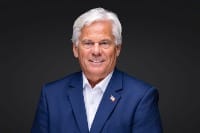
Phil: One more time. I've got my personal website, dr phil harrington.com. Dr. Phil Harrington, and then I, do you have notes in the show?
If you can add that link?
Diane: actually, I create a page on my site. Okay. And I'll have your handsome face on there and links to all your, all the social media and stuff that you provided me. Okay. And to your website.
Phil: Super. Alright. Yeah. Sounds good. Yeah. And, and yeah, I,I love to hear from people.
I love to give advice and, talk to people about using the treatments. But what is really rewarding is six or eight weeks later when I get a report back about how well they're doing, about how this improved and that improved, and
Diane: yeah,
Phil: and I'm able to play with my grandkids again and things of that nature.
That's what really makes my day.
Diane: That's why I had to have you on because I wanted people to know, Hey, this is out there. Don't be sitting around being uncomfortable and in pain, and don't be discouraged, Try it. What do you have to lose?
Phil: Yes.
Diane: yeah. thank you so much to my family caregivers out there.
You are the most important part of the caregiving equation. Without you, it all falls apart. So please learn to be gentle with yourself and practice self-care every day because you are worth it.
Caring for a loved one can be overwhelming — but you're not alone. If you have questions, big or small, our expert team is here to help.
👉 Click here to Ask the Expert
Our Resource section can help you find the information and tools that you need. We have courses, videos, checklists, guidebooks, cheat sheets, how-to guides and more.
You can get started by clicking on the link below. We know that taking care of a loved one is hard work, but with our help you can get the support that you need.
Click here to go to Resource Section now!