Becoming a Caregiver Too Young: How Early Caregiving Shapes Your Life and Identity with Whitney Rochelle - Episode 235
Becoming a caregiver at a young age can shape your identity, relationships, and future. Learn how to manage burnout, set boundaries, and find support.
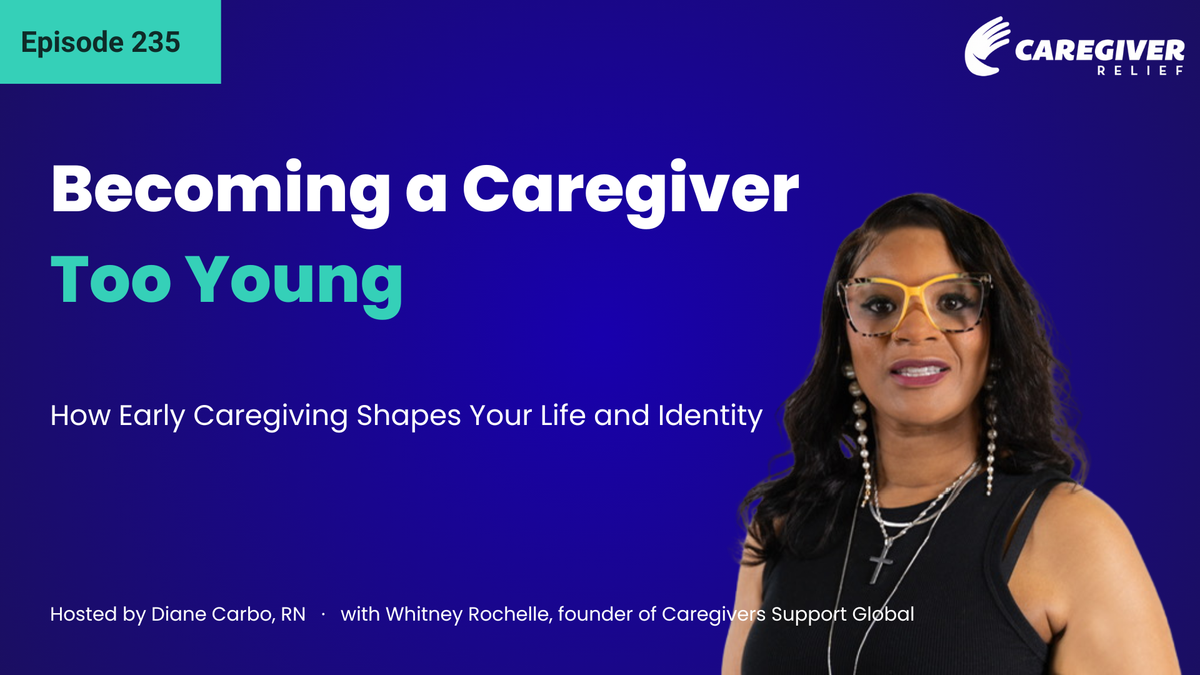
Host Diane Carbo, RN, sits down with Whitney Rochelle—a caregiver advocate, healthcare entrepreneur, author, and founder of Caregiver Support Global. Whitney shares her inspiring journey of stepping into a caregiving role at just 9 years old and how that early experience shaped her passion, purpose, and career.
Together, they dive deep into the unique challenges young caregivers face, how to maintain your identity, and the vital importance of setting boundaries and seeking respite. 💖
📌 Episode Outline & Key Takeaways
- 🎙️ Introduction to the Journey
- Welcome by host Diane Carbo, RN.
- Intro to guest Whitney Rochelle: caregiver advocate, author of The Honor of Family Caregiving, and founder of Caregiver Support Global.
- 🩸 Starting Caregiving as a Child
- Whitney’s early memories of taking her great-grandmother's blood sugar at age 9.
- Caring for her grandfather during his cancer journey as a teenager.
- Diane shares her own experience of stepping up as a caregiver at age 17 after her mother's lung cancer diagnosis.
- 🏠 Life as a Young Caregiver
- How early caregiving limits freedom and extracurricular activities while building strong family values.
- Unrecognized young caregivers in society today caring for ill parents or siblings.
- 💡 Shaping Identity & Finding Purpose
- Transitioning from informal caregiving to becoming a Certified Nursing Assistant (CNA) at age 16.
- Trading high-paying corporate roles for hands-on caregiving to stay true to her calling.
- Diane's story of continuing nursing school after losing her mother.
- 🛑 Setting Boundaries & Avoiding Losing Yourself
- The challenge of setting healthy boundaries when caregiving feels like an obligation or an honor.
- Reclaiming your identity, hobbies, and social life after caregiving.
- Why family caregiver contracts can help set expectations and prevent burnout.
- 🏢 Entrepreneurship & Community Support
- Whitney’s journey to co-founding a home care agency and launching Caregiver Support Global.
- Navigating non-profit support, 211 resource networks, and free respite programs like the Medicare GUIDE program.
- 🌊 Preparing for the "Silver Tsunami"
- The growing strain on the healthcare system, shortage of nurses, and increasing reliance on unpaid family caregivers.
- Recent shifts in Medicare reimbursements and acute care discharges.
- 🔥 Moving from Burnout to Purpose
- Advice on transitioning from overwhelm to passion-driven purpose.
- Practical tips: building a "caregiver relief group," delegating specific tasks, and prioritizing mental health.
- The shocking statistic: 63% of family caregivers pass away or get seriously ill before the person they care for—making self-care mandatory!
🔗 Connect with the Guest & Resources
- 🌐 Whitney Rochelle's Website: whitneyrochelle.com
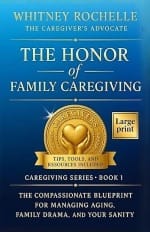
- 📖 Book: The Honor of Family Caregiving by Whitney Rochelle
💬 Loved this episode? Don't forget to like, share, and comment below! Your support helps us reach more caregivers who need hope and practical guidance. 🌟


Podcast Episode Transcript
Diane: Welcome to the Caregiver Relief Podcast. I'm your host, Diane Carbo, RN. If you've ever felt like caregiving forced you to grow up too fast, like your life took a different path than you expected, or like you've been carrying responsibility far too long, you are not alone.
Today's episode is a very special one because it's personal. Many caregivers don't start their journey later in life. They start young, sometimes as children, sometimes as young adults, long before they have the tools, support, or understanding to navigate it, and that experience doesn't just impact your present, it shapes your identity, your relationships, and your future joining me today is a very impressive young woman.
Her name is Whitney Rochelle. She's a caregiver advocate, a healthcare entrepreneur, author and founder of the Caregivers Support Global. Whitney brings more than 25 years of experience across home care behavioral health, crisis intervention, but just as important, she brings her own lived experience of caregiving at a very young age.
Today we're going to talk about the caregiving journey, what it means to start early, how it affects your life, and how to move from overwhelm to purpose without losing yourself along the way.
Diane: Whitney, thank you so much for joining us today. Can you share your personal caregiving story, and how old you were, and when this journey began?
Whitney: Sure. Thank you so much, Diane, for having me today. I was so excited about the opportunity. I love this topic. it's, it is very dear to me. My caregiving journey actually started as a, I would say, I started thinking about this, the other day. I said really it started as early as about nine years old.
I remember, taking my great-grandmother's blood sugar for the first time.
Diane: Wow.
Whitney: And what that was like and using the, the lan- putting the Lantus inside of, the needle inside, to take it and everything. And I just remember that whole experience, and I believe I was about 9 or 10. And from that point, I was fascinated about just doing that, that one thing.
But I was also a person, and I've always been a person that just loved to help. I loved to help, and I was, I loved seniors. Like I loved to be around the older people in the family. And so it just went from there to then, being a teenager caring for my grandfather.
He had, prostate cancer, and so the whole family, we went on a rotation. I remember being about 13 when that started, and we went on a rotation for about at least about three or four years, during his, during his decline. And so just all throughout my life, I feel like there's always been opportunities to care for someone, and in that, it sparked my, I would say my passion.
My passion to be that nurturer, my passion to be, to be that caregiver. It's what sparked me to go into healthcare at a young age.
Diane: I was 17 when, I'm the oldest of four, when my mom was diagnosed with lung cancer. And in those days, they did radiation therapy, for her. So I also became a caregiver, and I became a caregiver for my siblings as well.
I became the parent.
Whitney: Me too.
Diane: And my mom was so excited and so proud because I had been accepted to nursing school, and she was, was so proud. She had not been able to graduate from high school 'cause she was ill as a young girl and had a neurological problem that she was able to outgrow. But, I cared for my grandmother who, was at our house.
She had come home from recovering from, hip surgery, where she wore silky pajamas 'cause she was very vain. And she slipped out of bed and re-broke her hip, and we had to bring her home with a Spica cast. And for those that don't know what that is a regular heavy cast with a bar between your legs to keep them separated.
So I learned about bed pans, I learned about bed baths. I learned about a lot of things at a very young age as well, and I think that also sparked my interest in, I'm a caregiver. I've been a professional. I became a professional caregiver, but I was a, family caregiver at first. So I want to talk to you about what does caregiving at a young age feel like, especially, when you don't have the life experience, to process it?
Whitney: So for me, I can say that it does, and it can feel very limitating at times just because while everyone else may be, involved in extracurricular activities at school, your extracurricular activity is, hey, you come home, you get off the bus, you make dinner, you make beds. You make sure everyone's okay.
And so it does take away just a little bit of freedom. I was fortunate enough that my parents, usually they always made sure that we had our time, and they always wanted us to still be children. They always made sure that they initiated, "Look, you're just helping out. We're the parents, but we need your help here.
But we're the parents." So they never wanted us to, just grow up fast even though we were helping to perform caretaking duties. They framed it to look as such this is what family does. Family takes care of family.
Diane: Yeah.
Whitney: And and that's how I grew up, is family takes care of family, and I still believe that and still live like that, to this day.
Diane: Yes. Whitney, and I know you're aware of this, there are thousands of children in this country right now that are taking care of a parent that is maybe a drug addict, an alcoholic, or, the parents are divorced and, or a parent left, or they're taking care of a disabled sibling.
And those poor children go unrecognized and unnoticed, but it is life altering for them too. So you're very right about. I know for me, I had been accepted in nursing school, in my senior year when my mom was really sick, I actually skipped out of school every day at noon and walked five miles home to help her with the laundry and the folding the clothes and ironing.
They still ironed back then. And, and helping get supper ready for my siblings. Yeah. So I know it, it doesn't... I wasn't angry about it. I wasn't upset. It was just something I had to do because like you, I grew up with that sense of it's family, you have to take care of your family.
Whitney: Yes.
Diane: We're losing that in, in our today's society so much, and it's very sad. But, so how did caregiving shape your identity growing up, and did it change your life path?
Whitney: So it did shape my identity. Actually, that's how, that's what, that's how I found my purpose. I feel like I found my true purpose, and even when I go back to that, at the age of 16 in high school, I became a nursing assistant, certified nursing assistant.
Diane: God bless you, girl.
Whitney: So 16, our high school offered the program and that's where it all started, you know, on another level where I realized, okay, this can be a job that you actually get paid for, on another level of taking care of multiple people at one time. And all the different opportunities.
And so even through college, on to adulthood, I still always worked on and off as a nursing, a nursing assistant.
Diane: Oh.
Whitney: And so I feel like being a young caregiver because I, no matter what career I did, I still kept coming back to caregiving because I just felt like that's who I am. It was a natural thing for me.
I didn't have to think. It wasn't like being in the corporate world where I'm stressed out and my blood pressure's high every day.
Diane: Yeah.
Whitney: Working on projects. Whenever I'm in my caregiving mode and I'm out, you know, helping families- I just feel the most peace, I feel the most fulfilling.
I say all the time I feel like I traded time for money at, at, at some point. Money for time, because I gave up a lot of high-paying positions to do nursing assistant before I partnered to open the agency. And I just felt like I said, "Geez." I was like, "I'm doing all this, but I don't, I'm not happy."
So I wasn't happy truly doing all the things that, I had all this education for. I was more happy just being with families, just being bedside, getting my hands dirty. I didn't mind that. And, so for me, I feel like the, the start young paid, played a huge role in my identity. And, even like what you said, the family values, how it was framed for us is you're taking care of your family. This is your job.
Diane: Yes.
Whitney: So even with it
Diane: Yes
Whitney: being like that, I didn't feel taxed, That
Diane: Yes, exactly.
Whitney: Yeah, I didn't feel taxed.
Diane: It was expected of me, and I didn't feel that's one thing about that we lack is a sense of community, and, studies show that people that grow up with a community, like the multiple, generational family, which I did, they, it's not, they're, it's not a burden.
The family and the whole, as a unit does not see taking care of another family member as a burden. That's right. and that's what's everybody around, us now, I don't want to be a burden to my family. And I'm thinking well, what the hell?
I've taken care of people my whole life.
Whitney: Yeah.
Diane: But that's the way it is. I have, and I know you see it, 'cause you have an agency. You see it where they have, the families don't want to get involved or support the primary caregiver, or even a spousal caregiver. And it's really sad.
Whitney: It is. And they, you know, it's so much, I don't think people really realize the responsibility until they get in it, because I also see a lot of family caregivers that they're in it and, some of them, a lot of them are in it not by choice, but
Diane: Yes
Whitney: but there was no other choice. And
Diane: this is what I feel like the reluctant caregiver, yes.
Whitney: Yes. Yes. Yeah. Like I have to do this.
Diane: Yeah.
Whitney: And you just have to suck it up. And so that makes it really hard when it's not-
Diane: Oh, absolutely
Whitney: Something that's... Yeah, it's hard for the patient that's getting the care, and it's hard on the caregiver when it's
Diane: Yes. Yes
Whitney: you can just tell- When someone's passionate about something, how they show up in the room just you know
Diane: Yeah
Whitney: it makes all the difference.
Diane: It does. It absolutely does. Now, you were very, you were supported by your parents, which was lovely. You were very blessed, because a lot of, young caregivers, they're forced into the role because the parent in the family either, the, who should be the caregiver has abandoned the family or is, in my case, my dad just was a workaholic.
And it was expected of me to take care of the, my siblings. And my sister was 11, and, well, she was 11 when my mom died. But, so and so I know that, I learned a lot of stuff, and I can remember, my mom had a thoracotomy, which is an incision in your top of your chest, into...
And it was about four inches long, and they would every once in a while, my mom, it would her pleural cavity, her lung cavity would fill up with fluid, and gallons of fluids would come out, and I never... I have to tell you, it was clear and sometimes red. That meant blood. I didn't know any of this at the time.
But, I personally was terrified. I didn't know what to do. you know, and you're... I tried even then just to be calm and try to help and support my mom in any way I could. And it, so my mom died unexpectedly. I know that sounds silly since she had cancer, but she was just told she had beat cancer.
The cancer from her lungs was gone, and on her way home, on her way to tell me out of... She just left the doctor's office, the oncologist office, on the elevator on the way down to the nursing school across the street where I was, she threw a pulmonary embolism and died that night.
And I had a choice that, everybody thought that I should quit nursing, and I had only been there a few months.
I just started. And quit nursing and help my dad raise my brothers and sisters. And I just, I wanted to make my mom proud, and I was... I moved back home. I didn't stay at the dorm. I didn't go to frat parties. I didn't do any of that stuff. In fact, I got up very early in the morning to get a corner lot, spot to, in the city traffic in the city parking to get a corner spot to park my car so 'cause I couldn't, parallel park. But you know what? It, I became a nurse, and I also managed my siblings, and, that was also challenging. But, you know, your whole family dynamics change.
Whitney: Yes.
Diane: Now one of the things caregivers have a hard time doing is setting boundaries, especially when they're always the responsible one.
I had that issue. I've had that problem. I'm also an adult child of an alcoholic, so I had to learn a lot of things as I was growing up, and you grow up very fast.
How, were you able to set boundaries? Were you able to do that?
Whitney: Well, I am, I must say, I'm almost 40 years old and I'm just learning what boundaries mean to a certain extent.
I think being a young caregiver, you don't really realize, boundaries because there's a expectation that you just produce. and I think even for me, I've... listening to you talk about your siblings, I was the same way. I'm the oldest of three. And they always like, Whit was our second mom,
Diane: Yeah.
Whitney: Even down to my brother who passed away in '22, I was his caregiver, for a large part of his, pretty much throughout his whole, sickness. And it was really hard to set boundaries because, my time with him was also family time. So, you know, I wanted to soak up every moment of that.
Wanted to savor, just being, I took pride in actually being the caregiver for him. I took pride in being there, at every doctor's appointment and things like that, I mean, I was honored to do all of these things. And sometimes when you're honored to do or to, to execute, you don't really think about boundaries.
You just wanna be there, and you just wanna be a part. And when you're passionate about caregiving, it's very, kind of have to remind yourself to set healthy boundaries. make sure not to forget yourself. have your self-care. Still do, you don't lose your identity in being a caregiver.
You still can have goals. You still can do certain things. and I did just the opposite, to be honest. There was a while where even after he passed away, I felt like I was trying to find myself again, 'cause I was used to the life of caregiving. I was used to the life of doctor's appointments. I was used to, being on MyChart all day, checking in and out with doctors.
Diane: Yeah.
Whitney: You know, it was a lifestyle. So I had to find, okay, what is it now that you can do for recreation? what do, you gotta find something that you like. You gotta find you some hobbies, Find your tribe, 'cause my tribe was, the physicians, the-
Diane: Yes
Whitney: the other people that-
Diane: I understand
Whitney: Yeah, the nurses. Yeah The nurse practitioners. That was my tribe, is communicating with them, seeing what they were doing today, what do they have to say about the blood work, I would religiously check his blood work every time he went to the doctor, I couldn't hardly wait for it to come in MyChart, because I was being the Google doctor at that point, I was being the Google doctor. I need to look this up. Let me see. Okay, this is not normal. because you're also an advocate.
Diane: Yeah.
Whitney: And so when you're an advocate, even if the person can speak for themselves, that doesn't mean that you don't have to be an advocate. Sometimes you are that extra set of eyes in the room.
Diane: Yes.
Whitney: You are the extra set of ears. Just because they can make their own food doesn't mean that you shouldn't make sure that they have food.
Diane: Yeah.
Whitney: It's just, they're just, there's a lot that comes along with it, and boundaries truly has to be something that is learned and practiced.
Diane: Yes.
Whitney: Because otherwise you will not just naturally think that I need to set boundaries. Normally the boundaries come after you realize that there have been no boundaries.
Diane: Yeah.
Whitney: And sometimes it's hard to put them in place at that time.
Diane: Yeah. I encourage my listeners that are caregivers to, get a, invest in exploring a, family caregiver contract.
And the reason why I do that is because we have so much, we have no one to take care of our elderly, and it's always the one as you know, there's one person that does all the care, and the, there's uninvolved siblings or, extended family members who are judgmental and can be dismissive and, let you know that you're not doing enough or whatever, just to keep you in your place.
And I think with a family caregiver contract, you sit down and you say, you look at this as a job.
Whitney: Yes.
Diane: And I know that people find that offensive, but caregiving, people don't understand that caregiving can last as long as, five years on the average, and it is some people take as long as 20 years.
And you need to have a life. You need to be able to see your doctors and outside relationships. Like you said, you got when you were finished with your brother, you're like, "Who am I?" And you know, outside relationships are like a garden.
Diane: Yeah.
Whitney: You have to give them sunshine and water, and outside relationships wither up and die if you don't feed them.
And that's really hard for people 'cause the, the typical family caregiver takes time and says, "Whoa, I have no friends. I have no idea where I'm going." Many of them are financially, challenged because they've been doing it for so long, and they quit their jobs. Many have, taken have family caregivers have, become homeless because they were living in the home of the person they are caring for, and when that person dies, the other family members are saying, "You're out."
Whitney: Yes.
Diane: It happens all the time. It's so sad. And, we're gonna sell the house. And, they make reasons not to help financially support that family caregiver. That's why a part of the family caregiving contract is also getting paid for what you do.
Whitney: Yeah.
Diane: And do the avenues. But you're very impressive.
You did things with your caregiving, and, when did you decide you were going to g- you were going to school for all these things? When did you decide to open a home care agency?
Whitney: So the home care agency is something that I had always wanted to do kind of off and on. It was kind of one of those fallen dreams for a while.
It was just a goal, but, didn't really take the active steps. And I didn't want to do it alone. I wanted to have a good partnership,
Diane: Yes.
Whitney: Yeah. With it. And the opportunity came. Two years ago, I attended a healthcare conference, in Texas, and I just so happened to be sitting beside this wonderful nurse, and we hardly said two words, but at the end of the conference, I said, "Will you be my business partner?"
It was just like that.
Diane: Oh, my Lord.
Whitney: And literally from that day on, we found out that we only live like an hour away from each other.
Diane: Wow.
Whitney: And we met in Texas. So we met in a, a whole 'nother state and found out we only live an hour away from each other. Wow. And from that day on, we set out to start, and then we opened.
And so she had kind of the same passion as well, to do that. And it, I didn't want to do, anything like the franchise, anything too big
Diane: Yeah
Whitney: starting out. I wanted to still have the family feel, because I know the difference of, I've worked for a lot of those places, and I know there's a difference when you deal with certain people that are passionate about, who's coming in your home. They know the
Diane: Yeah
Whitney: they know the role. They know what has to happen versus
Diane: Yeah
Whitney: someone on the other side of that. So
Diane: Yeah
Whitney: for me, it was bigger than the invest it was bigger than just a, a financial or monetary investment.
It was more so of the heart of caregiving, and I really wanted us to be a pillar community, one of the pillars in the community.
Diane: Yes.
Whitney: I really wanted us to, we do a lot of educational things. Even down to what prompted me to start the Caregiver Support Global, which is something totally different, which is a nonprofit, was just what we were talking about, is that families They need a tribe.
They need a support. They need to know that there are other people in this, other people in this dynamic besides just themselves. They need to know that there are other family caregivers. and it's easier to sometimes talk to people who are going through or experience what you're going through versus someone who's just living life and not been affected yet by being a caregiver.
And I say yet, because I feel like at some point either you will need one or you will be one. And Yeah,
Diane: absolutely that's,
Whitney: yeah.
Diane: That's what Rosalynn Carter said, there's four type of people in the world. There are people that are caregivers, people that need caregivers, care people that will, require, having to have a caregiver, and oh, I can't remember the fourth one.
But anyway, we're all gonna need one, we're all gonna be one in some way or another. And, now, you, your home care agency, one of the things I'm seeing in home care is are you, a skilled, do you do skilled care or are you, the, on the unskilled side of things?
Whitney: We offer both.
Diane: Okay. Yes. Okay. Okay. I'm learning that, in fact I'm, I just did a, a several podcasts on Medicare has taken away the nurse visit. they're not reimbursing the nurse for the visit. And, for the skilled set, and I'm seeing this all over the country right now, and,I 'm really feeling.
Like I worked for a VNA, Visiting Nurses Association, and we were always the ones to go out and open the cases and just determine things, and you educate the families. That's not happening right now. the nurses aren't going out. The PTs, the physical therapists, are opening cases, and the patients are not getting the education, on, or the families aren't getting medication education.
They're not getting wound care help. they're missing a lot. How do you guys handle that?
Whitney: So we do, for us, we, I do know some of what you're speaking about. For our state, it hasn't quite been that's not in effect yet.
Diane: Okay.
Whitney: Yeah, so some states are being affected by that, but as of right now we have not been.
Now when it does happen, if it does happen to us, then I know that we will have to pivot just a bit on how we, how we onboard and assess the patients.
Diane: And it's hard.
Whitney: Yeah. It's very tough. And I think that
Diane: Yeah
Whitney: it's gonna be a challenge only because, I think it's very important that a nurse has a visit, has that first visit to any patient's home.
It's just- 100%. And you could be a physical therapist, you could be occupational, but it's not the same as having a nurse go out to do a full assessment
Diane: Yeah
Whitney: on a client.
Diane: We see things differently.
Whitney: Yes. Yes.
Diane: I've done rehab nursing, orthopedic nursing, behavioral health.
I've done a lot of different nursing. Home care. I've even worked on the insurance side of things, and, I see things so differently. I've worked, because my website here, I worked with aging in place specialists, so the CAPS, the Certified Aging. So I look at a home and I know, oh, you could use bars.
This needs to be fixed, because most homes are made for a young body and not an aging body. Things are too high.
Whitney: Yes
Diane: Handles, you can't turn them. You need different kind of handles and stuff. So I see things differently, and I really, what I'm seeing right now is unsafe discharges to home than we've ever seen before.
And that's scaring me, because I don't know where we're going to go in this, situation. But when did you decide... So you just, you're, what did you do... I'm just impressed at the global, support, thing, group that you have. Talk about that, because I'm impressed by that. first you have a home care agency, then you're having this and you've been a young caregiver, a CNA.
That is astonishing to me that you've done so much, and you do it with a smile.
Whitney: Oh. Yes.
Diane: Talk about your global support group.
Whitney: Yeah. So Caregiver Support Global became, it came about l just from me one day I literally kept saying, I know there has to be other family caregivers in this world who has a story" "that they want to talk about, or that they're looking for people that they can connect with."
Diane: And so it
Whitney: Yeah ... started as just a Facebook group. And I didn't really do a lot of advertising. I would post it, and people started joining. And I looked up at like about month eight, I think we had over 20,000 people in the group at like month eight. And I said, "Okay" Wonderful
"this is a big, this is a big thing." And we've grown even more since then. But, so with that, we moved from just having only the Facebook group to now we do, Zoom meetings just like this twice a month. We have a facilitator that does it. And each month or each meeting has different topics.
'cause a lot of people who are in the group, sometimes they may experience loss while they're a part of the group.
Diane: Yeah.
Whitney: So we even, we do a lot with the grief piece. And then we do something, where we're talking about there's just various topics, things that are posted a lot in the group.
Issues that post a lot are the issues that we try to address. So if people are constantly talking about some of the same topics, we try to
Diane: Yeah
Whitney: do that topic. along with that, we have a board of directors that govern the organization, a part of the board, we have state representatives for each state.
So we've been steadily adding people
Diane: Oh, you're so smart. Yeah.
Whitney: From every state that represent that state, and they go out in the community, and they take, you know, brochures about our organization brochures about the things that we offer, you know, and they just give away free resources because
Diane: Yes
Whitney: one of our big things that we hone in on, that we are honing in r- on right now is respite care, how to, what is respite care, how to find respite care. Yeah. And we're providing all the, we're kind of like that bridge providing all the third party, people to help give, if people need help with
Diane: Yes
Whitney: paying for respite. You know, how to get-
Diane: Yes
Whitney: free respite. we're a part of the, I'm connected with the guide program through Medicare for Alzheimer's and dementia that offer free respite hours. So things like that, we've been bringing all these resources together. We're also on 211, so if people call into 211 and they're looking for something, we are a listed resource in a lot of areas.
So
Diane: Explain 211 to my listeners.
Whitney: Yeah, so 211 is just like the, how can I say? It's the helpline, the information line. Got it. So if you're looking for, like rent assistance, food assistance, shelter, support groups local to you, then two, if you dial 211, then that will, they will give you listings of these places in your area, or you can also go to 211.org, I believe it is.
Diane: Yeah.
Whitney: And you can find, resources there as well. But Yeah, so it's just a need for caregivers to have support for all ages, the children caregiver, the adult caregivers, the spouses caring for
Diane: Yeah
Whitney: other spouses. the children in the sandwich generation that's taking care of their children plus mom and dad.
Diane: Yep.
Whitney: There's just a big need for support. A lot of questions, because sometimes you don't know what you need until you actually need it.
Diane: Yep.
Whitney: And it's still not too late. I tell people all the time, "Okay, just because you just found out, it's not too late," because there are lots of resources to
Diane: Yeah
Whitney: to get you what you need.
Diane: And one of the things, we're dealing with right now is we have a silver tsunami here, and it's coming even more. in the next four years we're going to double the amount of, caregivers in the country right now, and the, seniors are going to double.
The oldest of the boomers are going to be turning 80 which means there's got to be a lot of dementia and a lot of needs and then we have the youngest of the boomers that are going to be turning 65. A third of the nursing workforce will be retiring if they choose to, because they'll be old enough.
So we're going to need nurses.
Whitney: Yeah.
Diane: And, the other thing that we're going to experience is we have more seniors than youth ... that we never experienced this before. Low birth rates have caused every generation after the boomers, they have not replaced themselves in numbers.
So we're all... What we deal with as boomers with, we have solo agers and we have, childless couples. Who's going to provide care for them? And the family caregiver, the, when you're talking about respite care and stuff, the family caregiver is the single largest pillar of the long-term care industry.
They actually provide $1.1 trillion in unpaid care.
Whitney: Yeah. Yeah.
Diane: Yeah, and that's a year. That's a year. And, it's, I'm also seeing Medicare has moved to a cost-sharing platform, and, one of the things we're seeing, one of the thing, reasons why we're also going to see unsafe discharges to home is because, Medicare has changed the reimbursement rate for therapies, OT, PT, speech, in an acute care or skilled care setting.
And what's happened is some Medicare Advantage programs are charging 200 to $400 a day. Who can afford that?
Whitney: Can afford it.
Diane: And it's very, it's very, scary out there. And, they've also cut home care benefits, which is they're cutting the amount of they're rationing the amount of visits you can have.
And in other states we are seeing the, nurses, and not being not going out to the home because they're not getting reimbursed from it from, Medicare. So it's just very strange. And what I think one of the things that I, We were young caregivers. And we were, we are like, pioneers, so to speak in many things. and we know what good care, quality care is.
Whitney: Yes.
Diane: And, we also have a situation where, we have our caregivers, many of the adult children don't want to take care of their parent.
Whitney: Yeah. Yeah.
Diane: And, we don't have anybody to take care of them. In fact, the low reimbursement rates for therapies, has skilled care is nursing homes closing.
With skilled care units, they're closing. When we need more than ever before. And we also are seeing, community hospitals closing because the reimbursement rate's so low, and the nurses want more, a larger salary and, but they're expected to do more. I learned that we don't have a nursing shortage, we just have a nursing shortage of those who will not work in unsafe settings.
I just, I love that you're able to, you took what you did at a young age and you've made it into something that is continuing to help others. Your caregiving obviously shaped your identity and your life direction, and I'm impressed because you just didn't do you know, something small.
I mean, you went all out. And I get a kick out of that. So how do you, encourage caregivers to move from burnout to purpose without losing themselves? Do you have any tips on that?
Whitney: I think I would say, first of all, for every caregiver, I think what we were, like we discussed previously, every caregiver, it may not be their purpose.
It may just be
Diane: Yeah
Whitney: their job at the time.
Diane: Yeah.
Whitney: And so I encourage caregivers to truly still find your purpose. Just because you're in a caregiving position for family members or however, for friends, and you know that this is not truly what you want to do or who you really are, but you're doing it out of love, an act of love or an act
Diane: Yeah
Whitney: of, commitment or loyalty to friendship or loyalty to family
Diane: Yeah
Whitney: still find your purpose and your passion. The things that you are passionate about usually become your purpose in this life.
Diane: Yeah.
Whitney: And I think that, I definitely would not stop at, I just could not stop at only being a caregiver because I saw that there was a need for so many other dynamics associated with caregiving,
Diane: Yeah.
Whitney: They need support, all different types of support. Not just hands-on. Yeah. But there is financial pieces. There is
Diane: Yeah
Whitney: caregivers need breaks, so there's opportunity there to educate on how to give breaks, connect with those that can provide breaks. Mental health, it sparked
Diane: Yeah
Whitney: my love for mental health.
and I see how much caregivers, we, they need access to telehealth resources, you know?
Diane: Yes. Yes.
Whitney: And more therapy, more counseling. They need to have that safe space, not just for caregivers, but even I saw just the impact that it has on people who are, on patients or the elderly who are at home and cannot get to the doctor.
I see so much
Diane: Yeah
Whitney: depression, so much
Diane: Yeah
Whitney: anxiety, still living on the edge. And there is such a need for mental health, resources. Mental health is very important, and so that's what sparked me on my other, avenue that I'm on right now. But I would say, back to your original question, is to pursue your passion.
Your passion usually will lead you to your purpose.
Diane: Yeah.
Whitney: And don't feel like just because you're in a caregiving situation that all ends there, 'cause it does not.
Diane: Yeah.
Whitney: You can still set goals for yourself.
Diane: Yeah. I encourage my listeners who that are a primary caregiver to create a, a caregiver relief group, support group, where they have a team of people that can provide them with practical assistance.
Have somebody, you know, help with the dog. Ask people to bring a meal a coup- once or twice a week. Have them come sit with your loved one so you can go to the doctor's or go to the gym. There are, and if you have uninvolved family members and siblings that are judgmenting, judge- being judgmental and, trying to tear you down, they should financially contribute to helping you get that respite care, because respite care is needed. And if you can have something on a, breaks on a regular basis. So when you are looking to get that, pursue your passion, whatever it is, you should be able to, while you're caregiving, have people around you. I don't want them to do hands on care.
That is that you can have your, extended family members and siblings help pay for that if you, that you can't, because you're providing a service that is, I don't know if you're, I know you're, you must be aware of this, 63% of family caregivers become seriously ill or pass before
Whitney: Yeah
Diane: the person they're caring for. The chronic stress of caregiving can kill you. Yes. In fact, the stress of caregiving is so high that you feel the repercussions of your caregiving, for up to six years after your journey ends.
Whitney: So true. So true because
Diane: Yes
Whitney: a lot of times you're not going to the doctor for yourself.
You're not going to get your regular blood work or get your regular
Diane: Yeah
Whitney: just even a dentist appointment, I talk to so many people, just with the small things.
Diane: Yeah.
Whitney: You're not even thinking about yourself the way you should because you have put your duties
Diane: Yes
Whitney: in front of, you know
Diane: Yeah
Whitney: your, that responsibility and that person's wellbeing, because a lot of times people we care for, they totally depend on us for
Diane: Yeah
Whitney: in one aspect or another.
Diane: Yes.
Whitney: And that total dependence, it's very easy to allow that to take you away from taking care of yourself. But I always stress to
Diane: Yeah
Whitney: people it is very important to take care of yourself. If you still want to be able to produce
Diane: Yeah
Whitney: the way you're producing and you want to be around even after, this caregiving journey ends, you have to care for yourself.
Diane: Yeah.
Whitney: It's mandatory.
Diane: And many caregivers, because they become, angry because they're giving up, they're not taking care of themselves. They're not, they're, they give up so much, and they become angry, and that anger turns to rage, and they hold it back, and they're mad at the world, and they just...
And many of them feel relief when their loved one dies. That is normal because you've given so much. But it doesn't have to be that way. That's your choice as a caregiver. Ask for help. And I know many of you are going to say, "But they'll say no." Well, be specific about what you ask for.
Whitney: Yeah. That's right.
Diane: Yeah. That's right. and don't ask anything that they're not able to give. you'll know this person. And you know, that's the hard thing is people do want to help. And with our present situation, we have got to create a sense of volunteerism and support for the community.
We have to come together as community now and get away from this I'm all by myself, I don't
Whitney: Yes
Diane: need anybody else. I just have to think about me. We've got to get away from that and get back to family and community because that way we're not perceived as a burden. Everybody shares in the responsibility of the care, and that's what I feel that we need.
Whitney: Yes, and the community, when I say that there are people that are willing to volunteer, that would like to help.
Diane: Yeah.
Whitney: But sometimes I think when you're a primary caregiver, 'cause I got into this mode for a long time, it's just like, you know, you feel like you're wearing a badge of honor by doing everything, and you don't want to relinquish that control of
Diane: Yeah
Whitney: "I got it, I got it, I got it. I'm used to it. I got it." But it's really, I mean, it's imperative that you take advantage of people who offer. I don't care if they're offering just to bring a meal over.
Diane: Yeah.
Whitney: Okay, that's one meal you don't have to cook, one meal you don't have to go out for.
Diane: Yes. Ask them to help with laundry. there's so many things. I think that I learned to ask for help only because I was put in a situation. my mom dies, I have my siblings to take care of, and I have trying to go to nursing school. And that was challenging, 'cause it was two and a half years straight through.
You worked three days a week in the hospital on the rotation that you were in, whether it was med surg or psych or pediatrics, for eight-week rotations. So you learned how to do hands-on care. and I was a young woman. 17. I graduated from nursing school when I was 20. I learned to...
I had to delegate. I was gonna, I was gonna drown.
Whitney: Yeah.
Diane: And I wanted to be a nurse. I wanted to make my mom proud. And so you know, my siblings still tell me I'm the know it all, bossy sister. So that does come from being a child caregiver at an early age. But, Whitney, how do people find you?
You're so amazing. I want them to be able to find your group, learn about your, what you do.
Whitney: Sure. They could always just go to my website, whitneyrochelle.com, and there, there are links where they can join the social groups, they can join, the Caregiver Support Global, take a look at what we offer there.
There, there is a link for, the home care, all of those things. So everything, a link for my book if they're interested in that. everything is on that one
Diane: What's the title of your book?
Whitney: The Honor of Family Caregiving.
Diane: Oh, that's a beautiful title.
Whitney: Yes.
Yes. Thank you.
Diane: Oh. thank you. Whitney Rochelle, you're amazing.
And I'm so impressed. In fact, I thought you were in your 20s, that's how that's how young you look.
Whitney: Thank you.
Diane: I'm being, thank God. So I appreciate you, and I appreciate what you're doing for the caregivers, because I'm 73, I do this to you know, to help. I have a need, at my age, still to take care of others, and it's to provide resources and information, and I love to be able to share, information about people like you so that it, those out there listening can reach out and find you, because we all offer something different.
And we are, the silver tsunami is here. It's going to get worse. I don't know how we're going to get through this, this time in our history, with what's going on. But, I think that people like you who are pillars in your community is really important. So thank you.
Whitney: Thank you
Diane: Thank you so much.
To my family caregivers out there, you are the most important part of the caregiving equation. Without you, it all falls apart. So please learn to be gentle with yourself. Practice self-care every day, because you are worth it.
Caring for a loved one can be overwhelming — but you're not alone. If you have questions, big or small, our expert team is here to help.
👉 Click here to Ask the Expert
Our Resource section can help you find the information and tools that you need. We have courses, videos, checklists, guidebooks, cheat sheets, how-to guides and more.
You can get started by clicking on the link below. We know that taking care of a loved one is hard work, but with our help you can get the support that you need.
Click here to go to Resource Section now!