Unsafe Hospital Discharge: How to Get the Right Medical Equipment and Avoid Costly Mistakes at Home
oo many caregivers are sent home unprepared after a hospital discharge—without the right medical equipment or guidance. This guide explains how to avoid costly mistakes, prevent readmissions, and protect your loved one at home.

When You’re Sent Home Unprepared
Unsafe hospital discharge is happening every day—and family caregivers are paying the price.
You’re handed a stack of papers, rushed through instructions, and suddenly responsible for complex care at home. But what’s often missing is just as important as what you’re told:
The right medical equipment.
Without it, even the most devoted caregiver is set up to struggle.
Patients fall. Medications are mismanaged. Mobility declines. And too often, families end up right back in the hospital—exhausted, overwhelmed, and questioning what went wrong.
You are not the problem.
The system is failing to prepare you.
Why Medical Equipment Is Often Missing—or Wrong
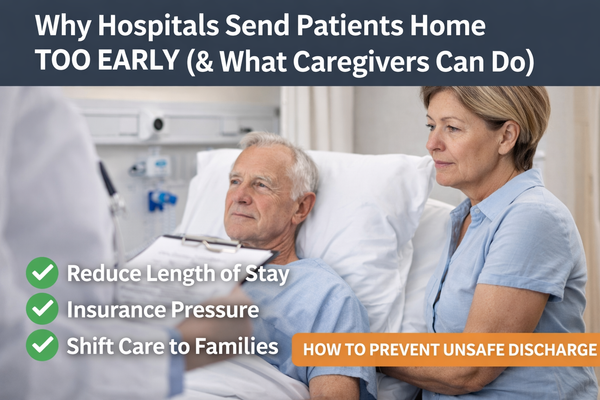
Hospital discharge teams are under pressure. Beds are needed. Length of stay is monitored. And increasingly, patients are sent home sooner than they should be.
That means critical decisions about care—and equipment—are rushed or overlooked.
Here’s what we’re seeing:
- Equipment is not ordered at all
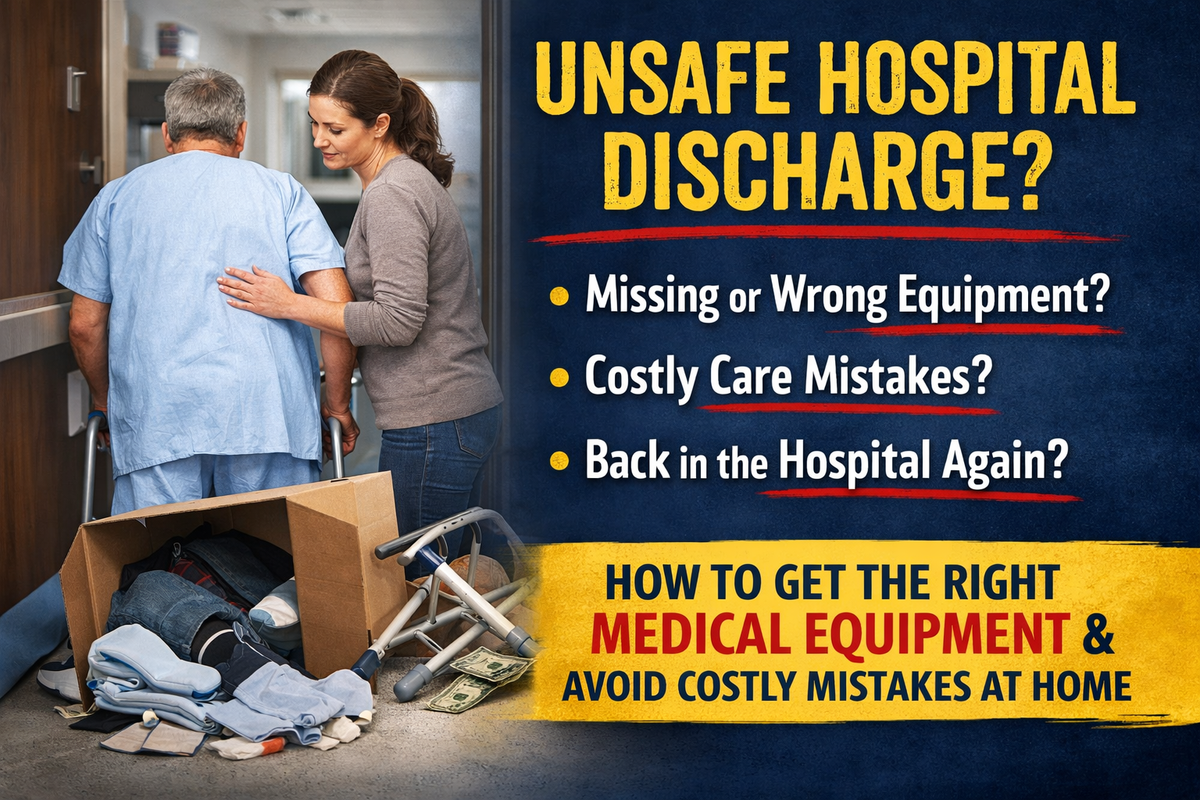
- Equipment is ordered incorrectly (wrong size, wrong function)
- Families are given little or no instruction on how to use it
- Caregivers are expected to figure it out on their own
This is how unsafe discharge turns into unsafe care at home.
👉 You may also need to understand your rights:
Medicare Discharge Appeal: How to Stop an Unsafe Hospital Discharge
The Most Common (and Costly) Equipment Mistakes
When caregivers don’t get guidance, they do what anyone would do—they try to solve the problem themselves.
But without the right information, this can lead to expensive and dangerous mistakes.
❌ Buying the Wrong Equipment Online
Many caregivers turn to online marketplaces for quick solutions. But without proper assessment:
- A walker may be the wrong height
- A wheelchair may not fit the home
- A commode may not meet safety needs
❌ Overpaying or Being Sold Unnecessary Items
Some families are pressured into purchasing equipment they don’t need—or paying far more than they should.
❌ Missing Critical Safety Equipment
Items like hospital beds, transfer aids, or pressure-relief mattresses may never be ordered—putting both patient and caregiver at risk.
The Hidden Cost: Readmissions and Caregiver Burnout
When the wrong equipment is used—or missing altogether—the consequences are serious:
- Increased risk of falls and injury
- Poor recovery or decline in condition
- Medication and mobility challenges
- Hospital readmissions that could have been prevented
But there’s another cost we don’t talk about enough:
The caregiver’s health.
Physical strain, emotional stress, and financial pressure build quickly when you’re trying to manage care without the right tools.
Why Caregivers Are Left to Figure It Out
There is a growing gap in healthcare:
- Discharge happens quickly
- Education is limited
- Follow-up is inconsistent
- Support is fragmented
Caregivers are expected to coordinate care, source equipment, and make critical decisions—often with little to no guidance.
This is why so many families feel:
- Overwhelmed
- Confused
- Alone
A Better Way: Get the Right Equipment Before There’s a Crisis
The key to avoiding costly mistakes is simple—but not always easy:
You need guidance before you act.
Before purchasing or accepting equipment, ask:
- What does my loved one actually need based on their condition?
- Will this equipment fit safely in the home?
- Has someone shown me how to use it correctly?
- Is this covered by insurance—or am I paying unnecessarily?
How Expert Guidance Can Change Everything
This is where working with a specialist—like Tara Slaughter—can make a critical difference.
With decades of experience in durable medical equipment, billing, and care transitions, Tara has seen firsthand how families are left unprepared—and how the right guidance can prevent costly mistakes.
Her work focuses on helping caregivers:
- Understand what equipment is truly needed
- Avoid unnecessary purchases
- Navigate insurance and billing issues
- Make safe, informed decisions at home
Have questions about medical equipment - Ask the Experts
Coming Soon: A Smarter Way to Navigate Medical Equipment
In an upcoming episode of Caregiver Relief, we’ll be speaking with Tara Slaughter about what she’s seeing in the field—and how new tools are helping caregivers make better decisions.
We’ll discuss:
- Unsafe discharge trends
- Equipment mistakes that lead to readmissions
- Financial risks families don’t see coming
- How her new app is helping caregivers get it right the first time
👉 Podcast coming soon—stay tuned.
This Page Is One Pillar of the Caregiver Balance Guide
This article is part of the Caregiver Balance Guide—a structured framework designed to protect caregivers from burnout, confusion, and financial strain.
Explore the other pillars:
- Caregiver Boundaries & Support Plan
- Family Caregiver Agreement
- Caregiver Relief Team (build support before burnout)
- Caregiver Guidance & Support (education and coaching)
- My Vital Vault – Emergency Peace of Mind (organize critical information before a crisis)
You Don’t Have to Do This Alone
If you’re facing a hospital discharge—or struggling to manage care at home—you deserve better than guesswork.
You deserve clear guidance, the right tools, and the confidence to make informed decisions.
Because caregiving should not cost you your health.
You don’t have to do this alone.
Related Guides for Caregivers Facing Unsafe Discharge
If you are dealing with a hospital discharge right now, these step-by-step guides will help you take action: