What Is a Reasonable Rate for a Family Caregiver?
What should you pay a family caregiver? Learn how to set a fair rate, avoid family conflict, and protect your finances with clear caregiver agreements.

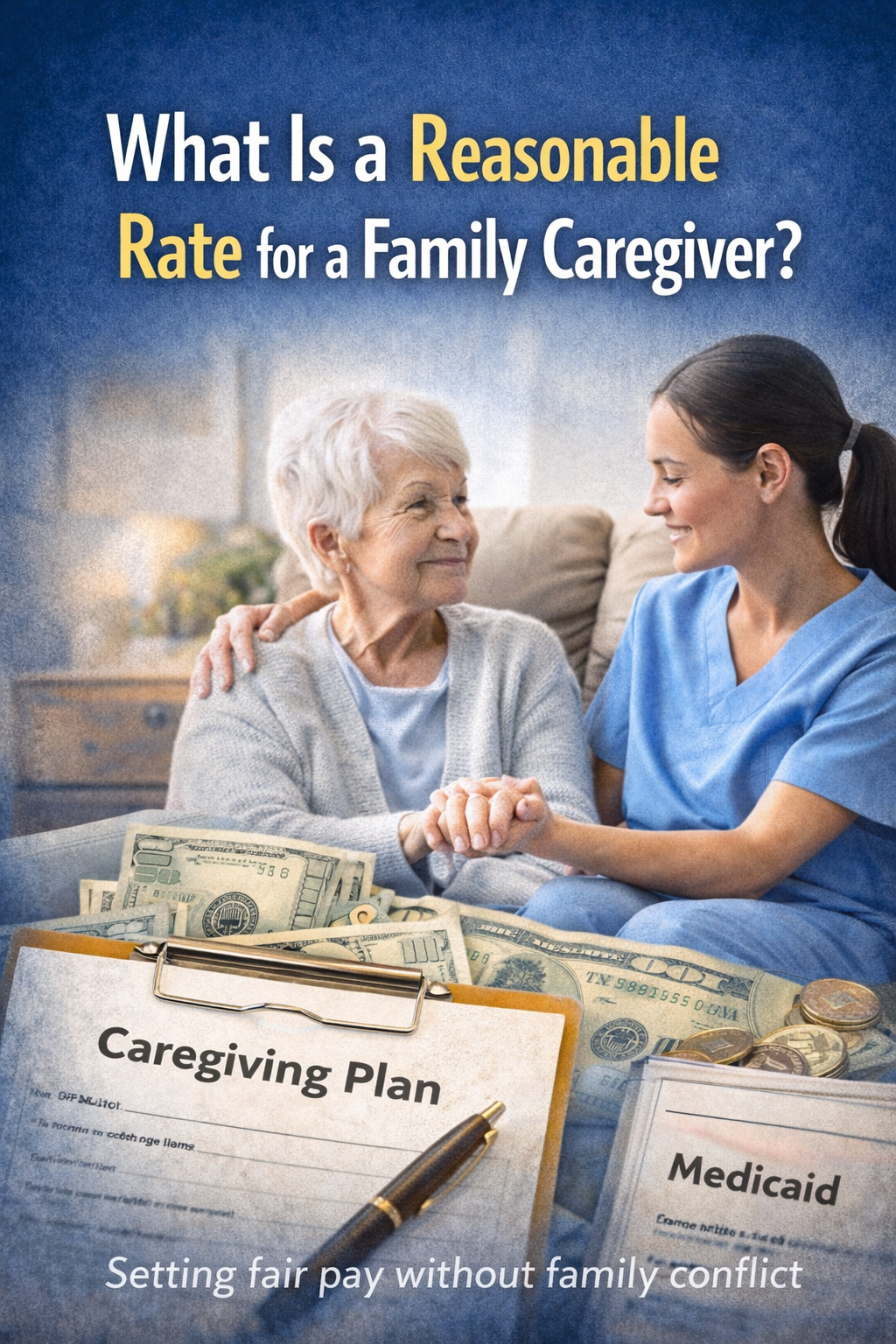
Determining a reasonable rate for a family caregiver can feel uncomfortable—but without clear guidelines, it often leads to confusion, resentment, and financial risk.
There is no single “correct” number.
👉 A reasonable rate depends on:
- The level of care required
- The number of hours provided
- Your geographic location
- The complexity of medical needs
👉 The goal is to set a rate that is fair, realistic, and defensible
Why This Question Is So Difficult
Families often struggle because:
- Caregiving is emotional
- Money conversations feel uncomfortable
- Expectations are unclear
- Roles evolve over time
👉 Many caregivers either:
- Undercharge
- Work for free
- Or avoid the conversation altogether
Why “Fair Market Value” Matters
When setting a caregiver rate, it’s important to stay within fair market value
This means:
👉 What a professional caregiver would be paid for similar services in your area
This is especially important for:
- Medicaid eligibility
- Financial protection
- Avoiding penalties
How to Estimate a Fair Rate
One of the most trusted resources is the
Genworth Cost of Care Survey
This report provides:
- Average hourly home care rates
- Regional cost differences
- Long-term care trends
Typical Pay Ranges (General Guide)
Rates vary by location, but generally:
- Companion care: lower range
- Personal care (bathing, dressing): mid-range
- Skilled or complex care: higher range
👉 Rates often fall within the range of local home care agency pricing
The Biggest Mistakes Families Make
Families often:
- Pay nothing (leading to burnout)
- Pay inconsistently
- Pay large lump sums without documentation
- Set rates far below market value
- Try to compensate retroactively
👉 These mistakes can create:
- Financial strain
- Family conflict
- Medicaid penalties
Why Documentation Is Critical
Even if the rate feels “fair,” it must be:
👉 Documented
Without documentation:
- Payments may be treated as gifts
- Medicaid eligibility may be delayed
- Disputes may arise later
The Role of a Family Caregiver Agreement
A caregiver agreement helps:
- Set a clear rate of pay
- Define responsibilities
- Establish expectations
- Protect both parties
👉 Learn how to create one:
How to Create a Family Caregiver Agreement
It’s Not Just About Money
Setting a rate is also about:
- Respecting the caregiver’s time
- Acknowledging the value of care
- Preventing burnout
- Creating sustainability
👉 Caregiving without boundaries often leads to exhaustion.
Navigating Family Dynamics
Money conversations can create tension.
Common challenges include:
- Siblings disagreeing on payment
- One person doing all the work
- Others contributing little or nothing
👉 Clear communication is essential.
Here is a Family Meeting Guide to help navigate the family dynamics.
💡 How to Start the Conversation
Start with:
- “We need to talk about what this level of care really involves”
- “This is becoming more than we expected”
- “We need a plan that is fair and sustainable”
👉 Focus on the care needs, not just the money
For more tips and strategies, check out our Eldercare Communication Course
Steps to Set a Reasonable Rate
Step 1: Define the Care Being Provided
List all responsibilities
Step 2: Estimate Hours
Be realistic about time commitment
Step 3: Research Local Rates
Use tools like the Genworth survey
Step 4: Agree on Compensation
Discuss openly with family
Step 5: Document the Agreement
Put everything in writing
Not sure where to start? Our Free Family Caregiver Agreement Starter Guide
🧩 The Caregiver Balance Guide Connection
This page is one pillar of the Caregiver Balance Guide — a structured framework designed to help caregivers:
- Set boundaries
- Protect finances
- Avoid burnout
- Plan for long-term care
Get the book- the Caregiver Balance Guide
You Should Not Be Expected to Do This for Free
Many caregivers feel obligated.
But the reality is:
👉 Caregiving has real financial and personal costs
👉 Without structure, those costs fall entirely on one person
Get Clear Before It Becomes a Problem
If you are unsure how to set a rate, structure an agreement, or navigate family dynamics:
The Family Caregiver Agreement Starter Guide can help you:
- Clarify responsibilities
- Prepare for conversations
- Set realistic expectations
- Create structure
👉 Download the Family Caregiver Agreement Starter Guide
Or:
👉 Schedule Your Caregiver Coaching Session Now
❓ Frequently Asked Questions
How much should I pay a family caregiver?
It depends on care level, hours, and location—but should reflect fair market value.
Can I pay below market rate?
You can, but it may create issues with fairness and Medicaid eligibility.
Do I need to document payments?
Yes. Documentation protects both the caregiver and the care recipient.
Can I pay a family caregiver retroactively?
No. Payments must be structured moving forward.
More information that may be of interest to you:
- Family Caregiver Agreement
- What is the Medicaid Look-Back Period?
- How to Get Paid as a Caregiver by Medicaid
- Does Medicare Pay Family Caregivers
- How to Stop a Hospital Discharge (Medicare Appeal Guide)
- What Happens If You Refuse a Hospital Discharge
- Observation vs Inpatient: Why It Matters for Rehab
- Hospital Discharge Checklist
- Who Is Responsible After Hospital Discharge