
What Is the Medicaid Look-Back Period?
The Medicaid look-back period can delay eligibility and create penalties. Learn how it works, what counts as a violation, and how to protect yourself.

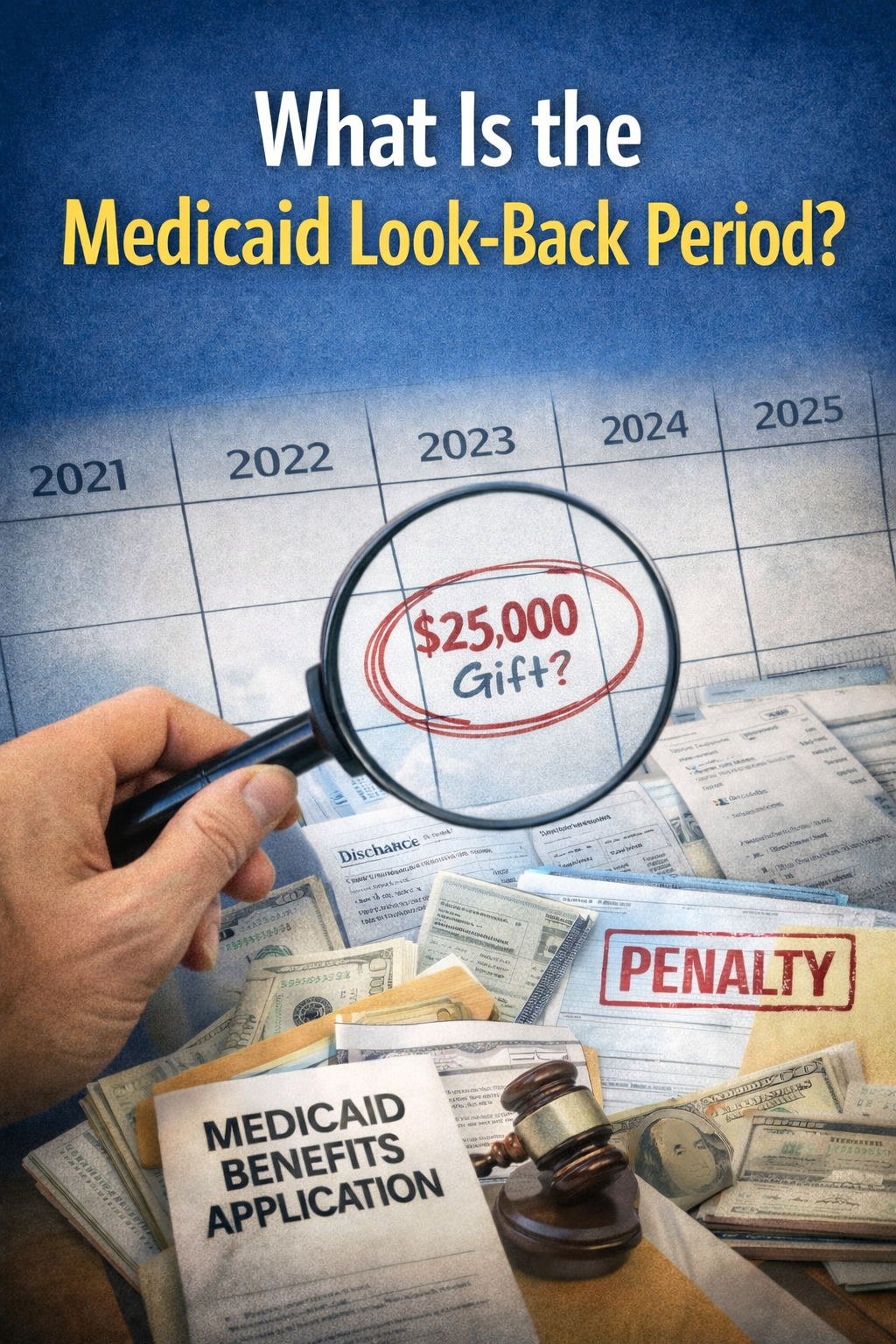
The Medicaid look-back period is one of the most misunderstood—and most financially dangerous—rules family caregivers face when planning for long-term care.
What Is the Medicaid Look-Back Period?
The Medicaid look-back period is a financial review process used to determine whether assets were transferred or given away before applying for Medicaid.
👉 Medicaid reviews financial activity to ensure applicants did not reduce assets improperly to qualify for benefits.
How Long Is the Medicaid Look-Back Period?
In most states, the look-back period is:
👉 5 years (60 months) prior to the Medicaid application date. There are states that are moving toward a 7 year look back period.
During this time, Medicaid examines:
- Bank account transactions
- Property transfers
- Gifts
- Payments to family members
- Financial records
What Triggers a Medicaid Penalty?
A penalty may occur if Medicaid determines that assets were:
- Given away
- Transferred for less than fair market value
- Paid to family members without documentation
- Used in ways that appear to reduce eligibility
👉 These are often called uncompensated transfers
Common Mistakes Families Make
Many caregivers unknowingly trigger penalties by:
- Paying family members informally
- Transferring money without documentation
- Adding names to bank accounts
- Gifting assets to children
- Trying to “fix things” too late
👉 These actions can delay Medicaid eligibility when care is urgently needed.
What Happens If You Violate the Look-Back Rules?
If a violation is found, Medicaid may impose a penalty period.
During this time:
- Medicaid will NOT pay for care
- The individual must cover costs privately
- Long-term care expenses can quickly escalate
👉 This can create a serious financial crisis for families.
Why Caregiver Payments Are Often Flagged
One of the most common issues involves paying family caregivers.
Without a formal agreement:
- Payments may be treated as gifts
- There is no proof of services provided
- Medicaid may deny or delay eligibility
👉 This is why documentation is critical.
How to Protect Yourself from Medicaid Penalties
There are steps you can take to reduce risk:
Create a Family Caregiver Agreement
A written agreement helps:
- Document care provided
- Establish fair compensation
- Prove payments are legitimate
👉 Learn how to set this up:
How to Create a Family Caregiver Agreement
Keep Detailed Records
Maintain:
- Payment records
- Care logs
- Receipts
- Medical documentation
Avoid Informal Transfers
Do not:
- Gift money without planning
- Transfer assets without understanding the impact
- Pay caregivers “off the books”
Plan Early
The best protection is:
👉 Planning before care becomes urgent
What the Look-Back Period Does NOT Mean
It does NOT mean:
- You cannot spend money
- You cannot pay for care
- You cannot use your assets
👉 It means:
Transactions must be properly documented and justified
How This Connects to Getting Paid as a Caregiver
The Medicaid look-back period is directly connected to:
- Caregiver compensation
- Financial planning
- Long-term care decisions
👉 Without planning, families risk losing both money and eligibility.
The Caregiver Balance Guide Connection
This page is one pillar of the Caregiver Balance Guide — a structured framework designed to help caregivers:
- Protect finances
- Set clear agreements
- Plan ahead
- Avoid costly mistakes
You Cannot Fix This After the Fact
One of the most important things to understand:
👉 Medicaid planning is NOT retroactive
If mistakes are made:
- They cannot always be undone
- Penalties may already apply
👉 Early planning is essential.
Protect Yourself Before It’s Too Late
If you are unsure how to handle caregiver payments, financial decisions, or Medicaid planning:
Caregiver coaching can help you:
- Avoid costly mistakes
- Set up proper agreements
- Understand your options
- Protect your financial future
👉 Schedule Your Caregiver Coaching Session Now
❓ Frequently Asked Questions
What is the Medicaid look-back period?
It is a 5-year review of financial transactions before applying for Medicaid.
What counts as a violation?
Gifts, undocumented payments, and transfers below market value.
Can I pay a family caregiver during this time?
Yes—but it must be properly documented through a caregiver agreement.
Can penalties be reversed?
In some cases, but not always—planning early is critical.
More Articles that may interest you
- Get Paid as Caregiver
- Family Caregiver Agreement
- The family Caregiver Agreement Starter Guide
- Unsafe Hospital Discharge: What Family Caregivers Must Know
- How to Stop a Hospital Discharge (Medicare Appeal Guide)
This article has been updated for current Medicare and Medicaid rules