Mental Health in the Shadows: Emotional Challenges on the Rare Disease Journey with Wes Michael - Episode 168
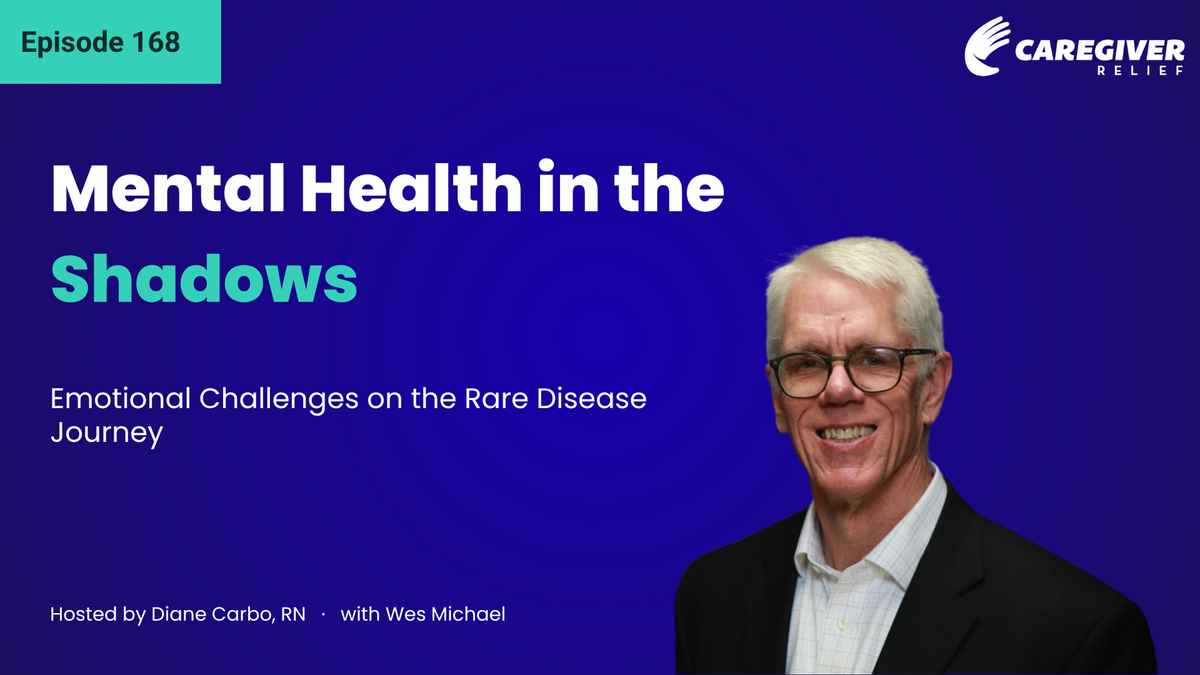
In this deeply moving episode of the Caregiver Relief Podcast, host Diane Carbo sits down with Wes Michael, the innovative founder of Rare Patient Voice, to shine a light on a topic that often hides in the shadows: the emotional and mental health challenges faced by patients and caregivers.
Whether you are navigating a rare disease diagnosis, caring for a loved one with chronic illness, or feeling the weight of the "caregiver burden," this conversation is for you.
📖 Episode Highlights
In this episode, Diane and Wes explore:
- The Power of Your Story: Why your lived experience is the most valuable tool in healthcare research—and how you can be compensated for sharing it.
- The Emotional Toll: A frank discussion on why caregivers and patients face such high rates of emotional distress, and why it is often not addressed by the medical system.
- Breaking the Stigma: Why men and women alike often hesitate to seek help, and why it is crucial to treat mental health with the same urgency as physical health.
- Navigating the Unknown: The unique trauma of the diagnostic journey and the relief that can come when you finally find a path forward.
- The Weight of Shame: A powerful insight into how "shame" (feeling like you are a bad person) differs from guilt, and how addressing it can be a gateway to healing.
- Safety and Privacy: How Rare Patient Voice ensures your data remains strictly confidential, so you can share your truth without fear.
💡 Key Takeaways for Caregivers
"If you’re not feeling how you felt when you felt good, don't be ashamed to have a professional take a look at it." — Wes Michael
- You are the expert: Your experience matters, and sharing it can help shape future treatments for others.
- Seek your tribe: Online support groups are becoming a lifeline for caregivers who need connection on their own schedule.
- Protect your peace: Be wary of "magical" cures or marketing schemes in support groups; true support is about community and shared experience.
🔗 Connect With Us
- Learn About Rare Patient Voice: Explore opportunities to share your story and contribute to research at rarepatientvoice.com.
Podcast Episode Transcript
Diane: Welcome to the Caregiver Relief Podcast, your go-to source for support, stories and strategies to ease the caregiving load. I'm your host, Diane Carbo, registered nurse, and today we're exploring a deeply important topic, mental health in the shadows, emotional challenges on the rare disease journey.
Joining me today is Wes Michael, the innovative founder and president of Rare Patient Voice, a platform that's revolutionized how patients and caregivers contribute to healthcare research with decades of experience and a global community making real impact. We is here to discuss the power of voices like yours.
Diane: Wes, thank you so much. I know you're really busy. You've got this amazing product. It took me a while to get you,on with me again. But, I'd like to start Wes by making people of familiar, with rare patient voice, what it is and how it got started back in 2013.
Wes: thanks Diane. It's always a pleasure to be with you and to.
Talk to your folks. so what we do is we offer people a chance to tell their stories, to share their experiences, their,anything that,that they feel, to those who are listening. And typically those who are listening are. Medical companies, there could be pharmaceutical or biotech.
They could be medical device companies, they could be people that provide services. There're people that are providing things for patients and caregivers. So guess what? They need to listen to patients and caregivers. How will they know Yes. What people want or need if they don't hear that? Yes. And there's nothing more powerful.
I'm a market researcher. Years back and I love my charts and my graphs and my 38%, but there's nothing more powerful to a decision maker than to hear a real person. Yeah. To hear real people tell their story, that hits people emotionally. And guess what? Even though we don't admit it, most decisions are made emotionally.
Yeah. They've got facts to back 'em up and things, and you don't wanna do stupid things. it's so important that people take advantage and do this. And so what we do is, for people that sign up with us, we don't share their names. We don't give 'em to anybody. We don't sell 'em anything. We don't spam 'em, but we get requests for interviews or surveys.
And if you sign up, say you're a mom of a kid with hemophilia, so you're a caregiver. We have a hemophilia study, we'll send an email and say, oh, we're looking for people. It's a one hour zoom interview, or it's a 30 minute online survey, or whatever it might be. We'll tell you what it is, right? And and invite people.
And if they're interested to take part, they click and they do whatever on their phone or on their computers, and then we compensate people for that. So it's a real win-win. People wanna
Diane: yes,
Wes: bear. It helps companies take into account their needs, and then we pay people at the rate of $120 per hour of their time.
So it's an hour Zoom interview. They get a check for $120. So it's, again, it's a win-win. It's honors their time, but most importantly, they get their voices heard, people that are making decisions, they'll hear. What they need and what their problems have been and what they liked and what they didn't like or what they understand or what they don't understand, or how easy their website is to navigate whatever it might be.
they need to hear directly from the people. here's a funny story. Just from this morning, my wife got a, an email from our patient voice. She's in it for a couple different, she says, oh, I got something here. She says, I don't know. I wasn't qualify, but let me. Go in and and then she was asking me things and she says, oh, they wanna do, I said, well, just, answer honestly.
And she qualified, I guess it was two, she qualified for one, but not for another, but, and then if she didn't qualify, she liked this, I forgot about this. If you don't qualify, which often happens and people are, frustrated. I get it. They want to participate and they're told yeah. But it's usually because maybe they want somebody on a certain drug or a certain age or they may love you, but they already have five people exactly like you, That have come in before you. but the good news is everybody that doesn't qualify every month, we have a. Raffle for a hundred dollars gift card, so at least you have the chance to get something out of the deal. So it's at least we, if somebody on our team had that idea, so let's reward people for what they're trying to do.
And we just appreciate people that have, keep trying and do it, do it. One other thing I'll say that we're very proud of since, as you said since we started 2013, we've paid patients and caregivers. Over $18 million for taking part studies and it's well deserved. They deserve that.
People's time is valuable and they deserve to be honored and,and people need it. So many people in the community. it's not cheap to have a condition no matter what your insurance is.
Diane: yes. Now, how does rare, patient voice recruit patients and caregivers for studies?
Wes: Oh, yeah. I love, we have various ways we do it. One way I love, and I've done this from the beginning and I participated this myself, is we go to events. You know how there's a walk for ms or there's a. Yes, a lupus conference or a new patient thing or support group meetings. We'll go to those events.
We'll sponsor them, have our table. And I love it because we can talk to people, they can ask us what we're about and we can ask them, if they're interested. And so that's one way, that's one way we do it. We love that. Another is through our network of referral partners, and that's terrific too. We have now over 6,000.
They could be individuals. They can be, Advocacy groups, rep representatives or foundations or whatever it might be. And we don't ask them to give us names because that wouldn't, that wouldn't be like respect, privacy. They, spread the word and they tell folks if they're interested to contact us.
And then each one of those referral partners. Has a unique link. So we, so if somebody signs up through them, we know who gets credit. 'cause we pay the referral partners too. We think it's, yeah, it should be rewarded. They get $10 for everyone that comes through and gets through the process. that, that's a wonderful way.
And then people also come in just by visiting the website or they might see things on social media. and the re website is rare Patient voice. Com and you'll see buttons all over, click here. And it's a good place to go and look. 'cause I don't want people to blindly do things that they, if they have questions, go and look and explore and ask.
we're not in any rush to, to get people to do something without making them fully informed about it. Okay,
Diane: now you have a community of over 180,000 members. Is that true?
Wes: That's true. Across 1500 different disease and condition areas, not just ra rare and non rare, over the years ago. and as as unfortunately.
Most people that have one condition have another condition, these things.
Diane: Yes.
Wes: they go, they travel in groups, Yep. And then so many people yes
Diane: to that,
Wes: speaking of mental illness, so many people that have a disease may be because of that, have anxiety or depression or something like that.
Diane: Yeah.
Wes: It. What we love is,we don't love that people have these conditions, but if they do, we want 'em to list that 'cause then they qualify for studies in any different area that, of things that may affect them, things that are major or things that are minor.
Diane: Yeah. I'm a perfect example.
After our first interview a few months ago, I joined Rare Patient Voice and I have chronic pain and I have, migraines.
Wes: Yeah. Yeah. So
Diane: I signed up for both of those, and you're right, and because of the migraines and the chronic pain, I also suffer from depression,
Wes: yeah. Yeah. It's hard to get away from this stuff.
Diane: Yeah, it is. It, and it really is. And so I get, responses from you guys all the time saying, Hey, here's a study for this, or here's a study for that. Do you wanna check into it? and I do. It's fun. and I look at it from the perspective. If I don't qualify for something and it's most likely, I won't because my migraines have pretty much resolved as I've gotten older.
That's a good thing. They still exist, but I know what sets 'em off now, but, I look at it as. I need to be grateful that I didn't qualify right? Although I don't like the money, but I'm not bad enough or I'm not the right age or whatever they're looking for. And I'm okay with that.
Hey, at 72, I'm glad they're interested in my opinion about anything.
Wes: that's so true. So often, they'll one people with a very severe form of a condition or a very, extensive cancer or something. and again, when people don't qualify, we say. It personally for you, it's good that you didn't qualify.
Now we're happy when people do, when they want to talk to us.
Diane: Oh, absolutely.
Wes: it's, we're not wishing you have. bad health just to qualify.
Diane: Yeah. 100%. Absolutely.
Yeah.
Diane: Now I wanna shift to the emotional side of, the platform because, there are some key mental challenges Yeah.
That patients and caregivers face, not just with rare diseases, but with diseases like Parkinson's, dementia. can we address that a little bit?
Wes: Yeah. That is so important because as we say, it's so often that. By having these conditions or being a caregiver for some,it pulls you down in a lot of other ways.
Diane: Yes.
Wes: And emotionally and mentally and such. We did a, survey about that very issue with a thousand or, almost a thousand of our members, patients and caregivers.
And we found a very high rate of those experiencing,we call it emotional distress. a large majority had it. at least some of the time.
And, only about 30%, which we're seeing or saw a mental health professional. They're trying. and that's probably normal. people try to solve these things on their own,their family and friends and network and support groups and things like that. But, some of these, I think people could be well served.
if it's covered, I don't know how you pay for this, but anyway,by taking advantage. But the other problem we solve though so many, folks, that even if they're getting professional help, it's a special subcategory Treating folks with rare disease or with any disease that's affiliated with, it's not just.[00:11:00]
I hate to say it this way. Run of the mill. Yeah.
Diane: Yes.
Wes: Yeah. Depression of something, because that's a special angle on it that I think pe they could, really help people with if they're coming at it because of that.
Diane: I have a perfect example. I have a friend, she's a retired nurse practitioner.
And, she recently was diagnosed with, squamous cell, stage four squamous cell cancer. And,it's very, first of all, she has no signs and symptoms except the little node that she felt on her wall. So she goes to the doctor and they draw bloods and they look at her, they do her genetic testing and stuff and they tell her they thought it was bladder cancer.
And of course she has no signs and symptoms, goes and has all the tests done. The urologist tells her you don't have bladder cancer. she was lucky enough to get into a specialist at At Harvard and he is a specialist that focuses on a very rare cancer is the squamous. It has to do with the lining of the bladder, the skin, the cells in there.
And, the squamous cell. So it's a urethra, whatever type of cancer. Yeah. And, it was, but she has, it's just worried her and they didn't know what the treatment was going to be, and that's frightening to anybody. And. She had, she luckily, she had the ability to reach out to a mental health professional, but city don't have the coverage or they don't have the ability to pay and that,
Wes: or there's a stigma in their minds about doing that, and it just makes things worse.
Diane: Yes, I know for men, and forgive me, you can beat me up over this. I've had husbands, sons, brothers. A lot of men just don't feel that they have a need to not only see a doctor, they don't think that it's good to share their dirt, air, their dirty laundry, so to speak.
Wes: Yeah, exactly. Exactly.
No, very common.
Diane: And it's really sad because they can be helped so much.
Wes: Definitely. speaking of gender. We found, women were significantly more,afflicted, if you will, suffering from,the mental health burden than men. But then the men are less likely to do anything about it and or are they really less, or are they just admitting less?
I don't know.
Diane: Yeah. and that's a, you're walking the tightrope there.
Wes: yeah. Yeah,
Diane: because,it's just very challenging. Now you're in your experience at Rare Patient Voice, how do parents and family caregivers perspectives highlight unique? Emotional hurt hurdles that people face in, in rare disease care.
Wes: the other thing that we noticed in the study that a caregiver is equally as much as patients are suffering, and you can imagine 'cause not only, some of them may worry even more about their patient, but they've got the 24 7 physical and emotional burden of taking care.
Diane: Yeah.
Wes: it's, it's crazy.
And then these, These burdens pile up because if you're a caregiver like that, you may have given up, and we see this all the time, you may have given up a lucrative career to take care of the person you may have had to move to be closer to a treatment center. And, so financially you're not as well off as you would've been.
And so you, so how can you get additional support? If it's not provided, how do you even pay to take a break and you don't want anybody watching your patient. so again, it's a vicious circle of all these issues that people have. But,the way out it appears is similar for everybody, is find support.
So many people, they starting with their friends and family as their first level of support. patient advocacy groups can be very helpful because so many people will have gone through the same thing. Yeah. And nothing like saying. Because anybody can say, I know what you're feeling, but they don't really.
But these people, if somebody with the same thing, I know because I went through it with my mom or with my kid or myself and here's what I did. And here, it makes people feel that they're not alone. 'cause that's the worst thing about all this. If they think you're the only one suffering from it, you don't see a way out.
But learn. it's always great to learn from others. that's what we're. And you know what? One other thing is we ask people where, what kind of support networks they love, they really like online.
Diane: Yes.
Wes: Support items. there's certainly a convenience around that because you can do it from wherever.
But, online, lemme look at my thing here. There's,Sorry, there was a nice list, online support groups, social media, communities, those things were le led the list even ahead of in-person support groups and so things like that.
Diane: when I started my first website, aging Home Healthcare, it was like 25 years ago, at the time, 50% of family caregivers were becoming seriously ill.
A chronic disease or they died before the person that, they were caring for passed it is now up to 63%. Oh my goodness. And it's it now with all the changes in Medicare, moving to a cost sharing platform. We are gonna end lack of re, re, lack of respite care, availability. we really need to, help our caregivers out so I can understand that's why they like the online.
they really do. And one of the things I can tell you is having run, an admin for several of them, you have to be very protective of your. Your caregivers in there because
Wes: Yeah.
Diane: When they join and so that nobody's marketing to them, nobody's, telling them there's a cure or not a cure, for something or throwing some weird,Let's do, a, drink coke for 10 days and it'll clear your connection.
Wes: Oh my God. Yeah. Everybody has their own, magical
Diane: solution, everybody thing. Yeah. Magical thing, coconut oil or whatever. And you have to be respectful of what people are dealing with. And I've dealt with that many for decades.
Yeah. And,one of the things with, I have quite a few clients. That are on a diagnosis journey. yeah. And the frustration they go through, because sometimes just the lack of a diagnosis can impact their mental health.
Wes: Yeah. It's that unknown factor. It's the worst because, I was just, reading about someone, or someone was telling me, I can't remember, but the, As, as bad as it was, when they got a diagnosis, they actually, opened a bottle of champagne. 'cause at least now they had a path forward.
Diane: Yes. At least
Wes: now they knew what they were fighting. Because you don't know what you're fighting and you know how it is. You get a misdiagnosis, you get a treatment.
It might make things worse. Certainly not better.
Diane: Yes.
Wes: So it's a horrible thing. So many of the people that I meet. Patients and caregivers, they've been diagnosed because they wouldn't know what support group to go to. But I hear about the, their journey. But I don't see directly a lot of people in the middle of that.
but it's, it is gotta be the worst, when
Diane: you it absolutely is. I've seen several, my, the very, my, I can still remember. Oh. this is showing my age 45 years ago. I was in Memphis, Tennessee at, a facility that I was working at, and this lady, we called her a frequent flyer.
She kept coming into the hospital and she had these weird signs and symptoms, and it got to the point where everybody, they marked her as a,she was crazy, Yeah.
Wes: they have good answers. For, for these that they don't understand. it's in your mind. Yeah. It's in your mind.
It's a women's problem. Yes.
Diane: Yes. And surprisingly, we had this great diagnostician that finally looked at her and he determined and found that she had a pituitary, glandular problem. That's very rare. And once he provided her with a solution. she became herself again. And it's amazing.
But I know that people do go through that where, you don't believe me, you don't understand. And I have several clients that I have dealt with that over the years where, and I have to tell them, look, you're going to be told it's all in your head. But you ha you, you just have to continue to try to get a diagnosis and seek other people.
I've known people that have gone to 4, 5, 6 doctors before they found a solution.
Wes: Definitely. Yeah. it's a long, it could be a long process. and we're seeing the people who per persevered through that, how many didn't and never got a diagnosis.
Diane: Yes.
Wes: another thing I remember seeing was. it's bad for everyone that's in that situation, but it tended to, tended to be more of a problem of not believing them and such if they were women versus men, if they were obese or if they were a person, a minority, or a person of color.
and even if people don't think they're being biased, they are in some way, shape or form. 'cause they're putting people in a bucket and thinking, thinking something about. The diagnosis,
Diane: I watch a lot of, old TV or,and I'm seeing like, I love the British shows and I always get, I'm always shocked that women when they were going through menopause or Yeah, had their PMS before their periods were seen as having mental health and were actually pushed into psychiatric facilities.
That shocks me.
Wes: and there's a related thing that, that I've always been skeptical and I see this more and more playing out. Another thing whenever, because we don't know everything, right? There's a million things we're still learning and we'll look back at how ignorant we are now, hopefully when we're from a future date.
But, so often when they don't understand something, not it's either all in your head, but they, another thing is. It is due to stress. Yes. And a lot of things,I'm not discounting that. We know that stress. No,
Diane: I, yes.
Wes: You can ask anyone and they'll feel stressed even if they're living a nice retired life.
It's stress about us, a bicker with a neighbor or what are we having for dinner? I don't know what it is, but I, that to me, remember they used to say stress calls ulcers and then they found it was bacteria. So I, that's an easy fallback. 'cause I think everybody can say, oh yes, I'm feeling stress.
and then, they stop the search at that point.
Diane: exactly. and I know that people suffer from that. And, our mental health delivery system, lets people down because they, it is not available. Mental health is not available to everybody. And, I know many people, many people, especially anybody over the age of 65 on Medicare.
Has to privately pay for most of their visits after a period of time.
Wes: And that's gonna exclude so many people.
Diane: it is. Now, what personal benefits beyond research and contributions do patients and caregivers report from sharing their stories and experiences?
Wes: Oh, I love, we get, we ask people after they've done a study to give us feedback.
And it's kinda like when you go to the Home Depot, they give you survey now, so not everybody answers, but I love it when people do and they write comments and so often they'll. They'll say it was it was cathartic. they're talking to someone that's not a family member, but somebody that's knowledgeable and has a sympathetic ear and they report, they feel so good.
Some people say, I was in tears, but it made me feel so good because I was able to get some of this. Out and know that it was being heard by others.
Diane: Yes.
Wes: So it is really wonderful to help support people in that way it's a byproduct of trying to collect their information is giving 'em a chance to tell their story.
Diane: Again, that's why the online, support groups do so well, because caregivers don't have a specific time that they have downtime and when they can get on to vent or help somebody else out. That's the other thing on the in. On the online, platforms, the support groups, it's nice when you know somebody's going through what you're going through and they're at the beginning of it, and you're in the middle or at the end of Right, That journey.
Wes: and you're happy to, if you've already been through it, that you can pay it forward if you will let people know.
Diane: Yes.
Wes: and make their lives. if I had only known this, it would've made my life easier. So let me tell you what that is. Yeah,
Diane: exactly. I see that a lot more, so with Lewy body dementia than any of the other dementia out there because it's always diagnosed as a, psychiatric condition first, and it's really hard, and it takes a long time for some people with Lewy body dementia.
To actually get a diagnosis, which is very frustrating.
Wes: Hey, Diane, something I, this is good, wonderful timing because I just learned something in the past few weeks that I think could be useful for folks. Turns out my cousin is a psychologist. She's in the midst of publishing a book, a ma, a major publisher about shame.
It's called How Shame Runs the World. her name is Judith Pillow. We're happy to provide info, but. The reason I say that so often caregivers, especially some,they'll call it guilt, but if you look it up, guilt is about a behavior and shame is about, I'm a bad person. People are feeling shame.
Oh, I passed along this gene, I'm at fault, or I smoked, I'm at fault, or I should have done better. And shame from her, book, her wonderful, research. Shame is the source of a lot of the mental health issues, anxiety and depression and such. And she has found with her patients that if she can get to this shame, she can solve a lot of the other problem because talk about undeserved shame, right?
Diane: Yeah,
Wes: you can't help that you pass the gene onto somebody. Don't feel personally shamed.
Diane: the also the family dynamics, the typical family caregiver, I is the primary caregiver. The, extended family and the, yeah. siblings don't get involved, but they're very judgemental. And when you said shame, it all of a sudden made sense to me because they brutalized.
The family caregiver, they demean them. They demoralize them in so many ways, and it does, it comes down to shame you and I didn't think about it till that moment, but they are awful to these family caregivers and they make them discount everything they do. And, the, of course the caregiver is feeling guilty and awful and they keep trying and trying to do better.
Or at least try to feel, and
Wes: then that'll get right to that burnout that they suffer, right?
Diane: yes.
Wes: And then they'll get blamed more.
Diane: You know what, that's, oh my gosh. it's a vicious circle for the caregivers.
Wes: So
Diane: I really understand that. Now What advice would you give to caregivers listening who are struggling with their own mental health in the shadows of a rare disease journey, and how can they get involved with rare patient voice?
Wes: first of all, I can't speak to anybody's personal situation or how they're covered, but seek, there's no back to , there's no shame. Seek professional help if at all possible. Even like with our employees, there's one of these telehealth things, and you can send a picture in of a skin, but there's mental health.
There's x number of dozen like visits you can have. So hopefully there's some way, shape, or form because just talking to someone can help get to the right direction of what you need and what you help. So I encourage everyone, don't be,admit you. The men we were talking about. You don't have to tell everybody you're doing it,but if you're feeling this way.
somebody once told me, with a physical ailment, you can say, ah, my elbow, and it, it hurts, but it'll get better. And I go, wait a minute. If it doesn't feel normal, something's wrong with it. Don't be ashamed to have a professional, take a look at it. if you're not feeling, you know how you felt when you felt good.
If you're not feeling that way, maybe somebody can help you get back to that. Yeah. treat it the same way. do that. And then as I said, We welcome caregivers of any and all patients of any and all conditions to join rare patient voice. I'm not promising it's the answer to all the problems, believe me, but it two things.
it can keep you involved in the condition. It can keep you, learning about new treatments of things as you, you see some of these studies and all the things you're going through. Just like we said, paying it forward to other people, it'll help. People see that and incorporate that into new treatments, new services and things like that.
so I encourage people to do that. And it's vol. You don't have to, you can see an invitation, you can ignore it or you can see one you like and you want to do it. And it's totally up to you. And if you're in an interview and they ask you a question you don't want to answer, you can be just like a politician.
You do not have to answer you, you can answer a different question like they do, right? Yeah. Yeah. Nobody can. You're the boss, don't. Yes. So that's what I tell people. You're the boss. If you want to do it, fine. If you don't, you can say, Hey, I'm not comfortable. It's not,that's a perfectly legitimate answer.
Diane: And the most important thing that I like is you come right up front and say you do not share data with anybody else.
Wes: That's so important.
Diane: Yeah. And it is. And I wanna make sure that we, they,
Wes: yeah,we go through all these, special security arrangements,HIPAA and, there's a European thing, GDPR.
We're very careful with that. and we don't provide it. We don't share it. we don't do anything without the patient's consent. when we do a study, this works out well. Say you wanted to do a survey, we know who you are, so we can send you the check for it, but we don't see your answers.
The client who's analyzing data, they just see a long alpha numeric code. They don't know who you are. So nobody can put the two and two together of Diane said this. No, we know Diane did it and gets paid, but we don't know what she share said or shared. So it's a wonderful system to keep it totally, confidential for people.
Diane: and that's really important because confidentiality and privacy is so important to many seniors and their caregivers.
Wes: Oh, in this day and age, oh my god, it, identity theft and things like that, you don't want any of that out there. And, people just worry if their medical information is out there.
What will that affect their insurance or,
a
Diane: hundred percent.
Wes: Nobody, nobody deserves to have that. and the last thing you wanna do is get ads for something. We're not sending you any. Yes. We're only, we're not gonna ever charge anybody for anything. all we do is if you are interested in it, and then we'll pay you for taking part.
or the opposite of a scam, right? So
Diane: yeah, there, yes. Yes. Thank you, Wes. How
Wes: if somebody's asking you to send money, it's not us,
Diane: yes. Wes, how do my listeners find you?
Wes: As we said, the website is great, but me personally,I'm on LinkedIn a lot. okay. Just look for Wes, Michael. I think I'm the only one on that. we have a wonderful Facebook site, but that's more for the, the company posts wonderful messages and things like that.
so rare patient voice on, on, on fa and then all these other social media ones that I have to admit, I. Know, know of, but don't go on like the
Diane: yes.
Wes: The tiktoks and Instagrams and yeah, things like that.
Diane: rare patient voice.com.
Wes: That's it. Rare patient voice.com, the source of all information about us.
Diane: That's great. To my family caregivers out there, you are the most important part of the caregiving equation. Without you, it all falls apart. So please learn to be gentle with yourself. Practice self-care every day because you are worth it.
Caring for a loved one can be overwhelming — but you're not alone. If you have questions, big or small, our expert team is here to help.
👉 Click here to Ask the Expert
Our Resource section can help you find the information and tools that you need. We have courses, videos, checklists, guidebooks, cheat sheets, how-to guides and more.
You can get started by clicking on the link below. We know that taking care of a loved one is hard work, but with our help you can get the support that you need.
Click here to go to Resource Section now!