Long-Term Care Planning for Aging Parents: Care Costs, Home Safety, and Support Before a Crisis with Lindsay Friedman - Episode 248

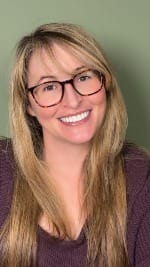
In this episode of the Caregiver Relief Podcast, host Diane Carbo, RN sits down with Lindsay Preston Friedman—founder of CareBloom and LT CareNav, host of LTCareNav's Care Compass podcast, and author of Plan Today, Protect Tomorrow: A Guide to Understanding and Navigating Long-Term Care and The Questions That Matter: A Family Guide to Aging, Care, and Planning. Together, they break down what long-term care planning really looks like, how to make homes safer, and why combining smart technology with human support is essential before a crisis forces your hand.
💡 Key Takeaways & Highlights
- Redefining Long-Term Care: Long-term care is not healthcare; it is managing Activities of Daily Living (ADLs) and personal habits. Having a proactive plan is the ultimate way to avoid an undesirable skilled nursing facility placement.
- The Caregiver as "CEO": Family caregivers are forced to become the manager of medication, insurance, finances, and personal care—often while working and raising their own families.
- The Assisted Living Reality Check: Assisted living operates on a social model rather than a medical model. Families must remain vigilant, visit often, and oversee care directly, as staffing levels often do not match resident needs.
- Smart Tech for Independent Living: Technology can bridge the gap between complete independence and constant supervision without feeling intrusive.
⌚ Spotlight on CareBloom & Tech Safety
After losing her grandmother to a devastating fall when a paid night aide slept down the hall, Lindsay created CareBloom—a solution designed to serve as discrete "eyes and ears" in the home.
- How It Works: Combines room sensors, smart algorithms, and a sleek smartwatch (which looks just like a Fitbit) to monitor daily routines without using privacy-invading cameras.
- What It Tracks: Tracks whether a loved one is getting out of bed, eating, showering, or moving around safely.
- Paid Care Oversight: Allows families to track whether hired aides are actually completing their assigned care tasks on time.
- Peace of Mind: Instead of constantly checking an app, family members only receive alerts when an unexpected activity or safety risk occurs.
📋 Episode Outline
- Introduction: Diane Carbo introduces Lindsay Friedman and the necessity of planning before a crisis hits.
- Lindsay’s Story: From nursing assistant to "CEO" of her grandmother's care, and the tragedy that sparked CareBloom.
- Redefining Long-Term Care: Shifting the narrative away from nursing homes and onto proactive home care plans.
- The Dark Side of Unsupervised Care: Addressing care fraud, vulnerability in aging adults, and systemic staffing shortages.
- Introducing Technology to Loved Ones: How to pitch smartwatches and sensors to parents while prioritizing their independence.
- Supporting Exhausted Caregivers: Navigating discharge challenges, building a local care team, and accepting practical assistance.
- Special Resources & Closing: Where to find Lindsay's planning e-book and exclusive discounts for listeners.
🎁 Connect with Guest & Special Resources
- LT CareNav Resource Hub: Learn more about navigating care at ltcarenav.com.
- Claim Your Free E-Book & CareBloom Discount: Download Lindsay's guide Plan Today, Protect Tomorrow and claim an exclusive discount at ltcarenav.com/podcasts.
- Explore CareBloom Devices: Visit carebloom.com to see how discreet sensors and smartwatches protect independence.
- Listen to LTCareNav's Care Compass: Check out Lindsay's podcast for ongoing tips and family care strategies.
- Books by Lindsay Preston Friedman:
- Follow & Connect:
- Connect with Lindsay on LinkedIn and follow LTCareNav on LinkedIn.
- Follow on Instagram @ltcarenav.


Podcast Episode Transcript
Diane: Welcome to the Caregiver Relief podcast. I'm Diane Carbo, RN, and today we are talking about something many families avoid until they are already in crisis, long-term care planning.
Long-term care is not just about nursing homes, it is about understanding what kind of help your loved one may need, what that care may cost, how safe they are at home, and what support exists, and how your family can make informed decisions before an emergency forces your hand. My guest today is Lindsay Friedman, founder of CareBloom and LT CareNav.
Lindsay began as a nursing assistant, and is also a multi-generational caregiver. She understands both the professional side and the personal side of caregiving. Through Long Term Care Nav, or LT CareNav, Lindsay helps [00:01:00] families create personalized care navigation and care planning so they can understand the real options and turn information into action.
Through CareBloom, she is also helping families use supportive technology, including smart watches and discrete room sensors, to better understand what is happening in the home without making care feel intrusive. Today we are going to talk about why long-term care feels so overwhelming, what families need to know before a crisis, and how to think about care costs, and how human support plus smart technology can help caregivers feel less alone.
Diane: Lindsay, this is a really an important topic, one that is definitely not, discussed much at all. So welcome and, to join us today. I welcome you.
Lindsay: Thank you so much for having me.
Diane: Lindsay, can you start by sharing your caregiving story, and how your experience as a nursing assistant and multi-generational caregiver led you to create CareBloom and LT CareNav?
Lindsay: Yeah, absolutely. So I actually created Care/Bloom first. As you said, I was a nursing assistant. I had worked in memory care, I worked in hospice, I worked in assisted livings, I had worked in a nursing home health aide. I've literally dabbled in every space of care that you can in the long-term care space.
And so when it came time for my grandma who needed care, I was like, "I'm gonna do it. I have this background, I know exactly what I'm doing." I know how to give care. This'll be great." And then plus I loved my grandma so much.
Diane: Yeah.
Lindsay: Well, it turns out that the skill set of toileting and turning is great, but there are so many other things that go into family caregiving.
Diane: Exactly. Yeah.
Lindsay: And it's not just the difference of loving somebody and having that emotion. There's ... You become like a CEO of that person's life. You are managing so much.
Diane: Yes.
Lindsay: And that I wasn't prepared for, because I was still very young and I wasn't even managing my own life that well. Right?
Diane: I will tell you that nurses that work in, like, emergency all their lives or in an intensive care, they don't know.
Or if they've always done hospital nursing and, have not explored other types of nursing, they don't know either.
Lindsay: Yeah, it's really different, and I think that's the difference. And when we talk about long-term care and people not understanding is it is not healthcare.
Diane: No, no.
Lindsay: It is your activities of daily living.
It is the things that we do as humans for ourselves every single day.
Diane: Yes.
Lindsay: And those are now the tasks you're completing for another person, and they're very personal and they're very habitual. And you now are taking your habits and trying to push them onto somebody else. And conflict occurs.
There's so much to it. But one of the things when we talk about planning, we were really fortunate because my grandma was a planner, and she had a long-term care policy.
Diane: God bless her.
Lindsay: I know. Way back then, it was wonderful. And what that enabled our family to be able to do was we, I was able to get people to come in during the night, which for any caregiver who doesn't have that, you know the nights get rough.
If your loved one isn't sleeping and they're getting up all night, then you're not sleeping and you're gonna get up during that day. It wears you down, so it was such a gift that she gave to us. But my grandma would tell me almost daily, "The aide is not sleeping in the room with me." We put a lovely recliner in there.
I'm like, "That's all you have to do, just stay in the room." She gets up a lot during the night to
Diane: Yes
Lindsay: use the bathroom. Just stay in the room and take her. And I would say stuff to the aide, and I was like, "Are you in the room? Because she says you're not." And the woman would say, "Well, your grandma's confused."
Which, truth be told, my grandma could've been very confused. It was a very reasonable response. And then one night my grandma got up during the night and she broke her femur because the aide was sleeping down the hallway
Diane: Oh, dear Lord
Lindsay: And, you know, femur break in your 90s is rough.
Diane: Oh.
Lindsay: And she did
Diane: Absolutely
Lindsay: she never and she never recovered from it. Of course
Diane: She didn't , no.
Lindsay: yeah, it was a bad means to an end. And that was what got me to create Care/Bloom is I was angry. Anger. Anger got me to create Care/Bloom.
Diane: Yes, I get it. I get it. And you know right now what we're dealing with, Lindsay, is the family caregiver is not just overseeing, the, the, the personal care.
They're the medication manager, they're the insurance, manager, they're the, plus they're, they could be working and managing another family. So they are, and we're putting more and more pressure on our family caregivers than ever before.
Lindsay: It is so much, and you don't even realize how much it's going to be until you're there.
Diane: Yes.
Lindsay: And that is what I think all family caregivers need to hear. A- and even when you have a plan, I, like I've talked to people who are like, "Oh, well, I'm gonna just have people come in and help." They forget that if you end up with dementia and you think even you have the means to afford long-term care, if that is great, how are you gonna call the home care company?
Diane: Yeah.
Lindsay: How are you gonna make sure they're coming here? You need other people in place as we age. We all do.
Diane: Yeah.
Lindsay: And it is gonna get complicated with solo agers, but there are fiduciaries out there.
Diane: Yeah. You need to have a support system, and that all comes down to a plan. So even people who are very financially secure, I keep telling them, like their children, you're most likely still going to become a caregiver in some capacity.
And these are the conversations you have so you can make sure that this journey is smooth for everybody, because no one is escaping this.
Diane: Yes. When families hear long-term care, many immediately think of a, just a nursing home. how should families, redefine long-term care?
Lindsay: So I look at a long-term care plan is the opposite of nursing home.
Diane: Yes. Nowadays it is.
Lindsay: Yes. Having a plan is the opposite of going to a nursing home. If you don't have a plan and there is a crisis and your financial means are squeezed, you're going to end up in what most people consider a traditional SNF, like a skilled nursing facility that, that most people's grandparents, great-grandparents were at.
Diane: Yeah.
Lindsay: That is without a plan. With the plan can be home care. It can be a really beautiful assisted living. I'm going to assisted living. I know so many that are so beautiful. It's like living in a resort, and it's wonderful, and you get the care you need. But that requires a plan too, 'cause they get expensive.
Diane: Yeah. It's not only that, but I was a DON of a very posh, assisted living. And I tell people assisted living is the most dangerous of all the medical delivery systems, and I'll tell you why. The expectation is the, of the family is you're going to get the best possible care you can there, and what they don't realize, it's based on a social model, not a medical model.
And that's why I don't understand how memory care even exists in assisted living because a person with dementia cannot direct their care. And the other issue is, if you are paying for memory care, what you are getting is, only two staff probably that you don't have trained staff on behaviors.
You just don't. you have, there, these facilities do not, staff according to acuity levels, that is an issue. If you have a lot of patients in the mid to late term, and they're, and, dementia, you're seeing patients, staying in bed and being incontinent and not eating cold breakfast if they get a breakfast at all.
I mean, I hear horror stories from families what they're dealing with as they're paying 7 to $10,000, a month. So what I tell people is assisted living is wonderful, but as you say, according to, you have to have a plan, and you have to have someone that oversees you in that facility and have somebody come visit you at least once a week, if not soon, more.
Lindsay: Yeah, and you need that in skilled nursing. And actually in my case, I thought I was overseeing like a hawk with my grandma and home healthcare.
Diane: Yeah. Yeah.
Lindsay: And, and that's really where the plan comes in, is who's gonna oversee this
Diane: Yeah
Lindsay: who's gonna step in. And the truth is I probably should've showed up in the middle of the night one night to see what was happening.
Diane: Yeah.
Lindsay: But I didn't. And,
Diane: That's why you have granny cams.
Lindsay: Right. Well, that's why we created CareBloom.
Diane: Yep. Yep.
Lindsay: Because my grandma would never have let me put a camera on her.
Diane: I know, I know.
Lindsay: And so I created what I wished I would have had with my grandma.
Diane: Tell me about CareBloom.
Lindsay: Yeah, so it is a smartwatch and sensors in the house.
You're able to track both the care recipient, your loved one, and if you have paid aides in the house, we can track them and track their tasks as well to make sure they're being compliant on what you've assigned them to do. And so we are really proud. We are, we're very precise. So we are able to tell you if your loved one hasn't gotten out of bed, if they've been sitting in the same chair, what their behaviors and movements are like during the day.
Are they taking care of themselves, or is the person that you're having hired to be there taking care of them? So it was what I would have wanted to both make sure when I ran out during the day, my grandma, she didn't have, dementia, but she was very, she was more cognitively, that she had more physical issues.
But my grandma, I would like, she would like sneak out and go for a walk just 'cause she wanted to walk without she liked to walk.
And just to be able to know that was happening, to be able to go to the grocery store knowing she was staying put.
Diane: Yes, yes.
Lindsay: And, so I really created something that was like an eyes and ears and like being there at all times.
Diane: And you know what? That's so important because there is a lot of fraud out there and, misjudgment, by us. We, I just, in fact, I just dealt with a, a client that came to me and said, "We have a problem. my father" He's in the hospital. he's not doing well. He may die, but he's still awake and alert and able to direct his care.
And we got all of his paperwork out, and we just found his aide is in the will. He changed the will a year before and gave everything to her. So, of course, I just told him, "You need to call that attorney and get him over to the hospital to redo all those papers while he's still awake and alert and cognizant."
And he was, so they were able to stop that. But those things happen, and it's really sad.
Lindsay: That... I've not heard that one. No. That was somebody who's, cognitively intact.
Diane: Yep, yep. But he's in his 90s, and he felt that... And this happens. It will happen because even a senior in their 90s who is cognitively aware, they fear that person will stop taking care of them if they don't do what they ask.
They feel vulnerable and, I was like, "Oh, Lord have mercy. We gotta save you. We gotta help you." and they were able to change it, but... And now they're gonna have to legally go after that, caregiver 'cause I'm sure that they're gonna look through things and find that she's done some other sinister things.
But yeah, it's really hard when you have long-term care, in the home with other people. That's why I like the CareBloom. You're able to at least acknowledge what, that they're doing their tasks. I mean, it transformed your grandmother's life and probably hastened her death.
Lindsay: Oh, it absolutely did.
Yeah. And it was. It was terrible. And this is where I look back and I'm like, even the skill set I had before, I should've known that this was really an option. Because when I had worked in memory care, now remind you this is going back almost 30 years, so I sometimes have to remind myself
Diane: Honey, I've been a nurse for 54.
Give it up.
Lindsay: I know. But I go sometimes I remind myself when people are asking me questions and I'm like, "This was a long time ago that I did things. I'm sure there was like a change." that I would watch people take someone, aides take someone in to shower
Diane: Yeah
Lindsay: and then get their hair wet
Diane: Yep
Lindsay: wheel them out, like change their clothes, and never actually do the shower, and then walk right over to the clipboard, 'cause this is back 30 years ago-
Diane: Yeah
Lindsay: where we charted things by hand, and then
Diane: Yeah
Lindsay: put the little chart, check next to the shower.
Diane: Yeah. I will tell you right now, it still goes on today. It's even worse now than it was before, because there, there, we're having a lot of sick people in the nurse in the assisted living and nursing homes, and the staffing is still what it was 30 and 40 years ago.
They're not staffing to acuity levels, and it's unrealistic for any as in long-term care, I used to go do agency nursing, and I would go into a nursing home, and they give you a hallway. There's 30 patients that I'm supposed to give meds to and do treatments on in an eight-hour shift, and there is no way on God's green earth anybody could do all of that and do it well.
It's just not possible. And that's what they do with the aides. The aides'll have six, eight, 10 patients, and that's not possible. And I understand why people wanna have care at home, but that care at home also requires a vigilance of your financial and the mental and emotional status of your... the person you're caring for.
So I'd like to know how technology like a smartwatch or discrete room sensors support aging at home. That's awesome to me.
Lindsay: Yeah. I mean, and there are some things we are. I always say, like, we are great at CareBloom is great for a lot of people at a certain point.
If you need hands-on care, we're not helping toilet, we're not helping do that, but what we can do is we can alert to the fact that those ADLs are not being accomplished by your loved one. So we can indicate that you need more care. And so we're really a great fit of somebody who's trying to live independently, is trying to increase that independence for a couple of years And peace of mind for the family.
We are able to make sure that you're being safe, making good decisions. Good decisions in these cases are getting out of bed, making sure you're eating, making sure you're showering, making sure you're getting enough fluids to toilet. Changes in those kind of behaviors are really key to well-being and to be able to stay in that independent as long as possible.
Diane: How do you help families introduce this to their loved one?
Lindsay: Yeah, that one
Diane: That's a tough one.
Lindsay: So I think the way we've really been able to frame it well is you want to be independent, right? That is the whole goal. We all want to be as independent and care for ourselves as long as possible.
Diane: Yeah.
Lindsay: And that this gives you the opportunity to do this. So we had one person who was on the system. He was one of our first people who we were able to keep him at home. He was in, 91 or two when we put it on him
Diane: God bless him
Lindsay: when the family got it, and he stayed on Care Bloom. They were really debating, here's, they were really debating, it's time for him to move in with one of his daughters.
And the daughters were really pushing with, for us. They found us, and the daughter said, "I don't think he can be alone. Here's the things that are happening." Yeah. And we were like, "No, we really can help with some of this stuff." And he was able to stay in his house. Only a few months ago, the family called and said, "Now it's time."
Diane: Oh, bless him.
Lindsay: He had, like, three and a half years of being able to make sure he was safely in the garden. He liked to grow garlic in his garden, and he was able to go outside safely. They knew he was coming back in. They knew he wasn't going into the basement. All of these things that were making it really unsafe and a danger, we were able to alert the family to, and they were able to keep him safe at home for years longer.
Diane: Oh, I like that story.
Lindsay: Yeah.
Diane: Now, how do you monitor that activity?
Lindsay: So we just, this is for full transparency, we are something that like all long-term care, you need a family member. We are not actually monitoring. Your data is safe and secure.
Diane: Okay.
Lindsay: And you are giving your family member permission to monitor you.
And so we use the sensors, we use AI, we use a lot of algorithms to watch these behaviors, and families don't have to be on this app. It's not like a camera where you have to check in. Yeah. You can not check in at all. You can set the alerts to only be notified when certain things happen.
So we, the, that's where our other real value prop with the camera is you don't need to actually even check.
We'll tell you if something has happened that you need to know about, and if not, you can let them go on about their day, and that's also one of the sells for the family is I'm not watching you. I'm not gonna randomly peek into your house. I'm not gonna peek in your behavior. If one of these things, if one of these alerts trigger- I'm gonna look, but you want me to look because you want me to know if you sent a help request, or you want me to know if you're stuck in the basement. So those are gonna be the times I'm gonna look.
Diane: Interesting. Do they, is it, when you say a smartwatch, do they have to wear a watch?
Lindsay: You do have to wear a watch.
We worked really hard to make sure it was a watch.
Diane: Okay.
Lindsay: A lot of people... So it is not just a beacon or something that you wear. It looks exactly like a Fitbit. We actually were doing a study with the Cleveland Clinic, and they were, part of the study has a Fitbit, part of it has our devices, and the watches kinda got thrown in a pile and they were like, "Oh, which one's which?" So it looks just like a Fitbit.
Diane: Awesome. Awesome.
Lindsay: Yeah.
Diane: Is there an alternative if a person won't wear a watch?
Lindsay: Yes. So there's two alternatives. There's one, you can just keep the watch in the pocket, and we're also working on a pendant, that goes on the hip.
Now, the reason we're going on the hip is anyone who says they do fall detection well
Diane: Yes
Lindsay: anywhere offside the hip is, you can't do it well. We're just not there yet. Like
Diane: Yeah
Lindsay: there, so that's why, even, like, some of the other devices like medical Life Alert, they get a lot of false positives.
Diane: Yeah.
Lindsay: And so that gets annoying at times. I have been helping people, I tell this little, this story about people who say they do fall detection, and she had a watch, and she is an, she's 96, think she's 96-ish, and she is super active, and she goes to her local Y, and she swims.
Diane: Yeah.
Lindsay: That's how active she is.
But she has a Life Alert, and she actually took off her Life Alert, she said, and she put it on the bench so she could go in and take a shower.
And she said somebody bumped her watch, and it was not with her while she was in the shower.
Diane: Yeah.
Lindsay: She said, and all a sudden, she goes, "There were," she goes, "All of these big men come rushing in," 'cause her watch called EMS.
Diane: Oh, no.
Lindsay: She said, "And I'm standing naked in the shower, and all of a sudden there's 10 men, like, staring at me asking if I'm okay."
Diane: Oh my God.
Lindsay: And she goes, "No, I am not okay.
Diane: " You must have been mortified. How awful. Yes. Yeah. Yes. Unbelievable.
Lindsay: So you really need, so there really is still some training and learning that has to happen with true
Diane: Yes
Lindsay: fall detection anywhere, so we are creating a, a spot for the belt so we can be really accurate. And so no, no one has to have somebody come running and try to rescue them when they're in the shower.
Diane: That made me spit my coffee out. I just, I can't believe that poor lady. you know, the thought of taking a shower at the gym is uncomfortable for me anyways.
I'm old Catholic girl that, we didn't do those things. It's always uncomfortable. But you know, when I go to the pool, I do take a shower at the Y. And I'm laughing because I can't imagine how mortified she must have been. God bless her.
Lindsay: and then if we wanna continue on this story, 'cause it gets worse.
So I spend a lot of time with her. She's and so we were actually at an event. I drove her to an event so she could speak, and we're walking, and she fell wearing her Life Alert, and fell straight down flat. I have no idea what happened. I felt like I was the, just ter
Diane: Oh
Lindsay: I felt so terrible. And she fell, and she looked at me, and her Life Alert didn't go off.
Diane: Oh.
Lindsay: Yeah
Diane: You know, I had somebody that had a problem with a Life Alert too, in that it didn't work when it was supposed to work, and laid there for, two or three days. So I know that no system is 100%.
Lindsay: No.
Diane: And you just have to, just you need to be Vigilant
Lindsay: Thank you.
Diane: Vigilant. I'm having problems speaking today. Vigilant. So I really think that it is important that even though you have these systems in place, it's good to have someone check once a day, twice a day. Even if it's just by phone or physically see them, because that's really important.
But I like the plan, the, product that you have there. Now, what would you say to a caregiver who's exhausted, worried, and trying to make the right decisions, but feels completely alone in the long-term care process?
Lindsay: That is a very normal feeling. That, that you are not alone, because that is how everybody in this process is feeling.
Diane: Yeah.
Lindsay: Even people who think they're prepared, when it comes to caring for your parents, your grandparents, people you love, it's hard.
Diane: Yeah.
Lindsay: And while I can give some good advice on planning and sharing the load and all of that, which is super critical in being a successful caregiver, just knowing you have to take time for yourself.
And it is so much easier said than done, and I appreciate that because sometimes if you are living with someone with dementia and you are the only one there, and it is not safe to leave that person alone
Diane: Yeah
Lindsay: that you might not have time. I also tell families, and I know sometimes this is one that can get tricky, that you might have to engage more help than you're able, and what does that look like?
And finding the resources around you to make sure you can keep with whatever your ideal situation is. If it is to stay at home, that's an option. But you are not wrong if you say, "I have to put somebody somewhere safer than with myself."
Diane: 100%. you have, you're not a failure. There's no way anybody
And we right now have a situation where there are more unsafe discharges to home than ever before occurring because the medical, Medicare has changed the reimbursement rates for skilled and care and rehab. And though we say we have 100 days of that coverage, and people used to stay 100 days at that coverage, we now have a situation where the therapy rates have been reduced so low that a facility makes more money not providing care.
So what they're doing is, with traditional Medicare, they're sending them home after 20 days even though they're not ready. I'm seeing it. I'm, it's awful, and expecting the family to be able to provide that care. Then those with Medicare Advantage are being a, are sent home between the 11th to 14th day, and if they fight to stay to the 20th day, I will tell you right now, the co-pays are making it unsustainable.
A co-pay for, the Medicare Advantage, I call it the Medicare Disadvantage, it's 200 to $400 a day co-pay. People can't stay, they can't afford it. And that's what we're dealing with. And then to add insult to injury, Medicare does not pay for the home care nurse to visit So the last bit of safety net was that home care nurse.
And the home care companies can't afford to pay a nurse to go in, so we're they're not getting support. And right now we are at a very critical level in our world. We have the family caregiver, uneducated, untrained, unprepared to provide care once provided by healthcare professionals.
And it's very ugly out there right now, and it's gonna get worse. when ... I laugh when you say people think they're gonna be able to hire somebody to take care of them. every population since the boomers has not replaced themselves in numbers, and we have a, we have more seniors than youth, and that's gonna happen with every generation after us.
And the, the youth are our tax base and they are our workforce. So we are either gonna be taxed at revenues levels we have never seen before to maintain some kind of care in the home, or, we're going to struggle. We're I just see community housing for seniors. nursing homes and skilled care units are closing all over the country right now, as well as community hospitals because the reimbursement rate is not sustainable to stay open.
We're in dire straits, and I don't know what the answer is. I really love that you encourage people to create a support group with them. I encourage a care team partner approach to care, where you have somebody that helps you. The family caregivers aren't getting any respite care. They have
It's little to no respite care is available. So I really worry, about, how they're gonna handle it. So I say get a group of people around you, have someone bring meals. And it's practical assistance, not hands on assistance. But that practical assistance can free up the caregiver to do things to care for themselves.
Go to the doctor's, maybe go to the gym. You know, they can sit with your family member, doing an activity or even coming in to have a lunch with them while you go off for a little bit. But those little bits of, respite care make a huge difference in a caregiver's life when, so that they don't feel so alone or exhausted and tired.
So I like the CareBloom approach. it's an awesome product that you have there. Lindsay, how do people find you?
Lindsay: So you can come to ltcarenav.com/podcasts, and we actually, I'm giving away a free e-book about planning, about care planning and what that looks like- Ooh and why it's important.
But we're also giving a discount on Carebloom.
Diane: Awesome. Your Carebloom site is www.carebloom.com?
Lindsay: Correct. Great. So that, so you can find more at Carebloom, but for anyone listening, if you go to the ltcarenav.com podcast, there's a discount code for people who've listened to the podcast.
Diane: Awesome. I have also created a permanent page on my website, Caregiver Relief.
And all of those links are going to be permanently on that page so people will be able to find you. Future visitors will be able to find you as well,
Lindsay: Oh, I appreciate that.
Diane: Yeah.
Lindsay: And for families who need assistance, if you reach out, we are really here to help point you in the right direction of what that looks like to understand what your options are.
Diane: Absolutely. thank you so much for sharing your information with us today. I really appreciate it. to my family caregivers out there, you are the most important part of the caregiving equation. Without you, it all falls apart. So please learn to be gentle with yourself. Practice self-care every day, because you are worth it
Caring for a loved one can be overwhelming — but you're not alone. If you have questions, big or small, our expert team is here to help.
👉 Click here to Ask the Expert
Our Resource section can help you find the information and tools that you need. We have courses, videos, checklists, guidebooks, cheat sheets, how-to guides and more.
You can get started by clicking on the link below. We know that taking care of a loved one is hard work, but with our help you can get the support that you need.
Click here to go to Resource Section now!