Grief, Burnout, and Trauma: Tools for Caregivers with Edy Nathan - Episode 133
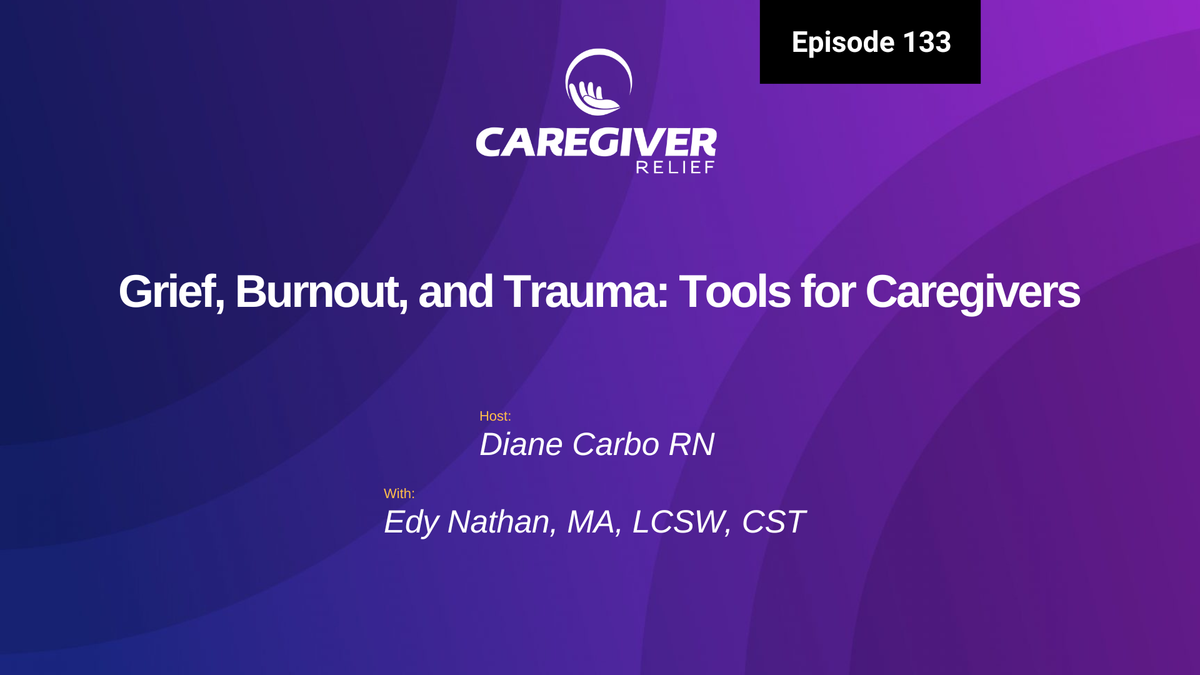
Caregiving is one of the most meaningful roles you will ever take on, but it is also one of the hardest. In this powerful episode of the Caregiver Relief Podcast, host Diane Carbo sits down with Edy Nathan, a grief and trauma therapist and author of It’s Grief: The Dance of Self-Discovery Through Trauma and Loss.
Together, they explore the "unspoken" shadows of caregiving: the grief that starts long before a loved one passes, the burnout that makes you feel invisible, and the trauma that can linger for years.
💔 Why We Don't Talk About Grief and Trauma
Grief isn't just about death. For caregivers, grief often commingles with burnout and trauma while the person you love is still alive. Edy Nathan explains that we often suffer from a "next" mentality—pushing away pain to get to the next task—which prevents us from processing our emotions.

Diane shares her own vulnerable story in this episode, opening up about becoming a caregiver at 16 for her mother. She discusses the anger, the "gallons of fluid" from medical procedures, and the silence imposed by her father regarding death. This suppression of grief led to a lifetime of feeling invisible—a feeling 99% of family caregivers relate to.
🕯️ Key Takeaways from This Episode
- The Invisibility of the Caregiver: One of the biggest signs of trauma is feeling invisible—like what you do doesn't matter and you aren't seen by family or healthcare pros.
- The "Trauma Bind": Caregivers often feel held hostage by their role, dealing with judgment from siblings or extended family while trying to provide care.
- Anticipatory Grief: You may mourn your loved one daily as they decline, especially in cases of dementia where they physically remain but psychologically fade.
- Guilt and Anger: It is common (and normal) to feel anger at the situation or guilt for wishing the suffering would end. Swallowing this anger fuels anxiety.
🛠️ The Liberation Protocol: 3 Steps to reclaim Yourself
Edy Nathan introduces her Liberation Protocol to help caregivers move from being "stuck" to finding freedom.
1. Embodied Curiosity 🧐
Stop and ask yourself: What am I feeling? Where am I feeling it? When was the last time you ate, showered, or laughed? This tool helps you check in with your physical and emotional self.
2. Empathy with Energy ⚡
We are often great at being kind to others but terrible at being kind to ourselves. Ask yourself: "If my friend was going through this, what would I say to them?" Then, say that to yourself. This shifts your mindset from self-criticism to self-support.
3. Radical Rapport & Boundaries 🛑
This means having enough rapport with yourself to set boundaries. If family members are judging you, you have a choice: crumble under the judgment or stand up for your mental health. As Edy says, "Would you rather be judged and crumble, or be judged and have boundaries?".
🧘♀️ Try This 2-Minute Breathing Exercise
Feeling overwhelmed? Edy shares a simple somatic exercise to clean your lungs and calm your nervous system:
- Inhale deeply.
- Hold the breath... hold it... hold it.
- Release it with a visible, audible "Whoosh" or sigh.
- Repeat 3 times to oxygenate your body.
 Edy Nathan MA, LCSWR, CST
📢 Meaningful Next Steps
If you are feeling depleted, Edy suggests making a "Date with Yourself." Put it on the calendar. It can be just 5 minutes to listen to a song you love, call a friend, or hug your pet.
Remember: You are resilient. You are the most important part of the caregiving equation. Without you, it all falls apart—so please, be gentle with yourself today.
Connect with Edy Nathan: Visit edynathan.com or find her book, It's Grief: The Dance of Self-Discovery Through Trauma and Loss, at your local bookstore.
Caring for a loved one can be overwhelming — but you're not alone. If you have questions, big or small, our expert team is here to help.
👉 Click here to Ask the Expert
Our Resource section can help you find the information and tools that you need. We have courses, videos, checklists, guidebooks, cheat sheets, how-to guides and more.
You can get started by clicking on the link below. We know that taking care of a loved one is hard work, but with our help you can get the support that you need.
Click here to go to Resource Section now!