From Isolation to Connection: How Joy Calls is Redefining Senior Companionship with Costin Tuculescu - Episode 138
Are you a caregiver worried about a loved one spending too much time alone? In this heartwarming and insightful episode of the Caregiver Relief Podcast, host Diane Carbo, RN, sits down with Costin Tuculescu, the visionary CEO and co-founder of Onscreen, Inc..
Together, they explore how the innovative platform Joy Calls is using technology—from big-screen TVs to AI companions—to bridge the gap between isolation and meaningful connection for older adults.
🎧 Why You Should Listen
Isolation and loneliness affect up to 40% of older adults, increasing the risk of dementia by 50% and heart disease by 30%. This episode isn't just about "gadgets"; it’s about a mission to bring warmth, laughter, and safety back into the homes of seniors through technology they already know and love.
"We live in amazing, interesting times where we can support better care, better connection, and better companionship for our aging loved ones." — Costin Tuculescu
📋 Episode Outline
1. The Birth of a Mission
- Costin shares his 20-year journey in video conferencing and how the COVID-19 pandemic revealed a desperate need for simpler senior tech.
- Why the "big screen" (TV) is the perfect window for seniors with vision or cognitive challenges.
2. Joy TV: Turning the Living Room into a Portal
- How Joy TV allows families to "beam" into the living room for soccer games, birthdays, and daily chats.
- Features like medication reminders and interactive Zoom classes for Tai Chi or poetry.
3. Meet "Joy": The AI Senior Companion
- Discover the AI persona named Joy who proactively checks in, tells jokes, and plays trivia.
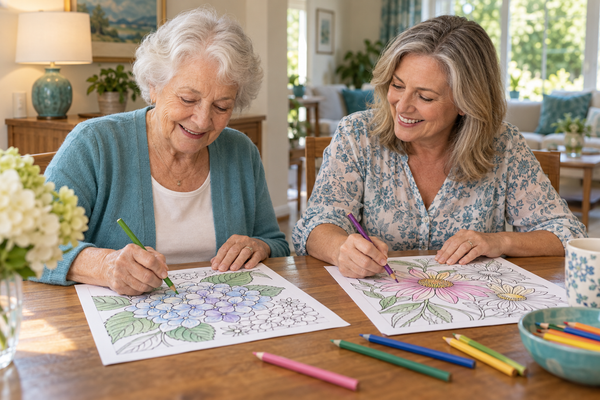
- Creative Connection: How Joy helps seniors "paint" digital masterpieces that are shared with their families.
4. Accessibility for All: Tablets and Landlines
- Joy Tablet: Repurposing old devices into dedicated communication portals.
- Joy Calls: A revolutionary service that brings AI companionship to traditional landlines and flip phones—no Wi-Fi required.
5. Safety, Privacy, and the "Robot" Debate
- Addressing concerns about AI: Why Joy is a "care team partner," not a replacement for family.
- Security features: Encrypted calls, HIPAA compliance, and physical camera shutters.
✨ Key Takeaways for Caregivers
- Proactive Engagement: Unlike Alexa, Joy initiates the conversation, which is vital for seniors with depression or cognitive decline who struggle to start activities.
- Safety Net: If a senior doesn't answer Joy's call after three attempts, the caregiver receives an immediate alert.
- Respite for You: Using AI as an "assistant" to fill the 8–12 hour gaps when you are at work or resting.
Podcast Episode Transcript
Diane: Welcome to the Caregiver Relief Podcast, where we empower caregivers and families with knowledge, inspiration, and practical solutions to making caregiving easier and more fulfilling. I'm your host, Diane Carbo, rn, and today we're exploring how technology can bring us closer together, especially for our aging loved ones.
My guest is Costin Tuculescu CEO, and co-founder of.
Onscreen, Inc. The innovative company behind Joy Calls a TV based platform, helping older adults stay connected, engaged, and supported through meaningful technology. Costin has over two decades of experience. Various creating products in video conferencing, unified communications, and senior care. His work combines engineering excellence with a passion for human connection and social impact.
Today we'll talk about how Joy calls in the new AI senior Companion are helping to. Isolation into connection one household at a time. So grab a drink or some coffee of tea, whatever, and join us for an inspiring conversation on how technology is bringing warmth and companionship back into the homes of seniors everywhere.
Diane: Costin. And thank you so muchfor joining me today. I'm really excited about sharing your, joy calls and, your ai. Program with my listeners. It's very positive, upbeat, and in a, and a challenging time. I'm really grateful that, I'm able to get ahold of you and do this podcast today.
Costin: Yeah, Diane, thank you so much for having me, and that was such a wonderful intro.
Really appreciate you taking the time of putting that together, and I am equally as excited to share. Our products with your audience. I think it, we live in a amazing, interesting times where now we can support better care, better connection, better companionship for our aging loved ones that are, very isolated and lonely.
up to 40% of older adults are isolated and lonely.
Diane: it's a very real problem, and that's why I was excited to share this platform with my listeners. Costinan, you have been a tech innovator for over two decades. What inspired you to focus your talents on helping seniors stay connected?
Costin: Yeah, tech innovation often comes from a place of trying to solve a problem, and I'd been in video conferencing for over 20 years. I started a company called Instant Presenter back in 2004, and people could do, presentations and webinars on the internet back then. Then I started another company called Any Meeting, and that was more like a video conferencing company, and I sold that company in 2017.
And then, in 2020 COVID hit. Yeah. And with CO, everything became video conferencing and that was the only communication medium that we had to stay in touch and reduce isolation and loneliness for everybody. And I felt like a little frustrated that we were using our tiny screens, our laptops.
That was the way we were communicating, and I started looking into. And we've got this giant screen in our living room that could literally be a window into another room. And how can I use this to communicate with my friends and my family? Can, and I don't know about you, Diane, but I've been a Star Trek fan my whole life.
Diane: Yep, yep.
Costin: I've been into sci-fi my whole life, and in all the future. All the visions of the future. There's these giant screens that people talk through, right? And video conferencing is life size in the future. So I was thinking, can I do this? Can I bring, this kind of technology to the masses, given my experience?
So I started working on a product with a couple of colleagues to turn the TV into that. full size communication device, and we created a product that we put on Amazon and we started getting some sales, but almost immediately we started getting calls saying, Hey, I'm trying to set this up for my mom, and she has dementia.
Diane: Okay.
Costin: You guys created this thing for the tv, but it requires a mobile app. It requires, a smartphone to make a call, to answer a call. Can you just make it simpler? And, we got call after call about that. People were looking at this as a solution to connect with their loved ones that were isolated.
They were in lockdown during COVID in senior living and. We took that challenge on. I looked at how many people in the country had dementia. I had no idea. I didn't have any background in senior care, senior living. and I saw 6 million people have dementia in the US and probably double that number as far as cognitive decline.
That would struggle with technology. So we took this TV based approach that I thought families would use. and funny story, my wife wouldn't use it. She's honey, I'm just gonna FaceTime. I'm gonna FaceTime my sister. I'm like, but look, I built this beautiful thing for you. You could sit on the couch, have a glass of wine and talk to your sister.
She's that's okay. That's okay. I got a fold laundry, so I'm gonna just take my FaceTime in the bedroom. So I couldn't get my family to use it, but once we made it simpler and easier, all of these families that were setting it up for their moms or dads with cognitive decline, all of a sudden they were so grateful and so thankful.
So we got really into the senior care. Technology business. We did a full pivot from trying to be like a consumer electronics company to being an age tech company. And and that's where we got our start, around 21, 22, creating this TV based solution. And ever since then, the platform has only grown because we've learned more about how big the need is.
Yes. Like 40%. Of older adults are lonely and isolated, this increases their risk for dementia by 50%, increases their risk for heart disease and stroke by 30%, and it's a $7 billion Costin to Medicare every year, just loneliness and isolation. So we felt that would be a good mission for this company.
And, yeah, I'll take a beat here to let you get it worded. Diane. But and then we started building a lot more products around that.
Diane: I'm giggling 'cause as you were talking about the size of the tv, you realize that the seniors, I can remember I was a teenager when we would all huddle around Ed Sullivan and it was a screen about the size of a, and it was black and white.
The size of a laptop. yeah. Now, and I'm just giggling because, there would be man, a whole family. I come from a big Irish family. We were all around trying to see close up. Yeah. And I love the big screen TV because I also feel that it helps those with vision impairment, and I think that's really an important thing to consider.
And with all the Bluetooth technology. Hearing aids now, people can have it directed to their hearing aids and it just makes a huge difference in their lives. So I'm really excited about this.
Costin: Absolutely. Yeah, we heard, so we also, heard from people with macular degeneration that, they just can't even see a small screen 'cause so much of their vision is blocked out.
But, the large TV. Was a solution for them for that.
Diane: I love that because,I have people I know that use special equipment on the, computer to magnifying glasses to. To see, and it, I can see where the TV, a bigger TV would make open up their world to them a little bit more, which I really like.
Costin: Yeah. Plus there's this whole experience around seeing the grandkids, seeing family members on the tv. it's like they're on the other side of a window.
Diane: yes.
Costin: And,we've got customers that. the way our product works is that the family, the adult caregivers, the family members, they use their mobile phones to call mom, and mom receives the call on her tv, for example.
And we have, did I freeze that?
Diane: I love that. I love that. I really do.
Costin: And, and so what they do is they'll take their mobile device, obviously, to, let's say a basketball game or a soccer game for the grandkids or a birthday party, and they can literally dial in. Mom, who might be in assisted living, might be in memory care and broadcast to her tv, the entire birthday party.
And it feels like she's right there, connected with the family, not isolated, not living alone in senior living. So it's such an amazing way to beam life into, the room.
Diane: and I agree that it's, what I like is we have lost our sense of community. we are a, what when we used to live within 25 miles of where we were born, we're now all over the world and our senior family members may still be in the hometown.
And we do, we've lost that sense of community, and connection, and that's. This makes me happy because families can say, actually communicate, joy, happiness, and celebrate and share celebrations, or even activities of daily living, like going to the kids' soccer games. And that's not only making memory. For the children knowing that grandma or grandpa are watching them. it's also allowing that senior to feel connected. And I think that's so important right now. 'cause you're combating loneliness on a daily basis though. I love that.
Costin: Yeah, that's exactly right. And we've had this product out, on the market.
We call this product Joy tv. And,it's a device that you actually, the adult child buys it. They go over to mom's house and it's like a Roku with a camera and they connect it to the tv. and, it just, it's a lovely experience now for that older adult to be able to see the families stay connected with them, but they also are able to receive medication reminders on their tv.
They're also, able, we even have things like Zoom classes, so that's a really big thing for reducing isolation. now somebody that might struggle getting on a Zoom, right? Like figuring how to get connected to Zoom. They can auto, like our platform has been automated so that they can just automatically join a class about poetry or they can join a virtual Tai Chi class, or virtual
Diane: oh wow.
Costin: music listening. So they could be connected with 20, 30 other people. For example, we have a couple of partners. One is Loop Village, another one is called Discover Live. And both of these partners put on these live classes that are interactive so that anybody, 80, 90, a hundred years old can get that additional stimulation, talk to other folks all from the comfort of their living room.
really bake them a lot of, functionality there for in on, into the tv.
Diane: Dementia prevention is doing something new and different every day, even if it's just walking backwards or taking a different way home. So having them be able to have that, ability to interact with others, also gives them another reason to get up in the morning and have something to look forward to, which is so lacking for so many seniors.
Costin: Yeah. Yeah. Now
Diane: you have the Ai s Senior Companion. Can you tell me about it and how does it support emotional engagement or mental wellness even?
Costin: Yeah,this theme of joy, it really came together back in, September, 2023 when we really started looking at all this new AI innovation that's been happening in the world and said, how can we create.
a really positive experience using AI for someone that might be alone all day and not, they don't get a chance to talk to anyone all day. So we created this AI persona named Joy. And she's like this lovely, person who pops up on your TV and just starts chatting with you pro, proactively.
So you don't have to call her like with a wake word, hey, like Alexa or hey Siri, or any of that. Typically, family members will set up joy visits. at, let's say at 10:00 AM Joy can visit at 2:00 PM at 6:00 PM. And Joy will show up on the TV and just ask you about your day, or ask you if you've taken your medication or play a trivia game with you or tell you a joke.
So it's just a way to bring in some of that voice engagement, some of that cognitive engagement through the technology that the older adults are already familiar with the TV and they may already be sitting there, for example. Yeah. price is right. Just ended. And now Joy comes on the TV to have a chat with you and you can talk about what you just saw on price is Right, and she'll ask you questions and what was your favorite part of the show, et cetera.
So it's a fully conversational, very realistic AI companion on the tv.
Diane: I have to tell you that, that's very impressive to me because, seniors that are in the early stages of dementia or have mild cognitive impairment oftentimes have theinability to initiate anything. And, some of the platforms out there expect them a senior to, to say, Hey, Alexa, do this, or Alexa do that.
And, They, the seniors lose that ability, or even ones in, even with mild depression, have no interest. So when you're saying that Joy pops up, plus I love that name, and it just. The connotation is happiness and comfort. that's right. Yeah. it is. And for, somebody for joy to pop up on the screen and go, Hey, how you doing today?
What's going on? Or whatever she says is amazing to me because all of a sudden I can see a person who is depressed or, not able to initiate. Responding and you're getting, you're having an interaction that would have been missed otherwise. Yeah. Yeah. and I really do. I love that. Yep.
Costin: That's exactly right.
And that's exactly what we've been going for, and we see. older adults engaging with joy, especially around the jokes of the day. Okay. Tell me another joke. Or the trivia. we even have this really cool thing on the TV where you can make a painting with joy and joy will prompt you. Okay. Let's make a painting together.
Okay. What should the painting be about? Gimme a general subject. Oh, I wanna paint a beach. Okay, what? What should be on the beach? Do you want beach balls? Do you want puppies, et cetera. So you tell joy what should be on the beach. Then she'll say, okay, is it daytime? Is it nighttime, da? And after she collects all of that information.
She thinks about it for about 30 seconds and then boom, you get a beautiful beach painting, on your TV that is also shared with your family. So now the family also sees that, oh my goodness, mom's been busy. She's been making these cool paintings with joy. And, it's just a phenomenal way to, again, drive engagement, create something new, and it gives the family something to talk about.
So next time when the daughter calls is like, Hey, mom, I saw that amazing painting that you made. It looks so great.
Diane: Costin. And one of the things that caregivers, and seniors don't realize is how important activities are, especially in the sta as you go through the stages of dementia, or even in with a person with mental health issues that is having depression and anxiety.
Actually activities can actually decrease or eliminate negative behaviors and challenging behaviors. And caregivers don't use those enough. So I love the fact that you have things going on, that you offer. That helps the senior be able to interact and be creative and,it helps their time pass faster.
And it does, I know personally from my 50 years of experience in nursing and a mother of two sons that Yeah, keeping them busy with activities absolutely does, stop the challenging behaviors.
Costin: Yeah. Yeah, I bet my wife would love to chat with you. We also have two sons, 13, 13, and 10 right now.
So we're really getting into the thick of it. We're getting
Diane: into the hard parenting stages. God bless. You gotta
Costin: keep them, gotta keep them busy and out of trouble.
Diane: Yep. at that age,I had, I used to tell people I might as well put my address in, at the post office with my license plate, because I'm going from one x.
Activity to another, whether it's karate, basketball, or whatever. Yeah. and it has to be the same way with seniors. You've gotta keep them busy,
Costin: That's right. So I wanted to bring up two more things that, that we believe helps give the caregiver respite and improves the experience. Yeah. Again, the family member can set it up.
So joy shows up multiple times per day. But the family member can also tell Joy all about the older adult, their preferences, their hobbies, their interests, so that joy really has a wealth of information,and chats and asks questions about all of these things that are going to stimulate.
And interest the older adult. not only does that provide that cognitive stimulation, but it does also potentially give the caregiver that respite and that opportunity to, have a cup of coffee, take a breath, and and all, and not just have, their loved one just in front of a TV with a, no interaction.
Just a kind of a one-way thing. Now it's a two-way interaction.
Diane: Yeah, I like that. I encourage every family caregiver to create a person-centered care profile, and it's just that it's all about them. So when they go in the hospital or have somebody else caring for them, all their needs, and wants, and their activities and stuff are all written down, their little quirks.
So I really like. that's a very, positive approach to, the, our seniors. So many families worry about privacy and security with smart de devices. How does onscreen ensure user safety and confidentiality?
Costin: Yeah, absolutely. So unlike the bigger players like the Googles. Or the Alexas, these smart speakers and smart AI devices in the home.
We are specifically built for families to support their older adult loved ones. it's a closed system. It's a closed network. there no one can call into the onscreen device unless the family member that set it up. Invited those people. So typically you'll have, let's say, the adult daughter by the onscreen device, and then she'll invite her brother.
She might invite the other brother. She might invite a grandkid who's like maybe a teenager. And only those people can reach grandma. all the conversations are encrypted, locked down. my, my 20 year background in technology as a technology executive in unified communications, I understand how critical security.
Privacy, encryption, all of that is. So we built all of that into the platform and we also operate at a HIPAA compliance level.
Diane: Wow.
Costin: so anyone that has access to the system must be authenticated, authorized. These are all very technical terms.
Diane: Yes.
Costin: But the bottom line is we think about privacy and security very seriously.
We take it very seriously, and that's how we built a product. I wanna say one more thing that. the Joy TV product has a camera. the camera has a built-in shutter, so it can be closed anytime or opened as needed. This gives the senior,the control, and just gives that.
Peace of mind that they're not being watched or anything like that. Also, when the camera is on, so when the family calls them and they're having a video call, there's a big light that goes on so they can see, okay, the camera's on right now. there's a big mute switch, so they can also lock it down completely.
Yeah. it's, again, it's number one for us that we have the trust of the senior, the trust of the family. And that they feel like. This thing is locked down Fort Knox style, and that's what we've built.
Diane: Costinan. Before we started the podcast, you started to share with me all the different things that you're offering now beyond Joy calls.
So I thought I'd ask you if you could elaborate on, what other, products or services you offer within the Joy Calls, platform. And yeah, I would love to hear about them.
Costin: Yeah, and it's a little confusing. It's a lot of joy. We try to put a lot of joy out there in the world, but it gets a little confusing.
So the product that we've been talking about, that's the TV based product, that's our Joy TV product. We call it Joy tv, and you can find that product at our. main company website, which is onscreen inc.com. So that's everything we just talked about is Joy tv. We also rolled out the Joy Tablet app, which is really.
Our attempt at making all of this functionality and all of these benefits available to people that maybe they don't want to hook something up to the tv. the Joy TV product does have a $150 price tag and it's $30 a month. Okay? So what we wanted to do was make something that's even simpler and more affordable and.
As a techie, one thing I noticed is if you're going to use tech to support your parents, okay. If you're a techie, you probably have an old iPad in a drawer somewhere. Okay. Or you've got an old Android tablet somewhere. So we thought, okay, we're doing all this really cool stuff with the biggest screen in the house.
What if we went to the next medium screen, which is typically a tablet? And what if we made an app that can do the video calling with automatic answering that can do the zoom classes with automatic joining that can do joy and joy visits you on the tablet. Can do medication reminders and calendar reminders.
What if we put that on any old tablet? That's lying around. So if you've got an old iPad, an old Android, you can go to the app store, download our app. Install the app, and then we give you instructions on how to lock it down so that your older loved one doesn't get themselves in trouble by clicking around and going into settings.
because that can happen.
Diane: Doing that.
Costin: Yeah. so then what our software does is it just turns that tablet into a very simple, very easy. Communication portal again, to reduce isolation, reduce loneliness, and it makes it so that they can never kind of break that experience, and so again, just we bring video calls, we bring zoom classes, we bring medication reminders, we bring joy checking in on you and having conversations with you, and then when it's not in use It's a digital picture frame. Okay, so the family can send photos, right? Uhhuh family can send photos. Family can also send messages also. I didn't mention that, but it's like, Hey mom, we're on our way. See you in 20 minutes. It pops up big on this tablet. but they can send photos and those photos just go on rotation when the tablet's not in use.
And it's just a lovely thing to have maybe in your kitchen, maybe on your nightstand. That. Does all of that amazing functionality, keeps you connected with family, but also provides you with those digital photos. So that's our Joy Tablet product where if some, again, if one, if the listeners wanted to load that on a tablet that they have lying around, they can just go to the Google Play Store or the Apple App store download.
The app and that one comes with a 30 day free trial and that it's only $10 a month for all of that functionality.
Diane: Yes.
Costin: so much more affordable than the TV option. For the smaller screen.
Diane: Yeah.
Costin: so we built that product as well. And then we can talk about joy calls.
Diane: I'd love to talk about joy calls.
Okay.
Costin: Yeah. so like I said, we've been around since COVID. It is been about a four year journey for us. Started with the tv, then we went to the tablet. all the whole time we've been evolving Joy herself, right? this AI companion that's just lovely to talk to. So then we went even further. What if we could remove.
All the devices. What if there was no need for a device? maybe there's no TV to set up. Or maybe my loved one doesn't have wifi. Okay. And there's a lot of folks living in rural areas and they don't have wifi or they have a very old TV that wouldn't be compatible with our Joy TV product and they have no tablets.
that's why we created joint calls, and that is a product that simply uses the phone line, even a landline or an old flip phone, any kind of phone, and it's just incoming phone calls to the senior to chat with them about their day. Okay.
Diane: Oh wow.
Costin: Yeah, and the way it works is. The family caregiver, again, they will call mom every day.
The customers that we work with, they love their mom, they love their dad, they check in on them frequently, but typically there's eight to 12 hours a day where more engagement is needed there. Maybe there's a lot of silence in the home and folks just need more engagement. So during that time when you're not able to call mom, let's say you're at work.
You can have joy, just call her on her telephone. And again, check in. Hey, have you taken your medication this morning? How do you feel? Do you have any pain today? What's your mood? how's the garden?
hey, there's, the weather's really great today. It might be a great day to take a walk.
Or, joy can even talk about their favorite book, their favorite TV show, et cetera. All just on the telephone. so now Joy calls, is this just the simplest iteration of how we deliver Joy, both the emotion and the AI companion?
Diane: Yes.
Costin: And we're just getting that off the ground now and people can go and try it.
If they go to Joy calls.ai, we set up a special website just for joy calls. They go there and they can sign up for a free trial for two weeks, try it with their loved one, and again, we believe it delivers. cognitive stimulation delivers re reduction in isolation and loneliness. again, joy will talk about their interests and their personalized things that they prefer to talk about.
And the, we're, we try to make it very affordable, but AI is a bit more expensive when it's just on the telephone like that, so that service is $30 a month.
Diane: They're seniors. I know, that go days without having hearing from anybody. So I can see this would be very positive, especially because if joy calls and, the senior doesn't answer the phone, do you have a system in place where.
you send an alert to the caregiver because I have seniors that lay for hours or days after a fall.
Costin: Oof. Yeah. So absolutely, that's a real issue. and that, that is one way also to, support your older adult, the constant check-in, you want to. Check in. we allow up to five calls per day with joy.
Oh
Diane: wow. That's amazing. Yeah.
Costin: Yep. And if Joy calls and no one picks up the phone, then she'll call again five minutes later.
Diane: Okay.
Costin: If again, it's no answer, she'll call again five minutes later. So now it's three attempts. After the third attempt, when there's no answer, then we send a text message to the family caregiver and we say, Hey, Costin didn't answer the call.
You may wanna check in on them. Yeah,
Diane: I really like that, especially because there's working caregivers, there's long distance caregivers, and this is a very positive approach that is not intrusive into the senior's home because so many of them are so private and they want, they're, they are fiercely independent.
But they are declining and they don't wanna accept it until they get to that point. Or a crisis occurs where they end up in the hospital or in a nursing home or whatever. Yeah. I love this as a simple approach that, can have make meaning into a senior's life.
Costin: Yeah, that, that's exactly right, Diane.
I do wanna ask you a question. I wanna get your thoughts on this. Okay.
Diane: Okay.
Costin: Because this is
Diane: alright. This is weird.
Costin: and it's just part of. How we try to make the product better. So I'd love your feedback on this, Uhhuh. so AI is new. People are, some people are freaked out by ai, right?
Yes. We've put some ads out on Facebook About joy calls. And we've actually gotten a bunch of hate on these ads and everyone's like, why would you want the robot calling your mom? Why you need to call your mom yourself. And so we're trying to make sure that our message is, yeah, you should call Mom every chance you get.
and Joy can be your assistant. But what do you think about this sort of like backlash against ai or even just using AI to support, humans, right? With these types of phone calls and to reduce loneliness? Do you think AI can actually help people Absolutely. And reduce their loneliness? Yeah.
Diane: I do.
And you know what? it's, I use AI every day. And I can tell you right now, it, I'm not threatened or worried about it 'cause it still has a long way to go. I watched a movie, I'll, I'll share with you many years ago. It's called Franken the Robot.
Costin: Yes. Okay. I haven't seen, I haven't seen it yet, but I know about it.
It's on my list. I gotta watch it. and I
Diane: have to tell you, I, it's basically Frank has, is a con man. He's got dementia and he lives alone and his family gets a robot to take care of him. Wow. And Frank works the robot, so they start doing bank properties. Yeah. it's, the table's turned on the robot.
Yeah. but I think that, what we have. Costinon is, we have a public health crisis in our country right now. We have more seniors than youth, and every generation after the baby boomers has not replaced their population. So we have, and our youth are our tax base and our workforce. So every generation is going to have a problem with nobody providing, being there to provide care.
And we've also gotten to a point where. Especially our youth, they're communicating. They've lost really communication skills. They're not interactive. They'll sit next to each other and text, but they don't know how to talk. So there's a lot of social awkwardness. I think we're going to see, and I think we have embrace, my personal thoughts are we have to embrace ai.
I know there's concerns, about, You, your AI is going to be programmed to be positive, upbeat, encouraging, and,you're also going to be very careful. But, I know that people are concerned about ai, being negative and doing terrible things. if you have to have parameters, and I think it has to do with, you're, you have to just let people know that,it's the wave of the future.
it's a way of. We have, how, how do I wanna say this? With the silver tsunami coming, we are going to have caregiver robots in our life because we don't have enough people for sure. So I, AI is going to be everywhere. We need to embrace it. And, I love your philosophy. I love the joy that you bring to people and, the connection you bring.
So I think that it's just gonna be a cultural acceptance. What surprises me is that. who are the naysayers? Are they the seniors or are they, their,the millennials who is being terrible, negative about it because, I see it as a positive. Yes, there can be negative things about ai, but it's, you have to work with a company that is going to have integrity.
Caring and I get that from you. So I'm, I wouldn't worry about it, I'd say to people, go ahead, go with joy calls.
Costin: Yeah. Thank you so much. I really appreciate that because yeah, there's just so much of this, mentality that the caregiver should. Take the whole burden on themselves. it's their way to carry.
And some of these messages that we're getting on Facebook are like, you need to call your mom. You need to make time in the day. You need to do this and that. And of course, there's no replacement for that personal human call and you know that human connection. But why wouldn't people want an additional assistant to reduce the amount of silence to a hundred
Diane: percent?
Costin: To, bring additional engagement and, we've built joy so that she can talk about 1940s jazz. She can talk about things that, that adult child has zero interest in.
Diane: yes. and I will tell you right now what I'm seeing is. the kids are, it is always one person in the family that provides care to the senior and, they, feel like they're failures if they don't take that burden on themselves.
Yeah. And they have a hard time asking for help. And I encourage them to build a care team, partner support group where they have people that offer or provide practical assistance. And I see joy as a. care team partner because she provides activities. Every senior, disabled person, men, people with mental illness need activities.
Absolutely. Yeah. You're also providing interaction in an, at a time when we don't have enough people to provide that. I really think that this is a very positive product. That's why I was so excited when you agreed to do this call with me, because, seniors need this and because we have lost a sense of community and as a woman who's had been divorced, I could tell you children and the baby boomers are experiencing children that, aren't as.
how do I wanna put this? they don't have a sense of family because of divorce. And that's why we have the loneliness and the isolation that we do. And I think that, and a lot of people now have also decided not to have children. Yeah. And I know so many people that have not, don't have any other family, so they have to depend on, other others to help them and with no help, out there for us, or.
If we, a lot of the help is from other countries. There's, communication, seniors are expected, have, are hard of hearing. They deal with people that have a different accent. they may have be great workers, but it's hard for a senior to understand what they're saying. I've heard this my whole life.
Yeah. It's nothing new. Yeah. I think that joy. joy, your platform and your programs bring, offer a solution. Actually, it's a safer solution than leaving them, alone, isolated. And, the other thing is, I'm gonna bring up a very, challenging topic, but people over the 65. We have the highest level of suicide rates next to the veterans that have 22 deaths a day.
And that's because of the loneliness, the social isolation, and, so we need, we need products like Joy.
Costin: Yeah. Yeah. and one thing I'll add is. joy might be able to elicit, conversations and authenticity from mom that she may not want to share with the daughter necessarily. Yeah.
Diane: But it's
Costin: important things, like if somebody has these dark thoughts
Diane: Yes.
Costin: the daughter needs to know and,to be able to help mom with that and. We built joy to be extremely safe because there is transparency between the conversations so that daughter who gets joy for mom, she's able to see the conversation, she's able to get summaries about them, and she's able to get alerts.
If mom says, oh,I woke up with a splitting headache, or, I just feel like there's no reason to keep going whatsoever. That daughter will get alerts and she'll call mom and brighten her day. So yeah.
Diane: And I find this is a way for caregivers that are working or long distance caregivers to have a peace of mind as well because they are having, another.
Avenue of care provided a layer of care provided that they're not able to provide and work. People are leaving their jobs to provide care and this may help people stay in their, the job workforce longer.
Costin: Yeah, that's exactly right. With the
Diane: current platform,
Costin: so that's what we're trying to do. Yeah. And we're trying to, I love
Diane: it.
How do people find you?
Costin: Yeah, so we've got a couple of websites. So Joy calls.ai is how you would just get started today for free with Joy. you can start getting those phone calls to mom to brighten up her day. within five minutes of signing up, it's a 14 day free trial. Get access to all the great features.
and it, we also do have a free forever version, so for free you can have just one short call every day just so that someone's always calling mom and checking in with her and making sure that she's okay. So that's Joy calls.ai. And then our other products, joy tv. You can go to onscreen inc.com.
onscreen i c.com. let me just double check. I think we might even have Joy tv. Do AI also. So if you go to, I have
Diane: links on my page and on the, in the screen notes, we will have all links to all of these as well.
Costin: Perfect. So yeah, joy tv.ai, that's the TV product. Awesome. And then from that website, they can find the tablet product as well.
Diane: Great. Thank you so much for your time. I so appreciate you, sharing your information with me. To my family, caregivers out there, you are the most important part of the caregiving equation. Without you, it all falls apart unless you have joy, ai, and, so learn to be gentle with yourself. Practice self-care every day because you are worth it.
Caring for a loved one can be overwhelming — but you're not alone. If you have questions, big or small, our expert team is here to help.
👉 Click here to Ask the Expert
Our Resource section can help you find the information and tools that you need. We have courses, videos, checklists, guidebooks, cheat sheets, how-to guides and more.
You can get started by clicking on the link below. We know that taking care of a loved one is hard work, but with our help you can get the support that you need.
Click here to go to Resource Section now!