How Do You Know When End of Life is Near? Signs Caregivers Should Never Ignore

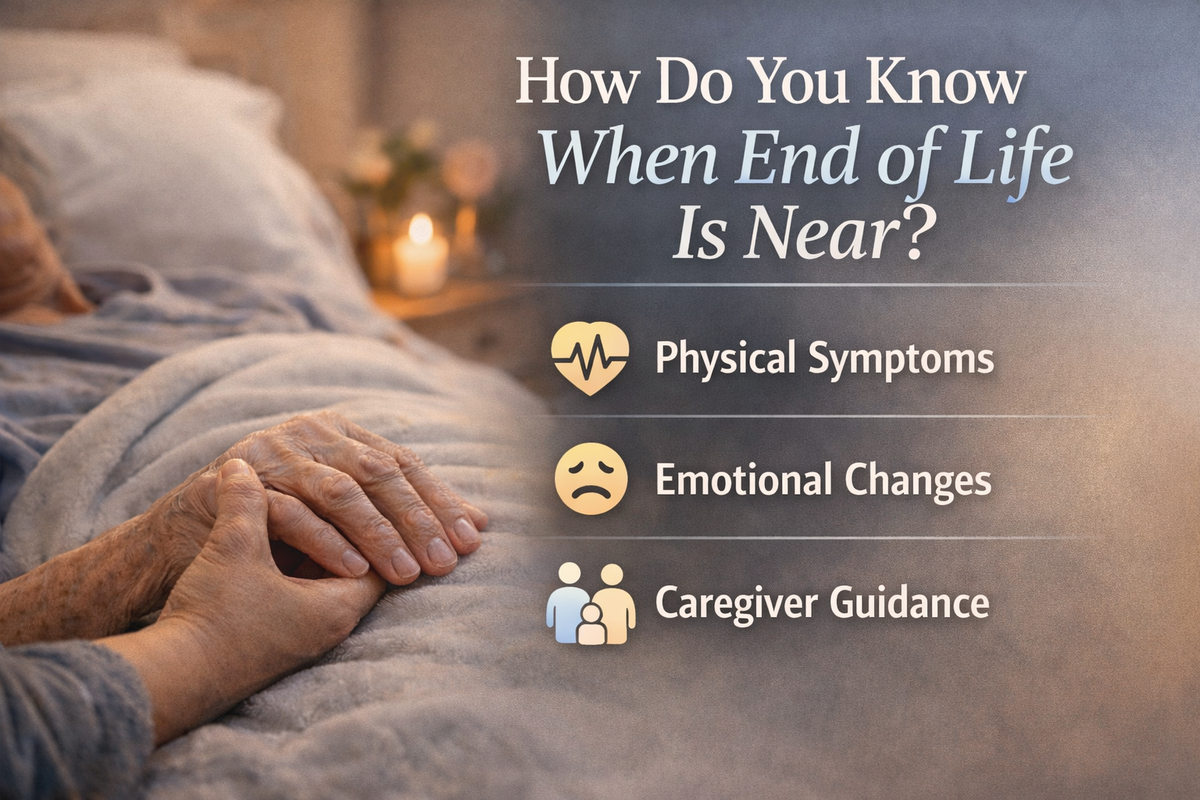
How do you know when end of life is near? This guide explains the physical, emotional, and cognitive signs of dying so caregivers can recognize what to expect and provide comfort during the final stage of life.
What Are the Signs That End of Life Is Near?
End-of-life signs are changes in the body, mind, and behavior that indicate a person may be approaching death. These signs can happen gradually or suddenly and vary from person to person.
While no one can predict the exact moment of death, recognizing these signs helps caregivers:
- Prepare emotionally
- Make informed care decisions
- Provide comfort and support
Common Physical Signs of End of Life
As the body begins to shut down, physical changes become more noticeable.
You may observe:
- Decreased appetite and fluid intake
- Increased sleep or unresponsiveness
- Weakness and limited mobility
- Weight loss
- Changes in breathing (irregular, shallow, or labored)
- Cool or mottled skin, especially in hands and feet
These changes are part of the body’s natural process and often indicate that death may be approaching.
Emotional and Psychological Changes
End of life is not just physical—it is also emotional.
Common emotional signs include:
- Withdrawal from people or activities
- Increased need for reassurance or companionship
- Fear, anxiety, or restlessness
- Sadness, regret, or reflection
- Moments of peace or acceptance
👉 These emotional shifts are normal and should be met with patience and compassion.
Cognitive Changes and Confusion
As the brain is affected, cognitive changes may occur.
You may notice:
- Confusion or disorientation
- Difficulty recognizing people
- Hallucinations or seeing things that aren’t there
- Trouble communicating or focusing
These changes can be distressing but are common in the final stage of life.
Spiritual Changes at End of Life
Many people experience spiritual changes as death approaches.
These may include:
- Increased interest in faith, meaning, or purpose
- Talking about seeing deceased loved ones
- Expressing peace or readiness
- Reflecting on life and relationships
Each person’s experience is unique, and all responses should be respected and supported.
Changes in Breathing: A Key Sign Death Is Near
One of the most recognized signs of end of life is a change in breathing.
You may notice:
- Irregular breathing patterns
- Periods of rapid breathing followed by pauses
- Shallow or labored breaths
- A rattling or gurgling sound (often called the “death rattle”)
👉 These changes often occur in the final hours to days of life.
For more on this, read:
How Long Can End-of-Life Breathing Last? What Caregivers Need to Know
When Should You Call Hospice or a Healthcare Provider?
It may be time to seek support if you notice:
- Increased pain or discomfort
- Significant changes in breathing
- Rapid decline in health
- Loss of interest in food or fluids
- Increased confusion or agitation
Hospice teams are trained to:
- Manage symptoms
- Provide comfort
- Support both the patient and family
👉 Early support can make a significant difference in quality of life.
Can You Predict Exactly When Death Will Happen?
No. Even experienced medical professionals cannot predict the exact moment of death.
End-of-life timelines vary based on:
- Underlying illness
- Overall health
- Individual response to the dying process
👉 What matters most is recognizing the signs and focusing on comfort and presence.
How Caregivers Can Provide Comfort
During this time, your role is not to “fix” anything—but to be present.
You can help by:
- Sitting quietly and offering reassurance
- Holding their hand or providing gentle touch
- Keeping the environment calm and peaceful
- Following hospice guidance for comfort care
Even if your loved one cannot respond, your presence matters.
The Emotional Impact on Caregivers
Watching someone you love decline is deeply emotional.
You may feel:
- Fear or uncertainty
- Grief before the loss (anticipatory grief)
- Exhaustion or overwhelm
These feelings are normal.
You are not alone—and support is available.
Frequently Asked Questions
What is the most common sign that death is near?
Changes in breathing, decreased appetite, and increased sleep are among the most common signs.
How long do end-of-life symptoms last?
They can last from days to weeks, depending on the individual.
Is confusion normal before death?
Yes. Cognitive changes, including confusion and hallucinations, are common.
Should I call 911 during end-of-life changes?
No. If your loved one is expected to be at end of life, contact hospice instead.
You Don’t Have to Navigate This Alone
Understanding the signs of end of life can help you feel more prepared and less afraid during this difficult time.
Explore more caregiver support:
- The Caregiver Balance Guide: A Family Caregiver Support Guide to Prevent Burnout and Organize Care
- How to Know When Death Is Near: A Hospice Nurse’s Guide for Caregivers and Families
- Caregiver Burnout Is Real: How to Heal Your Body, Mind, and Soul Naturally
- My Vital Vault: Emergency Peace of Mind for Families
Because caregiving should not cost you your health.
Helping caregivers care without losing themselves.