Caregiver Burnout Relief: How 5 Minutes of Silence Can Help When You’re Overwhelmed with Mark Blacknell - Episode 244

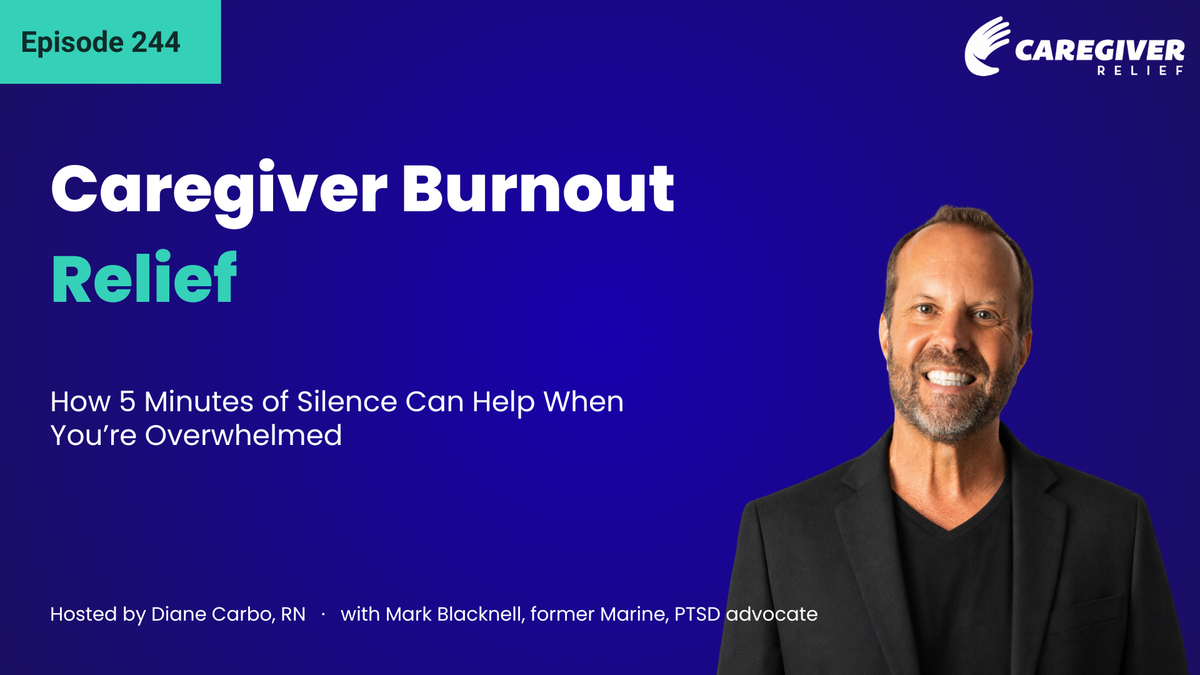
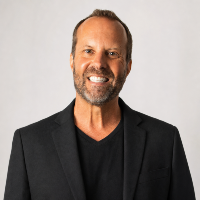
In this episode of the Caregiver Relief Podcast, host Diane Carbo, RN sits down with Mark Blacknell—a former Marine, PTSD advocate, and author of Just Stare at the Damn Wall. Mark brings a refreshingly honest, no-nonsense, and incredibly simple approach to mental health and meditation that requires no complicated techniques, no forced breathing, and no expensive tools.
If you've ever thought "I don't have time to sit still" or "When I stop, my mind gets too loud," this episode was made for you! 💖
📌 Episode Highlights & Outline
- 🛑 The Caregiver's "24/7" Reality: Unlike facility workers who punch out at the end of a shift, family caregivers often face a round-the-clock job. Mark and Diane discuss why finding ways to "punch out" for self-care is essential to survival.
- ⚽ The Soccer Ball Analogy: Why quieting your mind isn't about magical perfection—it's simple repetition, like a kid kicking a soccer ball against a wall.
- 🪑 Just Stare at the Wall: Learn the straightforward method of sitting down, facing a wall for 5 minutes, and watching your thoughts pass by like a series on Netflix without judging yourself.
- 🗣️ Recognizing Internal Dialogue: Discover how quiet reflection helps you spot self-judgment, negative mental chatter, and realize that your feelings of exhaustion, grief, and frustration are 100% normal.
- 🧘 Simplicity as a Survival Tool: Why standard complex meditation techniques fail for overwhelmed people, and why keeping it as simple as staring at a wall is the key to creating a lasting routine.
- 🕊️ Settling the Chaos: How taking a brief 5-minute pause in the morning can slow down a spinning world and bring grounded stability to your day.
💡 Key Takeaway
"When I sit down in the morning, the whole world's spinning. Everything feels wobbly and fast. And then after I do it, everything settles down." — Mark Blacknell
🔗 Episode Resources & Links
- 🌐 Mark's Website: stareatthewall.org
- 📚 Mark's Book: Just Stare at the Damn Wall
Podcast Episode Transcript
Diane: Welcome to the Caregiver Relief Podcast. I'm your host, Diane Carbo, RN. If you are a family caregiver, there are moments, quiet, heavy moments, when you may find yourself thinking, "I don't know how much longer I can keep doing this."
Not because you don't love the person you're caring for, but because you are exhausted, overwhelmed, and carrying more than anyone sees. The expectations placed on the family caregiver are beyond what is humanly possible by one person, and today's conversation is for you. My guest today is Mark Blacknell.
He's a former Marine. Thank you for your service, sir. He's a PTSD advocate and author of Just Stare at the Damn Wall, who brings a refreshingly honest, no nonsense approach to meditation and mental health.
After hitting rock bottom, Mark discovered something simple but powerful. Yet even a few minutes of silence can begin to steady the chaos inside. Now, I don't know what you may be thinking. I don't have time to sit still, and when I stop, my mind gets louder.
I understand that. I've been there. And that's exactly what we're going to talk about today. Because caregiving often keeps you in a constant state of urgency, always doing, always thinking, always holding it together. But what if just five minutes could help you begin to find your balance again?
Diane: Thank you, Mark.
I'm so excited for you to be here and join us and share your information with us. Again, thank you for your service. That's a huge sacrifice our soldiers make to allow us to have this conversation.
Mark: Thanks for having me today.
Diane: Now, you've worked with people who feel like they've hit rock bottom. What would you say to a caregiver who feels like they simply cannot keep going like this?
Mark: Well, I can completely, understand where they're coming from, number one, because, even in a facility the caregivers have it tough, and they
Diane: Yes
Mark: punch in and punch out.
Diane: Yes.
Mark: If you're caring for someone at home, that's almost a 24-hour job. There's no way to punch out.
Diane: Yes.
Mark: So basically what I'm saying is we need to figure out ways to punch out.
Diane: And you know what? I'm glad, and your approach is different from others that I've spoken to, and that's why I'm interested. Because the first thing out of a caregiver's mouth is, "I just don't have time for this." So and they are in a constant go mode. so how do you even begin to slow down when everything feels urgent and dependent on you?
Mark: Well, that's why I start people, even one minute, if you could just stop for one minute, and I offer, you know, sit in a chair and face the wall. So just, the first thing is just to make that your intent.
Diane: Yes.
Mark: Just find a way to stop, and one and bring it into your routine. It's all about making this type of thing part of your routine.
So somehow you gotta slip yourself, self-care into your routine.
Diane: How do you quiet your mind, Mark? I'm sitting here and I'm, I have a ... I learned how to do this, but it's very challenging because to ... I love your thought to just sit at, and stare at the damn wall. I love that because, it gives you a focus.
Okay, you sit at the damn wall, but then you're going to have your mind, your brain's gonna go, "What are you doing here? I have to do this, I have to do that." How do you start to quiet your mind?
Mark: It's World Cup time, and I love soccer, so I'm gonna bring soccer up.
Diane: You know? That's fine.
Mark: So when a kid, when he's young, he's kicking the ball against the wall to himself over and over and over and over again.
And then someday he may be in front of, a billion people in the World Cup. But it all started with him just kicking the ball against the wall. It's practice. So if you sit there and you practice each day, you kick the thoughts against the wall, let's just say, use that analogy, you'll start to see how to kinda handle them better, kinda like a soccer ball.
So it's just repetition is all it is. It's not something mystical or big or it's just repetition, like kicking a soccer ball. Any other, you know
Diane: Yeah
Mark: repetitive thing. So
Diane: I know many caregivers
Mark: It's almost like your mind, you know, your mind
Diane: Yeah
Mark: works out.
Diane: Yeah. Well, I know many caregivers often feel like they're hitting their head against the wall.
Mark: If you fall asleep when you're meditating, you will. Yeah.
I've done that, yeah.
Diane: Oh. so you sit in a chair and what do you do, tell your brain to when, thoughts come in, stop and replace them with some peaceful mantra or
Mark: Or no. Actually, it's just the opposite. You just watch everything come and go without judging it. Try to not judge it. Of course, you probably will judge yourself, especially if you're trying to silence your mind.
I don't think that's a good idea. I think,
Diane: Okay
Mark: kinda the idea is just to sit there and watch it
Diane: So I'm looking at a blank wall and
Mark: And whatever comes, whatever goes and then you do your time, maybe five minutes in the beginning.
And then you're done, and then you... The next day you do the same thing, and then the next day you do the same thing.
Sooner or later, it could be a year, it could be five days ... everybody's different.
Diane: Yes, yes.
Mark: Like you said, there's no cookie cutter approach. You'll start to see, probably how this thing up here is working .
Diane: Your, yeah, our brains are, yeah.
Mark: You'll start to see certain things. It's hard to really explain how it works other than all I can say is I don't wanna plant anything in anybody's head up front.
Diane: Right, right. '
Mark: Cause everybody's different. Just watch it. Just stop and watch. You know, how do you actually feel? What are you thinking right at this precise moment? We don't often do that as human beings. what's the reality of my situation right here?
Diane: And so how does your approach help break the cycle of self-judgment?
'Cause we're so cruel to ourselves. We push ourselves beyond what's humanly possible, and being quiet is hard, because the cycle of self-judgment is going to start. So you're telling me I can just sit in a chair, look at the wall
Mark: Try not to move.
Diane: and, okay, so you get comfortable and you put a timer on for five minutes?
Mark: Yeah. Yeah. That's one way of doing it. And, when I first started meditating, I was constantly watching the timer.
Diane: You know what? I understand that. I get that. Yeah.
Mark: I couldn't wait for it to be over. and five minutes is just the beginning. Once you kinda make the five minutes part of your routine, you can bump it up and maybe sit still for 10 minutes.
Then once that kind of becomes a routine, you don't wanna go past 40 minutes, then you can hurt yourself, in my opinion. So I always start at, people at five minutes. And if they can do that for two weeks straight without missing a day then maybe they're ready for a little bit more time.
Diane: So this is a very simple silent meditation. We're not, you're not asking us to do breathing techniques. You're not ask
Mark: Just breathe naturally.
Diane: Just breathe naturally, okay.
Mark: Pay attention to it maybe.
Diane: Okay. But
Mark: I try not to plant anything in anybody's head other than the form, which is, you put your hands a certain way- and you sit a certain way.
Diane: Okay.
Mark: Besides that, you basically learn to teach yourself.
Diane: That's very simple silent meditation, but why is simplicity so important, especially for overwhelmed individuals? it sounds too simple .
Mark: Because that, that's exactly the point . The ironic point is that it's very, very simple.
And it's hard to believe that it could actually help because it is so simple. All we're doing is just sitting there and watching ourselves, kinda like Netflix. If you can watch an episode of a Netflix series that means you have some time .
Diane: To meditate, yes.
Mark: You have some time to watch your, the series of yourself.
And if you watch it, like any other series, through six seasons you start to get it.
Diane: Yeah.
Mark: That doesn't mean, I fall into bad habits too. Once you make meditation a habit, then it's a habit. Then you gotta
Diane: Yeah
Mark: you gotta deal with maybe it going stale or just going through the motions or things like that.
But at first it's real simple. Just sit there and observe, kinda like a scientist, you're studying yourself, really
Diane: So I'm a caregiver. I've been both professional and, a personal family caregiver. And my challenging times were, when I was taking care of my mom. I was very young.
I wouldn't have even known about this stuff or with my son, I dealt with the military medical delivery system. God bless us, and save us. So I would sit there. I don't know if I could sit there and look at myself. So you're looking for self... I know you're not giving an idea, but, so we just sit there and whatever comes to mind is what we should focus on?
Is that it?
Mark: Yeah. Just, Okay ... you'll kinda start to see feelings and thoughts floating by.
Diane: It's different
Mark: for every person.
Diane: Yes
Mark: let's make that clear. But,
Diane: Yes
Mark: you'll start to see how what you focus on, what you attach to, and in Buddhism we're always talking about attachment.
Diane: Yes.
Mark: What we mean by that is what we choose to focus on.
Diane: Ah. Yeah.
Mark: So really, you start to learn how to focus. And I mean, like, really focus.
Diane: That's very interesting. The majority of people, caregivers included, fear silence.
When a sentence, when people are talking, they get uncomfortable if nobody's saying anything. And when we're by ourselves, so many of us have to have the TV on or music on or the background noise of news and whatever's going on in the world, because we fear the silence. And, you're telling me to sit there in the silence and, all of a sudden I'm thinking, well, you know, the things that come up for me are grief, anger, resentment, and guilt.
Mark: I mean, those are very common, issues and emotions that caregivers face. And tiredness. And, and the anger become, is because they don't get enough help. Of course, they don't ask for enough help. there's a whole cycle there. Well, that's a good point. But, all of that's normal.
Diane: Yes,
Mark: I think the thing that maybe stopping to pay attention to all that, on a routine basis, you start to realize that this is normal for a human being to feel this way. Specifically if you're in circumstances where you're a caregiver like that, that's consuming.
Diane: Yes.
Mark: So you, I think the thing that I started to realize is that the way I was feeling based on my circumstances and conditions was just normal.
There was nothing wrong with me. There'd be something wrong with me if I didn't feel that way. So I started to see that Really we're all, whether we're caregivers or not, we're all suffering human
Diane: Yes
Mark: there's no human being that is just living this perfect, life
Diane: Correct
Mark: And then that, that kind of helped me to be easier on myself.
Now you gotta be careful 'cause I'm at the point now where I can be too easy on myself, 'Cause I've worked all that out.
Diane: Yeah.
Mark: Then you can get a little lax and be too easy on yourself and lose your discipline and lose your focus. So it's kind of like a balancing act. So you talk about, I grew up in front of the television too.
I did my homework to The Flintstones and The Brady Bunch.
Diane: Yep. Yep.
Mark: That's I'm giving my age away here. Leave It to Beaver too. It was a rerun at that time.
Diane: Hey, I watched the original
Mark: Leave It to Beaver. Yeah, I watched reruns, but still.
Diane: Yeah.
Mark: but
Diane: Giving my age away too,
Mark: But you mentioned how, for me, music and the TV, that's natural for me.
So I think it's just like adding the silence. You don't have to go extreme and say, "Oh, I have to stop everything." It's not realistic to think you can just change your routine in a day.
Diane: Right.
Mark: This is more gradual. Okay. So this is okay, you got the news, you got music, you got this. Just add a little silence in there, Just stop it all for a little. maybe just listen to the birds. However you want to start. You know what?
Diane: Yes. That five-minute reset, I would love to just sit and, the first thing, when you said about listening to the birds or whatever, yes. I always tell my caregivers, "Stick your head out the window every day.
Get out into nature. Feel, get back to your roots." it help you feel grounded when everything else is exploding around you. I don't know if you're aware of this Mark, but the typical the average length of a caregiving journey is five years, five and a half years. That's a long time, and it's massive, change for a caregiver.
And they do, become worn out and tired. They, they get angry, resentful. And one of the things they do over time is have such anger and rage in them that, it negatively impacts their health. So I like What I'd like to bring attention to what can be done to help them. And so many of them say, "Well, I don't have money, I don't have this, I don't have time."
But all you're telling them is to do is sit in front of a chair, or sit in a chair in front of a wall and just look at it.
Mark: Yeah. That, that's a great point. Like, you're bringing up the kind of voices that are typical in the head of a caregiver. Yes. We all have voices in our head.
Diane: Yes.
Mark: I think the good thing about stopping to pay attention to that type of thing is you start to hear 'em.
Diane: Yes.
Mark: You start to hear these voices, and then you can be more aware of maybe the negative ones, and turn 'em around a little. It's an interesting process, the internal dialogue, when that starts becoming clear. Sometimes you realize that the voice that is in your head isn't even yours. It's maybe
Diane: You know what?
Mark: your father's or your mother's or- It's your,
Diane: yes, or your One of the things that happens in caregiving is there's a primary caregiver, and there's extended family members or uninvolved siblings that are judgmental. They're cruel. Of course ... they demean and dismiss what the, the primary caregiver is doing.
And a lot of that is to manipulate them to continue to do it, so that they're not expected to, 'cause they, those people, feel that they're too important, to be able to provide that kind of care. So a caregiver, they get beaten down so much. And, I love this idea of you sitting there and, 'cause I can hear things in my mind when I, quietly.
Silence used to terrify me, because I didn't wanna think about all those things. But you're forcing us to bring I know the first thing I would think is, "Daggone it, I'm just exhausted. I'm tired. And why do I feel so tired?" And then when you start to look at your day, you're thinking, "Well, hello.
I'm doing the work of 10 people."
Mark: Yeah.
Diane: And I like that.
Mark: And it's a loved one, too.
Diane: Yes. It's like your, it's your mother or someone you're
Diane: Yes.
Mark: So that brings an emotional component, but one, what I always say to caregivers is you're doing the right thing.
Diane: Yeah.
Mark: And someday, it might not make sense now, but once your loved one passes away, you'll have that inner knowledge that you did the right thing.
Diane: Yeah.
Diane: You did your best, and that's valuable.
Diane: Oh, it's absolutely priceless. And, one of the things that you bring up is that caregivers don't understand that they also are feeling a sense of grief, of, and there's, as they watch their loved ones, whether it's their both parents or one parent start to decline.
And, there's so many different types of grief. So you know, and their goal is, like, "Oh my gosh, I've got to do everything I can to keep my loved one alive for as long as possible." And, it's just not possible to do that all the time.
Mark: And it's also the realization that this is where I'm headed.
Diane: Yes.
Mark: After all this work, all this struggle, this is where I'm headed too.
Diane: Yes.
Mark: And that's tough to deal with. I mean, to bring that, if you're out working in an assisted living or a hospital or something to bring that home is difficult. But if it's always around you
Diane: Yeah
Mark: in your home, phew. That, that's tough.
Diane: And the other thing right now, Mark, is our healthcare system's so broken that the family caregiver is the single largest, pillar of the long-term care industry.
There's 63 million people out there providing care that is providing $1.1 trillion in unpaid care, and that's going to get even, in the next four years it's going to explode. We are really in a public health crisis right now. It's severe. And one of the things that, we're seeing is caregivers are developing PTSD.
They just are. Because the expectations are too overwhelming. What once was done by healthcare providers is now expected of the family caregiver. Now, as a person who has had PTSD, can you talk about, your struggles with how you work through this system, and how did you find this, decide to find this system?
Mark: Well, you know, meditation's thousands of years old.
Diane: Yes.
Mark: And I'm in a specific tradition. I kind of shy away from traditional type avenues now, but it's meditation has been around for thousands of years.
And it's been a tool for humanity for thousands of years, and all the major religions, if you look at the, the leaders and prophets, they all meditated, like Jesus and Abraham and Muhammad and Moses.
Diane: Yeah.
Mark: They were all meditators. So there's something to it, but the tough part about it is it's so simple Like you said, all these things are going through our minds, and especially in times of struggle when you're working hard and in a very emotional environment, and you don't feel like you have the support you need.
And I think the tension in modern society, regardless of your position, is palpable.
Diane: Yes.
Mark: Even younger people, I think, are feeling this kind of pressure. So the beauty about meditation is, the more you think about it, the less you're gonna wanna do it.
Diane: Yes. Yeah.
Mark: So it kind of helps you. the routine itself, if you can manage to keep doing it, it does help you think less.
I mean, thinking is a valuable tool, critical thinking. You don't want to abandon that. but what thoughts do we actually need, and which are not very good for us? That's another thing you start to see in meditation. You almost simplify your mind to basically what's needed.
Diane: You are actually promoting self-reflection.
And introspection of ourselves. I'm sitting when I'm sitting looking at the wall and I'm thinking, I'm worried about my dad. He's dying. We've got him on hospice. I've got all these things to do. I don't know how I'm gonna do it. I'm not feeling well myself.
So you force yourself to think.
Mark: You kind of force yourself to, to think so much that you realize that it's futile and you let go. I mean, that's kind of the point of the whole thing, for me. It
Diane: yeah.
Mark: Now, this is just my take.
Diane: Yes. Oh, I know.
Mark: I thought myself through so much that I realized that, all this thinking is just burning up my energy.
Diane: Yeah.
Mark: And, you gotta be careful where you... I say that the mind is like a loaded gun. You gotta be careful where you point it.
Diane: Yeah. I like that. I like that.
Mark: So really, it's just understanding that where you direct your mind is what's really happening to you at the moment. The mind is everything.
Diane: You know
Mark: But it only gets you so far.
Diane: Yeah. and I tell my caregivers and my listeners, I just tell them, you change your perspective, you change your life." And if you choose to be angry and upset and not deal with, what the root cause of that is, for example, for a caregiver, they need help.
There's no way on God's green earth one person can do what is being expected of a family caregiver. And, they are having the expectations put on them, and they just do it because they feel that it's expected of them when our system is taking, is putting unrealistic expectations on the whole system.
And they need to be able to stand up and say, I can't do this. I need help." And they need to reach out to others and find resources. And I think that your self-reflection will scare the hell out of many of them when they first start. Well Because they're not gonna like what they're hearing in their minds.
Mark: You're making a great point, though. So the first step is to realize you need help.
Diane: Yes.
Mark: And the wall and meditation can help you realize that you can't do it alone, and then it can help you focus on getting help. I need help. Whatever the crisis may be.
Diane: Yes. Yes, yes,
Mark: You know, personal or an addiction or whatever.
Yes. That's one thing, it helps you realize that you can't do it alone and that you need help. I know. And once you realize that, then you can look out into the community for help
Diane: Interesting. So, you start at five minutes and you have the timer. I'm sure many the initial week are going, and maybe two weeks even, are going to be challenged at sitting for five minutes.
Mark: Yeah, most, I'd say out of 1,000 people, only one actually did it two weeks straight.
Diane: Wow.
Mark: So
Diane: Wow
Mark: that's all part of the process
Diane: Yeah
Mark: not beating yourself up when you can't do it. But I think the key is just to keep it in the back of your mind.
Diane: Yeah.
Mark: Keep it in the back of your mind.
Maybe I should stop and go quiet for a little here. Go still and quiet.
Diane: You know, that's really a really good point. I encourage my family caregivers, and they're so exhausted and so tired. So many of them look at me like I have two heads when I say this. But get up 10 minutes earlier than, or 15 minutes earlier than you need to get up and take that time for self-reflection.
And, I like the idea of just sitting and looking at the wall and thinking, "Okay, I'm going to give five minutes, five minutes." And that is precious. Five minutes is precious to every single family caregiver out there.
They don't allow them even five, themselves five minutes, so I think that it's really important.
Mark: Well, here's the simplest way of putting it. When I sit down in the morning, the whole world's spinning.
Diane: Yeah. Oh, yes.
Mark: Yeah. I mean, everything feels wobbly and fast and spinning.
Diane: Yes. And then after I do it, everything settles down. So
Mark: I think that's the best way of putting it
Diane: Yeah. Well, you know, I used to get up, when I was taking care of both my mom, I was a kid, but my son, and I've taken care of my father till he passed. I used to get up and take those moments, of reflection just to take a deep breath and think, "Okay, gonna start the day." And you know, I started the day with a prayer, which I'm not a religious person, but I do, believe in a higher power, and I like starting my day on a positive note.
I start with that attitude of gratitude is my goal. But what, it's just taking that step. But five minutes, would have me in a panic. Oh my God, quiet for five minutes? it would be challenging at first. But now I could do it and not feel, a sense of urgency that I'm gonna miss something, and I could probably do 15, 20 minutes, right now of meditation without, my brain saying, "Hey, you gotta do this.
You gotta do that."
Mark: Let's not get ahead of ourselves.
Just kidding.
Diane: Okay.
Mark: Just kidding. But my Just my website, stareatthewall.org, has instructions on there.
Diane: Oh, okay.
Mark: And then
Diane: Okay
Mark: the book has instructions, too. It's just simple. You put your body a certain way, your hands.
Diane: Okay.
Mark: And just get started. that- It's so simple, it's
Diane: That's, it's so simple that it's overlooked, and that
Mark: Yeah, it's almost impossible to believe.
Diane: Yes. Yes, Mark, that's very true. I really appreciate your, approach. I think that it's great. I love that you are a Marine that has found a solution to, your PTSD. I love that, and that you're sharing it with others, and that it's so simplistic makes me giggle.
Mark: Well, I always say it's a tool, you know?
Diane: Oh, absolutely.
Mark: I had to go to counseling and meditation.
Diane: Yeah.
Mark: I say medication and meditation go very well together.
Diane: For some people, absolutely. Absolutely, I get that. But I really appreciate your time. Once again, I want you to tell my listeners how they can find you.
Mark: Sure. It's just stareatthewall.org, and the book is called Just Stare at the Wall.
So you can find that on all your outlets. And basically
Diane: Yeah,
Diane: we'll have links
Mark: basically everything I say is, blah, blah, blah, blah, blah, just stop and stare at the wall, blah, blah, blah, blah, blah. So I'm just trying to encourage people to teach
Diane: Yes
Mark: themselves,
Diane: Yes.
Mark: And become their own teachers, really.
Diane: Self-reflection, it's powerful, yes. thank you so much for your time, and I created a permanent page on my, Caregiver Relief website, and links to your book and, your site will be, at the bottom of the page
Mark: Great
Diane: So that people can find you. to my family caregivers, you are the most important part of the caregiving equation.
Without you, it all falls apart. So please learn to be gentle with yourself. Practice self-care every day because you are worth it.
Caring for a loved one can be overwhelming — but you're not alone. If you have questions, big or small, our expert team is here to help.
👉 Click here to Ask the Expert
Our Resource section can help you find the information and tools that you need. We have courses, videos, checklists, guidebooks, cheat sheets, how-to guides and more.
You can get started by clicking on the link below. We know that taking care of a loved one is hard work, but with our help you can get the support that you need.
Click here to go to Resource Section now!