An Aging Plan Can’t Wait: Navigating Care, Crisis, and Family Dynamics with Annalee Kruger - Episode 189
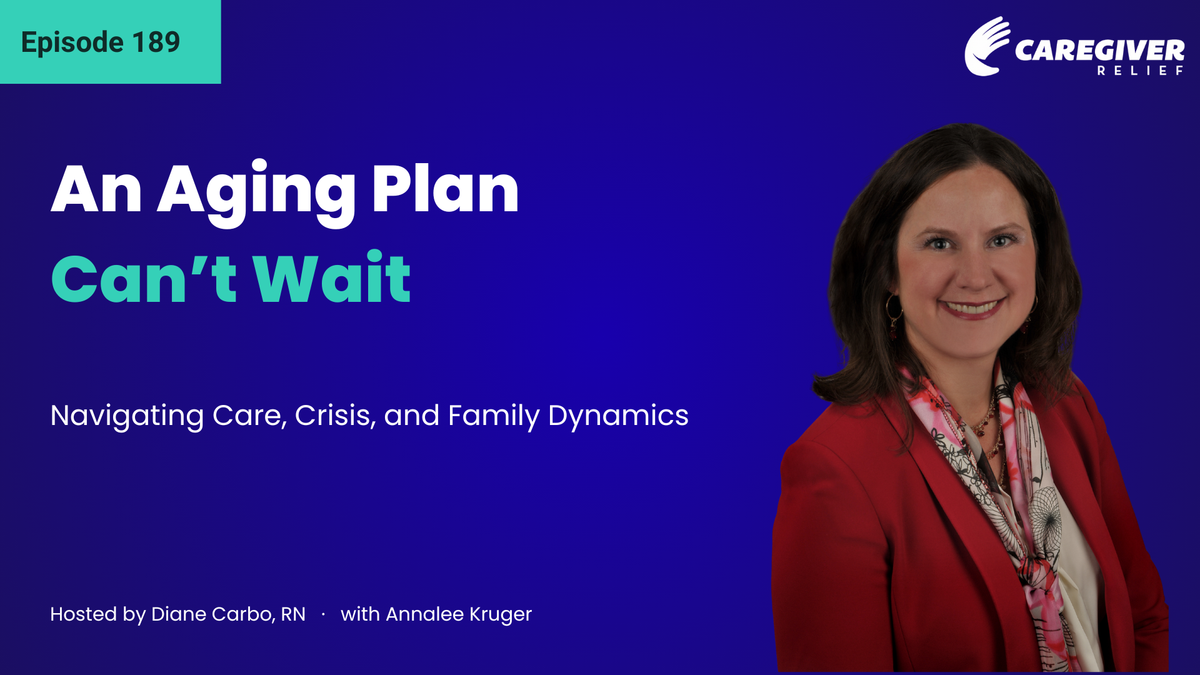
In this powerful episode of the Caregiver Relief Podcast, host Diane Carbo, RN, sits down with Annalee Kruger, founder of Care Right Inc. and author of The Invisible Patient. With decades of experience in the senior care industry, Annalee pulls back the curtain on a hard truth: most families aren’t just unprepared for aging—they are one medical emergency away from a total collapse.
From the rising costs of "aging in place" to the physical and emotional toll that turns caregivers into "invisible patients," this conversation is a vital roadmap for anyone with aging parents or those planning for their own future.
📋 Episode Highlights
- The Myth of "Aging at Home": Annalee breaks down the staggering reality that staying at home can cost upwards of $30,000 a month for 24/7 care, often far exceeding the cost of assisted living.
- The "Invisible Patient": Why the primary caregiver is often the one who ends up in the hospital (or worse) due to the extreme physical and emotional demands of the role.
- Safety Triggers: Learn how to identify the "red flags"—like frequent falls, UTIs, or wandering—that signal your current plan is no longer safe.
- The Medicaid Trap: Why "depleting funds to get on Medicaid" is a dangerous strategy that strips away your choices and limits you to facilities with the lowest reimbursement rates.
- The Aging Plan vs. The Crisis Plan: The difference between making calm, informed decisions today versus being forced into expensive, high-stress choices during a 2:00 AM emergency.
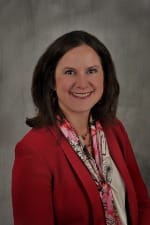
🧠 Key Takeaways: The Aging Plan Checklist
Annalee stresses the importance of a Grab-and-Go Binder and a Care Matrix to protect your family:
- Legal & Financial: Do you have Power of Attorney, long-term care insurance, and a list of all bank passwords?
- Medical Alignment: Does the family understand the actual progression of the specific disease (like Alzheimer's or Vascular Dementia)?
- Family Mediation: Using a neutral third party to navigate siblings' disagreements before they tear the family apart.
- The "What Ifs": Planning for the small things that become big problems—like who takes the dog if Mom is hospitalized?
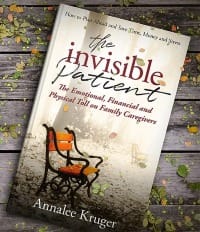
💡 Notable Quotes
"No one should ever be surprised that the primary caregiver is going to die prematurely because of caregiver burnout. No one should ever be surprised by that. But they always are." — Annalee Kruger
"We are in a public health crisis... the tsunami is here. It’s on our shores pounding every day." — Diane Carbo
🔗 Connect & Prepare
Don't wait for a fall or a stroke to start the conversation. 🛑
- Listen to the full episode below to hear Annalee’s expert advice on facilitating family meetings and avoiding the most common caregiving mistakes.
- Learn more about Annalee Kruger: Visit CareRightInc.com.
Remember: You are the most important part of the caregiving equation. Be gentle with yourself. ✨
Follow Annalee Kruger & Care Right Inc.:
- LinkedIn: annaleekruger
- Facebook: Care Right Inc. | Bonita Springs FL
- YouTube: Annalee Kruger (Care Right Inc.)
- X (Twitter): @care_right
- The Book: The Invisible Patient
Podcast Episode Transcript
Diane: Welcome to the Caregiver Relief Podcast. I'm Diane Carbo, RN, your host. Today's conversation is one every family needs before a crisis happens. My guest Annalee Kruger, has spent decades helping families navigate aging, dementia progression, and the complex senior care system, often stepping in when families are already overwhelmed and out of time.
Annalee is the founder of Care, right Inc. A virtual aging consultancy, a national speaker, and the author of the Invisible Patient. Annalee helps families understand their options, identify safety triggers, and create realistic aging plants that protect both the older adult and the caregiver. So if you've ever felt blindsided by caregiving responsibilities or you worry you might be someday, this episode is for you.
Diane: Annalee, thank you so much for joining me today. we have so many things in common and I was really excited to be able to share your knowledge, information and talk about your book.
Annalee: Thank you. Thank you for having me, Diane. But more importantly, thank you for all that you do for families across the country.
We were talking before you hit the record button about, you're, you are a pioneer in the industry.
Diane: Yeah.
Annalee: Helping families over the phone long before. current time. Yes.
Diane: I know. I was in the stone ages with the Flintstones.
Annalee: You know what though?
There's always, there is always a demand there. we're in.
Diane: Yes. And there will always be.
Annalee: And there will always be a demand, and there needs to be more people out there like us who are properly trained, yes, seasoned, educated, to help these families make informed decisions as they're aging, as they're determining care options, care needs.
Staying at home. What do we do if Mom falls? Again, all of the things that come along with aging and being a family or a solo age and be like, oh my gosh, who's gonna take care of me as I age? that's, let's talk about it.
Diane: Yes. I wanna know Annalee, what first opened your eyes on how unprepared families really are when a medical or cognitive crisis hits?
Because you've been doing this a long time, kid.
Annalee: Yeah, actually my whole life, my grandparent, literally my whole life. I'm a Iowa Farm kid. in the seventies, I'm 53 years old, and so in the seventies we had our grandparents move in with us because back in the seventies, there wasn't independent living, there wasn't home care on every corner.
There wasn't assisted living, and so seniors at that time, or in our case, grandparents either failed and died at home. They moved in with their kids or they moved into a nursing home. And back in the seventies there wasn't resident rights yet. And so it was terrible. Terrible places to go. And so I knew by the time I was in third grade that I wanted to serve families and their aging loved ones.
I just didn't know what it was called at the time. But it's called social work. Yes. And and I was a little girl, so I'm like, I don't know what this is, but I'm gonna help families and help them navigate care. And so I spent 28 years in long-term care, working first as a social worker, admission and admissions director.
So I did all the tours and explained the facility, explained dementia, explained the levels of care. Assisted living is the, is different than nursing home. Medicare is not Medicaid, and all the things that families got thrust into and didn't understand. Stand care options. They didn't understand our lingo.
And so I spent all this time doing during the tours, educating families. When I would ask them, what do your parents have in order? 'cause it, let's be honest, it's the adult kids that get thrust into this. They get that crisis call and mom's in the hospital, she's a caregiver to dad with Alzheimer's. The kids are like, oh my gosh, what do we do now?
We have two parents that need two different types of care. They don't know. What their parents have in order for estate documents or living wills or long-term care insurance. And so it was just always crisis my entire. Career as a social worker, admissions director, and an eventually executive director.
So in 2011, and Diane, you'll get a kick out of this. I don't know if your listeners will, but you probably will. 'cause you know how healthcare has changed. But in 2011, I was gonna get fired because I was spending too much time with the families. I was exceeding the minutes per patient per day. But these continuing care retirement communities, the ones that have in, independent living to assisted living, all the way down to memory care and skilled nursing.
I was exceeding the minutes per patient per day because I was spending too much time with families, educating them and supporting them and guiding them. But it was very shortsighted for administration because we were full with a waiting list because I spent so much time with family. Yeah. Yes, but administration was like, we have a waiting list.
You don't need to spend two or three hours with a family. Just get 'em in, get 'em out. And I'm like, that is what's wrong with these families. No one is actually spending the time to educate them, validate their feelings, help them understand care and why dad is behaving the way he is. because he has Alzheimer's, and this is what you can expect is that disease progresses.
So in 2011, I decided to leave my career on a high note and on my terms. And I'm like, fine, I'll just start my own company. 'cause that seems so logical.
And so in fairness, I did interview for other positions in senior care, and it was more of the same, terrible workplace culture burnout. Nobody supports each other. And I was like, I'm gonna just sink or swim, start my own consultancy. So in 2011. I started Care Rights Incorporated, a virtual consultancy for family caregivers who are in that aging space of we have aging parents.
What do we do with mom and dad? Or, I'm a solor. I don't have kids that I can just call and help me out. What are we gonna do? And actually do robust aging planning. Facilitate their family meetings. What's working well, what's not working well? What do you have in place already for documentation? your grab and go binder.
'cause again, as an employee, these kids had no idea what their parents had in order, and spouses had no idea. 'cause Ethel will say, I don't know, Marvin takes care of all the. he is the one that cuts the checks and he's the one that meets with the banker and the financial planner. And so when I started my own virtual consultancy, it was to solve for the problems that I saw happening for two over two decades, working as a social worker and admissions director and an executive director where families are just blindsided.
Diane: They really are now.
Annalee: They are.
Diane: Yeah. And, what are the most common crises that trigger that moment for a caregiver?
Annalee: Oh, mom know someone's taking care of someone else, right? So mom or dad. Mom is taking care of dad. Mom had us. Stroke. Dad has Alzheimer's disease.
Diane: Yes.
Annalee: The kids get thrust into caregiving now.
Back, back when I was still an employee for those 28 years, kids lived down the street from each other so they could a little bit more easily pitch in and help out. And they seemed a little bit more in tune to what's going on with mom and dad. 'cause back then they'd still get together for after church lunch on Sunday.
there was just more involvement because they lived down the street from each other. But that said, that doesn't mean that they were actually having family meetings about the what winds. And so the problems are this is, these are the mistakes. Mom and dad, someone has a medical crisis. There's been no family meeting about the what when of aging or family kids have said Annalee, we tried to have these family meetings with mom and dad.
What do you have in order? Who's your financial planner? Do you have a living will? All of that kind of stuff. but mom or dad gave us so much pushback that we quit trying to have a family meeting because now it was affecting the relationships. And so problems that I see families have. Is, it's usually the primary caregiver takes Ill, has a stroke, breaks a hip, or dies, which no one should ever be surprised that the primary caregiver is going to die prematurely because of caregiver burnout.
No one should ever be surprised by that. But they always are.
Diane: Yeah,
Annalee: Because they'll be like, oh, mom was in the hospital, so we've been taking care of dad for three days and we are exhausted and there's three of us taking care of him because he is got his days and nights mixed up. And I'm like, yeah, that's, now you can understand why your mom was so burned out.
sometimes you just don't always. Understand until you're the one doing the care and doing the things. That's 100% yes. So that's the biggest, that's the biggest thing that happens is the primary caregiver takes ill, needs to have surgery, dies, has a stroke, something catastrophic happens to the primary caregiver.
And then the kids or the, if it's an only child, gets thrust into it and they're like, oh my gosh, I'm an only child. I don't know what to do. I don't have anyone that I can lean on or guide, help guide with decisions. It's all on my shoulders. So that's the stress that the adult kids have is now I have to make decisions for someone, maybe the adult kids.
Maybe that relationship is. So strained because maybe mom wasn't the best mom, and so there's been this long standing resentment or strange relationships, and now they find themselves taking care of someone or making decisions on be on the behalf of someone that they don't necessarily really like in the first place.
Diane: Yeah, Annalee, one of the things I am seeing is, people that have had kids because of div and then yeah, they've gone through divorce or whatever, the majority of those children do not want to, in any way, shape or form, want to help, have to help. The parent.
Annalee: That's correct, yes.
Diane: I'm seeing that so much.
And we are in a public health crisis right now where we have more seniors than youth, and every single generation after us has not replaced themself in population. So we are going to struggle now in the next 10 years because of the baby boomers, the tsunami is. Here. it's on our shores pounding every day, and it's going to be overwhelming because we have a shortage of, professional healthcare workers.
Annalee: Yep.
Diane: And things are going to fall on a parent. Then We have so many that. Didn't have children and who's going to take care of them. So it, there's going to be major changes and that's why it's so important with somebody like you or I, to make people aware that hey, there are options out there that we may be able to help you.
Annalee: That's actually what I wrote my thesis on in 2006 is the changing landscape of senior care because families are much smaller than they ever have been, and so that automatically reduces family caregivers and that automatically is gonna reduce the healthcare professional workforce as well. So
Diane: We're also seeing an unprecedented number of nursing homes closing in small communities.
How hospitals closing. Yeah. Which is because the reimbursement's so low for the skilled care anymore, it's not holding up the Medicaid, run part of the building where the nursing home is. Yeah. so we are seeing, I don't know where we're going with this. I'm doing a podcast and in the next month or so on hospital at home.
Annalee: Yeah, we, I'm from a small town in, I'm from Wellsburg, Iowa, which is about as small as you can get. Like it's not even on the map. I had 18 people in my high school class. Like it's tiny. Wow. Yes. And even back then, I'm 53. So even back then, like if we needed care, like there was no hospital, there was no home care, there was none.
and not only the reimbursement issue for these rural hospitals and rural clinics, but the reality is there's not a lot of, Enticement for people to go into healthcare because there's Medicare cutback. we talked before we hit the record button. we have a shortage of nurses.
We've always had a shortage of nurses, but now it's even worse. We have a shortage of physical,
Diane: We don't have a shortage of nurses. We really don't. I will tell you what has happened is the hospitals have cut and cut so much that they push nurses to do more with less. They don't nurses, the RNs actually do no longer actually do hands-on care.
Unless it's absolutely necessary and things are getting missed, and so nurses are being pushed out into roles like, I'm a nurse, what am I doing? Instead of hands on, I'm. Helping families like you, navigate the medical delivery system. And I have to tell you that, nurses are in, they're opening up their own clinics because, we have a shortage of doctors and specialists.
Annalee: Yeah.
Diane: Because Medicare has again, reimbursed the doctor so low that they don't want to, and the Strangulating government regulations that they have to jump through, they need three times the amount of staff they used to do in the old days when, there was the doctor and his wife was the office manager, you know that, and she held the books and took care of that.
Now they have, so many more staff. So we really have our government run po. Healthcare has created this environment where we have a shortage of everything we need, and Medicare is also moving to a, and it has moved to for a lot a, Pay as you go platform, you're going to be more responsible for your healthcare than ever before.
And that is really impacting the market right now. But it's, we don't have a shortage of those things. Nurses are in. The insurance companies, now they're into other roles because they, I can remember I used to love, when I went into nursing in 1974, I was, I love nursing. You were able to do things, provide care.
Yeah. Educate, put hands on now the nurse and it got in the nineties when I only, I did PRN work 'cause I did outside consultancy early. I have to tell you that, W when I started to get physically ill before I, the day before I would go, have to be scheduled to go into work. Sure. And that's what nurses are experiencing every day now,
Annalee: right?
Yeah.
Diane: And it's really hard.
Annalee: It's hard, and the pandemic burned a lot of really good quality health, and we've got really good quality nurses who are just, they got burned out. You can only work double shift. For so long and they're working at Home Depot and they, their heart's not in it, but they're like, it's easy work.
It's, the hours are better and they're treated better. And so when I say we have a shortage of, I say we have a shortage of quality healthcare workers because a lot of Absolutely. the system is broken. Yeah. And you can only. So that's why I left too. The system was broken, right?
Diane: Yeah. And so they burn out really good quality workers and some of us start our own consultancy. we've got more mobile nurses than we've ever had. they're, they're finding a niche so that some of 'em are, still in the industry 'cause that's where their heart is at. But a lot of 'em are like, I'm done with healthcare, because they got so burned that now they're just doing non-healthcare stuff and And you know what, this leads me to the point that I wanna make that, things roll downhill and the, it's the doctor shortage, the nurse's shortage. Now we have a professional caregiver shortage, so everything is thrown on the family caregiver. And the responsibilities are overwhelming and that's why I love the fact that you do virtual and
I really feel bad. I wanna talk about aging at home. You know what? Yeah. Because that's, it's really getting to a point now where, that is the last frontier in nursing. And actually what we're seeing is, Concierge nurses, concierge doctors, concierge therapists, physical ot, PT speech, tele, teletherapy is for not just mental health, but physical and OT is very real in our fortune, our future. and technology is also, so what are the real pros and cons? Families need to understand early when they're talking about aging at home.
Annalee: So aging at home can happen. If you have the right supports in place, you have enough care coming in, you have enough quality, reliable care coming in. But by the same token, that costs money.
My, what families don't think about are, what consumers don't think about is some of them. Many of them assume that Medicare is gonna pay for all of this home care and it does not. So clients are paying. You know when I say to Ethel and Marvins, what are your goals as you age? It's always the same thing.
We wanna age in place at home. We don't wanna be a burden on our kids, but guess who is always on Zoom with me for their 30 minute free consult the adult kids, because guess what? The adult
Diane: Kids, absolutely. Adult
Annalee: Kids are now providing Mom and dad's assisted living. Because they're managing medications.
They're getting them to their doctor's appointments. They're ordering food, they're ordering Ubers. And so when people think about aging in place at home, they're not realizing the actual cost. And so I always educate families that none of us are going to get healthier, more able bodied, more mobile, more cognizant as we age.
So it's only common sense. That we're going to need care as we age and more and more care as we get old and frail and can't do anything for ourselves anymore. My clients who are aging in place at home, and it's a scary number, but I just need to tell people they're spending minimally. $30,000 a month in just one caregiver companion, 24 7.
Now you need a geriatric care manager. 'cause you can't manage your medications, your prescriptions are running out and you didn't realize, oh, we need to have a doctor's appointment to renew the prescription. And so geriatric care managers, that's another, 150 to $250 an hour.
And so families don't realize the actual cost of trying to age in place at home. It's one thing if you have $5 million. Yeah, but it's another, if your house is of 300,000 is your asset and you're living on social security, trying to stay at home is just not going to necessarily be feasible or safe.
One of the other things, and you probably see this on a day-to-day basis too, is mom and dad are hellbent trying to stay at home. they won't, they're not taking care of each other. And so we tried to get home care in there and we ordered that, we ordered home care ordered like it's a pizza.
We, we lined up home care and pay. We're paying for it, as the adult kids we're paying for it. And that's just not sustainable for kids either, unless they want to pay that kind of money. But. What time? What happens oftentimes is mom or dad will kick the caregiver out or they won't open the door.
And so anytime the kids try to put their version of an aging plan in place, mom and dad, were will foil it in one way or another. Exactly. 100%, yes.
Annalee: Or what if, what if the caregiver doesn't speak English or isn't the same color as you, or. Some of my clients that are in their eighties, nineties, and a hundreds, they still iron well.
Kids that are caregivers, they don't know how to iron. They're like, what's that? They're not gonna mop the floor like you would. and so when people talk about aging in place at home, there's just a lot of things to think about. What if you can't find care? 'cause you live in a rural area, or you live in a really metropolis area, but all the home care companies are at capacity.
30% of my seniors that are trying to age in place at home are all on waiting lists for home care workers because they have such a shortage, right? Yeah. Or. What if a caregiver doesn't have the critical thinking skills and your husband keeps throwing his wet incontinence pad into the toilet and the, the worker doesn't know to just shut off the water valve to the toilet.
Like all this critical thinking skill stuff. Yeah. Or what if they don't show up for their shift? Then who's gonna take care of mom for the day? And of course she's gonna fall, or she's not gonna get her pills, or she's not gonna get her toileted or she's, so what's the plan then? and unfortunately, families just can't always stop what they're doing or step away from their business or work or.
Yes, cancel their vacations because dad had another crisis. But guess what? That's what us adult kids do. We bend over backwards. Yeah. And disrupt our own lives, our own emotional wellbeing, our own physical wellbeing, to try to make sure mom and dad have what they need to be safe and happy, and have the best quality of life.
But the reality is not everybody's wired to be a caregiver. Not everybody has a relationship. Not everybody can feasibly do it. Like I just hung up with a family member. He's 3000 miles from his mom. Every time she falls, he's God, I have to take time off work or step away from my business. My spouse is no longer like talking to me anytime mom calls, like these are real struggles that caregivers have when they don't have an aging plan.
Diane: Yes. Explain an aging, what an aging plan is.
Annalee: Yeah. An aging plan, is again, I created a business model to solve for the problem that I ran into literally every day for 28 years. And that's, family's not putting a plan in place, or they tried to put a plan in place, but again, mom and dad gave 'em pushback.
Yes, so an aging plan is where we facilitate. We're neutral family meeting facilitators where 85% of my week is spent doing mediation because by the time families are referred to us. Because I don't advertise. So by the time families are word of mouth referral sent to us, they're just simply not getting along.
Maybe they never got along or maybe they were a blended family and they don't even know each other, but now mom had a stroke and we're not having, our dad's not gonna be taking care of your mom and all this stuff, right? Yes. Take their family meetings, what's working well, what's not working well?
How do we get mom or dad on board with this concept of aging planning? So I have a whole session that I do with families about how we're gonna get mom and dad on board. Couple little tips, mom and dad, is it important for you to have a say in what happens to you as you age, or you know how Uncle Johnny fell and broke his hip and the kids had to make all these big decisions and every, everything was just such a chaotic mess?
We don't want that to happen to you. Or mom and dad, what we're doing is not safe. We're not comfortable. we're not caregivers. We're electricians or attorneys. We're not here to wrap your wounds. Yeah. And your dressings, and so I have a whole session about just how to get mom and dad on board.
But then we do what's called a care matrix, mom and dad. we educate the families about a considerations of aging in place at home, just like what we just talked about. What if the care isn't available? What if your parent can't afford it? What if they kick 'em out? What if they're not the same color?
What if they don't speak English? All this, all those things that are daily issues. What's that big picture look like for current care needs? How much is it gonna cost? What are the safety triggers? mom, you've already had three falls in the last six months, or you've been in the hospital twice.
You've had three urinary tract infections, or dad's wandered out four times in the night 'cause you're exhausted and you need to be able to sleep. So we talk about what? What's working well, what's not working well? What are the safety triggers that say, okay, these are the. Cluster of things that are happening at home.
We need to either add more care or bring in care if care isn't even started yet. Yeah. But what's the plan? What's the plan if we can't stay at home or you can't afford to stay at home? The care matrix, is it done for you? A project to say, okay, here's home care companies in your area that are actually taking on new patients.
Here's what their shift minimums are, because it's hard to find a caregiver that'll, they all want four to eight or 12 hour shift minimums, right? Here's how much it's gonna cost. Here are geriatric care managers. Here's what they do. Here's how much they charge, but here are also care communities.
Here's what their levels of care are that they offer. Here's what their waiting list is. We rule out the facilities that have been cited for abuse or neglect, which unfortunately is a lot of them.
Diane: Yeah.
Annalee: We rule out the facilities or care communities that mom or dad wouldn't financially afford. So there's no point in, you know in families.
The value proposition of the care matrix is it saves the families the time, money, and stress of figuring it out on their own blindly and randomly touring care communities to find out, oh, mom and dad are $2 million short, or, oh, dad needs memory care, and they only offer assisted living. so it saves the families, the time, money, and stress of trying to figure it out on their own.
And then the aging plan also, again, not only the family communication and family alignment with care decisions, but it also helps 'em understand dementia progression or chronic illness. 'cause most of them are these caregivers doing a fantastic job, but they don't actually understand why mom is behaving the way she is.
She has Alzheimer's and so they get thrust into caregiving. They're in survival mode, just trying to get through the day. Or let's pray that mom sleeps through the night tonight. 'cause I'm exhausted. They don't have the bandwidth or the, it's called cognitive narrowing. When the more that you're a caregiver and the more exhausted you are, you just, you're paralyzed.
You're just trying to get through the day as a survivor, right? Yes. You're not thinking about care for next week or what next year looks like. You're just trying to get through this afternoon. And so the aging plan includes all of those. Difficult conversations that families are unable to or have tried to have on their own, but it just went sideways 'cause of family dynamics.
And then we also do the grab and go binder checklist of what do you have in order? What are you gonna do with your dog? If mom's in the hospital or if, what is she gonna do with her dog? If she has to go to a care facility and she can't have the cat or the dog with her? What are, where's the VA paperwork?
Who's the financial planner? Who's the attorney? All the things that, when I was doing the tours
Care with the, with these families back when I was an employee. That the kids didn't have any idea. They're like, we don't know if Dad has the power of attorney long-term care insurance. We don't know.
We've never talked about that. if dad has a stroke, how are you gonna step in and pay bills if you don't even know the, which accounts, which passwords, which bills come outta which account? All of that. So that's what the aging plan is. It's very robust.
Diane: and very comprehensive. And that's important because, you're offer offering a plan, of, from where they are now to the end of their life.
And
Annalee: yes,
Diane: People don't realize that when you put a plan in place, you can stay in, charge of your life up until the very. Last breath and beyond if you put the right paperwork in place.
Annalee: Sure.
Diane: Now I wanna touch base on your book, the Invisible Patient. Can we just, talk
Annalee: Sbout
Diane: The family caregiver?
'cause they really are the invisible patient.
Annalee: Yeah. they are. I should say we, 'cause I'm one of them as well.
Diane: Yeah.
Annalee: We are the invisible patient. I've worked with over 20,000 families in my career.
Diane: Yeah.
Annalee: And. I've had literally thousands of adult kids say, Annalee, we love mom and dad so much, but we know that what we're doing is not safe.
It's not sustainable. I can't keep stepping away from my business. I have a special needs child. I can't keep, like life is busy that we just can't keep doing what we're doing. It's not. Sustainable. And so they're like, Annalee, we love mom and dad. We just wish there was like a playbook, a manual of what to do with mom and dad as they age.
And so after, I don't know, 3000 adult kids saying that. I was like, okay, fine. I'll write a book. So I did, and it took me about three years to write it because one of the reasons I started a virtual consultancy back in 2011 is because my own mother was diagnosed with early onset dementia. She had mild cognitive impairment, the diagnosis of mild cognitive impairment, vascular from TIAs.
And so I knew that I needed to be and wanted to be where I needed to be to help support my parents as they age, and driving back and forth from Milwaukee to where my parents lived on the farm was a five and a half hour drive, and I was doing that every weekend. And It's hard to manage life when you're doing all of that, and so I became the invisible patient as well.
The invisible patient is the family caregiver, and I have to say, it always stings a bit when everybody's Hey, how's your dad? Or How's your mom? You're you were like, Hey, they're doing great, but it's to our demise, right?
Diane: Yes. Yes.
Annalee: Yeah. The emotion, the emotional toll of being a caregiver of just seeing the changes in roles like for your dad as an example.
'cause I also take, my dad lives with me now. As well. mom passed away from being, served the wrong diet in a memory care unit and she choked to death and so she died very unexpectedly. So the emotional toll of caregiving is not only you're grieving your own loved one, the through the dementia journey, and then ultimate the death.
But emotionally it's difficult 'cause now you have to be the social worker to the surviving. Parent, right? And help them manage through the holidays and the day-to-day stuff, and you're still grieving and all that. So the emotional toll of just. Being a caregiver is not easy, and their needs sometimes take priority over your own needs, and then emotionally you start feeling short-tempered, impatient, angry, resentful, depressed, anxious, 'cause you're trying to juggle 15,000 things.
In a day, and it's just not, it's not sustainable. So the emotional toll of caregiving and when you start feeling like, oh, you're just uptight and tense all the time, or you're just exhausted, or you've had a change in your appetite, or you're change in sleep, or your friends are like, Hey, you never come out to see us anymore, or We never get together, and you're like, I can't, 'cause I don't have care coming in and Or you can't take your vacations anymore. All of that emotional turmoil is going to catch up with you, and then that's gonna trigger into physical toll because you're gonna have high blood pressure, heart issues, strokes, all of those types of things are very likely going to happen. But not only the physical toll from the caregiver burnout, but think about if little Ethel is a hundred pounds soaking wet and she's taking care of Marvin, who's 150 pounds and she gets hurt trying to take care of your dad.
Or she's trying to bathe them because dad refuses to allow caregivers to come in. So poor little Ethel's trying to bathe them. they're slippery when they're wet. And guess what, if Marvin starts going down, Ethel's gonna go down with 'em and now you got two parents with two broken hips and it's not gonna work very well.
So the physical injury. The physical injury, the other thing I wanted to share too is 'cause families don't think about this 'cause they wouldn't know 'cause they're in uncharted territory, but. The same thing is true the physical toll of, think about if your mom is taking care of your dad. He's in a wheelchair.
He has five doctor's appointments a month because he is a bigger guy. He is got this heavy duty wheelchair and just trying to get him in and out of the car and pick up the wheelchair and put it in the trunk or put it in the backseat. Primary caregivers are getting hurt. Every single day because of caregiving, because the equipment is heavy, they don't know that they can get lighter wheelchairs or they don't think that they can hire someone to just do those things so that you can just be the husband, the wife, the son, or the daughter.
And then the financial toll of caregiving. So my book is The invisible Patient, the emotional, financial and physical toll on caregiving. The financial caregiving piece is expensive. kids or spouses are taking early retirement. They're pitching in financially to take care of costs because mom and dad are living Social Security Check to Social Security check.
Or they're, my typical son or daughter is spending $15,000 just in the emergency airfare within six to eight months before they contact us for an aging plan, which is actually now a crisis plan. Because when you get that crisis call and you're in New York, and mom and dad are in Tucson, Arizona, it's not $69 on Frontier, right?
And so the financial toll of having to pay for all this airfare out of pocket. Taking time off work, not taking the job promotion. 'cause you're like, I can't have any more responsibility. I've got my own family, I've got aging parents. I have to fly back and forth. And again, all of this is preventable if these families would've had an aging plan.
So
Diane: Yeah.
Annalee: It's expensive to, it. Absolutely. Caregiver,
Diane: Yes. And, nursing homes because,I was an, a nursing liaison, a regional nursing liaison, and I was the, I also, help di do admissions and stuff. And one of the things that nursing homes wanted. 15 years ago is probably even more so now they like a patient that has three years of private pay.
And people go, what do you mean? So I think the days of leaving a home to somebody, is your family member is gone. And that needs to be addressed because people don't understand that the government can't take care of all our aging.
Annalee: Yeah,
Diane: People, our population. So we really need to em embrace, the family caregiver and support them.
And, don't wait until the last minute to, to reach out to Annalee, in regards to care, because you need that support every caregiver. And Elise, how do my clients find you or my nurse?
Annalee: Yeah, sure. so they can find me or my team. I have 21 teammates. you can look at us on care right? inc.com website.
so Care right spelled properly care right inc.com. Or you can message me on LinkedIn and connect with me on LinkedIn under Annalee Kruger. And regarding the Medicaid piece that you just talked about, I just wanted. Super fast. Talk about that because sometimes families are like, Annalee, we don't need a plan.
We're just gonna deplete mom and dad's funds and put 'em on Medicaid. when you go and,
Diane: Yeah, doesn't work that way.
Annalee: When you're on Medicaid, you have no options of, you have no stay in where you go for care, who's gonna take care of you. And providers are not accepting Medicaid because the reimbursement is just so low and it costs them more money to take on a Medicaid patient than it would a private pay.
And yeah. So if you didn't plan ahead, or you had a medical catastrophe after retirement and that blew through your nest egg, yeah, it's gonna be very difficult finding quality care that Medicaid and quality care don't go in the same. Sentence. And so going on Medicaid should not be your plan.
And knowing that these care communities, that's why we do the care matrix. Yeah. How much money do you have to financially qualify to get in here so that now you can do the tour and get on the waiting list?
Diane: Yeah.
Annalee: So that you don't end up in whichever facility has an open bed, because it's not going to be a good scenario.
Diane: I can attest to that 100%.
Annalee: Yeah.
Diane: Thank you so much for spending time with us today. you offer valuable services that I need our listeners to know. You are going to need these in the future from one of us out there that is supporting the family caregiver because, we are absolutely in a public health crisis.
And to my family caregivers, you are the most important part of the caregiving equation. Without you, it all falls apart. So please learn to be gentle with yourself. Practice self-care every day because you are worth it.
Caring for a loved one can be overwhelming — but you're not alone. If you have questions, big or small, our expert team is here to help.
👉 Click here to Ask the Expert
Our Resource section can help you find the information and tools that you need. We have courses, videos, checklists, guidebooks, cheat sheets, how-to guides and more.
You can get started by clicking on the link below. We know that taking care of a loved one is hard work, but with our help you can get the support that you need.
Click here to go to Resource Section now!