Thriving at Home: How Holistic Care Outperforms Assisted Living with Emma Soy - Episode 190
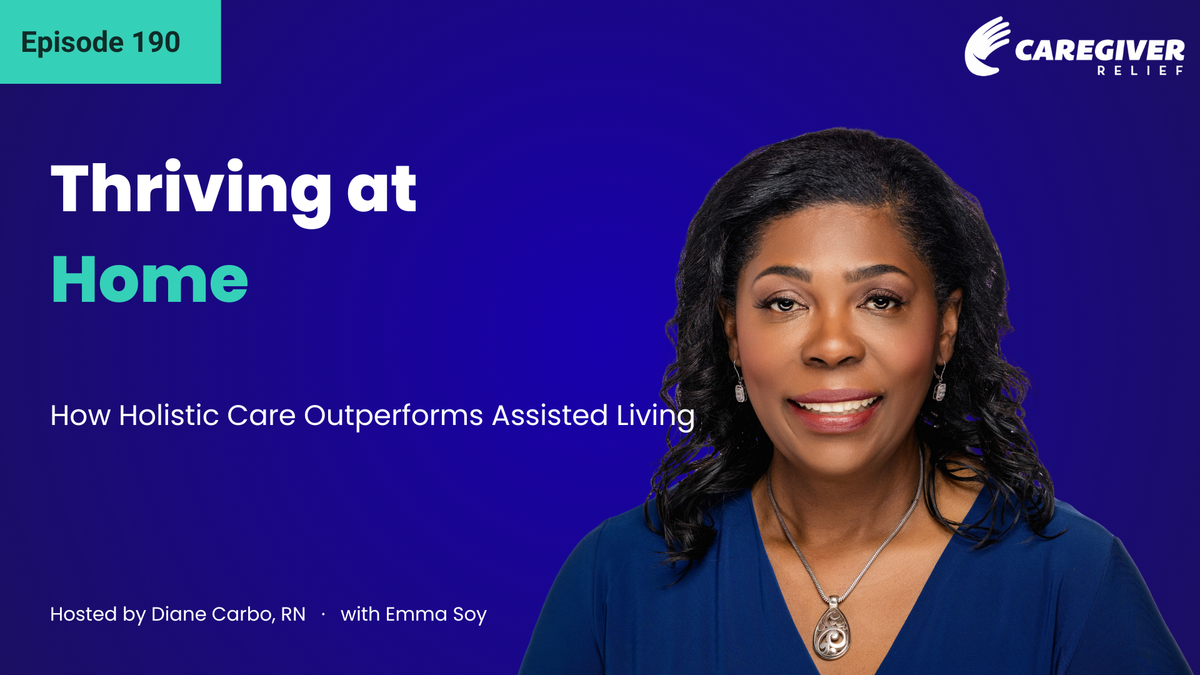
In this eye-opening episode of the Caregiver Relief Podcast, host Diane Carbo, RN, sits down with Emma Soy, RN, founder of Gentle Shepherd Care. Together, they pull back the curtain on the "most misunderstood" segment of senior care: Assisted Living.
Are families making $320,000 decisions with incomplete information? Emma and Diane explain why traditional models often lead to decline rather than thriving, and how a clinical, holistic approach to home care can change everything.
🎙️ In This Episode, You’ll Discover:
- The Social vs. Medical Model: Why families mistakenly believe assisted living provides medical care—and why that gap is dangerous.
- The Power of Clinical Oversight: How having an RN Care Manager can prevent "crisis mode" and address issues like UTIs or medication mismanagement before they become emergencies.
- The "Thrive" Pathway: Emma’s holistic framework that focuses on nutrition, hydration, sleep, mobility, and emotional purpose.
- The Hidden Costs of Moving: Beyond the high monthly fees, Emma discusses the loss of identity, community, and autonomy seniors face when leaving home.
- The Importance of an Aging Plan: Why planning ahead is "peanuts" compared to the cost of making decisions during a medical crisis.
📝 Episode Highlights
- The Reality of Assisted Living: Assisted living operates on a social model rather than a medical one, meaning residents often need to be able to direct their own care. Staffing levels in many facilities, particularly in memory care, may not be sufficient for the level of care required.
- Holistic Home Care vs. Traditional Care: While traditional home care focuses on tasks like cleaning and errands, holistic care includes RN oversight to manage chronic diseases and physical health markers.
- The "Panini Woman": A look at the "Sandwich Generation"—often women—who are squeezed between working, raising children, and managing the care of aging loved ones.
- Financial Pitfalls: Many families don't realize that assisted living costs are often "base rates" that increase as care levels rise. Emma highlights the importance of financial planning, such as using home equity to fund care rather than selling assets prematurely.
- The Solo Ager: For seniors without children, a Care Manager is essential to act as a fiduciary and ensure medical needs are met without family oversight.
💡 Notable Quotes
"Assisted living is the most misunderstood and often the most dangerous segment of our senior care system... it operates on a social model, not a medical model." — Diane Carbo, RN
"The cost of planning is peanuts compared to the cost of the care that you're going to provide later without planning." — Emma Soy, RN
🔗 Resources Mentioned
- Free Resource: Emma's report, How Dad Stayed Home: Thriving Instead of Declining in Assisted Living.
- Gentle Shepherd Care: Visit gentleshepherdcare.com
🎧 Why You Should Listen
If you are currently caring for an aging loved one or starting to think about "what's next," this episode is your roadmap. Don't wait for a fall or a hospital discharge to find out how the system works. Listen now to learn how to help your loved ones thrive, not just survive.
Podcast Episode Transcript
Diane: Welcome to the Caregiver Relief podcast. I'm your host, Diane Carbo, rn. Today's conversation is one I wish every family could hear before they make a care decision, not after I. I worked in assisted living as a director of nursing, and I was also licensed to be an assisted living facility administrator.
So when I say this next sentence, please understand there is a reason for why I am saying this. Assisted living is the most misunderstood. And office, the most dangerous segment of our senior care system. Yes, I said it, it operates. And the reason why is because it operates on a social model, not a medical model, and there's a wide gap between what the families believe they're paying for and what they're actually provided.
And that's why I'm so grateful today to be joined by Emma Soy rn, founder of Gentle Shepherd Care, a leader who is changing the way families think about aging, chronic illness, and what's truly possible at home. Emma has created a free resource called How Dad Stayed Home, thriving instead of Declining in assisted Living because families are making.
$320,000 decisions with incomplete information, and they deserve better. So let's dive in.
Diane: Emma, thank you so much for joining us. I want people to understand that we are in a public health crisis right now. And I'm trying to provide them solutions to The crisis. So thank you so much for joining me today.
Emma: thank you for having me. It's always a, a joy to be able to, as a fellow nurse, to be able to be talking about. These topics and topics that are dear to our hearts.
Diane: yes.
Emma: Yes. And,I love talking to you because you know the industry, you know the ins and outs, and sometime when you talk to other people who are not in the industry, it's they're like, really?
But. I love the conversation, so let's do it. Yeah,
Diane: I, and I love, general Shepherd Care, the way you approach things. So before we dive into the systems and models of care, tell us personally what led you to create General Shepherd Care?
Emma: I've been a nurse forever. you've been there before me, but I'm the old nurse.
I remember when I used to be the youngest nurse on the floor, but now I would be the oldest nurse. So I've been a nurse for a long time. I've done different things in nursing, and this is why I love nursing, because it give us the variety. Different things to be able to have the kind of different experience.
So one of them is managing chronic diseases. So I used to work,as a care manager, I had 37 doctors that I would manage their patients with living with chronic diseases. And that was when I would lived in Illinois. So when I moved here to Charlotte, I continued to do that, continue to do that,independently as a, care manager.
And, in 2019, I started a home care company. I added home care to my service, to provide home care to company, to people who are aging in their own homes. What I discovered was a lot of people who were doing that, a lot of other home care companies or what families were asking me, and I was just watching people decline in homes, they're just, I'm like, okay, this is not.
Nursing is, as a nurse I put my nursing hats on and started to see how can we do things differently. And so since then I've come up with a, develop a pathway that we can adapt, to care to, to make a different model where people do not just. Decline, but they can thrive. And not just because, not just in the home, but wherever as an older person, they have the right to be able to thrive.
not just saying that, but actually applying principles that would actually show that people are thriving. So
Diane: you are fundamentally different from traditional home care agencies. So I'd like you to share, when you ta you talk about the holistic care. And I love that because we are such a segmented society.
you go to, when I became a nurse, as a young nurse, orthopedics, an orthopedic surgeon would do hips, knees. Sold, backs, whatever if it was a bone, they fixed it. Now we're very specialized. Yeah. And it's, it's made it harder for us to get good care.
Emma: Yeah.
Diane: Because it is so segmented.
Emma: the traditional home care, traditional, non-medical home care, this is what we call it. Because it's non-medical, anybody can open a non-medical home care. Yeah. So it could be a business person. So that's the first thing that I noticed. The people who are running home care companies, they were just because my mom was, had Alzheimer's, they didn't have that clinical background.
Yeah. People think it's just so easy to just run home care companies because then the traditional is okay. Send some a, send a caregiver to help someone with activity of daily living. Get me outta bed, wash, clean, clean the house, do errands, meal preparation. And so that's the basic of non-medical
Diane: uhhuh.
Emma: And that is why the states allow anybody, really to be able to run this kind of home care company. But but when I came on. Even though my home care license says it's a non-medical, because as a clinician I was looking at the basic things that, that we need to add, that people need.
They need more than. Help me with the activity of daily living because why does this person needing help with activity of the daily living is because they're declining. So either declining mentally or physically. So what are we doing with that? And so that's where my, that's where I came up with those, the pathway where I focus on the basic things that we don't focus on, such as nutrition.
so in each of these topics, each of these pathways could be like a whole show on itself. Yeah. So I think, I'm sure we can, but, nutrition for the older adults, older adults cannot eat the same way that a young person eat. when you were, I can't eat the way today, I eat.
In my fifties when I, the same way that I used to eat in my twenties. yes. so the same thing for the older adult. They cannot continue to eat the same way, when they 80, or 70 because just because things are happening in their, in their bodies, things have to be adjusted. So nutrition.
Having someone focus on that and looking at what they need. Because at that, a, again, each of these topics could be a whole show. Yeah. But nutrition, hydration, sleep mobility. Medication management. A lot of these older adults are on tons of mes and they sometimes overmedicated and they're not being managed.
Medica Pain management. what's, the, or the chronic and the chronic disease that they facing. It's not being managed. We give pills for them, but we are not manage, helping manage 'em. The person living with hypertension,diabetes or heart disease. How beside giving a pill, what else are we doing to help them manage that?
Because those are chronic disease we all know could be revers, we call reversible. How are we helping them? That with reversible and then the la then we have sleep, and then we have emotional like, how do you help this person? How do you help an older adults, get up every day wanting to get up every day because they have a purpose for living.
It's, you gotta be, you gotta be able to take care of all these things so they can do that. So those, that's my pathway that, that, that I have added to my home care to make it more holistic instead of non-medical, traditional home care.
Diane: I love this and I, I want you to know and my listeners to know out there that while, Emma is a non-medical, Home care agency. she provides RN oversight, which is so critical. And Emma, I don't know if you're aware of this or not, but they have cut the skilled nursing. Care, when, skilled care needs, the OTPT speech and RN coverage in traditional medical home care They are not paying for a nurse to go in oversee the cases.
And what I am seeing is frightening. I am seeing people come home with, Discharges with wound care, that wounds that weren't even documented in the rehab center. Because I don't know if you've heard about patient rights.
I know you have, but some states say you have a right to fall, you have a right to, develop pressure source.
You have a right to,go
Emma: eat. Yeah.
Diane: yes. and not be turned and develop pneumonia. It's all on you. Which. Goes against everything I've learned in my 50 plus years of nursing. So my head explodes, and when I see a skilled care nurse or therapist come in to open a case when a nurse needs it, I am very afraid because the education's not going getting there.
the,the obs ob obser observation of things like. You've got new seizure meds, how are you responding? Or,are you in having a UTI and do we need to treat it? That's all being overlooked now by skilled nursing.
It's, and I've heard this, it's not just one or two cases, it's a problem.
So your oversight is so critical for seniors, especially with chronic or Progressive conditions. how does that change disease specific care for outcomes? yes.
Emma: so then. the thing is you still have that person provide the nonmedical, the what? What makes, yeah, what makes the, what make the difference is having the nurse care, managing, the care management
Diane: piece, 100%
Emma: the care management piece of these specific things.
it's not just having that like a caregiver go in and the Yeah. The caregivers still go in and do. They're caregiving things, but then when you have a nurse, a care manager, that's the combination that makes, home care different is adding that care management to caregiving.
Diane: Yes.
Emma: To be able to manage these things to help people thrive.
And That's the missing part. That's the missing part. Yeah.
Diane: it really is. And we are moving to, Medicare has moved to a cost sharing platform and patients now are being discharged home,very early. In fact, those with Medicare, advantage plans are actually being, charged 200 to $400 a day copay
Emma: where?
Diane: Oh,
Emma: skilled nursing
Diane: Well, in when they go to skilled nursing or rehab. Okay. We, they say we have 90 days, but because facilities are getting a higher level of reimbursement for not providing therapy, they're sending them home. And this frightens me. So we are moving and people don't realize it, but we are being pushed into a, everything's gonna be concierge, a la carte services for.
our medical care and the wealthy will be able to afford it. The second, the middle class, the disappearing middle class will, take out reverse mortgages or whatever To get those that care. So I'm really excited about. Promoting your approach to care because case management is absolutely necessary.
now I wanna talk about assisted living. Let's have a reality check here.
Families often believe assisted living provides medical care.
Why is this a dangerous misconception?
Emma: So the thing is with families, okay, so let's say, someone has a loved one, like a mom, dad. And, they then the person start to decline.
The first thing the family think is I can't, they can't stay home. They, they can't, can they asking the question, they can't stay home anymore by themselves, can they? maybe there was a fall recently. Maybe they're forgetting to turn off the stove. something scary.
All of a sudden, that person is asking. What's next? If my mom can't stay home, where do I send her? And then, so the next thing they figure out, since everyone else is sending everybody to assisted living, they start searching for assisted living because that's what we do when someone, when,
Diane: yes,
Emma: when we, concerned, when we are terrified, and we don't know what else to do.
But most people don't. The reason is that is because people don't plan. They don't, most people don't plan this. They don't have an urgent care plan to be able to, educate like someone like me to educate them in advance, making that, create that plan in advance, when that time comes to say, okay, where does my mom go?
Because they are different level of care for older adults. You don't just jump to the highest level of care right away.
Diane: Yeah.
Emma: and so not because assisted living is wrong, it's sometime it's, is it the right time at the, is it the right place for that person at the right time?
Diane: I will tell my listeners that, assisted living.
Is based on a social model, not a medical model. And that means that the person, the patient themselves, must be able to, direct their level of care. So they need to be able to express what their needs are. And, when you get to a point when they're in dementia and stuff, dementia care, they're not being, they're not able to do that anymore.
And I have come across, This is where I've learned about, I know we have patients' rights for goodness sakes. I understand that. But when a facility won't let you bring in an alarm bed because, alarms, bed alarms or chair alarms be to alert the staff when the patient is up because they fall, I have an issue with that.
I have an issue when they won't consider a low bed. to be brought in and, when a family's asking and see if they had a care manager. that you contact the facility and you make them aware that this is the plan we are putting in place because assisted living is supposed to be your home environment.
So you bring in your own furniture, you bring in your own stuff, and you should be able to, but, facilities are. and the other issue I have with, assisted living right now, especially in the memory cares, is the staffing is not in. Conjunction with the level of, care of care required. Yes.
And we're seeing like two aides for 12, patients and. In a dementia care unit especially, that's not enough. That is nowhere near enough. And things are missed. So I really appreciate that you offer, this service of care management because people don't know what they don't know, and that's what you are there to help them to make those decisions.
Emma: So even in the,the assisted living, if you are, ideally, if you're bringing someone to the assisted living, you decide to do that. I do recommend that you also bring someone like me into the assisted living Yeah. With that person. Yeah. Because the same thing, the same kind of holistic care that I'm providing in the home.
If that placing the person in the assisted living is the one, it's the one thing that you need to do because sometimes that's what needs to be done.
Diane: Yeah.
Emma: when you bring that care manager, that, that care manager, then. Become that person who apply those principles for you, because the model, like you said,
Diane: yeah.
Emma: Is not a model of what, it's not a medical model. It's not, no, it is. It's the me, it's non-skilled. It's non-skilled care. It's the same thing that we provide at home, but they provided in a facility, so it's non-skilled care. So a lot of time people think the minute they hear home care. They say, oh, it's expensive.
Okay. Yeah. So the not only they think it's expensive, but they also think, if I'm gonna spend $6,000 for home care, I can bring my mom to an assisted living because they get 24 hour care. They, people don't get 20 4K when they're in an assisted living. That person is in their apartment the same way that they would be in an apartment.
yes, there are people available if they need something, but they're not getting 24 hour care.
Diane: No, they're not.
Emma: They don't have someone sitting with them.
Diane: Exactly. And, I wanna talk about the, a la carte services for assisted living.
Emma: yeah.
Diane: I'm sure you're more aware, as aware of it as I am, but people think that, oh, they're gonna manage mom's meds.
They're going to alert me once mom has an incident of some sort. Yeah. and that doesn't happen at all unless you're willing to pay for it. You'll have, they'll nickel and dime you for everything from,
Emma: and again, I'm not talking bad about a specific thing because it might be right for someone, but
Diane: absolutely.
Emma: My goal is I want people to understand that there is a third option. Yes. The third option. Because the average cost of an assisted living in the United States right now is between anywhere between. 4,500 to 6,500, but people don't understand That's a base, that's a base cost.
Diane: yes.
Emma: For memory care, it runs anywhere between seven to $9,000. But they, but they don't understand that is base, it doesn't cover a lot of things. before they know it as they keep adding different things, add management or they add,toileting, they, different things that the Yeah.
as the care level of care increases.
Diane: Yeah.
Emma: the cost also increases, but here's what people don't understand. when someone move into a facility, they often lose more than money. They, it's not just money. Okay? Yes. First of all. They're not in their own homes.
Diane: Yeah.
Emma: So they lose that rhythm of their own home.
Yes. Number two, they lose their community.
Number three, they lose the control over their sleep. When I go to sleep, when I eat, when I dis, when I bake, when I, they, all of that is decided for you. what day of the week do you take a shower? What time of the day that you go to sleep.
Yeah. So that is decided for that person, that person just lost that control over these simple things.
Diane: Yeah.
Emma: as they age their sense of identity and dependence, they lose that slowly and sometime they will keep, they will even their will to even keep fighting or living. So that is not just.
How I feel. This is scientific, this is proven that this is what happened to older people when they move in into an assisted living.
Diane: Yes. andI want my families to know and understand that if you understand that this is your paying for. Somebody to stay in an apartment, and you're still overseeing their care, you as the family.
then you have the right concept because That means visiting, monitoring doctor's appointments and And scheduling them. That means, managing the meds. It's everything that you could do at home.
Emma: Yeah.
Diane: and,
Emma: and then it's a fraction by adding care management, by adding a nurse oversight.
That's what it is. Yeah. Oversight. And even if you don't have caregiving, even if you're the full-time caregiver, having a nurse oversight to be able to show you thi to be able to help you because you don't, you're not coming from a clinical perspective, even as a full-time caregiver. You are going to provide care based on like physical, but there are other things from a scientific perspective as an, as a clinician that you don't have unless you are one of them.
So it is still important to be able to bring that clinical oversight to be able to help you manage that person at home well. So my whole goal is how do we help these people to thrive?
Diane: Yes. Yes. and do it in their own homes, and I think do it in their own homes that absolutely. it's the wave of the future.
in fact, I know they're moving hospital into the home. so that high, acuity level patients will remain in their homes. I'm assuming it's for cop DERs. those with breathing disorders.I'm trying to figure out, maybe Ms. what kind of clients they would send home in the hospital for the family caregiver to take care of.
Emma: But I do know more and more responsibility is put on the family caregiver to provide care. Well, the other problem is the family caregiver. We forget that most of these families, they work. This is, yes, I call myself the panini woman because I'm managing a standard generation. Yes. The sandwich generation, we all talk about the, it's the new term now, is that person who's in between her, that, that person, that woman, because most of primarily the most, most likely the primary caregiver, the family caregiver, is a woman.
And yeah, we do find men doing the, doing it too. But majority is a woman who's working full-time, running a home, running her own life, and then also caring for her aging loved one. I don't say just mom and dad because you can find people age taking care of their aging. family member or someone that they love, that they wanna be, that they're caring for them.
So that person is being squeezed in the middle and you, and that's the same person doing the appointments. They're the same person doing homework with children. They're the same person managing the memory care facility during their lunch break. It's the same person managing discharge planning when that person is in the hot, it's the same person.
And yeah, absolutely.
Diane: Yeah. I do want my listeners to understand that assisted living communities rely on outside home care agencies to meet the medical needs of their, residents in the assisted living.
Emma: Yeah.
Diane: And that means, so if you have medical needs of any kind, whether it's wound care. Or, blood pressure monitoring.
that, and this is why I think a nurse care manager is really important, Emma, because, you can be proactive at making sure these are addressed early on instead of in a crisis fashion.
Emma: Yeah. Yeah. Just imagine, a care manager coming in with this pathway. Skill in assisted living? In assisted living.
Yeah. Helping to apply some, some of it are not as, because they have set meals, for example, everybody get the same food kind of thing. Yeah. So it's might be a little bit different. Difficult when you, man, when you try to manage, When you try to do the nutrition, but when you have someone advocating for you.
so that's a little different. But definitely the hydration part, the mobility and all that stuff to be able to oversee that it's being done. people can talk about, yeah, we do this, but do they really get done?
Diane: Yeah. here's a perfect example. I had a client call me all upset mom's in a very upscale assisted living.
I helped bring her down during COVID from, New York to, North Carolina.
And, his, the son calls me because he found assisted living for her and she's, In the, a memory care unit, sweet little old lady. And, she became a demon. and she was, for two weeks she was acting out and he calls me up and says they're throwing her out because of her behaviors.
And I said to him, Really Frank. I said, did they check her for a UTI urinary tract infection? He said, I don't know. I said, that's the first thing you need to do. That anybody in healthcare would know to rec do that as soon as you see a change in mental status.
And I said, if it's not that, then the next plan is you have them admit her, take her to the er. And admit her to a behavioral health. Maybe she needs medication management. And that's my caregiving approach. Okay. don't you know it, he calls me two hours later, his mom was septic from a urinary Yeah.
Infection.
Emma: Yeah. Yeah. That's often. Yeah.
Diane: yes. and that, that's because nobody's monitoring that patient. Yeah. And, and the very same people that are working at, Walgreens or CVS or even at McDonald's are passing pills and overseeing Yeah. interacting with your family member, but they don't have medical knowledge.
That's why. Yeah. I really feel care management is so important, especially now with our broken healthcare system.
Emma: Yeah. See the other thing is when they, when a family visit in assisted living, they tell 'em several things like, They have 24 hour supervision, number one, which is okay, you have 24 hour, you got people in the building, 24 hours.
That's one.
Diane: Yes. That's
Emma: the thing. The other thing is they, they don't understand that the majority of the care is being cared by these people that you just listed. Yes. The majority of the care is being done by non, non-medical, like
Diane: yes,
Emma: non-clinician. So that's most of the care. So the other thing is that they tell 'em is we have a nurse.
you have a nurse for how many people in your building? The nurse doesn't work 24 hours.
Diane: Yes.
Emma: She doesn't see everybody. She's available if something happened that she, that needs her attention, but she's not managing anybody's care.
Diane: No. Absolutely.
Emma: absolutely, because people want me to understand that when they say, the assisted living has a nurse.
because the state requires that they have a nurse, just like a home care agency, they require that you have a nurse, but that doesn't mean the nurse is going to see everybody,
Diane: right? yes'.
Emma: Damaging the care.
Diane: Yes. I know from my own personal experience as a director of nursing of a very upscale assisted living outside of Philadelphia, that, What I saw brighten me. And, it's just that people just don't know what they, they don't know.
And, things are often missed. And when people say, when they say they have 24 hour care, you don't know how many times somebody falls in their room and they, aren't seen till the next morning.
Emma: Yeah.
Diane: It happens because they aren't being, they're not going in and doing rounds and checking on them.
So that's why it's important that people understand it has to be done by, you, you have to be the family that monitors everything. If you're gonna put somebody in assisted living. Because otherwise it, it's, you are, it's, you could be having them in their independent living at, in a senior high rise and it would be the same thing.
Emma: Yeah. Yeah. You're right. So the thing is that I would like the public to know is this, all of this falls in non planning. Yes. People don't plan.
Diane: yes.
Emma: Elder care is not planned. It happened. People let elder care happen and this is the reason.
Diane: Yes.
Emma: Because if it was planned ahead,
Diane: yes.
Emma: You wouldn't be in the wrong place at the wrong time.
Diane: Yes.
Emma: You would be at the right level of care, at the right time because you have guidance. It does it, the cost of planning. The cost of planning is peanuts.
Diane: Yes. Yes. Yes.
Emma: Compared to the cost of the care that you're going to provide later without planning.
Diane: And I want you to know those solo seniors out there that have never had children
planning is even more important for you. Because, you're gonna have an attorney or a fiduciary looking over your,your life. And I can tell you from my personal experiences, even in a very posh, upscale, assisted living that, Things get missed.
Emma: I wish. I wish I had a slew of solo ages.
Diane: Yes.
Emma: as in my caseload because
Diane: yes.
Emma: So solo, and I don't think solo ages even know that this is who they need. They need a care manager in their life.
Diane: Exactly. Exactly.
Emma: Solo. I am the one who put all this stuff together for you so you can have it. that's what I do for my solo ages, so they can have the peace of mind knowing that.
When something happened, I have a phone number, I have a person. I know that, that I know where I'm going. I know how much this is gonna cost, and this is, yeah, very important. As much as it's important for people who have children. So much more for people who do not have any, who's aging by themself.
Diane: Exactly. Now you wrote a report. A free report for seniors to see on how dad, stayed home thriving instead of declining in assisted living. What inspired you to create that report?
Emma: So I created the report to give people a perspective on the, to compare,
Diane: yeah.
Emma: to see what it looks like, what it looks like when some compared the two, someone aging at home with.
Care management and someone going to an assisted living and how the things that we do that help 'em to thrive and how they thrive better to show the proof how people are thriving better with that model of care. Yeah. Instead of with aging, without that model.
Diane: Yes.
Emma: Whether it is in the home or outside the home.
If somebody's aging in the home with basic home care, you need that kind of model of care. If you aging in an assisted living without that, you need that model of care. You need that oversight
Diane: 100%. And that's why I'm so excited about sharing your information because yes. We are in a crisis, public health crisis right now, and with a silver tsunami coming, people need help.
And as we move to the cost sharing plan, people are going to need reverse mortgages. They're go or they're gonna take, sell their assets to be able to pay for care. that will be needed on many levels. And that's why I think that your, Encouraging, an aging plan in place early is so important.
Emma: and then to let 'em know they don't have to do this alone. Yes. They don't have to this alone, because every time I see someone try to do this alone, they made so many mistake. It's costly. Oh, absolutely. I met a couple, I met a couple. Last year who called me. By the time they usually call me, it's too late.
There's nothing I could do. They, it's, yes, it's on the journey. the couple called me because he is in the, he was in the crossroad between this, so when, his wife has beginning Alzheimer's and he himself is declining. So the two of them,
Diane: yes.
Emma: Plus he has a daughter and, they were living in the home and they thought, you know what?
This is what we're gonna do. We're going to downsize. What we're gonna do is to downsize. We are gonna sell our home. So they sold the house and then they downsized. Now, this is a home that they have. They were not paying, they were not paying a mortgage.
Diane: Yes.
Emma: So they took this money and go rent an apartment, two bedroom apartment, okay.
Diane: Uhhuh.
Emma: And now, almost a year later, they just realize they don't have any money.
Diane: Yes.
Emma: now that she needs care, they don't have any money for care. People are not thinking that you need money for care.
Diane: Yes,
Emma: you need money for care more than anything else as you age. So making that mistake, number one, the number one mistake you made was not to sell that house.
Diane: Yes.
Emma: Yeah. He needed a place to stay. Now he is the kind of person who probably could use a we reverse mortgage. So that reverse mortgage, he could use it to for care, Exactly. So at least you still have a place to stay, but now you can have the money that can provide the care for that for the two of you who needs it, because the two of you is too expensive to go to an assisted living.
One person is $6,000, the two of you is more expensive. You don't have that money.
Diane: Yes. Yes. And people don't understand that. People
Emma: don't understand that. That's why you need someone with knowledge of the system who can direct you and create that plan with you
Diane: 100%. So Emma, if families just take a one thing from that report before making a care decision, what do you hope it is?
Emma: Plan ahead.
Diane: Yes. Yes.
Emma: If Plan ahead is going to save you. Heartache is gonna save you money. And it can help people to thrive. And that is why I'm so passionate about this topic.
yes. Don't wait until mom fall. Don't wait until somebody goes to the hospital. Don't wait. When you calling people at eight o'clock at night looking for home care.
Don't wait to look for a provider when you need it. Don't wait for that. Yes. Every older adults need to have a care manager in their lives.
Diane: I agree 100%. And, how, Emma, how do people reach you?
Emma: They can reach me. They can call our office at (704) 209-5040. They can email me directly at Emma soy@gentleshepherdcare.com.
Diane: Great. And, to my listeners out there,
Emma: they can just check, oh, they can check our website.
Diane: Gentle shepherd
Emma: care.com. Yes.
Diane: Yes. Yes. And all that will be on our website that I create for you. Yes. to my family caregivers out there, you are the most important part of the caregiving equation.
Without you, it all falls apart. So please learn to be gentle with yourself. Practice self-care every day because you are worth it.
Caring for a loved one can be overwhelming — but you're not alone. If you have questions, big or small, our expert team is here to help.
👉 Click here to Ask the Expert
Our Resource section can help you find the information and tools that you need. We have courses, videos, checklists, guidebooks, cheat sheets, how-to guides and more.
You can get started by clicking on the link below. We know that taking care of a loved one is hard work, but with our help you can get the support that you need.
Click here to go to Resource Section now!