Sweet Freedom in Caregiving: Letting Go of Guilt and Holding Onto Hope with Shirley Buck - Episode 140
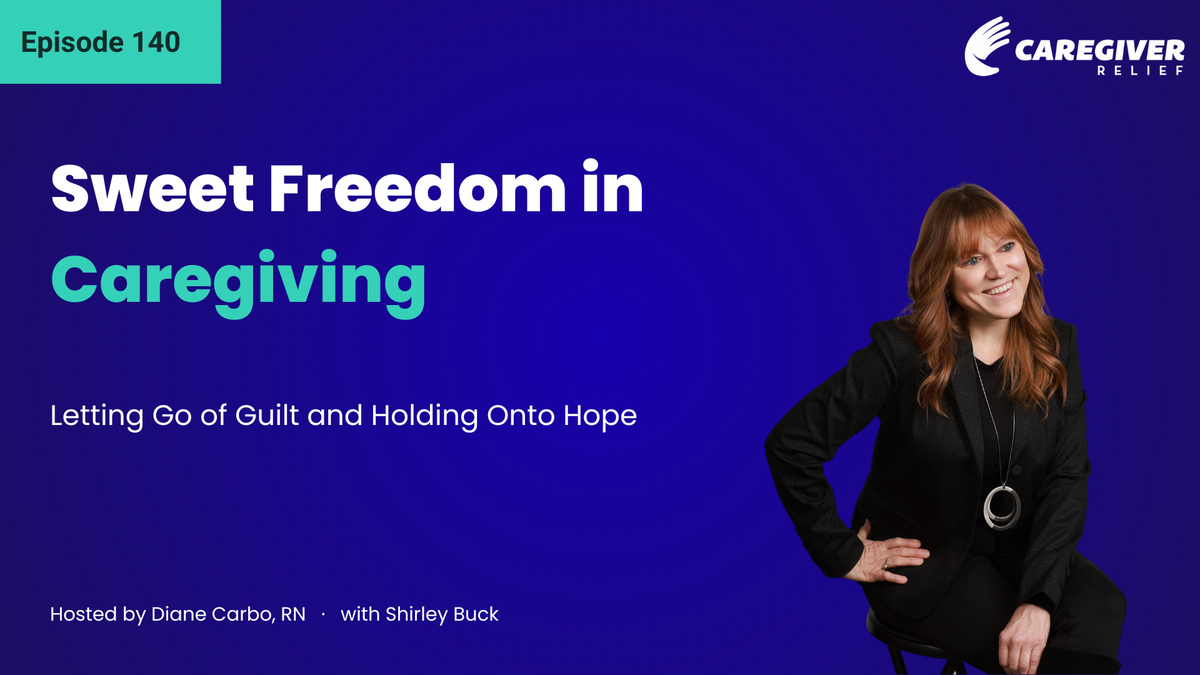
This episode of the Caregiver Relief Podcast features an incredibly moving conversation between host Diane Carbo and Shirley Buck, an internationally bestselling author, trauma recovery coach, and energy healer. Shirley shares her journey from a childhood of severe abuse and trauma to finding "Sweet Freedom" through mindset transformation and healing.
If you are a caregiver feeling crushed by the weight of responsibility or struggling with deep-seated guilt, Shirley’s insights offer a roadmap to rediscovering your inner strength and joy.
🎧 Episode Highlights
- The Power of Family & Joy: Shirley shares how she finds joy today through her children and grandchildren, emphasizing the importance of staying "childlike" and grateful.
- Surviving the Unimaginable: From interpreting her parents' divorce at age five to surviving severe abuse and her mother’s suicide, Shirley discusses the raw reality of her past.
- The "Safe" Breakdown: Shirley explains why she suffered a mental breakdown only after she finally felt safe in her 20s, highlighting how the mind processes trauma once it stops "running".
- Mindset Transformation: Why Shirley chose self-help and mindset work over traditional therapy, and how changing your perception can literally change your life.
- Releasing Caregiver Guilt: A deep dive into why guilt is a "toxic" and "wasted" emotion, and how caregivers can begin to let it go.
- Energy Healing & Reiki: An exploration of how Shirley uses energy healing to help others release emotional blockages trapped in the body.
📋 Episode Outline
1. Introduction to Shirley Buck
- Author of Sweet Freedom Whispered in My Ear.
- Her background as a trauma recovery coach and energy healer.
2. A Journey Through Trauma
- Growing up as the "ears and voice" for deaf parents.
- Navigating abuse, addiction, and eating disorders.
- The choice to get better or die.
3. Healing the Caregiver Mind
- The danger of the "Martyr" complex in caregiving.
- Why 63% of caregivers become ill or die before their loved ones.
- The importance of taking ownership of your own happiness.
4. Practical Tools for Emotional Freedom
- The "Crumpled Paper" technique for negative thoughts.
- Incorporating "childlike" play into a daily routine.
- The role of forgiveness (and why it’s the best revenge).
5. Closing Words of Hope
- The past only exists if you give it thought.
- How to find Shirley’s book and coaching services.
✨ Key Takeaways for Caregivers
"If we don't take care of ourselves, we're no good to anyone else. You can run yourself dry being a martyr... but you're hurting yourself." — Shirley Buck
- You are Not Alone: Hearing others' stories of pain can be the first step in realizing you aren't the only one struggling. 🤝
- Forgiveness is for You: Forgiveness doesn't let the other person off the hook; it lets you off the hook. 🕊️
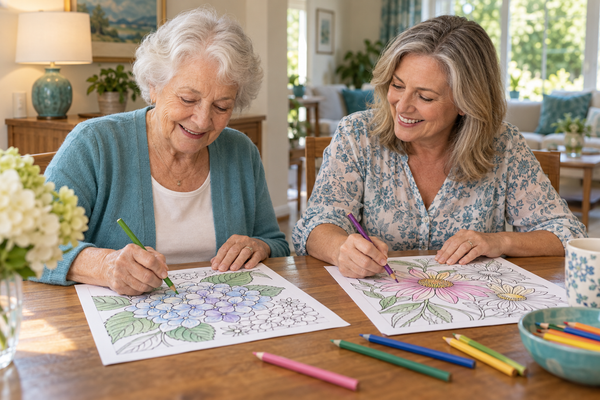
- Choose Joy: Whether it’s feeding birds, coloring, or listening to music, small moments of joy are essential for survival. 🎨
🔗 Connect with Shirley Buck
- Website: shirleybuck.com (Redleaf Alternative Healing).
- Book: Sweet Freedom Whispered in My Ear (Available on Amazon, Kindle, and Audible).
Podcast Episode Transcript
Diane: Welcome to the Caregiver Relief Podcast.
I'm Diane Carbo, your host, and today's episode is both powerful and deeply personal. I'm honored to welcome Shirley Buck, a trauma recovery coach, mindset, transformation expert, energy healer, and author of the internationally bestselling book, sweet Freedom Whispered in my Ear. Shirley's story is one of unimaginable pain, but more importantly, it's one of triumph, healing and hope.
Through her own journey of surviving severe abuse and trauma, she has created a path to help others, especially caregivers, find emotional freedom, release guilt, and rediscover their inner strength. So if you're a caregiver struggling with the weight of responsibility, guilt, or unprocessed pain, this conversation is for you.
Diane: let's dive in. Shirley, thanks so much for taking time out of your busy schedule today to be here. I really appreciate this.
Shirley: Oh, absolutely. Thank you for having me. I'm honored to be here.
Diane: I'm, excited that, for people to hear your experience. my listenership will really benefit from hearing and hopefully being able to relate to what you're saying.
I'm gonna start by asking you just a simple little question. What gives you joy in your life right now when you've been through so much?
Shirley: My family, that's number one. because I didn't have a family behind me. I had a family, but not one that was present. And, I just spending time with my children who are now grown, my grandchildren, that brings me the most joy.
we laugh a lot. we've learned to put gratitude up there on our priority list so that. We don't forget to be grateful and happy and stay childlike and play.
Diane: Yeah, it's important. your book, sweet Freedom whispered in my ear is incredibly raw and honest. what inspired you to share such a deeply personal story with the,
Shirley: with world?
For years, people have asked me to write a book. from the time I was in my twenties. And it wasn't until I was 55 years old that I decided okay. One person said, one of my clients is you should write a book. And then I was like, okay, I'll write a book. I guess I just felt like it was time.
Yeah.
Diane: share a little about, bit about your story to my listeners.
Shirley: Okay. I was born to deaf parents. Which in itself poses a big challenge because you become their ears, you become their voice, and you become, you grow up really fast. I didn't have toys in my room and things like that. My, I had a show and tell, which I loved because it let me play my, 40 fives in music that actually helped me escape a lot of the.
Things I was going through and by the time I was five I actually interpreted my parents' divorce in, in a lawyer's office at five years old. And once they were divorced, my mother had remarried somebody and became a heavy drinker. She, he was abusive and he talked her into selling our home that my father had left us and he took the money and just took off.
And she had, was full of anger, death, and, afraid and didn't know how to get proper help. And I was so young that by the time I was like eight years old, she became severely abusive. and by the time I was 13, she committed suicide and tried to take my life as well. But in between those and before that even happened, she.
Because she was such a bad alcoholic. She had ended up, being out late at night, being raped, needing to have a, like I had to go interpret all this to the police and all, like all these things, it's all in the book. But, when she had died, I, the trauma didn't stop there. I moved in with my dad, who had recently married my stepmother who didn't want me to eat there, wash my clothes there.
She didn't want me there. Oh my God. And they would fight about it. And fight about it and eventually I was just like, just don't fight anymore, dad. and I got a job at 13. And I was there for two years, and I would take that $10 a day, eat out on that $10 a day, and save my change and do my laundry.
And I would come in late at night and sleep where my dad lived. So my, I had a half-sister, a young sister who would, if the door was locked, she always left the bedroom window open for me so I could come in and sleep and stuff. So that man molested me for two years. oh. And it was, then I met someone when, who was 25 that said, I love you.
I'm gonna take you away from all this. Take care of you. I was 15. I believed it, he told me he, he couldn't have children. He was sterile. All this, of course, four months later I'm pregnant. I had to give that son up for adoption. So anyway, you get the idea. Went through a lot of, trauma and abuse.
So to share that story with the world,
by the time I was 18 I had my own apartment and I was working, making good money. I was everywhere on the scale from 70 pounds to 200 pounds 'cause I had severe eating disorders. I went through some drug addictions, alcohol. I went through a lot of things as a result of all this trauma. But when I was 23, I met my children's father.
And he and I had gotten engaged. We were living together and I finally felt safe and I was 23 years old and when I felt safe and life seemed like it was supposed to look like That's when I had a breakdown. I had a mental breakdown that was terrifying and I think. I just kept running so fast through life.
Yes. And it wasn't until I slowed down that I had to process everything that had happened. Yeah. So that's when I had my breakdown. I had never prior to been to any traditional therapy and I didn't wanna go to traditional therapy. I was like, no. I felt, I don't say therapy's wrong for everybody, but I felt that therapy was wrong for me.
I felt like how is someone who hasn't been through anything like this? Going to help me through this. They're just gonna tell me what they learned from a good question. Book good, And be what you learned in school. Half the time, school doesn't even teach you, prepare you for what you need anyway.
So anyway, I was just like, I am not going that route. And I also feel like they have you focus on the problem, focus on the problem, think about the why's, talk about the problem. Then you're depressed because you're focused on the problem. Then they give you meds because you're depressed. And I think it's just a.
A ball of, it's a cycle confus, and it's one I didn't want to go that route. So I got my hands on every self-help book I could, and I started to learn about mindset transformation. And what that means is changing your perce perception of everything. Yeah. And when that. Saying that sounds like a cliche.
Change your mind, change your life, or, yeah. if it was only that easy. It is that easy
Diane: Now it's a, you know what, thank you for saying that because I encourage all my caregivers to change their mind, change their life, look at things differently, and you can change your life. And a lot of them, I know they roll their eyes and they think, oh, it can't be done, but it's a choice.
We make choices. so go on. I interrupted you, but I was glad that no, I appreciate you
Shirley: saying that because Yes. Is, it is a simple process. it's not easy, but it's simple. It's, it is a simple process. I actually have a three month course that has proven to be very successful with my clients.
and, it's weekly lessons with daily activities. And then I, have an hour session, zoom session with them. During the process, and a lot of times we don't even talk about the course. We're just talking about their regular daily challenges and things like that. And it, but it has proven to be wonderful, which makes me very excited when I first went into it.
Wow. I, yeah, more than proud. Just, So grateful I can help pull some out of things like trauma and guilt and all these negative emotions that keep them. When someone tells me, you know what, I just, this past week, she said two weeks ago, I would not even notice this happened. Something positive was in her life and was, visible.
Outside and she's I, two weeks ago I wouldn't even have noticed that. Yeah. 'cause if your mindset is focused on negativity, that's what you're gonna see. That's what you're gonna focus on and all these beautiful things passing you up, you're not even gonna notice. Yeah. and you're closed off to any other opportunities because you're just so focused into the problem.
So I started to learn, and I studied it 25, 30 years, And. When I was going through that mental breakdown, it was honestly a choice of I'm either going to die or I'm going to get better because I can't live like this. I was terrified. I was having anxiety attacks that I couldn't even explain the feeling I was having such, scary thoughts and I was in the dark.
I was, and I think I was meant to go through that dark. So that I can help others,
Diane: we absolutely have to go through that dark. I'm an adult child of an alcoholic, okay? Now, my dad was a functional alcoholic, but he was abusive to my mom and terrorized. The Ki US kids, right? I'm the oldest of four.
and so many caregivers and people out there, especially women, have hidden traumas that they have ignored or they've pushed all these emotions down and it's once you s. you push 'em and push 'em until the box gets so full that it's like Pandora's box. It just opens up and all these uncontrollable feelings happen.
And yes, it's overwhelming. You explained it,simply, you had to make a choice between you were gonna die or you were going to try to improve. That's amazing to me. So how does that process begin? how do you make that, decision? Well,
Shirley: I just, I've always wanted to experience a better life.
Like I had my dad had a sister who was come to Chicago once a month and she and her husband, they were millionaires, but they were the kindest, beautiful people and. They did auto shows. my uncle invented something that you put on your mirror and it wouldn't fog up and things like that. But anyway, they'd come in once a year and stay at my grandma's and I would see them, and she was just like she, she was always.
Like exuded happiness and like she just floated on air and I said, I want that. I want to be happy one day I wanna have a successful life. And I think, you have to want it. You have to really want it because some people are comfortable with the identity of, oh my God, I'm a victim, poor me.
and they stay there because not only are they comfortable, but they feel like that's all their work. and you have to strive for something more. And,and maybe because I had just gotten engaged and I thought I have a taste of something better. Yeah. Like I, I want to keep moving in this direction, but I don't know how.
Yeah. But I feel like when you make a decision that you want to be better. The universe, God, source, whatever you wanna call it will start, the opportunities will be there. and you have to notice them. Like I got my hands on a book called The Feeling Good Handbook. I remember the title. I don't remember you out there.
But I read it and I was reading about so many different disorders people had and depression and all, and I said, wow, I'm not alone. So when you first learn that you're not alone, that music used to do that for me. I used to think if people could write such sad songs. They must have been super sad at one point.
So I'm not alone, Yeah. So when you don't feel alone, there's a power to that. and then I started reading about all these different things and I started doing writing exercises and I started to come out of it a little at a time. and I do have faith in God. I've always have, even though I wasn't always doing the right thing.
and I think that's okay. We don't always have to be doing the right thing. and sometimes religion teach you to be guilty and feel terrible. Yes. you're unworthy, but God loves you anyway. Which I don't believe, I believe God loves us, but I don't believe Oh, yeah. Worthy. So I use that too along with my learning the mindset and, Started to learn simple exercises, like when a bad thought would come, I literally would imagine crumpling it up and throwing it into a garbage can. Oh, I like that process. Yeah. Just, you turn on a song and you have to train your mind because you're just like everything else.
You got muscle memory, you've got brain memory, you've got these. Paths grooved in on a way of thinking. You have to forge a new path. And that's not easy. And that's why my course is three months and not three weeks, So you have to forge a new path to. Start thinking differently. And when you start thinking differently, you will see evidence of your life changing.
It will be there. You gotta be willing and want to do it. And one of the things when I'm, doing my consultation before anyone even decides to do the course Is do you wanna be happy? And you would not believe how many people stumble on that. They can't just come out and say, yes.
They're like, you're right. I know, I don't, I, wow. I never thought about being happy. I,they get. Nervous.
Diane: I work with family caregivers and seniors. the thing that astonished me the most is 63% of family caregivers become seriously ill or die before the person they're caring for.
Because of the stress and trauma they're going with. Absolutely. And these caregivers, and that's why I'm such a proponent of change your perspective, change your life. They feel like they're a failure if they ask for help. they feel and they always have the dysfunctional family members, the uninvolved siblings and the uninvolved, extended family members who are judging them.
Or even demeaning what they're doing, letting them know that they are unworthy of payment from the family. They're unworthy of anything because the extended family member or uninvolved siblings are so important. That they need to work in their jobs and they need to take their vacations because they're more valuable.
And that's the message that so many of my caregivers are given. And it makes me sad. So I love what you are teaching because it's important that our caregivers grasp that knowledge and say, I can make a difference.
Shirley: Absolutely. And unfortunately. The world conditions us to think that way. Yeah.
the world tells you, you have to think about everyone else before you think about yourself. Otherwise you're a bad person. You're arrogant. Yes, you're conceited, you're this, and yes, God forbid we age. We can't look a certain way, we can't be too heavy, we can't be too thin. We can't be like, we're constantly being bombarded with all these.
and it's all about money. Here's a skincare product, here's a weight loss product, here's a, make you feel so bad so they can profit. Yeah. And unfortunately, we are, especially women, I don't wanna say men aren't subject to it, but especially women Yes. are subject to, we are never good enough.
And sometimes. When we go to church and wanna find relief, sometimes we're still being told we're not good enough. Yeah. We're unworthy. So it's such a terrible cycle.
Diane: Yeah. we're not pretty enough. We're not tall enough. We're not short enough. we're not thin enough. Our boobs are too big or they're too small.
Our butts too big or too small. Yeah. Everything. there's always something. And the messages were, now we're being told that men are better women than women are. Yeah. that's true. How crazy is that? That's true. it's it just never stops. It never stops. I never thought it would get to that, but that's where we are right now, I don't even know what's
Shirley: in the future, but
Diane: yeah. Yeah. Men are better women than women are, so yes. Now you speak of healing as an individual and intuitive journey, but, so it's not a one size fits all. What are some common blocks that prevent people,from even starting their journey or continuing on a journey of, I
Shirley: think not feeling worthy is a big reason.
And like I said, you gotta have that one spark of hope, that one spark of I want to be better, I want to feel better, I want to do things for myself.
Diane: I deserve to be better. Yes, I deserve, have better treatment. I deserve to have a better life. Yes. That is really a big issue with many of my caregivers.
I, I see it. I know after 20 years of dealing with. People. It, that's what I see the most.
Shirley: if we don't take care of ourselves, we're no good to anyone else. And that's just the bottom line. Yeah. So you can run yourself dry and think that, oh, I'm doing the right thing, and you're being a martyr, thinking you're doing this wonderful thing, but you're not, you're hurting yourself.
You're not help helping anyone else if you're not helping yourself. That's the bottom line.
Diane: And
Shirley: that's the
Diane: thing that's a really, a big piece that most caregivers miss. Yes, they don't. They neglect themselves, their health, their mental and emotional wellbeing, their outside relationships, everything they give
Shirley: you, you know what I feel is very important and it's a little simple step, but very rarely do adults do This's.
Very important to be childlike. It is very important to find. I don't care if you enjoyed coloring when you were little, or you enjoyed dancing when you were little, or whatever you enjoyed. Yeah. As a child. Incorporate that in your life today. Yes. and do something that makes you joyful. I feed my birds and my squirrels every morning, and I built a little zen garden in my yard with a little swing, and I sit in there and I watch my birds and my squirrels.
And just little pieces of joy every day. You need to incorporate joy, laughter, and fun in your life. You can't just be, oh,I don't have time for that. I gotta take care of this person. I gotta do this. I got. No, you have to take that time. I don't care if it's, a half hour, it really, it should be a few hours.
But even if you only put a half hour of. Something fun and enjoyable in your life. It's so important to laugh, to joke. have, don't turn on the news because it's not helping you. It's not, it's all it's doing is telling you all these terrible things that's going on in the world and unless you can actively do something about it Turn it off. Yeah. Because it is not. All you're doing is hurting yourself. you're putting negativity, you're put, you're building a bubble of negativity around yourself. Turn it off. Put some comedy on in the background. Put some joyful music on, put some, even sad songs sometimes make you feel good.
You know what I mean? yeah. Just
Diane: something it brings back, it sparks memories of another time, maybe when we were younger or whatever.
Shirley: Yeah, exactly. When we, and. I don't know. as we get older, I don't know why we forget to still do the fun things. Like when we were teenagers, just we were like, we're never gonna get in, give into getting old and being like these old people that think negative and we have this determination.
We're gonna stay young. We're. That should follow us our whole life. That should follow us our whole life.
Diane: I am, I, my, my brother calls me a smart alec, all the time. I just have,a really, because I'm a nurse, I have a different sense of humor, but I can find something to be fu funny in anything.
I share moments like even at death when everybody's crying and sad. It, you gotta laugh when somebody jumps up and says, oh, we gotta open a window, and there's no window they can find to open. 'cause they wanna let the spirit out. And we're all like, everybody's all of a sudden look at, oh, how do we get the spirit out?
and even in a moment like that, it just breaks the tension. in life. yeah, I'd like to talk about guilt a little bit because that is one of the most common emotions that caregivers experience and to me it's a wasted emotion. I spent aika and letting go of guilt in my course. Yeah. Do you?
Yes, because it is, why is it so toxic and how can somebody begin to release it? I, it's obvious, Ali, something that's real intense because you have so much focus on it in your course then.
Shirley: Yeah, we have to take ourself out of the situation a little bit and think about someone we love and we care about.
If they were going through the same situation, what would you tell them? Sometimes that helps because, for instance. One of my healing exercises is I went into deep meditation and I went back as a child and I watch as an adult. I watched the child of me getting beat up by my mom and I just remember how she felt and I grabbed her in my arms and I'm like, you're gonna be okay.
this is not your fault. I love you so much and you're gonna have this beautiful life, and you're strong and you're beautiful and you're kind. and then I, I. Then I realized in that exercise, that's me. Yes. Even though I'm talking to my child, that's me. Why can't I give myself that same love that I'm giving this child?
Yeah. So sometimes taking ourselves out of the situation, it's not our fault somebody got sick. It's not our fault that, the rest of the world said the reason the rest of the world put it on you is because they knew you felt. Like you deserve all the. Responsibility of everybody in the world on your shoulders.
And they're like, oh, she'll do it, he'll do it. Whatever. they dump it on that person. I felt that way my
Diane: whole life.
Shirley: Yes.
Diane: I've, since I was a young girl, I've felt the weight of the world on my shoulders. And that, in nursing school we had eight weeks in psych, psychiatry. And one of the things they, we learned is your the bo mind body connection.
Not to the degree. Now, this was 50 some years ago. So it wasn't to the degree it is now. But we learned, if, stress causes anxiety, it affects your heart. And so I really, yeah. Heart break affects
Shirley: your heart.
Diane: Yes. Like
Shirley: we. We manifest a lot of our own illnesses without knowing about it.
And we go to a doctor and a doctor gives us medication, which also has all these different side effects a lot of times, and the side effects.
Diane: You take meds for that and it just keeps going. Yeah,
Shirley: I know. and there's things that we can control. Like I remember 10 years ago I was told I was pre-diabetic.
And they wanted to put me on medication. And I said,no. and the doctor actually said, within 10 years you're gonna have diabetes. And I said, no, I'm not Uhhuh. And he said, yes, you are. You're delusional if you don't think you are. I said, I am not. And I am getting a new doctor today because you should be telling me I could change this through diet and exercise.
Why,
Diane: telling you what I mean, our physicians have not been trained in nutrition. Or in, in the need for exercise. And they are, our doctors in the western world are not proactive about preventing disease. They just treat the symptoms of a disease and Right. That's really unfortunate.
Shirley: No. Yeah. And anyway, I also do a week on taking ownership and it's it's not in the first two weeks because, like my client I just recently talked to, she said, whoa, this week was like an eyeopener and I was angry at you. And I'm like, yeah, you were. She can, because I was teaching about taking ownership.
if something's happening to you. Yep. It's nobody else's fault. I had a girlfriend that would tell me all the time, this guy's a jerk. He did this to me, he did this to me. Can you believe it? Can you, I said, it's not his fault. What do you mean is it's not my fault? Yes, it is. No one can treat you anyway, that you don't exactly allow to be treated.
Yeah. So taking ownership is huge and that goes for the person who got sick. Yeah. That's not your fault, like Maybe they weren't taking care of themselves. Maybe they weren't, like I, I'm not saying, it's like I'm not trying to place blame on anyone. All I'm saying is that it's not your fault for someone else's.
circumstance, it's never your fault.
Diane: that's a problem in our society and culture today. Everybody's gotta blame everybody else.
Shirley: Yep.
Diane: they, nobody takes ownership of anything and it's really sad because until you're able to take responsibility. For your own life. Absolute.
And your own choices and decisions. you develop and so many caregivers, I know they're gonna hate me for saying this, but they get into the victim mode.
Shirley: Yeah.
Diane: I'm a victim, I can't control it. That's not true.
Shirley: Absolutely. I agree. Yeah. so taking ownership is huge. And I had a friend.
and I'm gonna get into the laws of, attraction and manifestation a little bit, even though, that's a whole nother level of changing the mindset. And it took me a long time of studying before I even got there and started to understand that. But someone called me and said, oh my God, I was attacked by my dog and I were attacked by this doberman and.
I got 13 stitches in my hand and this, and she's been going through a series of getting hurt, getting attacked, this, like all this. And I said, okay, I want to just stop and what were your thoughts? What were you focused on this past month or whatever. And she was, because of the, political situation with ICE and all that.
She was like, I'm just fearful of. Attack, I'm fearful about being attacked, being, in hurtful situations. And I said, do you realize you, this has been your thought process. We manifest what we think and it's a whole nother level that, it's hard for people to understand when you're like.
It can't possibly be my, by my fault, this was a random act that this dog attacked me. But don't you think of these months of fear and and of pain and fear of being attacked. And fear. And now these situations keep occurring in your life. And she's like, when am I gonna get a break?
I said, when you change your mind, that's when you're gonna get a break. listen to what I'm telling you. I know that it sounds crazy, but try it. Just try it is all I'm asking. What are you gonna lose? Try it. Yes. it, we have to get out of that pattern of thinking negative because you cannot receive anything positive.
You won't even see it, even if it's in front of your face. If you're in a negative mindset, if you are fighting for your limitations, you're gonna keep them. You're not gonna let 'em go, you're gonna keep 'em. Stop fighting for your limitations. Say I can do better. I can have better. I deserve better. There are, and it's beautiful to watch not only my own evidence, 'cause I still have problems, I still have things arise that, get, I don't have this perfect life where nothing bad happens to me.
Exactly. But I know how to change my mindset. To view it in a different way and to say, okay, good, can come out bad. Let's see what comes out of this. let's not just go down this rabbit hole of, oh my God, this is terrible. So it's all about having the proper tools when things go a little wonky, Yeah. So I'm not. I don't just walk through a world of rainbows and unicorns, but most of the time, most of the time I'm with the rainbows and unicorns. and that's the key is if you can mostly, most of the time, be aware of your emotion, emotional scale. Be aware of your thoughts, learn how to redirect them if you can, most of the time, be in a better place.
In your mind, you will most of the time have a better life. You will have good things most of the time working for you. People always say to me, you're so lucky.
Diane: no, you are lucky in the sense that you have, you realize that you have choices in life, right? And that you have,I did the work decisions.
Your decisions determine where you go next in life. And if you feel sorry for yourself and neglected or a victim, you're gonna stay in that. Victim mode. Absolutely. I know because I've seen it in, not only in my life, but in my family. Yeah. The difference in, the how we approach life and it absolutely.
It just, I have a, people
Shirley: can be going through the same exact trauma. Yes. And it could turn out way different.
Diane: Yes.
Shirley: and two people can be going through the same thing, but have two completely different perspectives. 100%. a simple example is my best friend and I, we love to read about medieval history and then we go to the countries to visit, Uhhuh, the countries and oh, how, and these are things we read about, Uhhuh, it's our little hobby. And, that's another mindset of scarcity. People are like, how do you afford to, I, I said, a price for a plane ticket is pretty much the price of that phone you're holding in your hand. Yep. If you want it, you can attain it, right? yes. it's just that you think you can't, so you can't, Yeah. anyway. We read this, on England and she fell in love with King Richard ii and, like King Edward when it was King John, oh, the whole England part. And I fell in love with the whole Wales, the Welsh. yes. history. And when I go to Wales, it's the only place I feel like I'm home.
I love, and I did my DNA test and I do have English and Welsh in my dna. Oh, okay. In Norwegian. And, yeah. But we read the same book and had completely different perspectives, perspec perspectives on it.
Diane: Yes. All I have to do is say the Bible and look at how many different
Shirley: there you go.
Exactly. Exactly.
Diane: the different versions of that are like unbelievable. So Yeah. Or the different interpretations of it. yes. there's so many different interpretations and it's our life experiences. Yeah. that, that change us and make us who we are and Absolutely.
But again, like I, I have, I'm the oldest of four and each of my siblings, even though we were in a household and had the very similar, di similar situation. We all came out of it different.
Shirley: Yeah, I know. Yeah. it's pretty amazing to see that. It really is. I get that.
Diane: Yeah, it really is. Shirley, you are, you work as an energy healer and I'm very interested in that.
Can you explain how energy healing supports trauma recovery?
Shirley: Yeah, absolutely. So there are seven chakras and. We, when trauma happens or anything negative, it doesn't have to be so much trauma or severe trauma. sometimes there's just some negative, like we just we're taught to think negatively,
And so we have these energies 'cause everything is energy. So we have energies that are trapped inside of us that. Have to do with, some negative energy trapped in there. So you wanna release these blockages and I don't do this. I'm a, an instrument, I am a conduit, Yes.
And I just go somewhere else and let my guides and angels work through me. Everybody, it's more of a experience than it is explainable. And. My clients all have very profound reactions to it, but very different. So it's pretty amazing. And I started out doing this when I was about 29 years old because I started to go get reiki, and when I was getting reiki done, my hands would burn, I'd see purple images, all this.
And they were like, you should go into this. This is your calling. You and I, at first I was like, really? And yeah, so over the years I became a reiki master and now I even get messages sometimes, like I. I saw this little boy trying to come to this lady, and I had to ask the hard question. Did you lose a young boy at one time and you're life?
Yes, I did. And I'm like, he was here. I, and then I'll people, I'll say, I'm not a medium or a psychic or anything, and people are like, you kinda are. And you got, but see how I don't, we have these, oh, I can't, I, that's not me. I can't accept that. So I don't walk around having these, Psychic visions. But when I do reiki, sometimes the message will come through because I tell the angels, I tell God I'm open to GI giving messages if you want to use me to relay a message. And sometimes it'll be, I saw this little white dog, oh my god. like just, whatever it is. but energy, people literally feel.
Energy shifting in their body and I feel it shifting through me for them. So it is, it's a beautiful thing and. There's all kinds of different, again,
Diane: you have to have the, you have to be willing and open to trying it.
Shirley: I am, and I've been to practitioners where I've been. I've felt nothing, and I've then, I've been to practitioners that really, I can tell
Diane: you, I was, I've been skeptical, but.
Because I tell people I used to pick up men for a living,
Shirley: And,
Diane: that always gets a response, what do you mean by that? But as a nurse, I did, and I did rehab, nursing, and my whole body is ruined right on my back and stuff, and neck. so I've been looking for, I had two experiences with a reiki master.
One was in England when I was visiting a friend and then one here in Florida. And I was really surprised 'cause I've had other experiences, but they did, they, I didn't feel anything.
But these two different individuals, you could just. Feel, I felt like I could feel their energy over me.
Shirley: Yeah.
Diane: And it was amazing. And I thought, oh my gosh. So I really have looked into alternative methods and the mindset thing. I've really changed my perspective that, you've gotta be open. Yeah. and willing to hear and try different things.
Shirley: I just heard you say, my body is ruined.
Diane: it, yeah.
Nursing has harmed No,I understand. I know what you're saying,
Shirley: but I'm saying it wrong. Yeah, you're right. You're right. you still have to have that hope and belief that there's healing still available, even though Yes. Things like that, because when you put that out in the universe, you're telling.
my body's ruined, so I just wanted to
Diane: say Don't say that. I'm glad you, I'm glad you pointed that out because I just recently purchased a,a class three B, laser cold. Laser light, and, because I have chronic pain and Right,I have bone on both knees and anyway, whatever is wrong with me and I, I.
I bought one for a friend because it's, I'm having positive results, right? I can't take pain medication,
Shirley: right?
Diane: And I, so I work on my body a lot during the day with, oh my, this hurts. Let me fix, treat this and I have a routine and, I have a good friend. Who I gave one to because she has a lot of severe pain and she put it aside and said, I'll never use it.
Yeah. and it was like, oh my God, how could you not wanna use this? but she was so close minded. And actually, Nate, I went into panic mode because I'm like, I was unworthy. I did something stupid. It's all my faults, But I am having very positive results and right number one, I expect them.
But,
Shirley: you're right, the totally different. Yeah. See, you can't take on that guilt either. That's her choice, Absolutely. I have frequency ones. I've got all kinds of things myself because, I'm also a massage therapist for 15 years, so I'm in there working on people. So I feel the results in my body as well.
But people will be like, oh, you must have carpal tunnel. I said, no, I don't. I don't label anything. I don't wanna label it because then it, a lot of times I feel like we, we've got into this, World where we label everybody, we label everything and they feel, so that's their identity. Then they're labeled now.
so I don't, I'm like, nope, I don't think I have carpal tunnel. I just feel like, my hands overworked, I just do I won't accept those. Things that are trying to be put on me. I'm like, no, my body's always in a healing mode. It's, I'm not sick, I'm healing, I'm not hurting, I'm healing.
I'm on the mend,
Diane: because I really am in a healing mode. I'm, yes, why I bought this and I invested in it and it was expensive, but it's but it's it's priceless to me.
Shirley: Oh, God. I know. I don't even, think about price when it comes to. Joy. Or healing. Yeah.
Because I feel like when you're in an open mindset about abundance, it flows to you. It's an in and out kind of thing, And when we are putting money out there on services or, healing or joy, other people's abundance are growing. And when you're putting it out, you're, you. Also are receiving abundance.
You have to, but when you're in a scarcity mindset, then you know you're blocking all that, that can be flowing to you. when people say, I can't afford that, I cringe. I'm like, Ugh. if you can't. Afford something that's gonna help you, but you will find a way to, afford something you really want.
But don't you really want,
Diane: I have that same issue. 'cause I hear that all the time. I can't afford it. And, my thoughts are you can't not afford
Shirley: To try
Diane: it because it's valuable. The information.
Shirley: Yes.
Diane: I'd like to touch on, forgiveness for a minute. yeah, that's also in my course.
Is it okay? Okay. the role of forgiveness is so important for ourselves and towards others. how does that play into your healing philosophy?
Shirley: I had a lot of people to, To forgive. I was raped, I was molested, I was beaten, I was taken advantage of by so many men because I didn't feel worthy.
and again, I took ownership and said they couldn't, not as a child, I had no control. So as an adult, when I chose to date certain people that weren't treating me, with respect or kindness, it's because I allowed it, but forgiving. People, it is so important because when you feel hate anger, again, that manifests as sickness.
it'll come out in your body. Eventually does. Absolutely. It will come out through illness, sickness, it will come out this anger. and not only that, you're walking through this world not feeling good. who wants that, yes. So when it comes to forgiveness, I look at it as it's a form of revenge.
because if but it's a healthy revenge. It's not like I'm gonna clobber you, I'm gonna run you over with a car because you sucks so bad. You know what I mean? it's more okay, you took my power from me for a short time, a long time, whatever time that it was going on, you took joy in hurting me in.
Okay. I'm not gonna allow you to do that anymore. You have no power over me. And that's the best revenge ever, is being happy and letting it go and being like, sorry, you don't have that power over me anymore. You're not nothing, you're nobody. Now, when you ask me why I wrote the book, I wrote the book so that I can tell people what I've been through so that they know.
No matter what you've been through, you can have a happy, successful life. Yes. Now, on that being said, forgiveness. when you're constantly living in that pain and what they've done to you, you are reliving it. You're reliving it, and you're reliving it. So people will say to me, oh, writing your book must have been cathartic.
It must have been. No, I don't live there anymore. Yeah. Yeah. I don't live there. Yeah. So for me to go back. That wasn't something I do. I don't live there. I don't, so for me to go back there was not an easy thing for me to do. Yeah. I had my grandchildren that kept me here when I had to go there. Yeah.
Because they have bring so much joy into my life, Yeah. Yeah. But so what I tell people is the past doesn't exist, and people get angry when they hear that because they wanna be validated by their past. Yes. The past does not exist. Unless you give it thought, that's powerful to learn because the past does really does not exist.
It's gone. It's not there. Can you touch it? Can you feel? No, you can't. It's gone. Yes. Unless you give it thought, it does not exist. So why do you wanna give it thought? If it's bad, you of course wanna have good memories and you wanna let that past exist because that's wonderful, beautiful memories, but you can choose what you're living in.
The best place to live is in the present, not in the future. Not in the past. But if you wanna revisit the past, why would you choose to revisit the bad parts of your past as opposed to the good part of your past? You're, again, you're making this choice.
Diane: Yeah.
Shirley: You are making this choice.
Diane: That's a very good point.
Shirley: Yes. So forgiveness isn't validating or allowing them the, okay. You're off the hook. They still have to deal with karma, God, whatever. They gotta deal with their own yuckiness. We don't have to, yes. We can, and again, do the thing where you're crumbling up the thought of them, throwing them in the garbage, turning on a good song that you love, turn, turning on a comedy.
do some housecleaning. Call a friend. Do something that gets your mind off of that. Once you keep practicing, putting that away, because if you're just trying not to think of something, you're gonna think of it even more. You're gonna think actively. Dump it. Actively dump it. Turn your my focus onto something else.
You got a dog, which mine is laying right here. Pet your dog, play with your dog, your cat, your hamster. I don't care like forgiveness doesn't let them off the hook. It lets you off the hook
Diane: and you also have to forgive yourself for your decision. Yeah, that's in
Shirley: my thing, in my course too. Yeah, I'm sure.
I'm sure forgiving yourself is very important. Because we have to be easy on ourselves. Yes. if someone I love did something I did, I would be like, it's okay. We all make mistakes, so why can't we say that to ourselves? It's okay. We all make a mistake. Mistake. So self-critical. Yes. Yeah. It's okay. We all make mistakes like hug yourself.
It's okay to hug yourself. It's not weird. Hug yourself. Yeah. It's okay. I'm human. but I also have the power to change it. So I'm gonna take that ownership, forgiving yourself, taking ownership, not living in the past, being aware of your emotional balance, letting go of guilt.
Like all of these things are all part of my course. And it's a habit, Yes. and
a belief is just a thought that you've thought for a really long time. That's all it is. You could change your belief. You just have to think something else for a long time. so it's very important, especially for caregivers to take care of themselves, to love themselves to, because all you're gonna do is, like you said 63%.
I didn't even know that. I knew that, a lot take on and get sick themselves. Yeah, but 63% is a pretty high percentage.
Diane: I just learned, I've been saying they provide $650 billion of unpaid care a year and it's now up to a trillion
Shirley: Yeah.
Diane: A year. These, people are, these caregivers are not family caregivers take a tremendous amount of burden and they are being forced.
To take on responsibilities that were once and tasks once provided by healthcare professionals,
Shirley: right? And
Diane: they're ill prepared for it, and they're frightened and they feel obligated. There's so many emotions. That's why I love your. your platform because you're, thank you. You're teaching people, that they have choices and they need to learn that because my thing is you need to build a care team, partner support group around you.
You need to ask people for help to provide practical assistance and Right. It doesn't make you a failure. No. Shirley, thank you so much. you have, I enjoyed this. Oh, I did too. tell my listeners how
Shirley: they can find you. my name is Shirley Buck, so you can look up shirley buck.com and, It's Redleaf.
Alternative Healing is the name of the, of my business. But my son was like, that's too hard for people to, if they remember your name, they can look up your name and then your website will pop up. I'm like, okay, that's great thinking. And then, my book, sweet Freedom whispered in my ear. it, my author name is Sa book instead of Shirley buck.
you can get that on Amazon. It's in Audible now, which is great. 'cause it never was. And Amazon offered me to make it audible and let me pick the voice and everything because it's consistently selling since 23. So that's, they're wonderful. They're like, okay, we're gonna do this for you. And I was like, oh, that's amazing.
See what happens when you put it out in the universe, I put it audible, but I didn't sit there and say, I can't do it. I can't. I just. I was like, it'll happen. It's gonna happen. And it did. So it did. it's in Kindle, audible, paperback, hardcover, whatever you like. I would like, a lot of people don't leave reviews, so if you do read it, leave reviews.
I do have,I don't know, 46 or 47 reviews or all five star, thank God. and I love reading it. It just makes me so happy to read people's reviews. But,I love feedback,
Diane: Oh, sure.
Shirley: Yes. So I just love yourself. Be easy on yourself, and if you wanna talk, I'm here.
Diane: all this to my listeners, it will be put on a, on the page that we create.
We create a per permanent page on caregiver relief with all this information and links to your information as well as in the show notes. Okay? To my family caregivers out there, you are the most important part of the caregiving equation. Without you, it all falls apart. So please learn to be gentle with yourself, practice self-care every day because you really are worth it.
Caring for a loved one can be overwhelming — but you're not alone. If you have questions, big or small, our expert team is here to help.
👉 Click here to Ask the Expert
Our Resource section can help you find the information and tools that you need. We have courses, videos, checklists, guidebooks, cheat sheets, how-to guides and more.
You can get started by clicking on the link below. We know that taking care of a loved one is hard work, but with our help you can get the support that you need.
Click here to go to Resource Section now!